July 2007
Monthly Archive
Posted by Glenn
[2] Comments
July 31-August 1 2007
Air Temperatures – The following maximum temperatures were recorded across the state of Hawaii Tuesday:
Lihue, Kauai – 85F
Honolulu, Oahu – 88
Kaneohe, Oahu – 85
Kahului, Maui – 87
Hilo, Hawaii – 83
Kailua-Kona, Hawaii – 85
Temperatures early Wednesday morning ranged between these warmest and coolest spots near sea level at the 4 a.m. hour:
Honolulu, Oahu – 78F
Hilo, Hawaii – 68
Precipitation Totals – The following numbers represent the largest precipitation totals (inches) during the last 24 hours on each of the major islands, as of Wednesday:
1.48 MOUNT WAIALEALE, KAUAI
0.52 MANOA LYON ARBORETUM, OAHU
0.11 MOLOKAI
0.00 LANAI
0.02 KAHOOLAWE
1.09 HANA AIRPORT, MAUI
0.30 KEALAKEKUA, BIG ISLAND
Weather Chart – Here’s the latest (automatically updated) weather map…showing a 1028 millibar high pressure system located far NE of Hawaii…with its associated ridge extending SW to a point north of Hawaii Wednesday. The trade winds will remain light to moderately strong over Hawaii’s coastal waters…although locally stronger and gusty in those usual windiest locations through Thursday. Here’s a Weather Map Symbol page for clarification about what all those weather symbols mean on the map.
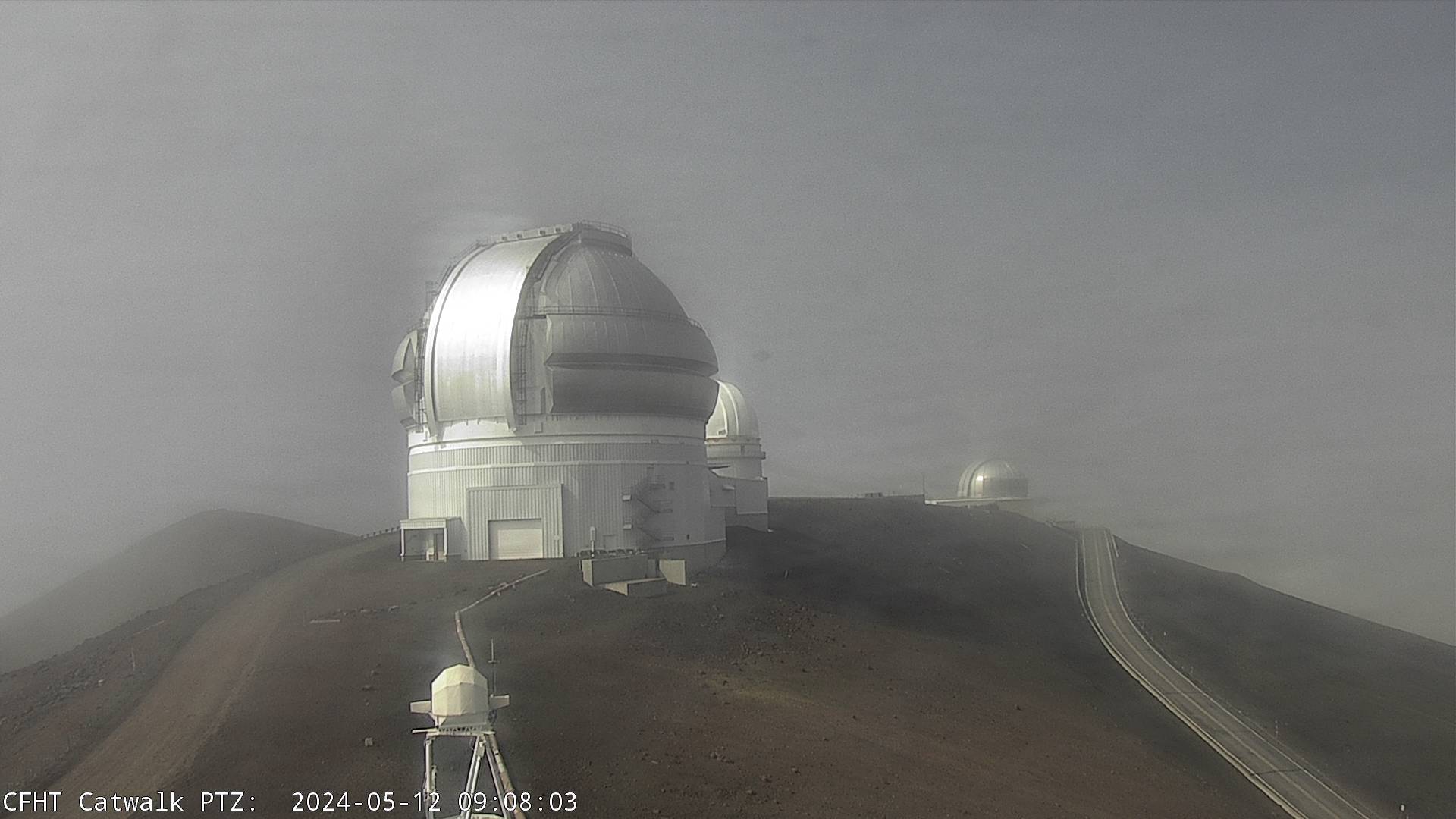
Hawaii’s Mountains – Here’s a link to the live webcam on the summit of near 14,000 foot Mauna Kea on the Big Island of Hawaii. The tallest peak on the island of Maui is the Haleakala Crater, which is near 10,000 feet in elevation. These two webcams are available during the daylight hours here in the islands…and when there’s a big moon rising just after sunset for an hour or two! Plus, during the nights and early mornings you will be able to see stars, and the sunrise too…depending upon cloud conditions.
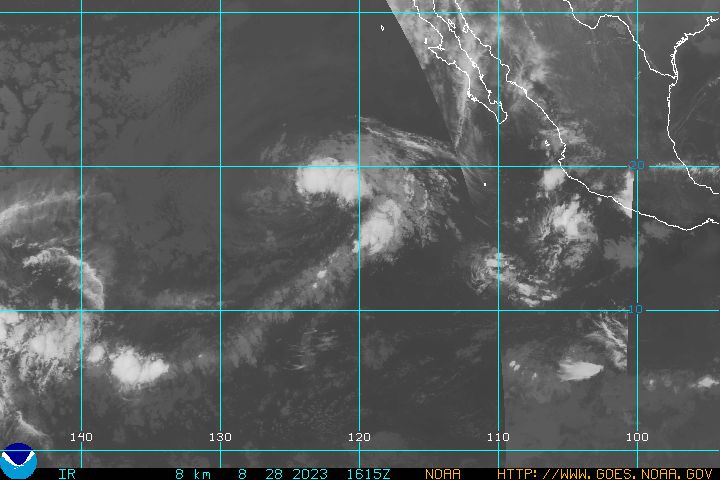
Tropical Cyclone activity in the eastern and central Pacific – Here’s the latest information coming out of the National Hurricane Center, covering the eastern north Pacific. You can find the latest tropical cyclone information for the central north Pacific (where Hawaii is located) by clicking on this link to the Central Pacific Hurricane Center. Here’s a tracking map covering both the eastern and central Pacific Ocean.
Satellite Images – To view the cloud conditions we have here in Hawaii, please use the following satellite links, starting off with the Infrared Satellite Image of the islands to see all the clouds around the state during the day and night. This next image is one that gives close images of the islands only during the daytime hours, and is referred to as a Close-up visible image. This next image shows a larger view of the Pacific…giving perspective to the wider ranging cloud patterns in the Pacific Ocean…out from the islands. To help you keep track of where any showers may be around the islands, here’s the latest animated radar image.
Aloha Paragraphs
 The sunny side of Maui
There continues to be no end in sight for the trade winds across the Hawaiian Islands. Weather maps show high pressure systems far to the NW, and far to the NE of here. These well placed high pressure cells will keep the trade winds active through at least the next week. The computer forecast models show the trade winds picking up a notch in strength as we get into the upcoming weekend time frame. This in turn will likely require the reissuance of small craft wind advisories in those windiest channels in the southern part of the state…as well as those windiest areas around Maui and the Big Island.
The usual windward showers have been a bit more active recently, and may continue that way for another couple of days. The same upper level low pressure system, which we saw this past weekend, is still around, with a lobe extending down to the west of Kauai. This trough of low pressure is enhancing the incoming showers locally to some extent...with a couple of heavy showers around the edges. As usual, with such a trade wind weather pattern in force, the most generous amounts will be deposited during the cooler night and early morning hours. There may continue to be a few showers falling during the afternoon hours along the Kona and Maui upcountry slopes as well.
By the way, a new tropical cyclone has formed in the eastern Pacific, given the number 8E. The forecast has this tropical system strengthening into a tropical storm, which will take the name Erick. Here’s a tracking map, showing that it will be moving into the central Pacific as a tropical storm. This is not a threat to the Hawaiian Islands at this point, although by next week we will need to be watching its progress more closely. Here’s a satellite image of soon to be Erick.
It’s Tuesday here in the islands, as I begin writing this last paragraph of today’s narrative. This time of year, what we could call the heart of summer, it takes the presence of upper level low pressure systems to coax more than the ordinary few passing showers out of our neighborhood clouds…being carried in our direction by the trade winds. Sometimes we have the upper level low around, like this past weekend, but no clouds…so not many showers end up falling. Now, we have a nearby trough of low pressure, which makes for less stable atmospheric conditions, AND we have some clouds around for a change. These two weather elements are making for somewhat more than normal shower coverage, with decent showers falling in a few places. Because, as noted in the paragarh above, the trough is near Kauai, that island, known as the garden island, is picking up the most generous rainfall amounts. That trough is also sending us high cirrus clouds, that not only beautify our local skies…but also do some sun dimming and filtering underneath. ~~~ In sum, nothing too unusual about any of this, with generally favorable weather cirucumstances prevailing. I’ll be back early Wednesday morning, I hope you have a great Tuesday night wherever you happen to be reading from! Aloha for now…Glenn.
Posted by Glenn
[2] Comments
July 30-31 2007
Air Temperatures – The following maximum temperatures were recorded across the state of Hawaii Monday:
Lihue, Kauai – 86F
Honolulu, Oahu – 89
Kaneohe, Oahu – 85
Kahului, Maui – 87
Hilo, Hawaii – 86
Kailua-Kona, Hawaii – 87
Temperatures early Tuesday morning ranged between these warmest and coolest spots near sea level at the 4 a.m. hour:
Honolulu, Oahu – 76F
Hilo, Hawaii – 71
Precipitation Totals – The following numbers represent the largest precipitation totals (inches) during the last 24 hours on each of the major islands, as of Tuesday morning:
0.11 WAILUA, KAUAI
0.92 AHUIMANU LOOP, OAHU
0.08 MOLOKAI
0.00 LANAI
0.03 KAHOOLAWE
0.75 WEST WAILUAIKI, MAUI
0.42 LAUPAHOEHOE, BIG ISLAND
Weather Chart – Here’s the latest (automatically updated) weather map…showing high pressure systems located far NW through far NE of Hawaii Tuesday. The trade winds will remain light to moderately strong over Hawaii’s coastal waters…although locally stronger and gusty in those usual windiest locations through Wednesday. Here’s a Weather Map Symbol page for clarification about what all those weather symbols mean on the map.
Hawaii’s Mountains – Here’s a link to the live webcam on the summit of near 14,000 foot Mauna Kea on the Big Island of Hawaii. The tallest peak on the island of Maui is the Haleakala Crater, which is near 10,000 feet in elevation. These two webcams are available during the daylight hours here in the islands…and when there’s a big moon rising just after sunset for an hour or two! Plus, during the nights and early mornings you will be able to see stars, and the sunrise too…depending upon cloud conditions.
Tropical Cyclone activity in the eastern and central Pacific – Here’s the latest information coming out of the National Hurricane Center, covering the eastern north Pacific. You can find the latest tropical cyclone information for the central north Pacific (where Hawaii is located) by clicking on this link to the Central Pacific Hurricane Center. Here’s a tracking map covering both the eastern and central Pacific Ocean.
Satellite Images – To view the cloud conditions we have here in Hawaii, please use the following satellite links, starting off with the Infrared Satellite Image of the islands to see all the clouds around the state during the day and night. This next image is one that gives close images of the islands only during the daytime hours, and is referred to as a Close-up visible image. This next image shows a larger view of the Pacific…giving perspective to the wider ranging cloud patterns in the Pacific Ocean…out from the islands. To help you keep track of where any showers may be around the islands, here’s the latest animated radar image.
Aloha Paragraphs
 Great sandy beach on the island of Oahu
These last two days of July will be full of the trade winds blowing here in Hawaii. Weather maps show an extensive area of high pressure stretched from far NW of the islands, running by to the north of here, and then far to the NE of our area. There are several high pressure cells embedded in this very long ridge of high pressure. This elongated zone of high pressure will keep the trade winds active through at least the next week. The long last lasting small craft wind advisory in the southern part of the state was finally taken down. The computer forecast models show the trade winds picking up a notch in strength as we get into the upcoming weekend time frame.
Satellite imagery shows several cloud bands being carried in our direction on the trade wind flow. The showers that fall from these stratocumulus and cumulus clouds will arrive along the windward coasts and slopes for the most part. As usual, with such a trade wind weather pattern in force, the most generous amounts will be deposited during the cooler night and early morning hours. The models show no serious rainfall coming our way anytime soon, so that most of those showers will be on the light side. There may be a few showers falling during the afternoon hours along the Kona and Maui upcountry slopes as well.
It’s Monday here in the islands, as I begin writing this last paragraph of today’s narrative. As noted in the two paragraphs above, we’re involved in what could be considered a very normal late July pattern, with the trade winds dominating our Hawaiian Island weather picture. Just the usual passing showers will fall along those lush tropical coasts and slopes. There are no tropical systems here in the central Pacific, nor in the eastern Pacific. We have to travel over into the western Pacific to find such a spinning storm, which is called typhoon Usagi…heading towards southern Japan. If we look even further to the west, there’s a dissipating storm in the south Indian Ocean as well. ~~~ I’m excited to find out from a friend’s email, that the Hawaiian Islands will have a rare total lunar eclipse later in the month of August…actually the night of August 27th. I’m pretty sure that at some point in my life I’ve witnessed a such an unusual celestial event, but I can’t remember when that was, and has me looking forward to such a special occasion! I’ll of course be discussing this event more thoroughly as it gets closer. ~~~ I’ll be back early Tuesday morning with your next weather narrative. I hope you have a great Monday night! Aloha for now…Glenn.
Posted by Glenn
1 Comment
July 29-30 2007
Air Temperatures – The following maximum temperatures were recorded across the state of Hawaii Sunday:
Lihue, Kauai – 85F
Honolulu, Oahu – 89
Kaneohe, Oahu – 84
Kahului, Maui – 87
Hilo, Hawaii – 86
Kailua-Kona, Hawaii – 85
Temperatures early Monday morning ranged between these warmest and coolest spots near sea level at the 4 a.m. hour:
Kaneohe, Oahu – 77F
Hilo, Hawaii – 68
Precipitation Totals – The following numbers represent the largest precipitation totals (inches) during the last 24 hours on each of the major islands, as of Monday morning:
0.31 MOUNT WAIALEALE, KAUAI
0.21 SOUTH FORK KAUKONAHUA, OAHU
0.02 MOLOKAI
0.00 LANAI
0.00 KAHOOLAWE
0.26 OHEO GULCH, MAUI
0.17 WAIAKEA UKA, BIG ISLAND
Weather Chart – Here’s the latest (automatically updated) weather map…showing an extensive area of high pressure, with embedded cells along a ridge, stretched from far NW though far NE of Hawaii. The trade winds will remain light to moderately strong over Hawaii’s coastal waters…although locally stronger and gusty in those usual windiest locations through Tuesday. Here’s a Weather Map Symbol page for clarification about what all those weather symbols mean on the map.
Hawaii’s Mountains – Here’s a link to the live webcam on the summit of near 14,000 foot Mauna Kea on the Big Island of Hawaii. The tallest peak on the island of Maui is the Haleakala Crater, which is near 10,000 feet in elevation. These two webcams are available during the daylight hours here in the islands…and when there’s a big moon rising just after sunset for an hour or two! Plus, during the nights and early mornings you will be able to see stars, and the sunrise too…depending upon cloud conditions.
Tropical Cyclone activity in the eastern and central Pacific – Here’s the latest information coming out of the National Hurricane Center, covering the eastern north Pacific. You can find the latest tropical cyclone information for the central north Pacific (where Hawaii is located) by clicking on this link to the Central Pacific Hurricane Center. Here’s a tracking map covering both the eastern and central Pacific Ocean.
Satellite Images – To view the cloud conditions we have here in Hawaii, please use the following satellite links, starting off with the Infrared Satellite Image of the islands to see all the clouds around the state during the day and night. This next image is one that gives close images of the islands only during the daytime hours, and is referred to as a Close-up visible image. This next image shows a larger view of the Pacific…giving perspective to the wider ranging cloud patterns in the Pacific Ocean…out from the islands. To help you keep track of where any showers may be around the islands, here’s the latest animated radar image.
Aloha Paragraphs
 The beautiful beaches of Wailea on Maui
Trade wind weather will continue through the remainder of this month, into early August. Weather maps show an extensive area of high pressure located to the north of the Aloha state Sunday evening. There are two distinct high pressure cells with their associated ridges…which will keep the trade winds active through at least the next week. The small craft wind advisory flags continue to wave in the breezes over the channels in the southern part of the state, as well as those windiest coastal areas on Maui and the Big Island.
There will be a few showers being carried into windward sides, although remain mostly light…and limited in coverage. The well advertised upper level low pressure system moved into the area north of Maui Saturday, but already shifted away to the north Sunday. This upper air feature was "suppose" to increase the intensity of whatever showers that where around along the windward sides. Although, as it turned out, there were hardly any clouds around for this upper level low to work on, so we saw hardly any showers…much less many heavy ones! The leeward upcountry slopes of the Big Island could find showers falling during the afternoon hours locally…with even a few heavy ones possible as a new upper level low arrives to influence that area later Sunday.
It’s Sunday evening here in the islands, as I begin writing this last paragraph of today’s narrative. As expected, the cold air aloft arrived, associated with an upper air low pressure system. Although as stated above, there wasn’t enough moisture around at lower levels of the atmosphere to spark any heavy showers. The Big Island began to see locally heavy showers in places early Saturday morning, but that ended rather abruptly. It appears that just isolated moisture pockets will ride in on the trade winds, leading to just the ordinary few light passing showers…and not very many of them. ~~~ This leaves almost all the state in fine shape, with lots of our famous Hawaiian sunshine beaming down during the days. Speaking of beaming down, the July full moon will be very bright the next couple of nights too! ~~~ I’ll be back early Monday morning with your next weather narrative from paradise. I hope you all have a great Sunday night wherever you happen to be spending it! Aloha for now…Glenn.
Posted by Glenn
[2] Comments
July 27-28 2007
Air Temperatures – The following maximum temperatures were recorded across the state of Hawaii Friday:
Lihue, Kauai – 86F
Honolulu, Oahu – 89
Kaneohe, Oahu – 84
Kahului, Maui – 89
Hilo, Hawaii – 86
Kailua-Kona, Hawaii – 85
Temperatures early Friday morning ranged between these warmest and coolest spots near sea level at the 4 a.m. hour:
Honolulu, Oahu – 77F
Hilo, Hawaii – 70
Precipitation Totals – The following numbers represent the largest precipitation totals (inches) during the last 24 hours on each of the major islands, as of Friday afternoon:
0.92 MOUNT WAIALEALE, KAUAI
0.82 OAHU FOREST NWR, OAHU
0.05 MOLOKAI
0.00 LANAI
0.00 KAHOOLAWE
0.28 OHEO GULCH, MAUI
0.71 GLENWOOD, BIG ISLAND
Weather Chart – Here’s the latest (automatically updated) weather map…showing a moderately strong 1028 millibar high pressure system located to the north of Hawaii Friday. Ridges extend both east and west from the center of this trade wind producing anticyclone. The trade winds will remain light to moderately strong over Hawaii’s coastal waters…although locally stronger and gusty in those usual windiest locations through Saturday. Here’s a Weather Map Symbol page for clarification about what all those weather symbols mean on the map.
Hawaii’s Mountains – Here’s a link to the live webcam on the summit of near 14,000 foot Mauna Kea on the Big Island of Hawaii. The tallest peak on the island of Maui is the Haleakala Crater, which is near 10,000 feet in elevation. These two webcams are available during the daylight hours here in the islands…and when there’s a big moon rising just after sunset for an hour or two! Plus, during the nights and early mornings you will be able to see stars, and the sunrise too…depending upon cloud conditions.
Tropical Cyclone activity in the eastern and central Pacific – Here’s the latest information coming out of the National Hurricane Center, covering the eastern north Pacific. You can find the latest tropical cyclone information for the central north Pacific (where Hawaii is located) by clicking on this link to the Central Pacific Hurricane Center. Here’s a tracking map covering both the eastern and central Pacific Ocean.
Satellite Images – To view the cloud conditions we have here in Hawaii, please use the following satellite links, starting off with the Infrared Satellite Image of the islands to see all the clouds around the state during the day and night. This next image is one that gives close images of the islands only during the daytime hours, and is referred to as a Close-up visible image. This next image shows a larger view of the Pacific…giving perspective to the wider ranging cloud patterns in the Pacific Ocean…out from the islands. To help you keep track of where any showers may be around the islands, here’s the latest animated radar image.
Aloha Paragraphs
 Beautiful waterfall on Kauai
The east to ENE trade winds will continue to blow across our latitudes of the north central Pacific. Weather maps show an expansive 1028 millibar high pressure system located to the north of the 50th state. This high pressure cell will keep the trade winds active…although becoming a bit lighter later this weekend into the middle of the new week ahead. The small craft wind advisory flags continue to wave in the breezes over the channels in the southern part of the state, as well as those windiest coastal areas on Maui and the Big Island.
There may start to be an increase in shower activity along the windward sides of all the islands soon. Weather maps and satellite imagery continue to show an upper level low pressure system moving into the area north of Hawaii. As this upper air feature gets closer, there will likely be an increase in showers along the windward sides, especially during the weekend time frame…some of which could be locally heavy. The leeward upcountry slopes on Maui and the Big Island could find showers falling during the afternoon hours locally as well…with a few heavy ones possible. It should be pointed out that many areas of the state will remain dry, especially those leeward beach areas, where most of the visitor resorts are located.
It’s Friday here in the islands, as I begin writing this last paragraph of today’s narrative. As described above, we have an upper level low pressure system edging in our direction. This can be thought of as a pool of cold air aloft, which typically causes our overlying atmosphere to become unstable. The contrast between that cold air high up, and the warmer air near the surface, is what triggers this instability factor. The only other ingredient that is also needed is low level moisture, otherwise there usually isn’t very many showers. In this case, that last component may be a little scarce, and could limit the amount of increased showers that we see being carried into state by the breezy trade winds. At any rate, satellite imagery does show some showery looking clouds upstream of the islands, so that we will have at least some additional showers moving into our area later Friday into the weekend. ~~~ Other than a close pass by a tropical cyclone, bringing us heavy showers, this upper low, with its instability, is the only other way that we see any significant rainfall arriving during our dry summer months. We are happy to see this prospect developing, as our islands have been too dry for quite some time, and we could use the precipitation to replenish our underground aquifers, and our surface water reservoirs too. Any rainfall that we get over the next couple of days will help to push the ongoing drought conditions back, which is affecting some parts of the state now. ~~~ I’ll be back early Saturday morning with your next weather narrative. I hope you have a great Friday night wherever you happen to be spending it! Aloha for now…Glenn.
Posted by Glenn
No Comments
July 26-27 2007
Air Temperatures – The following maximum temperatures were recorded across the state of Hawaii Thursday:
Lihue, Kauai – 85F
Honolulu, Oahu – 88
Kaneohe, Oahu – 84
Kahului, Maui – 88
Hilo, Hawaii – 88
Kailua-Kona, Hawaii – 85
Temperatures early Friday morning ranged between these warmest and coolest spots near sea level at the 4 a.m. hour:
Honolulu, Oahu – 77F
Hilo, Hawaii – 70
Precipitation Totals – The following numbers represent the largest precipitation totals (inches) during the last 24 hours on each of the major islands, as of Friday morning:
0.57 MOUNT WAIALEALE, KAUAI
0.70 OAHU FOREST NWR, OAHU
0.19 MOLOKAI
0.00 LANAI
0.00 KAHOOLAWE
0.65 OHEO GULCH, MAUI
0.53 WAIAKEA UKA, BIG ISLAND
Weather Chart – Here’s the latest (automatically updated) weather map…showing a moderately strong 1028 millibar high pressure system located to the north of Hawaii Friday. Ridges extend both east and west from the center of this trade wind producing anticyclone. The trade winds will remain light to moderately strong over Hawaii’s coastal waters…although locally stronger and gusty in those usual windiest locations through Saturday. Here’s a Weather Map Symbol page for clarification about what all those weather symbols mean on the map.
Hawaii’s Mountains – Here’s a link to the live webcam on the summit of near 14,000 foot Mauna Kea on the Big Island of Hawaii. The tallest peak on the island of Maui is the Haleakala Crater, which is near 10,000 feet in elevation. These two webcams are available during the daylight hours here in the islands…and when there’s a big moon rising just after sunset for an hour or two! Plus, during the nights and early mornings you will be able to see stars, and the sunrise too…depending upon cloud conditions.
Tropical Cyclone activity in the eastern and central Pacific – Here’s the latest information coming out of the National Hurricane Center, covering the eastern north Pacific. You can find the latest tropical cyclone information for the central north Pacific (where Hawaii is located) by clicking on this link to the Central Pacific Hurricane Center. Here’s a tracking map covering both the eastern and central Pacific Ocean.
Satellite Images – To view the cloud conditions we have here in Hawaii, please use the following satellite links, starting off with the Infrared Satellite Image of the islands to see all the clouds around the state during the day and night. This next image is one that gives close images of the islands only during the daytime hours, and is referred to as a Close-up visible image. This next image shows a larger view of the Pacific…giving perspective to the wider ranging cloud patterns in the Pacific Ocean…out from the islands. To help you keep track of where any showers may be around the islands, here’s the latest animated radar image.
Aloha Paragraphs
 Waikiki Beach, Honolulu, Oahu
The trade winds continue to bring cooling and refreshing relief from the mid-summer tropical heat in the Islands. Weather maps show well established high pressure systems located to the NNW and NE of the Aloha state. These high pressure cells will keep the trade winds blowing across our area through the rest of this week…although becoming a bit lighter later this weekend into the middle of next week. The small craft wind advisory flags continue to wave in the breezes over the channels in the southern part of the state, as well as those windiest coastal areas on Maui and the Big Island.
The lush tropical vegetation will continue to be watered locally along our windward coasts and slopes…thanks to a few passing showers carried in by the trade winds. The computer forecast models continue to show an upper level low pressure system moving near the state soon. As this upper air feature gets closer, there will likely be an increase in showers along the windward sides, especially during the Friday and Saturday time frame…some of which could be locally heavy. The leeward slopes on Maui and the Big Island will find showers falling too during the afternoon hours locally…some of those could be heavy as well.
It’s Thursday here in the islands, as I begin writing this last paragraph of today’s narrative. Thursday will be yet another great day here in Hawaii, another in a long series of days that just keep peeling by on the calender. July is often known as one of our better months, although that could be said about any of the 12 in all honesty! We’re at the tail-end of July, ready to move into the deep summer month of August. What exactly does deep summer mean? I guess I’m just referring to the fact that it will be warm in every way: in the air and in the ocean too, just everything about our weather is warm during that last full month of summer. This is of course true at all sea level locations,with one having to go up in elevation to find any hint of cooler temperatures. ~~~ With all that heat around, of course we begin to think in terms of spinning storms on the ocean at our tropical latitudes. Although, just to set the record straight, there won’t be any tropical cyclones anywhere near Hawaii at least through the end of this month. There is a tropical storm presently churning the water in the eastern Pacific, although it’s on its last leg, and will be dissipating over the next couple of days…posing no threat to Hawaii whatsoever. We may find a tropical cyclone spinning into the central Pacific next month, although that is yet to be seen. ~~~ I’ll be back early Friday morning with your next weather narrative from paradise, I hope you have a great Thursday night wherever you happen to be spending it! Aloha for now…Glenn.
Posted by Glenn
No Comments
July 25-26 2007
Air Temperatures – The following maximum temperatures were recorded across the state of Hawaii Wednesday:
Lihue, Kauai – 85F
Honolulu, Oahu – 89
Kaneohe, Oahu – 84
Kahului, Maui – 89
Hilo, Hawaii – 86
Kailua-Kona, Hawaii – 85
Temperatures early Thursday morning ranged between these warmest and coolest spots near sea level at the 4 a.m. hour:
Kailua-kona – 76F
Hilo, Hawaii – 70
Precipitation Totals – The following numbers represent the largest precipitation totals (inches) during the last 24 hours on each of the major islands, as of Thursday morning:
0.21 WAILUA, KAUAI
0.85 OAHU FOREST NWR, OAHU
0.07 MOLOKAI
0.00 LANAI
0.00 KAHOOLAWE
0.72 PUU KUKUI, MAUI
0.25 KEALAKEKUA, BIG ISLAND
Weather Chart – Here’s the latest (automatically updated) weather map…showing high pressure systems located to the NNW and NE Hawaii Thursday. The trade winds will remain light to moderately strong over Hawaii’s coastal waters…although locally stronger and gusty in those usual windiest locations through Friday. Here’s a Weather Map Symbol page for clarification about what all those weather symbols mean on the map.
Hawaii’s Mountains – Here’s a link to the live webcam on the summit of near 14,000 foot Mauna Kea on the Big Island of Hawaii. The tallest peak on the island of Maui is the Haleakala Crater, which is near 10,000 feet in elevation. These two webcams are available during the daylight hours here in the islands…and when there’s a big moon rising just after sunset for an hour or two! Plus, during the nights and early mornings you will be able to see stars, and the sunrise too…depending upon cloud conditions.
Tropical Cyclone activity in the eastern and central Pacific – Here’s the latest information coming out of the National Hurricane Center, covering the eastern north Pacific. You can find the latest tropical cyclone information for the central north Pacific (where Hawaii is located) by clicking on this link to the Central Pacific Hurricane Center. Here’s a tracking map covering both the eastern and central Pacific Ocean.
Satellite Images – To view the cloud conditions we have here in Hawaii, please use the following satellite links, starting off with the Infrared Satellite Image of the islands to see all the clouds around the state during the day and night. This next image is one that gives close images of the islands only during the daytime hours, and is referred to as a Close-up visible image. This next image shows a larger view of the Pacific…giving perspective to the wider ranging cloud patterns in the Pacific Ocean…out from the islands. To help you keep track of where any showers may be around the islands, here’s the latest animated radar image.
Aloha Paragraphs
 Kona coast on the Big Island
No end in sight for the trade winds blowing across the Hawaiian Islands. Weather maps show well established high pressure systems located to the north and NE of the Aloha state. These high pressure cells will keep the trade winds blowing across our area of the north central Pacific through the rest of this week…although starting to get lighter Sunday into the middle of next week. The small craft wind advisories remain in place over the channels in the southern part of the state, as well as those windiest coastal areas on Maui and the Big Island.
The windward sides of all the islands will see the usual few passing showers, most frequent during the night and early morning hours. The computer forecast models continue to show an upper level low pressure system moving over, or near the state soon. As this upper air feature gets closer, there will likely be an increase in showers along the windward sides…and perhaps the leeward slopes on Maui and the Big Island during the afternoon hours. This increase in moisture will be of benefit in helping to ease the ongoing drought conditions that prevail in those driest areas.
It’s Wednesday here in the islands, as I begin writing this last paragraph of today’s narrative. The prospect of more showers moving into the state is good news. As some of you know, many of the showers that arrived recently, with the passage of tropical depression Cosme, fell in areas that had been dry for a long time. So, things are heading in the right direction here, with what I would consider less severe drought conditions in general now. It can be difficult to coax showers in our direction during our long hot summer months! ~~~ There’s a tropical storm named Dalila over in the eastern Pacific at this time, although at last report it was moving over cooler sea water temperatures, and as a result moving into the dissipating stage of its life cycle. It won’t be migrating into our central Pacific region, and poses no threat to our Hawaiian Islands.
~~~ By the way, the increase in showers locally around the islands, noted above, won’t be bothering any of our visitors, at least those that are staying along the leeward beaches, where most of the resorts are located. Those showers, enhanced by the upper low pressure system, will rmain fixed for the most part, along the windward north and east facing coasts and slopes. Then too, there could be some increase in afternoon cloudiness, with shower spillage along both the Haleakala slopes on Maui, and along the Kona slopes on the Big Island as well. ~~~ I hope everyone has a great Wednesday night! I’ll be back early Thursday morning with your next weather narrative. Aloha for now…Glenn.
Posted by Glenn
No Comments
July 24-25 2007
Air Temperatures – The following maximum temperatures were recorded across the state of Hawaii Tuesday:
Lihue, Kauai – 85F
Honolulu, Oahu – 89
Kaneohe, Oahu – 83
Kahului, Maui – 87
Hilo, Hawaii – 87
Kailua-Kona, Hawaii – 86
Temperatures early Wednesday morning ranged between these warmest and coolest spots near sea level at the 4 a.m. hour:
Honolulu, Oahu – 76F
Hilo, Hawaii – 68
Precipitation Totals – The following numbers represent the largest precipitation totals (inches) during the last 24 hours on each of the major islands, as of Wednesday morning:
0.03 MOUNT WAIALEALE, KAUAI
0.73 OAHU FOREST NWR, OAHU
0.06 MOLOKAI
0.00 LANAI
0.00 KAHOOLAWE
0.61 OHEO GULCH, MAUI
0.19 KAHUKU RANCH, BIG ISLAND
Weather Chart – Here’s the latest (automatically updated) weather map…showing high pressure systems located to the north and NE Hawaii Wednesday. The trade winds will remain light to moderately strong over Hawaii’s coastal waters…although locally stronger and gusty in those usual windiest locations through Thursday. Here’s a Weather Map Symbol page for clarification about what all those weather symbols mean on the map.
Hawaii’s Mountains – Here’s a link to the live webcam on the summit of near 14,000 foot Mauna Kea on the Big Island of Hawaii. The tallest peak on the island of Maui is the Haleakala Crater, which is near 10,000 feet in elevation. These two webcams are available during the daylight hours here in the islands…and when there’s a big moon rising just after sunset for an hour or two! Plus, during the nights and early mornings you will be able to see stars, and the sunrise too…depending upon cloud conditions.
Tropical Cyclone activity in the eastern and central Pacific – Here’s the latest information coming out of the National Hurricane Center, covering the eastern north Pacific. You can find the latest tropical cyclone information for the central north Pacific (where Hawaii is located) by clicking on this link to the Central Pacific Hurricane Center. Here’s a tracking map covering both the eastern and central Pacific Ocean.
Satellite Images – To view the cloud conditions we have here in Hawaii, please use the following satellite links, starting off with the Infrared Satellite Image of the islands to see all the clouds around the state during the day and night. This next image is one that gives close images of the islands only during the daytime hours, and is referred to as a Close-up visible image. This next image shows a larger view of the Pacific…giving perspective to the wider ranging cloud patterns in the Pacific Ocean…out from the islands. To help you keep track of where any showers may be around the islands, here’s the latest animated radar image.
Aloha Paragraphs
 Keokeo Beach on the Big Island
Moderately strong trade winds will continue to blow across the Hawaiian Islands, like they almost always do during the summer month of July. Weather maps show well established high pressure systems located to the north and NE of the Aloha state. These high pressure cells will keep the trade winds blowing across our area of the north central Pacific through the rest of this week…which turns out to be the rest of this month. The small craft wind advisories remain in place over the channels in the southern part of the state, as well as those windiest coastal areas on Maui and the Big Island.
Nothing unusual expected in the rain department, with actually somewhat less than the normal amount of showers…even on the usually wetter windward coasts and slopes for the time being. The computer forecast models however do show an upper level low pressure system moving over, or near the state, later this week. As this upper air feature gets close, there may be somewhat of an increase in showers here and there…although it’s still a little early to know how much just yet. For the time being, this leaves all the leeward sides of the islands in fine shape, with lots of sunshine, and mostly dry weather prevailing. There’s always that chance that a few upslope showers may fall over the Kona slopes during the afternoons here and there.
It’s Tuesday here in the islands, as I begin writing this last paragraph of today’s narrative. We’re into our last week of July, with the weather here in the islands watching climatology very closely. Climatology of course is just the long term history of our daily weather conditions. Climatology gives us a good idea of what to expect on any given day, with weather conditions either matching that, as it’s doing now…or deviating greatly, when something unusual happens. This time of year the norm calls for the trade winds to be blowing, with just a few windward biased showers along our windward coasts. Climatology tells us that the leeward sides, those areas facing away from the prevailing trade wind flow, would be sunny and dry, and getting pretty hot during the afternoons. Our surrounding ocean is heating up nicely too, under the influence of all this Hawaiian sunshine…which will be edging up toward the 80F degree mark here pretty soon. ~~~ Have you noticed that the sun is starting to set earlier now, and the sunrise is happening a litle later each morning at the same time? This will continue to be the case of course as we move through the rest of this summer, into the upcoming autumn months. I gauge this earlier and later aspects during my morning walks, which I take right after I finish these website updates. I’m not needing my trusty little flashlight just yet, when I start out at right around 5:30am, although I have it ready to go when that time comes. ~~~ I’ll be back early Wednesday morning, I hope you have a great Tuesday night wherever you happen to be reading from! Aloha for now…Glenn.
Posted by Glenn
1 Comment
July 23-24 2007
Air Temperatures – The following maximum temperatures were recorded across the state of Hawaii Monday:
Lihue, Kauai – 86F
Honolulu, Oahu – 89
Kaneohe, Oahu – 84
Kahului, Maui – 87
Hilo, Hawaii – 86
Kailua-Kona, Hawaii – 86
Temperatures early Tuesday morning ranged between these warmest and coolest spots near sea level at the 4 a.m. hour:
Honolulu, Oahu – 77F
Hilo, Hawaii – 69
Precipitation Totals – The following numbers represent the largest precipitation totals (inches) during the last 24 hours on each of the major islands, as of Tuesday morning:
0.06 MOUNT WAIALEALE, KAUAI
0.19 OAHU FOREST NWR, OAHU
0.00 MOLOKAI
0.00 LANAI
0.00 KAHOOLAWE
1.22 PUU KUKUI, MAUI
0.94 KEALAKEKUA, BIG ISLAND
Weather Chart – Here’s the latest (automatically updated) weather map…showing high pressure systems located to the north and NE Hawaii Tuesday. The trade winds will remain light to moderately strong over Hawaii’s coastal waters…although locally stronger and gusty in those usual windiest locations through Wednesday. Here’s a Weather Map Symbol page for clarification about what all those weather symbols mean on the map.
Hawaii’s Mountains – Here’s a link to the live webcam on the summit of near 14,000 foot Mauna Kea on the Big Island of Hawaii. The tallest peak on the island of Maui is the Haleakala Crater, which is near 10,000 feet in elevation. These two webcams are available during the daylight hours here in the islands…and when there’s a big moon rising just after sunset for an hour or two! Plus, during the nights and early mornings you will be able to see stars, and the sunrise too…depending upon cloud conditions.
Tropical Cyclone activity in the eastern and central Pacific – Here’s the latest information coming out of the National Hurricane Center, covering the eastern north Pacific. You can find the latest tropical cyclone information for the central north Pacific (where Hawaii is located) by clicking on this link to the Central Pacific Hurricane Center. Here’s a tracking map covering both the eastern and central Pacific Ocean.
Satellite Images – To view the cloud conditions we have here in Hawaii, please use the following satellite links, starting off with the Infrared Satellite Image of the islands to see all the clouds around the state during the day and night. This next image is one that gives close images of the islands only during the daytime hours, and is referred to as a Close-up visible image. This next image shows a larger view of the Pacific…giving perspective to the wider ranging cloud patterns in the Pacific Ocean…out from the islands. To help you keep track of where any showers may be around the islands, here’s the latest animated radar image.
Aloha Paragraphs
 A remote beach on Molokai
The hawaiian Islands have returned to a routine trade wind weather pattern Monday, after the passage of former tropical depression Cosme to the south this past weekend. Cosme is now being described as a remnant low pressure system, and continues to move away from our area at near 20 mph. This retired tropical depression early Monday morning was over 1000 miles WSW of the Hawaiian Islands, and not expected to regenerate. The muggy and locally showery weather that we saw in places over the last few days, has now been replaced with drier air, with less humidity.
The trade winds will take over as our primary weather influence now, blowing more or less in the moderately strong category. Weather maps show well established high pressure systems located to the NNW and NE of the Aloha state. These high pressure cells will keep the trade winds blowing across our area of the north central Pacific Ocean through the rest of this week. The small craft wind advisories remain in place over the channels in the southern part of the state, as well as those windiest coastal areas on Maui and the Big Island.
Satellite imagery shows just the normal cloudiness upstream of the islands, which will keep a few showers falling along our windward coasts and slopes. Nothing out of the ordinary is expected this week in terms of precipitation. The computer forecast models show that an old cold front may bring its leftover showers into the waters north of Hawaii later this week, but it isn’t expected to reach any of our islands. This leaves the leeward sides of the 50th state in fine shape, with lots of sunshine, and mostly dry weather prevailing. There’s always that chance that a few upslope showers may develop over the Kona slopes during the afternoons here and there.
It’s Monday here in the islands, as I begin writing this last paragraph of today’s narrative. It was quite excitiing for a while there, as a tropical depression moved quite close to the Hawaiian Islands starting this last Friday into this past weekend. It was a little touch and go for a short time, not knowing exactly how windy it would get, and how much rain would fall where. As it turned out, we got quite a bit of both over the southern part of the state…although as expected, the Big Island and Maui shared top honors in regards to receiving the most generous precipitation. Some of the wettest areas on both of those islands got deluged with 5.00+ inch rainfall amounts, with at least one spot on the Big Island topping 6.00 inches! The trade winds got rather strong and gusty across Hawaii’s coastal waters as Cosme passed by to our south too, although not strong enough that it was a problem. ~~~ As the paragraphs above note, we are moving quickly back into a normal mid-summer trade wind weather pattern now. There is a new tropical storm in the eastern Pacific, called Dalila, although as this tracking map shows, it is all the way over close to Mexico, and absolutely poses no threat to our islands.
~~~ I’ll be back early Tuesday morning with your next weather narrative from paradise. Aloha for now…Glenn.
Posted by Glenn
No Comments
July 22-23 2007
Air Temperatures – The following maximum temperatures were recorded across the state of Hawaii Sunday:
Lihue, Kauai – 86F
Honolulu, Oahu – 88
Kaneohe, Oahu – 83
Kahului, Maui – 86
Hilo, Hawaii – 79
Kailua-Kona, Hawaii – 85
Temperatures early Monday morning ranged between these warmest and coolest spots near sea level at the 4 a.m. hour:
Kaneohe, Oahu – 78F
Hilo, Hawaii – 68
Precipitation Totals – The following numbers represent the largest precipitation totals (inches) during the last 24 hours on each of the major islands, as of Monday morning:
0.26 MOUNT WAIALEALE, KAUAI
1.07 OAHU FOREST NWR, OAHU
0.39 MOLOKAI
0.00 LANAI
0.00 KAHOOLAWE
1.75 PUU KUKUI, MAUI
0.43 GLENWOOD, BIG ISLAND
Weather Chart – Here’s the latest (automatically updated) weather map…showing high pressure systems located to the NNW and NE Hawaii Monday. The trade winds will remain moderately strong over Hawaii’s coastal waters…although locally stronger and gusty in those usual windiest locations through Tuesday. Here’s a Weather Map Symbol page for clarification about what all those weather symbols mean on the map.
Hawaii’s Mountains – Here’s a link to the live webcam on the summit of near 14,000 foot Mauna Kea on the Big Island of Hawaii. The tallest peak on the island of Maui is the Haleakala Crater, which is near 10,000 feet in elevation. These two webcams are available during the daylight hours here in the islands…and when there’s a big moon rising just after sunset for an hour or two! Plus, during the nights and early mornings you will be able to see stars, and the sunrise too…depending upon cloud conditions.
Tropical Cyclone activity in the eastern and central Pacific – Here’s the latest information coming out of the National Hurricane Center, covering the eastern north Pacific. You can find the latest tropical cyclone information for the central north Pacific (where Hawaii is located) by clicking on this link to the Central Pacific Hurricane Center. Here’s a tracking map covering both the eastern and central Pacific Ocean.
Satellite Images – To view the cloud conditions we have here in Hawaii, please use the following satellite links, starting off with the Infrared Satellite Image of the islands to see all the clouds around the state during the day and night. This next image is one that gives close images of the islands only during the daytime hours, and is referred to as a Close-up visible image. This next image shows a larger view of the Pacific…giving perspective to the wider ranging cloud patterns in the Pacific Ocean…out from the islands. To help you keep track of where any showers may be around the islands, here’s the latest animated radar image.
Aloha Paragraphs
 Waimanalo Beach, Oahu
Tropical depression Cosme continues to move away from the Hawaiian Islands, with muggy weather, along with some leftover showers in its wake. The heaviest rainfall has now passed the islands, although in the wake of the system, there will remain some showers through the day Sunday…focused most intently along the windward sides and over the mountains locally. The largest rainfall amount during the 24 hour period was a generous 5.22" at Puu Kukui, the rain gauge atop the West Maui Mountains. Here’s an animated looping radar image, so you can keep an eye on where showers are falling.
Tropical cyclone Cosme remains at the tropical depression category Sunday, and is forecast to remain so into Monday. This tropical system started out last weekend as tropical depression 06E, or the sixth tropical cyclone of the 2007 hurricane season. It then strengthened into a tropical storm, then briefly a hurricane, before being downgraded back into a tropical storm…and now all the way down to a depression. Here’s a tracking map…so you can follow the progress of Cosme.
Cosme came close enough to bring the northern fringe of its shower bearing moisture field up over the Big Island and parts of Maui, although the other islands where too far north to see these heavy showers. Here’s an animated satellite image showing Cosme to the SW of the Hawaii Islands. There will be passing showers along the windward sides of all the islands Sunday…with a chance that the leeward slopes on the Big Island may find showers popping up again Sunday afternoon. The atmosphere left in the wake of Cosme is very warm and humid, so that all islands will feel muggy for another day or so.
In terms of wind speeds…this low pressure vortex (Cosme), enhanced the strength of our local trade winds Saturday, but will be calming down gradually today into Monday. We find small craft wind advisories having now been pulled back to only those windiest areas around Maui and the Big Island. Winds were stronger than normal as Cosme moved by to our south. The trade winds will mellow-out further starting Monday, with moderately strong trades prevailing during the new week ahead.
This satellite image will show the clouds associated with Cosme. Weather conditions will improve gradually as this tropical system moves away to the west, with fairly routine trade wind conditions as we move into the new week ahead. So, as it turned out, Cosme came just close enough to give the Big Island and parts of Maui localized heavy rain, but remained to far south to provide its much needed heavy showers to the other island’s leeward sides. The computer forecast models handled Cosme’s movements very well, keeping all the major precipitation pretty much confined to the windward sides of the Big Island and Maui. ~~~ I’ll be back early Monday morning with your next weather narrative, I hope you have a great Sunday night! Aloha for now…Glenn.
Posted by Glenn
No Comments
July 21-22 2007
Air Temperatures – The following maximum temperatures were recorded across the state of Hawaii Saturday:
Lihue, Kauai – 85F
Honolulu, Oahu – 88
Kaneohe, Oahu – 83
Kahului, Maui – 88
Hilo, Hawaii – 86
Kailua-Kona, Hawaii – 85
Temperatures early Sunday morning ranged between these warmest and coolest spots near sea level at the 5 a.m. hour:
Lihue, Kauai – 77F
Hilo, Hawaii – 68
Precipitation Totals – The following numbers represent the largest precipitation totals (inches) during the last 24 hours on each of the major islands, as of Sunday morning:
2.74 MOUNT WAIALEALE, KAUAI
1.80 MANOA LYON ARBORETUM, OAHU
0.20 MOLOKAI
0.00 LANAI
0.00 KAHOOLAWE
5.22 PUU KUKUI, MAUI
2.45 HAKALAU, BIG ISLAND
Weather Chart – Here’s the latest (automatically updated) weather map…showing a high pressure system located to the NNW Hawaii. The trade winds will remain moderately strong over Hawaii’s marine environment…although locally stronger and gusty in those usual windiest locations through Monday. Here’s a Weather Map Symbol page for clarification about what all those weather symbols mean on the map.
Hawaii’s Mountains – Here’s a link to the live webcam on the summit of near 14,000 foot Mauna Kea on the Big Island of Hawaii. The tallest peak on the island of Maui is the Haleakala Crater, which is near 10,000 feet in elevation. These two webcams are available during the daylight hours here in the islands…and when there’s a big moon rising just after sunset for an hour or two! Plus, during the nights and early mornings you will be able to see stars, and the sunrise too…depending upon cloud conditions.
Tropical Cyclone activity in the eastern and central Pacific – Here’s the latest information coming out of the National Hurricane Center, covering the eastern north Pacific. You can find the latest tropical cyclone information for the central north Pacific (where Hawaii is located) by clicking on this link to the Central Pacific Hurricane Center. Here’s a tracking map covering both the eastern and central Pacific Ocean.
Satellite Images – To view the cloud conditions we have here in Hawaii, please use the following satellite links, starting off with the Infrared Satellite Image of the islands to see all the clouds around the state during the day and night. This next image is one that gives close images of the islands only during the daytime hours, and is referred to as a Close-up visible image. This next image shows a larger view of the Pacific…giving perspective to the wider ranging cloud patterns in the Pacific Ocean…out from the islands. To help you keep track of where any showers may be around the islands, here’s the latest animated radar image.
Aloha Paragraphs
 Palms, sandy beach, and of course the blue ocean
Rainy weather associated with tropical depression Cosme, moved over the Big Island Friday evening into early Saturday morning…continuing at times along the Kona slopes during the afternoon hours. The Big Island of Hawaii began to see the influence from tropical depression Cosme Friday morning, when showers moved into the east side of that southern-most island. The bulk of the heaviest rainfall has now passed that island, although in the wake of the system, there will remain quite a few showers through the day Saturday…with still the chance of a few heavy downpours along the leeward mountain slopes. The largest rainfall amount during the 24 hour period was a generous 6.86" at Hakalau, along the windward side. Here’s an animated looping radar image, so you can keep an eye on where showers are falling.
Tropical cyclone Cosme remains at the tropical depression category Saturday, and is forecast to remain so through Sunday. This tropical system started out last weekend as tropical depression 06E, or the sixth tropical cyclone of the 2007 hurricane season. It then strengthened into a tropical storm, then briefly a hurricane, before being downgraded back into a tropical storm…and now all the way down to a depression. The Central Pacific Hurricane Center in Honolulu is forecasting this storm to pass safely to the south of the rest of the islands through Sunday. Here’s a tracking map…so you can follow the progress of Cosme.
Cosme was close enough to bring the northern fringe of its shower bearing moisture field up over the Big Island, although the other islands where too far north to see these heavy showers…although a few places on Maui got some soaking rainfall too. Rainfall from this tropical source stretched up over the windward sides of Oahu and Kauai…although were mostly the light misty variety. Here’s an animated satellite image showing Cosme to the south and SW of the Hawaii Islands. There will be passing showers along the windward sides of all the islands into Sunday…with a chance that the leeward slopes on the Big Island may find showers popping up again Sunday afternoon. The atmosphere left in the wake of Cosme is very warm and humid, so that all islands will feel muggy for another day or two.
In terms of wind speeds…this low pressure vortex (Cosme), enhanced the strength of our local trade winds Saturday, although likely calm down some Sunday. We find small craft wind advisories having been pulled back to only those windiest areas around Maui and the Big Island. Winds were stronger than normal as Cosme moved by to our south. Those places that are in the usual windiest locations, when strong trade winds blow, will see winds up over 30 mph at times, with gusts near the 40 mph mark locally over parts of Maui and the Big Island. The trade winds will mellow-out starting later Sunday, with moderately strong trades prevailing during the new week ahead.
This satellite image will show the clouds associated with Cosme. Weather conditions will improve gradually as this tropical system moves away to the west, with fairly routine trade wind conditions starting Sunday into the new week ahead. So, as it turned out, Cosme came just close enough to douse the Big Island and parts of Maui with localized heavy rain, but remained to far south to provide its much needed heavy showers to the other island’s leeward sides. The computer forecast models handled Cosme’s movements very well, keeping all the major precipitation pretty much confined to the windward side of the Big Island and Maui. ~~~ I’ll be back early Sunday morning with your next weather narrative. Aloha for now…Glenn.
Next Page »












 Email Glenn James: