July 2007
Monthly Archive
Posted by Glenn
[2] Comments
July 20-21 2007
Air Temperatures – The following maximum temperatures were recorded across the state of Hawaii Friday:
Lihue, Kauai – 85F
Honolulu, Oahu – 88
Kaneohe, Oahu – 84
Kahului, Maui – 89
Hilo, Hawaii – 81
Kailua-Kona, Hawaii – 87
Temperatures early Saturday morning ranged between these warmest and coolest spots near sea level at the 4 a.m. hour:
Honolulu, Oahu – 78F
Hilo, Hawaii – 73
Precipitation Totals – The following numbers represent the largest precipitation totals (inches) during the last 24 hours on each of the major islands, as of Saturday morning:
0.57 MOUNT WAIALEALE, KAUAI
1.35 MANOA LYON ARBORETUM, OAHU
0.18 MOLOKAI
0.00 LANAI
0.00 KAHOOLAWE
1.92 PUU KUKUI, MAUI
5.01 GLENWOOD, BIG ISLAND
Weather Chart – Here’s the latest (automatically updated) weather map…showing a moderately strong 1028 millibar high pressure system located to the NNW Hawaii Saturday. The trade winds will remain moderately strong over Hawaii’s marine environment…although locally stronger and gusty in those usual windiest locations through most of the weekend. As tropical depression Cosme moves by to the south of the Hawaiian Islands, local winds will become locally stronger and gusty. Here’s a Weather Map Symbol page for clarification about what all those weather symbols mean on the map.
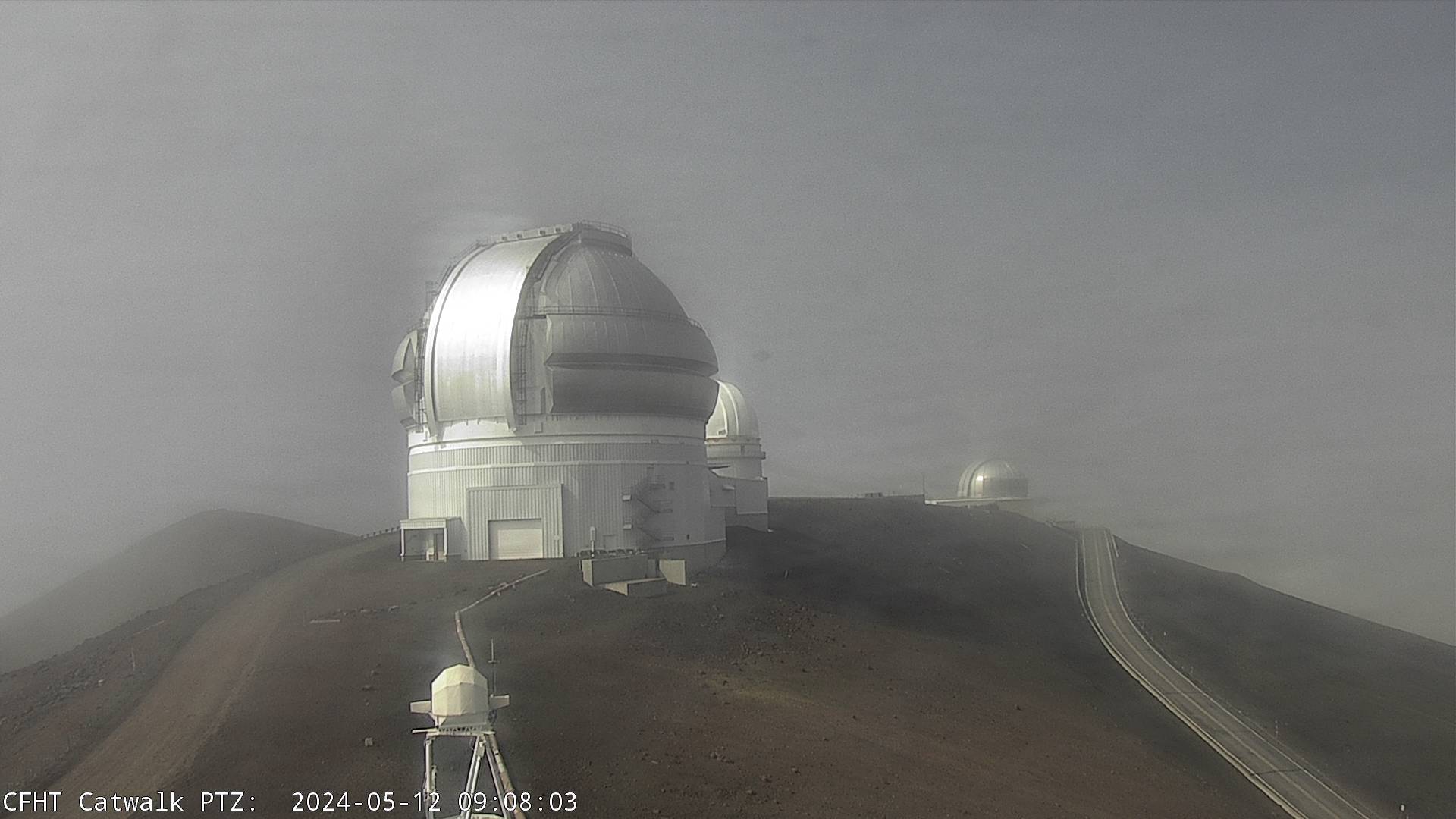
Hawaii’s Mountains – Here’s a link to the live webcam on the summit of near 14,000 foot Mauna Kea on the Big Island of Hawaii. The tallest peak on the island of Maui is the Haleakala Crater, which is near 10,000 feet in elevation. These two webcams are available during the daylight hours here in the islands…and when there’s a big moon rising just after sunset for an hour or two! Plus, during the nights and early mornings you will be able to see stars, and the sunrise too…depending upon cloud conditions.
Tropical Cyclone activity in the eastern and central Pacific – Here’s the latest information coming out of the National Hurricane Center, covering the eastern north Pacific. You can find the latest tropical cyclone information for the central north Pacific (where Hawaii is located) by clicking on this link to the Central Pacific Hurricane Center. Here’s a tracking map covering both the eastern and central Pacific Ocean.
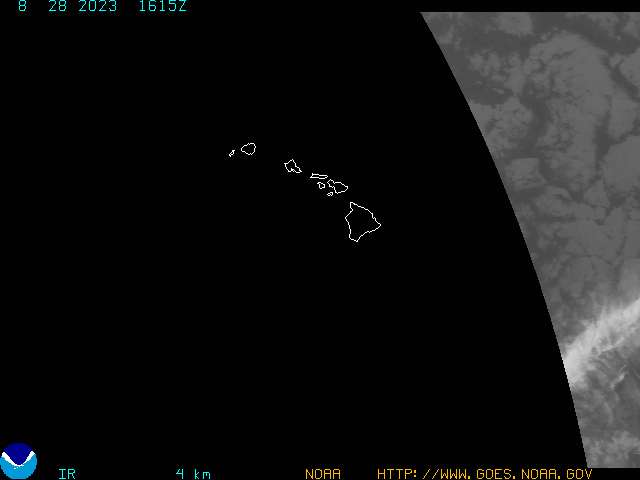
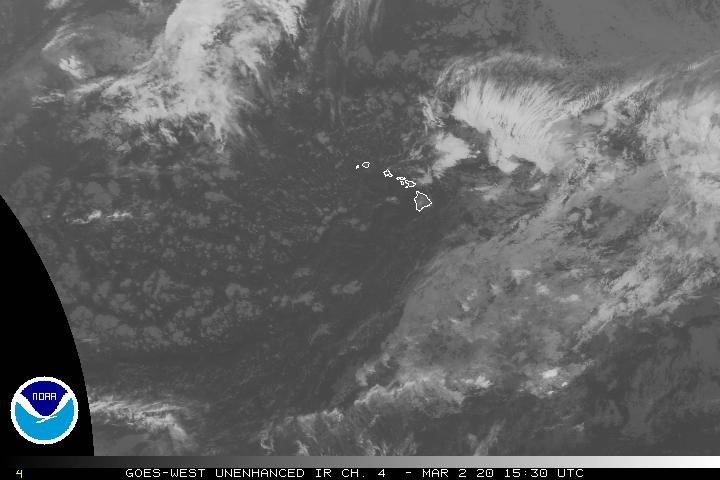
Satellite Images – To view the cloud conditions we have here in Hawaii, please use the following satellite links, starting off with the Infrared Satellite Image of the islands to see all the clouds around the state during the day and night. This next image is one that gives close images of the islands only during the daytime hours, and is referred to as a Close-up visible image. This next image shows a larger view of the Pacific…giving perspective to the wider ranging cloud patterns in the Pacific Ocean…out from the islands. To help you keep track of where any showers may be around the islands, here’s the latest animated radar image.
Aloha Paragraphs
 Waipio coast on the Big Island
Friday started off in a fairly routine manner, with moderately strong trade winds blowing, along with some of the usual windward biased showers falling here and there. The Big Island of Hawaii began to see the influence from tropical depression Cosme, when showers moved into the east side of that southern island. The trade winds will be increasing rather significantly overnight into Saturday, as Cosme moves by to our south. It would be wise for all concerns in the Hawaiian Islands to remain aware of this tropical system, and be ready to act quickly in the event of flooding rainfall in their area, and also to respond to the strong and gusty trade winds that will be blowing locally.
Tropical cyclone Cosme remains at the tropical depression category Friday evening. This tropical system started out this past weekend as tropical depression 06E, or the sixth tropical cyclone of the 2007 hurricane season. It then strengthened into a tropical storm, then briefly a hurricane, before being downgraded back into a tropical storm…and now all the way down to a depression. The Central Pacific Hurricane Center in Honolulu is forecasting this storm to pass to the south of the Big Island Friday night, and south of the rest of the state through Saturday. Here’s a tracking map…so you can follow the progress of Cosme.
It will be close enough to bring the northern fringe of its shower bearing moisture field up over the Big Island, with potentially heavy rain falling in places there. There’s a chance that the islands of Maui County could see some of this moisture plume arrive as well. It’s still not clear how much, if any, of this rainfall will make it to Oahu and Kauai. Here’s an animated satellite image showing Cosme to the SE of Hawaii. Additionally, we will start to see an increase in surf size along the east and SE facing shores, especially on the Big Island, as the swells generated by this tropical system arrive. A high surf advisory is now in effect for the east facing shores of all the islands.
The latest forecast coming out of the Central Pacific Hurricane Center in Honolulu, shows the system moving by safely to the south of the Big Island. If it remains on this track, it will be close enough however to bring its associated tropical rainfall to at least the southern part of the Aloha state. This began to happen first on the Big Island, with some chance that a few heavy showers will move up over Maui’s windward sides with time as well. It’s not certain yet, but there is a slight chance that the other islands may see some of these showers Saturday. Residents on the Big Island should be aware that a flash flood watch is in effect, indicating that flooding rainfall is likely…but not yet occurring.
In terms of wind speeds…this low pressure vortex (Cosme), will enhance the strength of our local trade winds. We now see small craft wind advisories over all the coastal waters, with a chance that gale warnings may be needed in the major channels in the southern part of the state. A wind advisory is still in effect over the summits of Maui and the Big Island…where especially strong winds are expected. The winds could get strong enough in those wind prone areas in other areas around the state, to be a potential problem, becoming quite blustery in places.
In sum: getting windier and locally wetter into Saturday…especially on the Big Island. We can use this satellite image to keep track of the clouds associated with Cosme. Weather conditions will improve after the passage of this tropical system, with fairly routine trade wind conditions starting Sunday into next week. It would be wise to keep an eye on this tropical system as it moves in a more or less westerly direction to our south. ~~~ I’ll be back early Saturday morning with your next weather narrative. Aloha for now…Glenn.
Posted by Glenn
1 Comment
July 19-20 2007
Air Temperatures – The following maximum temperatures were recorded across the state of Hawaii Thursday:
Lihue, Kauai – 85F
Honolulu, Oahu – 89
Kaneohe, Oahu – 85
Kahului, Maui – 89
Hilo, Hawaii – 86
Kailua-Kona, Hawaii – 84
Temperatures early Friday morning ranged between these warmest and coolest spots near sea level at the 4 a.m. hour:
Honolulu, Oahu – 78F
Hilo, Hawaii – 70
Precipitation Totals – The following numbers represent the largest precipitation totals (inches) during the last 24 hours on each of the major islands, as of Friday morning:
1.89 MOUNT WAIALEALE, KAUAI
1.18 OAHU FOREST NWR, OAHU
0.10 MOLOKAI
0.06 LANAI
0.00 KAHOOLAWE
0.71 PUU KUKUI, MAUI
0.15 HONAUNAU, BIG ISLAND
Weather Chart – Here’s the latest (automatically updated) weather map…showing a moderately strong 1032 millibar high pressure system located to the north Hawaii Thursday. The trade winds will remain light to moderately strong over Hawaii’s marine environment…although locally stronger and gusty in those usual windiest locations through most of Friday. As tropical depression Cosme moves by to the south of the Hawaiian Islands, local winds will become stronger and gusty Friday night into Saturday. Here’s a Weather Map Symbol page for clarification about what all those weather symbols mean on the map.
Hawaii’s Mountains – Here’s a link to the live webcam on the summit of near 14,000 foot Mauna Kea on the Big Island of Hawaii. The tallest peak on the island of Maui is the Haleakala Crater, which is near 10,000 feet in elevation. These two webcams are available during the daylight hours here in the islands…and when there’s a big moon rising just after sunset for an hour or two! Plus, during the nights and early mornings you will be able to see stars, and the sunrise too…depending upon cloud conditions.
Tropical Cyclone activity in the eastern and central Pacific – Here’s the latest information coming out of the National Hurricane Center, covering the eastern north Pacific. You can find the latest tropical cyclone information for the central north Pacific (where Hawaii is located) by clicking on this link to the Central Pacific Hurricane Center. Here’s a tracking map covering both the eastern and central Pacific Ocean.
Satellite Images – To view the cloud conditions we have here in Hawaii, please use the following satellite links, starting off with the Infrared Satellite Image of the islands to see all the clouds around the state during the day and night. This next image is one that gives close images of the islands only during the daytime hours, and is referred to as a Close-up visible image. This next image shows a larger view of the Pacific…giving perspective to the wider ranging cloud patterns in the Pacific Ocean…out from the islands. To help you keep track of where any showers may be around the islands, here’s the latest animated radar image.
Aloha Paragraphs
 A view of the Big Island…where tropical depression Cosme will be passing by to the south, bringing increasing rain and winds
There will be a few showers along the windward sides in some places into Friday. These unusual out of season bands of showers, will bring a little more moisture into the state, although again, most of the associated precipitation will fall on the windward coasts and slopes. The Big Island of Hawaii will begin to see some influence from tropical system Cosme Friday, at which point more significant rain will move into the Aloha state. The trade winds are expected to remain in the more or less moderately strong realms, and then increase rather significantly later Friday into Saturday, as Cosme moves by to our south.
Tropical cyclone Cosme, rating a tropical depression designation, is moving through the central Pacific. This tropical system started out this past weekend as tropical depression 06E, or the sixth tropical cyclone of the 2007 hurricane season. It then strengthened into a tropical storm, then briefly a hurricane, before being downgraded back into a tropical storm…and now all the way down to a depression. The Central Pacific Hurricane Center in Honolulu is forecasting this storm to pass to the south of the Big Island Friday night, and south of the rest of the state through Saturday. Here’s a tracking map…so you can follow the progress of Cosme. It will be close enough to bring the northern fringe of its shower bearing moisture field up over the Big Island, with potentially heavy rain falling in places there. There’s a decent chance that Maui, Molokai and perhaps even Oahu and Kauai could see this moisture plume arrive as well. At this point, the best guess is that the windward sides of the Big Island would see as much as 5+ inches of rain, Maui 2-3 inches…and 1-2 inches on Oahu and Kauai. Here’s an animated satellite image showing Cosme to the ESE of Hawaii. Additionally, we should start to see an increase in surf size along the east facing shores, especially on the Big Island, as the swells generated by this tropical system arrive.
It’s Thursday evening here in Hawaii as I begin writing this last paragraph of today’s tropical weather narrative. Everyone in the Hawaiian Islands should be paying close attention to the approach of this tropical system, which will be moving close to the Hawaiian Islands soon. The latest forecasts coming out of the Central Pacific Hurricane Center in Honolulu, shows the system moving by just south of the Big Island. If it remains on this track, it will be close enough to bring its associated showers to the 50th state. This would begin to happen first on the Big Island Friday, and then for the rest of the islands into Saturday. Residents on the Big Island, and perhaps other parts of the state, should be aware that localized flooding is certainly a possibility. ~~~ In terms of wind speeds…this low pressure vortex (Cosme), will enhance the strength of our local trade winds. We will likely need small craft wind advisories over all the coastal waters, and perhaps even wind advisories over the islands themselves, as the low pressure center moves by, moving in a more or less west to WNW direction. The winds could get strong enough in those wind prone areas, to be a problem, becoming quite blustery in places. In sum, getting windier and wetter later Friday into Saturday…especially on the Big Island. Let’s use this satellite image to keep track of the clouds associated with Cosme. Weather conditions will improve after the passage of this tropical system, with fairly routine trade wind conditions prevailing into next week. ~~~ I’ll be back early Friday morning with your next weather narrative, including the latest news about approaching tropical depression Cosme…the first tropical system to move near the islands during this 2007 hurricane season. Aloha for now…Glenn.
Posted by Glenn
No Comments
July 18-19 2007
Air Temperatures – The following maximum temperatures were recorded across the state of Hawaii Wednesday:
Lihue, Kauai – 84F
Honolulu, Oahu – 88
Kaneohe, Oahu – 83
Kahului, Maui – 87
Hilo, Hawaii – 85
Kailua-Kona, Hawaii – 85
Temperatures early Thursday morning ranged between these warmest and coolest spots near sea level at the 4 a.m. hour:
Kailua-kona – 78F
Hilo, Hawaii – 71
Precipitation Totals – The following numbers represent the largest precipitation totals (inches) during the last 24 hours on each of the major islands, as of Thursday morning:
1.80 MOUNT WAIALEALE, KAUAI
0.46 MANOA LYON ARBORETUM, OAHU
0.08 MOLOKAI
0.00 LANAI
0.00 KAHOOLAWE
0.07 WEST WAILUAIKI, MAUI
0.21 HONAUNAU, BIG ISLAND
Weather Chart – Here’s the latest (automatically updated) weather map…showing a moderately strong 1032 millibar high pressure system located to the north Hawaii Thursday. The trade winds will remain light to moderately strong over Hawaii’s marine environment…although locally stronger and gusty in those usual windiest locations through most of Friday. As tropical depression Cosme moves by to the south of the Hawaiian Islands, local winds will become stronger and gusty Friday night into Saturday. Here’s a Weather Map Symbol page for clarification about what all those weather symbols mean on the map.
Hawaii’s Mountains – Here’s a link to the live webcam on the summit of near 14,000 foot Mauna Kea on the Big Island of Hawaii. The tallest peak on the island of Maui is the Haleakala Crater, which is near 10,000 feet in elevation. These two webcams are available during the daylight hours here in the islands…and when there’s a big moon rising just after sunset for an hour or two! Plus, during the nights and early mornings you will be able to see stars, and the sunrise too…depending upon cloud conditions.
Tropical Cyclone activity in the eastern and central Pacific – Here’s the latest information coming out of the National Hurricane Center, covering the eastern north Pacific. You can find the latest tropical cyclone information for the central north Pacific (where Hawaii is located) by clicking on this link to the Central Pacific Hurricane Center. Here’s a tracking map covering both the eastern and central Pacific Ocean.
Satellite Images – To view the cloud conditions we have here in Hawaii, please use the following satellite links, starting off with the Infrared Satellite Image of the islands to see all the clouds around the state during the day and night. This next image is one that gives close images of the islands only during the daytime hours, and is referred to as a Close-up visible image. This next image shows a larger view of the Pacific…giving perspective to the wider ranging cloud patterns in the Pacific Ocean…out from the islands. To help you keep track of where any showers may be around the islands, here’s the latest animated radar image.
Aloha Paragraphs
 The Makena area of South Maui
A new area of clouds will increase showers falling along the windward sides later Wednesday night into Thursday. These unusual out of season bands of clouds, seen on satellite imagery to the north of the islands, will bring more welcome moisture into the state, although again, most of the associated precipitation will fall on the windward coasts and slopes. Local weather conditions on Friday will be fine, although the Big Island will begin to see some influence from tropical system Cosme. The trade winds are expected to remain in the more or less moderately strong realms for the next few days, and then increase in speed later Friday into Saturday, as Cosme moves by to our south.
Tropical cyclone Cosme, now down graded to a tropical depression, has moved from the eastern Pacific into our central Pacific now. This storm started out this past weekend as tropical depression 06E, or the sixth tropical cyclone of the 2007 hurricane season. It then strengthened into a tropical storm, then briefly a hurricane, before being downgraded back into a tropical storm…and now all the way down to a depression. The Central Pacific Hurricane Center in Honolulu is forecasting this storm to pass safely to the south of the Big Island. Here is a tracking map, so you can follow the progress of Cosme. It’s looking likely that whatever is left of Cosme will be close enough to bring the northern fringe of its shower bearing moisture field up over the Big Island, Maui, Molokai and perhaps even Oahu and Kauai as well. The windward sides of the Big Island may see as much as 3-5 inches, Maui 1-3 inches…and 1-2 inches on Oahu and Kauai. The forecast at this point is to have Cosme bring some weather changes to Hawaii starting Friday, continuing into Saturday. Additionally, we should start to see some increase in surf size along the east facing showers, again especially on the Big Island, as the swells generated by this tropical system arrive here in Hawaii.
It’s Wednesday here in Hawaii as I begin writing this last paragraph of today’s tropical weather narrative. The big weather news here in the Hawaiian Islands, as you might suspect, is the tropical depression out to the ESE of our fragile islands. It looks to me like this system will certainly move south of the Big Island, and more than likely close enough to bring its associated showers to the 50th state as well. This would begin to happen first on the Big Island Friday, and then for the rest of the islands into Saturday. The wild card is how strong the winds will be. The system itself, which will remain a tropical depression as it moves by to our south…by more than a hundred miles, won’t have strong winds left in it. Actually, what will happen is that this low pressure vortex, will enhance the strength of our local trade winds. We will likely need small craft wind advisories this weekend as the low pressure center spins by, moving in a more or less westerly direction. The winds won’t likely be too much of a problem, but will certainly become at least somewhat blustery in places. In sum, getting windier and wetter Friday into Saturday. Let’s use this satellite image to keep track of the clouds associated with tropical depression Cosme. Weather conditions will improve markedly after the passage of this tropical system, with fairly routine trade wind conditions prevailing into next week. ~~~ I’ll be back early Thursday morning with your next weather narrative. Aloha for now…Glenn.
Posted by Glenn
[3] Comments
July 17-18 2007
Air Temperatures – The following maximum temperatures were recorded across the state of Hawaii Tuesday:
Lihue, Kauai – 85F
Honolulu, Oahu – 88
Kaneohe, Oahu – 85
Kahului, Maui – 89
Hilo, Hawaii – 87
Kailua-Kona, Hawaii – 84
Temperatures early Wednesday morning ranged between these warmest and coolest spots near sea level at the 4 a.m. hour:
Kaneohe, Oahu – 77F
Hilo, Hawaii – 71
Precipitation Totals – The following numbers represent the largest precipitation totals (inches) during the last 24 hours on each of the major islands, as of Wednesday morning:
1.50 MOUNT WAIALEALE, KAUAI
0.76 POAMOHO 2, OAHU
0.03 MOLOKAI
0.09 LANAI
0.00 KAHOOLAWE
0.32 PUU KUKUI, MAUI
1.16 KEAHOLE AIRPORT, BIG ISLAND
Weather Chart – Here’s the latest (automatically updated) weather map…showing high pressure systems located to the north and ENE of Hawaii Wednesday. The trade winds will remain light to moderately strong over Hawaii’s marine environment…although locally stronger and gusty in those usual windiest locations through Thursday. Here’s a Weather Map Symbol page for clarification about what all those weather symbols mean on the map.
Hawaii’s Mountains – Here’s a link to the live webcam on the summit of near 14,000 foot Mauna Kea on the Big Island of Hawaii. The tallest peak on the island of Maui is the Haleakala Crater, which is near 10,000 feet in elevation. These two webcams are available during the daylight hours here in the islands…and when there’s a big moon rising just after sunset for an hour or two! Plus, during the nights and early mornings you will be able to see stars, and the sunrise too…depending upon cloud conditions.
Tropical Cyclone activity in the eastern and central Pacific – Here’s the latest information coming out of the National Hurricane Center, covering the eastern north Pacific. You can find the latest tropical cyclone information for the central north Pacific (where Hawaii is located) by clicking on this link to the Central Pacific Hurricane Center. Here’s a tracking map covering both the eastern and central Pacific Ocean.
Satellite Images – To view the cloud conditions we have here in Hawaii, please use the following satellite links, starting off with the Infrared Satellite Image of the islands to see all the clouds around the state during the day and night. This next image is one that gives close images of the islands only during the daytime hours, and is referred to as a Close-up visible image. This next image shows a larger view of the Pacific…giving perspective to the wider ranging cloud patterns in the Pacific Ocean…out from the islands. To help you keep track of where any showers may be around the islands, here’s the latest animated radar image.
Aloha Paragraphs
 Jumping for Joy
Leftover moisture from this past weekend’s old frontal cloud band, kept Hawaiian skies cloudier and more showery than normal Monday, although conditions will dry out as we head into Wednesday. Accumulations were generally light, although the exception was the upcountry leeward slopes on Maui and the Big Island. The Kona slopes on the Big Island were especially well favored…where thunderstorms popped-up Monday afternoon. These leftover showers will continue to bring off and on showers Tuesday, although thereafter, at least through Wednesday, things will return to more or less normal. A second old front may bring another possible batch of showers into the state Thursday, although most of the associated precipitation will remain fixed on the windward coasts and slopes then…and especially over the Kauai end of the state. The trade winds are expected to remain in the more or less moderately strong realms through the work week, and then may increase in speed by the weekend, depending upon what happens with Cosme.
The tropical cyclone, named Cosme, currently in the eastern Pacific, briefly attained hurricane status Monday…although was quickly downgraded back into a tropical storm. This storm started out this past weekend as tropical depression 06E, or the sixth tropical cyclone of the 2007 hurricane season. All the available computer forecast models show it coming near our Hawaiian Islands, although it is still too early to know exactly what influence it may have just yet. At any rate, here is a tracking map, so you can follow its progress in our direction. The best hope is that it would come close enough to bring its much needed rainfall, and by the time it got close enough to do that…the strong and gusty winds would be gone. The forecast at this point is to have Cosme bring some weather changes to Hawaii starting late Friday, continuing into Saturday…most notably to the Big Island of Hawaii.
It’s Tuesday here in Hawaii as I begin writing this last paragraph of today’s weather narrative. The latest guidance shows tropical storm Cosme moving steadily towards the Hawaiian Islands. As noted above, it is still too early to say exactly what this storm will do in terms of wind. There’s more certainty that this tropical system will bring rainy weather to at least some parts of the state. The current forecast track shows Cosme moving by just south of the Big Island, with sustained winds there, which are directly associated with what is likely to be a tropical depression…of around 35 mph, with stronger gusts near 45 mph. The trade winds could become locally strong and gusty through the rest of the state, as this tropical vortex passes by to the south. The best guess at this point has Cosme moving close to the state, bringing an increase in showers, and locally strong and gusty winds. This outlook could be altered over the course of the next several days, as subtle changes in the atmosphere occur. Surf along the east facing shores may begin rising some as early as Friday, as the storm’s swell arrives. Everyone in Hawaii, and all mariners especially, should be keeping an eye on this approaching storm. and paying close attention to its movments. ~~~ I’ll be back early Wednesday morning with your next weather narrative. Aloha for now…Glenn.
Posted by Glenn
[2] Comments
July 16-17 2007
Air Temperatures – The following maximum temperatures were recorded across the state of Hawaii Monday:
Lihue, Kauai – 84F
Honolulu, Oahu – 88
Kaneohe, Oahu – 83
Kahului, Maui – 87
Hilo, Hawaii – 85
Kailua-Kona, Hawaii – 79
Temperatures early Tuesday morning ranged between these warmest and coolest spots near sea level at the 4 a.m. hour:
Kaneohe, Oahu – 77F
Hilo, Hawaii – 71
Precipitation Totals – The following numbers represent the largest precipitation totals (inches) during the last 24 hours on each of the major islands, as of Tuesday morning:
1.79 MOUNT WAIALEALE, KAUAI
0.70 MANOA LYON ARBORETUM, OAHU
0.08 MOLOKAI
0.45 LANAI
0.00 KAHOOLAWE
0.47 WEST WAILUAIKI, MAUI
2.08 KEALAKEKUA, BIG ISLAND
Weather Chart – Here’s the latest (automatically updated) weather map…showing high pressure systems located to the north and NE of Hawaii Tuesday. The trade winds will remain light to moderately strong over Hawaii’s marine environment…although locally stronger and gusty in those usual windiest locations through Wednesday. Here’s a Weather Map Symbol page for clarification about what all those weather symbols mean on the map.
Hawaii’s Mountains – Here’s a link to the live webcam on the summit of near 14,000 foot Mauna Kea on the Big Island of Hawaii. The tallest peak on the island of Maui is the Haleakala Crater, which is near 10,000 feet in elevation. These two webcams are available during the daylight hours here in the islands…and when there’s a big moon rising just after sunset for an hour or two! Plus, during the nights and early mornings you will be able to see stars, and the sunrise too…depending upon cloud conditions.
Tropical Cyclone activity in the eastern and central Pacific – Here’s the latest information coming out of the National Hurricane Center, covering the eastern north Pacific. You can find the latest tropical cyclone information for the central north Pacific (where Hawaii is located) by clicking on this link to the Central Pacific Hurricane Center. Here’s a tracking map covering both the eastern and central Pacific Ocean.
Satellite Images – To view the cloud conditions we have here in Hawaii, please use the following satellite links, starting off with the Infrared Satellite Image of the islands to see all the clouds around the state during the day and night. This next image is one that gives close images of the islands only during the daytime hours, and is referred to as a Close-up visible image. This next image shows a larger view of the Pacific…giving perspective to the wider ranging cloud patterns in the Pacific Ocean…out from the islands. To help you keep track of where any showers may be around the islands, here’s the latest animated radar image.
Aloha Paragraphs
 Kona coast on the Big Island
The cloud band that brought showers to many areas of the Aloha state this past weekend, has mostly fallen apart…although some windward areas, especially around the Big Island, will continue to see showers. Accumulations will be generally light, with the leeward sides remaining mostly dry through at least the next several days. The exception is the upcountry leeward slopes, especially in Kona…where rain has continued, with even the threat of thunderstorms Monday afternoon. These leftover showers will continue to bring off and on showers into Tuesday, although thereafter, at least through Wednesday, things will return to more or less normal. The trade winds will play an active part in our Hawaiian Island weather picture through the work week, with a degree of uncertainty developing by the weekend…as a tropical system moves close to the state then.
The latest computer forecast models show that another unusual weather occurrence may unfold, during the second half of the work week. This will entail a possible out of season old cold front arriving around Thursday. Complicating matters further, an upper level low pressure system is forecast to slide overhead during the second half of the work week as well. The combination of the incoming moisture, which could be enhanced by the upper level low…could bring another round of showers into the state, although probably most active on Kauai and Oahu. This would be welcome news, as this past weekends showers weren’t near enough, or widespread enough to break the back of the current drought conditions that presently exists in Hawaii.
As noted in the first paragraph, there’s a good chance that a tropical system may move close to the state this weekend. Before anyone gets too nervous about this, the chances are that the current hurricane Cosme will be downgraded to a tropical storm or even a tropical depression by the time it gets near our islands…or passes to the south. This storm started out recently in the eastern Pacific as tropical depression 06E, or the sixth tropical cyclone of the 2007 hurricane season. The models show it coming very near our Hawaiian Islands, although it is still too early to know what influence it may or may not have just yet. At any rate, here is a tracking map, so you can follow its progress in our general direction. The best hope is that it would come close enough to bring some much needed rainfall, and by the time it got close enough to do that, that all the strong and gusty winds would be gone.
It’s Monday here in Hawaii as I begin writing this last paragraph of today’s weather narrative. If you had a chance to read down through the paragraphs above, you will know by now that it is an unusual period in terms of weather now. First we had an old cold front, or the tail-end of one, bring out of season showers to the islands this past weekend, which are still falling around the Big Island. Then we find a chance of yet another out of season old frontal cloud band arriving Thursday, bringing the chance of more showers then into Friday. As if all that wasn’t eough, what is currently hurricane Cosme, could bring some chance of increased showers and wind close to the Hawaiian islands, as a tropical storm this coming weekend. Despite the fact that Cosme has increased in strength, to a hurricane, the models show it weakening again soon, and perhaps all the way down to much weaker tropical storm or tropical depression before it gets near our area. At any rate, again, we are hoping for some bit of its moisture field to move over the state of Hawaii, which would bring much needed precipitation then. I will keep you closely updated on this prospect as this weather situation unfolds. Please note the storm tracking map in the paragraph above. ~~~ I’ll be back early Tuesday morning with your next weather narrative. I hope you have a great Monday night wherever you happen to be spending it. Aloha for now…Glenn.
Posted by Glenn
[5] Comments
July 15-16 2007
Air Temperatures – The following maximum temperatures were recorded across the state of Hawaii Sunday:
Lihue, Kauai – 85F
Honolulu, Oahu – 86
Kaneohe, Oahu – 80
Kahului, Maui – 86
Hilo, Hawaii – 85
Kailua-Kona, Hawaii – 84
Temperatures early Monday morning ranged between these warmest and coolest spots near sea level at the 4 a.m. hour:
Honolulu, Oahu – 77F
Hilo, Hawaii – 70
Precipitation Totals – The following numbers represent the largest precipitation totals (inches) during the last 24 hours on each of the major islands, as of Monday morning:
0.48 MOUNT WAIALEALE, KAUAI
1.31 OAHU FOREST NWR, OAHU
0.08 MOLOKAI
0.11 LANAI
0.15 KAHOOLAWE
2.06 WEST WAILUAIKI, MAUI
1.30 KAHUKU RANCH, BIG ISLAND
Weather Chart – Here’s the latest (automatically updated) weather map…showing high pressure systems located to the NNW and NE of Hawaii Monday morning. The trade winds will remain moderately strong over Hawaii’s marine environment…although locally stronger and gusty in those usual windiest locations today and Tuesday. Here’s a Weather Map Symbol page for clarification about what all those weather symbols mean on the map.
Hawaii’s Mountains – Here’s a link to the live webcam on the summit of near 14,000 foot Mauna Kea on the Big Island of Hawaii. The tallest peak on the island of Maui is the Haleakala Crater, which is near 10,000 feet in elevation. These two webcams are available during the daylight hours here in the islands…and when there’s a big moon rising just after sunset for an hour or two! Plus, during the nights and early mornings you will be able to see stars, and the sunrise too…depending upon cloud conditions.
Tropical Cyclone activity in the eastern and central Pacific – Here’s the latest information coming out of the National Hurricane Center, covering the eastern north Pacific. You can find the latest tropical cyclone information for the central north Pacific (where Hawaii is located) by clicking on this link to the Central Pacific Hurricane Center. Here’s a tracking map covering both the eastern and central Pacific Ocean.
Satellite Images – To view the cloud conditions we have here in Hawaii, please use the following satellite links, starting off with the Infrared Satellite Image of the islands to see all the clouds around the state during the day and night. This next image is one that gives close images of the islands only during the daytime hours, and is referred to as a Close-up visible image. This next image shows a larger view of the Pacific…giving perspective to the wider ranging cloud patterns in the Pacific Ocean…out from the islands. To help you keep track of where any showers may be around the islands, here’s the latest animated radar image.
Aloha Paragraphs
 A near empty beach on Kauai
The Hawaiian Islands will see occasional showers through the next several of days…especially around Maui and the Big Island. The latest satellite images show lots of clouds around the state, with some of them shower producers…although conditions have begun dry out from Kauai down through Molokai Sunday afternoon. This satellite image, known as a visible image, shows this cloudiness, giving the wide view…although it will only be available during the daytime hours. This IR image, which shows up both at night and during the day, is most useful at night. This higher resolution visible picture will show the clouds best…although again only viewable during the daylight hours.
An out of season cloud band, which can be thought of as the tail-end of an old cold front, coming down from the north and NE…briefly took away or summer weather. The vast majority of this incoming cloudiness, with its occasional mostly light showers, are focused on the windward sides of the islands on Maui and the Big Island. All of the islands were previously being graced with this very welcome shower event, although as usual, the leeward sides came up with the short end of the stick in terms of overall rainfall.
It’s Sunday here in Hawaii, as I begin to write this last paragraph of today’s narrative. The interesting thing about this showery weather event, is that it just "isn’t suppose to happen" during our summer months. Sure, we sometimes get some tropical moisture being pulled up from the deeper tropics during the summer months, but rarely coming in from the mid-latitudes to our north and NE! Another interesting thing is what the computer forecast models are suggesting will happen this next weekend, which is for a retired tropical depression, called 6E, to move near the islands…bringing the chance of another round of showers then. We’ll definitely have to remain in the "wait and see" mode before getting too serious about this long range forecast. For the moment, we are very happy to see the clouds and localized showers, some of which will be falling in areas that have seen a prolonged dry spell…leading to drought conditions so far this summer. ~~~ As I mentioned yesterday, this weekend is my birthday, I’m taking both days, rather than just one, just to stretch out the fun…which I’ve been having a lot of! Thanks for all your birthday wishes, they’ve been fun to read. I’ll be back early Monday morning with your next weather narrative from the tropics. Aloha for now…Glenn.
Posted by Glenn
No Comments
July 12-13 2007
Air Temperatures – The following maximum temperatures were recorded across the state of Hawaii Thursday:
Lihue, Kauai – 85F
Honolulu, Oahu – 87
Kaneohe, Oahu – 84
Kahului, Maui – 88
Hilo, Hawaii – 85
Kailua-Kona, Hawaii – 87
Temperatures early Friday morning ranged between these warmest and coolest spots near sea level at the 4 a.m. hour:
Lihue, Kauai – 76F
Molokai airport – 73
Precipitation Totals – The following numbers represent the largest precipitation totals (inches) during the last 24 hours on each of the major islands, as of Friday morning:
0.11 MOUNT WAIALEALE, KAUAI
0.35 OAHU FOREST NWR, OAHU
0.00 MOLOKAI
0.00 LANAI
0.00 KAHOOLAWE
0.37 OHEO GULCH, MAUI
0.40 KEALAKEKUA, BIG ISLAND
Weather Chart – Here’s the latest (automatically updated) weather map…showing high pressure systems located to the NNW and NE of Hawaii Friday. The trade winds will remain moderately strong over Hawaii’s marine environment…although locally stronger and gusty in those usual windiest locations Friday…becoming lighter Saturday and Sunday. Here’s a Weather Map Symbol page for clarification about what all those weather symbols mean on the map.
Hawaii’s Mountains – Here’s a link to the live webcam on the summit of near 14,000 foot Mauna Kea on the Big Island of Hawaii. The tallest peak on the island of Maui is the Haleakala Crater, which is near 10,000 feet in elevation. These two webcams are available during the daylight hours here in the islands…and when there’s a big moon rising just after sunset for an hour or two! Plus, during the nights and early mornings you will be able to see stars, and the sunrise too…depending upon cloud conditions.
Tropical Cyclone activity in the eastern and central Pacific – Here’s the latest information coming out of the National Hurricane Center, covering the eastern north Pacific. You can find the latest tropical cyclone information for the central north Pacific (where Hawaii is located) by clicking on this link to the Central Pacific Hurricane Center. Here’s a tracking map covering both the eastern and central Pacific Ocean.
Satellite Images – To view the cloud conditions we have here in Hawaii, please use the following satellite links, starting off with the Infrared Satellite Image of the islands to see all the clouds around the state during the day and night. This next image is one that gives close images of the islands only during the daytime hours, and is referred to as a Close-up visible image. This next image shows a larger view of the Pacific…giving perspective to the wider ranging cloud patterns in the Pacific Ocean…out from the islands. To help you keep track of where any showers may be around the islands, here’s the latest animated radar image.
Aloha Paragraphs
 The lovely Kihei, Maui coastal strip
No end in sight for the moderately strong trade winds blowing across the Hawaiian Islands. The latest weather map shows high pressure centers located to the north and NW of the 50th state, which continues to be the source of our locally breezy winds Thursday. The trades will remain at more or less moderate strengths through the rest of the week…although locally strong and gusty in those windiest areas. The rather long lasting small craft wind advisory around Maui and the Big Island has been cancelled. The trade winds may pick up a notch this weekend into early next week, as a shearline moves close to the northern islands.
There will be a few showers falling, although almost exclusively along the windward coasts and slopes. Otherwise, only light precipitation will fall, with nothing more than than expected until we get into the weekend. The leeward sides of the islands will remain dry during the foreseeable future. High clouds continue to sweep across island skies, providing great sunset and sunrise colors! These cirrus clouds are moving westward, in association with an upper level low pressure system, and will likely depart our area later today, and certainly by Friday.
It’s Thursday here in Hawaii, as I begin writing this last paragraph of today’s narrative. The next chance of an increase in showers will approach from the north late Friday into the weekend. The computer models continue to suggest that the tail-end of a cold front, often called a shearline, will be arriving this weekend. If it makes it to Hawaii, and it would be unusual during the summer month of July…it could bring an increase in showers. The islands of Kauai and Oahu would have the best chance of seeing moisture arriving, with the models even showing it making it down as far as the Big Island by Saturday night. This is good news, very good news…let’s just hope that it manifests as described by the models. Nonetheless, we will accept any showers with welcome arms, although it would be most welcome in the southern part of the state, where the driest conditions exist. ~~~ The last couple of days I’ve been exclaiming how beautiful the shrinking crescent moon has been, wondering just how thin it could get. We’ll, I believe that Thursday morning’s sliver is absolutely the thinnest possible. It’s rising out of the eastern horizon as I look out of my weather tower window now, shining through a veil of pink cirrus clouds. I can’t imagine it will be visible at all by Friday, which means it will have attained its new moon phase. ~~~ I hope you have a great Thursday night wherever you happen to be spending it, either here in the islands, or elsewhere! I’ll be back early Friday morning with your next weather narrative. Aloha for now…Glenn.
Posted by Glenn
No Comments
July 11-12 2007
Air Temperatures – The following maximum temperatures were recorded across the state of Hawaii Wednesday:
Lihue, Kauai – 86F
Honolulu, Oahu – 87
Kaneohe, Oahu – 83
Kahului, Maui – 88
Hilo, Hawaii – 83
Kailua-Kona, Hawaii – 85
Temperatures early Thursday morning ranged between these warmest and coolest spots near sea level at the 4 a.m. hour:
Kailua-kona – 79F
Hilo, Hawaii – 73
Precipitation Totals – The following numbers represent the largest precipitation totals (inches) during the last 24 hours on each of the major islands, as of Thursday morning:
0.70 MOUNT WAIALEALE, KAUAI
0.43 OAHU FOREST NWR, OAHU
0.00 MOLOKAI
0.00 LANAI
0.00 KAHOOLAWE
0.14 WEST WAILUAIKI, MAUI
0.21 WAIAKEA UKA, BIG ISLAND
Weather Chart – Here’s the latest (automatically updated) weather map…showing high pressure systems located to the north and NW of Hawaii Thursday. The trade winds will remain moderately strong over Hawaii’s marine environment…although locally stronger and gusty in those usual windiest locations through Friday. Here’s a Weather Map Symbol page for clarification about what all those weather symbols mean on the map.
Hawaii’s Mountains – Here’s a link to the live webcam on the summit of near 14,000 foot Mauna Kea on the Big Island of Hawaii. The tallest peak on the island of Maui is the Haleakala Crater, which is near 10,000 feet in elevation. These two webcams are available during the daylight hours here in the islands…and when there’s a big moon rising just after sunset for an hour or two! Plus, during the nights and early mornings you will be able to see stars, and the sunrise too…depending upon cloud conditions.
Tropical Cyclone activity in the eastern and central Pacific – Here’s the latest information coming out of the National Hurricane Center, covering the eastern north Pacific. You can find the latest tropical cyclone information for the central north Pacific (where Hawaii is located) by clicking on this link to the Central Pacific Hurricane Center.
Satellite Images – To view the cloud conditions we have here in Hawaii, please use the following satellite links, starting off with the Infrared Satellite Image of the islands to see all the clouds around the state during the day and night. This next image is one that gives close images of the islands only during the daytime hours, and is referred to as a Close-up visible image. This next image shows a larger view of the Pacific…giving perspective to the wider ranging cloud patterns in the Pacific Ocean…out from the islands. To help you keep track of where any showers may be around the islands, here’s the latest animated radar image.
Aloha Paragraphs
 Hidden Hawaii coast from a kayak
The trade winds will continue to grace the Hawaiian Islands through Thursday. The latest weather map shows a 1025 millibar high pressure center located to the NE of the Aloha state, which continues to be the source of our locally breezy winds Wednesday. The trades will remain at more or less moderate strengths through the rest of the week…although locally strong and gusty in those windiest areas around Maui and the Big Island.
Pretty normal shower activity along the windward sides, with chance of an increase around Kauai and Oahu this weekend. The leeward sides of the islands, where most of the resorts are located, will remain dry during the foreseeable future. The chance for some increase in showers over the Big Island has diminished, unfortunately. It appears that through the rest of this work week, nothing unusual in terms of precipitation is expected. High clouds will sweep across island skies, providing great sunset and sunrise colors!
It’s Wednesday here in Hawaii, as I begin writing this last paragraph of today’s narrative. The Big Island’s windward side, and the Kau District as well, were expecting an area of showers to brush that southernmost island as it moved westward. Although, as this satellite image shows, this slug of moisture is staying too far south…although there is lots of high cirrus clouds sweeping into the eastern part of the state Wednesday afternoon. This is disappointing, as that island, and Maui too, are both experiencing a pretty heavy duty drought. This sam~~~ The next chance of an increase in showers will have a difficult time reaching the islands as well….this time approaching from the north. The computer models continue to insist that the old tail-end of a cold front, often called a shearline, will be arriving this weekend. If it makes it to Hawaii, and at this time of year, as it bucks climatology, it would be unusual…it could bring some increase in showers. The islands of Kauai and Oahu would have the best chance of moisture arriving, with a much slimmer chance of it getting any further into the chain than that. Let me be clear, we are anxiously awaiting any rainfall, especially any that would fall over the leeward sides…pushing back the drought conditions. ~~~ As I look out of my weather tower window, the crescent moon is even thinner today than it was yesterday, and by tomorrow will be really getting super thin…as it heads towards its new moon phase. It’s a pretty sight, giving hope for another great day. It’s sometimes difficult to stay positive when looking at the nature of the world news, with so many untoward events happening in so many places. I yearn for those times when the news wasn’t so dire and threatening day after day! At any rate, I do wish you a good Wednesday night, and will be back with your next weather narrative early Thursday morning. Aloha for now…Glenn.
Posted by Glenn
No Comments
July 10-11 2007
Air Temperatures – The following maximum temperatures were recorded across the state of Hawaii Tuesday:
Lihue, Kauai – 84F
Honolulu, Oahu – 89
Kaneohe, Oahu – 86
Kahului, Maui – 88
Hilo, Hawaii – 87
Kailua-Kona, Hawaii – 87
Temperatures early Wednesday morning ranged between these warmest and coolest spots near sea level at the 4 a.m. hour:
Honolulu, Oahu – 78F
Hilo, Hawaii – 73
Precipitation Totals – The following numbers represent the largest precipitation totals (inches) during the last 24 hours on each of the major islands, as of Wednesday morning:
2.00 MOUNT WAIALEALE, KAUAI
0.56 OAHU FOREST NWR, OAHU
0.04 MOLOKAI
0.02 LANAI
0.04 KAHOOLAWE
0.35 WEST WAILUAIKI, MAUI
0.55 KAMUELA, BIG ISLAND
Weather Chart – Here’s the latest (automatically updated) weather map…showing a 1025 millibar high pressure system located to the NE of Hawaii Wednesday…with its elongated ridge of high pressure extending westward to Hawaii’s north, then across the International Dateline…in the western Pacific. The trade winds will remain moderately strong over Hawaii’s marine environment…although locally stronger and gusty in those usual windiest locations through Thursday. Here’s a Weather Map Symbol page for clarification about what all those weather symbols mean on the map.
Hawaii’s Mountains – Here’s a link to the live webcam on the summit of near 14,000 foot Mauna Kea on the Big Island of Hawaii. The tallest peak on the island of Maui is the Haleakala Crater, which is near 10,000 feet in elevation. These two webcams are available during the daylight hours here in the islands…and when there’s a big moon rising just after sunset for an hour or two! Plus, during the nights and early mornings you will be able to see stars, and the sunrise too…depending upon cloud conditions.
Tropical Cyclone activity in the eastern and central Pacific – Here’s the latest information coming out of the National Hurricane Center, covering the eastern north Pacific. You can find the latest tropical cyclone information for the central north Pacific (where Hawaii is located) by clicking on this link to the Central Pacific Hurricane Center.
Satellite Images – To view the cloud conditions we have here in Hawaii, please use the following satellite links, starting off with the Infrared Satellite Image of the islands to see all the clouds around the state during the day and night. This next image is one that gives close images of the islands only during the daytime hours, and is referred to as a Close-up visible image. This next image shows a larger view of the Pacific…giving perspective to the wider ranging cloud patterns in the Pacific Ocean…out from the islands. To help you keep track of where any showers may be around the islands, here’s the latest animated radar image.
Aloha Paragraphs
 Typical tropical scene in Hawaii
High pressure to the north of the islands, with low pressure to the south…will keep trade winds blowing across our latitudes of the north central Pacific Tuesday and Wednesday. The latest weather map shows a 1031 millibar high pressure center located far to the NE of the Aloha state…which is the source of our locally breezy winds Tuesday. The trades will remain at more or less moderate strengths through the rest of the week…although locally strong and gusty. The winds over the summit Maui remain rather strong and gusty now…enough so to keep the wind advisory alive up there.
There may be an increase in showers over some parts of the Big Island, although the rest of the state will see just the usual windward biased showers falling at times. As is often the case during summer, the leeward sides of the islands won’t see any of those windward showers, other than on the Kona slopes of the Big Island. This long lasting dry weather pattern will persist in most areas, with climatology telling us that we have a long, hot, and dry summer to move through before the later autumn showers return. As I’ve been saying for at least the last month and more, everyone needs to be careful about conserving water, and also not starting any wild fires.
It’s Tuesday here in Hawaii, as I begin writing this last paragraph of today’s narrative. The Big Island’s windward side, and perhaps the Kau District as well, may see a slug of moisture bring showers there. Satellite imagery shows an area of incoming moisture, being carried by the trade winds from the east. At the same time, an upper level trough of low pressure, with its colder air aloft, may enhance these showery looking clouds…helping to wring-out some good showers soon. Those same satellite images show a few thunderstorms having formed well offshore of the Big Island, which likely won’t reach our southern most island in the chain. Nonetheless, it’s a positive sign to see thunderstorms in the vicinity, as they can be a good indicator of heavier rainfall potentials. Unfortunately, this rain source will just brush by the Big Island, and not bring much needed rainfall to the rest of the Aloha state. ~~~ We continue to have problems with brush fires here on Maui, with yet another fire starting yesteday, this time in the area below Makawao, in the upcountry section of east Maui. Apparently, from what I heard on the radio, some kids lit this fire by setting off fireworks…geez! Then there was a power pole that fell over the road in lower Kula Monday afternoon too, cutting off power in some areas for hours. ~~~ I don’t know about you, but I have been having the most active dreams lately! Is it just me? Perhaps it’s that crescent moon shining down these nights that is triggering this stream of vivid nighttime stories? At any rate, they aren’t nightmares, and as much as I can recall in the mornings, they seem to be fairly nice dreams at least. ~~~ I’ll be back early Wednesday morning, I hope you have a great Tuesday! Aloha for now…Glenn.
Posted by Glenn
No Comments
July 9-10 2007
Air Temperatures – The following maximum temperatures were recorded across the state of Hawaii Monday:
Lihue, Kauai – 85F
Honolulu, Oahu – 87
Kaneohe, Oahu – 83
Kahului, Maui – 87
Hilo, Hawaii – 82
Kailua-Kona, Hawaii – 86
Temperatures early Tuesday morning ranged between these warmest and coolest spots near sea level at the 4 a.m. hour:
Honolulu, Oahu – 78F
Hilo, Hawaii – 71
Precipitation Totals – The following numbers represent the largest precipitation totals (inches) during the last 24 hours on each of the major islands, as of Tuesday morning:
0.73 MOUNT WAIALEALE, KAUAI
0.28 MANOA LYON ARBORETUM, OAHU
0.01 MOLOKAI
0.00 LANAI
0.00 KAHOOLAWE
0.37 WEST WAILUAIKI, MAUI
0.22 KAMUELA UPPER, BIG ISLAND
Weather Chart – Here’s the latest (automatically updated) weather map…showing a 1031 millibar high pressure system located far to the NE of Hawaii Tueday…with its elongated ridge of high pressure extending westward to Hawaii’s north, then across the International Dateline…in the western Pacific. The trade winds will remain moderately strong over Hawaii’s marine environment…although locally stronger and gusty in those usual windiest locations through Wednesday. Here’s a Weather Map Symbol page for clarification about what all those weather symbols mean on the map.
Hawaii’s Mountains – Here’s a link to the live webcam on the summit of near 14,000 foot Mauna Kea on the Big Island of Hawaii. The tallest peak on the island of Maui is the Haleakala Crater, which is near 10,000 feet in elevation. These two webcams are available during the daylight hours here in the islands…and when there’s a big moon rising just after sunset for an hour or two! Plus, during the nights and early mornings you will be able to see stars, and the sunrise too…depending upon cloud conditions.
Tropical Cyclone activity in the eastern and central Pacific – Here’s the latest information coming out of the National Hurricane Center, covering the eastern north Pacific. You can find the latest tropical cyclone information for the central north Pacific (where Hawaii is located) by clicking on this link to the Central Pacific Hurricane Center.
Satellite Images – To view the cloud conditions we have here in Hawaii, please use the following satellite links, starting off with the Infrared Satellite Image of the islands to see all the clouds around the state during the day and night. This next image is one that gives close images of the islands only during the daytime hours, and is referred to as a Close-up visible image. This next image shows a larger view of the Pacific…giving perspective to the wider ranging cloud patterns in the Pacific Ocean…out from the islands. To help you keep track of where any showers may be around the islands, here’s the latest animated radar image.
Aloha Paragraphs
 Manoa Valley, Oahu…rainforest
The trade winds will play an important role in our local Hawaiian Island weather picture through Tuesday. The latest weather map shows a 1031 millibar high pressure center located far to the NE of the Aloha state…which is the source of our locally breezy winds Monday. The trades will remain at more or less moderate strengths as we begin this new work week…although locally strong and gusty. The latest computer forecast models continue to show that they will remain active through at least the next week…and likely beyond that. The winds over the summits on both Maui and the Big Island have become locally strong and gusty…enough so to active a wind advisory atop the mountains on the Big Island Monday.
Dry conditions will prevail, other than those few showers that fall along the windward sides. As is often the case during summer, the leeward sides of the islands won’t see any of those windward showers. The one exception will continue to be the Kona slopes on the Big Island, where a few afternoon showers may occur. The overall dry weather will persist, with no organized rainmakers on our horizon in any direction. As I’ve been saying for at least the last month or more, everyone needs to be careful about conserving water, and also not starting any wild fires.
It’s Monday here in Hawaii, as I begin writing this last paragraph of today’s narrative. This time of year, down here in the tropics, one day flows into the next, with very little variation in terms of weather. The most notable variables include the trade wind speeds, how many showers will spill along the windward coasts and slopes, and how hot the afternoons will be. These weather elements are often quite subtle, with most folks not noticing any of these minor changes. ~~~ I worked around home quite a bit this past weekend, with the major tasks centered around disassembling my ping pong table, and then power washing my weather viewing deck. The washing took several hours, as the deck surface had collected quite a bit of dust and mildew during this past winter and spring seasons. This work is pretty demanding on the old body, but sure looks good when it’s done! ~~~ As you might have noticed in the paragraphs above, Hawaii remains in good shape weatherwise. The only "bad thing" is the continued drought conditions, which will prevail until we finally get some good old fashioned rainy days…which unfortunately doesn’t happen very often during the dry summer season. Other than that, the beaches will be really nice, with lots of sun tanning and lounging the rule. ~~~ I’ll be back early Tuesday morning with your next weather narrative, I hope you have a great Monday night wherever you happen to be spending it! Aloha for now…Glenn.
« Previous Page — Next Page »












 Email Glenn James: