











Air Temperatures – The following maximum temperatures were recorded across the state of Hawaii Saturday afternoon:
Lihue, Kauai – 82
Honolulu airport, Oahu – 83
Molokai airport – 84
Kahului airport, Maui – 83
Kona airport – 83
Hilo airport, Hawaii – 82
Air Temperatures ranged between these warmest and coolest spots near sea level – and on the highest mountain tops around the state…as of 730pm Saturday evening:
Kailua Kona – 77
Hilo, Hawaii – 71
Haleakala Summit – M (near 10,000 feet on Maui)
Mauna Kea Summit – 36 (near 13,800 feet on the Big Island)
Hawaii’s Mountains – Here’s a link to the live web cam on the summit of near 13,800 foot Mauna Kea on the Big Island of Hawaii. This web cam is available during the daylight hours here in the islands…and when there’s a big moon shining down during the night at times. Plus, during the nights you will be able to see stars, and the sunrise and sunset too…depending upon weather conditions. Here's the Haleakala Crater webcam on Maui.
Tropical Cyclone activity in the eastern and central Pacific – Here’s the latest weather information coming out of the National Hurricane Center, covering the eastern north Pacific. You can find the latest tropical cyclone information for the central north Pacific (where Hawaii is located) by clicking on this link to the Central Pacific Hurricane Center. A satellite image, which shows the entire ocean area between Hawaii and the Mexican coast…can be found here. The 2012 hurricane season is over in the eastern and central Pacific…resuming on May 15th and June 1st 2013.
Aloha Paragraphs

Clear to partly cloudy, cloudy periods…
passing showers at times windward sides
Strengthening trade winds into the new week
High surf advisory for north and west shores of
Kauai and Oahu…north shores of Molokai and Maui…
and the west shores of the Big Island
The following numbers represent the most recent top wind gusts (mph), along with directions as of Saturday evening:
24 Port Allen, Kauai – NE
29 Kahuku Trng, Oahu – ESE
24 Molokai – NE
36 Kahoolawe – E
30 Kahului, Maui – NE
24 Lanai – NE
29 South Point, Big Island – NE
Here are the latest 24-hour precipitation totals (inches) for each of the islands as of Saturday evening:
0.04 Mount Waialeale, Kauai
0.02 Moanalua, Oahu
0.00 Molokai
0.00 Lanai
0.00 Kahoolawe
0.02 Puu Kukui, Maui
0.11 Hilo airport, Big Island
We can use the following links to see what’s going on in our area of the north central Pacific Ocean. Here's the latest NOAA satellite picture – the latest looping satellite image…and finally the latest looping radar image for the Hawaiian Islands.
~~ Hawaii weather commentary ~~
Trade winds taking over through most of the new week ahead…becoming strong and gusty at times. We currently have a near 1029 millibar high pressure system (weather map), located far to the northeast of Hawaii, with a ridge southwest to the north of the islands. Meanwhile, we find an intense low pressure system far to our north, with its associated cold front stalled just to the northwest of Kauai. Here's a satellite image, showing lots of high cirrus to our southeast, and west through north. At the same time we have lower level clouds riding in on the trade winds…which will provide passing showers at times along our windward coasts and slopes well into the future.
As mentioned above, a cold front has stalled to our west, and will weaken there. This cold front will get pushed back to the west and northwest, by the return of our soon to be blustery trade winds. Looking ahead into the new week, the trade winds will continue, with the windward coasts and slopes getting showery. Depending upon how strong those trade winds become, a few showers may slide over into the leeward sections on the smaller islands at times too. As a result of this, our long lasting volcanic haze situation is finally ending. Although, here in upcountry area of Kula, Maui, I can still see some of that haze still around at sunset. Nonetheless, with a prolonged period of trade winds on tap, probably through most of the next week, we'll be done with all the voggy weather…that is unless you live in some parts of the Big Island. I'll be back Sunday morning with your next new weather narrative, I hope you have a great Saturday night wherever you're spending it! Aloha for now…Glenn.
Friday evening film: There are many good films showing, which makes it a little difficult to pick just one. Although I ended up picking Killing Them Softly, starring Brad Pitt, Casey Affleck, Sam Rockwell, Mark Ruffalo, Ray Liotta, and Linara Washington…among many others. The synopsis: Killing Them Softly is a darkly comic, visceral thriller that doubles as a cautionary tale on capitalism, whose message is delivered with sledgehammer force. ~~~ It's a mixed bag in terms of what the critics are saying about this film, from good to bad. In my way of thinking, there are so many good actors, that I've always liked, how could it be anything but good. As it turned out, I did like it, although it was so rough! It was the first film in a long time that I had to avert my eyes through this one stretch, where the Ray Liotta character was getting beat up so badly. This film was over the top in some ways, although it kept my attention throughout. It was absolutely a dark film, really dark, although there's a part of that kind of stuff that I find strangely very interesting, don't ask me why…as I'm not exactly sure. At any rate, as far as a grade goes, it falls somewhere between a B and B+. Here's the trailer, and by the way…its not for everyone's eyes!
Extra: The Moody Blues – Youtube music video…Nights of White Satin – full screen
and…
The Rolling Stones…Gimme Shelter (Live) – full screen
World-wide tropical cyclone activity:
Atlantic Ocean/Caribbean Sea: There are no active tropical cyclones
Gulf of Mexico: There are no active tropical cyclones
Eastern Pacific Ocean: There are no active tropical cyclones
Central Pacific Ocean: There are no active tropical cyclones
Western Pacific Ocean: Tropical depression Bopha (26W), is now dissipating in the South China Sea…located approximately 240 NM north-northwest of Manila, Philippines. Sustained winds are only 25 knots, with gusts to near 35 knots. Here's the JTWC graphical track map…along with a satellite image. Final Warning
South Pacific Ocean: There are no active tropical cyclones
North and South Indian Oceans: Typhoon Claudia (03S) remains active in the South Indian Ocean…located approximately 505 NM south-southeast of Diego Garcia. Sustained winds are near 100 knots, with gusts to near 125 knots. Here's the JTWC graphical track map…along with a satellite image.
Interesting: The 2012 Arctic Report Card is an annual description of the state of the Arctic that is sponsored by NOAA. The first Arctic Report Card was published in in 2006. Nearly 150 scientists from 15 countries contributed to this year's report. A major finding of the Report Card 2012 is that numerous record-setting melting events occurred, even though, with the exception of a few limited episodes, Arctic-wide it was an unremarkable year, relative to the previous decade, for a primary driver of melting – surface air temperatures.
From October 2011 through August 2012, positive (warm) temperature anomalies were relatively small over the central Arctic compared to conditions in recent years (2003-2010). Yet, in spite of these relatively moderate conditions, new records were set for sea ice extent, terrestrial snow extent, melting at the surface of the Greenland ice sheet, and permafrost temperature.
The Arctic is a polar region located at the northern-most part of the Earth. The Arctic consists of the Arctic Ocean and parts of Canada, Russia, Denmark (Greenland), Norway, the United States (Alaska), Sweden, Finland, and Iceland. The Arctic region consists of a vast, ice-covered ocean, surrounded by treeless permafrost.
The area can be defined as being north of the Arctic Circle, the approximate limit of the midnight sun and the polar night. Large changes are affecting Arctic climate and ecosystems, and, combined, these changes provide strong evidence of the overall momentum that has developed in the Arctic environmental system due to the impacts of a persistent warming trend that began over 30 years ago.
A major source of this momentum is the fact that changes in the sea ice cover, snow cover, glaciers and Greenland ice sheet all conspire to reduce the overall surface reflectivity of the region in the summer, when the sun is ever-present. In other words, bright, white surfaces that reflect summer sunlight are being replaced by darker surfaces, e.g., ocean and land, which absorb sunlight.
These conditions increase the capacity to store heat within the Arctic system, which enables more melting – a positive feedback. Thus, we arrive at the conclusion that it is very likely that major changes will continue to occur in the Arctic in years to come, particularly in the face of projections that indicate continued global warming.
A second key point in Report Card 2012 is that changes in the Arctic marine environment are affecting the terrestrial and marine ecosystems. During 2012, a number of record or near-record events occurred in relation to the Arctic terrestrial snow cover. Snow cover duration was the second shortest on record and new minimums were set for snow cover extent in May over Eurasia and in June (when snow still covers most of the Arctic region) over the Northern Hemisphere.
On land, new record high temperatures were measured at most permafrost observatories on the North Slope of Alaska and in the Brooks Range, Alaska, where measurements began in the late 1970s. In Greenland, surface melting on the ice sheet set new records, with melting in some locations lasting up to ~2 months longer than the average (1979-2011) and melting being detected by satellite instruments over ~97 % of the surface in July.
Sea ice extent in September 2012 reached the lowest observed in the satellite record (1979-present), with a related continued decline in the extent of thick multi-year ice that forms in the central Arctic Basin. This record was set despite a relatively high maximum sea-ice extent in March 2012, which was due to extensive ice in the Bering Sea.
March to September 2012 showed the largest seasonal decline in sea ice between the maximum and minimum extents during the satellite record. August 2012 was a period of exceptionally rapid ice loss, with accelerated decline during an intense storm in early August in the East Siberian and Chukchi seas. Observations of the Arctic marine ecosystem provide evidence of the impacts on the abundance and composition of phytoplankton communities.
For instance, new satellite remote sensing observations show ice-edge blooms throughout the Arctic and the importance of seasonal sea ice variability in regulating primary production. Changes in the terrestrial ecosystem are shown by vegetation and mammals. The tundra continues to become more green and in some locations above-ground plant biomass has increased by as much as 26% since 1982.
The length of the growing season increased throughout much of the Arctic, e.g., by ~30 days in Eurasia, between 2000 and 2010. In Europe, the Arctic fox population has declined to near extinction due to failure to recover from over-harvesting at the start of the 20th Century and the recent absence of lemming peaks populations. In contrast, the Arctic fox is abundant in North America. However, in both regions, the larger Red fox has been expanding northwards.
 Email Glenn James: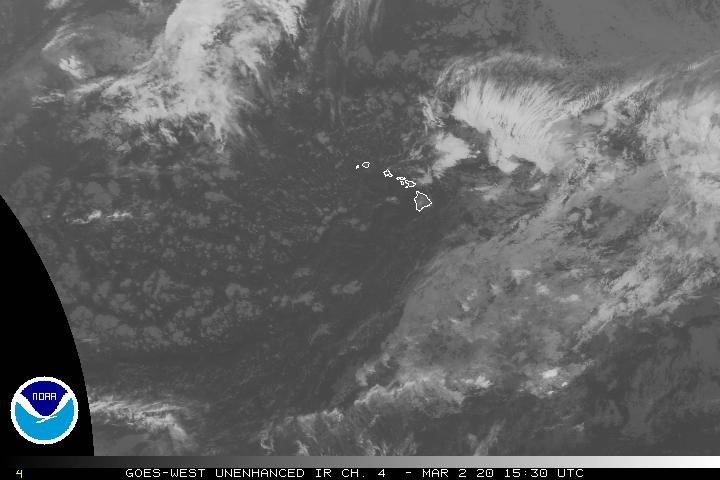




peter mac Says:
I urge readers to access the short speeches of civil society youth at the Doha climate disruption conference.
Many involved young people are pissed off at the impotent inaction of the elder policy makers.
Specifically the obstructionist position of the USA 'leaders' is cited frequently as a primary reason for the
total failure of this conference to impact CO2 emissions. Democracynow.org for starters.~~~Hey Peter, good one, you are involved with politics and climate change, and many others things too…I appreciate your involved nature, thanks for sharing! Aloha, Glenn