











Air Temperatures – The following maximum temperatures were recorded across the state of Hawaii Tuesday afternoon:
Lihue, Kauai – 85
Honolulu airport, Oahu – 87
Molokai airport – 83
Kahului airport, Maui – 86
Kona airport – 86
Hilo airport, Hawaii – 84
Air Temperatures ranged between these warmest and coolest spots near sea level – and on the highest mountain tops around the state…as of 810pm Tuesday evening:
Barking Sands, Kauai – 79
Kahului, Maui – 73
Haleakala Summit – 50 (near 10,000 feet on Maui)
Mauna Kea Summit – 41 (near 13,800 feet on the Big Island)
Hawaii’s Mountains – Here’s a link to the live web cam on the summit of near 13,800 foot Mauna Kea on the Big Island of Hawaii. This web cam is available during the daylight hours here in the islands…and when there’s a big moon shining down during the night at times. Plus, during the nights you will be able to see stars, and the sunrise and sunset too…depending upon weather conditions. Here's the Haleakala Crater webcam on Maui…although this webcam is not always working correctly.
Tropical Cyclone activity in the eastern and central Pacific – Here’s the latest weather information coming out of the National Hurricane Center, covering the eastern north Pacific. You can find the latest tropical cyclone information for the central north Pacific (where Hawaii is located) by clicking on this link to the Central Pacific Hurricane Center. A satellite image, which shows the entire ocean area between Hawaii and the Mexican coast…can be found here.
Aloha Paragraphs

Gusty trade winds…off and on
passing windward showers,
a few elsewhere at times too
As this weather map shows, we have several near 1030 millibar high pressure systems located to the north-northeast and northeast of the islands. Our local winds will remain rather strong and gusty Wednesday and Thursday…then gradually becoming slightly lighter Friday into the weekend.
The following numbers represent the most recent top wind gusts (mph), along with directions as of Tuesday evening:
31 Lihue, Kauai – NE
35 Kuaokala, Oahu – NE
33 Molokai – NE
37 Kahoolawe – NE
35 Kahului, Maui – NE
35 Lanai – NE
35 PTA Keamuku, Big Island – ENE
We can use the following links to see what’s going on in our area of the north central Pacific Ocean. Here's the latest NOAA satellite picture – the latest looping satellite image…and finally the latest looping radar image for the Hawaiian Islands.
Here are the latest 24-hour precipitation totals (inches) for each of the islands as of Tuesday evening:
1.14 Mount Waialeale, Kauai
0.71 Oahu Forest NWR, Oahu
0.38 Molokai
0.00 Lanai
0.00 Kahoolawe
0.71 Puu Kukui, Maui
0.61 Kainaliu, Big Island
~~ Hawaii Sunset Commentary ~~
Our trade winds will remain moderately to locally strong and gusty through mid-week into Thursday…and then gradually ease up a little into the weekend. We find near 1030 millibar high pressure systems (weather map), located to the north-northeast and northeast of the islands Tuesday evening. The NWS forecast office in Honolulu is keeping the small craft wind advisory active around those windiest coasts and channels around Maui and the Big Island. There will be moisture arriving on the trade winds, bringing showers to the windward sides of the state at times…with a few along leeward slopes locally. The overlying atmosphere is becoming more stable, with a slow drying trend expected over the next several days into the weekend.
As we look at this satellite image, it shows low clouds over the islands, and to the east and northeast of the state. These lower level clouds will bring showers as they arrive on the trade wind flow…keeping our windward sides off and on showery through the night into early Wednesday morning.
Here in Kula, Maui at 515pm Tuesday evening, it was partly cloudy and near calm…with an air temperature of 71.1F degrees. Our local winds will remain quite strong and gusty for the next 24-48 hours or so…and then mellow out a touch through the rest of the week. Trade showers will remain active, as clouds impact the windward sides of the islands at times. We are steadily moving back into a normal late summer trade wind weather pattern. I'll be back again early Wednesday morning with your next new weather narrative from paradise. I hope you have a great Tuesday night wherever you're spending it! Aloha for now…Glenn.
World-wide tropical cyclone activity:
Atlantic Ocean/Caribbean Sea: Tropical storm Nadine (14L) continues to strengthen about 940 miles east-northeast of the Lesser Antilles. Sustained winds are 60 mph, moving west-northwesterly at 15 mph. It will strengthen into hurricane Nadine within 24 hours. Here's the NHC graphical track map for this storm, which isn't expected to impact any land areas. Here's what the hurricane models are doing with Nadine. Here's a satellite image showing tropical storm Nadine.
Central Pacific Ocean: There are no active tropical cyclones
Eastern Pacific Ocean: Tropical depression 11E is now active about 195 miles southwest of Manzanillo, Mexico. Sustained winds are 35 mph, and it is moving west-northwest at 10 mph. Here's the NHC graphical track map. Here's a satellite image showing this tropical depression. Here's what the hurricane models are showing for this system. There will be no threat to land areas throughout the remainder of Nadine's life cycle.
Western Pacific Ocean: Typhoon Sanba (17W) remains active in the Philippine Sea to the east of the Philippine islands…located about 545 miles east of Manila. Sustained winds are 70 knots, with gusts to near 85 knots. This typhoon will move more or less north-northwest to the east of the Philippines and eventually Taiwan. Here's the JTWC graphical track map for Sanba. Here's a satellite image of Sanba over the Philippine Sea. The JTWC forecast calls for Sanba to continue strengthening through the next 3-4 days.
South Pacific Ocean: There are no active tropical cyclones
North and South Indian Oceans: There are no active tropical cyclones
Interesting: The Arctic is comparatively clean. Due to the prevailing worldwide sea and air currents, the Arctic area is also the fallout region for long-range transport pollutants, and in some places the concentrations exceed the levels of densely populated urban areas. An example of this is the phenomenon of Arctic haze, which is commonly blamed on long-range pollutants.
It's been more than a decade since global leaders met in Stockholm, Sweden, to sign a treaty with the goal of eliminating persistent organic pollutants making their way into our food chain — such as harmful pesticides like DDT that nearly wiped out the American Bald Eagle.
While leaders have come a long way in restricting these types of pollutants, contamination of the Arctic remains a problem. Researchers at MIT are working to help inform policies that more effectively address contamination problems with their latest research.
"Persistent organic pollutants are chemicals of substantial international concern," Noelle Selin, the project's lead researcher and assistant professor in MIT's Engineering Systems Division and Department of Earth, Atmospheric and Planetary Sciences, says.
"For emerging contaminants in the Arctic, we need to know more about their sources, environmental behavior, and transport pathways in order to regulate them more effectively." The consensus now is that pollutants from around the world are being carried north by rivers, ocean currents, and atmospheric circulation.
Due to extreme conditions in the Arctic, including reduced sunlight, extensive ice cover and cold temperatures, contaminants break down much more slowly than in warmer climates. Contaminants can become highly concentrated due to their significantly lengthened life span in the Arctic Selin and Carey Friedman, a postdoctoral associate at the MIT Joint Program on the Science and Policy of Global Change, had their latest results published last week in the journal Environmental Science & Technology.
The study, Long-Range Atmospheric Transport of Polycyclic Aromatic Hydrocarbons: A Global 3-D Model Analysis Including Evaluation of Arctic Sources, describes the researchers' development of a detailed 3-D atmospheric model used to track the day-to-day transport of chemicals.
Specifically, they tracked PAHs — toxic byproducts of burning wood, coal, oil and other forms of energy that remain in the atmosphere for less time than other persistent organic pollutants regulated by global standards.
"Even though our model estimates lifetimes less than a day, that's still long enough for these PAHs to travel long distances and have potentially damaging effects," says Friedman, the study's lead author, noting that some of these chemicals are known carcinogens that could cause cancer.
Together the researchers will be exploring the global transport of other contaminants in the Arctic, such as chemicals used in stain-resistant carpets and non-stick pans. In research going forward, Selin and her team will extend the model created in their recent analysis that allows them to track chemicals with much greater precision.
"These more complex models are showing what simple models aren't, such as daily fluctuations of pollutants in specific locations," Friedman says. Organic pollutants typically condense and rain down into Arctic regions. Once they mix with other chemicals, it's unknown what danger they could pose to animals and humans, especially in concert with other climate change stressors in the Arctic.
These chemicals are known to build up in the fat of whales, seals and other animals — a main source of food for people living in these high latitude regions. At the same time, the practices that create some of these chemicals such as gas and oil exploration and shipping are expected to increase in the Arctic.
As they do, it's important to understand how pollutants traveling from distant sources exacerbate the problem, and how climate changes can affect future contamination.
 Email Glenn James: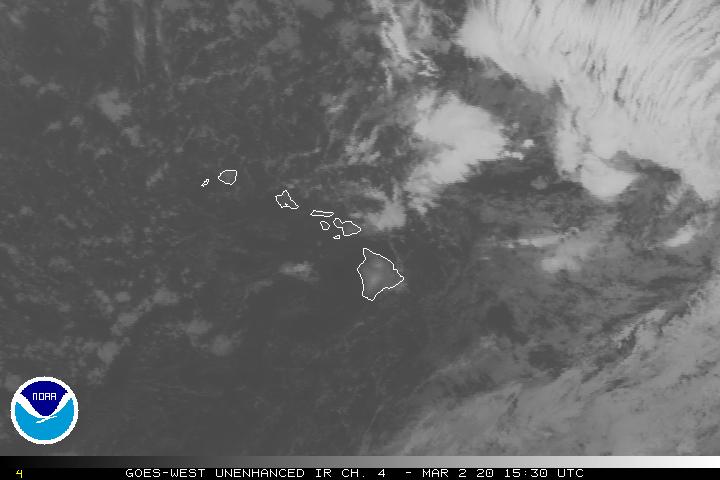


georgiahart Says:
Hawaii and all the other islands are very pretty I,ve always wanted to come there But for the time being I can look and wish, just wanted to say they’re so pretty! ~~~ Hi Georgia, I totally agree! Aloha, Glenn