











Air Temperatures – The following maximum temperatures were recorded across the state of Hawaii Saturday afternoon:
Lihue, Kauai – 84
Honolulu airport, Oahu – 85
Molokai airport – 82
Kahului airport, Maui – 88
Kona airport – 84
Hilo airport, Hawaii – 84
Air Temperatures ranged between these warmest and coolest spots near sea level – and on the highest mountain tops around the state…as of 810pm Saturday evening:
Honolulu, Oahu – 78
Hana airport, Maui – 75
Haleakala Summit – 41 (near 10,000 feet on Maui)
Mauna Kea Summit – 37 (near 13,800 feet on the Big Island)
Hawaii’s Mountains – Here’s a link to the live web cam on the summit of near 13,800 foot Mauna Kea on the Big Island of Hawaii. This web cam is available during the daylight hours here in the islands…and when there’s a big moon shining down during the night at times. Plus, during the nights you will be able to see stars, and the sunrise and sunset too…depending upon weather conditions. Here's the Haleakala Crater webcam on Maui…although this webcam is not always working correctly.
Tropical Cyclone activity in the eastern and central Pacific – Here’s the latest weather information coming out of the National Hurricane Center, covering the eastern north Pacific. You can find the latest tropical cyclone information for the central north Pacific (where Hawaii is located) by clicking on this link to the Central Pacific Hurricane Center. A satellite image, which shows the entire ocean area between Hawaii and the Mexican coast…can be found here.
Aloha Paragraphs

Trade wind speeds increasing Sunday,
off and on passing windward showers
As this weather map shows, we have a near 1028 millibar high pressure system located to the northeast of the islands. Our local winds will rebound gradually Sunday onwards.
The following numbers represent the most recent top wind gusts (mph), along with directions as of Saturday evening:
23 Port Allen, Kauai – SE
23 Kahuku Trng, Oahu – ESE
14 Molokai – SE
28 Kahoolawe – ESE
18 Lipoa, Maui – NE
24 Lanai – NE
29 Upolu airport, Big Island – NE
We can use the following links to see what’s going on in our area of the north central Pacific Ocean. Here's the latest NOAA satellite picture – the latest looping satellite image…and finally the latest looping radar image for the Hawaiian Islands.
Here are the latest 24-hour precipitation totals (inches) for each of the islands as of Saturday evening:
1.50 Mount Waialeale, Kauai
1.35 Makaha Stream, Oahu
1.29 Molokai
0.09 Lanai
0.00 Kahoolawe
2.45 Puu Kukui, Maui
1.23 Kamuela, Big Island
~~ Hawaii Sunset Commentary ~~
Our trade winds will strengthen Sunday into the new week. We find a near 1028 millibar high pressure system (weather map), located to the northeast of the islands Saturday evening. The forecast is calling for the recent heavy showers to decrease tonight into Sunday. There will be moisture associated with former tropical cyclone Ileana…bringing showers to the windward sides of the state starting tonight into Monday.
As we look at this satellite image, it shows low clouds over and around the islands. These lower level clouds will bring showers locally at times tonight…although gradually become less generous. At the same time, we see an area of high and middle level clouds moving by the state the north and northeast of the central islands…with another area approaching the Kauai side of the state. Our winds will begin to pick up again starting tomorrow…as the trough of low pressure moves away to the northeast. There will be more showers arriving later tonight into Sunday and Monday, when the moisture from an old tropical cyclone (Ileana), that was active in the eastern Pacific, arrives from the east into Monday.
Friday evening film: I went to see a new film last evening, one that I'd been really looking forward to. This one was called Lawless, starring Shia LaBeouf, Tom Hardy, Jessica Chastain, Jason Clarke, Dane Dehaan, Mia Wasikowska, Gary Oldman, and Guy Pearce…among many others. The synopsis: the true story of the infamous Bondurant Brothers: bootlegging siblings who made a run for the American Dream in Prohibition-era Virginia. Inspired by true-life tales of author Matt Bondurant's family in his novel "The Wettest County In The World," the loyalty of three brothers is put to the test against the backdrop of the nation's most notorious crime wave. The critics are weighing in favorably for the most part, and I've even heard humors about academy awards in relation to this film. The first time I saw the trailer for this film, I knew this was going to be one I would like very much. You can see by the title, this wasn't a soft and gentle film, far from it! It was filled with violence, and lots of drinkin' white lightnin', that moonshine whiskey. Despite all the killing and hurting that this film showed, it was so well done, so full of great acting. I liked it very much, and am going to give it a solid B+ to A- grade. It was a stylish film, evocative of the era, and again the detail of the characters made each of the actors utterly riveting! As far as this bootlegging drama goes, it left me needing a shot of whiskey, to calm my nerves by the end! Here's the trailer, just in case you're curious about it…although its not for the faint of heart by any means.
Here in Kula, Maui at 540pm Saturday evening, it was cloudy, although the afternoon showers had backed off…with an air temperature of 66.2F degrees. As the upper level trough of low pressure moves away to the northeast overnight, our local winds will rebound. As these winds pick up again Sunday into the new week, we'll see small craft wind advisory flags being hoisted over those windiest coasts and channels around County County and the Big Island. In sum, strengthening trade winds, carrying off and on passing showers onto our windward sides. It will take until Tuesday or so, before we slide back into a more normal late summer trade wind weather pattern. I'll be back Sunday morning with your next new weather narrative, I hope you have a great Saturday night until then! Aloha for now…Glenn.
World-wide tropical cyclone activity:
Atlantic Ocean/Caribbean Sea: Tropical storm Leslie (12L) is active in the Atlantic…located 140 miles east of Bermuda. Sustained winds were 60 mph, moving north at near 10 mph. Here's the NHC graphical track map for Leslie, and a satellite image. Here's the hurricane models output for this storm. Bermuda is finding Leslie moving by to the east today. High surf, gusty winds, and heavy rain are impacting Bermuda. High surf will continue to pound the east coast of the United States this weekend as well. Here's the looping radar images from Bermuda as Leslie moves by to the east.
Meanwhile, Hurricane Michael (13L) remains active in the central Atlantic. It's located about 955 miles west-southwest of the Azores, moving west at 5 mph…with sustained winds of 90 mph…making it a category 1 hurricane. Here's the NHC graphical, track map. Here's what the hurricane models are showing.
Finally, a tropical disturbance remains active just to the west of the Cape Verde Islands. It has a medium 40% chance of developing into a tropical depression within the next 48 hours.
Here's a satellite image showing storm Leslie, hurricane Michael, and that tropical disturbance above
Gulf of Mexico: There are no active tropical cyclones
Eastern Pacific Ocean: There are no active tropical cyclones
Central Pacific Ocean: There are no active tropical cyclones
Western Pacific Ocean: There are no active tropical cyclones
South Pacific Ocean: There are no active tropical cyclones
North and South Indian Oceans: There are no active tropical cyclones
Interesting: On Mars's poles there are ice caps of ice and dust with multiple layers that can tell us much about climate variations on Mars. Researchers from the Niels Bohr Institute have related the layers in the ice cap on Mars's north pole to variations in solar insolation on Mars, thus established the first dated climate history for Mars, where ice and dust accumulation has been driven by variations in insolation.
The results are published in the scientific journal, Icarus. The ice caps on Mars's poles are kilometers thick and composed of ice and dust. There are layers in the ice caps, which can be seen in cliffs and valley slopes and we have known about these layers for decades, since the first satellite images came back from Mars.
The layers are believed to reflect past climate on Mars, in the same way that the Earth's climate history can be read by analyzing ice cores from the ice caps on Greenland and Antarctica. Insolation is a measure of solar radiation energy received on a given surface area and recorded during a given time.
It is also called solar irradiation and expressed as hourly irradiation if recorded during an hour, daily irradiation if recorded during a day, for example. Solar insolation on Mars has varied dramatically over time, mainly due to large variations in the tilt of Mars's rotational axis and this has led to dramatic climate variations on Mars.
For years people have tried to link the solar insolation and layer formation by looking for signs of periodic sequences in the visible layers, which can be seen in the upper 500 meters. Periodic signals might be traceable back to known variations in the solar insolation on Mars, but so far it has been unclear whether one could find a correlation between variations in insolation and the layers.
"Here we have gone in a completely different direction. We have developed a model for how the layers are built up based on fundamental physical processes and it demonstrates a correlation between ice and dust accumulation and solar insolation, explains Christine Hvidberg, a researcher in ice physics at the Center for Ice and Climate at the Niels Bohr Institute at the University of Copenhagen.
Both polar caps show layered features, called polar-layered deposits, that result from seasonal melting and deposition of ice together with dust from Martian dust storms. Information about the past climate of Mars may be eventually revealed in these layers, just as tree ring patterns and ice core data do on Earth. Both polar caps also display grooved features, probably caused by wind flow patterns.
The grooves are also influenced by the amount of dust. The more dust, the darker the surface. The darker the surface, the more melting. Dark surfaces absorb more light energy. There are other theories that attempt to explain the large grooves.
She explains that in the model the layer formation is driven by insolation and the dust rich layers can be formed by two processes:
1: Increased evaporation of ice during the summer at high obliquity (when the rotational axis tilts down) and
2: Variations in dust accumulation as a result of variations in the axial tilt.
The model is simple, but physically possible and it can be used to examine the relationship between climate variability and layer formation. "The model dates the upper 500 meters of the northern ice cap on Mars, equivalent to approximately 1 million years and an average accumulation rate of ice and dust of 0.55 mm per year.
It links the individual layers to the maxima in solar insolation and thereby establishes a dated climate history of the north pole of Mars over 1 million years," says Christine Hvidberg. Even though the present model is only based on a comparison with the visible layers in the upper 500 meters, preliminary studies indicate that the entire thickness and internal structure of the ice cap can be explained by the model and can thus explain how ice and dust accumulation on Mars's north pole has been driven by variations in solar insolation for millions of years.
Interesting2: Tens of thousands of dead fish that washed up on Lake Erie beaches in Ontario, Canada — and had locals wondering if something or someone had poisoned the water — were likely killed by a lack of oxygen caused when lake sediment was stirred up, the province reported Friday. Water samples "do not show evidence of a manure spill or anything unusual in terms of contaminants," Ministry of Environment spokeswoman Kate Jordan told NBC News.
Jordan said it wasn't known if the die-off was unprecedented, but that "it was a significant number — tens of thousands." The fish were found along 25 miles of beach, with locals first coming across them on Monday. But three days earlier, residents had complained of a manure-like smell from the water, the Chatham Daily News reported.
"It was rank, so profoundly rank, that it was difficult to stay down there and the next morning we woke up to the smell," Neville Knowles said of his family's weekend trip to Rondeau Provincial Park. Another park visitor, Frank van den Boorn, said he and his family were at the beach when he noticed the darkened water and smelled something wrong.
"I said to the kids 'We've got to get out of here, there is something wrong with the water'," Van den Boorn recalled. "I scooped up a handful of water and … you could still smell the body stench on it." "I just couldn't believe people were letting their kids swim in it," he added.
Jordan said the smell and darkened water were consistent with the natural phenomenon known as "lake inversion" — where a change in wind can kick up waves that stir up sediment and reduce the oxygen levels for fish.
The wind did change directions last week, she noted, and a local water temperature gauge showed colder water, suggesting it had been churned up from the depths. The province is also testing some of the dead fish and those results should provide conclusive evidence, Jordan said. The results should be ready next week. The dead fish included catfish, carp and perch.
Interesting3: It is one of the oldest beliefs throughout the history of mankind; that with age, comes greater wisdom. For most cases this is true, particularly in learning a skill such as playing an instrument or constructing a house. But does knowing how to perform a skill more efficiently really make that person smarter, or have more wisdom?
This then begs the question, what exactly is wisdom? There are many definitions, but one which stands out above all is that having wisdom means that one is good at resolving conflict. A new study from the University of Waterloo, Canada has found that acquiring greater conflict resolution depends on your culture, and more precisely, where you’re from.
Conflict is a natural part of life. We do not live in a utopia where everybody gets along, and people's actions never impinge on another person. It is a tough world out there with man vs. man, man vs. society, society vs. society, man vs. nature, and society vs. nature. Yet, there are some cultures where conflict is largely avoided to make room for greater social cohesion.
Such a culture exists in countries like Japan. Conflicts are dealt with in a more indirect manner in order to minimize confrontation. Japanese individuals tend to be socialized to value interpersonal harmony, and are indoctrinated as such from a young age. On the other end of the spectrum is a country like the United States. Americans are taught to emphasize individuality and to take on conflict head on, often through direct persuasion.
Once in a while these confrontations can get ugly, or perhaps violent, but this is what Americans are bred to do. It is then logical that over time, Americans will hone and perfect their conflict-resolution skills (what the researchers deem "wisdom") through their many years of experiencing conflicts.
The researchers conclude that due to the difference in culture, Americans have greater wisdom later in life, and Japanese have greater wisdom earlier in life. To prove this, participants of both cultures, age 25-75, were given newspaper articles describing conflicts between two groups, and then asked several questions about the article.
Questions ranged from "What do you think will happen after that?" and "Why do you think it will happen this way?" This exercise then repeated, except instead of conflict between two groups, the articles were about conflicts between individuals such as siblings, friends, and spouses. The study was conducted by psychological scientist, Igor Grossman and his colleagues.
They measured the responses to see how they illustrated six previously established characteristics of wise reasoning:
1. Considering the perspectives of others
2. Recognizing the likelihood of change
3. Recognizing multiple possibilities
4. Recognizing the limits of one's own knowledge
5. Attempting to compromise
6. Predicting the resolution of the conflict
The results showed that while older age was associated with higher wisdom scores for the American participants, there was no such relationship for the Japanese participants. Therefore, wisdom does not always come with age. Being that this study was conducted in Canada, it is curious that Canadians were not included. I guess whether or not older Canadians are smarter than their younger counterparts is still up in the air.
 Email Glenn James: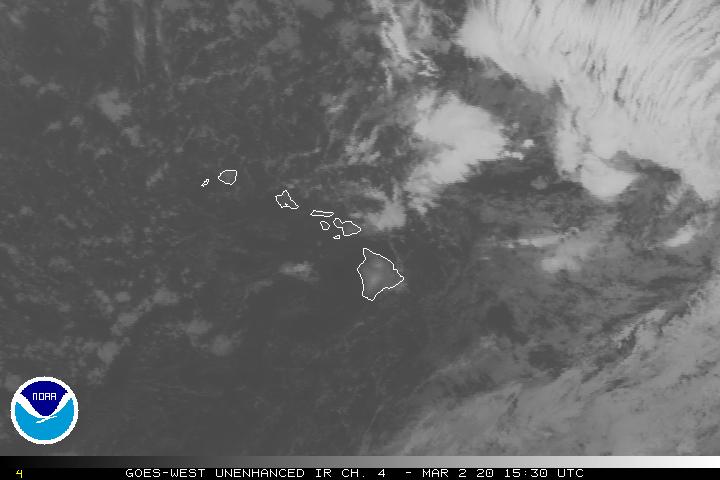




Helen Says:
Aloha Glenn,
Hope you are doing well.Just wanted to let you know it is pouring up here in Olinda !! We are happy to have rain.
Aloha,Helen~~~Hi Helen, thanks for your report, it has been pouring at times over here in upper KUla too! Cool temperatures as well…only 66F degrees in Kula at around 240pm this afternoon. Aloha, Glenn