











Air Temperatures – The following maximum temperatures were recorded across the state of Hawaii Tuesday:
Lihue, Kauai – 83
Honolulu airport, Oahu – 86 (Record high temperature for Tuesday / 92 -1987)
Kaneohe, Oahu – 82
Molokai airport – 84
Kahului airport, Maui – 86 (Record high temperature for Tuesday / 96 -1951)
Kona airport – 85
Hilo airport, Hawaii – 80
Air Temperatures ranged between these warmest and coolest spots near sea level – and on the highest mountain top around the state…as of 5pm Tuesday evening:
Kahului, Maui – 83
Hilo, Hawaii – 78
Haleakala Summit – M (near 10,000 feet on Maui)
Mauna Kea Summit – 50 (near 13,800 feet on the Big Island)
Hawaii’s Mountains – Here’s a link to the live web cam on the summit of near 13,800 foot Mauna Kea on the Big Island of Hawaii. This web cam is available during the daylight hours here in the islands…and when there’s a big moon shining down during the night at times. Plus, during the nights you will be able to see stars, and the sunrise and sunset too…depending upon weather conditions. Here's the Haleakala Crater webcam on Maui…although this webcam is not always working correctly.
Tropical Cyclone activity in the eastern and central Pacific – Here’s the latest weather information coming out of the National Hurricane Center, covering the eastern north Pacific. You can find the latest tropical cyclone information for the central north Pacific (where Hawaii is located) by clicking on this link to the Central Pacific Hurricane Center. A satellite image, which shows the entire ocean area between Hawaii and the Mexican coast…can be found here.
Aloha Paragraphs

Gusty trade winds…windward showers at times
As this weather map shows, we have a strong near 1037 millibar high pressure system located far to the northeast of the islands…with a low pressure system and cold front to our northwest. Our local trade winds will rebound today and mid-week…remaining active well into the future. A small craft wind advisory remains active in those windiest coasts and channels around Maui and the Big Island.
The following numbers represent the most recent top wind gusts (mph), along with directions as of Tuesday evening:
30 Port Allen, Kauai – ENE
37 Kuaokala, Oahu – NE
35 Molokai – NE
39 Kahoolawe – NE
35 Kahului, Maui – NE
35 Lanai – NE
35 PTA Keamuku, Big Island – NE
We can use the following links to see what’s going on in our area of the north central Pacific Ocean. Here's the latest NOAA satellite picture – the latest looping satellite image…and finally the latest looping radar image for the Hawaiian Islands.
Here are the latest 24-hour precipitation totals (inches) for each of the islands as of Tuesday evening:
0.66 Mount Waialeale, Kauai
0.14 Manoa Lyon Arboretum, Oahu
0.16 Molokai
0.00 Lanai
0.00 Kahoolawe
0.86 Puu Kukui, Maui
1.23 Island Dairy, Big Island
Sunset Commentary:
There will be a bit more strengthening of our local trade winds into Wednesday…then gradually mellowing-out a little going into the weekend. We find a strong near 1037 millibar high pressure system to the northeast of Hawaii, along with a weak low pressure system…and its associated cold front to our northwest. The trades will pick up a notch for the time being…and then slowly relax a little Thursday onwards. The trade winds will carry windward showers our way at times, with just a few along our leeward sides. The latest computer model output suggests that the Big Island end of the island chain may see a surge of tropical moisture arriving right after the upcoming weekend.
Here in Kula, Maui at 515pm, it was partly cloudy and calm…with an air temperature of 75.4F degrees. The trade winds have been on the upswing today, continuing through Wednesday. These winds will be moderately strong, with those typical stronger gusts to near 40 mph locally. These strengthening breezes will carry passing showers to our windward sides as usual…in an off and on manner. The leeward sides on the smaller islands will be nearly dry…while the Kona area will see an occasional late afternoon or evening shower. In sum, trade wind weather pattern well into the future, with the usual passing showers along our north and eastern facing windward sides. There will be warm sunshine beaming down along our leeward sides most of the time during the days, along with small to very small surf just about everywhere. ~~~ I'll be back back again early Wednesday morning, I hope you have a great Tuesday night wherever you happen to be spending it! Aloha for now…Glenn.
[World-wide tropical cyclone activity:
Central Pacific Ocean: There are no active tropical cyclones
Eastern Pacific Ocean: There are no active tropical cyclones
THERE HAS BEEN LITTLE CHANGE IN THE LOW PRESSURE AREA LOCATED ABOUT 1100 MILES SOUTHWEST OF THE SOUTHERN TIP OF BAJA CALIFORNIA. SOME SLOW DEVELOPMENT OF THIS DISTURBANCE IS STILL POSSIBLE DURING THE NEXT COUPLE OF DAYS. THIS SYSTEM HAS A MEDIUM CHANCE…30 PERCENT…OF BECOMING A TROPICAL CYCLONE DURING THE NEXT 48 HOURS AS IT MOVES WESTWARD OR WEST-NORTHWESTWARD AT 10 TO 15 MPH.
ELSEWHERE…TROPICAL CYCLONE FORMATION IS NOT EXPECTED DURING THE NEXT 48 HOURS.
Here's a satellite image of this area located southwest of the southern tip of Baja California
Here's what the various hurricane models are showing for what may become a tropical depression within the next 48 hours.
Atlantic Ocean/Gulf of Mexico/Caribbean: There are no active tropical cyclones
THUNDERSTORM ACTIVITY REMAINS MINIMAL IN ASSOCIATION WITH A NON-TROPICAL LOW PRESSURE SYSTEM LOCATED ABOUT 800 MILES EAST-NORTHEAST OF BERMUDA. THE LOW IS MOVING NORTHEASTWARD NEAR 20 MPH AND IS LIKELY PRODUCING WINDS TO NEAR GALE FORCE. THIS SYSTEM HAS A MEDIUM CHANCE…40 PERCENT…OF BECOMING A TROPICAL CYCLONE BEFORE IT REACHES COOLER WATERS LATER TODAY.
ELSEWHERE…TROPICAL CYCLONE FORMATION IS NOT EXPECTED DURING THE NEXT 48 HOURS.
Western Pacific Ocean: There are no active tropical cyclones
South Pacific Ocean: There are no active tropical cyclones
South and North Indian Oceans: There are no active tropical cyclones
Interesting: In recent months, Americans have experienced numerous extreme weather-related events, including droughts, wildfires and heat waves. We've witnessed the warmest spring since record-keeping began in 1895. Thirty-one states reached record-high temperatures. The period between July 2011 and June 2012 was the hottest 12 months on record. And last year 14 extreme weather-related events caused an incalculable loss of human life and cost the U.S. economy more than $55 billion.
Understandably, many Americans are wondering if these events are manifestations of a longer-term shift in climate. Opinion: Why the drought affects me — and you At present we cannot definitively link any single extreme event to climate change.
But it is worthwhile to consider whether the apparent increase in some extreme events has roots in a larger, longer-term trend, since that would predict a continuation of these events in the future. That kind of understanding can have practical importance because it can inspire action to reduce economic losses and human suffering — often in relatively simple ways.
If a region is likely to continue to get rainfall heavier than has historically occurred, for example, then it is sensible for city planners to consider installing larger-bore storm sewers when the time comes to replace aging infrastructure.
The science in this area is getting stronger all the time. In one recently published study, six international research teams led by scientists from NOAA and a number of countries investigated seven different 2011 extreme weather and climate events.
In six of the seven, there was sufficient evidence to conclude that climate change caused by human activities played a factor in the events — affecting their severity, likelihood or frequency. News: Extreme weather — get ready to see more of it Among those events exacerbated by climate change were heat waves in Texas and Oklahoma, the East African drought and extreme temperatures in Europe and England.
On the other hand, the study found no evidence that the devastating floods in Thailand last year were connected to climate change. Another new peer-reviewed article, the "2011 State of the Climate" report compiled by nearly 400 scientists from 48 countries, documents some of the longer-term trends that are underlying some of these changes. It found that:
— Carbon dioxide and other major greenhouse gases continue to climb, with the 2011 yearly global average the highest yet;
— Excess carbon dioxide in the atmosphere is making oceans more acidic;
— The Arctic is warming about twice as fast as the rest of the planet, and its sea ice is thinning dramatically;
— And the globally averaged heat stored in the upper ocean was the highest since records began in 1993.
Such striking trends have strong implications for climate, weather and environmental and human health. One upward trend is indisputable: At NOAA, requests for climate data have skyrocketed, and those data are increasingly helping stakeholders cope with extreme events.
Last year, for example, firefighters in Texas used long-term climate information to prepare for the spring/summer 2011 wildfire season. Emergency managers along the Mississippi, Missouri and Red River basins used NOAA climate data to help lessen flooding, months before it began.
Why we should expect more weather disasters
Coastal managers are using sea-level-rise data to protect crucial infrastructure.
Businesses and governments depend on climate information to make smart investments.
Electric utilities count on climate data to anticipate peak power requirements and distribute power where it is needed.
These are the kinds of practical actions that inspire me in my job as we work to make the best science available to understand and reduce the impact of extreme events on families, communities and businesses. These and other measures are essential to reducing the effects of extreme weather events and forging a safer future.
 Email Glenn James: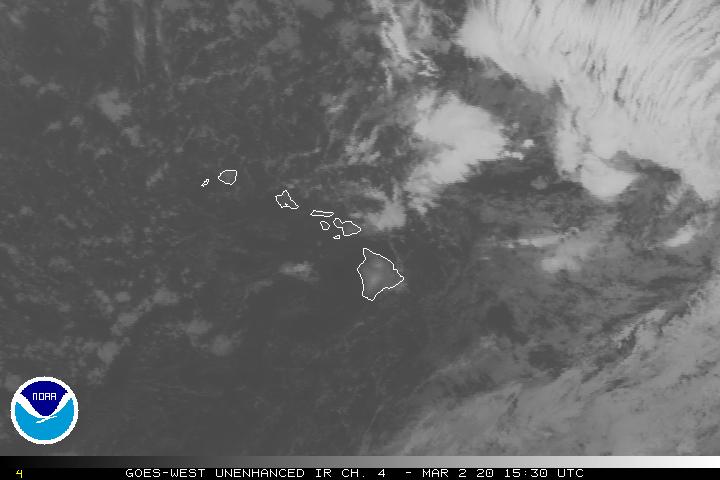


peter mac Says:
Thank you for your commitment to good science Glenn.
It seems to me that corporate business models, committed to short term profits, cannot respond adequately to interrupt the ongoing industrial activity putting CO2 into the atmosphere.
Thank you for caring. Aloha~~~Hi Peter, always appreciate your comments, thanks. Aloha, Glenn