











May 4-5, 2010
Air Temperatures – The following maximum temperatures were recorded across the state of Hawaii Tuesday afternoon:
Lihue, Kauai – 81
Honolulu, Oahu – 84
Kaneohe, Oahu – 81
Kaunakakai, Molokai – 84
Kahului, Maui – 87
Hilo, Hawaii – 81
Kailua-kona – 81
Air Temperatures ranged between these warmest and coolest spots near sea level around the state – and on the highest mountains…at 4pm Tuesday afternoon:
Kahului, Maui – 83F
Hilo, Hawaii – 75
Haleakala Crater – missing (near 10,000 feet on Maui)
Mauna Kea summit – 48 (near 14,000 feet on the Big Island)
Precipitation Totals – The following numbers represent the largest precipitation totals (inches) during the last 24 hours on each of the major islands, as of Tuesday afternoon:
0.13 Mount Waialaele, Kauai
0.58 Oahu Forest NWR, Oahu
0.00 Molokai
0.00 Lanai
0.00 Kahoolawe
0.06 Oheo Gulch, Maui
0.35 Honaunau, Big Island
Marine Winds – Here’s the latest (automatically updated) weather map showing a 1036 millibar high pressure system far to the northeast of the islands. Meanwhile, the old cold front to the northwest of Kauai…is moving away. The trade winds will strengthen Wednesday into Thursday.
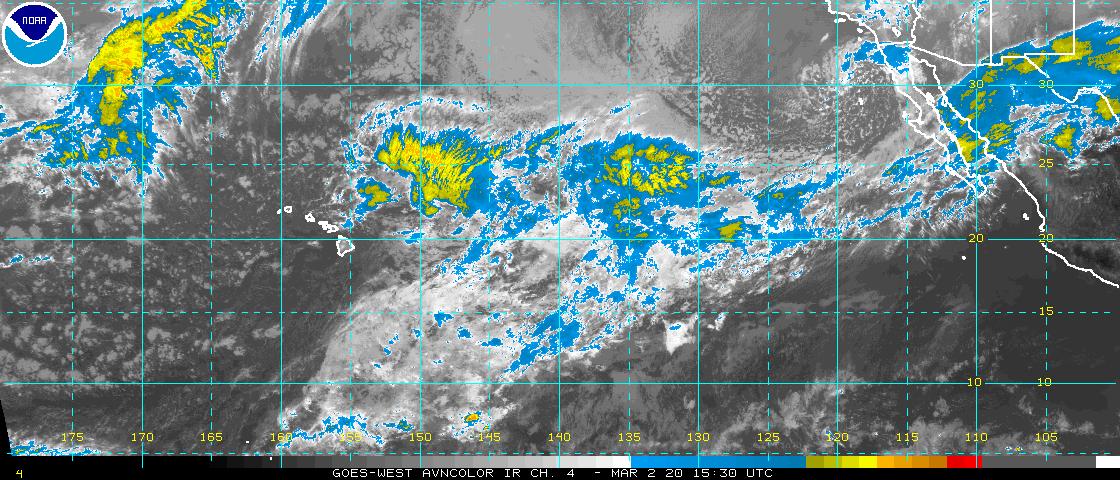
Satellite and Radar Images: To view the cloud conditions we have here in Hawaii, please use the following satellite links, starting off with this Infrared Satellite Image of the islands to see all the clouds around the state during the day and night. This next image is one that gives close images of the islands only during the daytime hours, and is referred to as a Close-up visible image. This next image shows a larger view of the Pacific…giving perspective to the wider ranging cloud patterns in the Pacific Ocean. Finally, here’s a Looping IR satellite image, making viewable the clouds around the islands 24 hours a day. To help you keep track of where any showers may be around the islands, here’s the latest animated radar image.
Hawaii’s Mountains – Here’s a link to the live webcam on the summit of near 14,000 foot Mauna Kea on the Big Island of Hawaii. The tallest peak on the island of Maui is the Haleakala Crater, which is near 10,000 feet in elevation. These two webcams are available during the daylight hours here in the islands…and when there’s a big moon rising just after sunset for an hour or two! Plus, during the nights and early mornings you will be able to see stars, and the sunrise too…depending upon weather conditions.
Tropical Cyclone activity in the eastern and central Pacific – Here’s the latest weather information coming out of the National Hurricane Center, covering the eastern north Pacific. You can find the latest tropical cyclone information for the central north Pacific (where Hawaii is located) by clicking on this link to the Central Pacific Hurricane Center. Here’s a tracking map covering both the eastern and central Pacific Ocean. A satellite image, which shows the entire ocean area between Hawaii and the Mexican coast…can be found here. Of course, as we know, our hurricane season won’t begin again until June 1st here in the central Pacific.
Aloha Paragraphs

Hawaiian Green Sea Turtle
Wind observations Tuesday confirmed, that the trade winds have infiltrated completely back into the
The computer forecast models are suggesting that not only will these trade winds prevail this week…but through next week as well. Since we are in the heart of the spring season now, this is quite easy to believe, considering climatology. The winds have recently become strong enough to have triggered small craft wind advisories in those windiest around around Maui and the Big Island. We could end up finding more widespread small craft wind advisories posted later this week, as the high pressure system far to our northeast…gradually begins to move closer to the island chain.
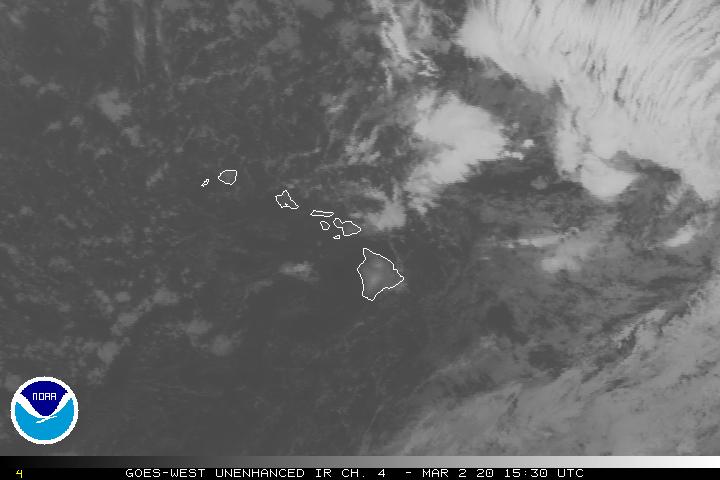
Now that this past weekend’s cold front has moved off to the northwest, our overlying atmosphere is drying up, and becoming more stable. This in turn has cleared our local skies quite a bit, and of course turned the showers off in most places too. Here’s a IR satellite image showing the retreating cold front to our northwest…and the cirrus clouds about the same distance down to our southeast. The other sign that the trade winds are back, is the ventilating effect that they are having on the volcanic haze, which was brought into the state on the southeast winds, ahead of the cold front. If we look closely, we can see the volcanic haze traveling to the west and west-northwest…from the vents on the
It’s Tuesday evening as I begin writing this last section of today’s narrative. The trade winds are back, without a doubt. We can confirm this by noticing that the NWS has issued a small craft wind advisory for those coastal and channel waters around Maui and the Big Island. As the trade winds are expected to remain active through much of this month, and probably through all of June, July and August, we will have lots of days with these wind related advisories enforce. Looking out the window here in Kihei, Maui, before I take the drive back upcountry to Kula, it still looks a bit hazy. It may take until Wednesday before we see all of the volcanic haze scoured out of the leeward sides. Otherwise, we’re looking at a very typical trade wind weather pattern, continuing pretty much forever from here. By the way, the 2010 hurricane season begins in the eastern Pacific just 10 days from tomorrow…summer’s ah comin’, can’t hold it back! I’ll be back early Wednesday morning with your next new weather narrative from paradise. I hope you have a great Tuesday night until then! Aloha for now…Glenn.
Interesting: With millions of gallons crude oil being spewed into the Gulf of Mexico from the Deepwater Horizon oil spill, the focus now is on shutting down the leak. However, in the cleanup efforts to come, "extreme caution" must be exercised so as not to make a bad situation even worse, says a leading bioremediation expert with the Lawrence Berkeley National Laboratory (Berkeley Lab).
"The concentration of detergents and other chemicals used to clean up sites contaminated by oil spills can cause environmental nightmares of their own," says Terry Hazen, a microbial ecologist in Berkeley Lab’s Earth Sciences Division who has studied such notorious oil-spill sites as the Exxon Valdez spill into Alaska’s Prince William Sound.
"It is important to remember that oil is a biological product and can be degraded by microbes, both on and beneath the surface of the water," Hazen says. "Some of the detergents that are typically used to clean-up spill sites are more toxic than the oil itself, in which case it would be better to leave the site alone and allow microbes to do what they do best."
The Deepwater Horizon oil rig leased by energy giant BP that exploded on April 20, is now estimated to be disgorging some 210,000 gallons of oil a day into the Gulf of Mexico. To contain the spreading oil slick and keep it from polluting the fragile ecosystems of the Gulf coast and the Mississippi delta, clean-up crews have deployed an array of chemical dispersants, oil skimmers and booms.
They have also attempted to burn off some of the surface oil. Such aggressive clean-up efforts are fraught with unintended consequences, Hazen warns. He cites as prime examples the Amoco Cadiz and the Exxon Valdez disasters. In 1978, an oil tanker, the Amoco Cadiz, split in two about three miles off the coast of Normandy, releasing about 227,000 tons heavy crude oil that ultimately stained nearly 200 miles of coastline.
The spill-site was so large that only the areas of greatest economic impact were treated with detergents. Large areas in the more remote parts of the coast went untreated. "The untreated coastal areas were fully recovered within five years of the Amoco Cadiz spill," says Hazen. "As for the treated areas, ecological studies show that 30 years later, those areas still have not recovered."
In March of 1989, the oil supertanker Exxon Valdez spilled 11 million gallons of crude oil into the Prince William Sound and impacted some 1,300 miles of coastline. It remains the largest oil spill in U.S. history. A combination of detergents and bioremediation were used in the clean-up. The detergents were nutrient rich, being high in phosphorous and nitrogen compounds.
In addition, as part of the bioremediation effort, fertilizers were also used to promote microbial growth. After the first year, the treated areas were dramatically cleaner, Hazen says, but after the second year no improvements were observed. Long-term prospects for the treated area are grim. "What happened was that we took an oligotrophic (low nutrient) environment, and added lots of nutrients to it to speed up the degradation of the oil, which we probably did," Hazen says.
"However, we upset the ecological balance of the system, which could not handle the influx of nutrients. As a result, the severe environmental damage resulting from the spill is expected to persist for decades to come." While improvements to detergents have been made, including some degree of biodegradability, they remain nutrient rich and in some cases more toxic to the environment than crude oil.
"From a clean-up standpoint, right now we should be using sorbents to take up as much of the oil as possible," Hazen says. "Then we need to gauge how quickly and completely this oil can be degraded without human intervention."
Interesting2: A volcano erupts and the world seems to end. What happens afterwards? May 18 marks the 30th anniversary of the eruption of Mount St. Helens in Washington state and scientists to this day use what’s being learned there to challenge established thinking about how landscapes evolve and rebound. Mount St. Helens is an active volcano located in Skamania County, Washington, in the Pacific Northwest region of the United States.
It is 96 miles south of Seattle and 50 miles northeast of Portland, Oregon. Mount St. Helens takes its English name from the British diplomat Lord St Helens, who made a survey of the area in the late 18th century. The volcano is located in the Cascade Range and is part of the Cascade Volcanic Arc, a segment of the Pacific Ring of Fire that includes over 160 active volcanoes.
Mount St. Helens is most famous for its catastrophic eruption on May 18, 1980, which was the deadliest and most economically destructive volcanic event in the history of the United States. Fifty seven people were killed; 250 homes, 47 bridges, 15 miles of railways, and 185 miles of highway were destroyed.
The eruption caused a massive debris avalanche, reducing the elevation of the mountain’s summit from 9,677 feet to 8,365 feet and replacing it with a 1 mile wide horseshoe shaped crater. So a volcano can be massively destructive. But there is another side to consider. Ecological succession, a fundamental concept in ecology, refers to a more or less predictable and orderly change in the composition or structure of an ecological community.
Succession may be initiated either by formation of new, unoccupied habitat (e.g., a lava flow or a severe landslide) or by some form of disturbance (e.g. fire or logging) of an existing community. Succession that begins in areas where no soil is initially present is called primary succession, whereas succession that begins in areas where soil is already present is called secondary succession.
The relationship between vegetation and environment can be initially random then, over time, environmental effects such as moisture and soil conditions began to play more of a role. Such "deterministic" processes, as opposed to happenstance, are just now being observed at Mount St. Helens and are the subject of papers in early 2010 and late last year in the Journal of Vegetation Science.
It is how nature assembles its communities and ecology as it starts to transform the landscape. One study by University if Washington (UW) professor Roger del Moral, found that distance is important in determining which species arrive on a site. Development is governed by a functional clock, not by the calendar.
Thus, of two sites that are similar except being at different elevations, the higher elevation site will be colder and develop more slowly than the lower, warmer, site. Hinckley (also of UW) and his students have studied how different species, stand compositions and ages affected the recovery of trees that were covered with ash.
While young trees recovered in as little as two seasons, old growth silver firs underwent extensive decline, die back and mortality. Silver firs have stiff needles and rigid branches that held onto the ash, reducing the amount of sunlight that reaches their needles and making them less vigorous. Snow and erosion patterns have also shaped recovery in the blast zone.
For example, many very small, but surprisingly old, mountain hemlock and silver fir trees were covered in snow when the eruption occurred. Those trees survived and today they form stands over 30 feet tall with many of the trees producing seed for the last several years. The initial ash from Mount St. Helens was lethal to many insects.
It stripped away the waterproofing layer, insects lost moisture and quickly died. "It was like sandpapering an insect to death, "John Edwards of UW says. But as the ash became less gritty, predatory beetles, ballooning spiders and other bugs began to arrive. It was calculated that 1,500 insect species were carried by winds into the blast zone from the surrounding forest and farmlands.
Interesting3: Emergency rescue crews in the Gulf of Mexico are in a race against nature to complete oil spill cleanup operations before the start of hurricane season, which begins June 1. "This [oil leak] could go on for 60 to 90 days or more," said Doug Helton, coordinator of incident operations for the National Oceanic and Atmospheric Administration (NOAA).
"There’s a lot of things that could go on in that time period that would greatly impact our model, like the fact that hurricane season is starting in a month." The effects a hurricane could have on the spreading oil spill are impossible to predict, but one thing is certain: Cleanup efforts would have to halt completely in the face of a big storm, said Dennis Feltgen, a spokesperson for the National Hurricane Center.
"You can’t have a cleanup in a hurricane. That’s kind of a no brainer," Feltgen said. "You can only try to get this cleaned up with all possible speed" before hurricane season starts. How a hurricane could impact the spread of the oil spill would depend on too many factors to calculate properly, Feltgen said. "You could come up with all sorts of scary scenarios and make a movie of the week, but it would just be pure conjecture".
"There’s so much that comes into play … [such as] the size of the spill, how deep it is, the size of the storm, the storm’s angle of approach, and its forward motion." Another interesting question is what effect the oil spill could have on a hurricane? Feltgen said that if an oil slick is large enough — on the order of several square miles — it could slow or even prevent the genesis of a hurricane or tropical storm in the Gulf of Mexico because the oil layer would prevent the evaporation of seawater, which is crucial for a hurricane or storm to gather power.
However, if a fully formed hurricane were to barrel into the Gulf of Mexico, an oil slick — even a large one — would likely have no effect on the storm because its winds would churn the surface ocean, naturally breaking the slick into smaller pools of oil and allowing evaporation to occur. U.S. Coast Guard petty officer Brandon Blackwell said the agency is very aware of the looming deadline. "We’re trying to mitigate the situation as quickly a possible," Blackwell said. "I’m not saying that it will be taken care of before [hurricane season starts], but we’re trying our best."
Interesting4: Earth’s current warming trend could bring deadly heat for humans. A new study that looked at reasonable worst-case scenarios for global warming found that if greenhouse gases continue to be emitted at their current rate, temperatures could become deadly in coming centuries.
Researchers calculated the highest tolerable "wet-bulb" temperature — equivalent to what is felt when wet skin is exposed to moving air — and found that this temperature could be exceeded for the first time in human history if greenhouse gas emissions continue at their current rate and future climate models are correct.
Temperatures this unbearable for humans haven’t been seen during the existence of hominids — the primate family that includes ancient humans — but they did occur about 50 million years ago.
Exposure to wet-bulb temperatures above 95 degrees for six hours or more will create lethal stress levels in humans and other mammals, said study team member Matthew Huber of Purdue University’s earth and atmospheric sciences.
Huber said that while areas of the world regularly see temperatures above 100 degrees, really high wet-bulb temperatures are rare because the hottest areas of the planet normally have low humidity — think Arizona’s dry heat.
Areas of the world such as Saudi Arabia have the highest wet-bulb temperatures near the coast where winds occasionally bring extremely hot, humid ocean air over hot land leading to unbearably stifling conditions.
"The wet-bulb limit is basically the point at which one would overheat even if they were naked in the shade, soaking wet and standing in front of a large fan," said Steven Sherwood of the Climate Change Research Centre at the University of New South Wales, Australia and the study’s lead author.
"Although we are very unlikely to reach such temperatures this century, they could happen in the next." The study did not address how likely this worst-case scenario is, only that it is possible based on so-called business-as-usual warming models, which make projections assuming that greenhouse gases continue to be emitted at the rate they are today.
"We found that a warming of 12 degrees Fahrenheit would cause some areas of the world to surpass the wet-bulb temperature limit, and a 21-degree warming would put half of the world’s population in an uninhabitable environment," Huber said. "Whole countries would intermittently be subject to severe heat stress requiring large-scale adaptation efforts," Huber added.
"One can imagine that such efforts, for example the wider adoption of air conditioning, would cause the power requirements to soar, and the affordability of such approaches is in question for much of the Third World that would bear the brunt of these impacts. In addition, the livestock on which we rely would still be exposed, and it would make any form of outside work hazardous."
 Email Glenn James: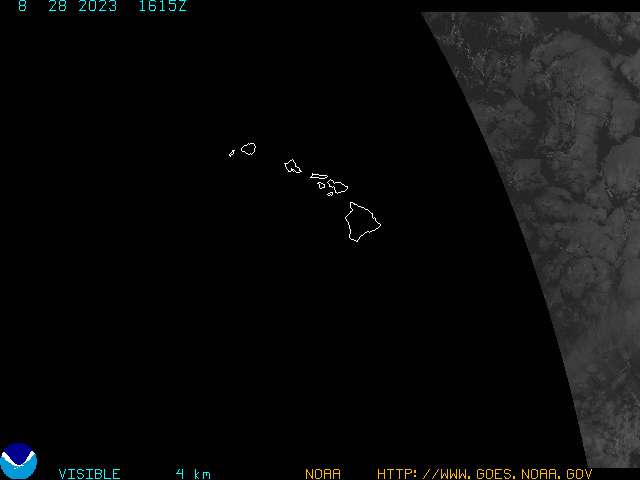


jack weber Says:
Awesome “Interestings” tonight, thanks Glenn! Sad but good to know about.~~~Hi Jack, who knows, the future is such an extra large piece of real estate…such big questions, and concerns, no one really knows what all will happen. I say lets make the present as good as we can, and go with that for now. Aloha, Glenn