











April 5-6, 2010
Air Temperatures – The following maximum temperatures were recorded across the state of Hawaii Monday afternoon:
Lihue, Kauai – 77
Honolulu, Oahu – 82
Kaneohe, Oahu – 78
Kaunakakai, Molokai – 78
Kahului, Maui – 81
Hilo, Hawaii – 75
Kailua-kona – 82
Air Temperatures ranged between these warmest and coolest spots near sea level around the state – and on the highest mountains…at 4pm Monday afternoon:
Barking Sands, Kauai – 82F
Hilo, Hawaii – 68
Haleakala Crater – 48 (near 10,000 feet on Maui)
Mauna Kea summit – 45 (near 14,000 feet on the Big Island)
Precipitation Totals – The following numbers represent the largest precipitation totals (inches) during the last 24 hours on each of the major islands, as of Monday afternoon:
0.75 Mount Waialaele, Kauai
2.92 South Fork Kaukonahua, Oahu
0.14 Molokai
0.00 Lanai
0.00 Kahoolawe
7.37 Puu Kukui, Maui
3.31 Glenwood , Big Island
Marine Winds – Here’s the latest (automatically updated) weather map showing a 1031 millibar high pressure system located to the north-northeast of the islands…moving eastward. This pressure configuration will keep trade winds blowing Tuesday and Wednesday, although in the light to moderately strong realms.
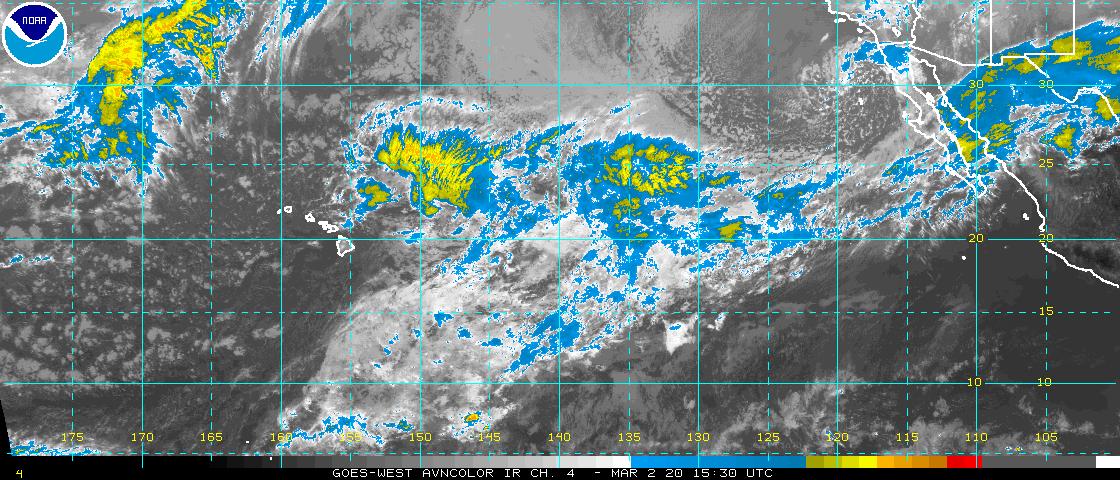
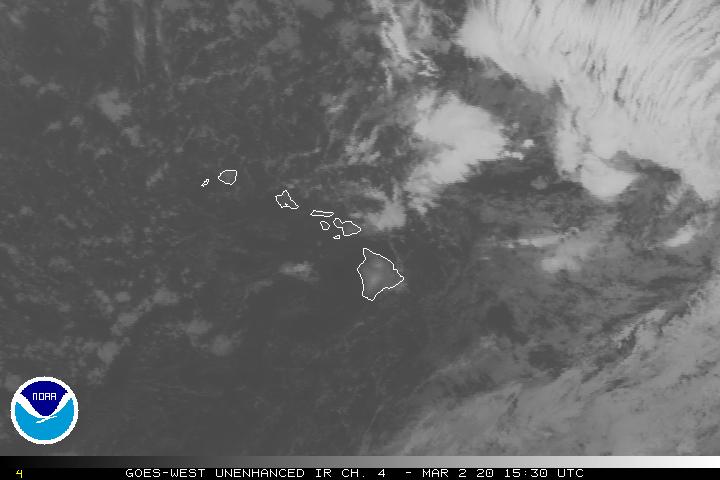
Satellite and Radar Images: To view the cloud conditions we have here in Hawaii, please use the following satellite links, starting off with this Infrared Satellite Image of the islands to see all the clouds around the state during the day and night. This next image is one that gives close images of the islands only during the daytime hours, and is referred to as a Close-up visible image. This next image shows a larger view of the Pacific…giving perspective to the wider ranging cloud patterns in the Pacific Ocean. Finally, here’s a Looping IR satellite image, making viewable the clouds around the islands 24 hours a day. To help you keep track of where any showers may be around the islands, here’s the latest animated radar image.
Hawaii’s Mountains – Here’s a link to the live webcam on the summit of near 14,000 foot Mauna Kea on the Big Island of Hawaii. The tallest peak on the island of Maui is the Haleakala Crater, which is near 10,000 feet in elevation. These two webcams are available during the daylight hours here in the islands…and when there’s a big moon rising just after sunset for an hour or two! Plus, during the nights and early mornings you will be able to see stars, and the sunrise too…depending upon weather conditions.
Tropical Cyclone activity in the eastern and central Pacific – Here’s the latest weather information coming out of the National Hurricane Center, covering the eastern north Pacific. You can find the latest tropical cyclone information for the central north Pacific (where Hawaii is located) by clicking on this link to the Central Pacific Hurricane Center. Here’s a tracking map covering both the eastern and central Pacific Ocean. A satellite image, which shows the entire ocean area between Hawaii and the Mexican coast…can be found here.
Aloha Paragraphs

Nice Sunset Monday evening…sunrise Tuesday morning
The trade winds will remain breezy Monday night, then easing up some on Tuesday and Wednesday…before picking up again thereafter. Looking at this weather map, we find a 1031 millibar high pressure system in the area north of the state Monday evening. As this high pressure cell moves east, winds will relax in speed for a couple of days. As the winds are finally becoming lighter, we’ve seen the small craft wind advisories having been pared back to just those windiest areas around Maui and the Big Island. The waves have finally calmed down enough however, that the high surf advisories along our windward east facing beaches…have been discontinued.
The windward sides continue to see off and on showers falling…with sunnier weather expected along the leeward beaches. These wet conditions along the windward sides will continue Tuesday, with a few heavier amounts locally. An upper level low pressure system moves overhead later Tuesday through Thursday or Friday. This occurs just about the time that our trade wind speeds are slowing. Thus, we will likely see some enhancement to the trade wind showers, and perhaps to showers that happen to be falling over the leeward slopes during the afternoons too.
It’s Monday evening as I begin writing this last section of today’s narrative. The winds remain rather strong and gusty as we close out this first day of the new work week. They will finally begin to ease up some for a couple of days, say between Tuesday and Wednesday, before taking off again Thursday into the weekend.
These were the strongest gusts around the state at around 5pm Monday evening on each of the islands:
38 mph on Kauai
35 mph on Oahu
40 mph on Molokai
42 mph on Lanai
38 mph on Kahoolawe
38 mph on Maui
30 mph on the Big Island
The windward sides have been wet, very wet in a couple of places during the last 24 hours. The following precipitation totals were most significant as of Monday evening:
2.92 South Fork Kaukonahua, Oahu
3.31 Glenwood , Big Island
7.37 Puu Kukui, Maui
These are big numbers, the kind of accumulations that we need to see now. I’m hoping that this week, as the rainfall enhancing trough of low pressure, with its colder air aloft, moves overhead…that we’ll see some of this water falling over our very dry leeward sides as well. The best chance will be over the slopes, rather than down near the coasts. Speaking of the south and west facing leeward beaches, that’s also where you should be able to find the best beaching conditions the next few days. Looking at this satellite image, we continue to see high cirrus clouds to our west and northwest. These clouds have flown across our islands skies Monday, and should make for some pretty sunset colors today, and may be around again at sunrise on Tuesday. ~~~ Here in Kihei this evening, before I take the drive back upcountry to Kula, it’s a nice day. The winds were up enough along the coast this afternoon, that there were quite a few white caps on the ocean surface. Glancing out the window, I see a pretty fair distribution of high clouds above, and lower level cumulus clouds below. This strikes me as a perfect evening for taking a cocktail down to the beach, dipping your feet in the warm ocean…and having a sip as the colors light up the sky! I’ll be back again early Tuesday morning with your next new weather narrative from paradise. I hope you have a great Monday night until then! Aloha for now…Glenn.
Interesting: Oxford University is involved in a research project to unearth 30,000 year old climate records, before they are lost forever. The rings of preserved kauri trees, hidden in New Zealand’s peat bogs, hold the secret to climate fluctuations spanning back to the end of the last Ice Age. The team, led by Exeter University, has been awarded a grant from the Natural Environment Research Council to carry out carbon dating and other analyses of the kauri tree rings.
The trees store an immense amount of information about rapid and extreme climate change in the past. For instance, wide ring widths are associated with cool dry summer conditions. The scientists believe their findings will help us understand what future climate change may bring. Tree rings are now known to be an excellent resource for extracting very precise and detailed data on atmospheric carbon from a particular time period.
Therefore this study could help plug a large gap in our knowledge of climate change by extending historical weather records that only date back to the mid-nineteenth century. There is nowhere else in the world with such a rich resource of ancient wood that spans such a large period of time.
The ancient kauri logs are of enormous dimensions, up to several meters across, and have the potential to provide new detailed information about rapid, extreme and abrupt climate changes at a time when there was significant human migration throughout the globe. While various records exist for historic climate change, such as those derived from ice cores, there is no easy way of correlating these records.
The research will focus on the last 30,000 years, but some trees date back 130,000 years. The period towards the end of the last Ice Age is particularly difficult to understand. This unique archive of kauri trees is likely to be lost within the next ten years because the timber is so highly-prized for furniture, arts and crafts.
Kauri (Agathis australis) are conifer trees buried in peat bogs across northern New Zealand. Trees can measure up to four meters wide and live for up to 2,000 years. As well as containing information on past climates, they could also shed light on environmental and archaeological change. Samples from a network of sites with buried trees will be collected in New Zealand and taken back to the UK laboratories for preparation and analysis at Exeter and then radiocarbon measurement at Oxford.
Professor Christopher Ramsey, from the School of Archaeology at the University of Oxford, said: ‘This gives us a unique opportunity to increase our knowledge of the earth’s climate and human responses to it at the end of the last Ice Age. The radiocarbon measurements should give us important new data that will help us to understand interactions between the atmosphere and the oceans during this period when there was rapid and dynamic change.
Equally exciting is the prospect it will give us of more precise dating of archaeological sites from this period — illuminating the only window we have onto how humans responded to these major changes in the environment.’ Lead researcher Professor Chris Turney of the University of Exeter said: ‘We are facing a race against the clock to gather the information locked inside these preserved trees.
It is fantastic to have this funding so we are able to gather this information before it is lost forever. While it will be fascinating to find out more about the earth 30,000 years ago perhaps more importantly we will have a better appreciation of the challenges of future climate change.’
Interesting2: Ships are responsible for 2.7% of world carbon dioxide emissions. The International Maritime Organization (IMO) estimates that these emissions could increase by 150-250% by the year 2050 in line with the expected continued growth in international seaborne trade. So how does one reduce such emissions since ships are international in nature and there are over a hundred different nations with different rules. How can one be fair and be green?
The IMO has been slow to come up with international rules to curb maritime emissions, and pressure is now growing for them to be addressed within the United Nations Framework Convention on Climate Change (UNFCCC). A meeting of the UN agency’s Marine Environment Protection Committee said the new group will study the feasibility of options like bunker fuels and emissions trading before preparing an impact assessment.
Bunker fuel is the cheapest fuel oil sold but potentially one of the more polluting kinds in terms of air emissions. In addition, the committee decided to postpone finalizing mandatory fuel efficiency standards for ships, concluding that more work remains to be done. It said it had drafted plans for an Energy Efficiency Design Index for new ships to ensure that new vessel designs are environmentally friendly, as well as for a Ship Energy Efficiency Management Plan for all ships in operation.
But it referred further work on outstanding issues, including ship size, target dates and reduction rate, to a working group that will report back in September 2010. Local authorities such as the California air board has tried to take independent actions at least for its coastlines. A 2008 measure requires ships traveling within 28 miles of shore to replace heavy fuel oil with lower sulfur fuel oil products. About 2,000 ships call at California ports every year.
But the board is in for a fight from the Pacific Merchant Shipping Association, which represents 60 ocean carriers and terminal operators on the West Coast. The group, which prefers a voluntary approach, blocked in court a previous state attempt to regulate vessel emissions. It also challenges the state’s authority beyond its waters, which extend 3 miles from shore. A ship may travel a thousand miles and go through numerous jurisdictions.
It cannot simply change its oil supply or have a different ship design depending on the jurisdiction. There is a simple question here of who is in charge. Failure to resolve this matter will restrict and delay shipping. "Global issues demand global solutions," said IMO Secretary General Efthimios E. Mitropoulos at the close of a recent meeting, arguing that the world should take heed of lessons learned in last year’s UN climate talks in Copenhagen to avoid repeating them in further negotiations set to take place in Cancún at the end of the year.
A major stumbling block on setting global emissions targets for international maritime was how to reconcile the principle of common but differentiated responsibilities of the UNFCCC, which governs the climate negotiations, with that of the equal treatment of ships under the IMO.
These are in direct opposition with one another, as the UNFCCC requires rich countries to bear a higher burden while the maritime sector considers that the cross border nature of its activities would require any bunker fuel taxes to be imposed evenly across the globe to prevent distortion of competitiveness.
A tax on bunker fuel would tend to reduce its consumption but who should pay is the problem. The European Union wants to set goals and targets to reduce ship emissions. The US rejected any mention of bunkers at Copenhagen in order not to introduce the common but differentiated responsibilities principle to bunker oil discussions.
This would have complicated the overall discussions. The European Union has said that it will act on its own if neither the IMO nor international climate negotiations succeed in curbing emissions from ships.
Interesting3: Workers who apply certain pesticides to farm fields are twice as likely to contract melanoma, a deadly form of skin cancer, according to a new scientific study. The researchers identified six pesticides that, with repeated exposure, doubled the risk of skin cancer among farmers and other workers who applied them to crops.
The findings add to evidence suggesting that frequent use of pesticides could raise the risk of melanoma. Rates of the disease have tripled in the United States in the last 30 years, with sun exposure identified as the major cause. Four of the chemicals – maneb, mancozeb, methyl-parathion and carbaryl – are used in the United States on a variety of crops, including nuts, vegetables and fruits.
Two others, benomyl and ethyl-parathion, were voluntarily cancelled by their manufacturers in 2008. "Most previous melanoma literature has focused on host factors and sun exposure. Our research shows an association between several pesticides and melanoma, providing support for the hypothesis that agricultural chemicals may be another important source of melanoma risk," according to the report by epidemiologists from University of Iowa, the National Institute of Environmental Health Sciences and National Cancer Institute.
The findings also may have implications for consumers who use pesticides in their homes or yards. Carbaryl, one of the pesticides linked to skin cancer, is the active ingredient in the insecticide Sevin, which is widely used by consumers to kill pests in gardens and lawns.
Interesting4: How will new fuel efficiency requirements that went into effect last week change the look, feel — and price — of your next car? Experts say expect prices to rise, and smaller, lighter, technologically advanced vehicles to grow in number.
New Corporate Average Fuel Economy (CAFE) standards published last week require most automakers to raise the average fuel efficiency of the vehicles they sell to 34.1 miles to the gallon by the 2016 model year rising to 35 mpg when efficiency gains in air conditioning are included.
Currently, the CAFE for cars stands at 27.5 mpg, and 23.1 for light trucks. The standards are expect to reduce CO2 emissions by about 30 percent between 2012 and 2016, and save the country $240 billion from fuel savings, pollution reduction and reduced imports.
Automakers have accepted the new standards because they are firm, ending a period of uncertainty; and nation-wide, so manufacturers do not have to contend with a patchwork of different state requirements.
 Email Glenn James: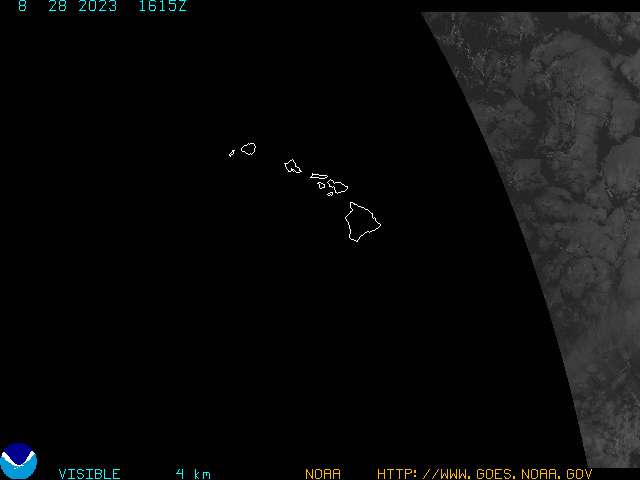


Yasser Says:
Hi Glen,
Thanks for the informative site on Maui weather. This is very helpful.
I’m visiting Maui tomorrow morning and will be staying for a week in Lahaina. Can you give me some advise on the weather I may expect during the next 8 days? I would like to plan my activities accordingly.
I am planning to stay in Hana for one day and would prefer a day when it is not too wet. Additionally, I have to also plan a kayak, snorkel tour in kanapali area.
Thanks.
Yasser~~~Hi Yasser, thanks for your positive comment. I’d suggest that you check out the various pages, like snorkeling, and the beach page, to help you determine which day would be best for the various activities that you’d like to participate in. I’m sure you’ll have a great adventure here on Maui! Aloha, Glenn
Joe Hartman Says:
Thanks for your information. Your web site is very informative. My family leaves tomorrow for 8 days in Maui! We can’t Wait!!!
Aloha
Joe Hartman~~~Hi Joe, glad to hear of the usefulness of this website, thanks for letting me know. I trust you will have a fabulous visit to Maui…weather looks good. Aloha, Glenn