Hawaiian Islands weather details & Aloha paragraphs
Posted by GlennDecember 20-21 2007
Air Temperatures – The following maximum temperatures were recorded across the state of Hawaii Thursday:
Lihue, Kauai – 79
Honolulu, Oahu – 81
Kaneohe, Oahu – 78
Kahului, Maui – 80
Hilo, Hawaii – 81
Kailua-Kona, Hawaii – 82
Temperatures ranged between these warmest and coolest spots near sea level at 4 a.m. Friday morning:
Lihue, Kauai – 73F
Hilo, Hawaii – 64
Precipitation Totals – The following numbers represent the largest precipitation totals (inches) during the last 24 hours on each of the major islands, as of Friday morning:
0.98 MOUNT WAIALEALE, KAUAI
0.71 POAMOHO 2, OAHU
0.16 MOLOKAI
0.00 LANAI
0.00 KAHOOLAWE
1.97 PUU KUKUI, MAUI
0.28 PAHOA, BIG ISLAND
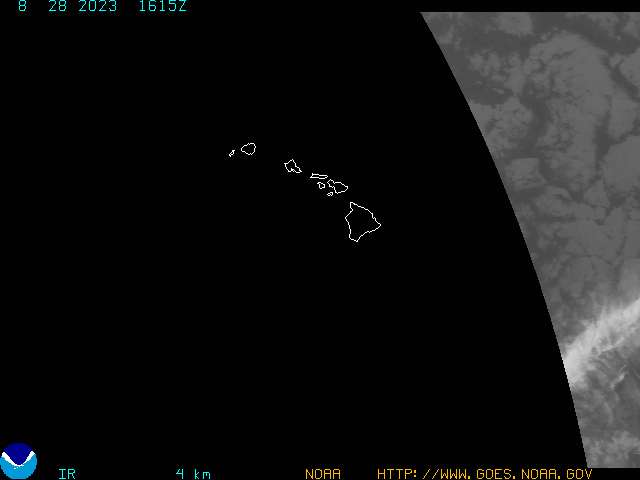
Satellite and Radar Images: To view the cloud conditions we have here in Hawaii, please use the following satellite links, starting off with the Infrared Satellite Image of the islands to see all the clouds around the state during the day and night. This next image is one that gives close images of the islands only during the daytime hours, and is referred to as a Close-up visible image. This next image shows a larger view of the Pacific…giving perspective to the wider ranging cloud patterns in the Pacific Ocean…out from the islands. To help you keep track of where any showers may be around the islands, here’s the latest animated radar image.
Weather Chart – A high pressure system located to the northeast of the Aloha state, has a ridge running from its westward flank into the area north of Hawaii. This ridge, now weakened by low pressure to its north, will keep slightly lighter trade winds blowing across our area Friday into Saturday. Here’s the latest (automatically updated) weather map. Here’s a Weather Map Symbol page for clarification about what all those weather symbols mean on the map.
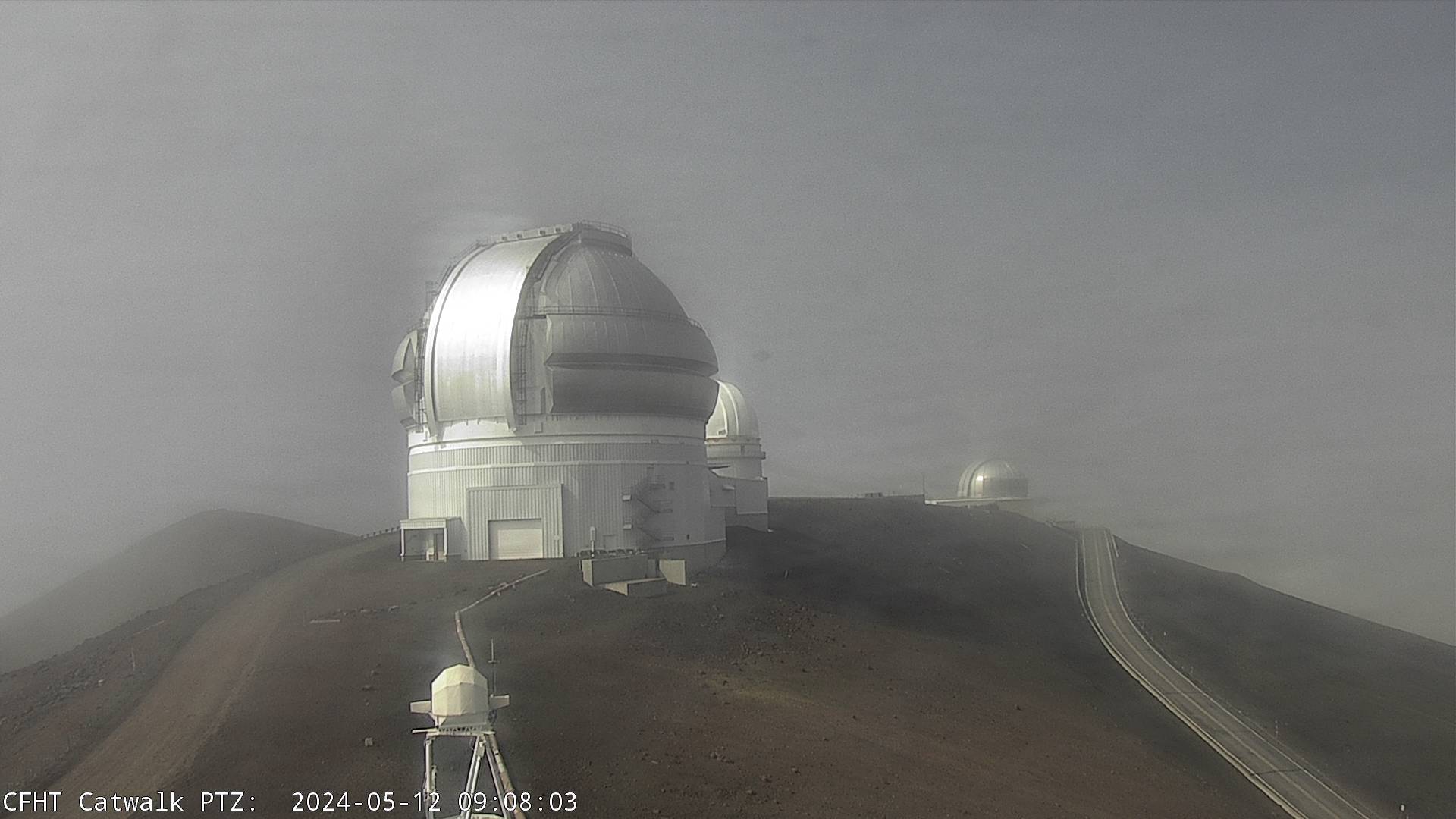
Hawaii’s Mountains – Here’s a link to the live webcam on the summit of near 14,000 foot Mauna Kea on the Big Island of Hawaii. The tallest peak on the island of Maui is the Haleakala Crater, which is near 10,000 feet in elevation. These two webcams are available during the daylight hours here in the islands…and when there’s a big moon rising just after sunset for an hour or two! Plus, during the nights and early mornings you will be able to see stars, and the sunrise too…depending upon cloud conditions.

A sunny day on Waikiki Beach…
photo credit: flickr.com
The windward sides will continue to see some passing shower activity, while most leeward beaches will remain dry and sunny for the most part during the days. Those north and east facing windward coasts and slopes will find most of the incoming showers falling during the overnight hours…when a few briefly heavy ones may rain down. Looking a little further ahead, there will be a fairly normal distribution of windward biased showers falling through the rest of the week into next week. The leeward sides will be just fine, with lots of warm sunshine beaming down during the days! Air temperatures will remain fixed in the 70F’s to lower 80F’s during the days, which is pretty normal for this time of year.
It’s Thursday evening here in the islands, as I begin writing this last paragraph of today’s narrative. Today is the last full day of autumn 2007, as here in Hawaii, the winter solstice occurs tomorrow evening. Winter here in the islands isn’t anything like it is in the middle latitudes of the northern hemisphere. Down here in the tropics, winter is more like summer, at least compared to most places in more northerly latitudes. Actually, winter is my favorite season, as the air temperatures are warm, and not hot like they can be during the high sun season of summer. The beaches are such a treat during the winter months, when the temperatures often, actually almost everyday along the leeward sides, climb into the 80F’s. The surrounding ocean remains in the middle 70F’s along those leeward beaches too, with the warm ocean and air combined…this creates what most folks picture as paradise. Add the coconut palm trees, and the lovely colors that are evident in every direction one looks, and we see why folks from all over the world flock here this time of year! ~~~ I worked from home today, here in Kula, Maui, so I wasn’t able to have my ordinary beach walk and swim during my lunch break, and believe me, I missed it. I’ll be back very early Friday morning with a new weather narrative, I hope you have a great Thursday night wherever you happen to be spending it! Aloha for now…Glenn.
Interesting: The land dwelling ancestor of the whale was a small deer-like animal that resembled a raccoon in size, according to researchers at the Northeastern Ohio Universities Colleges of Medicine and Pharmacy. The discovery of this animal could possibly provide the missing evolutionary link in how the whale came to live in water.
Scientists have speculated that the whale’s ancestor may have been a carnivore, which went to sea in search of fish. However the new fossil called Indohyus almost certainly appears to be a herbivore. The animal is thought to have roamed the Earth 48 million years ago.
Conventionally the hippopotamus has been regarded as a cousin of whales, dolphins and porpoises. However the discovery of the new fossils puts paid to that theory. The fossil’s bone structure has striking similarities to whales.
Its middle ear structure is identical to that found only in the cetaceans or the water-dwelling animals. This type of structure is thought to help these animals adapt to life underwater. Furthermore the chemical make-up of the tooth structure in Indohyus is also similar to marine mammals indicating that the creature spent a lot of time away from land.
"What we think happened is that the ancestors of both Indohyus and whales were animals that looked like a tiny deer," said lead researcher Hans Thewissen. On Indohyus being a plant eater he added, . “Apparently the dietary shift to hunting animals, as modern whales do, came later than the habitat shift to the water.”
 Email Glenn James: