Air Temperatures – The following maximum temperatures were recorded across the state of Hawaii Sunday afternoon:
Lihue, Kauai – 74
Honolulu airport, Oahu – 82
Kaneohe, Oahu – 78
Molokai airport – 81
Kahului airport, Maui – 83
Kona airport – 83
Hilo airport, Hawaii – 81
Air Temperatures ranged between these warmest and coolest spots near sea level – and on the highest mountain tops…as of 5pm Sunday evening:
Kapalua, Maui – 81F
Lihue, Kauai – 68
Haleakala Crater – missing (near 10,000 feet on Maui)
Mauna Kea summit – missing (near 14,000 feet on the Big Island)
Precipitation Totals – The following numbers represent the largest precipitation totals (inches) during the last 24 hours on each of the major islands, as of Sunday afternoon:
1.46 Princeville airport, Kauai
3.83 Luluku, Oahu
0.40 Molokai
0.05 Lanai
0.06 Kahoolawe
0.25 Oheo Gulch, Maui
0.10 South Point, Big Island
Marine Winds – Here’s the latest (automatically updated) weather map showing a 1026 millibar high pressure system to our northeast…with a ridge extending down just to the northeast of our islands. At the same time we find a weak trough of low pressure near Kauai. Our winds will be generally light or a little stronger at times…from southeast to south through Tuesday at least.
Satellite and Radar Images: To view the cloud conditions we have here in Hawaii, please use the following satellite links, starting off with this Infrared Satellite Image of the islands to see all the clouds around during the day and night. This next image is one that gives close images of the islands only during the daytime hours, and is referred to as a Close-up visible image. This next image shows a larger view of the Pacific…giving perspective to the wider ranging cloud patterns in the Pacific Ocean. Finally, here's a Looping IR satellite image, making viewable the clouds around the islands 24 hours a day. To help you keep track of where any showers may be around the islands, here’s the latest animated radar image.
Hawaii’s Mountains – Here’s a link to the live web cam on the summit of near 14,000 foot Mauna Kea on the Big Island of Hawaii. The tallest peak on the island of Maui is the Haleakala Crater, which is near 10,000 feet in elevation. These two web cams are available during the daylight hours here in the islands…and when there’s a big moon rising just after sunset for an hour or two! Plus, during the nights and early mornings you will be able to see stars, and the sunrise too…depending upon weather conditions.
Tropical Cyclone activity in the eastern and central Pacific – Here’s the latest weather information coming out of the National Hurricane Center, covering the eastern north Pacific. You can find the latest tropical cyclone information for the central north Pacific (where Hawaii is located) by clicking on this link to the Central Pacific Hurricane Center. Here’s a tracking map covering both the eastern and central Pacific Ocean. A satellite image, which shows the entire ocean area between Hawaii and the Mexican coast…can be found here. Of course, as we know, our hurricane season ends November 30th here in the central Pacific.
Aloha Paragraphs
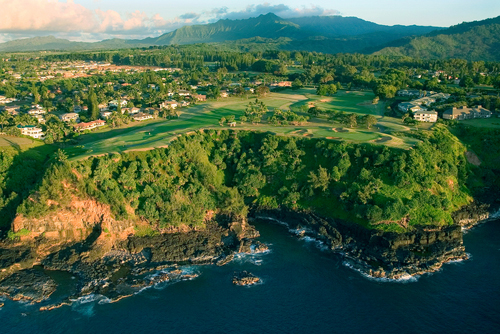
Kauai and Oahu most shower prone…some locally heavy
Flash flood watch Kauai and Oahu
Hawaii's breezes will blow from the southeast to south for the most part, mostly in the light to moderately strong range. This weather map shows a 1026 millibar high pressure system to our northeast Sunday night. Winds are coming in from the southeast on the Big Island side of the chain, becoming more south towards Kauai. This wind direction will keep light volcanic haze over some of the smaller islands. During first half of the new week ahead, we'll continue to find light south to southeasterly winds over the state. The computer models are suggesting that the trade winds will return later in the week…perhaps around Thursday or perhaps by next weekend even.
Winds will be generally light, although locally stronger…the following numbers represent the strongest gusts, along with directions Sunday evening:
10 mph Port Allen, Kauai – SE
22 Waianae, Oahu – SE
07 Molokai – SE
24 Kahoolawe – ESE
09 Kahului, Maui – NE
12 Lanai Airport – SE
29 South Point, Big Island – NE
We can use the following links to see what’s going on in our area of the north central Pacific Ocean Sunday night. This large University of Washington satellite image shows clouds are still abundant to our west, which will slide over the islands at times, most thickly over the Kauai end of the island chain. Looking at this NOAA satellite picture, we see partly cloudy conditions around the state…with the least clouds over Big Island at the time of this writing. We can use this looping satellite image to see high and middle level clouds to our west and southwest, which if they continue coming our way, will keep clouds coming our way. Checking out this looping radar image, it shows generally dry conditions for the most part from Maui to the Big Island, although there are moderate to heavy showers…with even some thunderstorms near Kauai.
The state will remain clear to mostly cloudy as we move through Sunday night, with generally light winds and a few showers…some locally heavy Sunday night into Monday on the Kauai end of the chain. On Kauai, near the remnant cold front, or what is a trough now, locally heavy showers will be present into Monday. There may be some localized flooding happening near Kauai, as these heavy showers or thunderstorms move ashore. The first part of the upcoming new work week will remain unsettled, with the other islands seeing afternoon clouds and showers in the interior sections. Looking even further ahead, the trade winds finally return by Thursday, although some of the computer models are keeping the trade winds at bay until then week.
This past Friday evening I went to see a new film, called Unknown, which is playing in Kahului. Liam Neeson, January Jones and Diane Kruger were the main stars…among many others. Here's the synopsis: a doctor wakes up from a car accident to discover that another man has assumed his identity. The critics are giving this film a B- grade, while the viewers are upping the score to B+. I was in the mood for a film, and these grades were enough to pull me into the theater. As it turned out, I ended up really liking this film! It was exceptionally engaging, with lots of great action from the very beginning right to the end. In my opinion this film deserves an A grade, without a doubt! I don't hand out A grades all that often, although this film was really that good. Here's the trailer for the film, which is being billed a drama.
~~~ Here in Kula, Maui at around 530m Sunday evening, skies were partly to mostly cloudy. The clouds increased during the day, although the locally heavy downpours that we've seen lately, didn't manifest today. The main action today has happened up on Kauai, where locally showers are still falling. The rest of the state got cloudy, although not that many showers have fallen from Oahu down through the Big Island. We have a complex weather situation on our hands, so unsettled weather will continue for many more days. An upper level trough of low pressure, with its associated instability will move closer to the islands soon, which will keep our overlying atmosphere shower prone. As I've mentioned many times in the paragraphs above, Kauai and then Oahu will find the most generous rainfall. Perhaps with time, the other islands will find increased showers too. I'll be back Monday morning, on the Presidents Day holiday, with your next new weather narrative. Until then, here's that looping radar image, so you can keep an eye on this heavier rainfall on the west end of the state. I hope you have a great Sunday night! Aloha for now…Glenn.
Interesting: BP had workers on the doomed Deepwater Horizon rig who could have prevented the missteps that led to the massive Gulf of Mexico oil spill, but they were not consulted, the White House oil spill commission said on Thursday. In an expanded report on the causes of the BP drilling disaster that killed 11 workers and ravaged the U.S. Gulf coast last summer, the commission released new details about the events that preceded the BP accident.
The commission's investigators said BP workers failed to ask a knowledgeable company engineer who was visiting the rig about unexpected results from a critical negative pressure test on the rig. "If anyone had consulted him or any other shore-based engineer, the blowout might never have happened," the commission said in a statement.
The misreading of that pressure test and the decision to move ahead with temporary abandonment of BP's Macondo well was a major catalyst for the April 20 rig explosion that eventually unleashed millions of barrels of oil into the Gulf of Mexico. Had BP's well site leaders brought their faulty explanation of the test results to one of the visiting engineers, "events likely would have turned out differently," the commission report said.
The engineers visiting the rig that day later questioned the crew's interpretation of the test results. BP onshore officials said they would have insisted on further testing, had they been consulted. "The sad fact is that this was an entirely preventable disaster," the commission's chief counsel, Fred Bartlit, said in a statement. "Poor decisions by management were the real cause."
Interesting2: The explosion and fire on a BP-licensed oil platform in the Gulf of Mexico in April 2010 had huge environmental and economic effects, with millions of gallons of oil leaking into the water for more than five months. It also had significant psychological impact on people living in coastal communities, even in those areas that did not have direct oil exposure, according to researchers at the University of Maryland School of Medicine who worked in collaboration with the University of Florida, Gainesville.
Study results will be published in the February 17 online edition of Environmental Health Perspectives, a publication of the National Institutes of Health. "We found that people living in communities with and without direct oil exposure had similar levels of psychological distress. People in both groups showed clinically significant levels of depression and anxiety.
Also, where compared to people whose income was unaffected by the disaster, people with spill-related income loss in both groups had higher rates of depression, were less resilient and were more likely to cope using 'behavioral disengagement,' which involves just 'giving up' trying to deal the problem," explains Lynn Grattan, Ph.D., associate professor of neurology at the University of Maryland School of Medicine.
The Maryland investigators, who traveled to the region soon after the spill, worked with Gulf Coast community leaders to get "real-time" assessments of the acute impacts of the spill. Their goal was to measure the acute psychological distress, coping resilience and perceived risk (concerns about the environmental impact and potential health consequences) of people living along the Gulf Coast.
By doing this, they could help identify the potential mental health needs of the Northwest Gulf Coast communities. They examined the psychological impact in two fishing communities: Baldwin County, Alabama, and Franklin County, Florida. Baldwin County had direct oil exposure; Franklin County did not.
The researchers defined indirect impact as a place where oil did not physically reach the coastline, but where anticipation of the oil spread significantly affected the community's recreation, tourism and fishing industries.
"The findings of these University of Maryland researchers may have important implications for planning public health response in similar situations, suggesting that a broader approach may needed," adds E. Albert Reece, M.D., Ph.D., M.B.A., vice president for medical affairs at the University of Maryland and dean of the University of Maryland School of Medicine.
The people in Florida, where oil had not reached shore, showed similar elevated levels of anxiety and depression as those living in Alabama who had direct oil exposure. Both groups had similar high levels of worry about the impact of the spill on the environment, health and seafood safety.
However, the levels of psychological distress were higher in both communities among people who had suffered income loss because of the spill. They had significantly more tension, anger, fatigue and overall mood disturbance than those whose income was not adversely affected. These people also had lower scores on resilience and may have fewer psychological resources to bounce back from adversity.
"From a public health standpoint, we need to understand that when there is a significant environmental crisis, we need to extend public health outreach and education, psychological monitoring and mental health services beyond the immediately affected areas, paying particular attention to people at risk for income loss.
There are things that can be done to help people manage their stress and anxiety, and cope in these situations, so these interventions need to be available immediately in the communities where the impacted individuals live," adds Dr. Grattan, who is also a neuropsychologist at the University of Maryland Medical Center.
The study on psychological impact built on a research program by University of Florida investigators who were already in the area to study the acute environmental and health impact of the spill.
Through contacts with local community and religious leaders, trade associations, the University of Florida extension office and other agencies, the Maryland researchers recruited 71 residents in Florida and 23 from Alabama for the psychological assessment.
The team evaluated the participants through interviews and standardized assessments of psychological distress, resilience and coping. The team also looked at whether the participants had cognitive symptoms of neurotoxicity as a result of exposure to oil and chemical dispersants.
These included assessments of attention, memory, and dexterity and speed (through a pegboard puzzle task). The researchers also asked the participants about what they were doing to cope with the situation, which could range from prayer and meditation to increased use of alcohol and other drugs.
Interesting3: The European Union will ban six toxic chemicals within three to five years, three of which are commonly used in plastic household items. Among the compounds are three plastic softening phthalates, a musk fragrance, a flame retardant and a hardener for epoxy resin.
Although the most toxic phthalates have been banned in children's toys since 1999, a survey last October showed some are commonly found in products on supermarket shelves, including items regularly used by children, such as pencil cases and erasers. The decision is being taken under the REACH regulation on chemicals, adopted in 2006 after major debate and discussion.
The EU regulation on 'Registration, Evaluation and Authorization of Chemicals' (REACH), aims to make chemicals safer for human health and the environment by placing the burden on businesses to prove their products are safe before they can be placed on the market.
Unless they obtain specific exemptions, companies will not be able to sell items containing phthalates known as DEHP, BBP and DBP, the fragrance Musk Xylene, flame-retardant HBCDD, or the epoxy resin-hardener MDA. Musk xylene was the most widely used of the "nitro-musks", a type of synthetic musk fragrance, which mimic natural musk.
It has been used as a perfume fixative in a wide variety of consumer products, and is still used in some cosmetics and fragrances. Phthalates, or phthalate esters, are esters of phthalic acid and are mainly used as plasticizers (substances added to plastics to increase their flexibility, transparency, durability, and longevity).
Phthalates are being phased out of many products in the United States, Canada, and European Union over health concerns. Use of musk xylene has declined sharply since the mid-1980s due to safety and environmental concerns. Its explosive and carcinogenic hazards are recognized.
It is also a very persistent and bioaccumulative polluant in the aquatic environment. Hexabromocyclododecane (HBCDD) is a brominated flame retardant. It consists of twelve carbon, eighteen hydrogen, and six bromine atoms tied to the ring. Its primary application is in extruded and expanded polystyrene foam that is used as thermal insulation in the building industry.
HBCD is highly efficient in this application so that very low levels are required to reach the desired flame retardancy. HBCD's toxicity and its potential harm to the environment are currently being discussed. HBCD can be found in environmental samples such as birds, mammals, fish and other aquatic organisms as well as soil and sediment.
Any company wishing to use the chemicals will need to demonstrate they are controlling safety issues, or that the benefits for the economy and society outweigh the risks. The decision is a victory for campaigners who raised their concerns about hundreds of compounds in the report released last October.
Interesting4: A powerful solar flare has ushered in the largest space weather storm in at least four years and has already disrupted some ground communications on Earth, said University of Colorado Boulder Professor Daniel Baker, an internationally known space weather expert. Classified as a Class X flare, the Feb. 15 event also spewed billions of tons of charged particles toward Earth in what are called coronal mass ejections and ignited a geomagnetic storm in Earth's magnetic field, said Baker, director of CU-Boulder's Laboratory for Atmospheric and Space Physics.
Such powerful ejections can cause a variety of socioeconomic and safety issues ranging from the disruption of airline navigation systems and power grids to the safety of airline crews and astronauts. "The sun is coming back to life," said Baker, who chaired a 2008 National Research Council committee that produced a report titled "Severe Space Weather Events — Understanding Societal and Economic Impacts."
For the past several years the sun has been in its most quiescent state since early in the 20th century, said Baker. From a scientific standpoint a class X event — the most powerful kind of solar flare — is exciting, said Baker, also a CU-Boulder professor in the astrophysical and planetary sciences department. "But as a society, we can't afford to let our guard down when operating spacecraft in the near-Earth environment."
According to the National Oceanic and Atmospheric Administration, several more coronal mass ejections may reach Earth's atmosphere in the next day or two. "Human dependence on technology makes society more susceptible to the effects of space weather," Baker said. "But scientists and engineers have made great strides in recent decades regarding this phenomenon.
"We understand much more about what is happening and can build more robust systems to withstand the effects," Baker said. "It will be interesting to see how well our technological systems will withstand the rigors of space weather as the sun gets back to higher activity levels."
 Email Glenn James: