











January 5-6, 2010
Air Temperatures – The following maximum temperatures were recorded across the state of Hawaii Tuesday afternoon:
Lihue, Kauai – 78
Honolulu, Oahu – 81
Kaneohe, Oahu – 83
Kaunakakai, Molokai – 81
Kahului, Maui – 83
Hilo, Hawaii – 81
Kailua-kona – 82
Air Temperatures ranged between these warmest and coolest spots near sea level around the state – and on the highest mountains…at 5pm Tuesday evening:
Honolulu, Oahu – 79F
Lihue, Kauai – 72
Haleakala Crater – missing (near 10,000 feet on Maui)
Mauna Kea summit – 41 (near 14,000 feet on the Big Island)
Precipitation Totals – The following numbers represent the largest precipitation totals (inches) during the last 24 hours on each of the major islands, as of Tuesday afternoon:
3.80 Puu Opae, Kauai
0.15 Hawaii Kai, Oahu
0.00 Molokai
0.00 Lanai
0.00 Kahoolawe
0.00 Maui
0.01 Kamuela, Big Island
Marine Winds – Here’s the latest (automatically updated) weather map showing a ridge of high pressure south of the Big Island, along with a dissipating cold front over Kauai and Oahu. Our winds will be locally breezy from the southwest into Wednesday...then turning slightly cooler and from the north to northeast Thursday.
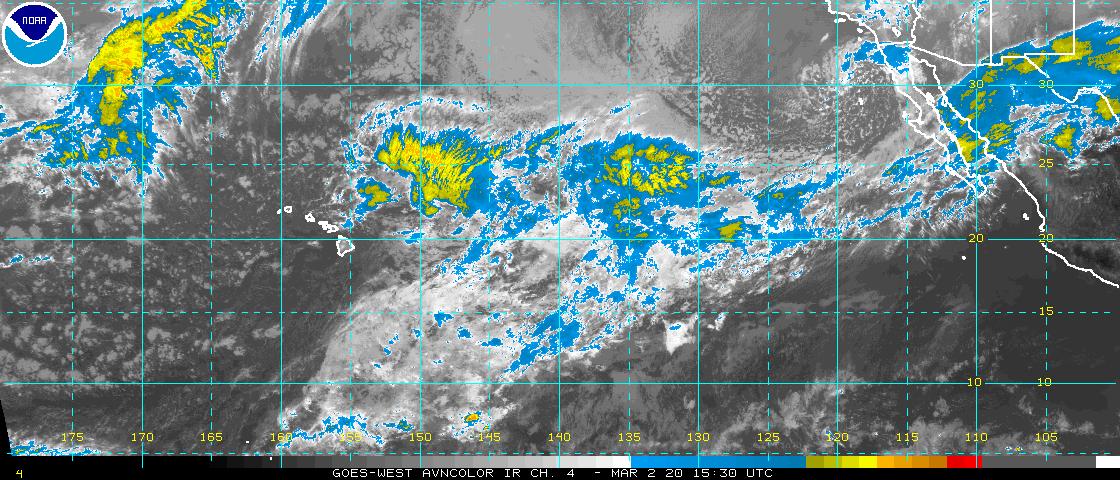
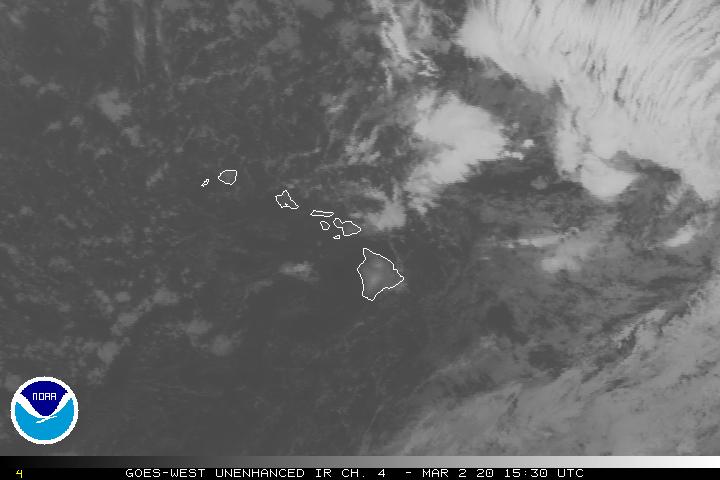
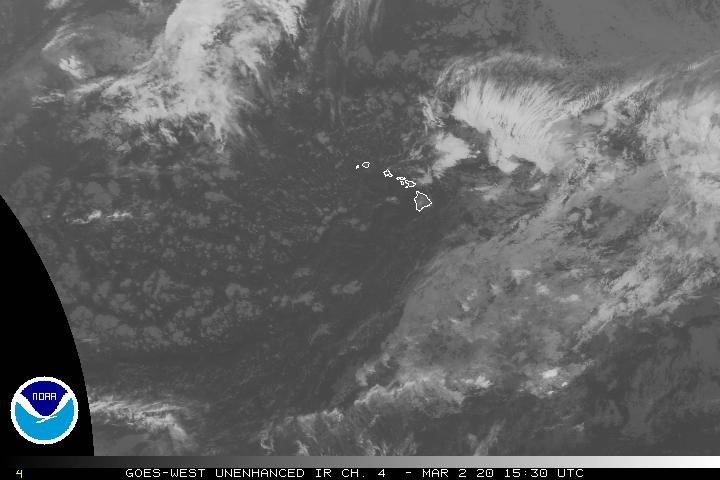
Satellite and Radar Images: To view the cloud conditions we have here in Hawaii, please use the following satellite links, starting off with this Infrared Satellite Image of the islands to see all the clouds around the state during the day and night. This next image is one that gives close images of the islands only during the daytime hours, and is referred to as a Close-up visible image. This next image shows a larger view of the Pacific…giving perspective to the wider ranging cloud patterns in the Pacific Ocean. Finally, here’s a Looping IR satellite image, making viewable the clouds around the islands 24 hours a day. To help you keep track of where any showers may be around the islands, here’s the latest animated radar image.
Hawaii’s Mountains – Here’s a link to the live webcam on the summit of near 14,000 foot Mauna Kea on the Big Island of Hawaii. The tallest peak on the island of Maui is the Haleakala Crater, which is near 10,000 feet in elevation. These two webcams are available during the daylight hours here in the islands…and when there’s a big moon rising just after sunset for an hour or two! Plus, during the nights and early mornings you will be able to see stars, and the sunrise too…depending upon weather conditions.
Tropical Cyclone activity in the eastern and central Pacific – Here’s the latest weather information coming out of the National Hurricane Center, covering the eastern north Pacific. You can find the latest tropical cyclone information for the central north Pacific (where Hawaii is located) by clicking on this link to the Central Pacific Hurricane Center. Here’s a tracking map covering both the eastern and central Pacific Ocean. A satellite image, which shows the entire ocean area between Hawaii and the Mexican coast…can be found here.
Aloha Paragraphs

Rising surf along the north and west shores
By far, the largest rainfall amounts being produced by the generally weak cold front, have fallen over
Referring back to the cold front over
The next cold front in line, the one shown on one of the larger images above, is moving in our direction at a quick paced 30 mph. The latest computer forecast models show it making a slightly deeper penetration into the island chain later tomorrow into Thursday. The hope is, and I use this term due to the dry to very dry conditions being experienced from one end of the state to the other – that this second cold front will carry more showers our way. It, in contrast to this first cold front, is slated to push down as far as
Meanwhile, setting those cold fronts aside, along with the Kona breezes, we’ll see rising high surf along our north and west facing beaches this evening into Wednesday. This swell, if it arrives as expected, is forecast to reach 25-35 feet at those beaches with the best exposure…lower elsewhere. This qualifies as high surf warning level surf, which is expected to last into Thursday, gradually subsiding into the early part of the upcoming weekend. The large amount of west in this swell may clip some parts of
It’s Tuesday evening, as I begin writing the last section of today’s narrative. It’s been a glorious day, that is unless you were under the clouds associated with the weakening cold front, which hung on through the day Tuesday, on Oahu and Kauai. The islands of Maui County, and the Big Island too, were stunning, with lots of warm sunshine beaming down. The haze of late begin losing its grip on these two southern islands Monday, and today has been much clearer than anytime during the last week or so. Looking out the window here in Kihei, all I can say is that I wish you could see what I’m seeing! The entire western flank of the Haleakala Crater is totally, absolutely clear as a bell. Not one tiny bit of volcanic haze, not a drop! As a matter of fact, it honestly is about as clear as it ever gets. All the ridges and little valleys standing out in perfect definition. ~~~ After all that exclaiming, I really must get out there, and more than that, drive back upcountry to my home in Kula, where I can luxuriate in all that heavenly beauty! I’ll be back early in the morning on Wednesday, with your next new weather narrative from Paradise, that’s with a capital P! I hope you have a great Tuesday night until then. Aloha for now…Glenn.
Extra: Maui’s own Laird Hamilton…excells in his surfing prowess
Interesting: Highway barriers erected along roadways to block the sound and sight of traffic for the adjoining neighborhoods may also be reducing the amount of pollutants, such as soot from diesel exhaust, reaching area residents. In a study by NOAA and the U.S. Environmental Protection Agency, researchers released harmless "tracers" — gases that act as a stand-in for vehicle-related toxic pollutants such as carbon monoxide and heavy metals, and volatile organic compounds such as benzene — so scientists can "trace" their movement through the air.
The study, the first to systematically and comprehensively investigate the role of atmospheric stability in real world conditions on the movement of pollutants near highway barriers, is now online and will appear in a January 2010 print edition of Atmospheric Environment.
"While the barriers block the noise and view of hundreds of vehicles whizzing by, we found that they also reduce high concentrations of pollutants from those vehicles by lifting and channeling them away from the adjoining areas, often a residential area," said Dennis Finn, lead author and a research meteorologist at NOAA’s Air Resources Laboratory in Idaho Falls, Idaho.
A large body of research shows a variety of human health effects such as respiratory disease, cardiovascular illness, and cancer in individuals living or working near heavily trafficked roadways. It is difficult to measure accurately and isolate the effect of highway barriers on the transport and dispersion of the pollutants that cause these health effects in real-world environments with a wide range of atmospheric conditions.
Researchers were able to conduct tracer studies in unstable, neutral and stable atmospheric conditions in tightly controlled circumstances, to quantify the effects of roadside barriers on pollutant dispersion. Atmospheric stability is a measure of top-to-bottom mixing in the atmosphere. The atmosphere is stable when the coldest air is at ground level. When there is no significant difference between temperatures in the top and bottom layers, conditions are neutral.
Like a pan of boiling water, an unstable atmosphere roils as warm air rises from ground level. "We also found that the barriers tended to trap pollutants in the area of the roadway itself, especially at night in low wind speed conditions," Finn said. "The amount of pollutants was much higher on roadway areas flanked by barriers than in areas without them."
Interesting2: As the US population becomes increasingly obese while smoking rates continue to decline, obesity has become an equal, if not greater, contributor to the burden of disease and shortening of healthy life in comparison to smoking. In an article published in the February 2010 issue of the American Journal of Preventive Medicine, researchers from Columbia University and The City College of New York calculate that the Quality-Adjusted Life Years (QALYs) lost due to obesity is now equal to, if not greater than, those lost due to smoking — both modifiable risk factors.
QALYs use preference-based measurements of Health-Related Quality of Life (HRQOL) which allow a person to state a relative preference for a given health outcome. Since one person may value a particular outcome differently than another person, these measures capture how each respondent views his or her own quality of life.
The 1993-2008 Behavioral Risk Factor Surveillance System (BRFSS), the largest ongoing state-based health survey of US adults, has conducted interviews of more than 3,500,000 individuals; annual interviews started with 102,263 in 1993 and culminated with 406,749 in 2008. This survey includes a set of questions that measures HRQOL, asking about recent poor health days and tracking overall physical and mental health of the population.
The authors analyzed these data and converted the measures to QALYs lost due to smoking and obesity. From 1993 to 2008, when the proportion of smokers among US adults declined 18.5%, smoking-related QALYs lost were relatively stable at 0.0438 QALYs lost per population. During the same period, the proportion of obese people increased 85% and this resulted in 0.0464 QALYs lost.
Smoking had a bigger impact on deaths while obesity had a bigger impact on illness. Investigators Haomiao Jia, PhD and Erica I. Lubetkin, MD, MPH, state, "Although life expectancy and QALE have increased over time, the increase in the contribution of mortality to QALYs lost from obesity may result in a decline in future life expectancy. Such data are essential in setting targets for reducing modifiable health risks and eliminating health disparities."
Interesting3: Considering it is unlikely that global carbon emissions will start dropping anytime soon, researchers are beginning to look at other methods to combat climate change. One of these is to hook polluting power plants up to massive carbon sinks where instead of the carbon going into the atmosphere it would be stored away in rocks. The process is known as carbon capture and sequestration or CCS.
But before one can even debate the pros and cons of setting up CCS, scientists must see if high-quality sites exist. Today, researchers writing in the Proceedings of National Academy of Science (PNAS) have announced a number of locations in the East Coast of the United States that appear prime for CCS.
The potential sites—off Long Island, Massachusetts, and northern New Jersey—are deep under the sea bed in basalt rock, which researchers say has many advantages over other rocks, such as sandstone. "We would need to drill them to see where we’re at," said Douglas S. Goldberg, lead author and geophysicist at Rutgers University, in a press release. "But we could potentially do deep burial here.
The coast makes sense. That’s where people are. That’s where power plants are needed. And by going offshore, you can reduce risks." The biggest concern with such sequestration methods is leakage of CO2, but researchers say that these sites should largely mitigate that risk. Not only are the sites deep underwater, but they are also covered over by hundreds to thousands of feet of sediment, both barriers to leakage.
The gas would be pumped into the basalt, filling in the rock’s gaps by displacing sea water. "The basalt itself is very reactive, and in the end, you make limestone," said coauthor Dennis Kent, also of Rutgers University, in a press release. "It’s the ultimate repository."
Interesting4: There are people in over 17 Arab countries living well below the water poverty line of 500 cubic meters annually, said Arab decision makers from around the Arab world, meeting on water insecurity this past Monday, in Jordan, reports the Jordan Times. They recognized climate change in the Middle East as an issue that will further impact their poorly-available water resources, noting that 75% of the surface water in the Arab world, originates from outside its borders.
Jordan is one of the most water poor countries in the Arab world, and its residents rely on bi-weekly water deliveries to their homes, that fill up tanks located on roofs or in underground wells. Action to protect water sources in the Arab world is needed now, they appealed, while meeting at a scientific forum on Arab water security.
Taking place in Jordan, and organized by the Arab Administrative Development Organization, the experts said new strategies are needed badly to help improve water management in the region, likely to face the brunt of climate change effects. Strategies are needed to bridge the gap between supply and demand.
Meanwhile, Jordan’s Minister of Water and Irrigation Mohammad Najjar said that Arab countries need to band together to protect their resources, while raising public awareness to the issue. He also encouraged sharing water resources, according to the article.
Interesting5: In Florida, Georgia and the Carolinas, a new federal rule has fishermen angry. A ban on fishing for red snapper—one of the most popular saltwater fish — started January 4th. Federal agencies and environmental groups say that in the south Atlantic, red snapper numbers are dwindling.
So along with the ban, officials also propose temporarily closing a huge area to virtually all fishing. To people who don’t fish or don’t live in the Southeast, it might seem like a lot of fuss over one species. But in fishing communities like St. Augustine, Florida, the red snapper is more than just a fish. It’s the reason thousands of anglers visit each year.
The new rules are a blow to coastal communities around the Southeast, like St. Augustine, that depend on recreational fishing. Robert Johnson is a charter boat captain who has fished for red snapper off the eastern coast of Florida for nearly 30 years. When his charter business slows down, he also fishes for them commercially.
According to Johnson, the average snapper measures around 2 feet long and weighs between 6 and 7 pounds. But he says he has caught fish that weigh up to 30 pounds. Red snapper can live to 50 years old and grow to 20 pounds or more. But fish that old — and big — are very rare — a clear indication, scientists say, of how much they’ve been overfished.
Interesting6: Shrouded in darkness, nighttime tornadoes can be deadly, especially during the winter season when people are not accustomed to such severe weather. Given the dangers, forecasters with NOAA’s National Weather Service are increasing efforts to alert people of a potential threat in their area before they go to sleep.
The NOAA Storm Prediction Center, in conjunction with local National Weather Service offices across the country, is now issuing new public severe weather outlooks when forecast conditions are favorable for strong and violent tornadoes to occur overnight.
When issued, the outlook will be available online. "Nighttime tornadoes pose a particular challenge since many people are asleep and not aware of watches and warnings," said Joseph Schaefer, director of NOAA’s Storm Prediction Center in Norman, Okla. "We added this extra outlook to highlight potential threats while people are still awake."
Following the February 2008 Super Tuesday Tornado outbreak that caused 57 fatalities in Arkansas, Tennessee, Kentucky and Alabama, researchers found most people minimize the threat of tornadoes in winter because it is outside the "traditional" tornado season. "We know tornadoes can occur anywhere and at any time under the right conditions," Schaefer said.
"Residents across the southern U.S. need to be extra vigilant in watching weather developments during this winter season." The strongest winter tornado activity in the United States this winter is expected to be over Florida and the Gulf Coast region due to the current El Niño, Schaefer warned.
Chances of a tornado increase along the Gulf Coast with the current El Niño, a large-scale weather pattern associated with warming of sea surface temperatures in the equatorial Pacific. As these waters warm, they force the development of a stronger-than-average jet stream emanating from the eastern Pacific and extending across the southern tier of the United States.
The impact of this jet stream is most apparent from January through late March when it enhances severe thunderstorm and tornado potential over coastal states. Nearly 80 percent of cool-season tornado deaths in Florida occur during El Niño’s, many after dark. This type of deadly nighttime tornado activity occurred as recently as February 2007 when an outbreak caused 21 fatalities and 76 injuries, and February 1998, when tornadoes killed 42 people and injured 259.
Other recent deadly cold season tornado outbreaks have affected parts of Georgia, Texas and Mississippi during El Niño years. Having a NOAA Weather Radio at your bedside is the best way to know when a tornado is on the way. These small units receive a special tone that activates the radio alarm before broadcasting emergency announcements, such as a tornado warning issued by NOAA’s National Weather Service. This feature is especially crucial when severe storms or other events occur at night when most people are sound asleep.
 Email Glenn James: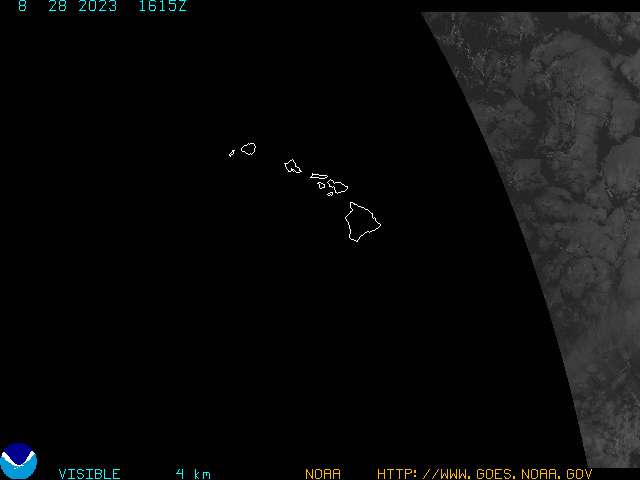


Nellie Says:
Glenn,
We are headed to Maui the last week in January. First time ever! When you say “cold” how cold do you really mean? We are coming from snow/frozen tundra country (Wisconsin). Is the ocean warm enough to swim in? Is this typically the “rainy” season? Should we expect more rain than sun?~~~Hi Nellie, I rarely say cold, perhaps I said cool, at any rate, cool in the tropical sense of the word. I doesn’t that often get into the 50F’s at sea level, and 60’s during the winter is quite common. The Ocean will be warm enough to swim in, definitely in the 70’s…often the middle 70’s. This winter is drier than normal, in terms of rainfall. I hope this helps, Aloha, Glenn
jack weber Says:
Glenn, thank you for praying for rain for us on Maui and on Big Island. We are dry as a bone here and some of my plants, even established fruit trees are beginning to show signs of deterioration from the drying winds and lack of precip. My small catchment is almost empty. Yikes. We’ll keep praying for some water. Is this totally dry scenario suppsoed to extend into May at this same level of dryness?
J*~~~Hi Jack, I understand your concern, it is super dry. I don’t, at this point in time, see any major relief from the drought conditions on your island. I expect a dry winter, lets hope for a wetter spring, before we head into our classically dry summer. I’ve been using the drought more and more, I don’t want to have to start calling it a severe drought, although at the moment…we’re headed in that direction! Aloha, Glenn