











December 8-9, 2010
Air Temperatures – The following maximum temperatures were recorded across the state of Hawaii Wednesday afternoon:
Lihue airport, Kauai – 79
Honolulu airport, Oahu – 79
Kaneohe, Oahu – 81
Molokai airport – 82
Kahului airport, Maui – 82
Kona airport – 81
Hilo airport, Hawaii – 80
Air Temperatures ranged between these warmest and coolest spots near sea level – and on the highest mountain tops…as of 5pm Wednesday evening:
Port Allen, Kauai – 81F
Hilo, Hawaii – 74
Haleakala Crater – 43 (near 10,000 feet on Maui)
Mauna Kea summit – 39 (near 14,000 feet on the Big Island)
Precipitation Totals – The following numbers represent the largest precipitation totals (inches) during the last 24 hours on each of the major islands, as of Wednesday afternoon:
0.07 Kalaheo, Kauai
0.07 Waimanalo, Oahu
0.01 Molokai
0.00 Lanai
0.00 Kahoolawe
0.00 Maui
0.08 South Point, Big Island
Marine Winds – Here’s the latest (automatically updated) weather map showing a high pressure ridge over the Hawaiian Islands…moving southward. Our winds will be increasing in strength from the south to southwest Thursday and Friday.
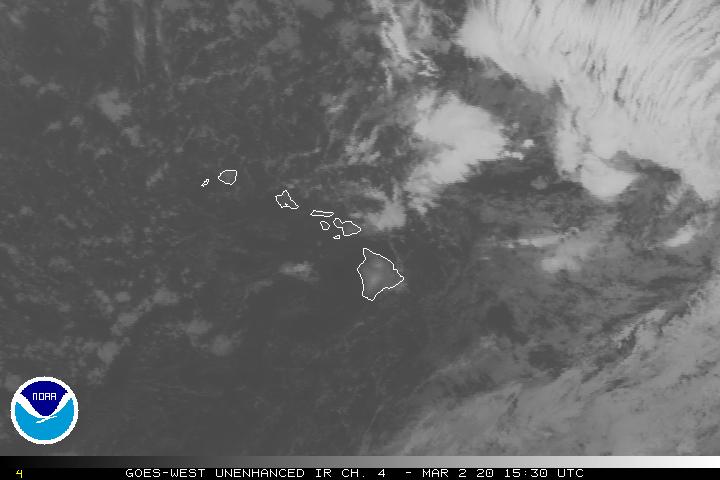
Satellite and Radar Images: To view the cloud conditions we have here in Hawaii, please use the following satellite links, starting off with this Infrared Satellite Image of the islands to see all the clouds around during the day and night. This next image is one that gives close images of the islands only during the daytime hours, and is referred to as a Close-up visible image. This next image shows a larger view of the Pacific…giving perspective to the wider ranging cloud patterns in the Pacific Ocean. Finally, here's a Looping IR satellite image, making viewable the clouds around the islands 24 hours a day. To help you keep track of where any showers may be around the islands, here’s the latest animated radar image.
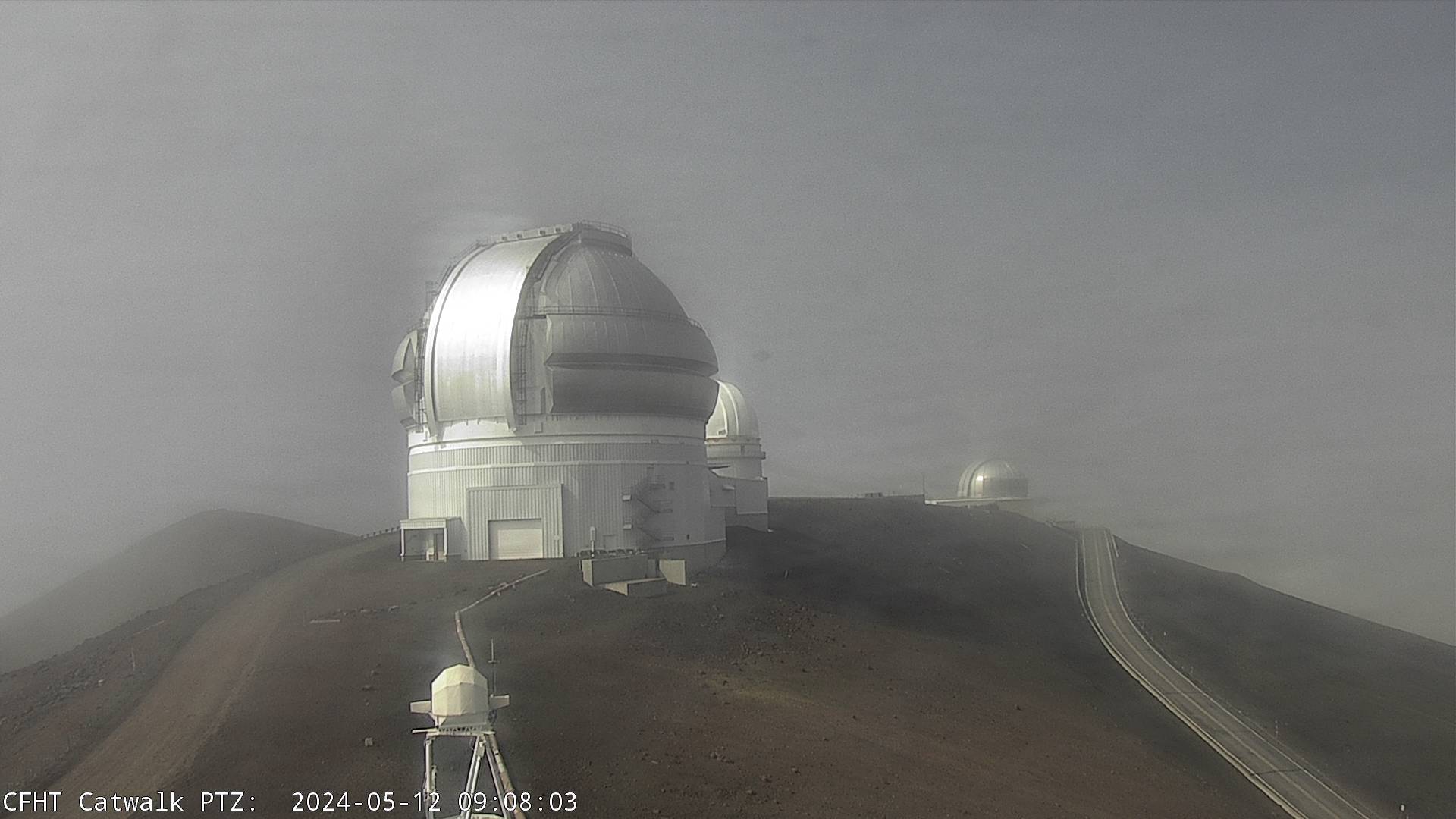
Hawaii’s Mountains – Here’s a link to the live web cam on the summit of near 14,000 foot Mauna Kea on the Big Island of Hawaii. The tallest peak on the island of Maui is the Haleakala Crater, which is near 10,000 feet in elevation. These two web cams are available during the daylight hours here in the islands…and when there’s a big moon rising just after sunset for an hour or two! Plus, during the nights and early mornings you will be able to see stars, and the sunrise too…depending upon weather conditions.
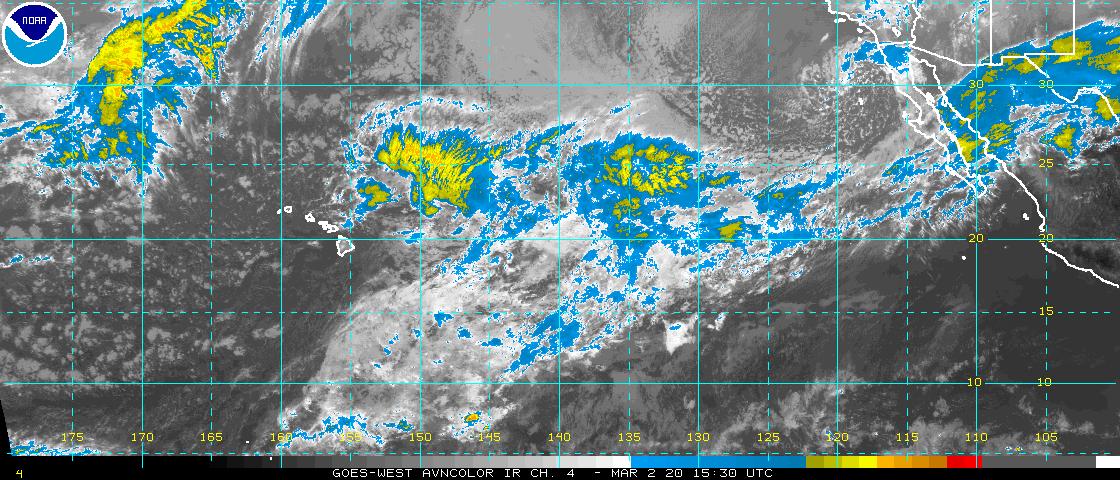
Tropical Cyclone activity in the eastern and central Pacific – Here’s the latest weather information coming out of the National Hurricane Center, covering the eastern north Pacific. You can find the latest tropical cyclone information for the central north Pacific (where Hawaii is located) by clicking on this link to the Central Pacific Hurricane Center. Here’s a tracking map covering both the eastern and central Pacific Ocean. A satellite image, which shows the entire ocean area between Hawaii and the Mexican coast…can be found here. Of course, as we know, our hurricane season won't end until November 31st here in the central Pacific.
Aloha Paragraphs

Becoming windy/wetter…first on Kauai and Oahu
Our recent spell of light breezes…will give way to strong and gusty southwest Kona winds Thursday into Friday. This weather map shows a 1025 millibar high pressure system far to our east-northeast, with its associated ridge extending westward from its center…over Oahu and Kauai Wednesday night. The placement of this ridge over the state will keep our local winds on the light side for the moment, although that will be ending soon. Meanwhile, a cold front is approaching from the west, keeping the ridge pushed south over the state. We began seeing an increase in volcanic haze (vog) over some parts of the state Tuesday…which has continued today. Winds are expected to become stronger and gusty from the south and southwest Kona directions Thursday and Friday…as the front gets closer. These Kona winds will become strong enough to trigger small craft wind advisories, perhaps even a wind advisory in one or two of those windiest locations. The trade winds are expected to arrive back in our Hawaiian Island weather picture Sunday into early next week.
Winds around the state remain generally light so far, although will be picking up soon…the following numbers represent the strongest gusts Wednesday evening:
20 mph Barking Sands, Kauai
22 Makua Ridge, Oahu
12 Molokai
12 Kahoolawe
13 Hana, Maui
12 Lanai Airport
23 PTA West, Big Island
Today remained generally dry, although showers may begin increasing later tonight into Thursday, first on Kauai and Oahu…and then the rest of the state into Friday. A low pressure system, as shown in the weather chart above, will move quickly into place to our north into Thursday. As this low, with its associated cold front gets closer to Niihau and Kauai…showers will begin there first. This frontal boundary will prompt stronger and gusty Kona winds into Friday too. This front will bring rainfall with it, some of which will be heavy…with potent thunderstorms possible too.
This type of rainfall can easily result in flash flooding. Thus, the NWS forecast office in Honolulu is keeping the flash flood watch in effect for Kauai County and Niihau as of Thursday morning. At the same time, the other islands are now included in the flood watch, although will wait until Thursday evening to begin. If things develop sooner than expected, we could see the flood watch start earlier, and grade into a flood warning with time. Besides the cold front itself, there will be a rainfall enhancing low pressure system aloft, which will add intensity to the rainfall into Friday. The cold front will pass down through the state, bringing heavy rains to the other islands later Thursday into Friday or even Saturday.
The details above are firming up, as we get closer to the event itself. This satellite image shows the nature of this low pressure system, and the cold front, now both out to our west and northwest. Looking at this weather situation, using this tighter focus, we can see the ragged leading edge of this inclement weather maker edging close to Niihau and Kauai already this evening. Shifting over to this looping radar image, we can see that rainfall is still not getting close to the Kauai end of the chain, although there a few showers, even a few moderately heavy ones, clipping the easternmost tip of the Big Island early this afternoon, with a few more, of moderate intensity…over the ocean to the south of Oahu at the time of this writing.
Meanwhile, the surf is large on the north shores, having triggered a high surf advisory, and potential large harbor surges for Kahului and Hilo harbors…although will be gradually dropping in turn. Then, if all the above wasn’t enough, the cold air aloft associated with the upper trough of low pressure heading this way, may cause the season’s first snowfall atop Mauna Kea and Mauna Loa with time. If you had a chance to glance at this view of the Big Island (during the daylight hours), you saw that there certainly wasn’t anything icy up there yet! All of this begs the question, when will this all be done with us? Well, the answer is still slightly unclear, although it looks like the trade winds will return Sunday, and could carry the leftover moisture from the cold front back over the windward sides for a day or two…or into early next week.
It's Wednesday as I begin writing this last section of this evening's narrative update. The weather here in the islands remained nice again today, with just those few afternoon clouds over and around the mountains, and a few light showers locally. Conditions will begin to break down Thursday though, after what has been a great weather pattern during these first three or four days of the week. ~~~ Here in Kihei, Maui, at around 535pm, the weather was mostly clear, although there is light to moderate volcanic haze in the air too. There are very few clouds in sight, which will keep our skies clear overnight as well…unless high clouds arrive from the south. This could lead to another cool start to the day Thursday…especially around Maui and Hawaii Counties. Kauai and Oahu should begin to get breezy and cloudy too, with this air coming up from the deeper tropics, so that those islands should feel a little warmer in the morning. ~~~ I'll be back early Thursday morning with your next new weather narrative, with more news about this upcoming wet and windy episode. I hope you have a great Wednesday night until then!
Interesting: Twelve years after the spillage at Aznalcóllar (Spain), a team led by the National Museum of Natural Science (NMNS-Spanish National Research Council) states that the soil affected has recovered "reasonably well." Their study of nematodes (microscopic soil worms that are indicators of the biological state of soil) confirmed the "enormous" impact of heavy metals and is useful for predicting the effect of the red mud spillage in Hungary.
One month ago, a spillage of red mud with toxic material from the aluminium holding pond in the city of Kolontar devastated the west of Budapest (Hungary) and reached the Danube. The immediate consequences were the loss of ten human lives and the destruction of houses and crops.
In Spain, the Aznalcóllar spillage in 1998 affected species in the soil in Doñana including killing several species. Some nematodes disappeared in the first few months after the disaster. "The abundance and diversity of these animals was affected immediately, but in the long term, the nematodes themselves did not suffer any irreparable damage," the main author of the study and researcher at the NMNS (SNRC) in Madrid Alfonso Navas said.
The study, published recently in Nematropica, compared samples from the unpolluted and polluted areas. According to the results, the diversity and maturity of nematodes was "significantly" lower in the polluted area than in the unpolluted area. "Nickel and Copper appear to be the most toxic metals for the nematode community," Navas added.
"The issue is not whether or not the nematodes disappear, because that is impossible, but whether the nematode fauna, which plays a biological role and recycles organic matter, has suffered damage and also whether the soil has felt the effects of the spill," the researcher specified. "It could take tens of years for the soil to recover," the expert added. "An impact such as a spillage of this type affects soil structure.
Even though it can recover in the long term, the immediate function of the micro fauna is altered for decades," Navas insists. The direct impact of such spillages is also coupled with the fact that majority contain heavy metals. According to the researchers, Aznalcóllar has been "restored in exemplary fashion," a process that began with a determined and rapid response on behalf of the SNRC and the Regional Government of Andalucía."
However, "some of that soil is still affected by heavy metals, although there is no reason to dramatise because they have been immobilised by physical and chemical corrective measures," Navas indicated. According to the researcher, the surroundings of the Doñana National Park were also used for mining, where "there were already a large number of heavy metals."
The Largest Ecological Disaster in Hungary On the 4th of October, the Hungarian aluminium holding pond in the city of Kolontar ruptured sending toxic red mud into at least 40km2 of the West of Budapest, researchers said. Houses, farms, crops and human lives were lost. The "extraordinary" fertility of the plains of the Danube was also affected.
"It is highly likely that this area will not be able to be used to grow crops for a long time," Navas said. Furthermore, "in Hungary, action was not taken as efficiently or quickly as was to be expected, as in Aznalcóllar, and toxic pollutants have probably reached a much greater depth than was the case in Spain," the expert stated.
The "advantage" of the Spanish spillage is that a mud crust was formed which saw pollutants remain on the surface, therefore making it possible to remove them mechanically. In Hungary "it was not hot enough for such a crust to form and the content of the spillage percolated into the soil," the scientist said.
If heavy metals filter into the soil, "biodiversity is reduced and the productivity of the soil, in both physical and nutritional terms, is noticeably affected. Without the biological natural components of the soil, the latter is not moved or aired and therefore becomes compact over time," Navas indicated.
The Spanish biologist believes Aznalcóllar could serve as a model for how to act in Hungary. The nematodes and earthworms play a "fundamental" role because they accelerate the cycle of nutrients and see to it that the latter interchange. "Without the micro fauna, the roots of plants asphyxiate and do not grow, leading to a reduction in the (agricultural and forest) fertility of the soil," Navas concludes.
Interesting2: A Texas Tech University whale researcher said she and others found evidence of exposure to polycyclic aromatic hydrocarbons (PAHs) and persistent organic pollutants, including the pesticide DDT, in Pacific Ocean-dwelling sperm whales. But even more surprisingly, the whales living in or around waters near the Galapagos Islands — a UNESCO marine reserve and considered pristine — showed higher levels of a contamination biomarker than whales from other areas of the world's largest ocean, said Celine Godard-Codding, an assistant professor at The Institute of Environmental and Human Health at Texas Tech and a lead investigator on the project.
The study published online Dec. 6, ahead of print in the peer-reviewed journal Environmental Health Perspectives (EHP). "Our findings provide a unique baseline for global assessment of pollution exposures and sensitivity in the sperm whale, a globally distributed and threatened species," Godard-Codding said. "What was surprising was the higher level of the biomarker found in whales near the Galapagos Islands.
We would not have expected the Galapagos to be the area where we'd find more, since it's usually considered such a pristine area." The broad study provides a baseline for future research on ocean pollution and health, she said. Tissues from some of the whales from all five Pacific regions also were analyzed for DDT, the fungicide hexachlorobenzene, PAHs, and 30 types of polychlorinated biphenyls (PCBs), known to cause endocrine disruption and neurotoxicity.
From 1999 to 2001, the study authors biopsied skin and blubber from 234 male and female sperm whales in five locations across the Pacific Ocean, which included the Gulf of California, Mexico; the Galapagos Islands, Ecuador; Pacific waters between the Galapagos Islands and Kiribati (Pacific Crossing); Kiribati; and Papua New Guinea.
Tissue samples from the whales were analyzed for expression of CYP1A1, an enzyme that metabolizes certain aromatic hydrocarbons — the more CYP1A1 is expressed, the more likely the animal has been exposed to compounds such as those examined in this study. CYP1A1 expression was highest in whales from the Galapagos Islands, second highest in those from the Gulf of California, and lowest in those from waters farthest from the continents (Kiribati and Pacific Crossing).
"Nothing of this scope has been done for an ocean-wide level," Godard-Codding said. "That's the exciting thing about this study. And that we could detect regional differences in the biomarker." The biomarker does not prove the animals came in contact with manmade contamination or industrial waste, she said.
It reveals exposure to a compound whether it's manmade, such as industrial combustion, or naturally produced, such as a volcano or forest fire. However, the enzyme does show the animals are coming in contact with compounds known to induce molecular changes. Pollutants were found in all the samples, but levels of the pollutants measured did not correlate directly with levels of CYP1A1 expression.
However, the authors were unable to test for many types of pollutants because the small amounts of tissue allowed under standards for humane biopsying of marine mammals precluded extensive chemical analyses. Godard-Codding said that sperm whales are important sentinels of ocean health.
These carnivores are likely to bioaccumulate and biomagnify fat-soluble pollutants because they are massive and long-lived. They can weigh up to 50 tons and live up to 70 years. Monitoring of sperm whales may also provide information on specific regions of the Pacific because females and juveniles tend to stay within a 600-mile range, she said.
Interesting3: Saying the health of the planet is at stake, U.N. Secretary-General Ban Ki-moon urged 190 nations meeting in Mexico to agree to steps to fight climate change that fall short of a perfect deal. "We cannot let the perfect be the enemy of the good," Ban told a first session of environment ministers at the November 29 to December 10 talks in the Caribbean resort of Cancun where rich and poor nations are split over cutting greenhouse gas emissions.
After U.S. President Barack Obama and other leaders failed to work out a U.N. climate treaty at a 2009 summit in Copenhagen, Ban repeatedly stressed lower ambitions for the Cancun talks despite calls by some nations for radical action. Ban told the ministers: "the stability of the global economy, the well-being of your citizens, the health of our planet, all this and more depend on you."
The Cancun talks are seeking a package deal to set up a fund to oversee climate aid, ways to slow deforestation, steps to help poor countries adapt to climate change and a mechanism to share clean technologies such as wind and solar power. Some developing nations, with Bolivia the most outspoken, have said that far more radical action by the rich is needed now to cut greenhouse gas emissions and deadly floods, droughts, desertification and rising sea levels.
Speaking on behalf of Africa, Ethiopian Prime Minister Meles Zenawi said he was "deeply dismayed" by the loss of momentum since Copenhagen. "Every day of delay is being paid for by the lives of countless numbers of Africans," he said. Saying the health of the planet is at stake, United Nations Secretary-General Ban Ki-moon urged 190 nations meeting in Mexico on Tuesday to agree to steps to fight climate change without holding out for a perfect deal.
 Email Glenn James: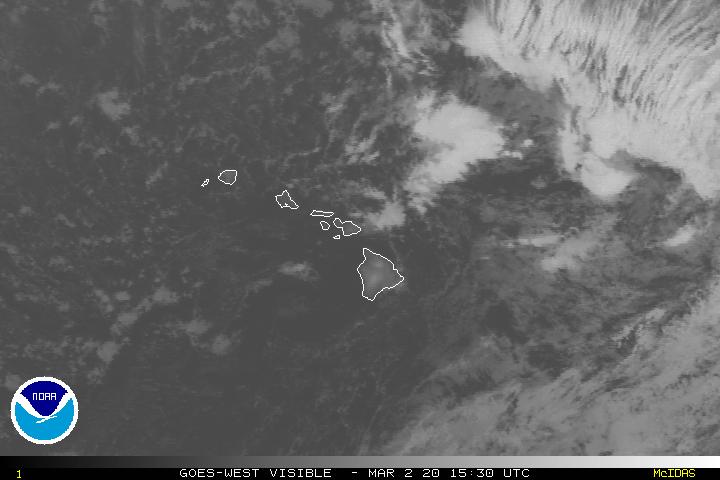



susan Says:
Hi Glenn
Here is a question for you. When a front comes from the south like this one is, and there is prefrontal rain precediing of the actual front, does that rain fall solely on the leeward side and then when the actual front passes over the state the rest of the island gets wet ? I am curious for Maui in particular so you can gear your answer to that,
Thanks for another weather lesson.
Aloha Susan~~~Hi Susan, another good question. This front is actually going to come in from the west and northwest, although with the ridge being eventually pushed to the south and east of the Big Island, our winds will come up from the southwest. This brings the showers onto our leeward sides as you mention, at least at first. As the frontal passage actually happens, like on Friday, the entire island chain will benefit from the frontal precipitation. This hold true for Maui as well. I hope this helps, Aloha, Glenn.