











December 6-7, 2010
Air Temperatures – The following maximum temperatures were recorded across the state of Hawaii Monday afternoon:
Lihue airport, Kauai – missing
Honolulu airport, Oahu – 80
Kaneohe, Oahu – 80
Molokai airport – 80
Kahului airport, Maui – 83
Kona airport – 81
Hilo airport, Hawaii – 79
Air Temperatures ranged between these warmest and coolest spots near sea level – and on the highest mountain tops…as of 5pm Monday evening:
Port Allen, Kauai – 81F
Hilo, Hawaii – 73
Haleakala Crater – 52 (near 10,000 feet on Maui)
Mauna Kea summit – 39 (near 14,000 feet on the Big Island)
Precipitation Totals – The following numbers represent the largest precipitation totals (inches) during the last 24 hours on each of the major islands, as of Monday afternoon:
0.01 Hanalei River, Kauai
0.01 Luluku, Oahu
0.01 Molokai
0.00 Lanai
0.00 Kahoolawe
0.01 Puu Kukui, Maui
0.25 Glenwood, Big Island
Marine Winds – Here’s the latest (automatically updated) weather map showing a high pressure ridge just north of the Hawaiian Islands…moving southward. Our winds will become lighter from the south and southeast Tuesday, to south to southwest Wednesday.
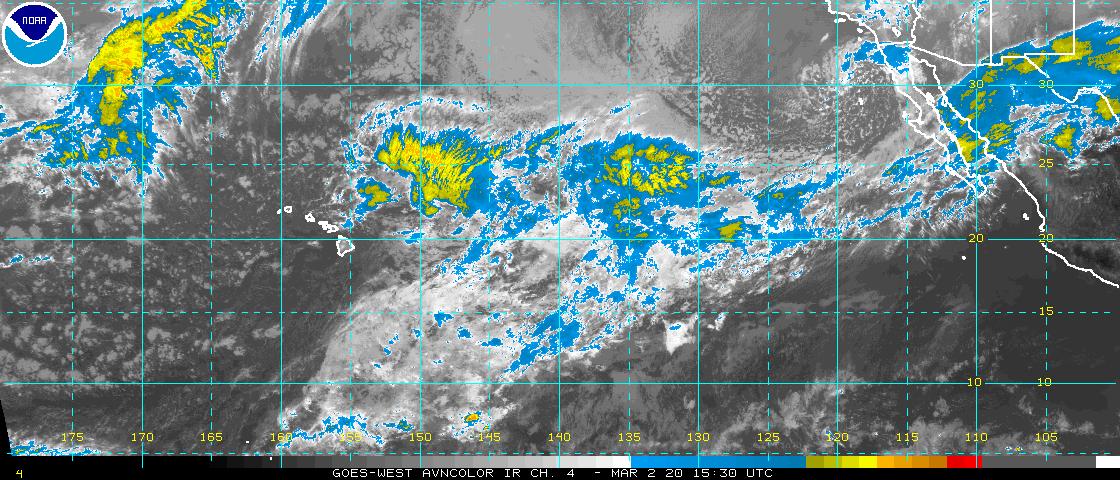
Satellite and Radar Images: To view the cloud conditions we have here in Hawaii, please use the following satellite links, starting off with this Infrared Satellite Image of the islands to see all the clouds around during the day and night. This next image is one that gives close images of the islands only during the daytime hours, and is referred to as a Close-up visible image. This next image shows a larger view of the Pacific…giving perspective to the wider ranging cloud patterns in the Pacific Ocean. Finally, here's a Looping IR satellite image, making viewable the clouds around the islands 24 hours a day. To help you keep track of where any showers may be around the islands, here’s the latest animated radar image.
Hawaii’s Mountains – Here’s a link to the live web cam on the summit of near 14,000 foot Mauna Kea on the Big Island of Hawaii. The tallest peak on the island of Maui is the Haleakala Crater, which is near 10,000 feet in elevation. These two web cams are available during the daylight hours here in the islands…and when there’s a big moon rising just after sunset for an hour or two! Plus, during the nights and early mornings you will be able to see stars, and the sunrise too…depending upon weather conditions.
Tropical Cyclone activity in the eastern and central Pacific – Here’s the latest weather information coming out of the National Hurricane Center, covering the eastern north Pacific. You can find the latest tropical cyclone information for the central north Pacific (where Hawaii is located) by clicking on this link to the Central Pacific Hurricane Center. Here’s a tracking map covering both the eastern and central Pacific Ocean. A satellite image, which shows the entire ocean area between Hawaii and the Mexican coast…can be found here. Of course, as we know, our hurricane season won't end until November 31st here in the central Pacific.
Aloha Paragraphs

Another cool morning Tuesday…potential vog
Light breezes, trending towards the south to southeast during the first half of this week…will give way to stronger Kona winds later in the week. This weather map shows a weak 1021 millibar high pressure ridge just to the north of our islands Monday night. The ridge is positioned very near Kauai at this time, thus the down swing of our wind speeds. Meanwhile, a cold front is approaching the state from the north. This front will stall before arriving, although get close to Kauai, pushing the ridge down towards the Big Island in the process. As the winds turn more south, we could see an increase in volcanic haze (vog) over some parts of the state soon. Winds are expected to become stronger and gusty from the south and southwest Kona directions during the second half of the week.
Winds around the state are lighter now, which will remain the case Tuesday…the following numbers represent the strongest gusts early Monday evening:
07 mph Lihue, Kauai
12 Kahuku, Oahu
08 Molokai
23 Kahoolawe
17 Lipoa, Maui
08 Lanai Airport
14 Honokaa, Big Island
There may be a few light showers around, although dry air will remain in place for the most part. As we move into the middle of the week, and then onwards from there…things will become more interesting. This may become especially true as we grade into the second half of the week…into Saturday. The details of this changing weather reality are apt to change somewhat, almost on a daily basis. There are still a couple of cold fronts pushing in our direction. The first will come close enough to Kauai by Wednesday, to bring our first batch of moisture into the state then. A second cold front will sweep in our direction later in the week, prompting stronger and gusty Kona winds. This front will bring rainfall with it, some of which will likely be heavy…with some thunderstorms possible then too. This type of rainfall pattern can easily lead to flash flooding.
In sum: a dry and stable air mass overlies the Aloha state now, which will keep good weather around for the next couple of days. As we move past the middle of this new week however, things will become potentially less settled. This will become especially true as we get into Thursday or Friday through Saturday. The details of this change in our weather will need to be fine tuned as noted above, although all signs continue to point towards windy and rainy weather with time. Here’s a large size IR satellite image, showing the dynamic parent low pressure system, with its classic wound-up cloud bands…associated with the approaching cold front to our north.
It's Monday evening as I begin writing this last section of today's narrative update. The weather here in the islands will remain near perfect for these first few days of the week. The light winds, and dry air however has caused cooler early morning temperatures…even at sea level locations. The air mass remains dry at the moment, so it will definitely be another mostly clear night just about everywhere Monday, which will bring more chilly temperatures right down to sea level. As noted above however, as we move into the second half of the week, we could see a completely different story.
~~~ Here in Kihei, Maui, at around 530pm, the weather is mostly clear, with just a few dissipating clouds on the slopes of the Haleakala Crater. The windward sides, as are most areas, stayed clear all day. The dry air, clear skies, and light winds are all the right ingredients to make for another winterized morning Tuesday! Grab that extra blanket, if you don't already have it on your bed…you'll need it. As was the case today, the sunny skies Tuesday will warm things up quickly again.
~~~ Part of the reason for the colder mornings, is that this week marks the earliest sunsets, and latest sunrises of the year. All this darkness, gives the atmosphere plenty of time to cool off. Also, look for the thinnest crescent moon this evening, as it will be generally clear, making it easy to see. I'll be back early Tuesday morning with your next new weather narrative, likely writing about the cold temperatures, and the good chance of rainfall later in the week. Finally, here in Kula, Maui at 830pm, the air temperature was already down to 54.9F degrees…absolutely heading into the 40's again by Tuesday morning. Aloha for now…Glenn.
Interesting: The news about the potential health dangers of the TSA's naked body scanners just keeps getting worse. An increasing number of doctors and scientists are going public with their warnings about the health implications of subjecting yourself to naked body scanners. These include Dr Russell Blaylock as well as several professors from the University of California who are experts in X-ray imaging.
At the same time, some internet bloggers are insisting that the TSA's naked body scanners pose no health risks because air travelers are subjected to higher levels of radiation by simply enduring high-altitude flights where cosmic radiation isn't filtered out by the full thickness of the Earth's atmosphere.
This comparison, however, is inaccurate: The TSA's body scanners focus radiation on the skin and organs near the skin whereas cosmic radiation during high-altitude flights is distributed across the entire mass of your body.
Comparing the total radiation exposure across your entire body to machine-emitted radiation exposure that focuses its ionizing radiation primarily on your skin is like comparing apples and oranges.
Interesting2: Community leaders managing a fragment of ancient Mexican jungle say their approach to logging precious hardwoods protects rare jaguar and may guide nearby U.N. climate talks seeking a forest blueprint. Community forest management means giving land ownership to local villagers, so that they harvest timber with an eye on the future and damages the forest less than industrial logging concessions which typically last 20 or 30 years.
Negotiators from nearly 200 countries are gathered in Mexico's Cancun beach resort, 155 miles north of the Noh-Bec forest community, where they are trying to design an extra incentive to reward careful foresters. They are considering tradable carbon offsets which would represent the greenhouse gas carbon dioxide locked in the trunks of their trees.
But that proposed scheme, called reduced emissions from deforestation and degradation (REDD), is bogged down like the wider, November 29-December 10 U.N. climate talks. "We've got 123 million acres of community forests in Mexico and Central America which potentially could qualify for REDD," said Salvador Anta, community forests manager with Mexico's forestry body, Comision Nacional Forestal (CONAFOR).
The Noh-Bec forest community, or ejido, was founded in 1936 and is regarded as one of the best examples of sustainable forestry in Mexico. It harvests four mahogany trees per 2.3 acres per year, and leave a portion of their 59,000 acres untouched.
Increasing3: Impairments to health and physical performance are not primarily a result of aging but of unfavorable lifestyle habits and lack of exercise. This is the position taken by Dieter Leyk and his coauthors in the new issue of Deutsches Ärzteblatt International. Sporty elderly people have a life expectancy that is almost 4 years higher and are often faster than younger athletes.
In their study, the sports scientists analyzed the stamina of more than 600 000 marathon and half marathon runners and asked participants about their lifestyle habits and their health. Marathon running is particularly suitable for studying because participants have to put in sufficient training hours for the competition, and the athletes accommodate this into their day accordingly.
Unfavorable characteristics such as obesity, smoking, and lack of physical activity are rarer in runners, and reductions in physical performance are more likely to be the result of biological aging processes. These reductions make their presence felt only after the 54th year of life and are but slight.
More than 25% of 50- to 69-year-olds had taken up running only in the preceding 5 years and participated in a marathon nonetheless. Of note: older participants do not have to train any harder to maintain their fitness than their younger rivals.
Interesting4: The exact location of Santa's Workshop has long been kept secret, but one thing every child knows is that he lives somewhere up by the North Pole. It's a place that has seen great changes in recent years with melting sea ice and warmer summer temperatures attributed to global warming. But climate change isn't the only bad news facing the world's favorite jolly old elf: research from the Norwegian University of Science and Technology (NTNU) shows that if he's eating anything that lives in the Arctic, chances are that he himself is loaded with toxic chemicals.
In a series of recent publications, NTNU biologist and professor Bjørn Munro Jenssen and colleagues have reported on high levels of contaminants in a range of Arctic animals and fish, including polar bears, ivory gulls and most recently, Greenland sledge dogs.
Contaminants concentrate over the Arctic
The Arctic seems like it should be pristine: Only a few smokestacks foul its air, and just a handful of industrial plants discharge pollutants to its rivers and seas. But industrial pollutants from western Europe, North America and Asia are dispersed by the air and ocean currents, and are then concentrated over the Arctic.
These chemicals are taken up by the smallest plants and animals lowest on the food chain, and are "biomagnified" the higher on the food chain an animal is. That's mainly why the 2500 or so polar bears that wander the remote Norwegian archipelago of Svalbard, only 1000 km from the North Pole, have some of the highest levels of toxic organic pollutants of any creature walking the planet, Jenssen and his colleagues have found.
Report to Arctic Council
Jenssen and colleagues have been exploring the combined effects of pollutants and climate change in a large-scale research project called Bear Health, which was initiated in 2007 as a part of the International Polar Year. The most recent results from this effort have been published as a part of the Arctic Monitoring and Assessment Program, which provides scientific information about arctic pollutants and their effects to the eight countries that are members of the Arctic Council.
In an article entitled "Exposure and effects assessment of persistent organohalogen contaminants in arctic wildlife and fish," published in the journal Science of the Total Environment earlier this year, researchers reported the presence of persistent organic pollutants such as PCBs and brominated flame retardants in the bodies of a wide range of arctic wildlife.
Three species of whales, polar bears, ringed seals, Stellar sea lions, walrus, mink and arctic fox were among the animals reported to contain high levels of these persistent organic pollutants. However, East Greenland and Svalbard polar bears and Svalbard glaucous gulls were the only species directly found to show stress from the pollutants, but the researchers believe this is due to a lack of data, not a lack of effects.
Sledge dogs show thyroid changes
The most recent issue of the journal Ecotoxicology and Environmental Safety also features an article co-authored by Jenssen with a report on the effects of contaminants on Greenland sledge dogs. Research on the dogs helps researchers understand how animals that are high on the food chain, such as polar bears and other carnivores, might be affected by environmental contaminants.
The researchers fed one group of dogs a diet of minke whale blubber that was known to be contaminated with organohalogens such as PCBs. These dogs had altered thyroid hormones compared to a matched set of control sledge dogs fed uncontaminated pork fat. ("Alterations in thyroid hormone status in Greenland sledge dogs exposed to whale blubber contaminated with organohalogen compounds".
Weight loss not a problem
But it's not all doom and gloom for Santa Claus, says NTNU toxicologist Tore Syversen, from the university's Faculty of Medicine. Should Santa decide to diet a bit — by eating less fatty contaminated foods, for example — he won't have to worry about harmful health effects from the contaminants that are surely stored in his own fat, round belly.
"Most people lose weight quite slowly, which enables the liver to cleanse the body of the substances released from body fat," Syversen says. "There is no research showing that dieting is dangerous for people who have accumulated toxic substances in their bodies," Syversen says, adding that it is can be quite beneficial for most people to lose a little weight — and that certainly applies to Mr. Claus.
Interesting5: Foreign pests are eating their way through our national forests, destroying majestic scenery and costing taxpayers millions of dollars. If enforcement efforts to prevent their importation aren't stepped up, irreplaceable resources will be lost forever and taxpayers can expect to fork over billions of dollars by 2019, according to a comprehensive study published Decembert 6 in BioScience.
Researchers at the University of California at Santa Barbara, Michigan State University, the University of Central Florida and the United States Department of Agriculture Forest Service analyzed the impact of invasive insects and pathogens introduced into the United States through 2007.
What they found was a staggering list of more than 455 insects and 16 pathogens that are destroying everything from oak trees in California to redbay trees in Central Florida. Based on the pattern, the researchers predict one especially destructive pest will sneak into the nation every two years.
"Entire forests are being wiped out, and it is costing taxpayers millions as the government tries to eradicate invaders that threaten industries dependent on trees and plants," said Besty Von Holle, a UCF biologist who worked on the project. "We're losing a variety of native species as a result of importing these pests. It's not just aesthetics. It's impacting our economy."
These pests and diseases sneak into the country on everything from horticultural (or plant) imports to the wooden pallets used to transport building supplies, electronic goods and toilet paper, among other products. "Global trade has had tremendous benefits for Americans," said lead author Juliann Aukema from the National Center for Ecological Analysis and Synthesis in Santa Barbara.
"Unfortunately, it also has resulted in the introduction of destructive insects and other organisms that threaten native ecosystems and the services they provide." No section of the country is immune. Laurel wilt disease is one of the latest organisms to be spread by a foreign beetle in the southeastern United States. It is wiping out redbay trees in Georgia and last month was discovered in Seminole County, Fla.
Redbay trees are important to wildlife, and certain butterflies depend on them for survival. California has been battling sudden oak death, a pathogen that is destroying oak trees in California and Oregon since the 1990s. California has spent millions trying to stop it, because the trees are a state treasure.
The Asian longhorned beetle, which came into the United States hidden in wooden packing pallets, has ravaged all sorts of trees in New York City and Chicago. So far, those communities have spent $220 million fighting the infestation. Another beetle, the emerald ash borer, has been destroying trees in the Midwest since 2002.
It is estimated municipalities will spend more than $10 billion for landscape and tree treatments and removals in the next 10 years battling the ash borer. "Once here, these invasive species are virtually impossible to stop," Von Holle said. Recommendations include better screening before letting items into the country.
The department within the USDA that is in charge of screening at airports and ports is now part of Homeland Security. "These screening agents have too much to do, and right now the focus is on finding bombs and weapons," Von Holle said. "That's absolutely right, but we also need to be more aggressive about biological threats that could undermine large parts of the U.S. economy and harm our environment."
 Email Glenn James: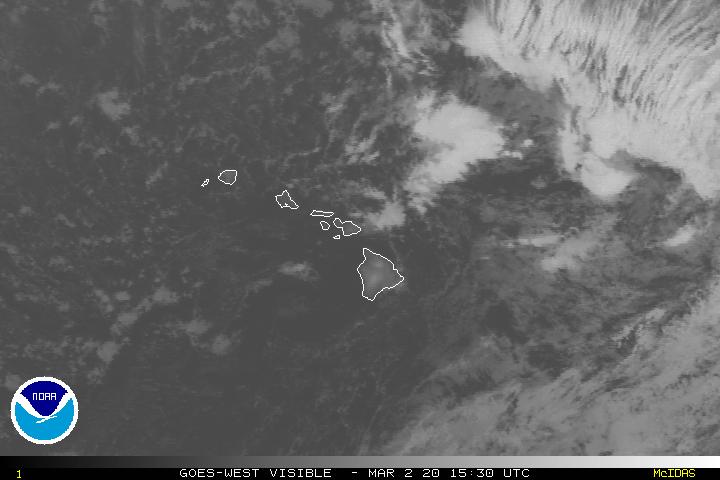


Tim Says:
I can't handle all these teasers for the chance of some much needed rain!! I'm really hoping the leeward sides get into the wet action at least one of these days later this week! I'm just putting it out there!~~~Totally understand Tim, all I can do is point out what’s going on, and the chance of rain later this week…I know we need the rain! Aloha, Glenn