











Air Temperatures – The following maximum temperatures were recorded across the state of Hawaii Thursday afternoon:
Lihue, Kauai – M
Honolulu airport, Oahu – 81
Molokai airport – 81
Kahului airport, Maui – 80
Kona airport – 81
Hilo airport, Hawaii – 79
Air Temperatures ranged between these warmest and coolest spots near sea level – and on the highest mountain tops around the state…as of 730pm Thursday evening:
Barking Sands, Kauai – 77
Hilo, Hawaii, Maui – 70
Haleakala Summit – 43 (near 10,000 feet on Maui)
Mauna Kea Summit – 37 (near 13,800 feet on the Big Island)
Hawaii’s Mountains – Here’s a link to the live web cam on the summit of near 13,800 foot Mauna Kea on the Big Island of Hawaii. This web cam is available during the daylight hours here in the islands…and when there’s a big moon shining down during the night at times. Plus, during the nights you will be able to see stars, and the sunrise and sunset too…depending upon weather conditions. Here's the Haleakala Crater webcam on Maui.
Tropical Cyclone activity in the eastern and central Pacific – Here’s the latest weather information coming out of the National Hurricane Center, covering the eastern north Pacific. You can find the latest tropical cyclone information for the central north Pacific (where Hawaii is located) by clicking on this link to the Central Pacific Hurricane Center. A satellite image, which shows the entire ocean area between Hawaii and the Mexican coast…can be found here. The 2012 hurricane season is over in the eastern and central Pacific…resuming on May 15th and June 1st 2013.
Aloha Paragraphs

Clear to partly cloudy, cloudy periods, passing showers at times
windward sides…and the leeward sides in places locally
Blustery trade winds…easing up slightly during the weekend
Small craft wind advisory all marine zones
Gale warning for the Alenuihaha and Pailolo
Channels…through 6pm this evening
High surf advisory for east shores of all
islands…through 6pm this evening
Wind advisory for Haleakala Summit, Maui…as
well as Kahoolawe – and near Upolu Point,
South Point, Waikoloa to Kamuela on the
Big Island of Hawaii through 6pm Friday
The following numbers represent the most recent top wind gusts (mph), along with directions as of Thursday evening:
37 Lihue, Kauai – NE
39 Kahuku Trng, Oahu – ESE
39 Molokai – ENE
44 Kahoolawe – NE
35 Lipoa, Maui – E
33 Lanai – NE
42 South Point, Big Island – NE
Here are the latest 24-hour precipitation totals (inches) for each of the islands as of Thursday evening:
0.97 North Wailua ditch, Kauai
0.73 Oahu Forest NWR, Oahu
0.50 Molokai
0.00 Kahoolawe
1.39 Puu Kukui, Maui
0.90 Mountain View, Big Island
We can use the following links to see what’s going on in our area of the north central Pacific Ocean. Here's the latest NOAA satellite picture – the latest looping satellite image…and finally the latest looping radar image for the Hawaiian Islands.
~~ Hawaii weather commentary ~~
Strong and gusty trade winds will prevail through the rest of the week….into early next week. We currently have a near 1032 millibar high pressure system (weather map), located to the north of Hawaii. We found strong and gusty winds starting off our day again today, even well before sunrise. Yesterday, all the islands saw wind gusts well over 30 mph. There were reports of 40+ mph gusts many times during the day as well. South Point, down on the Big Island, saw a gust hit 49 mph during the afternoon. Today we saw our winds reach 52 mph at South Point, that southernmost point in the United States. When will these winds calm down? Well…lets just say not very soon, perhaps a touch this weekend. As we get into early next week, another surge of stronger than normal trade winds are expected to arrive…which could be at least as strong as what we've seen this week.
Meanwhile, these stronger than normal winds will carry showery clouds into our windward sides at times, with a few being carried over into the leeward sides on the smaller islands. At the same time, an upper level low pressure system has moved into the area around Kauai. This in turn will enhance some of these incoming showery clouds, likely through about Friday or so. Here's a satellite image, showing generally thin high cirrus, and middle level altocumulus clouds over most of the islands…although they are thinning out this evening. If we take a look at these higher level clouds, by putting the image into motion, we can see them streaming northeast out of the deeper tropics to our southwest.
In sum….stronger than normal trade winds continuing, with several wind related advisories, including: high surf advisory for the east shores of all the islands, small craft wind advisories across all marine zones…and an unusual gale warning in the Pailolo and Alenuihaha Channels. Passing showers along our windward sides, will stretch across the islands into the leeward sides on the smaller islands at times…when there's sufficient moisture that is. Rough and choppy surf along our east shores will keep the ocean pretty un-inviting for the time being. Finally, the high clouds are thinning now, which will give us relief from the sun dimming soon. There should still be enough of these icy clouds to provide a nice sunset this evening, keep an eye out. ~~~ I'll be back early Friday morning with your next weather narrative. I hope you have a great Thursday night wherever you're spending it! Aloha for now…Glenn.
World-wide tropical cyclone activity:
Atlantic Ocean/Caribbean Sea: There are no active tropical cyclones
Gulf of Mexico: There are no active tropical cyclones
Eastern Pacific Ocean: There are no active tropical cyclones
Central Pacific Ocean: There are no active tropical cyclones
Western Pacific Ocean: There are no active tropical cyclones
South Pacific Ocean: Typhoon Evan (04P) remains active in the south Pacific Ocean…located approximately 640 NM east-northeast of Nadi, Fiji. Sustained winds are near 100 knots, with gusts to near 125 knots. Typhoon Evan will increase in strength…through the next 36 hours. Here's the JTWC graphical track map, along with a satellite image.
North and South Indian Oceans: There are no active tropical cyclones
Interesting: The world's urban population is expected to grow by 2.6 billion people between 2011 and 2050, bringing the total number of urbanites to 6.3 billion, according to new research conducted by the Worldwatch Institute for its Vital Signs Online service. This urban expansion will be especially burdensome for developing countries, where 82 percent of the world's population currently lives, writes report author Grant Potter.
Although the developing world is less urbanized than the industrial world in relative terms, developing countries are home to an estimated 1.54 billion more people. In absolute terms, the developing world is projected to add approximately 2.45 billion people to its cities by 2050, while the industrial world is due to add just 170 million.
Within the developing world, the vast majority of this urban growth is projected to occur in Asia and Africa. Asia far outstrips Africa in total population, with 4.2 billion people in 2011 compared with Africa's 1 billion. But these regions are also the least urbanized areas on Earth: Asia's population was 45 percent urban in 2011, and Africa's was only 40 percent urban.
In Latin America and the Caribbean, by contrast, 78 percent of the regions' 599 million people live in cities. A characteristic feature of Asian urbanization is the prevalence of "megacities" that are home to more than 10 million people. In 2011, there were 23 such cities worldwide, 13 of which were Asian. By 2025, the total number of megacities is expected to reach 37—with 21 in Asia alone.
Specifically, Southeast Asia is home to the most densely populated cities: approximately 16,500 people per square kilometer are squeezed into the region's urban areas. Cities, especially in the developing world, must find a way to provide essential services to their ever-increasing populations.
When cities fail to meet these essential needs on a large scale, they create areas known as slums, where households typically lack safe drinking water, safe sanitation, a durable living space, or security of a lease. According to UN HABITAT, 828 million people in developing-world cities are considered slum dwellers—one in every three residents.
Slum populations are expected to grow significantly in the future, and UN HABITAT projects that 6 million more people live in slums every year. The World Health Organization identifies the rapid increase of urban populations, especially slum populations, as the most important issue affecting health in the 21st century.
 Email Glenn James: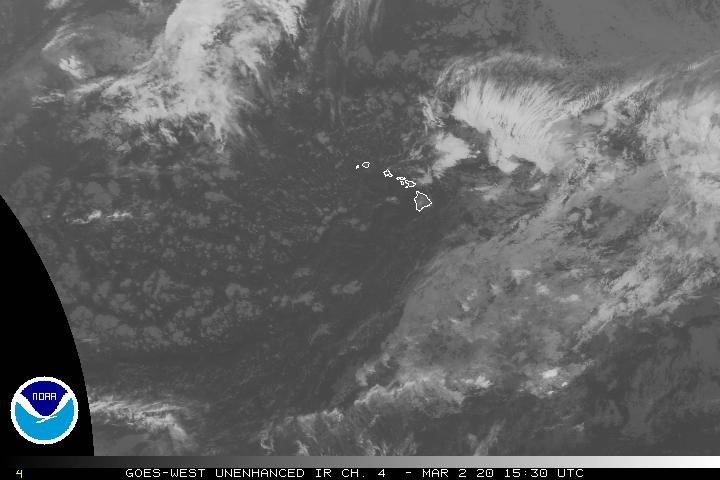


peter mac Says:
thank you Glenn for the urbanite projections. We are a mid pacific slum, and we are not powerless.
Grow food, respect each other.~~~Hi Peter, thanks for wise words, Aloha, Glenn
AmandaonMaui Says:
Blustery, rainy weather for part of the year? Sounds good to me. I love that about Hawai‘i. It doesn't rain all of the time, and it's not sunny 100% of the time either.~~~ I’m with you Amanda! Aloha, Glenn