Air Temperatures – The following maximum temperatures were recorded across the state of Hawaii Friday afternoon:
Lihue, Kauai – 84
Honolulu airport, Oahu – 87
Molokai airport – 84
Kahului airport, Maui – 86
Kona airport – 84
Hilo airport, Hawaii – 83
Air Temperatures ranged between these warmest and coolest spots near sea level – and on the highest mountain tops around the state…as of 1130pm Friday night:
Lihue, Kauai – 77
Hilo, Hawaii – 72
Haleakala Summit – 52 (near 10,000 feet on Maui)
Mauna Kea Summit – M (near 13,800 feet on the Big Island)
Hawaii’s Mountains – Here’s a link to the live web cam on the summit of near 13,800 foot Mauna Kea on the Big Island of Hawaii. This web cam is available during the daylight hours here in the islands…and when there’s a big moon shining down during the night at times. Plus, during the nights you will be able to see stars, and the sunrise and sunset too…depending upon weather conditions. Here's the Haleakala Crater webcam on Maui…although this webcam is not always working correctly.
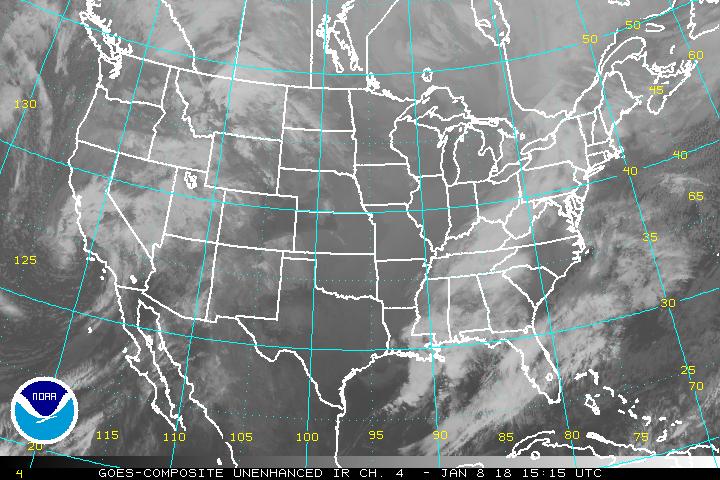
Tropical Cyclone activity in the eastern and central Pacific – Here’s the latest weather information coming out of the National Hurricane Center, covering the eastern north Pacific. You can find the latest tropical cyclone information for the central north Pacific (where Hawaii is located) by clicking on this link to the Central Pacific Hurricane Center. A satellite image, which shows the entire ocean area between Hawaii and the Mexican coast…can be found here.
Aloha Paragraphs

Gusty trade winds, fewer than normal
windward showers through this Labor Day
holiday weekend
As this weather map shows, we have a moderately strong high pressure system located to the northeast of the islands. Our local trade winds will be moderately strong and gusty through the next week…increasing some this weekend.
The following numbers represent the most recent top wind gusts (mph), along with directions as of Friday evening:
27 Port Allen, Kauai – ENE
37 Kuaokala, Oahu – NE
35 Molokai – ENE
38 Kahoolawe – ENE
36 Kahului, Maui -NE
35 Lanai – NE
32 PTA Keamuku, Big Island – NNE
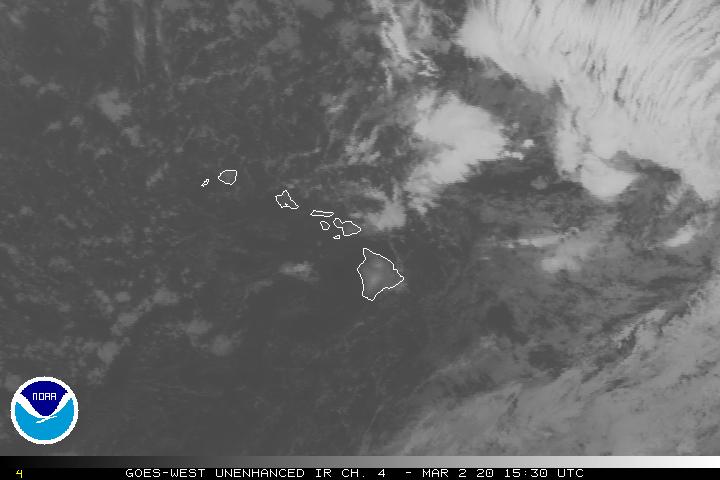
We can use the following links to see what’s going on in our area of the north central Pacific Ocean. Here's the latest NOAA satellite picture – the latest looping satellite image…and finally the latest looping radar image for the Hawaiian Islands.
Here are the latest 24-hour precipitation totals (inches) for each of the islands as of Friday evening:
2.60 Mount Waialeale, Kauai
0.44 Poamoho RG 1, Oahu
0.18 Molokai
0.01 Lanai
0.00 Kahoolawe
0.07 Puu Kukui, Maui
0.28 Mountain View, Big Island
~~ Hawaii Sunset Commentary ~~
Our trade winds will continue to be moderately strong, and last through the next week. These trade winds are forecast to increase a notch going into the weekend. As such, the NWS forecast office in Honolulu has issued a small craft wind advisory over those windiest parts of Maui County and the Big Island through Monday evening at 6pm. We find a moderately strong high pressure system (weather map) located to the northeast of the islands Friday evening. Windward showers will fall at times, although not all that many through this upcoming holiday weekend.
Here in Kula, Maui at 515pm Friday evening, it was partly cloudy with light breezes…and an air temperature of 78.3F degrees. The trades are forecast to continue across our islands, increasing a notch or so this weekend. These trade winds will blow generally in the moderately strong realms…although there will be stronger gusts at times…especially later Saturday into the early part of the new week ahead. If we look at this satellite image, it shows low cloud patches pretty scarce upwind of the islands, so a fairly dry night looks to be on tap. These lower level clouds will however bring a few passing showers over the next few days…although will become less frequent in general with a stable and dry atmosphere over and around the islands now. At the same time, there are minor areas of high cirrus clouds over the Big Island and Maui County, and to the northwest of Kauai at the time of this writing.
~~~ My neighbor just told me about a dance party happening this evening over in Haiku, on the windward side of east Maui. I was going to see a new film, although have decided to try out this dance party instead. As I was considering the fact that there was a full moon tonight an all, it made sense to be more sociable for a change. This will be the second full moon of the month, called a blue moon, on this last night of August 2012…which will light things up really nicely. I'll be back Saturday morning with your next new weather narrative, I hope you have a great Friday night wherever you happen to be spending it! Aloha for now…Glenn.
World-wide tropical cyclone activity:
Post-tropical cyclone Isaac is finally losing its ability for great flooding, with the threat of flash flooding diminishing. Isaac is located about 70 miles west-southeast of Columbia, Missour. Maximum sustained winds are 20 mph, moving in an easterly direction at a very slow 4 mph. Here's a satellite image of Isaac, along with a graphic showing forecast rainfall.
Atlantic Ocean/Caribbean Sea: Tropical storm Kirk (11L) remains active, although weakening in the central Atlantic Ocean…located 1065 miles west of the Azores. Sustained winds were 70 mph, moving towards the northeast at a fast 25 mph. Here's the NHC graphical track map, along with a satellite image of tropical storm Kirk. Here's the hurricane model output for Kirk.
Tropical storm Leslie (12L) is active in the tropical Atlantic…located 410 miles east-northeast of the Leeward Islands. Sustained winds were 70 mph, moving west-northwest at a 18 mph. Here's the NHC graphical track map for Leslie, and a satellite image. Here's the hurricane models information for this storm. Look for Leslie to become a hurricane within 72 hours…as it encounters less favorable environmental conditions at the moment. Leslie will move in a generally northwest direction, keeping it away from the Caribbean Islands. Later in the forecast cycle, it will turn more northerly, remaining at hurricane strength. There are no land areas in the projected path of this tropical cyclone at the moment, although Bermuda may see heavy weather conditions with time.
Here's a satellite image showing tropical storm Kirk…and tropical storm Leslie.
Gulf of Mexico: There are no active tropical cyclones
Eastern Pacific Ocean: Tropical storm Ileana (9E) remains active offshore from the Mexican west coast…located about 555 miles west of the southern tip of Baja California. Sustained winds were 50 mph. Here's the NHC graphical track map, along with a satellite image. Here's what the hurricane models are doing with Ileana. There is no threat to land from this weakening tropical storm.
Central Pacific Ocean: There are no active tropical cyclones
Western Pacific Ocean: There are no active tropical cyclones
South Pacific Ocean: There are no active tropical cyclones
North and South Indian Oceans: There are no active tropical cyclones
Extra: August 2012 is a month with two full moons. And, by popular acclaim, that means it’s a Blue Moon month – but Blue in name only. That’s because a Blue Moon is sometimes defined as the second full moon in a calendar month. The first full moon was August 1. The second full moon is tonight – August 31, 2012. The second full moon of August 2012 is the Blue Moon. Happy Blue Moon, everyone!
There are two more definitions for Blue Moon. It can be the third of four full moons in a single season. Or, someday, you might see an actual blue-colored moon. It’s very rare that you would see a blue-colored moon, although unusual sky conditions – certain-sized particles of dust or smoke – can create them. Blue-colored moons aren’t predictable.
The sorts of moons people commonly call Blue Moons aren’t usually blue. Now on to folklore’s Blue Moons. Every month typically has a full moon (although sometimes February doesn’t). In fact, our word for “month” comes from the word “moon.” Most of the time, the names for full moons coincide with particular months or seasons of the year.
So whether you define a Blue Moon as the second full moon in a month – or the third full moon of four in a season – the name Blue Moon accounts for times when there are more full moons than is ordinary. Blue moon as second full moon in a month. In recent decades, many people have begun using the name Blue Moon to describe the second full moon of a calendar month. The time between one full moon and the next is close to the length of a calendar month.
So the only time one month can have two full moons is when the first full moon happens in the first few days of the month. This happens every 2-3 years, so these sorts of Blue Moons come about that often. The idea of a Blue Moon as the second full moon in a month stemmed from the March 1946 issue of Sky and Telescope magazine, which contained an article called “Once in a Blue Moon” by James Hugh Pruett.
Pruett was using a 1937 Maine Farmer’s Almanac, but he simplified the definition. He wrote: Seven times in 19 years there were — and still are — 13 full moons in a year. This gives 11 months with one full moon each and one with two. This second in a month, so I interpret it, was called Blue Moon.
EarthSky’s Deborah Byrd happened upon a copy of this old 1946 issue of Sky and Telescope in the stacks of the Peridier Library at the University of Texas Astronomy Department in the late 1970s. Afterward, she began using the term Blue Moon to describe the second full moon in a calendar month on the radio.
Later, this definition of Blue Moon was also popularized by a book for children by Margot McLoon-Basta and Alice Sigel, called “Kids’ World Almanac of Records and Facts,” published in New York by World Almanac Publications, in 1985. The second-full-moon-in-a-month definition was also used in the board game Trivial Pursuit.
Can there be two blue moons in a single calendar year? Yes. It last happened in 1999. There were two full moons in January and two full moons in March and no full moon in February. So both January and March had Blue Moons. The next year of double blue moons is coming up in 2018. Blue moon as third full moon of four in a season.
The Old Farmer’s Almanac defined a Blue Moon as an extra full moon that occurred in a season. One season – winter, spring, fall, summer – typically has three full moons. If a season has four full moons, then the third full moon may be called a Blue Moon. The next blue moon by this definition will fall on August 21, 2013. In recent years, a controversy has raged – mainly among purists – about which Blue Moon definition is better.
The idea of a Blue Moon as the third of four in a season may be older than the idea of a Blue Moon as the second full moon in a month. Is it better? Is one definition right and the other wrong? After all, this is folklore. So the folk get to decide, and, in the 21st century, both sorts of full moons have been called Blue.
As the folklorist Phillip Hiscock wrote in his comprehensive article Folklore of the Blue Moon: Old folklore it is not, but real folklore it is. So enjoy Blue Moons! Bottom line: A blue-colored moon is rare. But folklore has defined two different kinds of Blue Moons. A Blue Moon can be the second full moon in a month. Or it can be the third of four full moons in a season. Tonight's full moon is considered a Blue Moon…and it will be bright again Saturday night as well!
Interesting: Leading water scientists have issued one of the sternest warnings yet about global food supplies, saying that the world's population may have to switch almost completely to a vegetarian diet over the next 40 years to avoid catastrophic shortages. Humans derive about 20% of their protein from animal-based products now, but this may need to drop to just 5% to feed the extra 2 billion people expected to be alive by 2050, according to research by some of the world's leading water scientists.
"There will not be enough water available on current croplands to produce food for the expected 9 billion population in 2050 if we follow current trends and changes towards diets common in western nations," the report by Malik Falkenmark and colleagues at the Stockholm International Water Institute (SIWI) said.
"There will be just enough water if the proportion of animal-based foods is limited to 5% of total calories and considerable regional water deficits can be met by a reliable system of food trade." Dire warnings of water scarcity limiting food production come as Oxfam and the UN prepare for a possible second global food crisis in five years.
Prices for staples such as corn and wheat have risen nearly 50% on international markets since June, triggered by severe droughts in the US and Russia, and weak monsoon rains in Asia. More than 18 million people are already facing serious food shortages across the Sahel.
Oxfam has forecast that the price spike will have a devastating impact in developing countries that rely heavily on food imports, including parts of Latin America, North Africa and the Middle East. Food shortages in 2008 led to civil unrest in 28 countries.
Adopting a vegetarian diet is one option to increase the amount of water available to grow more food in an increasingly climate-erratic world, the scientists said. Animal protein-rich food consumes five to 10 times more water than a vegetarian diet.
One third of the world's arable land is used to grow crops to feed animals. Other options to feed people include eliminating waste and increasing trade between countries in food surplus and those in deficit. "Nine hundred million people already go hungry and 2 billion people are malnourished in spite of the fact that per capita food production continues to increase," they said.
"With 70% of all available water being in agriculture, growing more food to feed an additional 2 billion people by 2050 will place greater pressure on available water and land." The report is being released at the start of the annual world water conference in Stockholm, Sweden, where 2,500 politicians, UN bodies, non-governmental groups and researchers from 120 countries meet to address global water supply problems.
Competition for water between food production and other uses will intensify pressure on essential resources, the scientists said. "The UN predicts that we must increase food production by 70% by mid-century. This will place additional pressure on our already stressed water resources, at a time when we also need to allocate more water to satisfy global energy demand – which is expected to rise 60% over the coming 30 years – and to generate electricity for the 1.3 billion people currently without it," said the report.
Overeating, undernourishment and waste are all on the rise and increased food production may face future constraints from water scarcity. "We will need a new recipe to feed the world in the future," said the report's editor, Anders Jägerskog.
A separate report from the International Water Management Institute (IWMI) said the best way for countries to protect millions of farmers from food insecurity in sub-Saharan Africa and south Asia was to help them invest in small pumps and simple technology, rather than to develop expensive, large-scale irrigation projects.
"We've witnessed again and again what happens to the world's poor – the majority of whom depend on agriculture for their livelihoods and already suffer from water scarcity – when they are at the mercy of our fragile global food system," said Dr Colin Chartres, the director general.
"Farmers across the developing world are increasingly relying on and benefiting from small-scale, locally-relevant water solutions. [These] techniques could increase yields up to 300% and add tens of billions of US dollars to household revenues across sub-Saharan Africa and south Asia."
 Email Glenn James: