











Air Temperatures – The following maximum temperatures were recorded across the state of Hawaii Sunday afternoon:
Lihue, Kauai – 85
Honolulu airport, Oahu – 87
Kaneohe, Oahu – M
Molokai airport – 83
Kahului airport, Maui – 86
Kona airport – 85
Hilo airport, Hawaii – 83
Air Temperatures ranged between these warmest and coolest spots near sea level – and on the highest mountain tops around the state…as of 8pm Sunday evening:
Barking Sands, Kauai – 79
Molokai airport – 74
Haleakala Summit – 50 (near 10,000 feet on Maui)
Mauna Kea Summit – M (near 13,800 feet on the Big Island)
Hawaii’s Mountains – Here’s a link to the live web cam on the summit of near 13,800 foot Mauna Kea on the Big Island of Hawaii. This web cam is available during the daylight hours here in the islands…and when there’s a big moon shining down during the night at times. Plus, during the nights you will be able to see stars, and the sunrise and sunset too…depending upon weather conditions. Here's the Haleakala Crater webcam on Maui…although this webcam is not always working correctly.
Tropical Cyclone activity in the eastern and central Pacific – Here’s the latest weather information coming out of the National Hurricane Center, covering the eastern north Pacific. You can find the latest tropical cyclone information for the central north Pacific (where Hawaii is located) by clicking on this link to the Central Pacific Hurricane Center. A satellite image, which shows the entire ocean area between Hawaii and the Mexican coast…can be found here.
Aloha Paragraphs

Gusty trade winds…windward showers at times
As this weather map shows, we have a moderately strong high pressure systems located to the northwest, north and northeast of the islands. Our local trade winds will be quite strong and gusty into the new week.
The following numbers represent the most recent top wind gusts (mph), along with directions as of Sunday evening:
27 Port Allen, Kauai – ENE
32 Kuaokala, Oahu – N
30 Molokai – NE
31 Kahoolawe – NE
32 Kahului, Maui -NE
32 Lanai – NE
31 Pali 2, Big Island – NE
We can use the following links to see what’s going on in our area of the north central Pacific Ocean. Here's the latest NOAA satellite picture – the latest looping satellite image…and finally the latest looping radar image for the Hawaiian Islands.
Here are the latest 24-hour precipitation totals (inches) for each of the islands as of Sunday evening:
0.26 Waiakoali, Kauai
0.17 Oahu Forest NWR, Oahu
0.17 Molokai
0.00 Lanai
0.00 Kahoolawe
0.53 Puu Kukui, Maui
1.48 Kainaliu, Big Island
~~ Sunset Commentary ~~
Our trade winds will remain active into the new week ahead. These trade winds remain strong enough to keep small craft wind advisories active over those windiest parts of Maui County and the Big Island into the new week. We still find several moderately strong high pressure systems (weather map) located to the northwest and far north of the islands Sunday evening. Windward showers will fall occasionally, mostly during the night and early mornings. The leeward coasts and slopes will see generally dry weather…with a few showers here and there.
Here in Kula, Maui at 515pm Sunday evening, it was partly cloudy and a little breezy…with an air temperature of 77F degrees. The trades are forecast to continue across our island chain, with no breaks expected well into the future. These trade winds will blow generally in the moderately strong realms…with stronger gusts over the eastern islands. If we look at this satellite image, it shows partly cloudy skies surrounding the islands. Looking ahead, the new week looks like it will continue to have favorably inclined conditions, with the trade winds blowing steadily, and those normal passing windward biased showers at times. I'll be back early Monday morning with your next new weather narrative, I hope you have a great Sunday night wherever you happen to be spending it! Aloha for now…Glenn.
World-wide tropical cyclone activity:
Central Pacific Ocean: There are no active tropical cyclones
Eastern Pacific Ocean: There are no active tropical cyclones
An area of disturbed weather remains active about 350 miles south of Acapulco, Mexico…with a high 80% chance of generating into a tropical cyclone. Development of this area into a tropical depression could occur during the next few days. Here's a satellite image showing this area.
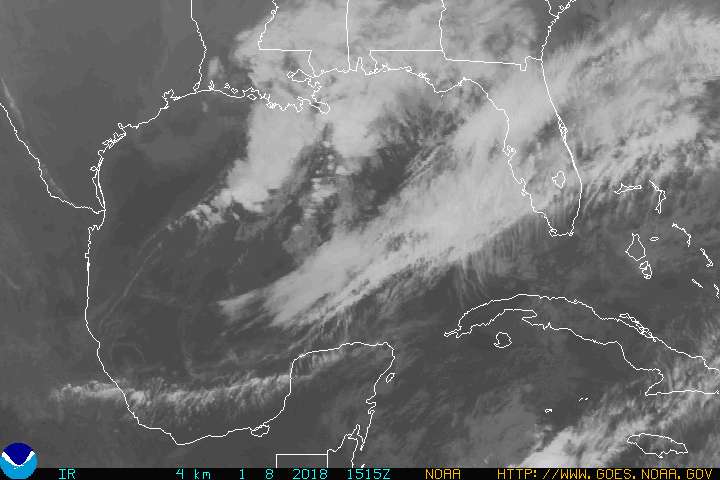
Atlantic Ocean/Gulf of Mexico/Caribbean: Tropical storm Isaac (9L) is moving through the Gulf of Mexico. It is located about 310 miles southeast of the mouth of the Mississippi River…moving northwest at 14 mph. The latest sustained wind speeds were 65 mph. Here's the NHC graphical track map, along with what the computer hurricane models are doing with Isaac. Here's a satellite image of Isaac. The latest NHC forecast shows Isaac becoming a hurricane this evening, then striking the Gulf coast near New Orleans…late in the day Tuesday.
Meanwhile, there's that tropical disturbance about 1050 miles west-northwest of the Cape Verde Islands. It has a medium 30% chance of developing into a tropical depression over the next 48 hours.
Finally, a tropical disturbance remains active in the far eastern Atlantic…located just offshore from the west coast of Africa. It has a low 10% chance of forming into a tropical depression within the next 48 hours.
Here's a satellite image showing tropical storm Isaac (9L)…and these two areas of disturbed weather in the Atlantic.
Western Pacific Ocean: Typhoon Tembin (15W) remains active about 240 NM south-southwest of Taipei, Taiwan. Sustained winds are 65 knots, with gusts to near 80 knots. The JTWC shows Tembin to the south-southwest of Taiwan, moving northeast. The forecast has Tembin continuing to complete its loop to the south of Taiwan, then moving by not far off the east coast. The extended forecast shows this weakening tropical cyclone then heading northwards offshore to the east of Shanghai, China as a weakening tropical storm in about 2-3 days. Here's the JTWC graphical track map…showing Tembin's movement.
Typhoon Bolaven (16W) is active in the western Pacific…located about 380 NM south-southwest of Seoul, South Korea. Sustained winds are 70 knots, with gusts to near 85 knots. The JTWC shows that Bolaven will be moving generally northwards offshore from the west coast of South Korea…making a landfall along the southwest coast of North Korea into the Chinese mainland as a weakening tropical storm. Here's the JTWC graphical track map.
South Pacific Ocean: There are no active tropical cyclones
North and South Indian Oceans: There are no active tropical cyclones
Interesting: Migrating Whimbrels — a type of shorebird — may struggle for hours against winds when trying to cross the Caribbean during hurricane season but get a huge boost as they fly out of storms, report researchers from the Center for Conservation Biology in Williamsburg, Virginia. Ahead of a large tropical storm last year scientists attached satellite transmitters to one Whimbrel, which they named "Hope". A statement from the American Bird Conservancy explains what they found.
"She took 27 hours averaging just 9 mph to fly non-stop through the storm to get to the center; then she flew at an average of almost 100 mph for 1.5 hours out the back end, using the power of the storm to 'slingshot' her towards land." Fletcher Smith, lead biologist on the tracking project, said the study highlights the "truly amazing dynamics of bird migrations".
"In addition to the simply staggering distances these birds travel — often thousands of miles at a time, nonstop — we are also observing what could be described as jaw dropping physical feats involving storms," he said in a press release. "These herculean efforts leave the birds exhausted and in need of a safe haven to rest and refuel. Unfortunately there are few of these locations in the Lesser Antilles."
 Email Glenn James: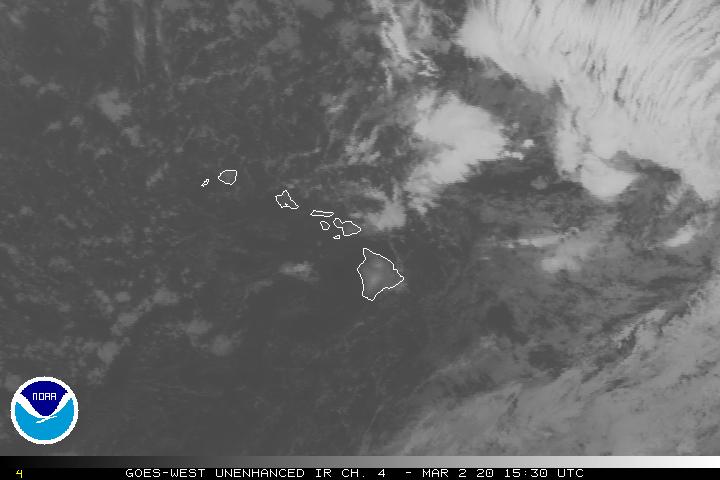




Cheryl Ann Says:
hi Glenn,
Just wondering if you are on tv in the morning. we love to watch you in the morning.
Thanks
Cheryl~~~Hi Cheryl, nope, have retired from doing the live TV weather show several years ago. I appreciate your positive feedback about that fun show, have a great vacation! Aloha, Glenn