











Air Temperatures – The following maximum temperatures were recorded across the state of Hawaii Wednesday afternoon:
Lihue, Kauai – 85
Honolulu airport, Oahu – 88
Kaneohe, Oahu – M
Molokai airport – 84
Kahului airport, Maui – 87
Kona airport – 86
Hilo airport, Hawaii – 84
Air Temperatures ranged between these warmest and coolest spots near sea level – and on the highest mountain tops around the state…as of 8pm Wednesday evening:
Barking Sands, Kauai – 80
Hilo, Hawaii – 72
Haleakala Summit – 41 (near 10,000 feet on Maui)
Mauna Kea Summit – M (near 13,800 feet on the Big Island)
Hawaii’s Mountains – Here’s a link to the live web cam on the summit of near 13,800 foot Mauna Kea on the Big Island of Hawaii. This web cam is available during the daylight hours here in the islands…and when there’s a big moon shining down during the night at times. Plus, during the nights you will be able to see stars, and the sunrise and sunset too…depending upon weather conditions. Here's the Haleakala Crater webcam on Maui…although this webcam is not always working correctly.
Tropical Cyclone activity in the eastern and central Pacific – Here’s the latest weather information coming out of the National Hurricane Center, covering the eastern north Pacific. You can find the latest tropical cyclone information for the central north Pacific (where Hawaii is located) by clicking on this link to the Central Pacific Hurricane Center. A satellite image, which shows the entire ocean area between Hawaii and the Mexican coast…can be found here.
Aloha Paragraphs
Trade winds continuing well into the
future, showers at times…some heavy
As this weather map shows, we have a moderately strong high pressure systems aligned to the northwest and northeast of the islands. Our local trade winds will remain light to moderately strong in general through Friday…then pick up a bit Saturday and Sunday into early next week.
The following numbers represent the most recent top wind gusts (mph), along with directions as of Wednesday evening:
22 Port Allen, Kauai – NE
28 Kuaokala, Oahu – N
30 Molokai – NE
31 Kahoolawe – NE
31 Kahului, Maui – NE
27 Lanai – NE
23 South Point, Big Island – NE
We can use the following links to see what’s going on in our area of the north central Pacific Ocean. Here's the latest NOAA satellite picture – the latest looping satellite image…and finally the latest looping radar image for the Hawaiian Islands.
Here are the latest 24-hour precipitation totals (inches) for each of the islands as of Wednesday evening:
0.92 Kilohana, Kauai
0.57 Waihee Pump, Oahu
0.03 Molokai
0.00 Lanai
0.00 Kahoolawe
0.70 Kula 1, Maui
0.61 Puhe CS, Big Island
~~ Sunset Commentary ~~
Light to moderately strong trade winds prevail…which will pick up a notch this weekend. We find a couple of moderately strong high pressure systems (weather map) located to the northwest through northeast of the islands Wednesday evening. These trades will carry windward showers our way…increasing at times tonight through early Friday morning. The leeward sides will see a few showers here and there, during the afternoon and evening hours over the next few days as well. An area of low pressure moving through the state over the next day or so, will prompt some of our showers to be locally heavy.
Here in Kula, Maui at 515pm Wednesday evening, it was partly to mostly cloudy with a few scattered showers…and an air temperature of 73.8F degrees. The trades are forecast to continue across our island chain through the next week and more. These trade winds will blow generally in the light to moderately strong realms through Friday…picking up a bit this weekend into early next week. If we look at this satellite image, it shows partly cloudy skies upstream of the windward sides of the islands. In addition, there's a streak of cirrus clouds just south of the Big Island at the time of this writing. Further to the northeast, east and southeast, we see potential patches of showery clouds, which will arrive at times…moving slowly across our island chain through Thursday night into Friday morning.
At the same time, we'll find cooler air aloft associated with troughs of low pressure, which will cause an enhancement to any showers that do occur…as these clouds move through our area. During the afternoon hours Wednesday, the NWS forecast office in Honolulu issued a flood advisory. The focus for this shower activity was over Ulupalakua, and the southwest facing flank of the Haleakala Crater on Maui. The cooler air aloft, and the daytime heating of both Maui and the Big Island, triggered these pockets of localized heavy rainfall. As we move into Friday and the weekend, our atmosphere will dry out some, with generally good weather prevailing. I'll be back again early Thursday morning with your next new weather narrative. I hope you have a great Wednesday night wherever you happen to be spending it! Aloha for now…Glenn.
World-wide tropical cyclone activity:
Central Pacific Ocean: There are no active tropical cyclones
Eastern Pacific Ocean: There are no active tropical cyclones
Atlantic Ocean/Gulf of Mexico/Caribbean: Tropical storm Isaac (9L) is in the Caribbean Sea…located about 200 miles south-southeast of San Juan, Puerto Rico…moving westward at 15 mph. This tropical cyclone will be gradually strengthening, becoming a hurricane within 36 hours or so…as it moves towards the Dominican Republic and Haiti…then Cuba. The latest sustained wind speeds were 40 mph. Here's what the computer hurricane models are doing with Isaac.
Tropical storm Joyce (10L) remains active in the Atlantic…located about 1305 miles east of the Leeward Islands…moving west-northwest at 17 mph. Sustained winds were 40 mph. This tropical cyclone will be gradually strengthening, although isn't a threat to land…although Bermuda will have to keep a close eye out early next week. Joyce isn't expected to attain hurricane status through her life cycle.
Finally, a new tropical disturbance has moved off the African west coast, into the far eastern Atlantic. It is a low 10% chance of developing into a tropical depression over the next 48 hours.
Here's a satellite image showing tropical storm Isaac (9L) and tropical storm Joyce (10L)…and this area of disturbed weather in the east Atlantic.
Western Pacific Ocean: Typhoon Tembin (15W) remains active…located about 150 NM south-southeast of Taipei, Taiwan. Sustained winds are 105 knots, with gusts to near 130 knots! The JTWC brings Tembin over the south central part of Taiwan today, and then into the Taiwan Strait, doing a loop to the southwest of Taiwan. Here's the JTWC graphical track map…which shows it will remain a strong typhoon as it strikes the east coast of Taiwan with very high surf, very strong winds, and heavy flooding rainfall.
Newly formed Typhoon Bolaven (16W) is active in the western Pacific…located about 500 NM southeast of Kadena AB, Okinawa, Japan. Sustained winds are 100 knots, with gusts to near 125 knots! The JTWC keeps Bolaven over the ocean, although moving right over Kadena AB in about 2-3 days. Here's the JTWC graphical track map…which shows it continuing to strengthen as an even stronger typhoon.
South Pacific Ocean: There are no active tropical cyclones
North and South Indian Oceans: There are no active tropical cyclones
Interesting: If there is any place that produces massive amounts of used coffee grounds, it is the thousands of coffee factories around the world, Starbucks. One would think that they would just throw the used grounds into the trash, but the people at Starbucks thought better of it. They were sitting on a considerable resource with great potential for secondary use. This not only includes the used coffee but also the day-old baked goods which the stores sell.
They utilize a process of converting plant-based products into an acid which can be used to make a range of products such as plastics, detergents, and medicines. The process is built upon existing technology used by the bio-fuel industry. Bio-fuels are made by converting corn, sugar cane, or other plant-based products into a fuel.
The Starbucks method takes the food scraps and used coffee grounds and blends them with a mixture of fungi. This breaks down the carbohydrates into simple sugars which are ultimately converted into succinic acid. This acid is the building block that can be used to make other materials.
The American Chemical Society (ACS) lauds this method as a new paradigm for food recycling. Rather than devoting good cropland to the production of consumer materials, why not use the scraps that are typically thrown away. According to the ACS, 1.3 billion tons of food is dumped in landfills, incinerated, or otherwise trashed every year around the world.
They celebrate the success of Starbuck's new "bio-refinery" at their 244th National Meeting and Exposition. "Our new process addresses the food waste problem by turning Starbucks' trash into treasure — detergent ingredients and bio-plastics that can be incorporated into other useful products," said Carol S. K. Lin, Ph.D., who led the research team.
"The strategy reduces the environmental burden of food waste, produces a potential income from this waste and is a sustainable solution." The potential exists to expand this technology to not just coffee chains, but to all major food services, including school cafeterias. Between the new bio-refinery and various composting technologies, not a single food scrap would ever have to be thrown away.
According to Lin, the technology could become economically viable without much additional funding from investors. After the initial construction of the system, it could easily pay for itself in a relatively short time frame.
Interesting2: Japanese scientists at Kinki University – based in Osaka, Japan – have unveiled a brand new tuna species, entitled the Kindai Tuna. After three generations of breeding this species is almost identical to its wild cousins, in terms of texture and nutrition, but is the first to be completely nurtured and grown in captivity.
However, the process is still expensive and rather inefficient. And the new Kindai tuna sells more, per pound, than wild Bluefin. In 1982, Japan led the global fishing market with an annual catch of over 11.8 million short tons. The United States followed with an annual catch of 4.3 million.
Over the last thirty years these numbers have skyrocketed reaching annual rates of 2 billion tons in Japan and 800 million in the United States. What some may view as advancement and efficiency in the fishing industry, others will deem the result of gluttony and blind consumption.
What is undeniable is the adverse environmental impact. The biggest (and most alarming) impact can be seen in large predatory fish such as the Bluefin Tuna. Although the Pacific Bluefin is not recognized as an endangered species, its dwindling numbers are indicative of a teetering ecological imbalance.
Tuna are carnivorous fish and are one of the top predators in the world’s ocean. They are also one of the most prized catches averaging over $1,000 per pound. Tuna are unique, in that they are endothermic, or warm blooded. They also have a unique metabolism that allows them to continuously and rapidly grow throughout their entire lives.
On average an adult tuna may measure up to around 6 feet but can grow upwards to 9 feet and weigh over 881 lbs. These massive fish are also incredibly fast swimmers, reaching speeds of up to 25 mph. Scientists and researchers monitoring the diminishing numbers of tuna are now investigating aquaculture (fish farming) as a viable alternative to large-scale ocean fishing operations.
At the moment, about 7% of the global commercial fish harvest is sourced from fish farms. And whilst this is the commonly used term, these operations are frequently not limited to fish. Oysters, clams, crustaceans, and many marine plants are also grown under controlled conditions. The most common fish species farmed are usually herbivorous, and include catfish, trout, carp, tilapia, and shrimp.
However, due to the recent increase in price for fish like tuna, many farmers are looking towards farming larger salt-water fish. These operations are expensive endeavors. Many fish farmers in North America spend more per pound on food than they yield in their finished harvest.
Also carnivorous fish, such as salmon and tuna, require a diverse feed made from a wide array of sources in order to maintain the illusion of a natural lifestyle, as well as to promote healthy muscle development. With the increase in tuna demand, farming the species has garnered a new found interest. However, because of the tuna’s size and ravenously active lifestyle, many previous attempts to farm them have failed.
Maintaining and recreating wild conditions are nearly impossible. Tuna migrate thousands of miles through oceans that vary in chemical composition as well as temperature. This dynamic lifestyle attributes to their high nutritional content and valued taste, but makes captivity a complicated undertaking.
Many other methods have been used to farm tuna. In the past, juvenile fish have been caught and captured. These fish where then fattened until maturity then killed. This method was thought to be effective but now is deemed unsafe because many of the captured fish are never given the opportunity to spawn, further decreasing the wild population.
Many believe that farm raising tuna is the better investment, citing lower mercury content in farm-raised tuna than in wild species. Farm raised tuna have lower levels of mercury but this leads to a different set of ethical and safety issues. Fish farming has raised many of the same ethical questions as large inland cattle and pig operations.
Although these fish may one day be cheaper – and contain less mercury – the quality of their farmed life comes under scrutiny because with larger farmed operations, the risk of mistreatment arises. Also, with so many fish living in such close proximity, the threat of disease both for the animals and the consumer drastically increases. Adding to these problems, breeding carnivorous fish demands lots of food, which once again links back to finding a steady and affordable source of fish.
 Email Glenn James: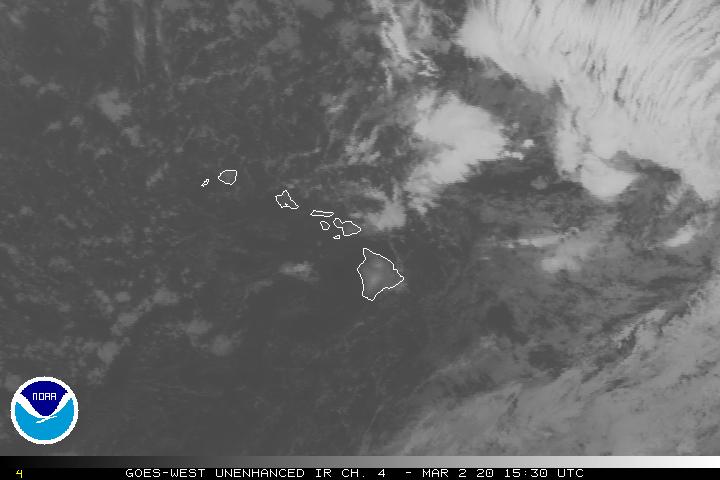


peter mac Says:
excellent bodysurf pic on surf page…jus like flying~~~I agree Peter! Aloha, Glenn