











Air Temperatures – The following maximum temperatures were recorded across the state of Hawaii Tuesday afternoon:
Lihue, Kauai – 84
Honolulu airport, Oahu – 86
Kaneohe, Oahu – 86
Molokai airport – 83
Kahului airport, Maui – 88
Kona airport – 83
Hilo airport, Hawaii – 78
Air Temperatures ranged between these warmest and coolest spots near sea level – and on the highest mountain top around the state…as of 8pm Tuesday evening:
Barking Sands, Kauai – 81
Hilo, Hawaii – 74
Haleakala Summit – M (near 10,000 feet on Maui)
Mauna Kea Summit – 37 (near 13,800 feet on the Big Island)
Hawaii’s Mountains – Here’s a link to the live web cam on the summit of near 13,800 foot Mauna Kea on the Big Island of Hawaii. This web cam is available during the daylight hours here in the islands…and when there’s a big moon shining down during the night at times. Plus, during the nights you will be able to see stars, and the sunrise and sunset too…depending upon weather conditions. Here's the Haleakala Crater webcam on Maui…although this webcam is not always working correctly.
Tropical Cyclone activity in the eastern and central Pacific – Here’s the latest weather information coming out of the National Hurricane Center, covering the eastern north Pacific. You can find the latest tropical cyclone information for the central north Pacific (where Hawaii is located) by clicking on this link to the Central Pacific Hurricane Center. A satellite image, which shows the entire ocean area between Hawaii and the Mexican coast…can be found here.
Aloha Paragraphs

Gusty trade winds…generally nice weather
As this weather map shows, we have moderately strong high pressure systems located to the northwest through northeast of the islands. Our local trade winds will remain moderately strong, with higher gusts locally into Thursday and beyond.
The following numbers represent the most recent top wind gusts (mph), along with directions as of Tuesday evening:
37 Port Allen, Kauai – E
35 Honolulu, Oahu – E
33 Molokai – NE
52 Kahoolawe – E
44 Kahului, Maui – NE
36 Pali 2, Big Island – N
We can use the following links to see what’s going on in our area of the north central Pacific Ocean. Here's the latest NOAA satellite picture – the latest looping satellite image…and finally the latest looping radar image for the Hawaiian Islands.
Here are the latest 24-hour precipitation totals (inches) for each of the islands as of Tuesday evening:
1.58 Mount Waialeale, Kauai
0.28 Oahu Forest NWR, Oahu
0.33 Molokai
0.00 Lanai
0.00 Kahoolawe
0.71 Puu Kukui, Maui
1.85 Kawainui Stream, Big Island
Sunset Commentary:
Our local trade winds will continue through the next week…and well beyond. We find moderately strong high pressure systems located far to the northeast and northwest of Hawaii…driving the gusty wind flow across the islands. The trade winds will carry just a few windward showers towards us, with generally dry conditions along our leeward sides. We can use this satellite image to see just scattered low level clouds to our east and northeast, being carried our way by the trades. These clouds will bring windward biased showers periodically over the next several days. The locally strong and gusty trade winds, along with the recent passing showers, will gradually start to back off…with a more typical trade wind weather pattern returning during the second half of the work week into the weekend and beyond.
Here in Kula, Maui at 520pm Tuesday evening, it was partly cloudy, hazy and calm…while the air temperature was 76.1F degrees. The trade winds will remain elevated into Wednesday…before settling down some again through the rest of the week. The NWS forecast office in Honolulu has the small craft wind advisory just active over those windiest parts of Maui County and the Big Island. Winds are still robust, as least in the gust department, topping 50 mph on the small island of Kahoolawe Tuesday afternoon! Meanwhile, much fewer passing showers will impact our windward sides going forward. We'll grade back into a more classic summer trade wind weather pattern by Wednesday evening and Thursday onwards. By the way, it appears that because the winds are so easterly or perhaps even east-southeast, some of the volcanic haze (vog) from the vents on the Big Island, is being carried over Maui County…thus the hazy skies at the moment. I'll be back early Wednesday morning with your next new weather narrative, I hope you have a great Tuesday night wherever you happen to be spending it! Aloha for now…Glenn.
World-wide tropical cyclone activity:
Central Pacific Ocean: There are no active tropical cyclones
Eastern Pacific Ocean: There are no active tropical cyclones
Atlantic Ocean/Gulf of Mexico/Caribbean: There are no active tropical cyclones
SHOWERS AND THUNDERSTORMS ASSOCIATED WITH AN AREA OF LOW PRESSURE LOCATED ABOUT 1100 MILES EAST-SOUTHEAST OF THE WINDWARD ISLANDS HAVE NOT BECOME ANY BETTER ORGANIZED DURING THE PAST SEVERAL HOURS. ENVIRONMENTAL CONDITIONS ARE MARGINALLY CONDUCIVE FOR GRADUAL DEVELOPMENT OF THIS LOW OVER THE NEXT FEW DAYS. THIS SYSTEM HAS A MEDIUM CHANCE…50 PERCENT…OF BECOMING A TROPICAL CYCLONE DURING THE NEXT 48 HOURS AS IT MOVES WESTWARD AT 15 TO 20 MPH.
DISORGANIZED SHOWERS AND THUNDERSTORMS OVER HISPANIOLA…PUERTO RICO…AND THE CENTRAL CARIBBEAN SEA ARE ASSOCIATED WITH A WESTWARD-MOVING TROPICAL WAVE. DEVELOPMENT OF THIS WAVE IS NOT EXPECTED AND IT HAS A LOW CHANCE…NEAR 0 PERCENT…OF BECOMING A TROPICAL CYCLONE DURING THE NEXT 48 HOURS. HOWEVER…LOCALLY HEAVY RAINFALL AND GUSTY WINDS ASSOCIATED WITH THIS WAVE WILL SPREAD ACROSS EASTERN CUBA AND THE SOUTHEASTERN BAHAMAS DURING THE NEXT DAY OR TWO.
ELSEWHERE…TROPICAL CYCLONE FORMATION IS NOT EXPECTED DURING THE NEXT 48 HOURS.
Here's a satellite image of these areas
Western Pacific Ocean: Typhoon Saola (10W) remains active over the ocean to the east of Taiwan…moving in a north-northwesterly direction. Sustained winds were 85 knots, with gusts to 105 knots. It is expected to slowly increase in strength, peaking in strength over the next couple of days. The latest JTWC forecast shows the center of Saola remaining offshore of the northeastern tip Taiwan…and then turning northwest towards the mainland China coast. Here's the JTWC graphical track map, along with a NOAA satellite image.
Meanwhile, trophical storm Damrey (11W) is active in the western Pacific…moving in a west-northwesterly over open ocean to the south of Japan. Sustained winds were 60 knots, with gusts to 75 knots. It is expected to slowly increase in strength a little more, attaining typhoon status soon. The latest JTWC forecast shows Damrey moving by over the ocean just to the south of southern Japan, and then on towards the mainland China coast, impacting the coast just to the north of Shanghai. Here's the JTWC graphical track map, along with a NOAA satellite image.
South Pacific Ocean: There are no active tropical cyclones
South and North Indian Oceans: There are no active tropical cyclones
Interesting: The Coral Triangle, a roughly triangular marine zone in the Indo-Pacific region that is considered to have the world's richest concentration of marine biodiversity, is facing potential ecological collapse due to heavy pressure inflicted by human activities, according to a new report. The warning appears in a collaborative study, 'Reefs at Risk Revisited in the Coral Triangle', produced by a consortium led by the World Resources Institute, a global environmental think-tank based in Washington DC, United States.
It serves as a status report on the well being of coral reefs in or near the six countries comprising the triangle. The study aimed to identify where reefs are most threatened and to provide "baseline data to help groups establish and prioritise specific management strategies," Kathleen Reytar, a lead author of the study, told SciDev.Net.
According to the report, 85 per cent of reefs in the Coral Triangle are directly threatened by local human activities such as overfishing, the use of poisons and dynamite in fishing, watershed-based pollution (fertilizers, pesticides and other runoff from the land), and coastal development.
When combined with developments related to global warming, the percentage of threatened reefs rises to more than 90 per cent, the report says. "In a single human lifetime, we have inflicted a crisis on the oceans greater than anything we have ever done to the rainforests, but because people can't see what is happening under the oceans, we are allowing this to continue," said Maurice Knight, a contributor to the report, and chief of party for the Coral Triangle Support Partnership, an Indonesia-based civil society consortium.
However, the report's authors believe that reef degradation in the Coral Triangle area can be checked and even reversed, for example through the extended use of marine protected areas (MPAs). Knight pointed out that some countries, such as the Philippines, have an extensive network of MPAs, which involve fishing restrictions that can include a complete ban on all types of fishing, restrictions on types of fishing methods or gear, or other types of constraints.
For example, Indonesia, the world's biggest archipelago, established its first MPAs in the 1970s, and now has over 17 million hectares of designated MPAs — the most extensive in the world. "Marine protected areas, including no-take areas [protected areas where fishing is completely prohibited] that serve as fish nurseries, are essential to maintain the health of reef fish populations, and the reefs themselves," said Knight, although he also warned that "just establishing fish nurseries is not enough".
Interesting2: Large numbers of humpback whales are remaining in bays along the Western Antarctic Peninsula to feast on krill late into the austral autumn, long after their annual migrations to distant breeding grounds were believed to begin, according to a new Duke University study. The study, published July 30 in the journal Endangered Species Research, provides the first density estimates for these whales in both open and enclosed habitats along the peninsula in late autumn.
It suggests that the little-studied bays are much more important late-season feeding grounds for humpback whales than scientists previously thought. It also highlights changes that are occurring in the region in response to the increasingly delayed arrival and reduced extent of annual winter sea ice cover, associated with rapid climate change.
"The old dogma is that by late autumn, the ice is heading in and the whales have headed out. But 70 percent of our surveying took place in waters with no ice, and we detected 371 groups of humpback whales over a 654-kilometer survey area, with density estimates of up to 1.75 whales per square kilometer," said David W. Johnston, research scientist at Duke's Nicholas School of the Environment and lead author of the paper.
At that density, Johnston said, "if you were to walk to the bridge of a ship and look around, you'd spot two whales within 500 meters of the boat. That's higher than anyone expected." The scientists found the highest densities of whales in narrow, enclosed sections of Wilhelmina Bay, Andvord Bay and the Errera Channel.
They found the lowest densities — as low as 0.02 whales per square kilometer — in the open water of the adjacent Gerlache Strait, which separates the Palmer Archipelago from the Western Antarctic Peninsula. They conducted the study aboard the National Science Foundation (NSF) research vessel Laurence M. Gould in late April through early June of 2009.
NSF funded the study. Johnston's co-authors are Ari S. Friedlaender, research scientist; Andrew J. Read, Rachel Carson Associate Professor of Marine Conservation Biology; and Douglas P. Nowacek, Repass-Rodgers University Associate Professor of Marine Conservation Technology. All four are stationed at the Duke University Marine Laboratory. Nowacek holds a joint appointment as associate professor of electrical and computer engineering at Duke's Pratt School of Engineering.
Scientists have long known the waters around the Western Antarctic Peninsula are important foraging grounds for humpback whales that feed on swarms of shrimp-like krill there, but previous studies have been conducted earlier in the season or in open waters farther from land.
"Establishing the autumn density of humpback whales in the inshore regions of the Western Antarctic Peninsula is crucial for understanding the role they play in this rapidly changing ecosystem," said Friedlaender.
"Our results provide a new perspective on the magnitude of predator-prey relationships in the region as the Antarctic winter sets in. Being the first to estimate densities in the peninsula's narrow in-shore waters was a challenge, Johnston said, because the line-transect techniques and distance sampling methods scientists traditionally use for this type of study weren't well suited to the bays' tight quarters, tricky currents and jutting shorelines.
"We had no idea that the whales were going to be packed up in these narrow channels and passages. We had to think on our feet a bit and use alternative sampling approaches and incorporate data from other portions of the project," he said.
For instance, data collected from tagging the whales and tracking their underwater movements turned out to be inordinately useful for estimating densities, too. "Once we knew their dive behaviors, we could establish how likely it was that we might miss them as we were traveling along the surface of the water," Johnston said. "That's not something we would have been able to do using only the traditional methods."
 Email Glenn James: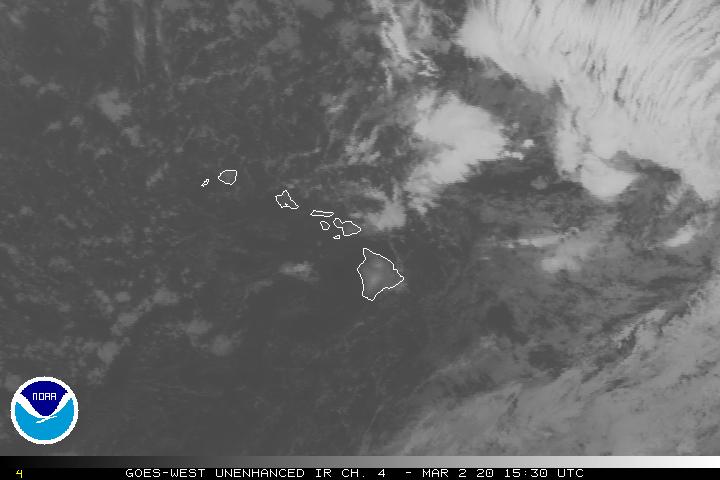


Jeff King Says:
Aloha Glenn, Do you know that Mayor Alan Arakawa and his wife, Ann, are in Taiwan as part of a special delegation of U.S. mayors? Following is the latest press release from his office:
WAILUKU, Maui, Hawai`i – Maui County is still in the process of establishing a line of communication with Mayor Alan Arakawa, who is in Taiwan as Typhoon Saola bears down. At this time the mayor is not expected to be in any danger, as Taiwanese officials say Typhoon Saola is not expected to hit Taiwan directly.
According to the Pacific Disaster Center Typhoon Saola is projected to move by just to the northeast of Taiwan before impacting the Chinese coast on August 2nd. http://dynamic.pdc.org/snc/prod/31574/rr.html
http://weather.pdc.org/index.php/2012/07/30/tropical-cyclone-activity-report-pacific-indian-oceans-54/
The Taipei Economic and Cultural Office selected Mayor Arakawa along with nine other US mayors to go on this trip to Taiwan, in order to promote business and cultural exchanges between Taiwan and the U.S. on the municipal level. The trip was sponsored by and paid for by the Taipei Economic and Cultural Office in Washington D.C.
Both Mayor Arakawa and his wife Ann left for Taiwan on July 28th and are scheduled to return to Maui on August 4th. (End)
Can you add your comforting words to the forecast that Alan and Ann will most likely be spared the brunt of the storm?
Jeff~~~Hi Jeff, thanks for letting me know that our Maui Mayor is in Taiwan. Like I’ve been pointing out as the Senior Weather Specialist at the Pacific Disaster Center, and on my own website, as you know…the center of Saola is forecast to slide by offshore from the northeast tip of Taiwan. If it does as expected, the top 1/2 or 1/3 of that island will likely receive gusty winds and locally heavy rain. The good thing is that the most dangerous part of the typhoon will remain offshore to the northeast of Saola. So, I would imagine that the Mayor will be fully aware of this close by tropical cyclone…but will come back and perform his mayorial duties here on Maui without mishap, at least from this system. Aloha, Glenn