











Air Temperatures – The following maximum temperatures were recorded across the state of Hawaii Wednesday:
Lihue, Kauai – 82
Honolulu airport, Oahu – 86 (Record high temperature for Wednesday / 91 -1985)
Kaneohe, Oahu – 82
Molokai airport – 80
Kahului airport, Maui – 86 (Record high temperature for Wednesday / 94 -1953)
Kona airport – 85
Hilo airport, Hawaii – 80
Air Temperatures ranged between these warmest and coolest spots near sea level – and on the highest mountain top around the state…as of 5pm Wednesday evening:
Kahului, Maui – 82
Molokai airport – 76
Haleakala Summit – M (near 10,000 feet on Maui)
Mauna Kea Summit – 41 (near 13,800 feet on the Big Island)
Hawaii’s Mountains – Here’s a link to the live web cam on the summit of near 13,800 foot Mauna Kea on the Big Island of Hawaii. This web cam is available during the daylight hours here in the islands…and when there’s a big moon shining down during the night at times. Plus, during the nights you will be able to see stars, and the sunrise and sunset too…depending upon weather conditions. Here's the Haleakala Crater webcam on Maui…although this webcam is not always working correctly.
Tropical Cyclone activity in the eastern and central Pacific – Here’s the latest weather information coming out of the National Hurricane Center, covering the eastern north Pacific. You can find the latest tropical cyclone information for the central north Pacific (where Hawaii is located) by clicking on this link to the Central Pacific Hurricane Center. A satellite image, which shows the entire ocean area between Hawaii and the Mexican coast…can be found here.
Aloha Paragraphs

Gusty trade winds, fewer windward
showers…generally nice weather
As this weather map shows, we have an unusually strong near 1035 millibar high pressure system located far to the north-northeast of the islands. Our local winds will remain active from the trade wind direction, moderately strong with some stronger gusts through Thursday…slightly lighter Friday.
The following numbers represent the most recent top wind gusts (mph), along with directions as of Wednesday evening:
33 Port Allen, Kauai – NE
50 Kuaokala, Oahu – NE
37 Molokai – NE
40 Kahoolawe – NE
37 Kahului, Maui – NE
39 Lanai – NE
33 Puu Mali, Big Island – NE
We can use the following links to see what’s going on in our area of the north central Pacific Ocean. Here's the latest NOAA satellite picture – the latest looping satellite image…and finally the latest looping radar image for the Hawaiian Islands.
Here are the latest 24-hour precipitation totals (inches) for each of the islands as of Wednesday evening:
1.81 Mount Waialeale, Kauai
1.46 Oahu Forest NWR, Oahu
0.40 Molokai
0.00 Lanai
0.00 Kahoolawe
0.89 Puu Kukui, Maui
2.37 Kawainui Stream, Big Island
Sunset Commentary:
Variable clouds with fewer passing showers along our windward sides…along with gusty trade winds. A strong near 1035 millibar high pressure to the north of Hawaii, will continue the locally strong trade wind flow across our islands. These trades will carry a few windward showers our way, stretching over into the leeward sides locally. The gusty trades will taper of some Friday and Saturday…then pick up a notch again Sunday into early next week. Drier air will arrive Thursday, bringing fine weather our way into the weekend.
Here in Kula, Maui at 515pm, it was partly to mostly cloudy and near calm…with an air temperature of 74.3F degrees. Our local trade winds will continue blowing, generally in the moderately strong range through Thursday. There will be wind gusts in the 30-40+ mph range…becoming lighter Friday and Saturday. Meanwhile, there continue to be clouds to our east and northeast, which will keep our windward sides a little showery at times. The leeward sides on the smaller islands may see a few of these light passing showers, carried by the gusty trade winds at times too. Here's a satellite image showing the clouds upstream of the islands, which will bring those periodic light showers to our windward sides into Thursday morning. At the same time, we can see thunderstorms occurring near the center of former tropical cyclone Emilia, now to the southwest of Oahu and Kauai. ~~~ I'll be back again early Thursday morning, I hope you have a great Wednesday night wherever you happen to be spending it! Aloha for now…Glenn.
[World-wide tropical cyclone activity:
Central Pacific Ocean: There are no active tropical cyclones
Eastern Pacific Ocean: There are no active tropical cyclones
Atlantic Ocean/Gulf of Mexico/Caribbean: There are no active tropical cyclones
Western Pacific Ocean: Tropical storm Khanun (08W)…located approximately 15 NM south of Seoul, South Korea. Dissipating Khanun will move northeast across South and North Korea, then wash out completely over the far northwestern Pacific thereafter. Here's the JTWC graphical track map, along with a JTWC satellite image of this tropical cyclone. Sustained winds were 25 knots, with gusts to near 35 knots. – Final Warning
South Pacific Ocean: There are no active tropical cyclones
South and North Indian Oceans: There are no active tropical cyclones
Interesting: NOAA Ship Oscar Elton Sette arrived back in its home port of Honolulu on Saturday after a month in Papah'naumoku'kea Marine National Monument. The team of 17 scientists collected nearly 50 metric tons of marine debris, which threatens monk seals, sea turtles and other marine life in the coral reef ecosystem, in the Northwestern Hawaiian Islands (NWHI).
NOAA has conducted annual removal missions of marine debris in the NWHI since 1996 as part of a coral restoration effort. “What surprises us is that after many years of marine debris removal in Papah'naumoku'kea and more than 700 metric tons of debris later, we are still collecting a significant amount of derelict fishing gear from the shallow coral reefs and shorelines,” said Kyle Koyanagi, marine debris operations manager at NOAA Fisheries’ Pacific Islands Fisheries Science Center and chief scientist for the mission.
“The ship was at maximum capacity and we did not have any space for more debris.” This year, marine debris was collected from waters and shorelines around northern most islands and atolls: Kure Atoll, Midway Atoll, Pearl and Hermes Atoll, Lisianski Island and Laysan Island.
Approximately half of the debris was comprised of derelict fishing gear and plastics from Midway Atoll’s shallow coral reef environments, where the team also completed a 27-day land-based mission prior to loading debris on the 224-ft. NOAA Ship Oscar Elton Sette.
As part of this year’s mission, the NOAA team did look for debris from the 2011 tsunami in Japan, however, no debris with an explicit connection to the tsunami was found. Scientists monitored marine debris for radiation in partnership with the Hawaii Department of Health out of abundance of caution and to gather baseline data from the NWHI.
“While we did not find debris with an obvious connection to last year’s tsunami, this mission was a great opportunity to leverage activities that had already been planned and see what we might find,” said Carey Morishige, Pacific Islands regional coordinator for NOAA’s Marine Debris Program. “It’s also an important reminder that marine debris is an everyday problem, especially here in the Pacific.”
A portion of the funding for this year’s marine debris removal activities was provided as part of the legal settlement collected by NOAA’s Damage Assessment, Remediation and Restoration Program from a July 2005 ship grounding at Pearl and Hermes Atoll in the Monument.
Additional support was provided by NOAA’s Marine Debris Program, NOAA Fisheries’ Pacific Islands Fisheries Science Center and Papah'naumoku'kea Marine National Monument, as well as other partners including U.S. Fish and Wildlife Service, the State of Hawaii, U.S. Coast Guard, Schnitzer Steel, and Covanta Energy.
Marine debris removed during this project will be used to create electricity through Hawaii’s Nets to Energy Program, a public-private partnership. Since 2002, more than 730 metric tons of derelict nets have been used to create electricity — enough to power nearly 350 Hawai‘i homes for a year.
Interesting2: A debate has raged for years as to whether natural gas is better or worse overall than coal and oil from a global warming perspective. The back-and-forth findings have been due to length of the studied time, the details of natural gas extraction, and the electricity-generating efficiency of various fuels.
A new study from Cornell addresses this question by comparing the reduction of greenhouse warming that would result from substituting gas for coal and some oil to the reduction which could be achieved by instead substituting zero carbon energy sources.
It was shown that substitution of natural gas reduces global warming by 40% of that which could be attained by the substitution of zero carbon energy sources. the study does not consider secondary considerations, such as economic, political, or other environmental concerns and focuses instead on global warming only.
To come to this conclusion, the author (Cathles of Cornell)considered three different future fuel consumption scenarios:
(1) a business-as-usual case, which sees energy generation capacity continue at its current pace with its current energy mix until the middle of the century, at which point the implementation of low-carbon energy sources dominates and fossil fuel-derived energy production declines;
(2) a gas substitution scenario, where natural gas replaces all coal power production and any new oil-powered facilities, with the same mid-century shift;
(3) a low-carbon scenario, where all electricity generation is immediately and aggressively switched to non-fossil fuel sources such as solar, wind, and nuclear.
No matter the time frame considered, he concluded, substituting natural gas energy for all coal production and some oil production provides about 40 percent of the global warming benefit that a complete switch to low-carbon sources would deliver, making this a good intermediary step.
Other researchers (for example, leading climate scientist Ken Caldeira and former Microsoft executive Nathan Myhrvold) have found that the climate change related benefits of natural gas are not great enough to warrant its use as a bridge fuel (that we should just be going straight into renewable energy. This is still a contentious point of debate within this field.
"From a greenhouse point of view, it would be better to replace coal electrical facilities with nuclear plants, wind farms and solar panels, but replacing them with natural gas stations will be faster, cheaper and achieve 40 percent of the low-carbon-fast benefit," Cathles writes in the study. "Gas is a natural transition fuel that could represent the biggest stabilization wedge available to us."
 Email Glenn James: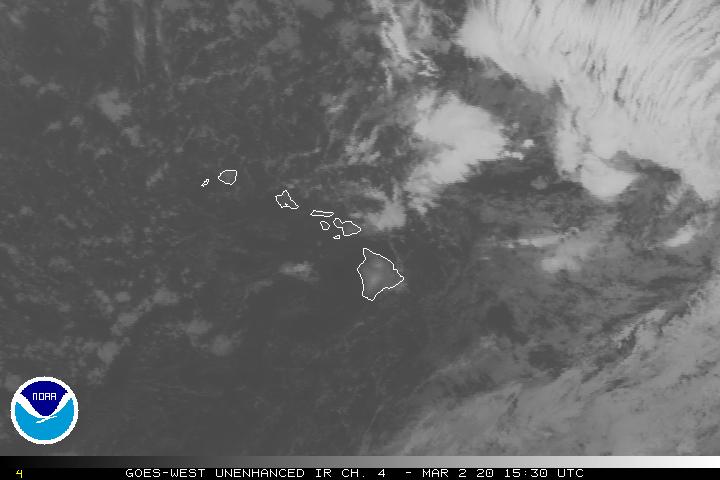


hannah Says:
what a surprise to read about marine debris on your site! FYI, there is a Maui/Big Island connection to the Nets to Energy Program: Hawai'i Wildlife Fund, our non profit, has been pulling debris off the beaches since 1996 also and contributed more than 150 tons to this program through NOAA and private funding. We have worked from Midway down to South Point (Ka'u – Ka Lae area) especially focused on the beaches of Waiohinu and Kamilo on the Big Island. All of our islands have certain beaches that collect the debris that has been accumulating in our ocean for decades. Everyone can help simply by cleaning the beaches of marine debris whenever the opportunity presents itself. mahalo for your good work Glenn
aloha Hannah Bernard – President, Hawai'i Wildlife Fund~~~Hi Hannah, nice to know that you visit my site, and thanks for letting us know of your good work too. I’ve been aware of your efforts for many years, and appreciate it very much! Aloha, Glenn
mary Says:
Glenn
for Kahului, at what time of the day is the daily high temperature usually recorded? thank you
~~~Hi Mary, it is available at 230pm, Aloha, Glenn