











Air Temperatures – The following maximum temperatures were recorded across the state of Hawaii Tuesday:
Lihue, Kauai – 82
Honolulu airport, Oahu – 85 (Record high for Tuesday / 93 – 1951)
Kaneohe, Oahu – 84
Molokai airport – 80
Kahului airport, Maui – 83
Kona airport – 84
Hilo airport, Hawaii – 80
Air Temperatures ranged between these warmest and coolest spots near sea level – and on the highest mountain tops…as of 5pm Tuesday evening:
Kahului, Maui – 81
Lihue, Kauai – 76
Haleakala Crater – M (near 10,000 feet on Maui)
Mauna Kea – 48 (near 13,800 feet on the Big Island)
Hawaii’s Mountains – Here’s a link to the live web cam on the summit of near 13,800 foot Mauna Kea on the Big Island of Hawaii. This web cam is available during the daylight hours here in the islands…and when there’s a big moon shining down during the night at times. Plus, during the nights you will be able to see stars, and the sunrise and sunset too…depending upon weather conditions. Here's the Haleakala Crater webcam on Maui…although this webcam is not always working correctly.
Tropical Cyclone activity in the eastern and central Pacific – Here’s the latest weather information coming out of the National Hurricane Center, covering the eastern north Pacific. You can find the latest tropical cyclone information for the central north Pacific (where Hawaii is located) by clicking on this link to the Central Pacific Hurricane Center. A satellite image, which shows the entire ocean area between Hawaii and the Mexican coast…can be found here. Here's a tropical cyclone tracking map for the eastern and central Pacific.
Aloha Paragraphs

The trade winds will calm down a little more over
the next few days, then pick up again later this
weekend…lasting through all of next week
Passing windward showers…drifting leeward at times
As this weather map shows, we have a large near 1030 millibar high pressure system to the north of the islands. At the same time, a ridge of high pressure extends southwest from this high pressure cell…which is located to the northwest of the Aloha state. Our local winds will gradually calm down some from the trade wind direction through Saturday.
The following numbers represent the most recent top wind gusts (mph), along with directions as of Tuesday evening:
30 Lihue, Kauai – NE
40 Kuaokala, Oahu – NE
35 Molokai – NE
33 Kahoolawe – SE
31 Kahului – NE
38 Lanai – NE
35 Puu Mali, Big Island – NE
We can use the following links to see what’s going on in our area of the north central Pacific Ocean. Here's the latest NOAA satellite picture – the latest looping satellite image…and finally the latest looping radar image for the Hawaiian Islands.
Here are the latest 24-hour precipitation totals (inches) for each of the islands as of Tuesday evening:
2.77 Mount Waialeale, Kauai
1.12 Oahu Forest NWR, Oahu
1.72 Molokai
0.02 Lanai
0.02 Kahoolawe
3.61 Puu Kukui, Maui
1.32 Kawainui Stream, Big Island
Sunset Commentary: Our local winds have calmed down quite a bit today, certainly compared to yesterday. The winds will remain active Wednesday through Saturday, and then pick up a notch Sunday through all of next week. As for showers, there will be somewhat more than the usual few, most of which will stick pretty close to the windward coasts and slopes. Although, as the winds will remain quite gusty, some of these may stretch over into the leeward sides into mid-week…with drier weather expected thereafter.
Here in Kula, Maui at 515pm, it was partly cloudy and dry, with generally light breezes…and an air temperature of 74.3F degrees. As this satellite image shows, we still have lots of low level clouds poised to arrive along our windward sides tonight. There are still a few of those departing high cirrus clouds too…the whiter and brighter clouds to our north. We should see off and on passing showers along our windward sides into Wednesday. Speaking of showers, there were a lot today, on each of the islands, at least in places! 1-3"+ inches fell on all of the larger islands, with the big winner being the 3.61" atop the West Maui Mountains. Here in Kula it lightly showered most of last night, and those off and on showers kept up their falling into the early afternoon here. It was a delightful display of showery weather, especially during June…our driest month of the year here in the islands! As we get into Wednesday, we'll find better weather, in regards to lighter winds and fewer showers. ~~~ I'll be back early Wednesday morning with your next new weather narrative, I hope you have a great Tuesday night wherever you're spending it! Aloha for now…Glenn.
[World-wide tropical cyclone activity:
Central Pacific Ocean: There are no active tropical cyclones expected through the next 48 hours.
Eastern Pacific Ocean: There are no active tropical cyclones expected through the next 48 hours.
SHOWER ACTIVITY ASSOCIATED WITH A NEARLY STATIONARY AREA OF LOW PRESSURE CENTERED ABOUT 225 MILES WEST-SOUTHWEST OF MANZANILLO, MEXICO HAS BECOME LESS ORGANIZED…AND THE POTENTIAL FOR TROPICAL CYCLONE FORMATION HAS DIMINISHED. THIS SYSTEM HAS A MEDIUM CHANCE…40 PERCENT…OF BECOMING A TROPICAL CYCLONE DURING THE NEXT 48 HOURS. LOCALLY HEAVY RAINS ALONG THE COAST OF SOUTHERN MEXICO ARE LIKELY TO CONTINUE DURING THE NEXT DAY OR TWO.
ELSEWHERE…TROPICAL CYCLONE FORMATION IS NOT EXPECTED DURING THE NEXT 48 HOURS.
Here's a satellite image showing this tropical disturbance / Here's the computer forecast models for Invest 95E. Here's a (Joint Typhoon Warning Center) JTWC plot of where 95E might be going.
Atlantic Ocean: Tropical storm Chris remains active in the Atlantic Ocean. It has 45 mph sustained winds, and was located about 565 miles south-southwest of Cape Race, New Foundland. Here's the NHC graphical track map, along with a satellite image of this storm…well offshore to the east of the United States. Long looping satellite image of Chris.
A LOW PRESSURE TROUGH EXTENDING FROM THE NORTHWESTERN CARIBBEAN SEA NORTHEASTWARD TO THE BAHAMAS IS PRODUCING WIDESPREAD CLOUDINESS… SHOWERS…AND A FEW THUNDERSTORMS. UPPER-LEVEL WINDS ARE NOT PARTICULARLY CONDUCIVE FOR DEVELOPMENT…AND THIS SYSTEM HAS A LOW CHANCE…10 PERCENT…OF BECOMING A TROPICAL CYCLONE DURING THE NEXT 48 HOURS. HEAVY RAINFALL IS LIKELY ACROSS THE CAYMAN ISLANDS…CUBA…THE BAHAMAS…AND SOUTHERN FLORIDA OVER THE NEXT COUPLE OF DAYS AS THE SYSTEM MOVES NORTHWESTWARD AT 5 TO 10 MPH. FLOODING IS ALSO POSSIBLE IN THESE AREAS…ESPECIALLY IN CUBA WHERE THE GROUND IS ALREADY SATURATED FROM HEAVY RAINFALL OVER THE PAST SEVERAL WEEKS.
ELSEWHERE…TROPICAL CYCLONE FORMATION IS NOT EXPECTED DURING THE NEXT 48 HOURS.
Here is a graphical tropical weather outlook…showing this tropical disturbance
Western Pacific Ocean: Tropical storm Talim (06W) remains active in the South China Sea…located approximately 240 NM southwest of Taipei, Taiwan. Sustained winds were near 52 mph, with gusts near 63 mph. This tropical cyclone is forecast to remain just offshore from China, as it moves through the Taiwan Strait…brushing far northwest Taiwan as it goes by, and then moving just offshore of the Japan islands. Talim will bring gusty winds and heavy flooding rains to Taiwan and Japan as it moves northeast. Here is a JTWC graphical track map for this tropical cyclone, along with a satellite image.
South Indian Ocean: There are no active tropical cyclones
Interesting: What does a robot feel when it touches something? Little or nothing until now. But with the right sensors, actuators and software, robots can be given the sense of feel — or at least the ability to identify different materials by touch.
Researchers at the University of Southern California's Viterbi School of Engineering published a study June 18 in Frontiers in Neurorobotics, showing that a specially designed robot can outperform humans in identifying a wide range of natural materials according to their textures, paving the way for advancements in prostheses, personal assistive robots and consumer product testing.
The robot was equipped with a new type of tactile sensor built to mimic the human fingertip. It also used a newly designed algorithm to make decisions about how to explore the outside world by imitating human strategies. Capable of other human sensations, the sensor can also tell where and in which direction forces are applied to the fingertip and even the thermal properties of an object being touched.
Like the human finger, the group's BioTac® sensor has a soft, flexible skin over a liquid filling. The skin even has fingerprints on its surface, greatly enhancing its sensitivity to vibration. As the finger slides over a textured surface, the skin vibrates in characteristic ways.
These vibrations are detected by a hydrophone inside the bone-like core of the finger. The human finger uses similar vibrations to identify textures, but the robot finger is even more sensitive. When humans try to identify an object by touch, they use a wide range of exploratory movements based on their prior experience with similar objects.
A famous theorem by 18th century mathematician Thomas Bayes describes how decisions might be made from the information obtained during these movements. Until now, however, there was no way to decide which exploratory movement to make next.
The article, authored by Professor of Biomedical Engineering Gerald Loeb and recently graduated doctoral student Jeremy Fishel, describes their new theorem for solving this general problem as "Bayesian Exploration." Built by Fishel, the specialized robot was trained on 117 common materials gathered from fabric, stationery and hardware stores.
When confronted with one material at random, the robot could correctly identify the material 95% of the time, after intelligently selecting and making an average of five exploratory movements. It was only rarely confused by pairs of similar textures that human subjects making their own exploratory movements could not distinguish at all. So, is touch another task that humans will outsource to robots?
Fishel and Loeb point out that while their robot is very good at identifying which textures are similar to each other, it has no way to tell what textures people will prefer. Instead, they say this robot touch technology could be used in human prostheses or to assist companies who employ experts to assess the feel of consumer products and even human skin.
 Email Glenn James: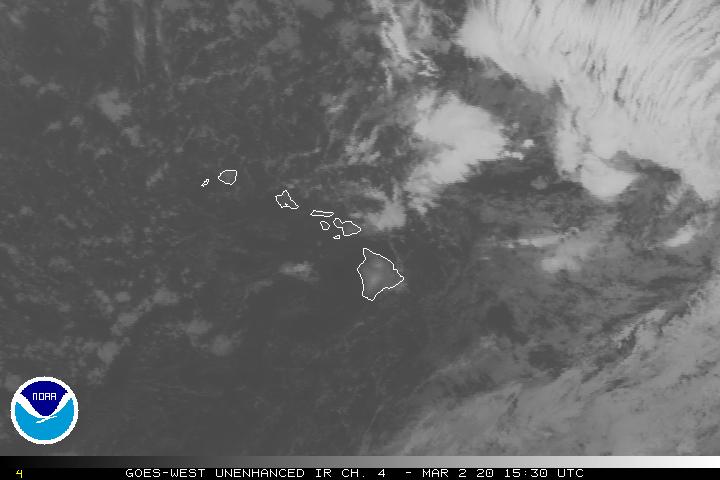


Cuban Traveler Says:
Wow, that's a heavy article. At some point in the future, do you think advanced robotics will be an excellent alternative to general biotic appendages? Something like the million dollar man for instance? Crazy stuff huh!~~~Hi Cuban traveler, from what I have heard lately, robots will be in our homes normally in a few years – 5 maybe. Interesting stuff, Aloha, Glenn