











Air Temperatures – The following maximum temperatures were recorded across the state of Hawaii Saturday:
Lihue, Kauai – 82
Honolulu airport, Oahu – 85 (Record high for Saturday / 90 – 1992)
Kaneohe, Oahu – M
Molokai airport – 81
Kahului airport, Maui – 84
Kona airport – 85
Hilo airport, Hawaii – 82
Air Temperatures ranged between these warmest and coolest spots near sea level – and on the highest mountain tops…as of 5pm Saturday evening:
Barking Sands, Kauai – 85
Kapalua, Maui – 75
Haleakala Crater – 45 (near 10,000 feet on Maui)
Mauna Kea – 30 (near 13,800 feet on the Big Island)
Hawaii’s Mountains – Here’s a link to the live web cam on the summit of near 13,800 foot Mauna Kea on the Big Island of Hawaii. This web cam is available during the daylight hours here in the islands…and when there’s a big moon shining down during the night at times. Plus, during the nights you will be able to see stars, and the sunrise and sunset too…depending upon weather conditions. Here's the Haleakala Crater webcam on Maui…although this webcam is not always working correctly.
Tropical Cyclone activity in the eastern and central Pacific – Here’s the latest weather information coming out of the National Hurricane Center, covering the eastern north Pacific. You can find the latest tropical cyclone information (once the season begins June 1) for the central north Pacific (where Hawaii is located) by clicking on this link to the Central Pacific Hurricane Center. A satellite image, which shows the entire ocean area between Hawaii and the Mexican coast…can be found here. Here's a tropical cyclone tracking map for the eastern and central Pacific.
Aloha Paragraphs

Strong and gusty trade winds…passing
windward showers at times, a few leeward
Small craft wind advisory coastal and channel waters
statewide, wind advisories on the upper slopes
of the Haleakala Crater on Maui…and windiest areas
on the Big Island too
High surf advisory east facing beaches
As this weather map shows, we have high pressure systems merging to the north-northeast of the islands, with an elongated high pressure ridge extending far southeast of the state. Our local winds will continue to be from the trade wind direction…remaining locally strong and gusty.
The following numbers represent the most recent top wind gusts (mph), along with directions as of Saturday evening:
33 Lihue, Kauai – NE
46 Kuaokala, Oahu – NE
44 Molokai – NE
42 Kahoolawe – ENE
38 Kahului, Maui – NE
44 Lanai – NE
43 Puu Mali, Big Island – ESE
We can use the following links to see what’s going on in our area of the north central Pacific Ocean. Here's the latest NOAA satellite picture – the latest looping satellite image…and finally the latest looping radar image for the Hawaiian Islands.
Here are the latest 24-hour precipitation totals (inches) for each of the islands as of Saturday evening:
1.43 Mount Waialeale, Kauai
0.64 Oahu Forest NWR, Oahu
0.02 Molokai
0.00 Lanai
0.00 Kahoolawe
0.68 Puu Kukui, Maui
0.36 Pahoa, Big Island
Sunset Commentary: The trade winds will remain stronger than normal through this long Memorial Day holiday weekend. This is a long lasting trade wind weather regime, as our trades will remain active through the next week at least. The NWS forecast office in Honolulu will keeping the small craft wind advisories active across all the marine zones statewide. Meanwhile, the winds are strong on the upper slopes of the Haleakala Crater, and now the upper summit areas on the Big Island too, which warrants the off and ongoing wind advisory. These gusty winds will gradually taper off…becoming moderately strong as we push towards the middle of the new week ahead.
As far as precipitation goes, there will be incoming showers at times, carried by the stronger than usual trade wind flow. As this satellite image shows, we have more showery clouds coming towards the windward sides Saturday night. At the same time, there's an impressive swath of high cirrus clouds flying by to our south…moving from west to east. We'll watch this area to see if it wants to migrate northward over the Hawaiian Islands, or not. High clouds, and middle level ones too, are famous for providing great sunrise and sunset colors.
My neighbors invited me to see a film at their house Friday evening, called Rum Diary (2011), starring Johnny Depp, Aaron Eckhart and Amber Heard…among many others. The synopsis: Based on the debut novel by Hunter S. Thompson. Tiring of the noise and madness of New York and the crushing conventions of late Eisenhower-era America, Paul Kemp (Johnny Depp) travels to the pristine island of Puerto Rico to write for a local newspaper, run by downtrodden editor Lotterman (Richard Jenkins). Adopting the rum-soaked life of the island, Paul soon becomes obsessed with Chenault (Amber Heard), the wildly attractive Connecticut-born fiancée of Sanderson (Aaron Eckhart). Sanderson is one of a growing number of American entrepreneurs who are determined to convert Puerto Rico into a capitalist paradise in service of the wealthy. When Kemp is recruited by Sanderson to write favorably about his latest unsavory scheme, the journalist is presented with a choice: to use his words for the corrupt businessmen's financial benefit, or use them to take the bastards down. ~~~ It turned out to be quite good, although not great in my book. I like Johnny Depp, its hard not too, although I'm not typically overly moved by his films. This particularly one deserves a soft B in my humble opinion…although was certainly entertaining. Here's a trailer in case you're interested.
Here in Kula, Maui at 555pm, it was partly cloudy and calm, with an air temperature of 75.7F degrees. The gusty trade winds will continue to whip through the island chain through Monday into early Tuesday, with a little easing over the days out from there. This will keep the coconut palm trees swaying, and the surrounding ocean filled with numberless white caps and rough surf along our eastern beaches too. These gusty winds will carry somewhat more than the usual passing showers to our windward sides at times, especially during the night and early morning hours. I'll be back Sunday morning with your next new weather narrative from this windy paradise of ours. I hope that you have a great Saturday night wherever you happen to be spending it! Aloha for now…Glenn.
World tropical cyclones-
Eastern Pacific: There are no active tropical cyclones.
Central Pacific: There are no active tropical cyclones. In the central part of the Pacific, the hurricane season begins as of June 1. The Central Pacific Hurricane Center in Honolulu is forecasting 2-4 tropical cyclones in this part of the Pacific Basin…which is slightly below the average number. An average season has 4-5 tropical cyclones, which include tropical depressions, tropical storms and hurricanes.
Atlantic Ocean: Subtropical storm Beryl remains active offshore from the Florida and Georgia coasts…nearly stationary at the time of this writing. This storm formed in the southwestern Atlantic, and is expected to maintain its strength over the next 24 hours. Persons in the southeast coastal areas of the United States should pay close attention to this subtropical system this weekend…as it moves towards those coastal areas. It was located 185 miles southeast of Charleston, South Carolina, and 230 miles east of Jacksonville, Florida, with 50 mph winds. It is expected to impact the coast Sunday night or Monday morning. This tropical system will bring rain, gusty winds, and thunderstorms to the area as it continues moving closer to the coast into the Memorial Day holiday…some rising surf too.
Western Pacific Ocean: Tropical storm Sanvu (03W) is dissipating in the western Pacific. The latest forecast by the Joint Typhoon Warning Center (JTWC) includes the Final Notice. It was located approximately 245 nautical miles east of Chichi Jima, Japan. Here's the latest JTWC graphical track map. Here's a NOAA satellite image of now retired Sanvu. Top sustained winds at the time of this writing were 45 knots, with gusts to 55 knots.
Interesting: Noted paleoanthropologist Richard Leakey predicts skepticism over evolution will soon be history. Not that the avowed atheist has any doubts himself. Sometime in the next 15 to 30 years, the Kenyan-born Leakey expects scientific discoveries will have accelerated to the point that "even the skeptics can accept it."
"If you get to the stage where you can persuade people on the evidence, that it's solid, that we are all African, that color is superficial, that stages of development of culture are all interactive," Leakey says, "then I think we have a chance of a world that will respond better to global challenges."
Leakey, a professor at Stony Brook University on Long Island, recently spent several weeks in New York promoting the Turkana Basin Institute in Kenya. The institute, where Leakey spends most of his time, welcomes researchers and scientists from around the world dedicated to unearthing the origins of mankind in an area rich with fossils. His friend, Paul Simon, performed at a May 2 fundraiser for the institute in Manhattan that collected more than $2 million.
A National Geographic documentary on his work at Turkana aired this month on public television. Now 67, Leakey is the son of the late Louis and Mary Leakey and conducts research with his wife, Meave, and daughter, Louise. The family claims to have unearthed "much of the existing fossil evidence for human evolution."
On the eve of his return to Africa earlier this week, Leakey spoke to the Associated Press in New York City about the past and the future. "If you look back, the thing that strikes you, if you've got any sensitivity, is that extinction is the most common phenomena," Leakey says.
"Extinction is always driven by environmental change. Environmental change is always driven by climate change. Man accelerated, if not created, planet change phenomena; I think we have to recognize that the future is by no means a very rosy one." Any hope for mankind's future, he insists, rests on accepting existing scientific evidence of its past.
"If we're spreading out across the world from centers like Europe and America that evolution is nonsense and science is nonsense, how do you combat new pathogens, how do you combat new strains of disease that are evolving in the environment?" he asked.
"If you don't like the word evolution, I don't care what you call it, but life has changed. You can lay out all the fossils that have been collected and establish lineages that even a fool could work up. So the question is why, how does this happen? It's not covered by Genesis.
There's no explanation for this change going back 500 million years in any book I've read from the lips of any God." Leakey insists he has no animosity toward religion. "If you tell me, well, people really need a faith … I understand that," he said.
"I see no reason why you shouldn't go through your life thinking if you're a good citizen, you'll get a better future in the afterlife …." Leakey began his work searching for fossils in the mid-1960s. His team unearthed a nearly complete 1.6-million-year-old skeleton in 1984 that became known as "Turkana Boy," the first known early human with long legs, short arms and a tall stature.
In the late 1980s, Leakey began a career in government service in Kenya, heading the Kenya Wildlife Service. He led the quest to protect elephants from poachers who were killing the animals at an alarming rate in order to harvest their valuable ivory tusks. He gathered 12 tons of confiscated ivory in Nairobi National Park and set it afire in a 1989 demonstration that attracted worldwide headlines.
In 1993, Leakey crashed a small propeller-driven plane; his lower legs were later amputated and he now gets around on artificial limbs. There were suspicions the plane had been sabotaged by his political enemies, but it was never proven. About a decade ago, he visited Stony Brook University on eastern Long Island, a part of the State University of New York, as a guest lecturer.
Then-President Shirley Strum Kenny began lobbying Leakey to join the faculty. It was a process that took about two years; he relented after returning to the campus to accept an honorary degree. Kenny convinced him that he could remain in Kenya most of the time, where Stony Brook anthropology students could visit and learn about his work.
And the college founded in 1957 would benefit from the gravitas of such a noted professor on its faculty."It was much easier to work with a new university that didn't have a 200-year-old image where it was so set in its ways like some of the Ivy League schools that you couldn't really change what they did and what they thought," he said.
Earlier this month, Paul Simon performed at a benefit dinner for the Turkana Basin Institute. IMAX CEO Rich Gelfond and his wife, Peggy Bonapace Gelfond, and billionaire hedge fund investor Jim Simons and his wife, Marilyn, were among those attending the exclusive show in Manhattan's Chelsea neighborhood.
Simon agreed to allow his music to be performed on the National Geographic documentary airing on PBS and donated an autographed guitar at the fundraiser that sold for nearly $20,000. Leakey, who clearly cherishes investigating the past, is less optimistic about the future.
"We may be on the cusp of some very real disasters that have nothing to do with whether the elephant survives, or a cheetah survives, but if we survive."
 Email Glenn James: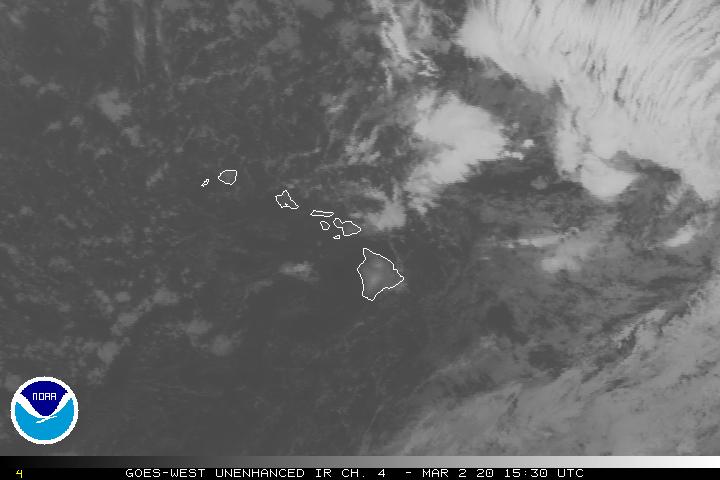





Sharon Says:
Rather like a storm coming through. Hawaii makes it easy to remember the blessings of the aftermath, rainbows rising above the debris. Malama pono! S. ~~~ Well put Sharon, very well put! Aloha, Glenn
Sharon Says:
Good evening Glenn!
Just a little thank you for your good work in posting all your interesting tidbits, which add up to a mighty big and clear picture.
Trust you are recalibrating gracefully after the passing of your father.
Aloha,
S.~~~Hello Sharon, nice to receive your comment, and as always…clear and concise. First of all, you are welcome, and thank you for your positivity. Clear sounds good to me, I’m glad it’s coming through in that way. Recalibrating, that’s a rather deep and introspective question. Yes, thanks for pointing that out, life does have a unique and special way of going on, making way for what’s coming. Aloha, Glenn