











Air Temperatures – The following maximum temperatures were recorded across the state of Hawaii Friday:
Lihue, Kauai – 82
Honolulu airport, Oahu – 86
Kaneohe, Oahu – 81
Molokai airport – 82
Kahului airport, Maui – 87 (Record high for Friday / 91 – 1996)
Kona airport – 84
Hilo airport, Hawaii – 83
Air Temperatures ranged between these warmest and coolest spots near sea level – and on the highest mountain tops…as of 5pm Friday evening:
Barking Sands, Kauai – 83
Molokai airport – 76
Haleakala Crater – 48 (near 10,000 feet on Maui)
Mauna Kea – 37 (near 13,800 feet on the Big Island)
Hawaii’s Mountains – Here’s a link to the live web cam on the summit of near 13,800 foot Mauna Kea on the Big Island of Hawaii. This web cam is available during the daylight hours here in the islands…and when there’s a big moon shining down during the night at times. Plus, during the nights you will be able to see stars, and the sunrise and sunset too…depending upon weather conditions. Here's the Haleakala Crater webcam on Maui…although this webcam is not always working correctly.
Tropical Cyclone activity in the eastern and central Pacific – Here’s the latest weather information coming out of the National Hurricane Center, covering the eastern north Pacific. You can find the latest tropical cyclone information (once the season begins June 1) for the central north Pacific (where Hawaii is located) by clicking on this link to the Central Pacific Hurricane Center. A satellite image, which shows the entire ocean area between Hawaii and the Mexican coast…can be found here. Here's a tropical cyclone tracking map for the eastern and central Pacific.
Aloha Paragraphs

Strong and gusty trade winds…passing
windward showers at times, a few leeward
Small craft wind advisory coastal and channel waters
statewide – gale warnings in the windiest areas
in Maui County and the Big Island – wind advisory
on the upper slopes of the Haleakala Crater…Maui
High surf advisory east facing beaches
As this weather map shows, we have a a near 1033 millibar high pressure system located to the north-northeast of the islands, with an elongated high pressure ridge extending far southeast of the state. Our local winds will continue to be from the trade wind direction…remaining locally strong and gusty.
The following numbers represent the most recent top wind gusts (mph), along with directions as of Friday evening:
32 Port Allen, Kauai – NE
37 Kuaokala, Oahu – NE
33 Molokai – E
43 Kahoolawe – NE
47 Kaupo Gap, Maui – NE
35 Lanai – NE
40 Kealakomo, Big Island – NE
We can use the following links to see what’s going on in our area of the north central Pacific Ocean. Here's the latest NOAA satellite picture – the latest looping satellite image…and finally the latest looping radar image for the Hawaiian Islands.
Here are the latest 24-hour precipitation totals (inches) for each of the islands as of Friday evening:
0.25 Mount Waialeale, Kauai
0.10 Oahu Forest NWR, Oahu
0.01 Molokai
0.00 Lanai
0.00 Kahoolawe
0.22 Puu Kukui, Maui
1.62 Kawainui Stream, Big Island
Sunset Commentary: The trade winds will remain stronger than normal into the holiday weekend. This is a long lasting trade wind weather regime, as our trades will remain active through the next week at least. The NWS forecast office in Honolulu is keeping the small craft wind advisories active across all the marine zones statewide. An unusual gale warning remains active across those windiest coastal and channel waters around Maui County and the Big Island through 6pm Saturday. Meanwhile, the winds are strong on the upper slopes of the Haleakala Crater too, which is in effect through 6pm Saturday evening as well. These gusty winds will gradually taper off…becoming moderately strong as we push into the new week ahead.
As far as precipitation goes, there will be incoming showers at times, carried by the stronger than usual trade wind flow. As this satellite image shows, we have an area of showery clouds just upstream of the windward sides, which will bring an increase in showers there tonight. The leeward sides of the islands should remain quite nice in general, although some areas will find clouds being carried over there on the blustery trade winds…leading to a few showers at times too. The overlying atmosphere however remains relatively stable and dry, which will generally keep any showers that do fall on the light side…with just a few minor exceptions here and there.
My neighbors have invited me to see a film at their house this evening, called Rum Diary (2011), starring Johnny Depp, Aaron Eckhart and Amber Heard…among many others. The synopsis: Based on the debut novel by Hunter S. Thompson. Tiring of the noise and madness of New York and the crushing conventions of late Eisenhower-era America, Paul Kemp (Johnny Depp) travels to the pristine island of Puerto Rico to write for a local newspaper, run by downtrodden editor Lotterman (Richard Jenkins). Adopting the rum-soaked life of the island, Paul soon becomes obsessed with Chenault (Amber Heard), the wildly attractive Connecticut-born fiancée of Sanderson (Aaron Eckhart). Sanderson is one of a growing number of American entrepreneurs who are determined to convert Puerto Rico into a capitalist paradise in service of the wealthy. When Kemp is recruited by Sanderson to write favorably about his latest unsavory scheme, the journalist is presented with a choice: to use his words for the corrupt businessmen's financial benefit, or use them to take the bastards down. I've been wanting to see this film for quite some time, and am looking forward to settling into it, without having to drive down to Kahului. I'll let you know what I thought of it in the morning, when I get back online again. Here's a trailer in case you're interested.
Here in Kula, Maui at 540pm, it was clear to partly cloudy and quite breezy, with an air temperature of 73.8F degrees. The winds continued to be our primary influence on this last day of the work week, as they have been the last few days…and will continue to be through the upcoming holiday weekend. It's hard to tell if what I'm seeing in the atmosphere here on Maui, is vog or just dust flying around in the winds down there in the Central Valley from here in Kula, I can see that there's still a definite haze in our air. I'll be back Saturday morning with your next new weather. I hope that you have a great Friday night wherever you happen to be spending it! Aloha for now…Glenn.
World tropical cyclones-
Eastern Pacific: The second tropical cyclone of the 2012 hurricane season remains active in the eastern Pacific. This tropical system has recently been downgraded from a category 1 hurricane, to tropical storm Bud (2E). Bud was located approximately 125 miles northwest of Manzanillo, Mexico, with 50 mph sustained winds. Here's the NHC storm track map, along with a satellite image. As Bud nears the coast it's expected to bring strong winds and heavy flooding rains. / The eastern Pacific Ocean is expected to have a near normal 2012 hurricane season…with 12-18 tropical cyclones.
Central Pacific: Here in the central part of the Pacific, the hurricane season begins as of June 1. The Central Pacific Hurricane Center in Honolulu is forecasting 2-4 tropical cyclones in this part of the Pacific Basin…which is slightly below the average number. An average season has 4-5 tropical cyclones, which include tropical depressions, tropical storms and hurricanes.
Atlantic Ocean: The recent area under investigation, called 94L, has generated into a subtropical storm called Beryl. This storm has formed in the southwestern Atlantic, and is expected to increase a bit in strength over the next 24-36 hours. Persons in the southeast coastal areas of the United States should pay close attention to this developing tropical system over the weekend. It was located 285 miles east of Charleston, South Carolina, with 45 mph winds / According to the NOAA 2012 hurricane season forecast, the Atlantic Ocean is expected to have a near-normal amount of tropical cyclones. This would include 12 named storms with six hurricanes…including three major hurricanes.
Western Pacific Ocean: Typhoon Sanvu (03W) is active in the western Pacific. The latest forecast by the Joint Typhoon Warning Center (JTWC) is for Sanvu to gradually weaken through the remainder of its life cycle. It was located approximately 125 nautical miles south of Chichi Jima, Japan. Here's the latest JTWC graphical track map. Here's a NOAA satellite image of Sanvu. Top sustained winds at the time of this writing were 70 knots, with gusts to 85 knots.
Interesting: Plastic bags are perhaps the largest source of waste from our modern consumer culture. Stores give them out without question for all products big and small. Later, they can be found littered on the sides of roads and highways, hanging from tree branches, floating in rivers and clogging up our landfills.
Now, a new plastic bag ban is set to be imposed by the largest US city to date to do so. This week, the Los Angeles City Council approved plans to phase out plastic bags at about 7,500 stores within the next 16 months. Behind the push to ban plastic can be found an assortment of environmental advocacy groups, including an outspoken spokesperson in the form of actress Julia Louis-Dreyfus.
As a board member of the group, Heal the Bay, she and her fellow board members pressed the important issue of preventing this common pollutant from entering LA's streams, drainiage systems, and eventually the Pacific. Their efforts helped bring the City Council to the landslide vote of 13 for and 1 against.
First step in the ban is conducting a four-month environmental review of the bag ban, starting Wednesday, May 23rd. This will be followed by the implementation of the ordinance. Big stores will have six months to phase out the plastic bags. Small stores will have 12 months to do so.
The banning of paper bags was also considered, but was backed off quietly by the council members. Instead, retailers will be forced to charge 10 cents per paper bag starting one year after the plastic bag ban is enacted. According to Councilman Paul Koretz, city officials would conduct a study in two years to see if the ban should be expanded to include paper.
Fighting the plastic bag ban were employees of plastic bag manufacturers. They pleaded with the council members not to destroy their jobs, saying their families depend on them and their benefits. However, the advocates of the ban were more numerous and forceful.
"Plastic harms our environment. It is a threat to the coastal economy. It is a danger to marine life and it is an unconscionable burden to taxpayers who have to foot the bill for cleanups year after year," said attorney H. David Nahai, a former top executive at the Department of Water and Power.
This move by Los Angeles comes after similar bans have been enacted in San Jose, San Francisco, Long Beach, and dozens of other cities. It would be no surprise to see a such a bill at the California Statehouse in Sacramento at some point in the near future.
Interesting2: The bottom of the sea is dark and lonely. Yet there is life usually isolated and located near some source of energy such as a deep sea vent. these vents are not continuous and in between there is a lot of empty space and totally alien environmental conditions especially between the bottom of the sea and the top of th3e ocean.
Marine scientists studying life around deep-sea vents have discovered that some hardy species can survive the extreme change in pressure that occurs when a research submersible rises to the surface. The team's findings, published in Conservation Biology, reveal how a species can be inadvertently carried by submersibles to new areas, with potentially damaging effects on marine ecosystems.
After using the manned submersible Alvin to collect samples of species from the Juan de Fuca Ridge under the northeastern Pacific Ocean, the team discovered 38 deep-sea limpets among their sample. Intriguingly this species is believed to occur only in the vents of the Gorda Ridge, which are 635 km south of the dive site.
The Juan de Fuca Ridge is a tectonic spreading center located off the coasts of the state of Washington in the United States and the province of British Columbia in Canada. The Gorda Ridge is a tectonic spreading center located off the coast of Oregon and northern California north of Cape Mendocino.
"The big question was, how did they get over 600 kilometers from their habitat?" said Dr. Janet Voight, from the Field Museum of Natural History in Chicago. "We discovered that the individuals must have been transported from the Gorda Ridge by our submersible.
Even though we clean the submersibles after sampling we had assumed that the extreme pressure change would kill any species which are missed." The introduction of new species to an ecosystem by humans, often inadvertently, is a big challenge to conservation. How a new species will react to new surroundings, and the effect it can have, is unpredictable.
Increases in deep-sea drilling and submersible activity can increase the probability of introductions, but until now hydrothermal vents have been considered too extreme and too isolated to be a source of introduced species. In coastal environments one of the biggest threats posed by invasive species to native species is disease, as newly introduced pathogens and parasites can cause mass mortality.
Diseases that may exist in the extreme environments created by hydrothermal vents have not been well studied. "We've discovered that it is possible to accidentally introduce a species, and any potential diseases it may carry, from a deep-sea vent to a new location," concluded Voight. A hydrothermal vent is a fissure in a planet's surface from which geothermally heated water issues.
Hydrothermal vents are commonly found near volcanically active places, areas where tectonic plates are moving apart, ocean basins, and hotspots. Hydrothermal vents exist because the earth is both geologically active and has large amounts of water on its surface and within its crust.
Common land types include hot springs, fumaroles and geysers. Under the sea, hydrothermal vents may form features called black smokers. Relative to the majority of the deep sea, the areas around submarine hydrothermal vents are biologically more productive, often hosting complex communities fueled by the chemicals dissolved in the vent fluids.
Chemosynthetic archaea form the base of the food chain, supporting diverse organisms, including giant tube worms, clams, limpets and shrimp.
 Email Glenn James: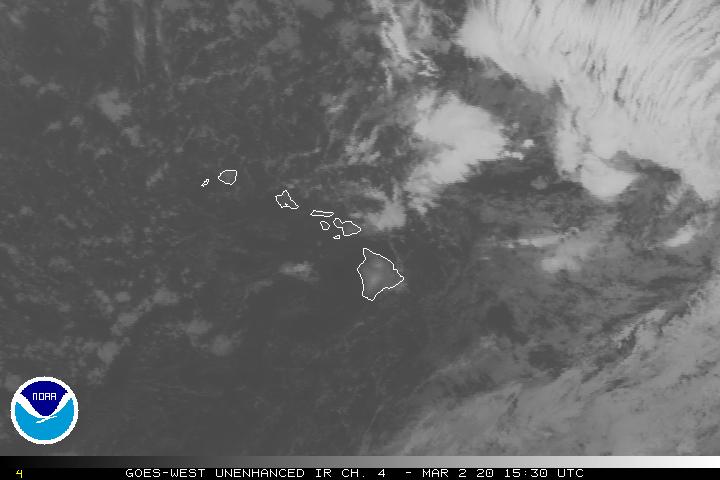





Elena Says:
Hawaii is a very beautiful paradise….perfect for resort weddings.~~~I agree Elena! Aloha, Glenn
Vicky Says:
Hey Glenn, was the photo on your daily weather page taken on Maui or ? It's beautiful….thanks for sharing all the wonderful pictures for those of us who can't be in the islands :-)~~~Hi Vicky, thanks for your comment, that is a wonderful picture, I agree. It was shot from West Maui, looking across the channel to the small island of Lanai. Aloha, Glenn