











Air Temperatures – The following maximum temperatures were recorded across the state of Hawaii Wednesday:
Lihue, Kauai – 82
Honolulu airport, Oahu – 84
Kaneohe, Oahu – 76
Molokai airport – 79
Kahului airport, Maui – 85 (Record high for Wednesday / 92 – 1996 )
Kona airport – 83
Hilo airport, Hawaii – 77
Air Temperatures ranged between these warmest and coolest spots near sea level – and on the highest mountain tops…as of 5pm Wednesday evening:
Barking Sands, Kauai – 82
Hilo, Hawaii – 71
Haleakala Crater – 41 (near 10,000 feet on Maui)
Mauna Kea – 30 (near 13,800 feet on the Big Island)
Hawaii’s Mountains – Here’s a link to the live web cam on the summit of near 13,800 foot Mauna Kea on the Big Island of Hawaii. This web cam is available during the daylight hours here in the islands…and when there’s a big moon shining down during the night at times. Plus, during the nights you will be able to see stars, and the sunrise and sunset too…depending upon weather conditions. Here's the Haleakala Crater webcam on Maui…although this webcam is not always working correctly.
Tropical Cyclone activity in the eastern and central Pacific – Here’s the latest weather information coming out of the National Hurricane Center, covering the eastern north Pacific. You can find the latest tropical cyclone information (once the season begins June 1) for the central north Pacific (where Hawaii is located) by clicking on this link to the Central Pacific Hurricane Center. A satellite image, which shows the entire ocean area between Hawaii and the Mexican coast…can be found here. Here's a tropical cyclone tracking map for the eastern and central Pacific.
Aloha Paragraphs

Strong and gusty trade winds…passing windward
showers at times, a few leeward – diminishing
Strong winds atop the upper slopes on
Maui and the Big Island of Hawaii…along
with a wind advisory in those windiest
lowland areas in Maui County and the
Big Island – small craft wind advisory
coastal and channel waters statewide
As this weather map shows, we have a a near 1034 millibar high pressure system located to the northeast of the islands, with an elongated high pressure ridge extending far southwestward…to the north of the state. Our local winds will continue to be from the trade wind direction…remaining locally strong and gusty.
The following numbers represent the most recent top wind gusts (mph), along with directions as of Wednesday evening:
28 Port Allen, Kauai – ENE
45 Kahuku training area, Oahu – NE
42 Molokai – ENE
44 Kahoolawe – NE
47 Kahului, Maui – NE
37 Lanai – NE
35 Upolu airport, Big Island – NE
We can use the following links to see what’s going on in our area of the north central Pacific Ocean. Here's the latest NOAA satellite picture – the latest looping satellite image…and finally the latest looping radar image for the Hawaiian Islands.
Here are the latest 24-hour precipitation totals (inches) for each of the islands as of Wednesday evening:
0.26 Mount Waialeale, Kauai
0.10 Kahuku, Oahu
0.01 Molokai
0.01 Lanai
0.00 Kahoolawe
0.40 Kaupo Gap, Maui
1.28 Glenwood, Big Island
Sunset Commentary: The trade winds will remain stronger than normal into Thursday. This will be a long lasting trade wind weather pattern, keeping our trades blowing through the next week at least. The NWS forecast office in Honolulu is keeping the small craft wind advisories across all the marine zones statewide. An unusual gale warning has been issued across those windiest coastal and channel waters around Maui County and the Big Island at the same time! All lower level areas in Maui County and the Big Island are under a wind advisory through 6pm Thursday evening. The Big Island summits are under a high wind warning until 4am Thursday morning. These gusty winds will gradually taper down later Friday into the weekend, becoming moderately strong as we push into early next week.
As far as precipitation goes, there will be incoming showers at times, carried by the stronger than usual trade wind flow. The trade winds will carry most of the showery clouds to our windward coasts and slopes. These showers will gradually taper off Thursday into the weekend time frame. The leeward sides of the islands should remain quite nice, although some areas will find clouds being carried over there on the blustery trade winds…leading to a few showers at times too.
Here in Kula, Maui, it was partly cloudy early Wednesday evening, with an air temperature of 75.7F degrees. The main thing today were the strong and gusty trade winds, no doubt. Winds didn't quite reach 50 mph, at least that I saw, although they were gusting up into the 40+ mph range most of the day. There are all kinds of wind related warnings and advisories across our island chain, which were summarized just up this page. These winds will remain abnormally strong through Friday, although will gradually diminish some into the weekend…and then more so as we get into next week. Here in Kula it clouded up significantly this morning, which led to light showers into the afternoon hours. The cloudiness broke however, with lots of sunshine beaming down at the time of this writing. Thursday should be a decent day, that is if you don't mind windy weather messing up your hair, or sending skirts flying…along with frothed-up seas all around. There will be fewer showers likely than we saw today though. ~~~ I'll be back early Thursday morning with your next new weather narrative, I hope you have a great Wednesday night until then! Aloha for now…Glenn.
Tropical cyclone reports / Eastern Pacific: The second tropical cyclone of the 2012 hurricane season, in the eastern Pacific, became active this past Sunday. This tropical storm called Bud (2E), is still a tropical storm at the time of this writing…although is expected to strengthen into a hurricane soon. Bud was located approximately 410 miles southwest of Manzanillo, Mexico, with 70 mph sustained winds. Here's the NHC storm track map, along with a satellite image. There is absolutely no threat to the Hawaiian Islands from this developing tropical system as it curves back towards the Mexican coast into the weekend. As Bud nears the coast it's expected to weaken back into a tropical storm, although will bring gusty winds and localized heavy rains.
Central Pacific: Here in the central part of the Pacific, the hurricane season begins as of June 1. The Central Pacific Hurricane Center in Honolulu is forecasting 2-4 tropical cyclones in this part of the Pacific Basin…which is slightly below the average number. An average season has 4-5 tropical cyclones, which include tropical depressions, tropical storms and hurricanes.
Atlantic Ocean: There are no active tropical cyclones – although there is an area under investigation (called 94L) in the northwestern Caribbean. There is no circulation of this tropical disturbance, and it has a near 0 chance of developing into a tropical system during the next 48 hours. However, it is causing very heavy rains in Cuba and even southern Florida. Miami received 9.70" of flooding rainfall on Tuesday…likely more today!
Western Pacific Ocean: There's a second tropical cyclone in the tropical waters of the world, this one in the western Pacific. It is typhoon Sanvu (03W), forecast by the Joint Typhoon Warning Center (JTWC) to become stronger over the next few days. It was located approximately 375 nautical miles south-southwest of Iwo To, Japan. Here's the latest JTWC graphical track map. Here's a NOAA satellite image of Sanvu. At the moment, this tropical cyclone isn't expected to impact any island areas in the western Pacific…although is forecast to get within just 62 miles from the small Japanese island of Iwo To. Top sustained winds at the time of this writing was 65 knots, with gusts to 80 knots.
Oh my gosh: Buffalo Whisperer
Interesting: Keeping track of bears in the Northwestern region of the United States will soon be made easier because of the work of the United States Geological Survey. The USGS has implemented a new study using the hair follicles of grizzly bears in areas of Montana and Idaho to better find out the size of the grizzly bear population. According to USGS officials, the method was successfully tested on grizzly bears in Glacier National Park’s Bob Marshall Wilderness Refuge in northwestern Montana.
The federal bureau will next estimate the grizzly bear population in the Cabinet-Yaak ecosystem, one of the six recovery zones defined by the U.S. Fish and Wildlife Service's Grizzly Bear Recovery Plan. USGS officials believe that over 40 grizzlies live within the 2,600-square-mile recuperation area. The USGS said that similar hair follicle testing methods will be conducted in this ecosystem as they were within the boundaries of Glacier National Park.
Officials said that this will also give the Geological Survey more specific information pertaining to the population of the grizzly bears. It will also further develop the genetic database of the grizzlies within the Cabinet-Yaak ecosystem.
Marcia McNutt, the director of the United States Geological Survey, said that getting specific counts of animals in the wilderness are very difficult to obtain, especially if the animals have similar appearances. "The great advantage of using DNA for counting is that it not only distinguishes individuals reliably, but also can determine how related or inbred a population has become, an important parameter in monitoring genetic diversity in the wild," said McNutt.
McNutt states that individual bears will be classified by bear hair DNA collected from nearly 800 scent-baited and over 1200 unscented poles, trees and posts that bears rub up against. This specific information will be used to determine the bears' population and genetic health.
Hair samples will be obtained throughout the summer of 2012 and sent to federal laboratories for analysis. Only a miniscule amount of hair follicles are necessary to discover information about the specific bear that left the sample, such as species, individual identity, relationship to other bears and gender.
"Determining the size and distribution of bear populations with accuracy and precision requires a lot of resources because it involves intense sampling on a large scale," said USGS scientist Kate Kendall. "That the local community and agencies were able to pull together the funding for this effort is an indication of the importance to them of moving toward recovering this population."
Interesting2: An innovation in wine drinking is emerging in California restaurants: wine on tap. Wine served from a keg is not a new concept; it has a long-standing history in Europe. But here in the United States, wine on tap has been brought to the market and failed — more than once; first in the 1970s, then twice again in the 1980s.
This time, however, the concept is sticking; wine kegs are opening up a new market for wineries and rejuvenating the wine industry. Kegged wine has multiple advantages for both the restaurant and the winery. These advantages are environmental, quality related, and economic. Environmentally, the benefits of kegging wine are clear.
The bottling process is extremely resource intensive and includes bottles, corks, foils, labels, boxes and pallets. Kegs eliminate tons of packaging, and are reusable for 20+ years. Each standard sized, 19.5L keg, holds 26 bottles worth of wine. Also, wines sold by the glass account for up to 80% of wine sold in restaurants, which equates to approximately 600 million bottles per year.
If 10% of that was served from a keg, that would save 60 million bottles yearly. Since only about 27% of glass is recovered for recycling, this would divert millions of bottles from landfills. Furthermore, kegs lessen transported wine's weight, which accounts for one-third to one-half of the industry’s transportation carbon emissions. Kegs keep wine tasting like it should.
When a keg is tapped, the contents become pressurized by an inert gas, which prevents oxygen from ever touching the wine, and therefore eliminates the waste that comes with serving wines by the glass. And since the wine is served at a consistent level of ideal quality, wine on tap safeguards the promise of restaurants and wineries having more faithful, repeat customers. Economically, kegging wine makes sense, too.
Bottling is extremely costly, as all the resources required in the process must be purchased and are used only once. Kegs result in savings of about 25—30% for wineries when compared to the equivalent amount of wine in bottles. Restaurants that serve wine on tap can enjoy 25% higher profit margins than selling wine by the glass from bottles. Due to wastes being eliminated with kegged wine, restaurants can capitalize on even higher profit margins by offering more respectable, higher-end wines by the glass.
 Email Glenn James: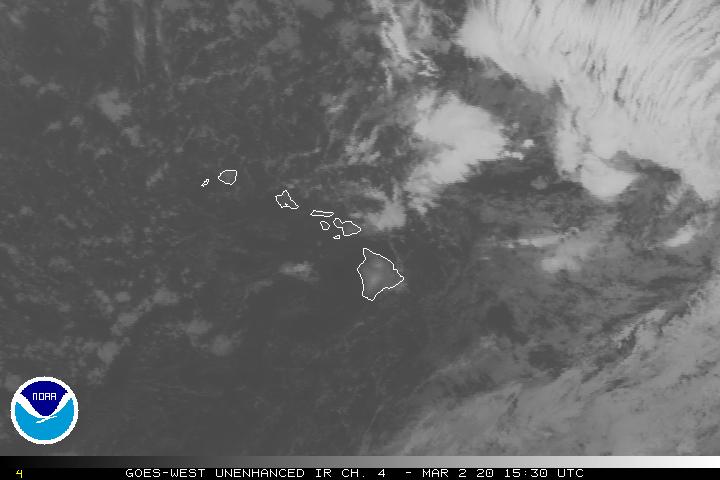


j.j. Says:
Aloha Glenn…thank you for always giving your interesting perspective on the weather and other subjects..
jj~~~Hi JJ, thanks for your positive comment, and I’d like to thank you playing all the good music on Tuesday evenings in return! Aloha, Glenn