











Air Temperatures – The following maximum temperatures were recorded across the state of Hawaii Monday:
Lihue, Kauai – 81
Honolulu airport, Oahu – 79
Kaneohe, Oahu – 82
Molokai airport – 80
Kahului airport, Maui – 84 (Record highest temperature for Monday / 91 – 1953)
Kona airport – 82
Hilo airport, Hawaii – 81
Air Temperatures ranged between these warmest and coolest spots near sea level – and on the highest mountain tops…as of 5pm Monday evening:
Kahului, Maui – 80
Lihue, Kauai – 73
Haleakala Crater – 50 (near 10,000 feet on Maui)
Mauna Kea – 45 (near 13,800 feet on the Big Island)
Hawaii’s Mountains – Here’s a link to the live web cam on the summit of near 13,800 foot Mauna Kea on the Big Island of Hawaii. This web cam is available during the daylight hours here in the islands…and when there’s a big moon shining down during the night at times. Plus, during the nights you will be able to see stars, and the sunrise and sunset too…depending upon weather conditions. Here's the Haleakala Crater webcam on Maui…although this webcam is not always working correctly.
Tropical Cyclone activity in the eastern and central Pacific – Here’s the latest weather information coming out of the National Hurricane Center, covering the eastern north Pacific. You can find the latest tropical cyclone information (once the season begins June 1) for the central north Pacific (where Hawaii is located) by clicking on this link to the Central Pacific Hurricane Center. A satellite image, which shows the entire ocean area between Hawaii and the Mexican coast…can be found here. Here's a tropical cyclone tracking map for the eastern and central Pacific.
Aloha Paragraphs

Rebounding trades late Tuesday onwards, a
few windward biased showers beginning then,
with a few more on Kauai from the cold front
As this weather map shows, we have high pressure systems located to the west-northwest, and the northeast of the Hawaiian Islands…with a ridge over the islands. At the same time, we find a weak cold front just to our north…which won't quite make it to Kauai. Our local winds will gradually begin increasing again later Tuesday onwards.
The following numbers represent the most recent wind gusts (mph), along with directions as of Monday evening:
04 Barking Sands, Kauai
12 Bellows, Oahu – NE
07 Molokai
12 Kahoolawe – NE
14 Lipoa, Maui – NE
07 Lanai
18 South Point, Big Island – ENE
We can use the following links to see what’s going on in our area of the north central Pacific Ocean. Here's the latest NOAA satellite picture – the latest looping satellite image…and finally the latest looping radar image for the Hawaiian Islands.
Here are the latest 24-hour precipitation totals (inches) for each of the islands as of Monday evening:
0.32 Mount Waialeale, Kauai
0.03 Schofield Barracks, Oahu
0.00 Molokai
0.00 Lanai
0.00 Kahoolawe
0.00 Maui
0.08 Keaumo, Big Island
Sunset Commentary: The low clouds associated with a late season cold front have reached Kauai this evening. This frontal boundary is interrupting the usual trade wind flow, with lighter than normal wind conditions in place over the Hawaiian Islands into Tuesday. This frontal boundary will stall near Kauai, and likely remain near that island into Tuesday. The rest of the island chain will find good weather prevailing, with some afternoon cloud buildups over the mountains…leading to a few localized showers. Then, later Tuesday into Wednesday, the trade winds will rebound, bringing more typical late spring weather conditions to the Aloha state through the rest of this week at least.
As noted above, a late season cold front is slowly migrating southward to near Kauai. This in turn has kept our local breezes on the light side the last couple of days. We'll see the convective pattern extend into Tuesday, with a characteristic cool clear morning…giving way to cloudy afternoons over the islands locally, with a few showers over the interior sections Tuesday afternoon. Our winds will be sea breezes during the day Tuesday, with overnight down slope land breezes tonight into Tuesday morning. Kauai will see a slight uptick in showers due to the moisture from the close by cold front. As we get into the middle of the week, we'll see the start of a well established trade wind weather pattern…which may break down somewhat by the upcoming weekend briefly.
Here in Kula, Maui at 540pm, skies were partly to mostly cloudy with light breezes, and a slightly cool air temperature of 66.9F degrees. As this satellite image shows, we have an area of high and middle level clouds, that are showing up brighter white in color, having moved away further to the east of the state today. This satellite image also shows the aforementioned ragged cold front just to the north of Kauai. It's weak and will be pretty much a non-event as it bottoms-out near Kauai into Tuesday morning. There may be a few associated showers around Kauai, but nothing too much more than that. High pressure building in to the north of the dissipating front will bring our trade winds back late tomorrow, and onwards into the week from there. As the trade winds return, the convective weather pattern will shift back into a trade wind pattern, with some manner of showers beginning to fall along our windward sides again, generally during the night and early morning hours by Wednesday. ~~~ I'll be back early Tuesday morning with your next new weather narrative, I hope you have a great Monday night until then! Aloha for now…Glenn.
Extra: The 2012 hurricane season in the eastern Pacific begins May 15th. We now find the first tropical cyclone of the 2012 hurricane season…spinning offshore from mainland Mexico. It's called 1E, and is located approximately 650 miles south-southwest of Manzanillo, Mexico. Here's the NHC graphical track map for now strengthened tropical storm Aletta (1E), along with this satellite image. Aletta should gain a bit more strength, although certainly not reaching hurricane strength…before starting to weaken rather quickly Wednesday onwards. Despite the fact that it will be moving westward, it poses absolutely no threat to the Hawaiian Islands.
Interesting: New Navy estimates showing many more dolphins, whales and other marine mammals could be hurt by sonar off Hawaii and Southern California…has caused alarm among environmentalists. The Navy, for its part, emphasized those were worst-case estimates and that the numbers cover a much larger testing area than before.
The numbers are in the Navy's new draft environmental impact statement for exercises planned from 2014-2018. In it, the Navy says that, under its preferred alternative, sonar training and testing might unintentionally harm marine mammals 2.8 million times a year over five years.
"The numbers are staggering and there is absolutely no corresponding mitigation to account for this harm," Zak Smith, an attorney for the Natural Resources Defense Council. That's up from about 150,000 instances a year in the Navy's impact statement for 2009-2013, Smith added.
But the Navy said the numbers were misleading since the new area is much larger and more activities have been added since the last statement. "It's like comparing three grapes to a watermelon," Pacific Fleet spokesman Mark Matsunaga. "These are just worst-case estimates," he added.
"That's not to say we're going to go out there and hurt them all." "Direct comparisons with the prior analysis might not be comparing apples to apples," acknowleged Smith. "But I think that's irrelevant. … Regardless of what accounts for this change the fact is that we — including the Navy — now understand that the Navy's activities will have a much greater impact than previously thought."
Twelve million potential exposures over those five years are listed under "behavioral," Smith noted. It's the least harmful category, but Smith said it can include an impact like forcing a whale to abandon its habitat for several days. "Marine mammals don't have the energy to continually withstand" that kind of impact, he added. Two million incidents are counted for temporary hearing loss, Smith said, and 2,000 are listed for permanent hearing loss.
Hearing is critical to marine mammals, much like seeing is to humans, Smith said. "It's as if some technology used in my neighborhood blinded me for the next 10 minutes. It becomes a problem if I go outside and get hit by a car." Dolphins are the most impacted species under the new estimates, which are based on models, followed by whales and orcas.
In addition, the Navy estimates traditional explosives testing and training might kill 1,000 marine mammals during the period. The Navy numbers were presented Thursday by John Van Name, a senior environmental planner at the U.S. Pacific Fleet. US sued over sonar tests in whale waters
"Each time around, each time we swing through this process, we get better, we take a harder look, we become more inclusive," the Associated Press quoted him as saying. Matsunaga added that the new estimates include "more activities that weren't analyzed the first time around" and "hundreds more sources of sound" from Navy ships.
"We're at an early stage of the process," said Matsunaga, noting that the estimates don't take into account Navy mitigation. Smith said his group isn't looking to block sonar and explosives testing and training, but to see it used at times and places where the impacts to marine mammals are minimized. Will the Navy work with other federal agencies to mitigate the damage?
"That's the big question," said Smith, noting that, as part of the environmental process, the Navy is now taking public comments and then will consult with the National Marine Fisheries Service. The NRDC, he added, will be submitting formal comments and hopes that the Navy and the fisheries service will eventually have "a very thoughtful conversation as to what they can work out."
 Email Glenn James: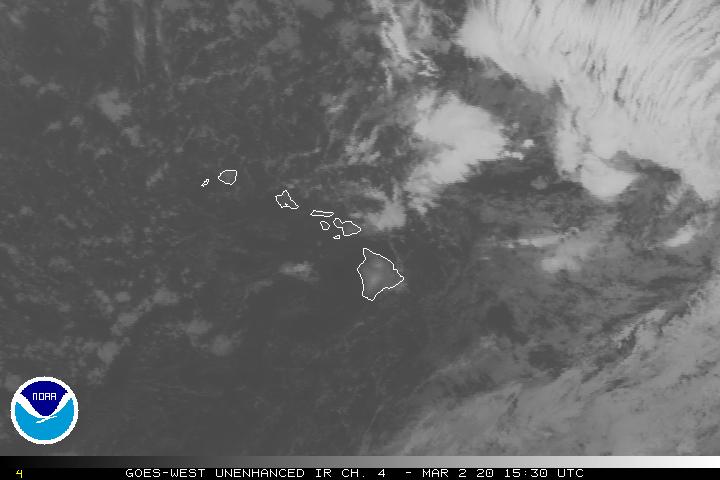

david northup Says:
INTERESTING Aloha Glenn!!
I remember getting into this not so many years back, The Navy said at that time they were not injuring anything ,but if you live near the beach you could tell when they were in the area by how many whales or creatures that were not .in their usual places pretty much running them away. This testing should not be allowed . In the ealier years we were told that the sonar, if directed at a mammal could would vibrate their insides and it would get to the point of an internal hemorage ,then death . I just don't know ! ]But if the ray is directed at a sub it might be able to level the crew without a shot being fired from a conventional weapon . not a good thing…
Aloha and Mahalo Glenn ~~~Hi David, I have to agree with you here, I don’t want our marine creatures, including dolphins and whales hurt by the Navy’s sonar rays! I don’t approve in the least, I’m with you on this one. Aloha, Glenn
Eliza Says:
Aloha Glenn – Wheee, what chilly air in Pukalani this morning. 62 degrees at 430am, 1500' up the hill. Left a window open on the uphill side and wheee, what a nip in the house. Yow! You've been cold up there at your level. Now, we have a lovely cloud cover with light light breezes. Bit of a chill on the breezes. Could use the rains, for sure! Come on down rain! Thanks for all your posts. How is your mom doing and your sibs? Malama pono ~ Eliza~~~Hi Eliza, yes ma’am, the mornings have been cold, more like winter than spring the last couple of days! As the trade winds return soon, conditions will warm up going forward, although still a bit chilly Tuesday morning yet. My Mom and the rest of the family is learning to live without my Dad, it’s a slow process, although one that naturally happens given the way life moves forward it seems. Thanks for checking in from just down the mountain, there in Pukalani! Aloha, Glenn
Matt Guru Says:
Great info. I'm bookmarking this page, and plan on using it to plan our trip there next year sometime. We're still trying to decide what the best time of year to visit would be since my wife and I have never been before. Hi Matt, that’s a good question of course, and one that varies depending upon what you are looking for, where in the islands you want to travel, etc. As for dry weather, typically May and June come up as strong choices in this regard. The one problem is that the islands are so nice every month, its difficult to actually chose one month over another! Best of luck, you’d have a hard time finding a bad time of year to visit Hawaii…honestly! Aloha, Glenn