











Air Temperatures – The following maximum temperatures were recorded across the state of Hawaii Saturday:
Lihue, Kauai – 83
Honolulu airport, Oahu – 84
Kaneohe, Oahu – 77
Molokai airport – 82
Kahului airport, Maui – 85 (Record high temperature for Saturday – 90 / 1954)
Kona airport – 82
Hilo airport, Hawaii – 81
Air Temperatures ranged between these warmest and coolest spots near sea level – and on the highest mountain tops…as of 5pm Saturday evening:
Kahului, Maui – 80
Princeville, Kauai – 73
Haleakala Crater – 48 (near 10,000 feet on Maui)
Mauna Kea – 34 (near 13,800 feet on the Big Island)
Hawaii’s Mountains – Here’s a link to the live web cam on the summit of near 13,800 foot Mauna Kea on the Big Island of Hawaii. This web cam is available during the daylight hours here in the islands…and when there’s a big moon shining down during the night at times. Plus, during the nights you will be able to see stars, and the sunrise and sunset too…depending upon weather conditions. Here's the Haleakala Crater webcam on Maui…although this webcam is not always working correctly.
Aloha Paragraphs

Strong trades…a few windward
showers into the new week ahead
Nice surf along our south and west facing beaches
As this weather map shows, we have a near 1036 millibar high pressure system to the northeast of Hawaii…is migrating slowly northwestward. At the same time, there's a a series of cold fronts to the west and northwest of the islands moving northeast. Our local winds will gradually increase in strength this weekend…into the new week ahead.
The following numbers represent the most recent wind gusts (mph), along with directions as of Saturday evening:
18 Princeville, Kauai – ESE
25 Honolulu, Oahu – NE
22 Molokai – NE
42 Kahoolawe – ESE
29 Kapalua, Maui – NE
08 Lanai – SW
31 South Point, Big Island – NE
We can use the following links to see what’s going on in our area of the north central Pacific Ocean. Here's the latest NOAA satellite picture – the latest looping satellite image…and finally the latest looping radar image for the Hawaiian Islands.
Here are the latest 24-hour precipitation totals (inches) for each of the islands as of Saturday afternoon:
1.57 Mount Waialeale, Kauai
0.28 Nuuanu Upper, Oahu
0.00 Molokai
0.01 Lanai
0.00 Kahoolawe
0.25 Puu Kukui, Maui
0.55 Saddle Quarry, Big Island
Sunset Commentary: A near 1036 millibar high pressure system remains in place to the northeast of the state Saturday evening…although continues moving slowly to the northwest. A series of cold fronts to our west continues to move northeast, having little bearing on our local weather at this time. Our winds are blowing from the trade wind direction statewide, and are due to strengthen some on Sunday. These trade winds will carry a few showers into the windward sides, although nothing unusual in terms of precipitation is expected. The trade winds will prevail into the new work week ahead.
Meanwhile, in the marine environment, south swell waves coming up from the southern hemisphere, where its well into autumn now, will bring active surf conditions along our south and west facing leeward beaches this weekend…although not large enough to trigger a high surf advisory. We'll find a very common trade wind weather pattern here in our area, with lots of white caps on the ocean surface surrounding the Hawaiian Islands. The mornings will have the lightest winds, while the afternoons will exhibit the strongest conditions. The leeward sides will have those waves I was referring to above, as well as great weather conditions…especially during the morning hours.
Here in Kula, Maui at 5pm, skies were partly cloudy, with light winds, and an air temperature of 75.6F degrees. As mentioned above, high pressure will continue its normal presence to our northeast and north, thus keeping our springtime trade winds blowing. They will be strongest around Maui County and the Big Island, so that the ongoing small craft wind advisory flags will stay up over those eastern islands for the time being. As for showers, there will be some, although almost all of them will fall along our north and east facing coasts and slopes during the nights. The leeward sides will be generally sunny and warm to very warm during the days, and pleasantly cool at night. There really isn't anything of threat on the horizon, with nice weather through the rest of this weekend, stretching into the new week ahead. ~~~ I hope you have a great Saturday night wherever you're spending it! Aloha for now…Glenn.
Interesting: Waste is directly linked to human development, both technological and social. The compositions of different wastes have varied over time and location, with industrial development and innovation being directly linked to waste materials. Waste is sometimes a subjective concept, because items that some people discard may have value to others.
Americans generate more trash than anyone else on the planet: more than 7 pounds per person each day. About 69 percent of that trash goes immediately into landfills. And most landfill trash is made up of containers and packaging — almost all of which should be recycled, says Pulitzer Prize-winning journalist Edward Humes.
"It's instant trash," he says. "We pay for this stuff, and it goes right into the waste bin, and we're not capturing it the way our recycling programs are intending us to capture it. We're just sticking it in the ground and building mountains out of it." Humes' new book Garbology: Our Dirty Love Affair with Trash follows the journey that trash takes as it makes its way from garbage containers through landfills, sanitation plants and scrap heaps.
He tells Fresh Air's Terry Gross that because much of our trash is immediately hidden from our daily lives, it's easier for us to be wasteful. Humes' investigation into garbage's journey around the Earth didn't stop on land. He also met with scientists who study the 5 massive gyres of trash particles swirling around in the Indian, Atlantic and Pacific oceans.
Created by the convergence of ocean currents and wind, the gyres contain masses of litter that aren't entirely visible by the human eye. "What we're actually seeing in the ocean is this kind of chowder of plastic — these tiny particles that are the size of plankton," he says. "It's plastic that has been weathered and broken down by the elements into these little bits, and it's getting into the food chain."
The Great Pacific Garbage Patch, also described as the Pacific Trash Vortex, is a gyre of marine litter in the central North Pacific Ocean located roughly between 135°W to 155°W and 35°N to 42°N. The patch extends over an indeterminate area, with estimates ranging very widely depending on the degree of plastic concentration used to define the affected area.
The Patch is characterized by exceptionally high concentrations of pelagic plastics, chemical sludge, and other debris that have been trapped by the currents of the North Pacific Gyre. Despite its size and density, the patch is not visible from satellite photography, since it consists primarily of suspended particulates in the upper water column.
Since plastics break down to even smaller polymers, concentrations of submerged particles are not visible from space, nor do they appear as a continuous debris field. Instead, the patch is defined as an area in which the mass of plastic debris in the upper water column is significantly higher than average.
 Email Glenn James: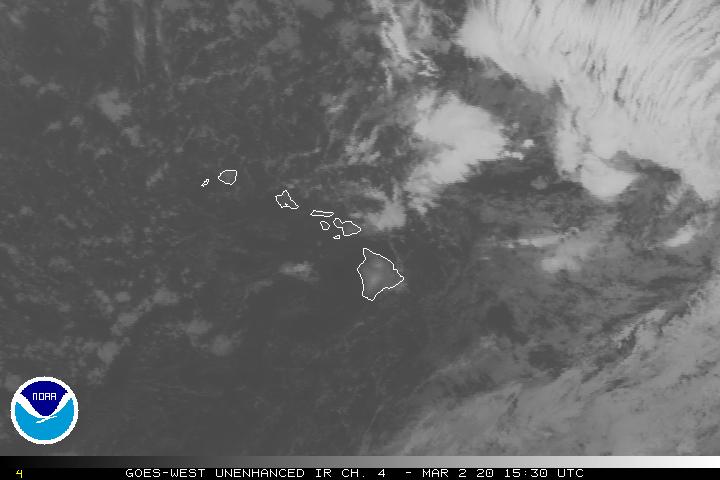
Sharon Says:
Aloha Glenn!
Thank you for all your gentle reminders of our thoughtless effects on our environment. It is not something that most of us want to hear, but only collectively can we make a difference, just as collectively we have made the mess. Keep at it!~~~Hi Sharon, thanks for your note. Its true, we all need to find our small individual ways to keep our fragile planet safe from harm. Aloha, Glenn