











Air Temperatures – The following maximum temperatures were recorded across the state of Hawaii Monday:
Lihue, Kauai – 81 (Record high temperature for Monday – 85 / 1962)
Honolulu airport, Oahu – 80
Kaneohe, Oahu – 79
Molokai airport – 76
Kahului airport, Maui – 80
Kona airport – 79
Hilo airport, Hawaii – 76
Air Temperatures ranged between these warmest and coolest spots near sea level – and on the highest mountain tops…as of 6pm Monday evening:
Barking Sands, Kauai – 82
Hilo, Hawaii – 70
Haleakala Crater – 50 (near 10,000 feet on Maui)
Mauna Kea – 39 (near 13,800 feet on the Big Island)
Hawaii’s Mountains – Here’s a link to the live web cam on the summit of near 13,800 foot Mauna Kea on the Big Island of Hawaii. This web cam is available during the daylight hours here in the islands…and when there’s a big moon shining down during the night at times. Plus, during the nights you will be able to see stars, and the sunrise and sunset too…depending upon weather conditions. Here's the Haleakala Crater webcam on Maui…although this webcam is not always working correctly.
Aloha Paragraphs

Kalaupapa, Molokai
Windward showers…backing off some into Tuesday.
Gradually lighter winds through Wednesday, becoming
voggy, with afternoon showers Thursday through Saturday…
followed by trade winds again Sunday into next week
As this weather map shows, we have a high pressure system to the north of Hawaii. At the same time, we have a retiring frontal boundary just south of the Big Island. Our trade winds will gradually be easing up into Wednesday.
The following numbers represent the most recent wind gusts (mph), along with directions as of Monday evening:
21 Princeville, Kauai – NE
29 Honolulu, Oahu – NE
30 Molokai – NNE
36 Kahoolawe – NE
30 Lipoa, Maui – NE
25 Lanai – NE
29 South Point, Big Island – NE
We can use the following links to see what’s going on in our area of the north central Pacific Ocean. Here's the latest NOAA satellite picture – the latest looping satellite image…and finally the latest looping radar image for the Hawaiian Islands.
Here are the latest 24-hour precipitation totals (inches) for each of the islands as of Monday evening:
1.09 Mount Waialeale, Kauai
1.66 Manoa Lyon Arboretum, Oahu
0.38 Molokai
0.25 Lanai
0.00 Kahoolawe
4.04 Puu Kukui, Maui
1.86 Kawainui Stream, Big Island
Sunset Commentary: A moderately strong high pressure system remain positioned to the north of the state, which will continue to provide trade winds into mid-week. This high pressure cell will keep our trade winds quite strong and gusty, although gradually slowing down some as the high pressure cell shifts eastward over the next few days. At the same time, we find a weakening front now positioned just south of the Big Island. It's bringing windward showers, although they will gradually ease up going forward. The leeward sides will find the most sunshine during the days, as is often the case during a trade wind episode like this.
As we move into the middle of this week, a cold front will approach the islands from the northwest. As the front gets closer, our high pressure system to the north will be moved eastward. The front won't make it to our islands, although will cause our local winds to become lighter. These lighter winds will veer to the southeast, bringing muggy and voggy weather our way…along with afternoon interior showers locally. The mornings should be clear with slightly cooler than normal air temperatures. Our weather will return to near normal, with trade winds rebounding again later this coming weekend into early next week.
Here in Kula, Maui at 540pm, skies were partly cloudy, with light winds, and an air temperature of 73.9F degrees. I can still see low clouds stretched out along the windward side of east Maui, although less so than during most of Monday. This looping radar image shows the rainfall associated with the dissipating cloud band, which is now mostly located to the south of the Big Island. The front first brought lots of rain to the mountains on Kauai, and then during the last 24 hours brought lots of rain to the mountains and windward sides of Maui. The largest amount on Maui was at Puu Kukui, the tallest point in the West Maui Mountains…which measured in at 4.04"! Glancing at that satellite image two paragraphs up, we can see considerable clouds, from the retiring front, stretched out along all our windward coasts and slopes.
I had a good fast walk early this morning, and drove down to Pukalani for a yoga class after breakfast, but unfortunately it had been canceled for some reason. So, I came home and got a few things, before driving up into the Haleakala National Park for several hours of communing with nature. Now, I'm about ready to head out for my fast paced early evening walk, totaling 2.2 miles. If I do both morning and evening, I get a solid 4.4 miles per day, which feels about right to me. I have a nice red sauce for dinner, and all I have to do is boil the pasta, plate it, and add some grating cheese. Then, it will be perhaps a telephone conversation or two, followed by the walk up the stairs to the weather tower for some reading, before retiring for the night. My alarm goes off each M-F morning at 450am, at which time I get up to meditate for 35 minutes or so. Then, as most of you know, I'll jump back on the computer to prepare your Tuesday morning narrative. I hope you have a great Monday night until then! Aloha for now…Glenn.
Interesting: Occasionally it's good to step back from the details of global warming science and offer non-technical visitors a "Global Warming 101" perspective, sort of like The Big Picture, but starting from the very beginning and touching on many aspects of this broad topic. The Earth is a giant rock, hurtling through space in its orbit around the sun. It would be a frozen lifeless rock like the moon if not for the thin layer of atmosphere that traps solar energy and insulates the Earth's surface, like a transparent blanket. The way the atmosphere traps solar energy is called (somewhat inaccurately) the Greenhouse Effect, because the effect is similar to a greenhouse or a closed car heating up in the sun.
Sunlight comes in through a transparent window and is absorbed by whatever it hits, heating up the interior. Some of that heat is trapped inside, partly because glass is less transparent to heat than it is to light, and the temperature increases. In the atmosphere, sunlight is absorbed by the Earth's surface or rooftops or whatever, and that energy is radiated as heat (infrared energy) back toward space.
Most of that heat doesn't make it to space, because it gets absorbed by certain gases in the atmosphere, mainly water vapor, carbon dioxide, and methane. Normally this is a good thing, because without the heat trapped in the atmosphere by "greenhouse gases", our planet would be frozen. But it turns out that too much of a good thing is a bad thing.
If extra carbon dioxide that is not part of the natural carbon cycle is added to the atmosphere, then extra heat is trapped that would otherwise escape to space, and the atmosphere gets warmer. So in a nutshell, Global Warming is an increase in the Earth's overall average temperature caused by adding extra carbon dioxide and other greenhouse gases to the atmosphere that absorb and trap heat.
Carbon dioxide (or CO2) is the familiar gas that bubbles out of carbonated beverages, and in its solid form it's called dry ice. Carbon dioxide is also a waste product of animal metabolism, after oxygen from the air is combined with carbon-containing compounds in food to produce the energy we need to live. In a beautiful carbon cycle, plants take in carbon dioxide and solar energy to live, and they "exhale" the oxygen that we need to live.
For most of human existence, the amount of CO2 in the atmosphere has been stable at about 280 parts per million (ppm), meaning that out of every million molecules in the air, 280 of them are carbon dioxide. It's a pretty small fraction of the atmosphere (0.028%), but it's the right amount of carbon dioxide to absorb just enough heat so that the Earth has the overall average temperature that we and everything else have gotten used to.
Then came the Industrial Revolution, when we learned to make the great amounts of electricity and heat needed to build modern civilization by burning "fossil fuels", or coal, oil, and natural gas (methane). Fossil fuels are the remains of plants and animals that died millions of years ago and sank to the bottom of stagnant water that lacked the oxygen needed to decompose them, so they became buried under layer after layer of sediment and compressed into coal or oil.
Today we mine that coal and drill for oil and then burn them in power plants and cars. Fossil fuels are mostly made of carbon, and burning them turns them into carbon dioxide that goes up the smoke stack or out the tailpipe and into the atmosphere. This is the extra carbon dioxide, beyond that nice amount we used to have when the carbon cycle was in balance, that is causing global warming.
Carbon dioxide doesn't just go away, it builds up in the atmosphere and traps more heat and makes the planet warmer. The amount of carbon dioxide in the atmosphere in 2010 was 390 ppm (Fig. 2), which is up 39% from pre-industrial levels, and it's increasing at a rate of 1.9 ppm/year as more and more humans burn more and more fossil fuels. It's astonishing that humans can have such a large effect on the whole planet's atmosphere, but it's a fact that they do.
Global warming is NOT about the daily weather, and there's no clear connection between global warming and any single hurricane or snow storm or drought. That's not the right way to think about it. Instead, adding energy to the whole Earth System leads to such things as more frequent severe weather events that on average are stronger and more damaging.
That is, it's a statistical thing that has to do with averages and long-term trends, rather than one's own experience with the daily weather. There's a great deal of day-to-day and even year-to-year variability in the weather, and the 0.6°C (or 1.1°F) increase in the average global temperature over decades shown in Fig. 1 is a statistical trend that an individual can't really detect.
However, scientific research brings to bear lots of measurements and data analysis and computer modeling and debate and discussion among thousands of experts who spend their careers studying this in great detail. That's what makes them experts, and why they deserve to be listened to with an open mind.
Global warming IS about an overall increase in the amount of energy in the whole Earth System caused by an increase in heat-trapping greenhouse gases. The experts are only talking about a few degrees of average temperature increase, which doesn't sound like much, but consider this example. Imagine a glass of water and ice cubes in a refrigerator whose temperature is set right at the freezing point of water, 0°C or 32°F.
The mixture of ice and water will remain pretty much as it is, but if the temperature is raised by even 1 degree, the ice cubes will start to melt, and at 2 degrees they will melt faster. Everything was in balance at the old temperature, but at the slightly warmer temperature you eventually end up with all water and no ice, much like what is happening right now to Earth's Arctic sea ice and mountain glaciers.
What happens when the planet gets warmer? More extreme weather, disappearing Arctic sea ice, and receding glaciers have consequences, such as less habitable coastal areas, decline of the polar bears, and disappearing fresh water supplies for billions of people. The current rate of sea level rise is 3.3 mm/year (Fig. 4), which is cause for concern in low-lying or hurricane-prone coastal areas like Bangladesh or certain disappearing Pacific islands or the U.S. Gulf coast.
This becomes a national security and military concern when there are millions of "climate refugees" with nowhere to go. They will do what they must to survive, as we all would, and they'll go to China, Australia, the U.S., and elsewhere, and they probably won't be welcomed with open arms. Other consequences of global warming include extended droughts and encroaching deserts, increasing wildfires and insect infestations, and changing rainfall and agricultural patterns.
The oceans and marine life are doubly affected by global warming: first by an increase in temperature, which intensifies hurricanes and melts sea ice, and second by increased acidity caused by dissolved CO2. And these aren't even the worst-case scenarios. These three factors make confronting global warming both more difficult and more urgent.
Natural processes that permanently remove CO2 from the atmosphere take place on a timescale of decades or longer, so we are already committed to a certain amount of additional warming even if humanity stopped burning fossil fuels today. When a system such as Earth's climate system is perturbed from a stable state, "positive feedback" processes can cause the system to move even farther from its previous state, while "negative feedback" processes tend to restore a perturbed system to its previous state.
There are several positive feed backs in the Earth's climate system that could lead to a "tipping point", which is a threshold condition that, once reached, leads to an irreversible change no matter what we do, because once it's done it's done. One example of a positive feedback in the climate system concerns the decreasing Arctic ice cap shown in Fig. 3 (20% smaller since 1979).
Ice is a very reflective surface with an albedo of 0.5-0.7, meaning that 50-70% of sunlight is reflected back to space and doesn't contribute (much) to global warming. Ocean is one of the least reflective surfaces with an average albedo of only 0.08 (only 8% reflected, 92% absorbed), so most of the solar energy hitting the ocean participates in global warming.
As the size of the Arctic ice cap decreases from melting, a less reflective surface (the ocean) replaces a more reflective surface (the ice), so more solar energy is absorbed and the rate of global warming increases, leading to faster ice cap melting, leading to faster warming, etc., until all the ice is gone. A second positive feedback in the climate system concerns the thawing of permafrost soil in northern latitudes.
Vast stretches of permafrost contain vast quantities of CO2 and methane locked up in the frozen soil, which is released into the atmosphere when the soil melts, which traps more heat and increases the rate of global warming, which melts more and deeper permafrost, which further increases the rate of global warming, etc. These and other positive feed backs could lead to a tipping point, where dramatic changes in the Earth System happen quickly and are permanent and irreversible no matter what we do about CO2 emissions.
Climate science is enormously complex (see Fig. A4), yet sufficient progress has been made that we know the broad outlines of what is needed to avoid the worst consequences of global warming. We need to make major changes in the way we get and use energy, and we need to do it soon, or the world will change in ways we won't like and our children will like even less.
Having a specific goal can sometimes motivate progress, and some climate experts have suggested that we should aim to stabilize the atmospheric CO2 concentration at no more than 350 ppm. Recall that the pre-industrial CO2 level was 280 ppm, and we're currently at 390 ppm and increasing at a rate of 1.9 ppm/year, so we're already above the desired level and rapidly heading in the wrong direction.
The target of 350 ppm originated with a paper by eminent NASA climate scientist Dr. James Hansen, which involved an analysis of past climate conditions and their associated CO2 concentrations. A commonly cited target for policy considerations is to limit global warming to 2°C (3.6°F), which gives us a chance to avoid positive feedbacks such as widespread melting of permafrost that could lead to a tipping point.
The 2°C limit roughly corresponds to an 80% reduction in CO2 emissions by the year 2050, if substantial reductions begin immediately. Meeting such targets requires transformational energy policy that establishes clear requirements and a mechanism to meet them, and in one way or another puts a price on the emission of carbon to drive reductions.
Right now there is zero cost for contributing to global warming, so there's no incentive to stop, and taxpayers will continue to pay for the effects of global warming. Energy choices made today will determine the climate in coming decades. Historically it has been difficult for human beings to get together to confront a major problem until some catastrophe occurs, which does not bode well for addressing global warming because we must act far in advance of any catastrophe due to the long timescale for removal of CO2 from the atmosphere.
THE SOLUTIONS ARE CLEAR: We need to use energy more efficiently, as about half of it is just wasted by inefficient cars, appliances, buildings, electrical grid, etc., and we need to transition to clean and renewable (non-fossil fuel) sources of energy, which we already know how to do. However, the forces opposing change are formidable and well funded, and frankly, very good at deceiving a poorly-informed public about a complex and long-term issue.
Coal was great for powering the industrial revolution and electrifying civilization, but now we know there are long-term global consequences, and now we know how to make electricity in smarter ways than using fire to boil water to turn a generator. Oil has plenty of problems in addition to being a major contributor to global warming, including volatile prices, environmental damage such as the Gulf oil disaster or tar sands mining, and the loss of life, political destabilization, and enormous expense to taxpayers of protecting oil supplies.
Even relatively "clean" natural gas (methane) is not really very clean unless much more is done to prevent leakage of this potent greenhouse gas into the atmosphere. Confronting global warming will require a combination of strong legislation crafted by informed and courageous legislators, personal actions to reduce one's own energy use and to support renewable energy, and teaching others about the reality of global warming and what's at stake.
One thing that any individual can do is to elevate the importance of strong clean energy and climate legislation when making voting decisions. For me, this issue is way above politics, it's about the future of my daughter and my species. Regarding who to believe about global warming, consider this simple analogy. If I want to know how to fix my plumbing, I will call a plumber, not a climate scientist. But if I want to know if all the hoopla about global warming is real and should we do something about it, it seems like common sense to ask a climate scientist, not the Coal Lobby, or the American Petroleum Institute, or some (but not all) politicians.
 Email Glenn James: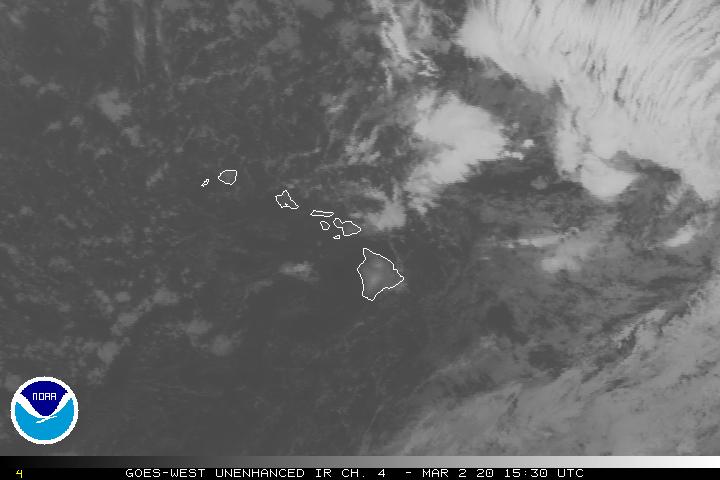
Eliza Says:
Aloha Glenn – E como mai – welcome home to your usual routine. May you recover from the stress of your dad's transition in the loving arms of Maui.
Weather news – woke to very light drips of rain off the house in upper Pukalani this morning. Just enough to dampen the grasses. Have watched these strong tradewinds blow more rains into the area down hill and east of us. Few glimmers of partial rainbows as the sun shines through breaks in the clouds.
Have a great week ~ A hui hou ~
Eliza~~~Hi Eliza, thanks for your welcome home, and indeed, Maui is having a healing effect on me. I could see those light showers down your way from up here in Kula. Glad to know you got at least a little moisture, we’re dry here. Thanks for your good wishes for the week, and the same to you! Aloha, Glenn