











Air Temperatures – The following maximum temperatures were recorded across the state of Hawaii Wednesday:
Lihue, Kauai – 76
Honolulu airport, Oahu – 78
Kaneohe, Oahu – M
Molokai airport – 75
Kahului airport, Maui – 76
Kona airport – 83
Hilo airport, Hawaii – 82
Air Temperatures ranged between these warmest and coolest spots near sea level – and on the highest mountain tops…as of 5pm Wednesday evening:
Kailua-kona – 80
Princeville, Kauai – 68
Haleakala Crater – 50 (near 10,000 feet on Maui)
Mauna Kea – 30 (near 13,800 feet on the Big Island)
Hawaii’s Mountains – Here’s a link to the live web cam on the summit of near 13,800 foot Mauna Kea on the Big Island of Hawaii. This web cam is available during the daylight hours here in the islands…and when there’s a big moon shining down during the night at times. Plus, during the nights you will be able to see stars, and the sunrise and sunset too…depending upon weather conditions. Here's the Haleakala Crater webcam on Maui…although this webcam is often not working correctly.
Aloha Paragraphs

High surf along the east shores and north shores…rough
conditions with stronger trade winds into Friday
Fair conditions Thursday…then unsettled weather
again later Friday into the weekend…improvement
starting again next Monday into mid-week
Flood Advisory for Maui County
As this weather map shows, we have strong high pressure systems far to the northeast and northwest of the islands. At the same time we have a low pressure system to the north, with its associated cold front/trough located near the Big Island. Our winds will become stronger trades Thursday through the upcoming weekend.
The following numbers represent the strongest wind gusts (mph), along with directions Wednesday evening:
35 Barking Sands, Kauai – NNE
25 Wheeler AFB, Oahu – NNE
27 Molokai – N
29 Kahoolawe – NNE
23 Kapalua, Maui – N
17 Lanai – NE
25 Upolu Point, Big Island – NNE
We can use the following links to see what’s going on in our area of the north central Pacific Ocean Wednesday evening. Looking at this NOAA satellite picture we see middle and high level clouds over the ocean, stretching back over parts of Maui and the Big Island. We can use this looping satellite image to see much less showery clouds over the islands today, compared to the last several days at least…along with more high clouds approaching Hawaii to the west. Checking out this looping radar image we see a few light showers…especially along the windward sides from Oahu down through Maui County at the time of this writing.
Here are the 24-hour precipitation totals (inches) for each of the islands as of Wednesday evening:
3.04 Kilohana, Kauai
3.30 Oahu Forest NWR, Oahu
0.70 Molokai
0.57 Kahoolawe
1.74 Puu Kukui, Maui
2.21 Kawainui Stream, Big Island
Evening Commentary: As we move into Thursday, our weather will be generally fair, with most of whatever showers that are around falling along our windward coasts and slopes. This will be a short break from the more numerous showers that we saw over the last several days. As we move into Friday, yet another unsettled weather pattern will slide over the state into the weekend. An upper level trough of low pressure will cross our islands then, with its unusually cold air aloft, causing instability in our overlying atmosphere. An unstable air mass like this is infamous for prompting locally generous rainfall, along with thunderstorms at times too. As we push into early next week, our weather conditions will begin to improve once again.
A cold front/trough is near the Big Island now, heading to points east from there. This frontal boundary will act as a focus for showers, for the most part over the Big Island. The rest of the state found relief from the long lasting threat of heavy precipitation of late. As the winds are coming in from the north now, the leftover moisture from the front will end up along those north to northeast coasts and slopes, although not amounting to very much. The next weather change that we'll notice in our Hawaiian Islands weather picture, will be the strengthening trade winds over the next couple of days. These will become rather strong and gusty, especially on the Kauai side of the island chain. These fresh trades will carry showers to our windward sides…while the leeward beaches will find some falling in places too.
Here in Kula, Maui at 530pm HST, we had light breezes, pea soup fog…and an air temperature of 64.4F degrees. Satellite imagery shows a large area of high and middle level clouds over the ocean to our east, extending back over the Big Island and Maui County at the time of this writing. This looping radar image shows most of the leftover showers are moving over the windward sides, with just a few light showers over the rest of the state…the most active are over Oahu and Maui County at the time of this writing. ~~~ I had some extra time today, so I took the relatively short drive up into the Haleakala National park. I ended up around the 7,000 foot elevation, and just parked my car with no one around. I sat there for a while and just took in the beauty of the mountain, after driving through pretty foggy conditions coming up from my house at 3,100 feet. I did a bit of texting to friends, read a bit too, but mostly just sat in my car and communed with nature, as the clouds slowly gathered force. Then I got my skateboard out of the back, put on my leather gloves, and hit the road, not literally through…thankfully. I skated down this nice smooth piece of road, and then just walked back up, several times. The last time that I started to walk back up, it started to rain lightly, which made the road slick, which isn't a good thing for this sport. I got back in my car and put up the windows, put the seat back, and enjoyed being warm and cozy, and just watched the rain drops hitting the windows of my car…and actually took a short nap. I just love it up there, as it's so peaceful and private. I came back home after that, and have enjoyed a very foggy afternoon, sitting here in my weather tower doing work. Glancing outside now, its still foggy, very foggy in fact. I'll be heading out for my 2.2 mile fast walk now, wanting to fit it in before dark. ~~~ I'll be back with my next sunrise commentary early Thursday morning. I hope you have a great Wednesday night wherever you're spending it! Aloha for now…Glenn.
Interesting: As the developing nations change and their populations ask for amenities, energy and environmental issues will increase. As populations across the world grow, new research out of MIT shows the rising influence of large or developing countries in shaping our future global challenges. MIT's Joint Program on the Science and Policy of Global Change's 2012 Energy and Climate Outlook report projects that energy use could double by 2050.
China alone could go from having about 50 million cars and trucks on the road to having about 300 million in less than 40 years. Fast-growing G20 nations — including Russia, Brazil, Mexico, China, India and other developing Asian countries — could put four times more vehicles on the road by 2050 than they have today.
"While we have known for some time that large economies outside Europe, North America and Japan would have a growing influence on greenhouse gas emissions and the climate, the dramatic increase in their energy use and emissions [by 2050]," as projected in the new report, "is staggering," says John Reilly, the co-director of the Joint Program on Global Change and a lead author of the study.
Reilly, along with the other lead author Sergey Paltsev and nine others, based their projections on the United Nations' estimate that the world's population will grow to more than 10 billion by the end of the century.
They then used a computer modeling system to project how this growth would affect our energy and climate — incorporating pledges to cap emissions by 2020, made by G20 nations at an international meeting in Copenhagen in 2009. (Which may be optimistic)
"The unrelenting increase in greenhouse gas (GHG) emissions, concentrations and changes in climate — even assuming success at capping emissions in Europe, North America and Japan — is especially troubling, and it points to the need to redouble efforts to reduce emissions," Reilly says.
The report projects that as Russia, Brazil, Mexico, China, India and developing countries grow and substantially increase their energy use, they would also likely become the largest sources of emissions — contributing to a doubling of global GHG emissions, and a tripling of global carbon emissions over the century.
With rising emissions, temperatures would warm by as much as 6.7 degrees Celsius by the end of the century, the report shows — a projection slightly higher than that of the Intergovernmental Panel on Climate Change, which has said temperatures could warm by as much as 6.4 degrees Celsius.
While the researchers note in their study that the amount of temperature increase considered dangerous remains open to debate and uncertainty, they write, "few would argue that the increases projected in our study — ranging from 3.5 degrees to near 7 degrees Celsius or more by 2100 — constitute danger." Greenhouse gases other than carbon dioxide will be significant as well, the report shows.
While about two-thirds of GHG emissions will continue to come from carbon dioxide, the report shows other types of sources could increase — like nitrous oxide from fertilizer, and methane from livestock. Because these other types of emissions are expected to become more prevalent, the report notes that efforts should focus on reducing them as well.
The report projects that coal, oil and gas would continue to be the predominant forms of energy through the next half century. The MIT report comes amidst similar efforts from the U.S. Department of Energy and some large energy companies, such as ExxonMobil and BP.
Both companies say the projection that there will be a substantial increase in global energy consumption, led by developing countries, is very similar to their own projections out to 2030. But Reilly says while their projections are similar, the MIT report has a wider scope.
"The forecasts presented here are similar through that period [2030], but by including detailed projections through 2050, as well as the global climate and environmental implications of population and economic growth through to 2100, we begin to see much more clearly the environmental risks we are likely to face if we continue the path we are on."
Truly as the world changes what is done here may affect what happens elsewhere in the world. As the population grows and demands more luxuries and goods, the need for energy and the potential increase of environmental harm rises. It is not just the efforts of one nation or person but the efforts of all to change these potential environmental impacts.
 Email Glenn James: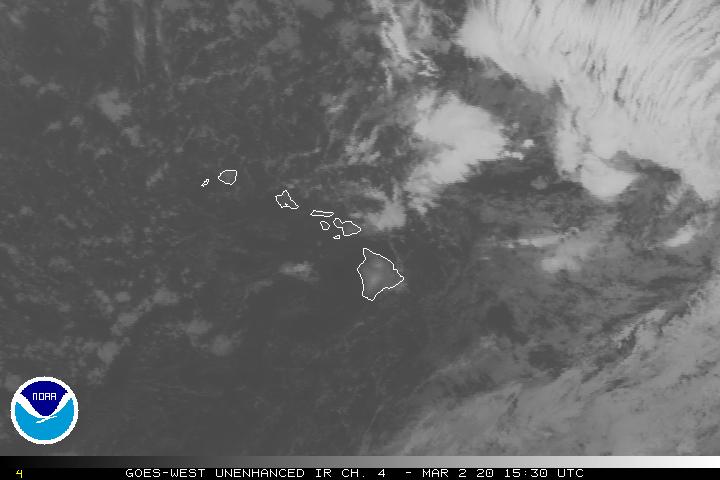
Sharon Says:
Sweet description of the simple pleasures of being alive & aware amongst this beauty.
You set some good examples!~~~Hi Sharon, I appreciate your acknowledgement! Aloha, Glenn
Ted Meeker Says:
Glenn,
I followed and watched the fat burning video that your site promoted and was very impressed, but then found that it would not let me download the program which they advertised. Would have done so if I could have. Very disappointing, since I know you depend on those to keep this excellent site running.
Ted Meeker~~~Thanks Ted, its true checking out the google ads does create income for this website. I’m sorry that the video you were checking out didn’t work properly. I actually have little to do with picking those google ads, other than I can dismiss them if I dislike them…which I sometimes do. Thanks for your positive comment about this site Ted! Aloha, Glenn