











Air Temperatures – The following maximum temperatures were recorded across the state of Hawaii Monday:
Lihue, Kauai – 70
Honolulu airport, Oahu – 74
Kaneohe, Oahu – M
Molokai airport – 71
Kahului airport, Maui – 71
Kona airport – 81
Hilo airport, Hawaii – 73
Air Temperatures ranged between these warmest and coolest spots near sea level – and on the highest mountain tops…as of 6pm Monday evening:
Kailua-kona – 77
Lihue, Kauai – 63
Haleakala Crater – 37 (near 10,000 feet on Maui)
Mauna Kea – 27 (near 13,800 feet on the Big Island)
Hawaii’s Mountains – Here’s a link to the live web cam on the summit of near 13,800 foot Mauna Kea on the Big Island of Hawaii. This web cam is available during the daylight hours here in the islands…and when there’s a big moon shining down during the night at times. Plus, during the nights you will be able to see stars, and the sunrise and sunset too…depending upon weather conditions. Here's the Haleakala Crater webcam on Maui…although this webcam is often not working correctly.
Aloha Paragraphs

(you will have reload/refresh this page to get the latest radar image…if you stay on this page)
Showers or rain, locally heavy…with isolated thunderstorms over
Kauai, Oahu and Maui County Tuesday…showers elsewhere
Hazardous surf along the east shores – high surf warning
on those beaches…advisory level north shores
Improving weather beginning later Wednesday into
Thursday…with strong trade winds later in the week
Flash flood watch Kauai, Oahu and Maui County
Flash flood warning Kauai
Wind advisory Big Island summits
As this weather map shows, we have strong high pressure systems to the northeast and north of the islands. At the same time we have a low pressure system closer to the north-northeast, with its associated cold front located in the channel between Kauai and Oahu. Our winds will be generally light and variable in direction…stronger near Kauai tonight.
The following numbers represent the strongest wind gusts (mph), along with directions Monday evening:
45 Lihue, Kauai – NE
13 Wheeler AFB, Oahu – SE
05 Molokai – N
22 Kahoolawe – NE
10 Lipoa, Maui – ESE
06 Lanai – NNW
21 South Point, Big Island – NE
We can use the following links to see what’s going on in our area of the north central Pacific Ocean Monday evening. Looking at this NOAA satellite picture we see low, middle and high level clouds over the ocean, stretching over the islands in places…especially near Kauai, Oahu and Maui County. We can use this looping satellite image to see heavy duty showery clouds over parts of the state, with thunderstorms popping-up in places. At the same time, we have a large swath of high clouds streaming up from the tropics…with the northern edge close to the Big Island at the time of this writing. Checking out this looping radar image we see light to moderate showers, with heavy ones too…especially around Oahu, Kauai, and parts of Maui County at the time of this writing.
Here are the 24-hour precipitation totals (inches) for each of the islands as of Monday evening
15.02 Hanalei, Kauai
7.30 Waihee Pump, Oahu!
0.43 Molokai
0.75 Kahoolawe
1.23 Ulupalakua, Maui
0.52 Kealakomo, Big Island
Sunset Commentary: The atmosphere remains unstable and shower prone over the islands, especially near Kauai, Oahu and Maui County. There are still those showery clouds that continue to bring locally heavy rainfall, and even severe thunderstorms located over the ocean…although over the islands in many places too. Meanwhile, there will continues to be lots of moisture in our area, which will keep conditions off and on wet through Tuesday, tapering off some by mid-week.
A cold front/trough is very near Kauai now, in the channel between there and Oahu. This frontal boundary will act as a focus for more locally heavy rainfall, and thus keeping the good possibility of more flooding for the islands. The Big Island won't be under this most intense rain shield, although is apt to see at least some shower activity continuing. It appears that we'll have to wait until around Wednesday or Thursday before we see this inclement weather pattern finally starting to shift away. This will keep the threat of rainfall in our weather forecast, particularly over the the island chain tonight through Tuesday.
Here in Kula, Maui at 530ppm HST, we had calm winds, cloudy skies, with threatening skies…but no rain at the moment. We certainly had a good downpour at mid-day, with what looks like more not far to the west of here at the time of this writing. Satellite imagery still shows very heavy duty clouds around Kauai, some of which are extending to Oahu into Maui County now too. This looping radar image shows that there is still rainfall happening over and around the islands, especially focusing on Kauai as we head into our sunset hour. All of the islands have received some of this wet weather, with more showers taking aim on the entire state…with the exception of the Big Island at this time.
I would highly suggest that folks drive with extreme care, especially if you find yourself in one of these localized heavy downpours during your commute back home from work. The NWS has issued a severe thunderstorm watch for Kauai now, which means that flooding is a sure thing. The soils over many parts of the state are totally saturated, which means that more precipitation will lead to quick flooding situations. I'll be keeping a close eye on this very wet and unsettled weather pattern, and will come back online this evening. I'll then return early Tuesday morning with your next new sunrise commentary. I hope you have a great Monday night wherever you happen to be spending it! Aloha for now…Glenn.
Interesting: Long dry spells have been a problem in various parts of the world including China, Africa, Russia, Australia, the southern and western United States, and Western Europe. Many are hoping that this is just a cyclical nuisance and not evidence of a permanent change in climate patterns. England in particular is used to being a damp and rainy island, but has been surprised now with three straight winters of drought-level precipitation.
The first to notice and be affected by the changing levels of rainfall are the farmers. However, now public officials are beginning to worry about the long-term stability of their water supplies and the effects that lower rainfall will have on the environment as a whole.
The European Union is taking a lead role in making water resources an important issue in the international community. Occurring next week in Marseille, France, is the World Water Forum, a meeting to discuss the status of water supplies around the world and steps that must be done to protect them.
At the June UN Conference on Sustainable Development in Rio de Janeiro, Brazil, EU officials intend to make water conservation a major agenda item. Furthermore, the European Commission has named 2012 as the Year of Water, planning an in depth review of the continent's water legislation and policies.
France, Spain, Portugal, and large sections of England have all been affected by recent droughts. As major agricultural areas, many are concerned with food output. The level of food supply would also then affect food prices. In Europe, the issue is mostly a lack of rainfall.
However, around the world, officials agree that the biggest source of water shortages is how the water is used. First of all, populations are exploding in the regions that already strained with water supplies. This includes the Middle East, Africa, and South Asia.
In many areas, water is wasted with over-watering crops and gardens, taking long showers, or just general abuse. Just as importantly, water quality is reduced, especially in developing nations, due to pollution. EU officials urge significant steps be taken immediately to protect what is left of the world's water supplies, in order to avoid future social and ecological disasters. European nations are doing what they have to do to be prepared, but cannot do it for the rest of the world.
 Email Glenn James: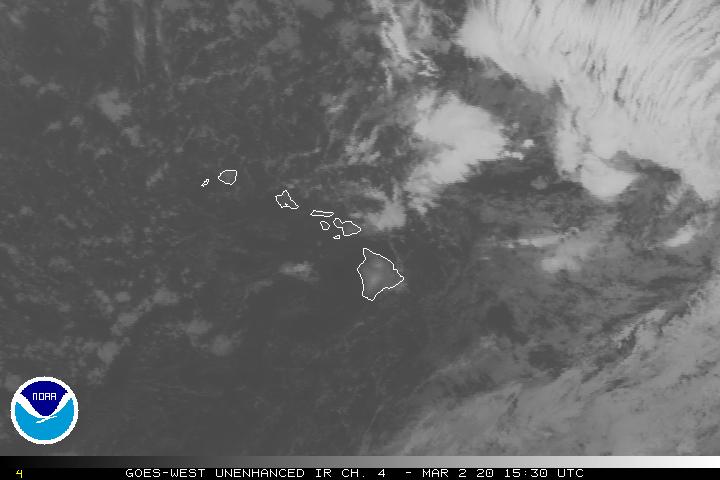
buffalo Says:
Tony: Great reporting from your "neck of the woods". I agree with the W.C. assessment. You would never know we existed out here if it were up to them. Glenn: Thanks for the timely updates and info. Nothing like locals predicting local weather. Mahalo-Buff.~~~Thanks Buffalo, Aloha, Glenn
Tony Says:
Aloha from thunderbump (Tony), In Kalaheo, Kauai….about 900 ft elevation with a direct funnel down to the ocean at Poipu Beach. Today at around noon the real big wind started. It was about 20-30mph with some gusts above 35 or so from the southeast. As night fell the thunderstorms became very intense, vivid lightning and a lot of training of the storms as they made landfall and headed inland. Center of the island (one of the wettest places on earth received something like 50-60 inches of rain in 36 hours…AMAZING. At my house we recorded about 12 inches just in the last 24 hours. The front finally past us at 1am, heavy stuff headed to Oahu. Currently at 2am now it is 64' outside….very cold and several hours ago we had steady wind at 35-45 with a few good gusts over 70mph. Felt just like going through a fast moving tropical storm (much colder though). Humidity here now is 93% and pressure is 2967 with a slow rise now. I have not seen this much wind, water and beach damage likely since Iniki in 1992. Many big trees down here, main road (only one) Kuhio Highway has been shut down on and off all over the island today making it impossible to get anywhere. Flooding at all golf courses, mud slides, rock slides, rivers over flowing and shutting down the hwy. OH and then our major fetch of extreme wind has put our east shore waves at near 20 feet. Very rare for our east side ever. Muddy chocolate ocean water,…..bummer. Water falls are awesome with about 20 times normal flow. I wish we had more attention on the weather channel. They never ever seem to mention Hawaii at all in any manner except for local on the 8's. Nothing though about our wild weather or any weather outside of a major hurricane is ever broadcast through them. Not sure why….same with Alaska. There is more awesome and changing weather in Hawaii and Alaska than the whole lower 48. I have written many letters to the Weather Channel discussing this and I just get blown off. If anyone out there would like to see the weather channel show more about our island home then send them emails about what you want to see. Thanks everyone. Mahalo to you Glenn, this is a great site. Aloha…..Tony (Glenn…where are you located?) ~~~ Hi Tony, great report, thanks! I live in Kula, Maui at 3,100 foot elevation. Aloha, Glenn
Tony Says:
Aloha,
In Kalaheo…..rained heavy most of the night with thunder on and off. About noon the wind started and I am up high thus we are getting a good southeast wind of 20-35mph with some higher gusts/. Big surprise since the front itself still looks about 200 miles west north/west of us. Looks like a huge build up of thunderstorms near the southern end of the front which may hit Kauai tonight. I have not seen a soaker like this one in a while and more thunder and lightning than in the last 2 years. Excellent Site buddy……I am always ready with observations from Kalaheo (southside of Kauai)….I am about 900 feet up and it is quite cooler here…only 63 right now. Send me an email anytime and I can give you current observations, wind, barometric pressure, humidity and so on. Aloha …..Tony~~~Hey hey Tony, excellent report, wild one too, what with all the inclement weather conditions you are experiencing! It looks like tonight into Tuesday may even be a bit wilder than what we’ve been having…if that’s possible! Anytime you wanna pass along a report like this, send it, and I’ll post it here! Thanks, Glenn
Laurie Says:
Just wanted to say thanks for the updates, I am in Northern Canada, and the dreams of palm trees and warmer weather are helping me make it through! Lots of Yukoners are there right now, enjoying the Islands!
Laurie~~~Hi Laurie, way up there in the far north country! Glad you are staying a little warmer by visiting my website, hello to all you Yukoners here in Hawaii! Aloha, Glenn
Jim Says:
Hi, I am coming to Kauai 3/12 – 3/19. Is the rain going to continue?~~~Hi Jim, sorry that’s way too far out into the future for an accurate weather forecast now…check back once we get closer to your vacation time frame. Best of luck, Aloha, Glenn