











Air Temperatures – The following maximum temperatures were recorded across the state of Hawaii Wednesday:
Lihue, Kauai – 79
Honolulu airport, Oahu – 82 (Highest temperature for this date was 85 – in 1996)
Kaneohe, Oahu – 80
Molokai airport – 80
Kahului airport, Maui – 80
Kona airport – 79
Hilo airport, Hawaii – 77
Air Temperatures ranged between these warmest and coolest spots near sea level – and on the highest mountain tops…as of 6pm Wednesday evening:
Honolulu, Oahu – 77
Hilo, Hawaii – 70
Haleakala Crater – 43 (near 10,000 feet on Maui)
Mauna Kea – 36 (near 13,800 feet on the Big Island)
Hawaii’s Mountains – Here’s a link to the live web cam on the summit of near 13,800 foot Mauna Kea on the Big Island of Hawaii. This web cam is available during the daylight hours here in the islands…and when there’s a big moon shining down during the night at times. Plus, during the nights you will be able to see stars, and the sunrise and sunset too…depending upon weather conditions. Here's the Haleakala Crater webcam on Maui…which is working only sometimes lately.
Aloha Paragraphs

South to southwest kona breezes…showers
increasing locally later Thursday and Friday – a
tropical cool snap later Friday into Saturday
As this weather map shows a near 1030 millibar high pressure system far to the northeast, along with its associated ridge running to the southwest…ending up just to the north of the state. At the same time, we have a long cold front approaching the state from the northwest. The location of this high pressure ridge is retreating northeast…resulting in gradually lighter winds Thursday and Friday from the southeast to south.
The following numbers represent the strongest wind gusts (mph), along with directions Wednesday evening:
10 Port Allen, Kauai – NE
15 Kahuku, Oahu – E
06 Molokai – NW
23 Kahoolawe – E
16 Lipoa, Maui – SE
06 Lanai – N
20 Upolu Point, Big Island – NE
We can use the following links to see what’s going on in our area of the north central Pacific Ocean Wednesday evening. Looking at this NOAA satellite picture we see low level cloud patches out over the ocean at the time of this writing, although clouds are also evident over and around the islands in places too. We can use this looping satellite image to see a cold front to the northwest and north of the islands…and an area of thunderstorms far to the east of the Big Island. Checking out this looping radar image we see a few light to moderately heavy showers over the ocean, impacting the islands locally…coming up more from the south now, although the showers are still moving by towards the west south of the Big Island.
Here are the 24-hour precipitation totals (inches) for each of the islands as of Wednesday evening:
0.83 Mount Waialeale, Kauai
0.99 Punaluu Stream, Oahu
0.02 Molokai
0.00 Lanai
0.56 Kahoolawe
0.42 Kepuni, Maui
0.96 Mountain View, Big Island
Sunset Commentary: There are several high pressure systems far to the northeast of the Hawaiian Islands Wednesday evening…located offshore from the Washington State coast. An associated high pressure ridge runs down to the southwest, ending just to the north of Kauai. At the same time, there's a cold front to the northwest, which is approaching the stat. The winds will become lighter from the southwest through southeast Thursday ahead of the front. Cooler northwest to northerly breezes will bring a tropical cool snap into the state Friday into the Saturday, before veering to the south again Sunday and Monday…ahead of another cold front.
There have been more showers recently, which were light to moderately heavy locally. The next chance for more rainfall will occur Thursday, when a frontal cloud band, and a cold trough of low pressure aloft gets over or near the state…then into Friday morning. This interaction between the upper trough, and moisture at the surface associated with the front, will bring an increase in showers, at least locally. There's a chance that some of these showers will end up being locally quite generous. The weekend should dry out some, before another cold front brings showers our way during the first couple of days of next week.
Here in Kula, Maui at around 5pm HST, it was cloudy to partly cloudy with more clouds in most directions from here, and an air temperature of 62.4F degrees. As we move into Thursday and Friday, a cold front is expected to move down into the state. At the same time, an area of unusually cold air will edge into place aloft. These two weather features will bring some increase in showers Thursday into Friday…with a chance of heavier showers falling here and there. As the front and upper trough of low pressure move away, we should move into a drier weekend, with more or less nice weather Saturday. A more vigorous cold front will be making its way in our direction later this weekend, bringing a good dose of showers early next week.
~~~ As I was stating this morning, I'm happy to see that we will be getting back under some showers soon. I know that not everyone is in the same boat, and would prefer sunny dry weather, and of course I can't blame you. It has been dry in many areas of the state this winter, and this is our wet season. We need these periodic showery episodes, otherwise we could easily drop deeper into localized drought conditions…which are already happening in many areas. Therefore, I must admit that I'm beginning to get a little excited about having cold fronts on the horizon at times during the next week. The wild card at this point is still how the very cold air in the upper atmosphere over the next 24-36 hours, will interact with the showers that develop over the state? There's that chance of at least some shower enhancement, and it wouldn't be all that surprising if we saw a few heavy showers popping-up. The threat of heavy showers will likely ease up later Friday into the weekend, with another shot of rainfall expected towards the end of the weekend, or probably more likely during the first couple of days of next week. We're finally beginning to see signs of a more normal wet season, which is a good thing…all things considered!
~~~ I'll be back early Thursday morning with your next new weather narrative from paradise. I hope you have a great Wednesday night until then! Aloha for now…Glenn.
Interesting: A mysterious malady has killed off nearly one-fifth of Colorado's aspens. But forest ecologists have struggled to explain the widespread die-off, known as Sudden Aspen Decline. The Aspen Daily News reports that a new study from researchers at Stanford University and the University of Utah may provide a breakthrough in understanding the decline and how it kills trees. The research found that aspens have essentially dehydrated due to a drought that took hold of Colorado from 2000 to 2004.
In a delayed reaction to the drought, the systems that carry water through aspen stands broke down. "If they can't transport water, they're kind of screwed," said Duncan Smith of the University of Utah, who worked on Anderegg's project and co-authored a paper on it released this month in the Proceedings of the National Academy of Sciences Researchers pruned dying aspens and studied them in the lab, and listened to their inner workings with microphones as they died.
"Just as there are a number of ways people can die and you can't always pinpoint it, it's the same with trees," said Stanford Ph.D. candidate William Anderegg, who led the research. Researchers found that in response to drought, the trees were developing embolisms — much like common human blood vessel blockages — which broke down their ability to move water.
In trees affected by the decline, an average of 70 percent of the vascular system was blocked. That's up from an average of 17 percent in healthy aspens. The trees, researchers found, fought against dehydration for a few years after the drought but lost and eventually died.
The researchers concluded that drought caused widespread failure of water transport systems in the trees. Their conclusion is a foreboding sign for Aspen's signature trees in the age of global warming. Anderegg's team studied climate records in 51 different aspen-filled areas in Western Colorado from 1900 to 2009.
The period from 2000 to 2004 marked the most severe drought in the entire period. "For aspens, hot temperatures tend to be really stressful," Anderegg said. "Climate change and global warming will be a real problem for aspen trees anywhere."
 Email Glenn James: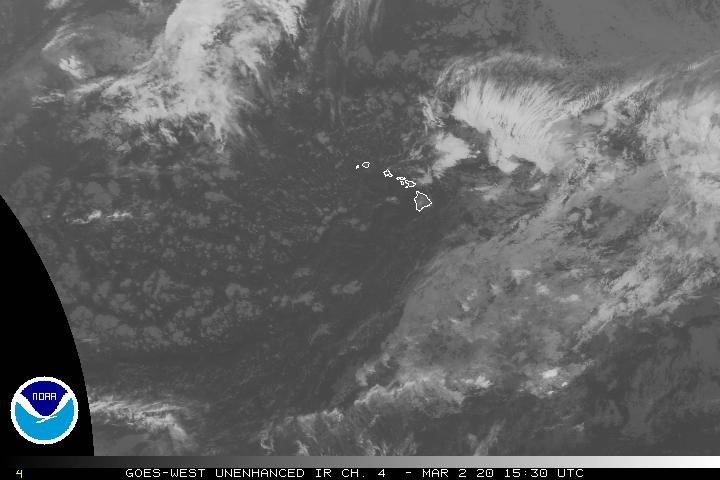
Ali Says:
hey glenn!
love your daily weather narritive! can you switch the tide charts on the "surfing" page to 2012? thanks!
Ali~~~Hi Ali, thanks for your reminder, I forgot…will do that today! Thanks for your positive comment too! Aloha, Glenn