











December 2-3, 2010
Air Temperatures – The following maximum temperatures were recorded across the state of Hawaii Thursday afternoon:
Lihue airport, Kauai – 77
Honolulu airport, Oahu – 83
Kaneohe, Oahu – 79
Molokai airport – 82
Kahului airport, Maui – 83
Kona airport – 84
Hilo airport, Hawaii – 80
Air Temperatures ranged between these warmest and coolest spots near sea level – and on the highest mountain tops…as of 5pm Thursday evening:
Kailua-kona – 80F
Lihue, Kauai – 73
Haleakala Crater – 43 (near 10,000 feet on Maui)
Mauna Kea summit – 34 (near 14,000 feet on the Big Island)
Precipitation Totals – The following numbers represent the largest precipitation totals (inches) during the last 24 hours on each of the major islands, as of Thursday afternoon:
2.48 Mount Waialeale, Kauai
0.66 Moanalua RG, Oahu
0.01 Molokai
0.00 Lanai
0.00 Kahoolawe
0.37 West Wailuaiki, Maui
0.63 Pahoa, Big Island
Marine Winds – Here’s the latest (automatically updated) weather map showing a strong 1037 millibar high pressure system far to the north of the Hawaiian Islands. Our winds will be strong and gusty from the trade wind direction Friday…then slightly lighter Saturday.
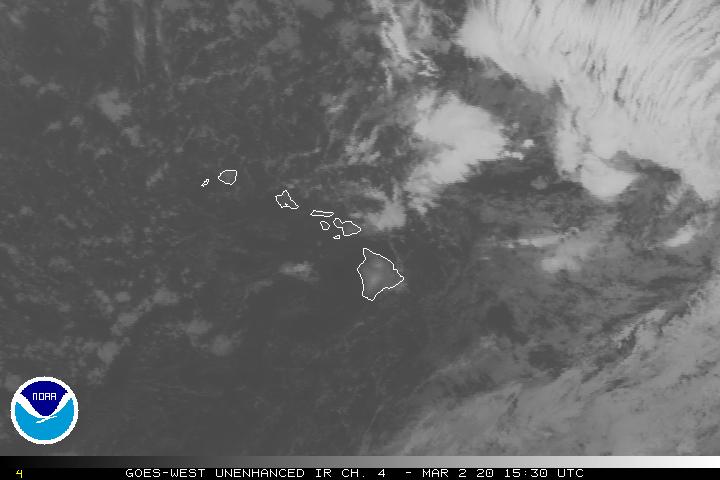
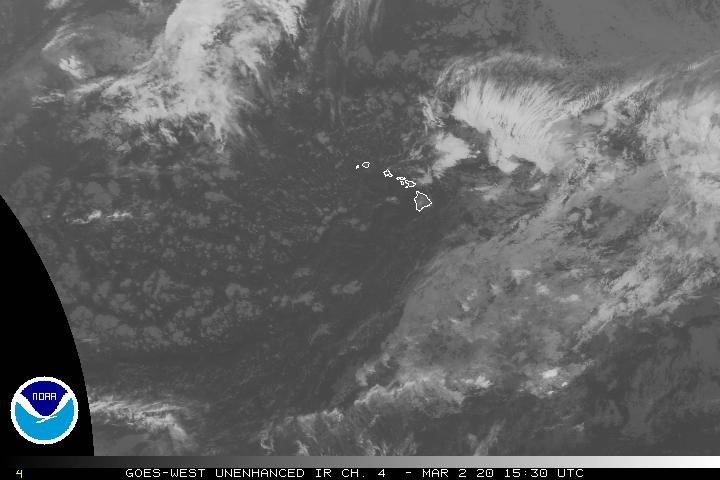
Satellite and Radar Images: To view the cloud conditions we have here in Hawaii, please use the following satellite links, starting off with this Infrared Satellite Image of the islands to see all the clouds around during the day and night. This next image is one that gives close images of the islands only during the daytime hours, and is referred to as a Close-up visible image. This next image shows a larger view of the Pacific…giving perspective to the wider ranging cloud patterns in the Pacific Ocean. Finally, here's a Looping IR satellite image, making viewable the clouds around the islands 24 hours a day. To help you keep track of where any showers may be around the islands, here’s the latest animated radar image.
Hawaii’s Mountains – Here’s a link to the live web cam on the summit of near 14,000 foot Mauna Kea on the Big Island of Hawaii. The tallest peak on the island of Maui is the Haleakala Crater, which is near 10,000 feet in elevation. These two web cams are available during the daylight hours here in the islands…and when there’s a big moon rising just after sunset for an hour or two! Plus, during the nights and early mornings you will be able to see stars, and the sunrise too…depending upon weather conditions.
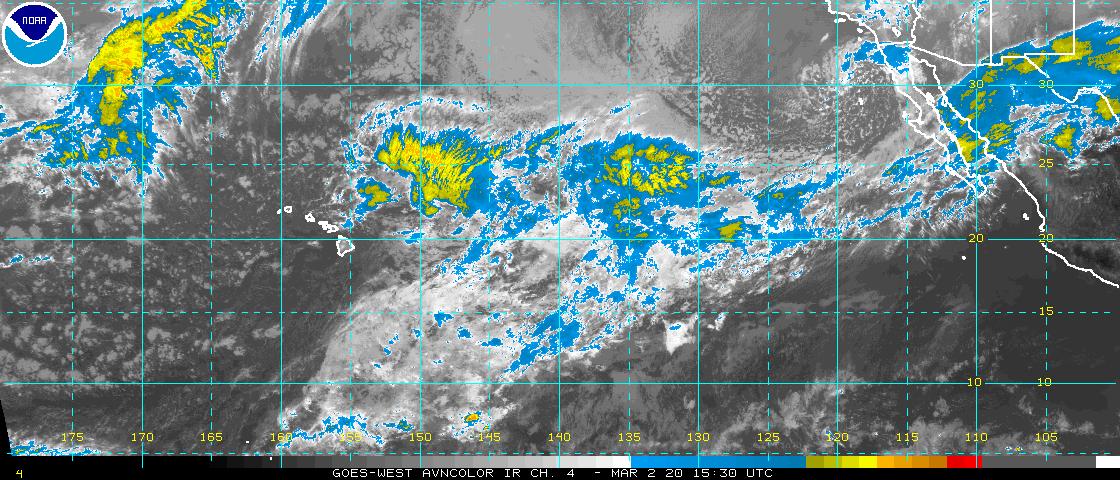
Tropical Cyclone activity in the eastern and central Pacific – Here’s the latest weather information coming out of the National Hurricane Center, covering the eastern north Pacific. You can find the latest tropical cyclone information for the central north Pacific (where Hawaii is located) by clicking on this link to the Central Pacific Hurricane Center. Here’s a tracking map covering both the eastern and central Pacific Ocean. A satellite image, which shows the entire ocean area between Hawaii and the Mexican coast…can be found here. Of course, as we know, our hurricane season won't end until November 31st here in the central Pacific.
Aloha Paragraphs

Increasing winds and showers
The trade winds are blustery, with gusts to 50+ mph locally, although lighter outside of the direct wind flow. This weather map shows a strong 1037 millibar high pressure system to the north of our islands, with a second much weaker 1021 millibar high pressure cell to the east-northeast of Hawaii Thursday night. Winds will remain much stronger than usual through Friday, and then gradually slow down a bit later this weekend…into early next week. We have small craft wind advisories, gale warnings, wind advisories, in addition to a high surf advisory for the east facing shores…which taking the brunt of all the swell activity generated by the strong and gusty wind flow over the ocean upwind of the islands.
Winds around the state continue to accelerate…the following numbers representing the strongest gusts early Thursday evening:
31 mph Lihue, Kauai
44 Oahu Forest NWR, Oahu
38 Molokai
45 Kahoolawe
40 Maalaea Bay, Maui
04 Lanai Airport
33 Waikoloa, Big Island
The well advertised cold front is taking its time getting here, and now the arrival time has been pushed back until this evening…into Friday. As this satellite image shows, the cold front is clearly visible to our north, although has been rather slow going in its push into the tropics. Meanwhile, we still have that trough of low pressure out to our west, with its attendant high cirrus cloudiness…and embedded thunderstorms. If we check out this larger satellite view, we can see this seemingly never ending cloudiness. Once again, we can refer to this even broader satellite picture ~ showing the cold front to our north extending into the west coast between southern California and Oregon…actually into a weak low pressure system between here and the mainland. Finally, here’s the looping radar image, so we can keep track of where the current showers are falling around the state.
It appears that the cold front might have gained a bit of form, compared to its presence yesterday. At the time of this writing, the frontal cloud band had just begun to nick the north shore of Kauai, and and Oahu. It will take a bit more time to reach down through Molokai and Maui…and then finally down to the Big Island, the last island in line for this generous precipitation. Since it’s holding off, it will take longer for this weather feature to move through the islands, which should last into Friday at this rate. There is still the chance that some of this rainfall will be locally heavy, especially right along the leading edge of this frontal boundary.
As is often the case, drier and more stable air will flood into the state, which should provide clearing late Friday…leading to improved weather this weekend, if you don’t like precipitation that is. The windward sides will probably get at least some passing showers, as the winds will remain up, although the leeward sides will see fairly decent weather, into the first couple of days of the new week ahead. As was mentioned here yesterday, the computers are trying to bring another stronger cold front down our way later next week…which could bring rain, and even some south to southwest Kona winds in ahead of its arrival, followed by chilly north to northeast breezes, more about that soon.
It's Thursday evening as I begin writing this last section of today's narrative update. The weather here in the Hawaiian Islands are going through some distinct changes, which have already begun. The two most notable features will be the abnormally strong trade wind flow across our islands, and the increased clouds and showers associated with this late autumn cold front. This cold front will bring moisture into the state tonight, although it will lose its influence already by later Friday, which will set us up for a good weekend…lasting into at least the first couple of days next week.
~~~ The winds will be a slightly different story, as they will remain blustery through Friday, gradually losing some steam during the weekend, and continuing on into next week. These winds will be dynamic enough, at least in places exposed to its direct influence, that folks should batten down the hatches. This just means to secure loose objects like trash containers, and perhaps some lawn furniture, stuff like that. There will of course be those areas that the winds are blocked to some degree, which won't be nearly as gusty.
~~~ Here in Kihei, Maui at around 530pm, there still hasn't been any rainfall from my vantage point. There are quite a few high cirrus clouds around this evening, as we head into the sunset hour…which may add some color to our skies. As far as adding rainfall to this reality, it will take until later tonight before the cold front arrives. It will bring even stronger trade winds than we've seen so far, which will remain blustery through Friday, at least. It's been a long wait for this frontal boundary to arrive, to bring its rain, although it still seems definitely on track. I'll be back early Friday morning with your next new weather narrative, I hope you have a great Thursday night until then! Aloha for now…Glenn.
Extra: for you hard core drivers…I enjoy this video every time I watch it!
Interesting: In August NASA and the US Geological Survey released the first-ever satellite analysis of the world's mangrove ecosystems. What they found was dire: mangroves covered 12.3% less area than previously estimated. Now, NASA has released images of the world's mangrove ecosystems, which currently cover 137,760 square kilometers.
Yet this number keeps shrinking: mangroves are vanishing rapidly due to rising sea levels, deforestation for coastal developments, agriculture and aquaculture. Among the world's most important ecosystems, mangroves are tropical saline-adapted forests that survive in tropical coastlines.
These forests serve as nurseries for a variety marine fish, underpinning global fisheries and providing additional food for coastal communities. In addition, they store massive amounts of carbon and act as buffers against marine erosion. Recent studies have even found that mangroves buffer human populations and property against tropical storms.
During the devastating 2004 tsunami in Southeast Asia, regions with mangroves suffered less damage than those without. In all it has been estimated that mangroves provide at least $1.6 billion in ecosystem services annually. Yet despite their importance, less than 7% of the world's mangroves are under legal protection.
Interesting2: The likelihood of developing cancer is largely attributed to an individual's genetic inheritance, but can also be affected by lifestyle choices and what we eat. In a 2009 article, the American Cancer Society recommended eating at least five servings of fruits and vegetables per day to prevent cancer. Now, a new study from the University of Oxford suggests that fruits and vegetables, while important for a healthy diet, are unlikely to protect against cancer.
The study, published in the British Journal of Cancer, examined evidence from the last decade for the connection between the consumption of fruits and vegetables and cancer development. The researchers concluded that the only diet-related factors to affect the risk of cancer were obesity and alcohol.
Tobacco smoke, technically not diet-related, remains the single largest cause of cancer. According to Tim Key of the Cancer Epidemiology Unit at Oxford University, "Fruit and vegetables are an important part of a healthy diet and a good source of nutrients. But so far the data does not prove that eating increased amounts of fruit and vegetables offers much protection against cancer.
But there’s strong scientific evidence to show that, after smoking, being overweight and alcohol are two of the biggest cancer risks." Obesity can cause very difficult-to-treat forms of cancer in the bowel, pancreas, kidney, esophagus, and breast. Alcohol can cause cancer of the mouth, throat, breast, bowel, and of course, liver.
The researchers stress that the best ways to prevent cancer is keep a healthy weight, stop smoking, and limiting alcohol to one drink per day for women and two for men. Eating fruits and vegetables up to a certain level is essential for the body to obtain vital nutrients.
However, as the law of diminishing returns dictates, consumption exceeding that certain level provides fewer, if any, benefits. It does not make the tissues super-healthy or indestructible. So while the American Cancer Society is not giving bad advice, it may have to change its message in light of new evidence.
Interesting3: Major snow-related disruptions hindered mobility for millions of residents in the United Kingdom on Thursday as a major cold wave entered its second week. Southern and southeastern England, including outskirts of London, suffered a second day of heavy snowfall. The busy regional airport of Gatwick, south of London, was shut for a second day owing to the weather. Nearby Charlwood observed a snow depth of 10 inches, an exceptional amount of snow for the region.
Snow and ice brought accidents, delays and at times even chaos on roads and highways across many parts of the U.K. according to reports. The head of the U.K. Highways Agency urged would-be drivers to stay home barring a necessity to travel. "I think it is really important that people think whether their journey really is necessary," he said.
Complaints have been raised that storm response for the roadways has been weak. Local and national rail service also suffered delays and cancelations. An area from eastern Scotland through northeastern England has born the brunt of the heaviest snow with this extreme wintry outbreak, and Thursday brought more of the same.
The Edinburgh, Scotland, airport was shut once again on Thursday as the snow depth reached nearly one foot. Snow depth in the Scottish Borders and neighboring Northumberland, England, already above one foot, rose further. At Redesdale Camp, snow depth reached 15 inches, the highest thus far.
The unusual cold will last through at least the end of the week, bringing with it potential for further snow in areas of the U.K.
Interesting4: Unseasonal warm temperatures caused by El Niño have a profound effect on the fish populations of coral reefs in the South Pacific, scientists have found. An international team of biologists studied the arrival of young fish to the atoll of Rangiroa in French Polynesia for four years and compared their results with satellite and oceanographic data.
They found that the El Niño event caused a sudden collapse in the plankton community and this led to a near absence of the young fish that are required to replenish adult stocks.
Coral reef fishes are bad parents. Rather than caring for their young, they disperse them into the open waters off the reef where they drift with the currents while they grow and develop into small juveniles, at which point they make their way back again to the reef.
This process allows these baby fish to feed on plankton and escape the predators that would consume them if they had to grow up on the reef with adults. But in a changing climate, this dispersal into the haven of open water could now become an Achilles' heel for coral reef fishes.
Using a crest net — which looks like a football goalmouth facing out to sea on the edge of a barrier reef — the scientists were able to monitor the numbers of fish as they returned to reefs from open water.
Under the supervision of Professor René Galzin, Dr Alain Lo-Yat and assistants from Service de la pêche set and emptied the net on the atoll of Rangiroa for four years, a period that included the intense 13-month El Niño event of 1997-8.
Climate scientist Elodie Martinez from France and marine biologists Dr Steve Simpson and Dr Mark Meekan then analyzed the data, the longest time-series of its kind, to detect and explain the worrying trends. The paper is published in the journal Global Change Biology.
Dr Steve Simpson from the University of Bristol's School of Biological Sciences said: "Near to the equator, fish arrive throughout the year to replenish adult populations. In contrast, during the El Niño event at Rangiroa, when temperatures climbed up to 3.5°C above the seasonal average, we found that the young fish virtually disappeared.
"Analysis of satellite images around Rangiroa suggested that plankton, the food supply for many baby and adult reef fishes, declined dramatically during the warm waters of El Niño. As a consequence, adults struggled to produce offspring and young fishes were likely to starve when in open waters off reefs.
Just 1-2 months after the onset of the warm conditions, the next generation of young fish stopped arriving so that adult stocks were no longer being re-supplied." Dr Meekan said: "The events we witnessed during El Niño are a worrying sign for the future when climate change is predicted to warm ocean temperatures and may even increase the frequency of the El Niño phenomenon."
Warns Dr Simpson: "Coral reef fisheries provide food and livelihoods for hundreds of millions of people throughout the world and underpin a multi-billion dollar tourism industry. Our study shows that warmer waters may leave fish stocks on reefs in serious trouble, which will have far-reaching consequences for the people around the globe who are dependent upon them."
 Email Glenn James: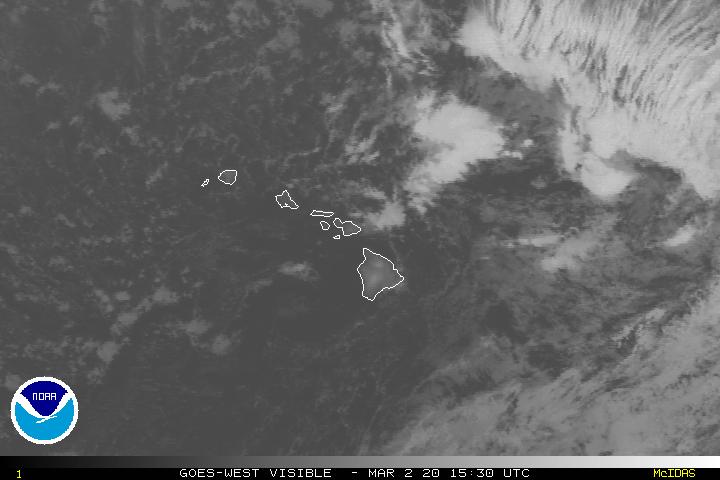


Gail Says:
Hi Glenn–I was wondering if there is anywhere you can look online to learn of current wind/swell conditions at Ma'alaea. So often I arrive from just a few miles away and find the conditions on the bay to be 180 degrees different. Hoping Kihei can get a little rain out of this new system. Thanks so much for sharing your knowledge and enthusiasm of our unique weather patterns.~~~Hi Gail, you are very welcome, my enthusiasm comes naturally, always has. Swells won’t be an issue until the spring season, I couldn’t find any webcams. You can always go to the NWS page,
http://www.prh.noaa.gov/hnl/pages/hiwinds.php to find the current wind speeds, etc. Aloha, Glenn