











December 1-2, 2010
Air Temperatures – The following maximum temperatures were recorded across the state of Hawaii Wednesday afternoon:
Lihue airport, Kauai – 79
Honolulu airport, Oahu – 83
Kaneohe, Oahu – 80
Molokai airport – 83
Kahului airport, Maui – 84
Kona airport – 84
Hilo airport, Hawaii – 82
Air Temperatures ranged between these warmest and coolest spots near sea level – and on the highest mountain tops…as of 5pm Wednesday evening:
Port Allen, Kauai – 81F
Hilo, Hawaii – 72
Haleakala Crater – 43 (near 10,000 feet on Maui)
Mauna Kea summit – 30 (near 14,000 feet on the Big Island)
Precipitation Totals – The following numbers represent the largest precipitation totals (inches) during the last 24 hours on each of the major islands, as of Wednesday afternoon:
2.69 Mount Waialeale, Kauai
2.21 Palisades, Oahu
0.39 Molokai
0.00 Lanai
0.01 Kahoolawe
1.55 West Wailuaiki, Maui
2.95 Hilo airport, Big Island
Marine Winds – Here’s the latest (automatically updated) weather map showing a strong 1039 millibar high pressure system far to the north of the Hawaiian Islands. Our winds will become substantially stronger from the trade wind direction into Friday.
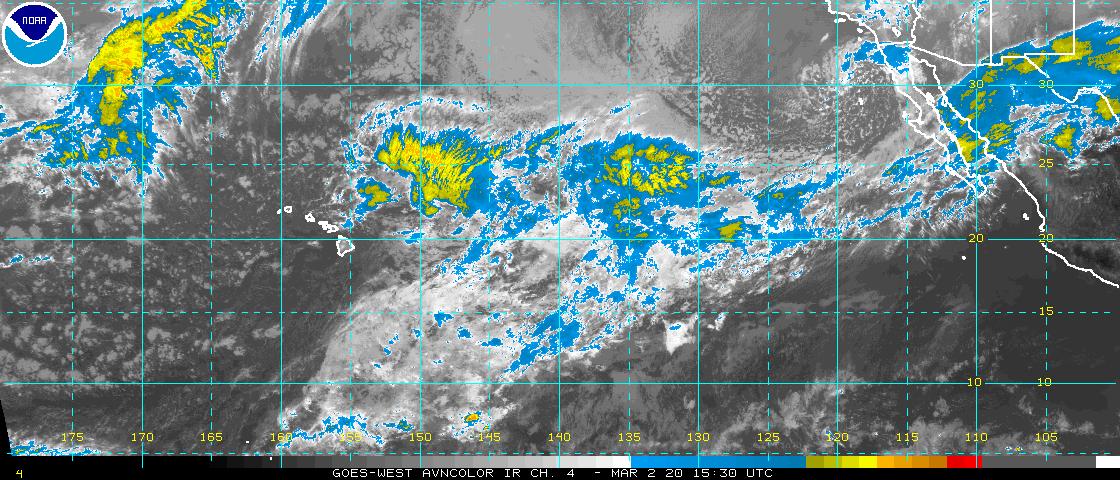
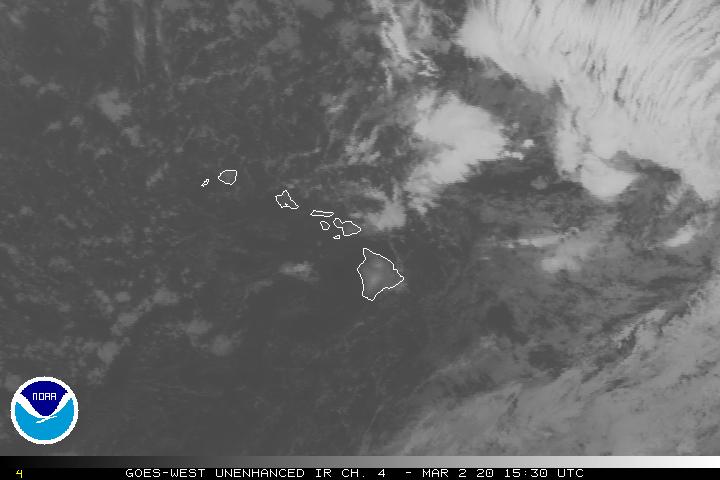
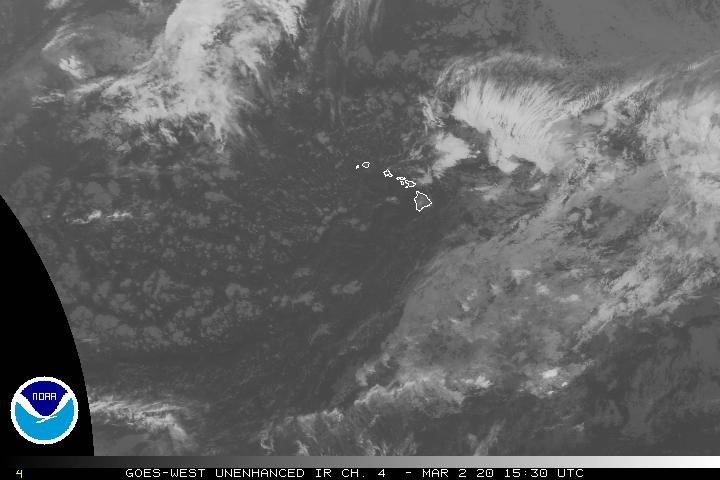
Satellite and Radar Images: To view the cloud conditions we have here in Hawaii, please use the following satellite links, starting off with this Infrared Satellite Image of the islands to see all the clouds around during the day and night. This next image is one that gives close images of the islands only during the daytime hours, and is referred to as a Close-up visible image. This next image shows a larger view of the Pacific…giving perspective to the wider ranging cloud patterns in the Pacific Ocean. Finally, here's a Looping IR satellite image, making viewable the clouds around the islands 24 hours a day. To help you keep track of where any showers may be around the islands, here’s the latest animated radar image.
Hawaii’s Mountains – Here’s a link to the live web cam on the summit of near 14,000 foot Mauna Kea on the Big Island of Hawaii. The tallest peak on the island of Maui is the Haleakala Crater, which is near 10,000 feet in elevation. These two web cams are available during the daylight hours here in the islands…and when there’s a big moon rising just after sunset for an hour or two! Plus, during the nights and early mornings you will be able to see stars, and the sunrise too…depending upon weather conditions.
Tropical Cyclone activity in the eastern and central Pacific – Here’s the latest weather information coming out of the National Hurricane Center, covering the eastern north Pacific. You can find the latest tropical cyclone information for the central north Pacific (where Hawaii is located) by clicking on this link to the Central Pacific Hurricane Center. Here’s a tracking map covering both the eastern and central Pacific Ocean. A satellite image, which shows the entire ocean area between Hawaii and the Mexican coast…can be found here. Of course, as we know, our hurricane season won't end until November 31st here in the central Pacific.
Aloha Paragraphs

Increasing winds and showers Thursday…rising east swell
We're heading into a period of much stronger trade winds, which will last through the rest of this work week…gradually easing up as we move into early next week. This weather map shows two high pressure systems, located far to the northeast, and far north of Hawaii Wednesday night. These trade winds have triggered a small craft wind advisory across those windiest waters around Maui and the Big Island…which will be in force well into the future. As of late this afternoon, that advisory was extended across the rest of our Hawaiian waters. At the same time, we now have a wind advisory in effect for the area from Lanai, Kahoolawe, Maui, and parts of the Big Island. If all that wasn't enough, we also have a gale watch in force for the area around Molokai down through the Big Island from Thursday evening through Friday afternoon.
Winds around the state continue to accelerate...the following numbers representing the strongest gusts early Wednesday evening:
27 mph Port Allen, Kauai
32 Kahuku, Oahu
33 Molokai
39 Kahoolawe
39 Maalaea, Maui
14 Lanai Airport
35 PTA Kipuka Alala, Big Island
An area of good showers got brought in by the first surge of trade winds last night into today. There were rainfall totals of 1-2+ inches associated with this precipitation. The airport in Hilo reported a hefty 2.95” during the last 24 hours. As this satellite image shows, we have a ton of high cirrus clouds looming just to the west of the islands. If we check out this larger satellite view, we can see the extent of this area of those icy clouds to our west…which is dynamic! Meanwhile, a cold front is moving in our direction from the north. It’s not particularly distinct, as the high clouds are trying to hide it now. If we track this frontal boundary up to the northeast, we can see it…using this even bigger satellite picture…heading into the west coast between northern California and Washington State. Here’s the looping radar image, so we can keep track of where the current showers are falling around the state.
Showers from this cold front will arrive late tonight into Thursday, some of which may turn out to be heavy…at least locally. The interesting thing is that just about the time that this frontal moisture arrives, we’ll have cold air shifting overhead aloft. This in turn will make our showers more generous than they would be otherwise. The computer models have recently backed off on all that much influence of this trough however, with the elimination of possible thunderstorms now. There will still likely be some decent downpours Thursday…especially along the windward sides, and over and around the mountains. The winds will become locally very strong and gusty as this front pushes through, which will keep the showers moving along at a good clip. This may limit the amount of rainfall in some places, although not everywhere. Conditions are expected to turn around quickly Friday, leaving generally nice weather in place through early next week.
It's Wednesday evening as I begin writing this last section of today's narrative update. The weather here in the Hawaiian Islands will grab our attention through the rest of the week. We've already seen an area of showers moving through the state, most of which fell along the windward sides…although not all of it. The next thing we'll notice is the nature of our local trade winds, which will strengthen across the state through the next several days. As the cold front gets pushed this way, we'll see showers increasing again tonight into Thursday. This may turn out to be the most interesting aspect of this round of weather changes, as it could turn locally heavy at times. As the weather should…it will take a turn for the better as we move into the weekend.
~~~ Here in Kihei, Maui, before I take the drive back upcountry to Kula, it's actually quite clear. The high cirrus clouds are located for the most part further to the west…although they will be spreading eastward over us again soon. The winds are going to become stronger than usual, so if you live in an area exposed to the trades, you may want to batten down the hatches now. Thursday should be quite a wet day, even the leeward sides will get moisture…carried over there on the blustery trade winds. Air temperatures will be on the cool side Thursday too, due to the extensive cloud cover, and the fact that the trade winds will have somewhat more of a northern aspect to them…plus the showers of course. I'll catch up with you early Thursday morning, when I'll be back with your next new weather narrative. I hope you have a great Wednesday night until then. Aloha for now…Glenn.
~~~ Finally, I want to share with you the numbers that occurred during November. There were 292,638 page views of this website. There were 2,877 clicks on the google ads, and lots of traffic pushed to the advertising links on the left hand side of every page on this site. I want to thank all of you for visiting my website, and for participating in this weather endeavor of ours! It certainly takes two to tango, and I'd suggest that we dance together quite well!
Extra: for you hard core drivers only!
Interesting: People are easily fooled when it comes to food labels, and will eat more of something if they believe it's a "small" portion, according to a new study in the Journal of Consumer Research. Authors Nilufer Z. Ayinoglu (Koç University, Istanbul) and Aradhna Krishna (University of Michigan) found that inconsistent portion sizes contribute to people's uncertainty about the appropriate amount to eat.
"In this context of large portion sizes and consumer uncertainty about appropriate food intake, we show that size labels chosen by food and drink vendors (such as 'small-medium-large') can have a major impact on consumers' purchase and consumption behavior," the authors write. "As such, food providers' choice of size labels has many potential legislative and liability-related implications."
The researchers conducted five studies that included actual food consumption. They demonstrated that the use of different size labels for the same product affects the amount people consume. When people consumed a large item that was labeled "small," they felt less guilty; the authors call this effect "guiltless gluttony."
"An implication of our results is that consumers can continue to eat large sizes that are labeled as smaller and feel that they have not consumed too much. This can result in unintended and uninformed over-consumption, which is clearly ridden with significant health ramifications, and size labels could be contributing to the rampant obesity problems in the United States."
The authors found that the biasing effect of size labels was most pronounced when people's concern about accurate nutrition intake was not high and when people's ability to process was limited — in other words, situations not unlike everyday life.
"Stricter size labeling laws and more vigilant monitoring of marketers' use of size labels may be needed, especially considering the limited cognitive resources available to consumers for routine food choice and consumption behavior during their other everyday endeavors," the authors conclude.
Interesting2: Astronomers have discovered that small, dim stars known as red dwarfs are much more prolific than previously thought — so much so that the total number of stars in the universe is likely three times bigger than realized. Because red dwarfs are relatively small and dim compared to stars like our Sun, astronomers hadn't been able to detect them in galaxies other than our own Milky Way and its nearest neighbors before now.
As such, they did not know how much of the total stellar population of the universe is made up of red dwarfs. Now astronomers have used powerful instruments on the Keck Observatory in Hawaii to detect the faint signature of red dwarfs in eight massive, relatively nearby galaxies called elliptical galaxies, which are located between about 50 million and 300 million light years away.
They discovered that the red dwarfs, which are only between 10 and 20 percent as massive as the Sun, were much more bountiful than expected. "No one knew how many of these stars there were," said Pieter van Dokkum, a Yale University astronomer who led the research, which is described in Nature's Dec.1 Advanced Online Publication.
"Different theoretical models predicted a wide range of possibilities, so this answers a longstanding question about just how abundant these stars are." The team discovered that there are about 20 times more red dwarfs in elliptical galaxies than in the Milky Way, said Charlie Conroy of the Harvard-Smithsonian Center for Astrophysics, who was also involved in the research.
"We usually assume other galaxies look like our own. But this suggests other conditions are possible in other galaxies," Conroy said. "So this discovery could have a major impact on our understanding of galaxy formation and evolution." For instance, Conroy said, galaxies might contain less dark matter — a mysterious substance that has mass but cannot be directly observed — than previous measurements of their masses might have indicated.
Instead, the abundant red dwarfs could contribute more mass than realized. In addition to boosting the total number of stars in the universe, the discovery also increases the number of planets orbiting those stars, which in turn elevates the number of planets that might harbor life, van Dokkum said.
In fact, a recently discovered exoplanet that astronomers believe could potentially support life orbits a red dwarf star, called Gliese 581. "There are possibly trillions of Earths orbiting these stars," van Dokkum said, adding that the red dwarfs they discovered, which are typically more than 10 billion years old, have been around long enough for complex life to evolve. "It's one reason why people are interested in this type of star."
Interesting3: The loss of biodiversity — from beneficial bacteria to charismatic mammals — threatens human health. That's the conclusion of a study published this week in the journal Nature by scientists who study biodiversity and infectious diseases. The work reveals a critical connection between conservation and disease.
Species losses in ecosystems such as forests and fields result in increases in pathogens — disease-causing organisms — the researchers found. The animals, plants, and microbes most likely to disappear as biodiversity is lost are often those that buffer infectious disease transmission.
Those that remain tend to be species that magnify the transmission of infectious diseases like West Nile virus, Lyme disease, and hantavirus. "We knew of specific cases in which declines in biodiversity increase the incidence of disease," says Felicia Keesing, an ecologist at Bard College in Annandale, N.Y., and first author of the paper.
"But we've learned that the pattern is much more general: biodiversity loss tends to increase pathogen transmission across a wide range of infectious disease systems." The pattern holds true for various types of pathogens — viruses, bacteria, fungi — and for many types of hosts, whether humans, other animals, or plants.
"When a clinical trial of a drug shows that it works," says Keesing, "the trial is halted so the drug can be made available. In a similar way, the protective effect of biodiversity is clear enough that we need to implement policies to preserve it now."
In the case of Lyme disease, says co-author Richard Ostfeld of the Cary Institute of Ecosystem Studies in Millbrook, N.Y., "strongly buffering species like the opossum are lost when forests are fragmented, but white-footed mice thrive. The mice increase numbers of both the blacklegged tick vector and the pathogen that causes Lyme disease."
Scientists don't yet know, Ostfeld says, why the most resilient species — "the last ones standing when biodiversity is lost" — are the ones that also amplify pathogens. Preserving natural habitats, the authors argue, is the best way to prevent this effect. Global biodiversity has declined at an unprecedented pace since the 1950s.
Current extinction rates are estimated at 100 to 1,000 times higher than in past epochs, and are projected to increase at least a thousand times more in the next 50 years. Expanding human populations can increase contact with novel pathogens through activities such as land-clearing for agriculture and hunting for wildlife.
Identifying the variables involved in infectious disease emergence is difficult but critical, says co-author Andrew Dobson of Princeton University. Biodiversity is an important factor, but so are land use changes and human population growth and behavior, he says. "When biological diversity declines and contact with humans increases, you have a perfect recipe for infectious disease outbreaks."
The authors call for careful monitoring of areas in which large numbers of domesticated animals are raised or fish are farmed. "That would reduce the likelihood of an infectious disease jumping from wildlife to livestock, then to humans," says Keesing. For humans and other species to remain healthy, it will take more than a village — we need an entire planet, the scientists say, one with its diversity thriving.
Interesting4: Deforestation in the Brazilian Amazon has fallen to its lowest rate for 22 years, the government says. Satellite monitoring showed about 2,490 sq miles of rainforest were cleared between August 2009 and July 2010, a drop of 14% compared with the previous 12 months. Brazilian officials said the reduction was due to better monitoring and police control.
Environment minister Izabella Teixeira said the figures were "fantastic". She said she would be "proud" to present the results at the UN Climate Change Conference currently taking place in Cancun, Mexico. She added that Brazil was well on course to reduce deforestation to its target of 5,000 sq km of by 2017.
The latest figure still represents an area more than half the size of Lebanon or Jamaica. But it is far lower than the peak of 27,772 sq km in 2004. President Luiz Inacio Lula da Silva said the reduction showed Brazil was "keeping its promises" on tackling global warming.
In 2005 President Lula pledged to reduce deforestation by 80% by 2020. Global importance Deforestation is thought to be responsible for about 20% of CO2 emissions worldwide. The cutting and burning of trees in the Amazon has made Brazil a major contributor of the greenhouse gases that fuel global warming.
The latest data was published by the Brazilian space research institute (Inpe) which uses satellites to monitor deforestation in the Amazon. The head of Inpe, Gilberto Camara, said the reduction was the result of "coordinated action", including greater control of illegal logging by Brazil's environment ministry and the federal police. He also praised "responsible businesses" who had stopped buying beef and soya produced in deforested areas.
Mr Camara added that a program that had given legal titles to about 300,000 landholders had also helped reduce the rate of forest clearance. President Lula's government has also been promoting "extractive reserves" where local people can make a living from the forest without destroying it.
Environmental groups have warned that Brazil's soaring economic growth, as well as growing global demand for agricultural produce, could increase pressure on the Amazon rainforest in the coming years.
Interesting5: Iran has declared a two-day public holiday in Tehran due to air pollution – the second such shutdown in a week. Public offices, banks, schools and universities will remain shut throughout Wednesday and Thursday, officials said. It follows a similar move last Wednesday, when state TV announced the closures because of "polluted and unhealthy" atmospheric conditions.
Critics say the holidays are costly for Iran's economy. Iran's weekend begins on Friday, meaning the weekend has been extended by two days. Tehran's population has greatly increased in recent decades, and there are high number of cars on the roads – many of them old.
The city is wedged between mountains, meaning dirty air can get trapped when there is no wind or rain. Iranian health experts say thousands of deaths a year are caused by heart attacks and respiratory illnesses brought on by smog.
 Email Glenn James: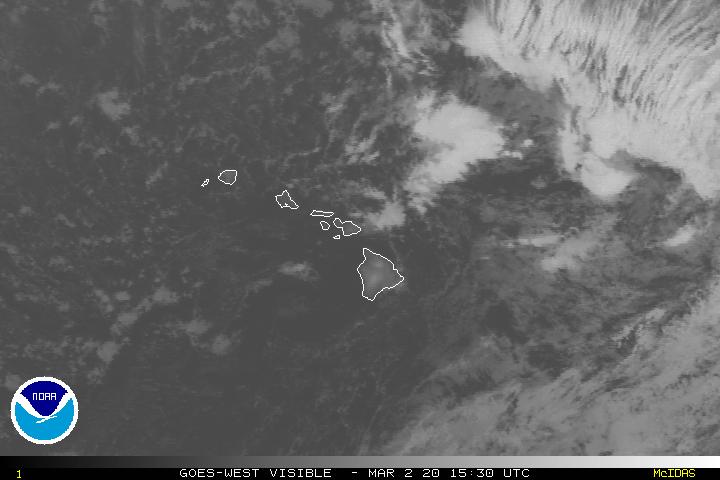


Tracy Says:
Aloha Glenn,
Congrats on all the web traffic for November.
I try to hit your site everyday, espeically now with these winter storms moving through the islands now.
Keep up the great work.
Mahalo nui!~~~Hi Tracy, it’s folks like you that keep the web traffic coming, which makes it all worth while to keep this page going…thanks! Aloha, Glenn
Dennis Says:
Hi Glenn,
Heading to the islands on Saturday for my 10th annual trip. Starting checking in on your weather info yesterday. Just wanted to say how glad I am to see you are still there. Feels like I am checking in on an old friend!
Dennis~~~Hi Dennis, what a nice thing to say…thanks! You weather should be just fine, through at least the first several days of next week…perhaps longer? Have a great time, and enjoy yourself here in paradise! Aloha, Glenn
susan Says:
Hi Glenn
Why is it that most cold fronts cause the winds before them to weaken or shift to the south but this one if I am interpreting correctly will not do that ?
Thanks for your help so I can better understand this
Aloha Susan~~~Hi Susan, good question. If you look at this weather map (http://www.prh.noaa.gov/hnl/graphics/npac.gif), you see the zigzag orange line, the high pressure ridge, positioned pretty far to our northeast. When it is located out there, it doesn’t drop down over us, or to our south…which is why our winds get lighter or turn Kona. I hope this helps, Aloha, Glenn