











November 16-17, 2010
Air Temperatures – The following maximum temperatures were recorded across the state of Hawaii Tuesday afternoon:
Lihue airport, Kauai – 79
Honolulu airport, Oahu – 85
Kaneohe, Oahu – 82
Molokai airport – 84
Kahului airport, Maui – 85
Kona airport – 84
Hilo airport, Hawaii – 80
Air Temperatures ranged between these warmest and coolest spots near sea level – and on the highest mountain tops…as of 5pm Tuesday evening:
Port Allen, Kauai – 82F
Lihue, Kauai – 74
Haleakala Crater – 45 (near 10,000 feet on Maui)
Mauna Kea summit – 37 (near 14,000 feet on the Big Island)
Precipitation Totals – The following numbers represent the largest precipitation totals (inches) during the last 24 hours on each of the major islands, as of Tuesday afternoon:
1.01 Mount Waialeale, Kauai
0.15 Wilson Tunnel, Oahu
0.00 Molokai
0.00 Lanai
0.00 Kahoolawe
0.08 Oheo Gulch, Maui
0.20 Glenwood, Big Island
Marine Winds – Here’s the latest (automatically updated) weather map showing a diminishing 1030 millibar high pressure system far to the northeast of our islands, with a ridge extending southwest…near Kauai. Our local winds will remain light, from the south to southeast directions, as a ridge remains near Kauai and Oahu.
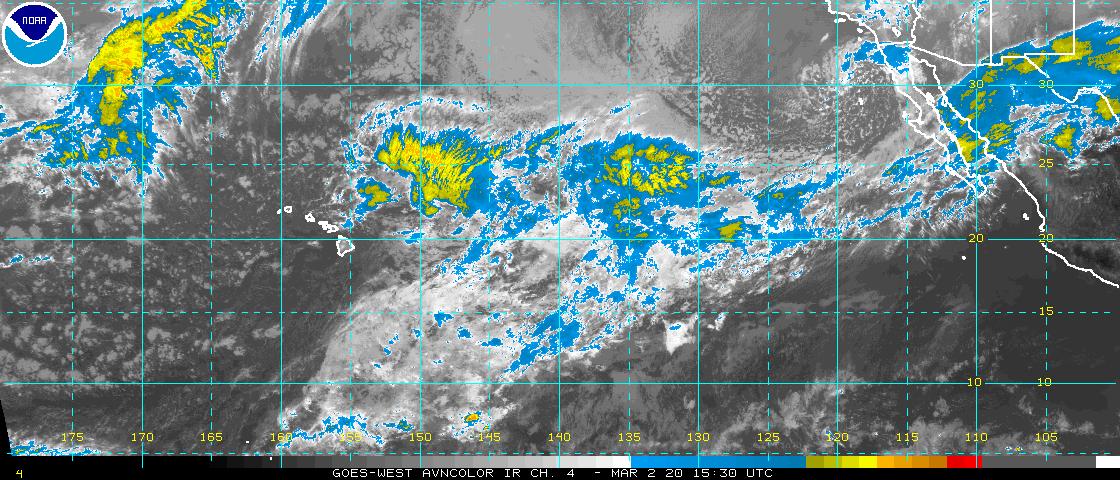
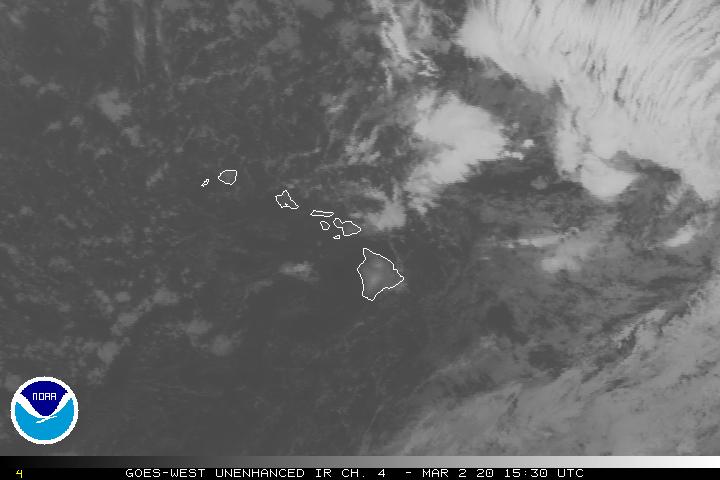
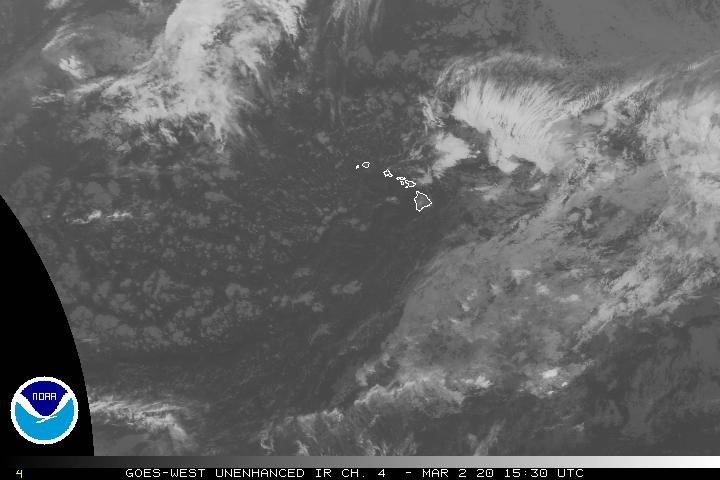
Satellite and Radar Images: To view the cloud conditions we have here in Hawaii, please use the following satellite links, starting off with this Infrared Satellite Image of the islands to see all the clouds around during the day and night. This next image is one that gives close images of the islands only during the daytime hours, and is referred to as a Close-up visible image. This next image shows a larger view of the Pacific…giving perspective to the wider ranging cloud patterns in the Pacific Ocean. Finally, here's a Looping IR satellite image, making viewable the clouds around the islands 24 hours a day. To help you keep track of where any showers may be around the islands, here’s the latest animated radar image.
Hawaii’s Mountains – Here’s a link to the live webcam on the summit of near 14,000 foot Mauna Kea on the Big Island of Hawaii. The tallest peak on the island of Maui is the Haleakala Crater, which is near 10,000 feet in elevation. These two webcams are available during the daylight hours here in the islands…and when there’s a big moon rising just after sunset for an hour or two! Plus, during the nights and early mornings you will be able to see stars, and the sunrise too…depending upon weather conditions.
Tropical Cyclone activity in the eastern and central Pacific – Here’s the latest weather information coming out of the National Hurricane Center, covering the eastern north Pacific. You can find the latest tropical cyclone information for the central north Pacific (where Hawaii is located) by clicking on this link to the Central Pacific Hurricane Center. Here’s a tracking map covering both the eastern and central Pacific Ocean. A satellite image, which shows the entire ocean area between Hawaii and the Mexican coast…can be found here. Of course, as we know, our hurricane season won't end until November 31st here in the central Pacific.
Aloha Paragraphs

The many colors of the Hawaiian Islands…even without vegetation
Our local winds will be lighter through the next several days, with a return of the trade winds late this weekend…maybe. This weather map shows a weakening 1030 millibar high pressure system northeast of the islands Tuesday night. This high pressure cell has an elongated ridge, which extends southwest and southward, to just north of Kauai. At the same time, we see a 998 millibar low pressure system, with its associated cold front to our northwest and west. Our winds will remain light due to the close proximity of the ridge near the islands.
This light wind condition is expected to continue through the rest of this week, with directions varying between southeast and south to southwest, as the cold front gets closer, and finally moves down into the state…and then perhaps even after that. The chance of volcanic haze (vog) increases here in Hawaii with winds coming out of these directions. Some of the models are suggesting that we could see the trade winds returning later this weekend, or early next week, although others are holding them off…as the next storm system to our northwest holds it in place near the islands.
Winds around the state are considerably lighter today, compared with the last several days…with the following numbers representing the strongest gusts late in the day Tuesday:
13 mph Port Allen, Kauai
21 Waianae, Oahu
07 Molokai
28 Kahoolawe
22 Maalaea Bay, Maui
07 Lanai Airport
12 Honokaa, Big Island
The threat of heavy showers, or even moderately heavy showers has diminished for the time being…which may change as we move into Thursday and Friday. For the time being, with our light winds in place, we’ll shift from a trade wind weather pattern…into a convective regime. This influence typically brings clear mornings, with increased clouds over and around the mountains, with a few showers during the afternoon hours. If we get a batch of high clouds moving overhead though, all bets are off in terms of those clear mornings. High clouds can limit the daytime heating too, with less interior shower activity a result.
Here's a satellite picture showing the generally clear skies overhead…although along with all the clouds associated with the cold front to our west and northwest. Meanwhile, this looping radar image shows showers scooting by on the SSE winds near Kauai, and a few down near the Big Island…riding in on the easterly trade winds down there. Looking ahead, the front now west and northwest of Kauai, as shown on this larger satellite image, will continue to creep this way, although slowly, rather than rushing southeastward. It could bring locally heavy showers to Kauai and Oahu…with the chance of a thunderstorm or two Thursday into Friday. This satellite image also shows high clouds riding out ahead of the cold front, pushing into our area…which may dim and filter our Hawaiian sunshine over the next several days.
The latest GFS model run, in terms of precipitation, shows moisture arriving over Kauai and then Oahu…before running out of steam somewhere near Maui. The front dissipates, although the ridge remains in our area, keeping the winds on the light side. This will likely keep us in a modified convective weather pattern, with the chance of more of those afternoon interior showers popping-up here and there Saturday afternoon. The models still don’t show a definite arrival date for the trade winds. They may return briefly later this weekend into early next week, before the ridge gets pushed down over us again by the next storm system…potentially.
It's Tuesday evening as I begin writing this last section of today's narrative update. As pointed out above, we have some changes taking place in our Hawaiian Island weather picture now. The main thing for the next couple of days, will be the lighter winds, possible hazy conditions, and the chance of afternoon upcountry showers Wednesday. This convective weather pattern will prevail through mid-week. As we move into the last couple of days of the work work, a cold front will move down into the state. At the same time, our atmosphere will turn unstable, meaning that localized heavy rain is a possibility. Likely the islands of Kauai and Oahu will receive the greatest precipitation, although the other islands will get some action too. There's even a chance of localized thunderstorms that could occur here and there. The upcoming weekend will remain occasionally showery, although the chance of heavier rainfall fades then…into the first part of next week.
~~~ Here in Kihei, Maui, at 520pm, there are a few leftover clouds over the Haleakala Crater, and over the West Maui Mountains too. The rest of the island looked pretty clear, as we head into the sunset. I''ll be back early Wednesday morning with your next new weather narrative from paradise. I hope you have a great Tuesday night until then! Aloha for now…Glenn.
Interesting: Fashion may come and go, and style may change with the times. But if there’s an item of clothing that could be called timeless, it’s a pair of great denim jeans. Both men and women wear them, and it seems safe to assume that everyone has a pair (even the girls I know who deem them uncomfortable). But while I’ve certainly pondered how my jeans go with the top I’m wearing, I have never considered how their production affects the environment.
There are certain things we all know affect the environment: driving SUVs, throwing out recyclables and taking hour-long showers. But then there are things we do without ever knowing their environmental impact, such as wearing denim jeans.
As it turns out, denim jeans are extremely environmentally unfriendly. The article, “How Green Are Your Jeans?” from OnEarth.org describes how making them is an arduous process that takes up a large amount of resources and releases a variety of toxins.
The numbers are staggering, such as the 1,600 gallons of water required to sustain the cotton that makes one pair of denim jeans. A pound of oil (per pair of jeans!) is also required to run the machinery that sprays the cotton with pesticides.
Afterwards, the cotton is starched to create denim material. The starch and oil or coal-based dyes bleed into water sources, depriving them of oxygen for the marine life and polluting them with chemicals such as mercury and lead. (You can only what happens to the water after that.) Later, the jeans are washed countless times in order to achieve the intended fashionable look.
So what’s the damage caused by making just one pair of jeans? Denims and Jeans tells us in their article, “Vintage Denim – At What Cost to the Environment?”. The article states that as of 2006, making one pair of Levi’s 501jeans released 32kg of CO2, while using up around 920 gallons of water and 400mJ of energy.
Furthermore, that is “equivalent to running a garden hose for 106 minutes, driving 78 miles and powering a computer for 556 hours.” And why we might hesitate before doing any of those things, the same can’t be said for buying a new pair of jeans.
I’m sure most of us will continue buying some of the 520 million pairs of jeans sold annually in the USA. Like I said, jeans are timeless.
Interesting2: Like DDT before it, a new class of insecticides known as neonicotinoids is believed to be causing drastic population declines in bird species. It is so effective at killing insects, that it has deprived birds of their basic food. Some scientists also believe they are behind the decline in bee populations in Europe and the United States known as honey-bee Colony Collapse Disorder.
Neonicotinoids, which are part of the nicotine family, are essentially glued to plant seeds, and infiltrate the entire plant. Any bug that eats the plant is immediately infected. The toxin attacks the central nervous system and causes a quick death. It is much less toxic to other animals because the chemical blocks a specific neural pathway found more commonly in insects.
Henk Tennekes, researcher at the Experimental Toxicology Services in Zutphen, the Netherlands, has linked the use of neonicotinoids to declines in bird populations in his recent book, The Systemic Insecticides: A Disaster in the Making. Tennekes said, "The evidence shows that the bird species suffering massive declines since the 1990s rely on insects for their diet."
It is also accused of causing the alarming decline in bee populations. Researchers have found that the chemical negatively affects the bee's navigational ability which in turn, causes the bees to neglect feeding and caring for eggs and larvae. However, the true cause of Colony Collapse Disorder is not fully understood. Other possible factors include Varroa mites, insect diseases, malnutrition, genetically modified crops, and even cell phone radiation.
Nevertheless, countries like Germany and France have strictly limited the use of neonicotinoids. In Germany, it is believe that the glue did not sufficiently hold the chemical to the seeds of agricultural crops. The chemical could then drift into the environment where it affected bees. The effectiveness of this pesticide has certainly taken a toll on insects, but has taken a much more noticeable toll on birds.
In Britain, the house sparrow population has declined by 68 percent since 1977. Since 1994, the common swift population has shrunk by 41 percent and the starling by 26 percent. Other birds affected include the spotted flycatcher, wood warbler, snipe, and song thrush.
Neonicotinoids are used on a level far lower than DDT was used back in its time, but since it is so efficient at killing insects, it is having the same effect. For that reason, it is loved by farmers in protecting their crops.
The chemical also makes the plants more resistant to drought, low pH levels, heat stress, and viral infections. More research is needed to conclusively link neonicotinoids to avian declines. Regardless, some European countries have taken small steps to limit its use.
However, Henk Tennekes believes that a global ban is the only solution. "Neonicotinoids act like chemical carcinogens, for which there are no safe levels of exposure. The message is that we must act quickly and ban these compounds, to avoid a catastrophe."
Interesting3: In July, Japanese scientists announced that they had found something inside Hayabusa's 40cm-wide sample return capsule, but it was far from certain as to what that "something" was. Was it dusty contamination from reentry? Or was it precious asteroid dust, the very thing the sample return mission set out to capture? Now we have an answer. The trouble-plagued Hayabusa did return asteroid dust. In fact, 1,500 particles of the stuff have been recovered so far.
"This is a world first and it is a remarkable accomplishment that brought home material from a celestial body other than the moon," Yoshiaki Takagu, Japanese science and technology minister, told a press conference announcing mission success. On June 13, the Japanese mission came to a spectacular end.
Slamming into the atmosphere after a 7-year round-trip, the spacecraft dazzled on re-entry, disintegrating and burning up over the Australian outback. Before the fireworks however, the Hayabusa probe jettisoned a precious sample return capsule that reentered the atmosphere safely ahead of the doomed spacecraft to parachute to Earth.
Since that day, scientists have been patiently waiting to find out whether that capsule carried any precious cargo. And now, after six months of study, the Japanese space agency JAXA has confirmed everyone's wildest dreams: Hayabusa successfully completed its mission and brought dust from the 400 meter-wide asteroid Itokawa home.
Interesting4: Things are heating up in the small car segment. GM has rated its Chevy Cruze Eco model at 42 mpg highway. That beats out many pricier hybrids and sets a new bar in the under-$20,000 segment. I hope you can drive standard though. Otherwise, you are stuck with the six-speed automatic transmission , which gets 26 mpg city and 37 mpg highway, not bad but not class-leading numbers either.
GM got a bulk of its mpg-improvements from aerodynamic enhancements, like a lower grille that closes off at highway speed, under-body panels, and a lowered ride height. They also added a baby spoiler, the same low-rolling resistance tires as the Volt, and a few other nips and tucks.
A good way to keep costs down, but I have a feeling that lower automatic transmission rating will lose them a few customers. If you do opt for a manual transmission, the Eco is rated for 28 mpg city and 42 mpg highway. That beats out the Honda Civic, Toyota Corolla, and Ford Focus (which is getting replaced next year with a 40 mpg version).
With an MSRP of $18,995 for a turbocharged 42 mpg small sedan, that really isn't too shabby. If you’re somebody who has a long commute on the highway, this car could save you a few bucks.
 Email Glenn James: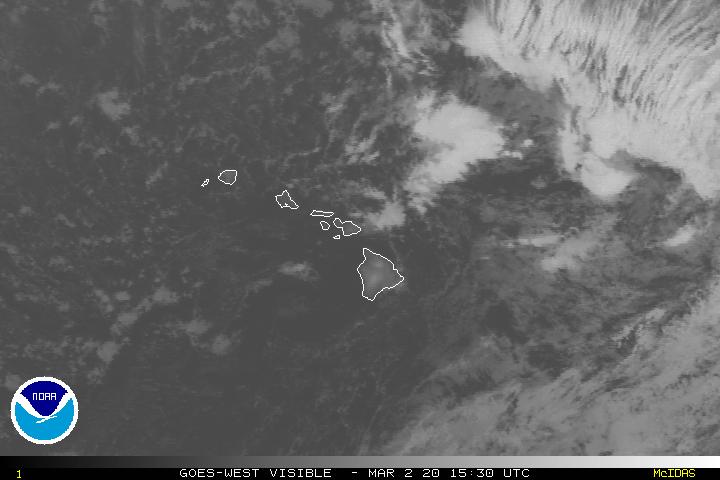


Deanna Says:
Glenn, do you have a facebook page?~~~Yes I do Deanna…although don’t put much energy into, given my work load. Aloha, Glenn