











September 9-10, 2010
Air Temperatures – The following maximum temperatures were recorded across the state of Hawaii Thursday afternoon:
Lihue airport, Kauai – 84
Honolulu airport, Oahu – 87
Kaneohe MCAS, Oahu – 84
Molokai airport – 84
Kahului airport, Maui – 86
Hilo airport, Hawaii – 84
Ke-ahoe airport (Kona) – 85
Air Temperatures ranged between these warmest and coolest spots near sea level – and on the highest mountain tops…as of 5pm Thursday evening:
Barking Sands, Kauai – 85
Kaneohe, Oahu – 76
Haleakala Crater – 55 (near 10,000 feet on Maui)
Mauna Kea summit – 48 (near 14,000 feet on the Big Island)
Precipitation Totals – The following numbers represent the largest precipitation totals (inches) during the last 24 hours on each of the major islands, as of Thursday afternoon:
0.40 Mount Waialeale, Kauai
0.12 Oahu Forest NWR, Oahu
0.01 Molokai
0.00 Lanai
0.17 Kahoolawe
0.32 Puu Kukui, Maui
0.48 Kawainui Stream, Big Island
Marine Winds – Here’s the latest (automatically updated) weather map showing three high pressure systems located to the northwest through northeast of the islands. The reason our trade winds aren’t stronger now, is that there’s a low pressure system, with its associated trough, to the north of the state…in between the high pressure systems and our islands. Our local trade winds will remain moderately strong Friday and Saturday…locally stronger and gusty.
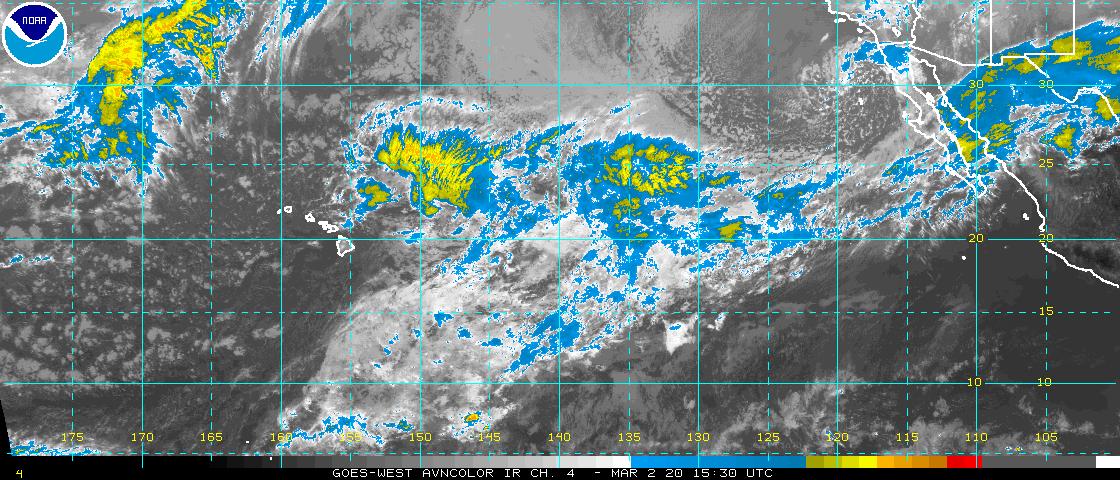
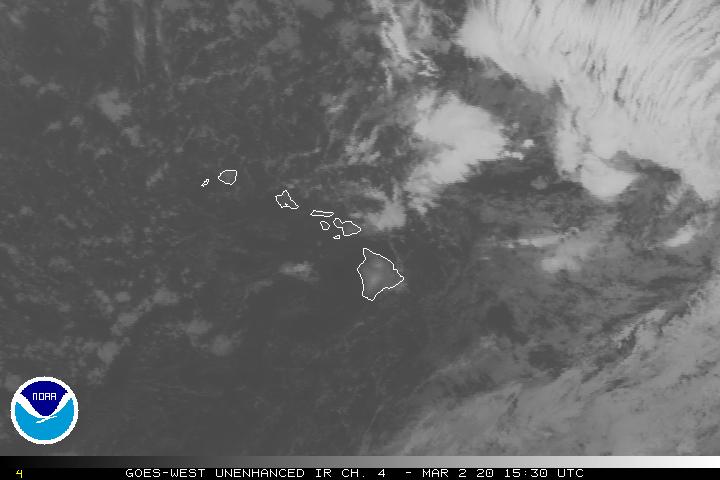
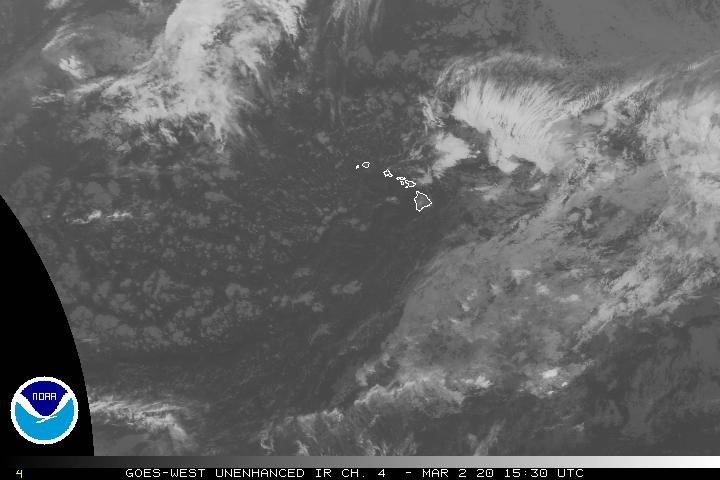
Satellite and Radar Images: To view the cloud conditions we have here in Hawaii, please use the following satellite links, starting off with this Infrared Satellite Image of the islands to see all the clouds around during the day and night. This next image is one that gives close images of the islands only during the daytime hours, and is referred to as a Close-up visible image. This next image shows a larger view of the Pacific…giving perspective to the wider ranging cloud patterns in the Pacific Ocean. Finally, here’s a Looping IR satellite image, making viewable the clouds around the islands 24 hours a day. To help you keep track of where any showers may be around the islands, here’s the latest animated radar image.
Hawaii’s Mountains – Here’s a link to the live webcam on the summit of near 14,000 foot Mauna Kea on the Big Island of Hawaii. The tallest peak on the island of Maui is the Haleakala Crater, which is near 10,000 feet in elevation. These two webcams are available during the daylight hours here in the islands…and when there’s a big moon rising just after sunset for an hour or two! Plus, during the nights and early mornings you will be able to see stars, and the sunrise too…depending upon weather conditions.
Tropical Cyclone activity in the eastern and central Pacific – Here’s the latest weather information coming out of the National Hurricane Center, covering the eastern north Pacific. You can find the latest tropical cyclone information for the central north Pacific (where Hawaii is located) by clicking on this link to the Central Pacific Hurricane Center. Here’s a tracking map covering both the eastern and central Pacific Ocean. A satellite image, which shows the entire ocean area between Hawaii and the Mexican coast…can be found here. Of course, as we know, our hurricane season won’t begin again until June 1st here in the central Pacific.
Aloha Paragraphs

Isolated beach on the island of Kauai
Our local trade winds are expected to remain light to moderate through the rest of this week…locally stronger in those typically windiest areas. This weather map shows three high pressure systems located to our north…the source of our trade breezes Thursday afternoon. There will be those places, those typically windier locations, which will be somewhat stronger and gusty. There’s that chance that these areas, usually around Maui and the
As the trade winds continue to blow, most of the incoming showers will be focused along the windward sides. This satellite image shows more than the normal amount of clouds upstream of the islands. It appears that we’ll see some increase in windward showers tonight into Friday. Glancing further out from the islands, using this satellite picture, we see an area of thunderstorms to the south of the Big Island. Meanwhile, we see thickening high cirrus clouds moving over of our islands now.
It’s Thursday evening as I begin writing this last section of today’s narrative update. Our weather, now that we’re getting right into the end of summer time frame, is becoming a bit more interesting. The trade winds are the one common thread that remains normal. There are three things that are catching our attention at this time:
1.) The first being the area of disturbed weather, or what we call a tropical disturbance, down to the south of
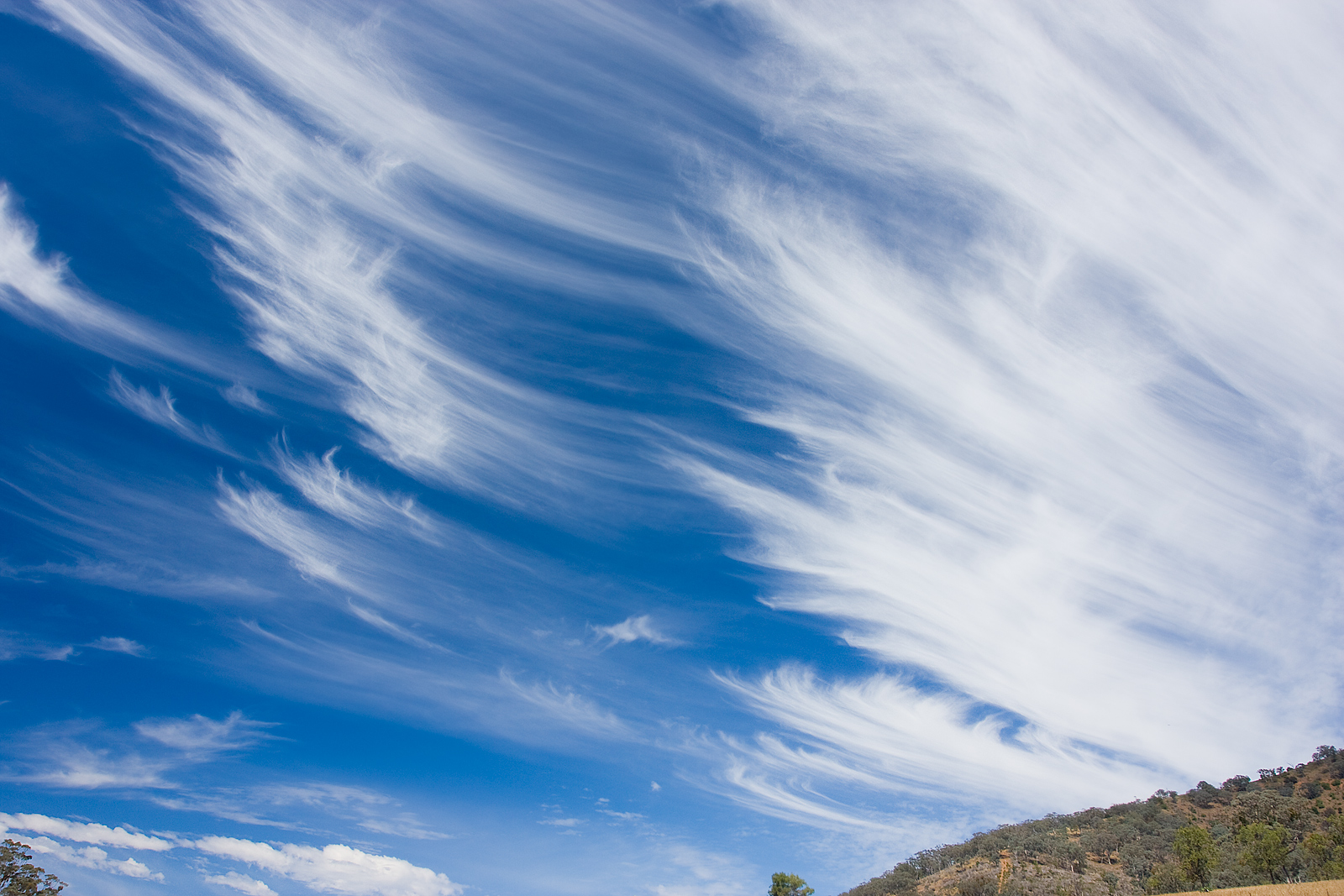
2.) The second thing is the rather dynamic area of high cirrus clouds to the west of the state. This could dim and filter our Hawaiian sunshine if it were to shift just a bit further east. It too will provide some great sunrise and sunset colors too.
3.) Finally, we see more than the normal amount of low clouds to our east, which will likely bring some increase in showers to our windward sides mainly, later this evening into Friday. We should refer to this looping radar image to keep track of those showers moving through the state. The computer forecast models suggest that there would be some slightly drier air arriving over the weekend, which of course is a good thing.
~~~ Thursday was a good day weatherwise here in the islands, with the trade winds, and lots of sunshine…although the high clouds did filter it some. The sunset was rather nice, although a rather quick shot of orange was all we had. We’ll see how sunrise on Friday turns out, I hope a good one for us. I’m home here in Kula, and have had my returning home walk already. I just played a little ping pong, although it’s getting darker earlier these days, have you noticed? I’ll be back very early Friday morning with your next new weather narrative, I hope you have a good night until then! Aloha for now…Glenn.
Interesting: Gregory Stone, director of LSU’s WAVCIS Program and also of the Coastal Studies Institute in the university’s School of the Coast & Environment, disagrees with published estimates that more than 75 percent of the oil from the Deepwater Horizon incident has disappeared. Stone recently participated in a three-hour flyover of the affected area in the Gulf, where he said that subsurface oil was easily visible from overhead. "It’s most definitely there," said Stone. "It’s just a matter of time before it makes itself known again."
Readings from WAVCIS indicate that the direction of the ocean currents near the middle and bottom of the water column are aimed offshore; in other words, this submerged oil will be pushed out to sea, where it will then rise higher into the water column and be washed onto land, particularly during storms. "It is going to come on shore not consistently, but rather in pulses because it is beneath the surface," he said. "You may get one or two, maybe even five or 10 waves coming ashore with absolutely no oil … but eventually, it’s going to come ashore."
He also cautions that whatever oil doesn’t remain suspended in the water column may simply sit atop the seafloor, waiting to be mixed back into the currents. "It will simply be stirred up during rough seas or changing currents and reintroduced into the water column," he explained. Another timely concern is hurricane season since September is generally one of the most active months of the year. "Storm surge, when combined with storm waves from a hurricane, could stir up this submerged oil and bring it — lots of it — onshore and into the wetlands," Stone said.
"Even a tropical storm could result in more oil on the shoreline. And that’s a reality we need to consider and be prepared for." Formally known as the Wave-Current-Surge Information System, WAVCIS is based off of a network of buoys, oil platforms sensors and ADCPs, or Acoustic Doppler Current Profilers, in the Gulf of Mexico. The ADCPs are exceptionally sensitive. Housed on the seafloor, they send acoustic signals up to the surface of the water, measuring the entire water column for everything from current direction to speed and temperature.
It’s also integrated with the National Data Buoy Center, or NDBC, system, providing researchers worldwide with a comprehensive look at the Gulf environment, which is an invaluable research tool during the inevitable hurricane season, and also during disasters such as the Deepwater Horizon tragedy. "WAVCIS is among the most sensitive ocean observing systems in the entire nation," said Stone. "We measure a wide variety of physical parameters at the water surface, water column and on the sea bed.
This information is extremely helpful in predicting or determining where the oil is — and where it’s going to go. Because our information is updated hourly and available to the public, our lab has played a primary role in providing facts about the situation surrounding the oil’s movement and location." Stone, whose experience with WAVCIS has spanned everything from natural to manmade disasters, knows that only time will tell the severity of the oil’s impact.
"This is a long term problem. It’s not simply going to go away. I was in Prince William Sound 10 years after the Exxon-Valdez event, and when I lifted up a rock, there was still residual oil beneath it," he said. "Thus, the residence time of oil in the coastal environment can be substantial, although ecosystem conditions along the northern Gulf are very different and will likely recover quicker than in Alaska. We here at WAVCIS can at least track Gulf conditions to monitor the situation as closely as possible."
Interesting2: Due to increasing life-spans and improved health many populations are ‘aging’ more slowly than conventional measures indicate. In a new study, to be just published in Science, scientists from the International Institute for Applied Systems Analysis (IIASA) in Austria, Stony Brook University, US, (SBU), and the Vienna Institute of Demography (VID) have developed new measures of aging that take changes in disability status and longevity into account.
The results give policymakers faced with growing numbers of elderly new tools to more accurately determine the cost of an aging population and to determine more appropriate retirement ages. Currently, assessments are frequently based on United Nations aging forecasts that include the proportion of the population that is 65 years and older, and the "old age dependency ratio" (OADR), which considers the number of people dependent on others when they reach age 65.
"Those measures are based on fixed chronological ages, and this can generate misleading results," says Dr Warren Sanderson, from IIASA and SBU. "When using indicators that assume fixed chronological ages, it’s assumed that there will be no progress in factors such as remaining life expectancies and in disability rates. But many age-specific characteristics have not remained fixed and are not expected to remain constant in the future."
However, many people over 65 are not in need of the care of others, and, on the contrary, may be caregivers themselves. The authors provide a new dependency measure based on disabilities that reflect the relationship between those who need care and those who are capable of providing care, it is called the adult disability dependency ratio (ADDR).
The paper shows that when aging is measured based on the ratio of those who need care to those who can give care, the speed of aging is reduced by four-fifths compared to the conventional old-age dependency ratio. Co-author Dr Sergei Scherbov, from IIASA and the VID, states that "if we apply new measures of aging that take into account increasing life-spans and declining disability rates, then many populations are aging slower compared to what is predicted using conventional measures based purely on chronological age."
The new work looks at "disability-free life expectancies," which describe how many years of life are spent in good health. It also explores the traditional measure of old age dependency, and another measure that looks specifically at the ratio of disabilities in adults over the age of 20 in a population. Their calculations show that in the United Kingdom, for example, while the old age dependency ratio is increasing, the disability ratio is remaining constant.
What that means, according to the authors, is that, "although the British population is getting older, it is also likely to be getting healthier, and these two effects offset one another." New measures of aging that include not just changes in longevity, but accurate numbers about disability rates, "can help educate the public about the likely consequences of improvements in health and longevity," the authors say.
And such measures have policy implications because, "slow and predictable changes in pension [retirement] age justified by an increased number of years of healthy life at older ages, may be more politically acceptable than large, abrupt changes justified on the basis of budget stringency."
Interesting3: Hungry microbes feasting on spilled BP oil caused a drop in oxygen levels in the Gulf of Mexico, but did not create a marine "dead zone" near the wellhead, U.S. scientists reported on Tuesday. The amount of oxygen decreased by 20 percent from the long-term average in areas where oil from the broken BP Macondo wellhead was detected by government and independent observers, scientists from the National Oceanic and Atmospheric Administration told reporters.
"All the scientists working in the Gulf have been carefully watching dissolved oxygen levels because excess carbon in the system might lead to a dead zone," said NOAA’s Steve Murawski. "While we saw a decrease in oxygen, we are not seeing a continued downward trend over time." Summer dead zones are common in shallower areas of the Gulf of Mexico, caused by run-off from farm chemicals flowing down the Mississippi River.
Dead zones have such low oxygen levels that most marine life — including commercial important fish and shellfish — cannot survive, and scientists feared the BP spill would create such a zone in deep water around the Macondo wellhead after the April 20 blowout at the Deepwater Horizon rig.
That did not happen, Murawski said, and at this point is unlikely. He said oxygen levels had hit a "sweet spot," with microbes consuming enough of the dispersed oil to cause what he called a sag in oxygen, but not enough to cause a low-oxygen dead zone.
Interesting4: For regions with adequate space and little recycling infrastructure, disposing of bottles in landfill generates a lower carbon footprint than recycling or incineration… The ubiquitous PET bottle, used around the world to package drinks, may best be buried after use rather than burnt or reconverted into a second-life product. According to an independent study that I and a colleague just completed, the footprint of recycling is lower than that of landfills only if at least half of the plastic ends up being valorized.
That’s right: only if about 50% or better of the used PET actually displaces production of new PET, will recycling deliver the lowest footprint. In recycling programs using kerbside collection, typically less than 50% of the used bottles end up displacing new PET (an abbreviation of polyethylene tere-phthalate).
Programs using take-back obligations, separate collection or bottle-deposits, however, tend to report much higher displacement rates — some in the range of 75%. And what about burning it all? Charging used bottles to waste incinerators converts them largely to the greenhouse-gas carbon dioxide, which then goes straight into the atmosphere.
This footprint debit can be reduced somewhat by generating power and heat from the incinerator. However, waste incinerators even at their best are inefficient power generators, so the net effect is still far more ‘carbon positive’ than either recycling or landfilling.
 Email Glenn James: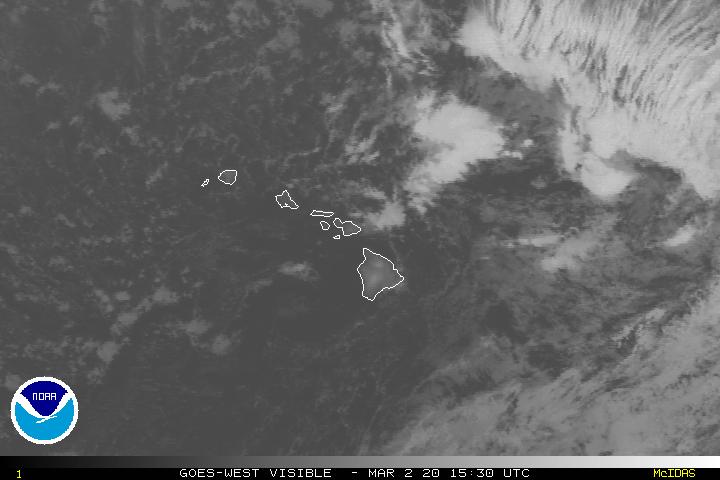




David Woodham Says:
What is effect of a La Nina event on Maui, Surf wind precip ect.?
What are drought conditions on Maui now?
Also unable to connect to Hookipa cam?
Thanks Dave~~~Hi Dave, La Nina typically brings more than the normal amount of winter rainfall. More light and variable or south to southwest wind days. Very dry at the moment here on Maui…at least on the leeward sides, less dry on the windward sides. Try again on the webcam for Hookipa. Aloha, Glenn