











August 17-18, 2010
Air Temperatures – The following maximum temperatures were recorded across the state of Hawaii Tuesday afternoon:
Lihue, Kauai – 82
Honolulu, Oahu – 87
Kaneohe, Oahu – 83
Kaunakakai, Molokai – 86
Kahului, Maui – 88
Hilo, Hawaii – 81
Kailua-kona – missing
Air Temperatures ranged between these warmest and coolest spots near sea level – and on the highest mountain tops…as of 5pm Tuesday evening:
Kahului, Maui – 84
Lihue, Kauai – 79
Haleakala Crater – 63 (near 10,000 feet on Maui)
Mauna Kea summit – 48 (near 14,000 feet on the Big Island)
Precipitation Totals – The following numbers represent the largest precipitation totals (inches) during the last 24 hours on each of the major islands, as of Tuesday afternoon:
0.89 Mount Waialeale, Kauai
1.55 Moanalua RG, Oahu
0.01 Molokai
0.00 Lanai
0.02 Kahoolawe
0.22 Puu Kukui, Maui
0.07 Kawainui Stream, Big Island
Marine Winds – Here’s the latest (automatically updated) weather map showing a 1025 millibar high pressure system located northeast of the islands. Our local trade winds will remain active Wednesday and Thursday.
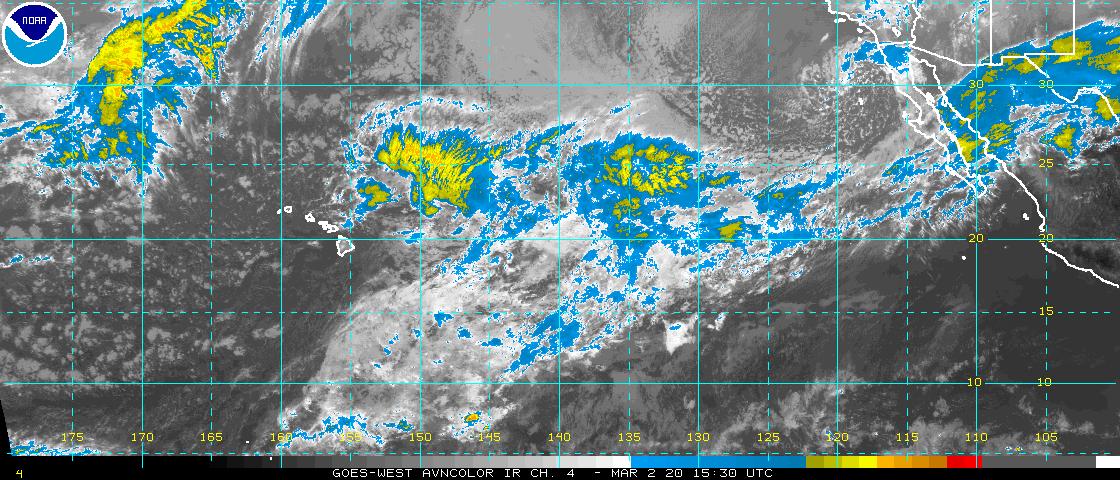
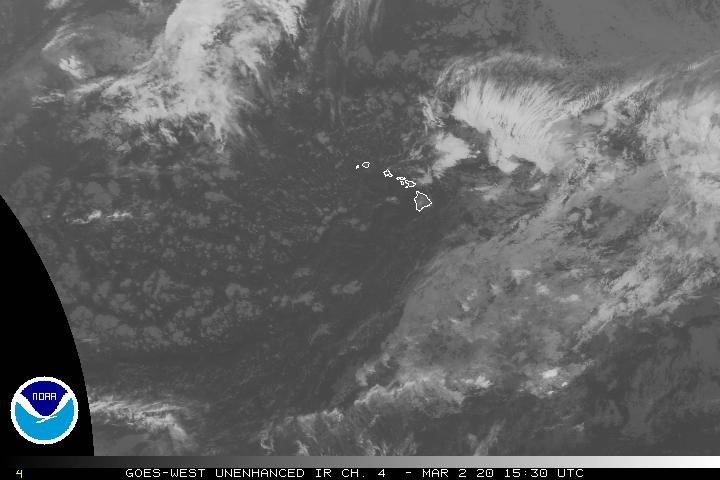
Satellite and Radar Images: To view the cloud conditions we have here in Hawaii, please use the following satellite links, starting off with this Infrared Satellite Image of the islands to see all the clouds around during the day and night. This next image is one that gives close images of the islands only during the daytime hours, and is referred to as a Close-up visible image. This next image shows a larger view of the Pacific…giving perspective to the wider ranging cloud patterns in the Pacific Ocean. Finally, here’s a Looping IR satellite image, making viewable the clouds around the islands 24 hours a day. To help you keep track of where any showers may be around the islands, here’s the latest animated radar image.
Hawaii’s Mountains – Here’s a link to the live webcam on the summit of near 14,000 foot Mauna Kea on the Big Island of Hawaii. The tallest peak on the island of Maui is the Haleakala Crater, which is near 10,000 feet in elevation. These two webcams are available during the daylight hours here in the islands…and when there’s a big moon rising just after sunset for an hour or two! Plus, during the nights and early mornings you will be able to see stars, and the sunrise too…depending upon weather conditions.
Tropical Cyclone activity in the eastern and central Pacific – Here’s the latest weather information coming out of the National Hurricane Center, covering the eastern north Pacific. You can find the latest tropical cyclone information for the central north Pacific (where Hawaii is located) by clicking on this link to the Central Pacific Hurricane Center. Here’s a tracking map covering both the eastern and central Pacific Ocean. A satellite image, which shows the entire ocean area between Hawaii and the Mexican coast…can be found here. Of course, as we know, our hurricane season won’t begin again until June 1st here in the central Pacific.
Aloha Paragraphs

The Kona coast…on the Big Island
The trade winds will prevail well into the future, increasing some during the last several days of this week…and then ease up a little as we get into early next week. This weather map shows a moderately strong 1025 milibar high pressure system located to our northeast, the source of our trade breezes Tuesday night. This high pressure cell extends northward into the eastern Gulf of Alaska, to south of the
Showers will arrive in an off and on manner for the time being…most generously along our windward coasts and slopes. This more or less normal trade wind shower activity Tuesday will remain in place through the rest of this week. This satellite image shows a cloud band impacting the
It’s Tuesday
evening as I begin writing this last section of today’s narrative update. Our trade winds will continue, and may strengthen temporarily Friday into the upcoming weekend. On another note, the surf will be coming up some along our leeward beaches now, bringing larger waves to those south and west facing shores. At the same time, a retired tropical cyclone, which was active in the western Pacific last week, has sent us some possible waves for our north shores too…arriving at mid-week. This of course is good news for our local surfing and windsurf/kiteboarding communities. ~~~ Here in Kihei, Maui it was clear to partly cloudy, with still some pretty stiff trade wind breezes blowing. Looking up towards the slopes of the Haleakala Crater, it was still cloudy up that way. Looking around the state at around 530pm, the strongest wind gust was being reported at Kahoolawe, where a 36 mph wind was blowing. The warmest temperature at the same time was being reported at 84F degrees at the Kahului airport. Checking the higher elevations, the top of the Haleakala Crater was reporting a relatively warm 63 degrees…while the Mauna Kea summit on the Big Island was a cooler 48 degrees. I’m heading up to Kula, Maui now, and will be back with your next new weather narrative from paradise at around 550am Wednesday morning. I hope you have a great Tuesday night until then! Aloha for now…Glenn.
Interesting: The summer of 2010 produced Pakistan’s worst flooding in 80 years. In a televised address on August 14, Prime Minister Yusuf Raza Gilani said that 20 million people, about one-ninth of the population, had been displaced by the disaster.
Flooding began on July 22 in the province of Baluchistan. The swollen waters then poured across the Khyber-Pakhtunkhwa Province in the northwest before flowing south into Punjab and Sindh. Estimates of the death toll of the floods range from 1,300 to 1,600.
Television footage from helicopters showed a seemingly endless vista of muddy water, freckled with palm trees. Estimates of grievous long-term economic and political damage from the inundation were constantly revised in more dire directions as the rains continued. Roads, bridges and communications networks across the country were severely damaged, Pakistani officials said.
Aid and Instability
The devastation raised fears of further instability in Pakistan, a central pillar of American regional strategy to combat the Taliban and Al Qaeda but also a place long troubled by a weak government and economic woes. Hard-line Islamic groups stepped in to provide aid where the government has failed to reach; the United States also sent aid with an eye to improving its reputation among ordinary Pakistanis.
For the past year, the Pakistani government and the military were engaged in a campaign to restore public services in Pakistan’s northwest, trying to rebuild trust after more than two million people were displaced in 2009 when government forces launched a major offensive against militants. But the reconstruction efforts were painfully slow, and the public mood shifted from frustrated to furious.
The United Nations appealed for international donations of $460 million, but only one-third of that had been provided as of August 16. The World Bank pledged to reroute money from other projects to provide $900 million in emergency funds to help recovery efforts.
The United Nations secretary general, Ban Ki-moon, who flew over the country on August 15 with President Asif Ali Zardari, said he had never seen such a disaster and urged foreign donors to speed up their assistance. President Zardari, who came under stinging criticism for making a trip to Europe as the flood disaster unfolded, made his first tour of flood-hit areas on August 12.
Disease Fears
United Nations officials said that a shortage of aid funds left some six million people, the majority of them children and infants, at risk of potentially lethal diseases borne by dirty water.
Aid workers confirmed the first reports of cholera in the Swat Valley of the northwestern Khyber-Pakhtunkhwa Province and in the remote Rajanpur district in Punjab Province.
Cholera is common in South Asia during the rainy season, but flooding that overflows outhouses and sewage canals compounds the problem. The authorities’ ability to contain the disease depends on whether they can get antibiotics to people who are ill and clean water to people who are not.
Food Shortage Fears
Even as the government and international relief workers struggle to get food and clean water to millions of flood-stricken Pakistanis, concerns are growing about the enduring toll of the disaster on the nation’s overall economy, food supply and political stability.
Providing clean water for millions and avoiding the spread of diseases like cholera are the first priorities. But there are also looming food shortages and price spikes, even in cities. There is also the danger that farmers will miss the fall planting season, raising the prospect of a new cycle of shortfalls next year.
The prospect of immediate hunger combining with long-term disruptions to food supplies was a chief concern. The floods have submerged about 17 million acres of Pakistan’s most fertile croplands, in a nation where farming is an economic mainstay. The waters have also killed more than 200,000 head of livestock, and washed away large quantities of stored commodities that feed millions throughout the year.
While dire conditions threaten rural communities, severe inflation and shortages of fresh produce loom for even large urban centers relatively unaffected by the floods, like Karachi.
Interesting2: In a bold effort to save one of the world’s rarest amphibians from extinction, one hundred Kihansi spray toads have been flown home to Tanzania after being painstakingly reared at the Bronx Zoo and The Toledo Zoo working in close partnership with the Tanzanian government and the World Bank. The toads now reside at a new, state-of the-art propagation center in Dar es Salaam, Tanzania’s commercial capitol, with the eventual goal of reintroducing the tiny amphibians into their former habitat.
"On behalf of the Government of the United Republic of Tanzania, we are very grateful to the Bronx Zoo and The Toledo Zoo for taking care of these precious toads (KST) for ten years, and now they have safely arrived home via KLM flight and all 100 toads are cheerful as witnessed by our Tanzanian trained KST keepers at the facility at UDSM Zoology Department. We are very optimistic that they will acclimatize soon and be taken to their homeland in Kihansi Gorge in the near future," said Anna Maembe on behalf of the Government of Tanzania.
According to Dr. Anne Baker, The Toledo Zoo’s Executive Director and CEO, "We are extremely proud of the staff members, curators, and keepers whose expertise in scientific husbandry made this tremendous accomplishment possible. The level of collaboration involved here, from the World Bank, the Tanzanian government, and the participating zoos to the Tanzanian field biologists and students who shared their knowledge with us, has been nothing short of inspiring."
"The return of these special creatures to Tanzania is a landmark achievement for the Bronx Zoo, the Tanzanian government, The Toledo Zoo, and the World Bank," said Jim Breheny, Director of the Bronx Zoo and Wildlife Conservation Society Senior Vice President of Living Institutions. "For years, the Bronx Zoo has been anticipating this important step toward reintroduction of the species, and we are ecstatic that the first toads are thriving in the new facility."
Interesting3: Dead zones are hypoxic (low-oxygen) areas in the world’s oceans, the observed incidences of which have been increasing since oceanographers began noting them in the 1970s. These occur near inhabited coastlines, where aquatic life is most concentrated. Every summer for the past nine years, water with lethally low concentrations of oxygen has appeared off the Oregon coast. The cause is not clear and it does not fit the pattern of several other dead zones associated with man made run off issues. Some other causes have been recently implicated in a research study by Oregon State University.
Aquatic and marine dead zones can be caused by an increase in chemical nutrients (particularly nitrogen and phosphorus) in the water, known as eutrophication. Additionally, natural oceanographic phenomena can cause de-oxygenation of parts of the water column. For example, enclosed bodies of water such as fjords or the Black Sea have shallow sills at their entrances causing water to be stagnant there for a long time.
Dead zones are exactly that. Life does not flourish in such places because there is not enough oxygen to sustain it. In July 2002, scientists with the Oregon Department of Fish and Wildlife found unusual numbers of bottom-feeding sculpin lying lifeless on the ocean floor, which would normally be teeming with life. Crabs were also dying, and they washed up onto some beaches in large numbers.
Officials at the government agency asked Francis Chan, a bio-geochemist at Oregon State University in Corvallis, for help in discovering the cause of the disturbance as quickly as possible. Chan was about to set off on a scheduled research cruise along the Oregon coast, so he grabbed all the extra equipment he could think of, including a brand-new oxygen sensor.
Ocean surface waters normally contain 5—8 milliliters of oxygen per liter of water, a number that declines rapidly with depth. But on his first day out, Chan found that at a depth of 150 feet the inner coastal waters off Oregon were hypoxic — oxygen levels there were lower than 1.43 milliliters per liter, so low that fish cannot survive.
Similar low oxygen levels were found further offshore, the researchers knew that something unprecedented was happening. The changes in Oregon may be related to a broader pattern around the globe, in which subsurface patches of permanent hypoxia seem to be growing in size and losing yet more oxygen, for unknown reasons. And whether or not global warming is responsible for the changes to date, ocean models forecast that in the coming decades increasing water temperatures and changes in circulation will drive oxygen concentrations down even further.
"What we have been experiencing is a perfect storm — where weather, climate and currents can come together to crash an ecosystem," says Chan.
Storms had repeatedly delayed Chan’s cruises during the spring, and he wondered whether the weather was also delaying the oxygen’s vanishing act by keeping the winds in a favorable, generally southerly, pattern. Usually in the spring, occasional periods of northerly wind blow surface waters offshore, allowing cool waters, rich in nutrients but poor in oxygen, to upwelling from deeper, offshore layers. That upwelling is what makes Oregon’s fisheries so productive.
Upwelling can turn deadly for creatures near the sea floor if the winds are unrelenting. Normally, the winds that promote upwelling slacken at various times during spring and summer, enough to mix the waters on the continental shelf, refreshing them with oxygen. But some recent years have brought strong and steady spring winds that prevent oxygen from reaching subsurface waters. At the same time, the constant upwelling spurs blooms of phytoplankton, which die and then decompose, using up oxygen in the near shore waters.
Further out to sea, beyond the continental shelf, water at a depth of roughly 3000 feet is permanently oxygen deprived, at roughly 0.5 milliliters per liter. Called an oxygen minimum zone (OMZ), the layer is a normal feature in many parts of the ocean; it is too far down to mix with the well oxygenated surface waters.
The waters above an OMZ are expected to have slightly lowered amounts of dissolved oxygen. Researchers have discovered that the water above the OMZ off the Oregon coast is steadily losing oxygen. The researchers pulled together 30 years of offshore recordings and, in an unpublished preliminary analysis, found that concentrations of the gas have dropped by 0.5 milliliters per liter and are now about 2 milliliters per liter — dangerously close to hypoxic conditions. These are the very waters that well up onto the continental shelf in the spring and summer. Chan estimates that this oxygen decline above the OMZ has pushed the chances of seeing hypoxia in the nearshore waters from 10% to roughly 60% each year.
Around the globe, many OMZs are also losing oxygen and expanding horizontally and vertically. OMZs currently cover about 30 million square kilometers, or 8% of the ocean area. These regions have mostly attracted little attention from researchers, but the best known OMZs sit off the coasts of Namibia, Chile and Peru — also areas of strong upwelling.
Chan and other researchers are trying to determine whether the warming climate is to blame for expanding OMZs and the recent upwelling along the Oregon coast. A connection is possible, in theory. Climate models suggest that ocean oxygen concentrations will decline in the future, mainly because increasing temperatures of the surface waters impede mixing with deeper layers, and the warming also reduces the solubility of oxygen in the water. On top of that, heating of the polar regions may slow down the giant currents that carry oxygen from cold regions to warmer ones. Various model runs forecast that the global oxygen content of oceans will decline by 1—7% over the next century.
The exact cause of the Oregon dead zone has not yet been established but the trend is troubling.
 Email Glenn James: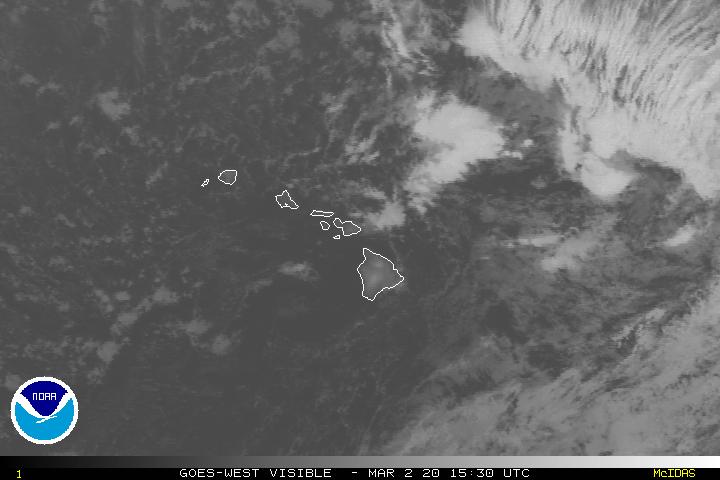


oscar camargo Says:
thank you!
its a pleasure…
one more thing… and what about the waves?
is it right to assume the efect will be opposite?
can i expect above normal average swells for october and winter as we had last year?
tks a lot!!
by the way… last year i tried one red wine you suggested… lol… very good inded…~~~Hi again Oscar, as for waves, I would expect average or slightly below average surf size in October. Glad you liked that red wine! Aloha, Glenn
oscar camargo Says:
Hi Glenn,
I am a kitesurfer from Brazil and i spend 3 weeks in maui every october… but i follow you daily comments year round.
I would like to know what is the efect of la nina in the wind forcast for this october…
i tried to figerout a correlation in the wind archives between wind and la nina without sucess…
tks
oscar~~~Hi Oscar, good to hear from you there in Brazil. I anticipate that our trade winds will be lighter than normal during October, and into the winter season as well. I hope this helps, and by the way, thanks for reading my website! Aloha, Glenn