











August 11-12, 2010
Air Temperatures – The following maximum temperatures were recorded across the state of Hawaii Wednesday afternoon:
Lihue, Kauai – 83
Honolulu, Oahu – 86
Kaneohe, Oahu – 84
Kaunakakai, Molokai – 86
Kahului, Maui – 88
Hilo, Hawaii – 81
Kailua-kona – 82
Air Temperatures ranged between these warmest and coolest spots near sea level – and on the highest mountain tops too…as of 5pm Wednesday evening:
Kahului, Maui – 84
Princeville, Kauai – 77
Haleakala Crater – 57 (near 10,000 feet on Maui)
Mauna Kea summit – 39 (near 14,000 feet on the Big Island)
Precipitation Totals – The following numbers represent the largest precipitation totals (inches) during the last 24 hours on each of the major islands, as of Wednesday afternoon:
0.97 Mount Waialeale, Kauai
0.25 Moanalua RG, Oahu
0.01 Molokai
0.00 Lanai
0.00 Kahoolawe
0.39 West Wailuaiki, Maui
0.39 Hilo airport, Big Island
Marine Winds – Here’s the latest (automatically updated) weather map showing a 1031 millibar high pressure system far to the northeast of the islands. Our local trade winds will remain active Thursday and Friday.
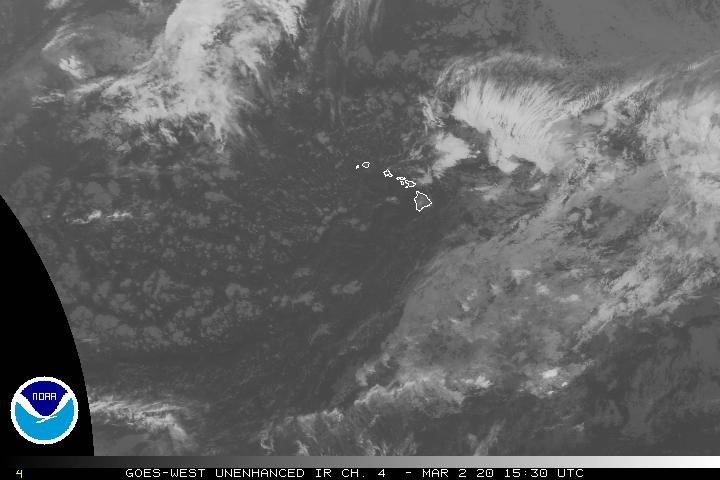
Satellite and Radar Images: To view the cloud conditions we have here in Hawaii, please use the following satellite links, starting off with this Infrared Satellite Image of the islands to see all the clouds around during the day and night. This next image is one that gives close images of the islands only during the daytime hours, and is referred to as a Close-up visible image. This next image shows a larger view of the Pacific…giving perspective to the wider ranging cloud patterns in the Pacific Ocean. Finally, here’s a Looping IR satellite image, making viewable the clouds around the islands 24 hours a day. To help you keep track of where any showers may be around the islands, here’s the latest animated radar image.
Hawaii’s Mountains – Here’s a link to the live webcam on the summit of near 14,000 foot Mauna Kea on the Big Island of Hawaii. The tallest peak on the island of Maui is the Haleakala Crater, which is near 10,000 feet in elevation. These two webcams are available during the daylight hours here in the islands…and when there’s a big moon rising just after sunset for an hour or two! Plus, during the nights and early mornings you will be able to see stars, and the sunrise too…depending upon weather conditions.
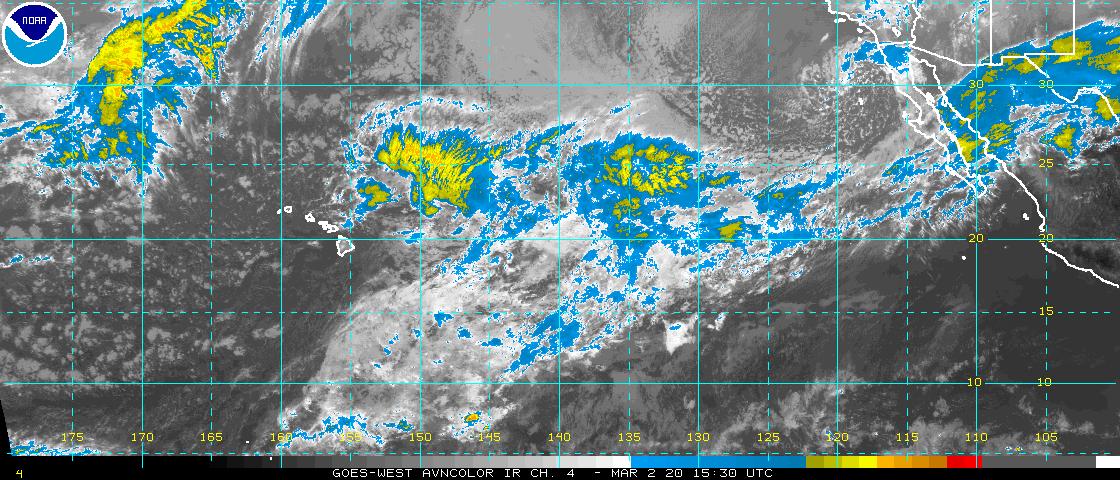
Tropical Cyclone activity in the eastern and central Pacific – Here’s the latest weather information coming out of the National Hurricane Center, covering the eastern north Pacific. You can find the latest tropical cyclone information for the central north Pacific (where Hawaii is located) by clicking on this link to the Central Pacific Hurricane Center. Here’s a tracking map covering both the eastern and central Pacific Ocean. A satellite image, which shows the entire ocean area between Hawaii and the Mexican coast…can be found here. Of course, as we know, our hurricane season won’t begin again until June 1st here in the central Pacific.
Aloha Paragraphs

Hawaiian Art
The steady trade winds continue to buffet the
Here’s the strongest gusts as of late Wednesday afternoon:
Kauai – 30 mph
Oahu – 35
Molokai – 33
Kahoolawe – 42
Maui – 39
Lanai – 09 – blocked from the strong trade winds
Big Island – 36
We’ll find showers falling along the windward sides at times…with dry conditions for the most part along our leeward sides. This more or less normal trade wind flow will remain in place through most of this week. This satellite image shows quite a few clouds upwind of the islands…bringing in those occasional showers noted above. Glancing down further to the south of the islands, in the deeper tropics, using this satellite picture, we see increased thunderstorm activity…to the southwest and southeast of our islands. The trough of low pressure to our south is pretty active now, in terms of towering cumulonimbus clouds (thunderstorms). The NWS office in Honolulu is giving one of these areas to the SSW a 10% of spinning up into something. Here’s a satellite image, with yellow circle showing where.
It’s Wednesday
evening as I begin writing this last section of today’s narrative update. Our trade winds will remain active for the time being. Tese winds will likely ease up a touch Friday into the weekend…although continue on into next week.
~~~ Somehow a small mouse got into my house three days ago, and I was going to ask my neighbor to borrow his humane mouse trap. This is one of those things that you can catch the mouse, and then let it go out a field someplace. Well, when I went down to get some water this morning, I heard this rustling in my trash container. The mouse had somehow got up the side, and I guess fell in! So, I heard this scampering around, where he/she/it trapped itself. I took the container down to Kihei with me yesterday morning, to let this lucky mouse go in the field there. I prefer this to the typical mouse traps.
~~~ The next episode of this mouse in the house story, is that it may have turned into a mouse in the car story! I brought the furry little creature down to Kihei as planned, and was going to give it back its freedom shortly after I came into the office, and got my first couple of products emailed out…here at the Pacific Disaster Center. I went out there to get the bag, and walked out into the nearby field, and lo and behold, the mouse had chewed a hole in this bag, and escaped into my car! So, I left my car doors opened all day, and will do that again on Wednesday. Come Thursday though, if he or she hasn’t had the good sense to jump out of my car, I’ll have to take more drastic measures. This will be to put a regular mouse trap into my car, baited with cheese or peanut butter, and hope that this mouse is long gone already. I’ll keep you abreast of this story until I find out one way or the other on Thursday.
~~~ I’ve seen no sign of my little mouse friend in the car. I’ve had a new thought today, and that is rather than to test to see if he as moved out of my car, with a regular trap on Thursday…I’ll simply put a little cheese on the floor of my car, and see if it’s gone at the end of the day. If it is gone, I’ll try opening my car doors for another day, and then I’ll be forced to put a mouse trap in there. Although, it just occurred to me that I could put the humane trap in the car on Friday, and catch it that way. I’m hoping however, that the little chunk of cheese will still be there at the end of the day, and I’ll figure that Mr. or Mrs. mouse has taken the hint to leave. Thursday will be the proving day, as either the cheese will be eaten, not good…or it will remain in place. I’ll let you know which way it goes later Thursday.
~~~ Here in Kihei, Maui, just before I leave for the routine drive back upcountry to Kula, it’s clear to partly cloudy. The winds here aren’t strong, and would qualify as light breezes at the moment. I’ll leave this notice of the Perseid Meteor Shower up, so we don’t forget to get out there Thursday night and look up. I know its hard to drag ourselves out of bed, even if may give us a chance to see some shooting stars…although I’m planning on doing it anyway. Anyway, I’m signing off for the night, and will catch up with you early Thursday morning with your next new weather narrative. I hope you have a great Wednesday night until then! Aloha…Glenn.
Extra: Perseid Meteor Shower information (new link provided Wednesday evening), best viewing the night of August 12th…into early Friday morning.
Interesting: If solar electricity or solar water heating isn’t in your cards right now, there are plenty of other ways to take advantage of the sun’s energy—for little or no money. One of the simplest is hanging your wet duds on a clothesline. It only takes just a couple more minutes of your time than throwing them in the dryer. Plus it’s a good excuse to get outside on a sunny day.
As long as you’re taking the time to smell the sun-warmed sheets, why not get dinner started too? With a solar oven you can cook a casserole, make a pot of rice and even bake some cookies-using only the power of the sun. You can make your own solar oven from low-cost materials or buy one already made.
If you’re wondering what to cook in that solar oven, how about some homegrown spuds from your own organic garden? Plants do a miraculous job of transforming the sun’s energy into nutritious, delicious food, and growing your own helps you slim down your carbon footprint.
Interesting2: Biochar is charcoal type created by the pyrolysis of biomass, and differs from ordinary charcoal only in the sense that its primary use is not for fuel, but for biosequestration or atmospheric carbon capture and storage. As much as 12 percent of the world’s human caused greenhouse gas emissions could be sustainably offset by producing biochar. That’s more than what could be offset if the same plants and materials were burned to generate energy, concludes a recent study published in the journal Nature Communications.
Biochar could sequester carbon in the soil for hundreds to thousands of years. Biochar is a high carbon, fine grained residue which today is produced through modern pyrolysis processes. Pyrolysis is the direct thermal decomposition of biomass in the absence of oxygen to obtain an array of solid (biochar), liquid (bio-oil) and gas (syngas) products. For their study, the researchers looked to the world’s sources of biomass that are not already being used by humans as food.
For example, they considered the world’s supply of corn leaves and stalks, rice husks, livestock manure and yard trimmings, to name a few. The researchers then calculated the carbon content of that biomass and how much of each source could be used for biochar production. With this information, a mathematical model was developed that could account for three possible scenarios. In one, the maximum possible amount of biochar was made by using all sustainably available biomass.
Another scenario involved a minimal amount of biomass being converted into biochar, while the third offered a middle course. The maximum scenario required significant changes to the way the entire planet manages biomass, while the minimal scenario limited biochar production to using biomass residues and wastes that are readily available with few changes to current practices.
The study found that the maximum scenario could offset up to the equivalent of 1.8 billion metric tons of carbon emissions annually and a total of 130 billion metric tons in the first 100 years. Avoided emissions include the greenhouse gases carbon dioxide, methane and nitrous oxide. The estimated annual maximum offset is 12 percent of the 15.4 billion metric tons of greenhouse gas emissions that human activity currently adds to the atmosphere each year.
Researchers also calculated that the minimal scenario could sequester just under 1 billion metric tons annually and 65 billion metric tons during the same period. Instead of making biochar, biomass can also be burned to produce bioenergy from heat. Researchers found that burning the same amount of biomass used in their maximum biochar scenario would offset 107 billion metric tons of carbon emissions during the first century. The bioenergy offset, while substantial, was 23 metric tons less than the offset from biochar.
However, the team also added that a flexible approach including the production of biochar in some areas and bioenergy in others would create optimal greenhouse gas offsets. Their study showed that biochar would be most beneficial if it were tilled into the planet’s poorest soils, such as those in the tropics and the Southeastern United States. Those soils, which have lost their ability to hold onto nutrients during thousands of years of weathering, would become more fertile with the extra water and nutrients the biochar would help retain.
Richer soils would increase the crop and biomass growth — and future biochar sources — in those areas. This is all new technology. Biochar has been found or used in the Amazonian soils. Pre-Columbian Amazonian natives are believed to have used biochar to enhance soil productivity and made it by smoldering agricultural waste. European settlers called it Terra Preta de Indio.
Biochar can be used to hypothetically sequester carbon. In the natural carbon cycle, plant matter decomposes rapidly after the plant dies, which emits CO2; the overall natural cycle is carbon neutral. Instead of allowing the plant matter to decompose, pyrolysis can be used to sequester some of the carbon in a much more stable form. Biochar thus removes circulating CO2 from the atmosphere and stores it in a stable soil form, making it a carbon-negative process. There is still much to learn about this process which shows so much potential.
Interesting3: The Gondwana supercontinent underwent a 60-degree rotation across Earth’s surface during the Early Cambrian period, according to new evidence uncovered by a team of Yale University geologists. Gondwana made up the southern half of Pangaea, the giant supercontinent that constituted the Earth’s landmass before it broke up into the separate continents we see today.
The study, which appears in the August issue of the journal Geology, has implications for the environmental conditions that existed at a crucial period in Earth’s evolutionary history called the Cambrian explosion, when most of the major groups of complex animals rapidly appeared. The team studied the paleomagnetic record of the Amadeus Basin in central Australia, which was part of the Gondwana precursor supercontinent.
Based on the directions of the ancient rock’s magnetization, they discovered that the entire Gondwana landmass underwent a rapid 60-degree rotational shift, with some regions attaining a speed of at least 16 (+12/-8) cm/year, about 525 million years ago. By comparison, the fastest shifts we see today are at speeds of about four cm/year. This was the first large-scale rotation that Gondwana underwent after forming, said Ross Mitchell, a Yale graduate student and author of the study.
The shift could either be the result of plate tectonics (the individual motion of continental plates with respect to one another) or "true polar wander," in which the Earth’s solid land mass (down to the liquid outer core almost 3,000 km deep) rotates together with respect to the planet’s rotational axis, changing the location of the geographic poles, Mitchell said.
The debate about the role of true polar wander versus plate tectonics in defining the motions of Earth’s continents has been going on in the scientific community for decades, as more and more evidence is gathered, Mitchell said. In this case, Mitchell and his team suggest that the rates of Gondwana’s motion exceed those of "normal" plate tectonics as derived from the record of the past few hundred million years.
"If true polar wander caused the shift, that makes sense. If the shift was due to plate tectonics, we’d have to come up with some pretty novel explanations." Whatever the cause, the massive shift had some major consequences. As a result of the rotation, the area that is now Brazil would have rapidly moved from close to the southern pole toward the tropics. Such large movements of landmass would have affected environmental factors such as carbon concentrations and ocean levels, Mitchell said.
"There were dramatic environmental changes taking place during the Early Cambrian, right at the same time as Gondwana was undergoing this massive shift," he said. "Apart from our understanding of plate tectonics and true polar wander, this could have had huge implications for the Cambrian explosion of animal life at that time."
Interesting4: Ice can exist on the equator, so long as it’s at a high elevation. The Indonesian mountain ridge, which rises to 16,000 feet on the island of New Guinea, supports the presence of such an ice field. According to a study by researchers from Ohio State University, that tropical ice field can disappear within a few years.
Their studies also offer clues of the El Nino weather phenomenon that dominates climate variability in the tropics. The research team was also aided by the Freeport-McMoRan mining company, Indonesian government agencies, and Columbia University. The work involved drilling three ice cores, two of which went all the way to bedrock.
The longest ice core was 32 meters long (105 feet). These cores are much smaller than those drilled in Greenland or Antarctic ice which can be as long as 1.5 miles! This is because the ice fields in Indonesia are much smaller and are rapidly shrinking. They cover an area of less than one square mile.
This is similar to other equatorial ice fields such as those in the Peruvian Andes and Mount Kilimanjaro of Africa. However, according to senior Ohio State glaciologist, Lonnie Thompson, even a small ice core can yield an extraordinary amount of information. For example, Thompson drilled out a 50 meter ice core from Mount Kilimanjaro which contained 11,700 years of climate history.
The main purpose of the scientific expedition was to better understand the El Nino Southern Oscillation (ENSO) which occurs in the tropical Pacific Ocean. El Nino climate pattern that cycles every five years on average. It is characterized by variations in ocean surface temperature. El Nino represents a warming of surface temperatures, and La Nino stands for a cooling of temperatures.
This weather phenomenon can cause extreme weather in many regions of the world. Due to its complicated nature, it is still not fully comprehended. The researchers believe that information from ice cores will offer new insight to better understand El Nino. Last year, Thompson’s team drilled ice cores in the Peruvian Andes which yielded 500 years of climate history.
This complements a previous ice core from that region which yielded a 19,000 year-record. The recent ice cores drilled in Indonesia are from the opposite side of the Pacific, almost exactly due west. The Indonesian ice expedition was a harrowing adventure, and came close to complete disaster several times. First of all, the site is extremely remote. The weather was treacherous, with constant rain storms and exposure to lightning strikes.
The ice core drills were missing from the equipment delivered to the site, only to be found later in a warehouse in Jakarta. Then near the end, native tribe members attempted (unsuccessfully) to steal the ice cores from the freezer facility. The local tribes’ religion states that they are one with nature, and by extension, the ice.
If the ice were to disappear, then part of their soul would be lost. In the end, the researchers negotiated with the natives who allowed them to take the ice back to Ohio. They explained that the ice cores were important for studying climate patterns and global warming which threatened their mountain ice.
Now, the cores are held safely at the University of Ohio and are being studied for clues. Hopefully, the results will be worthy of the expense and hardships involved in producing them!
Interesting5: A vast flotilla of small, virtually undetectable jellyfish have stung hundreds of people on Spanish beaches this week – a swimmer’s nightmare that biologists say will become increasingly common due to climate change and overfishing. The blobs attacked three areas near the eastern city of Elche along a famed stretch of white sand beaches known as the Costa Blanca. On Tuesday alone, 380 people were stung, compared to the usual four or five swimmers a day, said Juan Carlos Castellanos of the Elche city tourism department.
There was no sign of the jellyfish yesterday but since Sunday at least 700 people have been stung. "In the five or six years I have been in this job, I have never seen anything like this," Mr Castellanos said. The beaches were never closed but officials put up warning signs and stationed lookout boats offshore.
The tourism official blamed strong currents for sweeping the jellyfish onto the beaches and then calm seas for letting them hang around for three days. Particularly warm waters – which jellyfish like – also helped boost their numbers during Spain’s key summer tourism season. One problem was these jellyfish were small and almost transparent were not readily visible and thinly spread out over five kilometers of coastline.
"The swimmers could probably not even see them," Mr Castellanos added. Far to the north, a much more menacing species looms – the Portuguese Man-of-War, a floating, violet-coloured sack with metres-long tentacles. They have stung more than 300 people over the past three weeks in Atlantic waters off Spain’s northern coasts of Cantabria and the Basque region, officials said.
Spanish marine biologists say, in general, they are seeing fewer jellyfish this summer than in other years. In the Catalonia region and the Balearic islands – both hugely popular with British and German tourists – officials said this summer has been relatively quiet on the jellyfish front. But scientists and Spanish beachgoers are going to have to get used to higher concentrations of jellyfish. Normally, jellyfish are kept from getting close to the shore by a natural barrier of less-salty water formed with runoff from summer rains.
But with rain more scant because of global warming, this protective cushion is weaker, said Jose Maria Gili, a jellyfish specialist at the Institute of Marine Sciences in Barcelona. Another problem is overfishing, which depletes stocks of tuna, swordfish and other species that are natural predators of jellyfish. And fewer fish means fewer competitors for tiny plankton that jellyfish feed on, allowing the latter to flourish, Mr Gili says.
 Email Glenn James: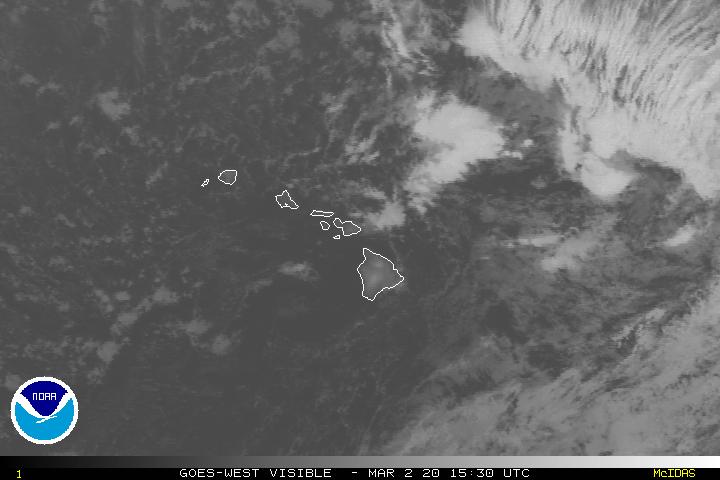



Steven Says:
Glenn; I read your previous piece about La Nina. I am curious as to how windsurfing weather could be affected.
SH~~~Steven, likely more cold front pushing through the state during an La Nino winter, with more south to southwest winds ahead of these fronts, and more north winds blowing in behind them. Aloha, Glenn
Fay Hovey Says:
Aloha Glenn, wondered if anyone else besides my neighbor and
I report a very sudden and strange gust of wind on Monday early afternoon. Just picked up a lot of stuff I had – lawn chairs, canopy and hurled it along with a patio umbrella
—-some distance and rushed through the house – and blew
papers and files everywhere. Took some shingles off the roof.
My neighbors sturdy sliding screen door was completely
blown out when he got home and other items thrashed around.
Wondered if you’d heard anything. I heard a loud sudden
whoosh and it blew hard against the house and ran out to
see everything flyin’ and it lasted no more than 90 seconds
– came out of the south west.
thanks, Fay might have been in the paper but haven’t seen the paper for Tuesday.~~~Fay, no one else has reported this unusual weather condition to me. I don’t read the newspaper generally, so don’t know if it was in the paper or not. I’ve heard in the past of such brief strong winds, from other folks. Sorry you had the damage, hopefully it won’t be expensive to fix. Thanks for letting us know! Aloha, Glenn
Alan McKillop Says:
My forecast of what you’ll find on the mouse is that it took off to the Southwest, helped by the trades, at between 10 to 20 mph.~~~Alan, I would be delighted with that escape route, lets hope that that is the case! Aloha, Glenn
Steven Says:
Hey Glenn,
Why don’t you get a cat! Just kidding.
Seriously, are you going to follow up on the El Nino, El Nina news?
SH~~~Tough to make the two cats where I live, stay in the car. Anyway, the news you may be looking for is about La Nina, which hopefully will give us a wetter than normal winter. I just wrote a piece about that a couple of days ago, more coming as we get into the autumn season. Aloha, Glenn