











May 24-25, 2010
Air Temperatures – The following maximum temperatures were recorded across the state of Hawaii Monday afternoon:
Lihue, Kauai – 83
Honolulu, Oahu – 86
Kaneohe, Oahu – 80
Kaunakakai, Molokai – 83
Kahului, Maui – 86
Hilo, Hawaii – 84
Kailua-kona – 83
Air Temperatures ranged between these warmest and coolest spots near sea level around the state – and on the highest mountains…at 5pm Monday evening:
Barking Sands, Kauai – 86F
Princeville, Kauai – 73
Haleakala Crater – 45 (near 10,000 feet on Maui)
Mauna Kea summit – 37 (near 14,000 feet on the Big Island)
Precipitation Totals – The following numbers represent the largest precipitation totals (inches) during the last 24 hours on each of the major islands, as of Monday afternoon:
0.21 Kilohana, Kauai
0.72 South Fork Kaukonahua, Oahu
0.01 Molokai
0.00 Lanai
0.00 Kahoolawe
0.60 West Wailuaiki, Maui
0.85 Glenwood, Big Island
Marine Winds – Here’s the latest (automatically updated) weather map showing a 1030 millibar high pressure system to our north…with elongated ridges of high pressure extending from its center southeast and southwest of our islands. The trade winds will remain locally blustery Tuesday…somewhat lighter Wednesday.
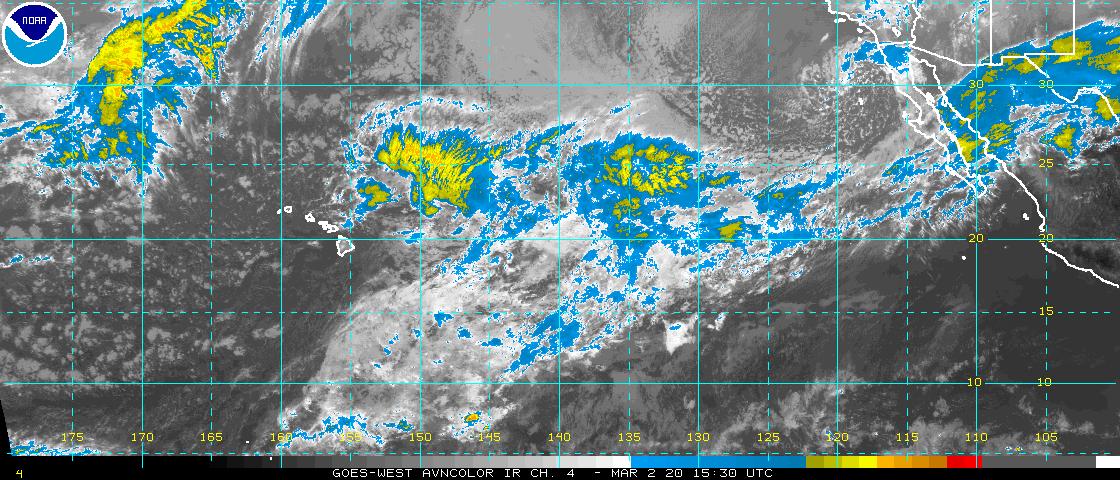
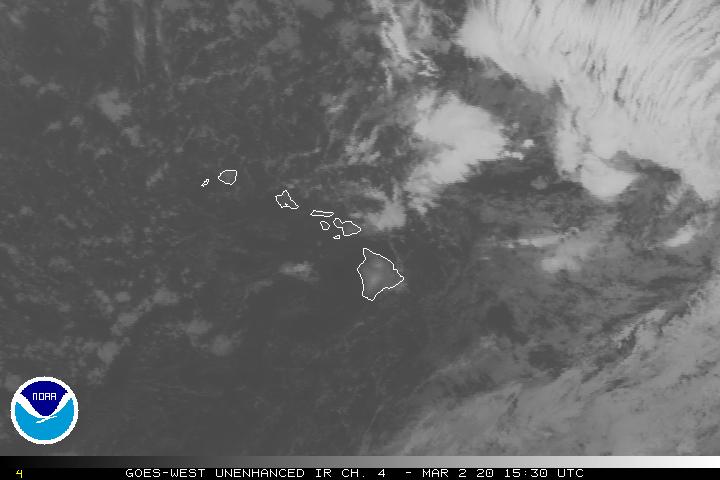
Satellite and Radar Images: To view the cloud conditions we have here in Hawaii, please use the following satellite links, starting off with this Infrared Satellite Image of the islands to see all the clouds around the state during the day and night. This next image is one that gives close images of the islands only during the daytime hours, and is referred to as a Close-up visible image. This next image shows a larger view of the Pacific…giving perspective to the wider ranging cloud patterns in the Pacific Ocean. Finally, here’s a Looping IR satellite image, making viewable the clouds around the islands 24 hours a day. To help you keep track of where any showers may be around the islands, here’s the latest animated radar image.
Hawaii’s Mountains – Here’s a link to the live webcam on the summit of near 14,000 foot Mauna Kea on the Big Island of Hawaii. The tallest peak on the island of Maui is the Haleakala Crater, which is near 10,000 feet in elevation. These two webcams are available during the daylight hours here in the islands…and when there’s a big moon rising just after sunset for an hour or two! Plus, during the nights and early mornings you will be able to see stars, and the sunrise too…depending upon weather conditions.
Tropical Cyclone activity in the eastern and central Pacific – Here’s the latest weather information coming out of the National Hurricane Center, covering the eastern north Pacific. You can find the latest tropical cyclone information for the central north Pacific (where Hawaii is located) by clicking on this link to the Central Pacific Hurricane Center. Here’s a tracking map covering both the eastern and central Pacific Ocean. A satellite image, which shows the entire ocean area between Hawaii and the Mexican coast…can be found here. Of course, as we know, our hurricane season won’t begin again until June 1st here in the central Pacific.
Aloha Paragraphs

Double Rainbow…Hawaii
The active trade winds will prevail through the first couple of days of this new work week, then gradually weaken for several days…before rebounding by the weekend. Checking out this weather map, we see a weaker trade wind producing high pressure system located to the north of the islands…weighing-in at a reduced 1029 millibars Monday night. The small craft wind advisory flags are still active across all the major channels from Kauai down through the
Showers carried our way on the trade winds will fall along the windward sides at times, stretching over to the leeward sides locally. A trough of low pressure is near the islands Monday night, and isn’t expected to depart for some time. This trough is destabilizing our atmosphere to some degree, making the incoming clouds more shower prone along our windward sides at times…depending upon moisture availability that is. As the trade winds are so strong now, we could see a few showers being carried over into the leeward sides on the smaller islands too. Monday evening, using this IR satellite image, we see the next cloud band getting ready to bring showers to the windward sides. As we can see, the leeward sides are almost completely cloud free. Shifting over to this looping radar image, we can see the leading edge of these showery clouds approaching the windward sides.
It’s Monday evening as I begin writing this last section of today’s narrative. The trade winds will remain blustery. To get an idea how strong they are, here were the top gusts early Monday evening on each of the islands:
Kauai – 31 mph
Oahu – 42
Molokai – 35
Lanai – 04 – blocked from the strong trade winds
Kahoolawe – 42
Maui – 45
Big Island – 39
Our local winds remain locally strong and gusty, with many of our windiest coastal locations topping 40 mph in gusts during the day Monday. We see some clouds upstream of the islands, which as they move under the influence of the upper trough of low pressre, should show some enhancement in the moisture falling from them. The looping satellite image, up this page, will show the nature of these showers as they arrive. Otherwise, just the stiff trade winds continuing on into Tuesday and Wednesday, then slowing down some Thursday and Friday. At this point, the very dry leeward sides have the best chance of finding some much needed showers arriving during the afternoon hours starting Thursday. As the trades surge again over the weekend, those showers will come back around to the windward sides again. ~~~ Just before leaving Kihei, Maui for the drive back upcountry to Kula, it looks like clear to partly cloudy conditions prevail…although showers are present again along those windward sides. Again, I expect these windward sides of the islands to remain showery again overnight into the morning. I’ll catch up with you again early Tuesday morning, with your next new weather narrative from paradise. Aloha for now…Glenn.
Interesting: Grazing lands represent one of the largest land resources in the world, yet their role as net sinks or sources of greenhouse gases is essentially unknown. Previous research has emphasized the role of grazing management on the sequestration of atmospheric carbon dioxide as soil organic carbon. However, there is a lack of information regarding how grazing management impacts the flux of two potent GHGs, nitrous oxide and methane.
A team of scientists lead by Mark Liebig at the USDA-ARS Northern Great Plains Research Laboratory estimated net global warming potential for three grazing management systems located in central North Dakota. The grazing management systems represented two native vegetation pastures under medium and high grazing pasture management, and a heavily grazed seeded crested wheatgrass pasture receiving supplemental nitrogen.
The results indicate that grazing lands are strong sinks of soil organic carbon and minor sinks of methane, but small to moderate sources of nitrous oxide. Results from the study were published in the May-June 2010 issue of Journal of Environmental Quality, published by the America Society of Agronomy, the Crop Science Society of America, and the Soil Science Society of America.
Net global warming potential for the native grasslands was negative, implying an overall removal of greenhouse gases from the atmosphere. This finding underscores the value of grazed, mixed-grass prairie as a viable agro-ecosystem to serve as a net greenhouse gas sink in the northern Great Plains. Conversely, the seeded forage nitrous oxide emissions were nearly three times that of the native grasses, which contributed a net positive net global warming potential, implying net greenhouse gas emission to the atmosphere.
The research team was able to estimate global warming potential for each management practice by measuring changes in soil organic carbon, and nitrous oxide and methane flux. This data was combined with estimates for methane emissions from cattle and carbon dioxide emissions associated with applying nitrogen fertilizer.
"It’s important to keep in mind the greenhouse gas balance we measured for the grazing treatments falls short of encompassing the full life-cycle of a steer," said Mark Liebig. "While our results suggest grazed native vegetation in the northern Great Plains is a net GHG sink, we need to acknowledge there is additional greenhouse gas emissions associated with cattle production outside of what we measured or estimated."
Interesting2: BP sharply reduced its estimate on Monday of how much oil it is siphoning off each day from a ruptured well in the Gulf of Mexico that has been spewing oil for a month and threatening ecological disaster. The British-based energy giant said the oil captured on average by a mile-long siphon tube was 2,010 barrels (84,420 gallons) per day in the six days before May 23, less than half the up to 5,000 barrels (210,000 gallons) per day the company estimated it had been capturing. At times the capture was as low as 1,360 barrels per day (57,120 gallons).
The oil group believes about 5,000 barrels have been leaking every day, although some experts have given significantly higher estimates for the size of the leak. The lower estimate came as two members of U.S. President Barack Obama’s Cabinet were to visit the fouled Gulf Coast on Monday to keep pressure on BP in hopes of averting a looming environmental catastrophe. The Obama administration warned the company on Sunday that it would be removed from efforts to seal the well if it is not seen as doing enough.
But it acknowledged that only the company and the oil industry have the know-how to stop the leak. BP is readying new measures to try to stop the gushing torrent of oil that began after an April 20 explosion sank the Deepwater Horizon rig, killing 11 workers. BP shares have taken a beating in the markets since the accident. On Monday its share price fell 1.9 pct, with sentiment hit by renewed pressure from the Obama administration. But today’s news on the bill and the amount of oil the company is siphoning off remains within existing estimates. The market looks squarely focused on BP’s effort in the next few days to plug the well completely.
"We had the initial euphoria on Thursday that it was doing 5,000 (barrels) and then they revised down the numbers and there was a bit of concern about exactly how much crude was coming out. I think the market was very much aware of this one," said Panmure Gordon analyst Peter Hitchens. "Really what everyone’s waiting for is the top kill operation which should be coming up in the next couple of days hopefully. Touch wood. That really is the key: whether they can actually kill off this well."
Interesting3: A major earthquake, similar to what devastated Chile and Haiti, has more than a one-in-three chance of striking the U.S. Pacific Northwest within the next 50 years, scientists say. Earlier estimates put the chance of such quakes at just once every 500 years. But new analyses by Oregon State University marine geologist Chris Goldfinger and his colleagues have revealed a more complex picture of the Cascadia Subduction zone, where the ocean floor steadily slips below the North American Plate – and where the region’s earthquakes originate.
They found that Cascadia represents at least four separate segments, rather than one big subduction zone. Mega-quakes of magnitude-9 or greater occur less frequently in the northern segment and can rupture the entire fault, even as magnitude-8 earthquakes strike more often in the southern segment. "It is not a question of if a major earthquake will strike, it is a matter of when," Goldfinger said, "And the ‘when’ is looking like it may not be that far in the future."
A magnitude-9 earthquake that struck the Cascadia region could rip apart highways, collapse bridges and even crumble buildings. A quake epicenter just offshore might give coastal residents as little as 15 minutes warning time before a tsunami swept ashore. That sense of urgency has compelled engineers and scientists to explore different ways of evacuating low-lying areas, including the construction of high-rise, tsunami-resistant facilities. Rolling the dice, the southern end of the fault running from Newport, Ore., to northern California has a 37-percent chance of triggering a major earthquake in the next half century.
An even more devastating mega-quake has a 10 to 15 percent chance of hitting the northern segment, which stretches from Seaside, Ore., to Vancouver Island in British Columbia. Those revised estimates are based on the historical record, which shows that magnitude-8.2 or higher earthquakes took place 41 times in the Northwest during the past 10,000 years. "At the southern end of the fault, the earthquakes tend to be a bit smaller, but more frequent," Goldfinger noted.
"These are still magnitude-8 or greater events, which is similar to what took place in Chile, so the potential for damage is quite real." As if following the motto that misery enjoys company, the northern segment may also experience earthquakes in clusters. A thousand years could pass without major incident, before a cluster of earthquakes strikes every 250 years or so, researchers found. Still, scientists remain undecided about whether that segment of the subduction zone does experience clusters of quakes. That uncertainty adds an additional element of danger to the quake risk estimates.
The historical record for earthquakes comes from coarse sediments, called turbidites, which stream down from the continental margins into undersea canyons during ground-shaking from temblors. Those stand out from the finer particles that normally build up between major earthquakes. Goldfinger and his colleagues used carbon-14 analysis and other methods to date the particles and pin down estimates of when major earthquakes took place. That allowed them to recreate a 10,000-year geological record of earthquakes in the Northwest.
Lower sea levels that existed beyond 10,000 years ago meant West Coast rivers regularly dumped storm debris into the offshore canyons, which made it difficult to distinguish the earthquake turbidites. The last major earthquake to shake the Cascadia Subduction Zone took place in January of 1700.
That event unleashed a 30-foot tsunami that struck Japan, and so scientists knew of the impact from historical records of the damage. More indirect evidence came from huge physical changes in the coastlines of Oregon and Washington – a sobering reminder of what U.S. residents could face again sooner than later, just as in Chile and Haiti, the researchers say.
Interesting4: A diet with nuts, including pistachios, significantly lowered total and LDL-cholesterol levels, in addition to triglycerides, a new study found. The finding, published earlier this month in the Archives of Internal Medicine, confirms other evidence that nuts can help reduce the risk of cardiovascular disease, researchers said.
The report was authored by Joan Sabaté of Loma Linda University’s School of Public Health, and the research was funded by the International Tree Nut Council Nutrition Research & Education Foundation. "Enjoying a handful or two of in-shell pistachios may provide significant heart health benefits," said Martin Yadrick, past-president of the American Dietetic Association.
"They are known to also improve blood vessel function, blood sugar control, act as potent antioxidant and offer weight management benefits, all of which are important for improving heart health." The study, published in Archives of Internal Medicine, involved a review of research conducted in seven counties and involved 600 subjects and 25 clinical trials. It is said to be the most comprehensive study of its kind. The analysis included data from 583 men and women, aged 19 to 86 years old.
Among the studies, nut consumption ranged from less than one ounce to 4.75 ounces per day. The average daily intake for the meta-analysis was 67 grams per day or 2.4 ounces. The results found that when 67 grams of nuts were consumed, triglycerides were reduced by 10.2 percent among those with high triglyceride levels at the onset of the study; and total and LDL-cholesterol were lowered by 5.1 percent and 7.4 percent, respectively.
Individuals with higher baseline LDL-cholesterol levels also experienced a greater reduction in total and LDL-cholesterol levels compared to those with normal baseline LDL levels. Subjects following a typical Western-diet also experienced a greater reduction in total and LDL-cholesterol levels (-7.4 percent and – 9.6 percent, respectively) compared to a low-fat (-4.1 percent and -6.0 percent, respectively) or a Mediterranean diet (-4.1 percent and -6.0 percent, respectively).
 Email Glenn James: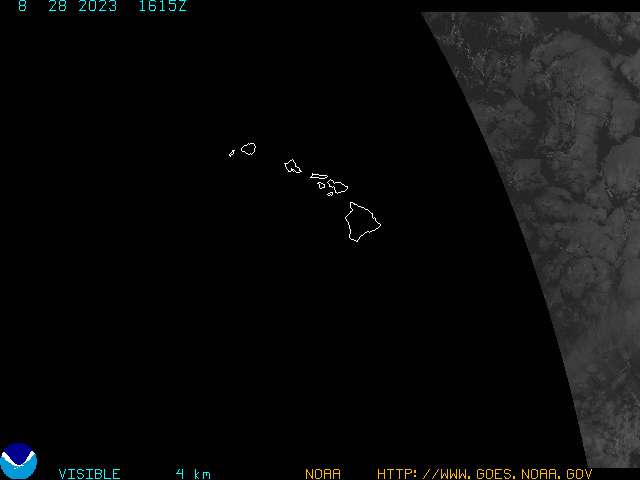


peter Says:
Perhaps there is a difference in ion content as well as moisture??~~~Hi Peter, nice question, anyone have a good answer, other than the fact that ions are part of the moisture? Aloha, Glenn.
Mike Says:
Glenn;
Why is it that here in northern Arizona in the spring the winds drive me crazy, but when in Maui and the trades are blowing, even sometimes harder than normal, it never bothers me. Must be the difference in a nice place and paradise!~~~Hi Mike, good question, and perhaps best answered by suggesting that Arizona isn’t surrounded by a nice warm ocean…and palm trees rather than cactus. Aloha, Glenn