











March 9-10, 2010
Air Temperatures – The following maximum temperatures were recorded across the state of Hawaii Tuesday afternoon:
Lihue, Kauai – 76
Honolulu, Oahu – 81
Kaneohe, Oahu – 78
Kaunakakai, Molokai – 79
Kahului, Maui – 79
Hilo, Hawaii – 78
Kailua-kona – 81
Air Temperatures ranged between these warmest and coolest spots near sea level around the state – and on the highest mountains…at 4pm Tuesday afternoon:
Barking Sands, Kauai – 81F
Hilo, Hawaii – 73
Haleakala Crater – 37 (near 10,000 feet on Maui)
Mauna Kea summit – 28 (near 14,000 feet on the Big Island)
Precipitation Totals – The following numbers represent the largest precipitation totals (inches) during the last 24 hours on each of the major islands, as of Tuesday afternoon:
0.87 Mount Waialaele, Kauai
0.41 Oahu Forest NWR, Oahu
0.20 Molokai
0.18 Lanai
0.00 Kahoolawe
0.83 Puu Kukui, Maui
0.69 Kawainui Stream, Big Island
Marine Winds – Here’s the latest (automatically updated) weather map showing high pressure systems to the north through northeast of Hawaii. The winds will be strong and gusty…gradually veering around to the ENE and east.
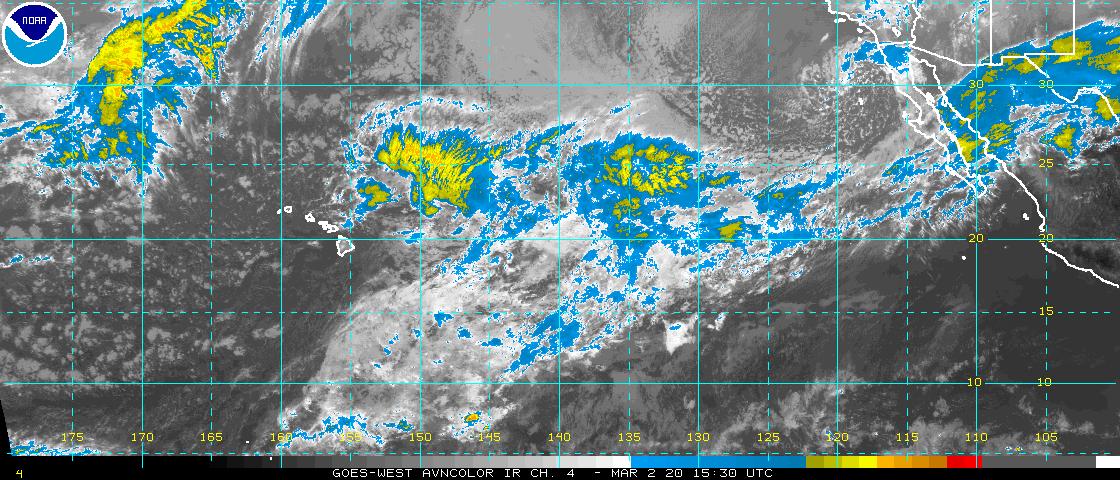
Satellite and Radar Images: To view the cloud conditions we have here in Hawaii, please use the following satellite links, starting off with this Infrared Satellite Image of the islands to see all the clouds around the state during the day and night. This next image is one that gives close images of the islands only during the daytime hours, and is referred to as a Close-up visible image. This next image shows a larger view of the Pacific…giving perspective to the wider ranging cloud patterns in the Pacific Ocean. Finally, here’s a Looping IR satellite image, making viewable the clouds around the islands 24 hours a day. To help you keep track of where any showers may be around the islands, here’s the latest animated radar image.
Hawaii’s Mountains – Here’s a link to the live webcam on the summit of near 14,000 foot Mauna Kea on the Big Island of Hawaii. The tallest peak on the island of Maui is the Haleakala Crater, which is near 10,000 feet in elevation. These two webcams are available during the daylight hours here in the islands…and when there’s a big moon rising just after sunset for an hour or two! Plus, during the nights and early mornings you will be able to see stars, and the sunrise too…depending upon weather conditions.
Tropical Cyclone activity in the eastern and central Pacific – Here’s the latest weather information coming out of the National Hurricane Center, covering the eastern north Pacific. You can find the latest tropical cyclone information for the central north Pacific (where Hawaii is located) by clicking on this link to the Central Pacific Hurricane Center. Here’s a tracking map covering both the eastern and central Pacific Ocean. A satellite image, which shows the entire ocean area between Hawaii and the Mexican coast…can be found here.
Aloha Paragraphs

Windy weather continues
The unusually strong and gusty trade winds remain our main focus…which will carry showers to our windward sides this evening into Wednesday morning. Wind directions have been out of the northeast, although will be gradually becoming east-northeast to east over the next day or two. The winds have been strong enough, that wind chill has made it still feel somewhat chilly. This weather map shows high pressure systems strung out along the area north through northeast…pumping out these blustery winds.
These winds have prompted the NWS forecast office in
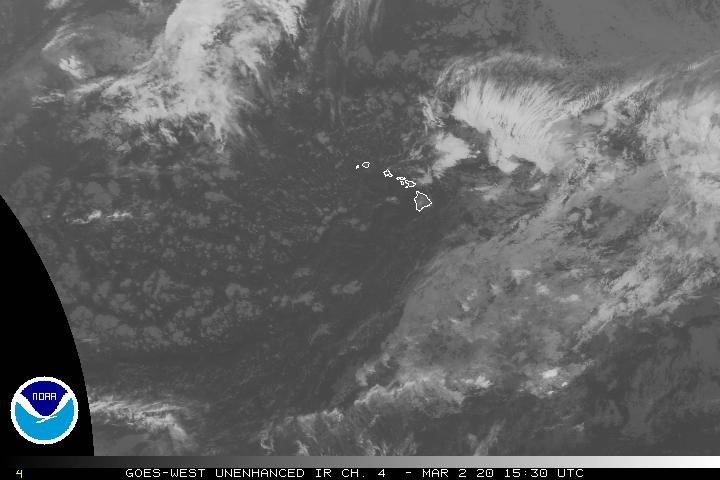
We can still see the trough of low pressure over to the east of the islands…although it is now almost gone. Here’s a satellite image showing that area of diminished clouds. This fading upper level trough, has moved far enough away now, to have lost its influence over our area. An upper level ridge moving over the state now, which will put an end to the threat of heavy showers. An area of clouds however, will bring some showers overnight into Wednesday morning. The GFS computer model continues to show a cold front reaching the islands this Sunday, with showers extending into Monday, followed by what else…but more cool blustery north to northeast winds!
As noted in the paragraphs above, we have locally strong and gusty winds blowing. They have been able to funnel through valley’s, bringing gusty winds into some leeward areas. Tuesday evening still finds Gale Warnings placed in the Alenuihaha Channel between Maui and the Big Island, and in the Pailolo Channel…between Maui and Molokai. Small Craft Wind Advisories are active across all of Hawaii’s coastal waters too. Meanwhile, those windiest locations around the state, now have a Wind Advisory for sustained winds of 30 mph, with higher gusts locally to near 50 mph or above. While we’re listing all these things, we shouldn’t forget the high surf advisories for all the east facing beaches across the state…caused by the strong winds blowing over the ocean.
It’s Tuesday evening, as I begin writing this last section of today’s narrative. The trade winds are really cranking now, definitely as strong as they were at the beginning of last week…almost a perfect match in fact. Just to nail down this fact, here’s the strongest gusts again, this time at around 5pm Tuesday evening – 42 mph on Kauai; 44 mph on Oahu; 38 mph on Molokai; 46 mph on Lanai; 50 Kahoolawe; 48 mph on Maui; and 55.3 mph at Kawaihae on the Big Island. These are big numbers, especially that 55 mph observation on the Big Island! As the winds turn more easterly, there will be an island blocking effect, calming the winds down in some areas. Plus, as we move past Wednesday, the winds will slow down further, due to the weakening of our high pressure systems to the north. ~~~ I’m just about ready to leave Kihei, for the drive back upcountry to Kula, Maui. Looking out the window here before I leave, it’s still breezy outside, although not so bad as it was earlier. At one point, when I left to go to lunch, I honestly had a bit of a hard time pushing the door open…with the gusty winds pushing in from the other side! I anticipate another blustery day Wednesday, and will be back early in the morning to discuss the new details about that then. I hope you have a great Tuesday night until then! Aloha for now…Glenn.
Extra: This link is for sunrise and sunset times here in Hawaii…please bookmark
Interesting: A string of earthquakes hitting Haiti, Chile and as recently as Turkey this year have fueled the speculation that the "clustering" of temblors may signal the Earth is entering a new period of earthquake cycle, but whether the theory stands is still an issue of debate within the science community. Stephen S. Gao, a geophysics professor at Missouri University of Science and Technology in the United States, is one of the scientists who argued that the Earth has been witnessing increased activity.
"It is clear that the Earth is significantly more active over the past 15 years than the 20 years before," he told Xinhua in a recent interview. Gao’s statement is based on the study of the so-called "moment release," a measure of the product of the area ruptured by an earthquake and the displacement between the two sides of the fault.
His calculation shows that the moment release per year between 1995 and 2010 is about four times as large as that between 1975 and 1994. Even when the 2004 Sumatra earthquake in Indonesia and its large aftershocks and this year’s 8.8-magnitude earthquake in Chile are not counted, the moment release over the past 15 years is still twice as large as that of the previous two decades.
Gao believed that the increased activity could simply be natural fluctuations of the stress field in the Earth’s lithosphere, or the outer solid part. "We do not have a long-enough record of instrumentally determined earthquakes to determine if this is true or not for a longer period," noted the geophysicist.
"Although we are still trying to come up with some explanations for the higher activity over the past 15 years, I do not think global warming or human activities have much to do with it," he added. According to a recent report by the newspaper USA Today, Marcia McNutt, director of the U.S. Geological Survey (USGS), said that global earthquakes in recent years, starting with the 9.1- magnitude one in Indonesia in 2004, follow a 50-year cycle of earthquake activity.
The last cycle, in the 1960s, produced two mega-quakes with a magnitude-9.5 earthquake in Chile and a magnitude-9.2 one in Alaska. The one in Chile in 1960 is the largest earthquake ever instrumentally recorded. Other scientists in the United States, however, are not as convinced that a new spike of major earthquakes is emerging.
Statistics by the USGS indicated that seven out of the 15 largest earthquakes since 1900 occurred in the period between 1950 and 1964, with four quakes on the top 15 list happening after the end of 2004 including the 8.8-magnitude one in Chile this year. However, when a larger pool of earthquakes with magnitude 8.0 or above are considered, the pattern of the "clustering" or " grouping" of large quakes becomes much less apparent, said Jian Lin, a geologist at the Woods Hole Oceanographic Institution.
Whether recent earthquakes are part of a new phase of long-term cycle is subject to ongoing research, he told Xinhua. "The answer to the question will also depend on how large the earthquakes one would like to consider in a statistical study," Lin said. Dr. Chris Goldfinger, a marine geologist at Oregon State University, also cautioned that scientists should not rush to conclusions.
A global "clustering" of big earthquakes is very difficult to test, as "our history for most faults is not long enough," said Goldfinger, director of the university’s Active Tectonics and Seafloor Mapping Laboratory. It’s not impossible that there could be such "clustering," as earthquakes may trigger other earthquakes through transfer of stress in the crust and could result in a peak in earthquake activity, the scientists said. "Overall though, a general increase in earthquake frequency isn’t something that would be very likely without some tectonic explanation, I know of no such mechanism," he told Xinhua.
Interesting2: U.S. researchers estimate that an 18 percent tax on pizza and soda can push down U.S. adults’ calorie intake enough to lower their average weight by 5 pounds (2 kg) per year. Health The researchers, writing in the journal Archives of Internal Medicine on Monday, suggested taxing could be used as a weapon in the fight against obesity, which costs the United States an estimated $147 billion a year in health costs.
"While such policies will not solve the obesity epidemic in its entirety and may face considerable opposition from food manufacturers and sellers, they could prove an important strategy to address overconsumption, help reduce energy intake and potentially aid in weight loss and reduced rates of diabetes among U.S. adults," wrote the team led by Kiyah Duffey of the University of North Carolina at Chapel Hill.
With two-thirds of Americans either overweight or obese, policymakers are increasingly looking at taxing as a way to address obesity on a population level. California and Philadelphia have introduced legislation to tax soft drinks to try to limit consumption. CDC director Dr. Thomas Frieden supports taxes on soft drinks, as does the American Heart Association.
There are early signs that such a policy works. Duffey’s team analyzed the diets and health of 5,115 young adults aged age 18 to 30 from 1985 to 2006. They compared data on food prices during the same time. Over a 20-year period, a 10 percent increase in cost was linked with a 7 percent decrease in the amount of calories consumed from soda and a 12 percent decrease in calories consumed from pizza.
The team estimates that an 18 percent tax on these foods could cut daily intake by 56 calories per person, resulting in a weight loss of 5 pounds (2 kg) per person per year. "Our findings suggest that national, state or local policies to alter the price of less healthful foods and beverages may be one possible mechanism for steering U.S. adults toward a more healthful diet," Duffey and colleagues wrote.
In a commentary, Drs. Mitchell Katz and Rajiv Bhatia of the San Francisco Department of Public Health said taxes are an appropriate way to correct a market that favors unhealthy food choices over healthier options. They argued that the U.S. government should carefully consider food subsidies that contribute to the problem.
"Sadly, we are currently subsidizing the wrong things including the product of corn, which makes the corn syrup in sweetened beverages so inexpensive," they wrote. Instead, they argued that agricultural subsidies should be used to make healthful foods such as locally grown vegetables, fruits and whole grains less expensive.
Interesting3: The Toba super eruption occurred between 69,000 and 77,000 years ago at Lake Toba (present day Indonesia), and it is recognized as one of Earth’s largest known eruptions. The related catastrophe theory holds that this super volcanic event plunged the planet into a 6 to 10 year volcanic winter, which resulted in the world’s human population being reduced to 10,000 or even a mere 1,000 breeding pairs, creating a bottleneck in human evolution. Some researchers argue that the Toba eruption produced not only a catastrophic volcanic winter but also an additional 1,000 year cooling episode.
Newly discovered archaeological sites in southern and northern India have revealed how people lived before and after the colossal Toba volcanic eruption 74,000 years ago. According to the supporters of the genetic bottleneck theory, between 50,000 and 100,000 years ago human population suffered a severe population decrease (only 3,000 to 10,000 individuals survived).
Genetic evidence suggests that all humans alive today, despite apparent variety, are descended from a very small population, perhaps between 1,000 to 10,000 breeding pairs about 70,000 years ago. Ambrose and Rampino proposed in late 90s that this bottleneck could have been caused by the climate effects of the Toba eruption.
The supporters of the Toba catastrophe theory suggest that the eruption resulted in a global ecological disaster with extreme phenomena, such as worldwide vegetation destruction, and severe drought in the tropical rain forest belt and in monsoonal regions. Τhis massive environmental change created population bottlenecks in species that existed at the time.
Toba may have caused modern races to differentiate abruptly only 70,000 years ago, rather than gradually over one million years. The Toba explosion instantly destroyed all life in its immediate area. The eruption was more powerful than Krakatoa in 1883 that helped lower global temperatures by about 1.2 degrees C in the next year.
It also sent hundreds of cubic kilometers of ash and gases high into the atmosphere, even as the volcano itself collapsed inwards to form a huge sunken caldera (now Lake Toba). The gases, including sulfur dioxide, circled the globe on air currents, while the ash spread out to the north and west fanned by prevailing winds.
When the ash began to fall, it covered the Indian subcontinent and rained down into oceans from the Arabian Sea in the west to the South China Sea in the east. Around this time the earth slipped into a dramatically colder portion of the ice ages, and while this was underway before Toba’s eruption, the super volcano undoubtedly had an important influence.
An international, multidisciplinary research team, led by Oxford University in collaboration with Indian institutions, recently unveiled to a conference in Oxford what it calls "Pompeii like excavations" beneath the Toba ash in India. The seven year project examines the environment that humans lived in, their stone tools, as well as the plants and animal bones of the time.
The team has concluded that many forms of life survived the super eruption, contrary to other research which has suggested significant animal extinctions and genetic bottlenecks. According to the team, a potentially ground-breaking implication of the new work is that the species responsible for making the stone tools in India was Homo Sapiens. Stone tool analysis has revealed that the artifacts consist of cores and flakes, which are classified in India as Middle Palaeolithic and are similar to those made by modern humans in Africa.
"Though we are still searching for human fossils to definitively prove the case, we are encouraged by the technological similarities. This suggests that human populations were present in India prior to 74,000 years ago, or about 15,000 years earlier than expected based on some genetic clocks," said project director Dr Michael Petraglia, Senior Research Fellow in the School of Archaeology at the University of Oxford.
This exciting new information questions the idea that the Toba super eruption caused a worldwide environmental catastrophe. An area of widespread speculation about the Toba super eruption is that it nearly drove humanity to extinction. The fact that the Middle Palaeolithic tools of similar styles are found right before and after the Toba super eruption, suggests that the people who survived the eruption were the same populations, using the same kinds of tools, says Dr Petraglia.
Although some scholars have speculated that the Toba volcano led to severe and wholesale environmental destruction, the Oxford led research in India suggests that a mosaic of ecological settings was present in the world, and some areas experienced a relatively rapid recovery after the volcanic event. Dr Petraglia said: "This exciting new information questions the idea that the Toba super eruption caused a worldwide environmental catastrophe.
That is not to say that there were no ecological effects. We do have evidence that the ash temporarily disrupted vegetative communities and it certainly choked and polluted some fresh water sources, probably causing harm to wildlife and maybe even humans."
Interesting4: "This is the biggest, deepest crater on the Moon — an abyss that could engulf the United States from the East Coast through Texas," said Noah Petro of NASA’s Goddard Space Flight Center in Greenbelt, Md. The impact punched into the layers of the lunar crust, scattering that material across the Moon and into space. The tremendous heat of the impact also melted part of the floor of the crater, turning it into a sea of molten rock. That was just an opening shot.
Asteroid bombardment over billions of years has left the lunar surface pockmarked with craters of all sizes, and covered with solidified lava, rubble, and dust. Glimpses of the original surface, or crust, are rare, and views into the deep crust are rarer still. Fortunately, a crater on the edge of the South Pole-Aitken basin may provide just such a view. Called the Apollo Basin and formed by the later impact of a smaller asteroid, it still measures a respectable 300 miles across.
"It’s like going into your basement and digging a deeper hole," said Petro. "We believe the central part of the Apollo Basin may expose a portion of the Moon’s lower crust. If correct, this may be one of just a few places on the Moon where we have a view into the deep lunar crust, because it’s not covered by volcanic material as many other such deep areas are.
Just as geologists can reconstruct Earth’s history by analyzing a cross-section of rock layers exposed by a canyon or a road cut, we can begin to understand the early lunar history by studying what’s being revealed in Apollo." Petro presents his result March 4 during the Lunar and Planetary Science meeting in Houston, Texas.
Petro and his team made the discovery with the Moon Mineralogy Mapper (M3), a NASA instrument on board India’s Chandrayaan-1 lunar-orbiting spacecraft. Analysis of the light (spectra) in images from this instrument revealed that portions of the interior of Apollo have a similar composition to the impact melt in the South Pole-Aitken (SPA) basin.
As you go deeper into the Moon, the crust contains minerals have greater amounts of iron. When the Moon first formed, it was largely molten. Minerals containing heavier elements, like iron, sank down toward the core, and minerals with lighter elements, like silicon, potassium, and sodium, floated to the top, forming the original lunar crust.
"The asteroid that created the SPA basin probably carved through the crust and perhaps into the upper mantle. The impact melt that solidified to form the central floor of SPA would have been a mixture of all those layers. We expect to see that it has slightly more iron than the bottom of Apollo, since it went deeper into the crust.
This is what we found with M3. However, we also see that this area in Apollo has more iron than the surrounding lunar highlands, indicating Apollo has uncovered a layer of the lunar crust between what is typically seen on the surface and that in the deepest craters like SPA," said Petro. The lower crust exposed by Apollo survived the impact that created SPA probably because it was on the edge of SPA, several hundred miles from where the impact occurred, according to Petro.
Both SPA and Apollo are estimated to be among the oldest lunar craters, based on the large number of smaller craters superimposed on top of them. As time passes, old craters get covered up with new ones, so a crater count provides a relative age; a crater riddled with additional craters is older than one that appears relatively clean, with few craters overlying it.
As craters form, they break up the crust and form a regolith, a layer of broken up rock and dust, like a soil on the Earth. Although the Apollo basin is ancient and covered with regolith, it still gives a useful view of the lower crust because the smaller meteorite impacts that create most of the regolith don’t scatter material very far. "Calculations of how the regolith forms indicate that at least 50 percent of the regolith is locally derived," said Petro.
"So although what we’re seeing with M3 has been ground up, it still mostly represents the lower crust." It’s likely Earth wasn’t spared the abusive asteroid bombardment experienced by the Moon. Giant craters on other worlds across the solar system, including Mercury and Mars, indicate the rain from the heavens was widespread.
However, on Earth, the record of these events was rubbed out long ago. The crust gets recycled by plate tectonics and weathered by wind and rain, erasing ancient impact craters. "The Apollo and SPA basins give us a window into the earliest history of the Moon, and the Moon gives us a window into the violent youth of Earth," said Petro.
 Email Glenn James: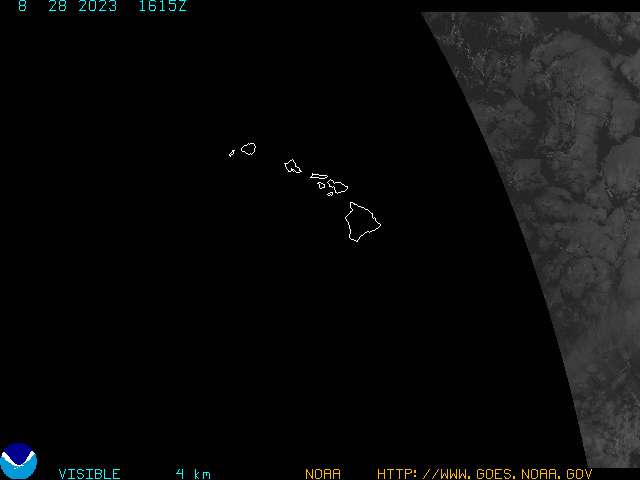


Priscilla Allen Says:
Wow what an extra, extra. Now I can feel like Paris Hilton whenever I carry my notebook about.
Your blog has become a daily treat,
Thanks Glenn~~~Glad you are a satisfied customer! Aloha, Glenn