











March 31-April 1, 2010
Air Temperatures – The following maximum temperatures were recorded across the state of Hawaii Wednesday afternoon:
Lihue, Kauai – 79
Honolulu, Oahu – 83
Kaneohe, Oahu – 79
Kaunakakai, Molokai – 78
Kahului, Maui – 83
Hilo, Hawaii – 80
Kailua-kona – 82
Air Temperatures ranged between these warmest and coolest spots near sea level around the state – and on the highest mountains…at 4pm Wednesday afternoon:
Barking Sands, Kauai – 83F
Kapalua, Maui – 75
Haleakala Crater – 54 (near 10,000 feet on Maui)
Mauna Kea summit – 43 (near 14,000 feet on the Big Island)
Precipitation Totals – The following numbers represent the largest precipitation totals (inches) during the last 24 hours on each of the major islands, as of Wednesday afternoon:
0.37 Mount Waialaele, Kauai
0.31 Oahu Forest NWR, Oahu
0.06 Molokai
0.00 Lanai
0.00 Kahoolawe
0.15 West Wailuaiki, Maui
0.12 Kawainui Stream, Big Island
Marine Winds – Here’s the latest (automatically updated) weather map showing a 1031 millibar high pressure system located to the north of the islands. This pressure configuration will keep strong to very strong trade winds blowing Thursday…slightly lighter Friday.
Satellite and Radar Images: To view the cloud conditions we have here in Hawaii, please use the following satellite links, starting off with this Infrared Satellite Image of the islands to see all the clouds around the state during the day and night. This next image is one that gives close images of the islands only during the daytime hours, and is referred to as a Close-up visible image. This next image shows a larger view of the Pacific…giving perspective to the wider ranging cloud patterns in the Pacific Ocean. Finally, here’s a Looping IR satellite image, making viewable the clouds around the islands 24 hours a day. To help you keep track of where any showers may be around the islands, here’s the latest animated radar image.
Hawaii’s Mountains – Here’s a link to the live webcam on the summit of near 14,000 foot Mauna Kea on the Big Island of Hawaii. The tallest peak on the island of Maui is the Haleakala Crater, which is near 10,000 feet in elevation. These two webcams are available during the daylight hours here in the islands…and when there’s a big moon rising just after sunset for an hour or two! Plus, during the nights and early mornings you will be able to see stars, and the sunrise too…depending upon weather conditions.
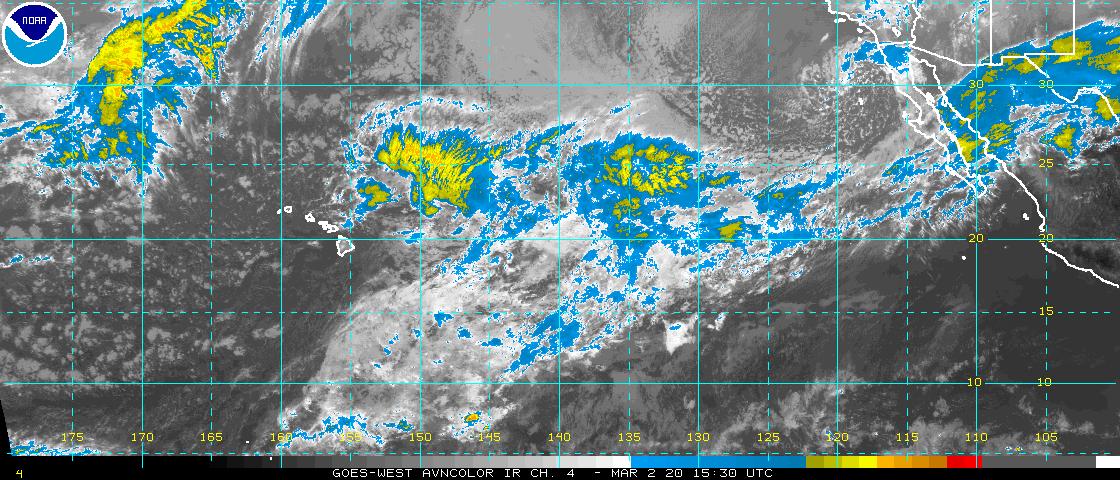
Tropical Cyclone activity in the eastern and central Pacific – Here’s the latest weather information coming out of the National Hurricane Center, covering the eastern north Pacific. You can find the latest tropical cyclone information for the central north Pacific (where Hawaii is located) by clicking on this link to the Central Pacific Hurricane Center. Here’s a tracking map covering both the eastern and central Pacific Ocean. A satellite image, which shows the entire ocean area between Hawaii and the Mexican coast…can be found here.
Aloha Paragraphs

Windy weather to say the least!
There will be some fluctuations in the strength of the trade winds through the next week…although strong and gusty will be the name of the game for the most part. As I was mentioning down the page from here, the top gust so far, during this exceptionally windy period, was the outrageous 71 mph at Kaupo Gap…on the southeast side of east
The reason for the slight softening of the winds coming up, is that a low pressure system, and its associated cold front, will migrate by to the north of our high pressure system Friday. This will erode the high pressure cell’s north side as it migrates by eastward. This slightly lighter version of the trade winds won’t last long, as a new high pressure system moves into place this weekend. This will jack the trade winds right back up across our area, before a second cold front moves by in the middle latitudes of the
We still have a ton of wind related advisories and warnings going on now…which will remain in force into Thursday. We continue to see an unusual wind advisory in effect over all the islands. At sea, at least over the coastal zones, a small craft wind advisory covers the entire state. In deeper water, in those major channels between the islands of Maui and Molokai, Maui and the
Rainfall will be relatively scarce, as any showery clouds are being limited by several factors now. Very often we find wet clouds being carried into the windward sides of the islands…under such circumstances. This time around though, we have a very limited rainfall regime, at least for the time being. There will of course be some showers arriving, although not all that many. The windward sides will get the most, although some light showers may get carried over into the leeward sides on the smaller islands…during the windiest aspects this ongoing windy episode. The models have been describing some increase in showers for this weekend, and continuing into early next week. This would be a good thing, as we continue to have well below normal precipitation for this time of year...like near 25% of normal!
It’s Wednesday evening as I begin writing this last section of today’s narrative. Trade winds remain active across the islands now…to say the least. Looking at the strongest gusts around the state during the last 24 hours, these were the biggest numbers on each of the islands:
43 mph on Kauai
56 mph on Oahu
56 mph on Molokai
51 mph on Lanai
58 mph on Kahoolawe
71 mph on Maui
58 mph on the Big Island
It’s a little difficult to believe, although I absolutely trust the wind instruments (called anemometers), that the winds are actually this strong! 50+ mph gusts on all the islands from Oahu down through Maui County to the Big Island. The 70+ mph gust at Kaupo Gap, here on Maui, is incredible…very very unusual! This falls just 4 mph short of qualifying as hurricane force! One of the most remarkable things is to be in a place like Kihei, or Kula, Maui, and be almost totally in the wind shadow…of the near 10,000 foot Haleakala Crater. At lunch today here in Kihei, I was in a very light breeze, while I looked out over the ocean between Maui and Lanai, and could see very strong winds whipping-up the ocean like crazy! By the way, my automobile thermometer was reading 90F degrees at lunch today…that’s unofficial of course. My neighbors upcountry in Kula, said that there were generally light winds up there today as well. The direction of the winds are all important, with your exposure determining if you’re in the "wind tunnel" or not. I had a friend from Haiku, Maui (windward Maui) email me today, and told me she was having very strong and gusty trade winds in her area. ~~~ At near 515pm Wednesday evening, the strongest gusts in the state were being reported on both Maui and the Big Island…with 52 mph at PTA Kipuka Alala on the Big Island, and also Maalaea Bay, Maui. I had the Maui News call and interview me about the winds this afternoon, with the story coming out in Thursday’s paper. The reason I bring this up, is because my friend Brian Perry, the City Editor, told me that there was at least one brush fire reported in the Kaanapali area, which had scorched at least 10 acres so far. ~~~ I’m about ready to leave Kihei for my drive back to Kula now, and looking out the window of my office, I literally don’t see one cloud in the sky, it is toally clear again this evening, much like the last two evenings. I’ll be back with you again dark and early Thursday morning, with your next new weather narrative hot off the press…right here and now, I mean then. I hope you have a great Wednesday night! Aloha for now…Glenn.
Interesting: For all of you who enjoy syrupy pancakes, bacon, eggs, and sausage for breakfast; for all who crave omelets and pork-roll, egg and cheese sandwiches; for all who relish the breakfast of champions, there is some great news coming your way. According to a new study at the University of Alabama at Birmingham, eating a high fat breakfast is healthier than you think! Metabolic syndrome, the technical term for abdominal obesity, high triglycerides, insulin resistance, and other cardiovascular disease-risk factors, may actually be prevented from eating a high fat breakfast in the morning.
The study, titled "Time-of-day-dependent dietary fat consumption influences multiple cardio-metabolic syndrome parameters in mice," published in the International Journal of Obesity on March 30th may prove the old adage to eat breakfast like a king, lunch like a prince, and dinner like a pauper. "Studies have looked at the type and quantity of food intake," says the study’s lead author Molly Bray, Ph.D., "but nobody has undertaken the question of whether the timing of what you eat and when you eat it influences body weight."
Bray believes her research team has found that fat intake just after waking seems to make fat metabolism much more efficient, and increases the body’s ability to respond to different types of food later in the day. Therefore, your first meal determines your metabolism for the rest of the day. Using mice subjects, the team revealed that when the mice are fed a carbohydrate-rich breakfast, carbohydrate metabolism was turned up and seemed to stay at that level throughout the day, no matter what the mice were fed later on.
On the other hand, the consequences of a fat-rich breakfast is increased "metabolic plasticity to transfer your energy utilization between carbohydrate and fat," according to the study’s senior author, Martin Young, Ph.D. Since the human diet is so varied throughout the day, this flexibility becomes a significant advantage. However, before jumping for joy over this new bacon-loving freedom, it is important to note that this metabolic advantage only works in conjunction with low-caloric intake later in the day.
Only through the combination of the two can health benefits be seen. A high fat/carbohydrate meal at the end of the day would lead to weight gain and other obesity-related problems, no matter what was eaten for breakfast. The study concludes by stating that the time of day at which fat or carbohydrates are consumed significantly impacts the efficiency of the metabolic system. Therefore, the largest meal is better at the beginning rather than the end.
Interesting2: Magazines are being printed in volumes everyday, and the sheer bulk in waste is staggering. Time magazine prints more than four million copies a year, all in a slick glossy format that has not always been recyclable. But now, a technological gadget could provide a means for curbing the amount of glossy magazines that are produced—and therefore the number that end up in landfills.
Apple is bringing the iPad to the world on April 3rd, and as usual for Apple, it is being delivered with a lot of hoopla and plenty of pre-orders. However, this device is different from past debuts in that its strengths may not be the device itself, but rather the deals and the support surrounding it. To be more precise, Apple has been working with major publishers to bring their wares to the device.
As Information Week reports, Time and other major magazines will offer digital versions, served up on the device. Publishers are hoping the iPad will bring back declining readership and ad sales—and Time has already lined up Unilever, Toyota, and Fidelity Investments for ad space placement. The cost for an ad in an iPad issue? A cool $200,000.
One of the things attracting the print media giants is the iPad’s dynamic and colorful display, which will allow advertisements to really sing and transcend the printed page. You can expect to see interactive ads, incorporating user-generated and sport videos. These new ads should be a hit with young viewers, who have been exposed to interactive TV and video games for most of their lives.
Interesting3: Top a building with a light-colored "cool roof," and it reflects sunlight, cutting air conditioning bills in summer, but increasing winter heating costs. Choose black shingles, and the roof soaks up sunlight to cut winter heating costs but makes the roof bake in the summer sun. One or the other.
You can’t have it both ways. Until now. Scientists reported the development of a "smart" roof coating, made from waste cooking oil from fast food restaurants, that can "read" a thermometer. The coating automatically switches roles, reflecting or transmitting solar heat, when the outdoor temperature crosses a preset point that can be tuned to the local climate. They described the coating at the 239th National Meeting of the American Chemical Society (ACS) in San Francisco.
Roofs coated with the material would reflect scorching summer sunlight and reduce sticker-shock air-conditioning bills. When chilly weather sets in, the coating would change roles and transmit heat to help warm the interior. "This is one of the most innovative and practical roofing coating materials developed to date," said Ben Wen, Ph.D., leader of the research project. He is the vice-president of United Environment & Energy LLC in Horseheads, N.Y.
"This bio-based intelligent roof coating, compared with a traditional cool roof, could reduce both heating and cooling costs as it responds to the external environment. It will help save fuel and electricity and reduce emissions of volatile organic compounds from petroleum-based roofing products. In addition, it will provide a new use for millions of gallons of waste oil after it is used to cook french fries and chicken nuggets."
Scientists already have evidence that "white roofs" — roofs that are painted white to reflect solar heat and help cool buildings during peak summer weather — could significantly reduce global warming by lowering fuel consumption. However, white roofs can have a wintertime heating penalty because they reflect solar heat that would help warm the building. So white roofs are a benefit in summer but a detriment in winter.
The new "intelligent" coating may sidestep this quandry. Tests on coated asphalt shingles showed that it could reduce roof temperatures by about 50 — 80 percent in warm weather. In cooler weather, the coating could increase roof temperatures up to 80 percent compared with the traditional cool roof. By changing the coating’s composition, Wen and colleagues can tune the substance, so that it changes from reflective to transmitive at a specific environmental temperature.
"Even though the roof temperature is reduced or increased by a few degrees, depending on the outside temperature, this change could make a big difference in your energy bill," Wen noted. In producing the coating, waste cooking oil is processed into a liquid polymer that hardens into a plastic after application. Unlike raw waste oil, which can smell like French fries or fish, the resulting polymer is virtually odorless. Manufacturers could potentially produce it in any shade, ranging from clear to black, depending on what additives are used, he said.
The material is also non-flammable and nontoxic. Wen cautions against pouring ordinary cooking oil on a roof in an attempt to achieve a similar energy-saving effect. That’s because ordinary cooking oil won’t turn into a polymer, doesn’t contain the key ingredient for controlling infrared light levels, and could well pose a fire hazard for the building.
The coating can be applied to virtually any type of roof. Wen expects that the coating can last many years and can be reapplied when it wears off. If further testing continues to go well, he estimates that the coating could be ready for commercial use in about three years.
Interesting4: One of the most common house ant species might have been built for living in some of the smallest spaces in a forest, but the ants have found ways to take advantage of the comforts of city living. Grzegorz Buczkowski, a Purdue University research assistant professor of entomology, found that odorous house ant colonies become larger and more complex as they move from forest to city and act somewhat like an invasive species. The ants live about 50 to a colony with one queen in forest settings but explode into super-colonies with more than 6 million workers and 50,000 queens in urban areas.
"This is a native species that’s doing this," said Buczkowski, whose results are published in the early online version of the journal Biological Invasions. "Native ants are not supposed to become invasive. We don’t know of any other native ants that are out-competing other species of native ants like these." Odorous house ants live in hollow acorn shells in the forest. They’re called odorous because they have a coconut- or rum-like smell when crushed. They’re considered one of the most common house ants.
In semi-natural areas that are a cross of forest and urban areas, such as a park, Buczkowski said he observed colonies of about 500 workers with a single queen. He said it’s possible that as the ants get closer to urban areas they have easier access to food, shelter and other resources. "In the forest, they have to compete for food and nesting sites," Buczkowski said. "In the cities, they don’t have that competition. People give them a place to nest, a place to eat." Buczkowski observed the ants in three different settings on and around the Purdue campus.
He said it might be expected that if the odorous house ants were able to multiply into complex colonies, other ants would do the same. But Buczkowski found no evidence that other ants had adapted to new environments and evolved into larger groups as the odorous house ants have. He said it’s possible that odorous house ants are better adapted to city environments than other ant species or that they had somehow outcompeted or dominated other species.
"This raises a lot of questions we’d like to answer," he said. Buczkowski said understanding why the super-colonies form could lead to better control of the pests in homes, as well as ensuring that they don’t outcompete beneficial species. Future studies on odorous house ants will include studying the ant’s genetics and trying to understand the effects of urbanization of odorous house ants.
Interesting5: The main cause of a rapid global cooling period, known as the Big Freeze or Younger Dryas — which occurred nearly 13,000 years ago — has been identified thanks to the help of an academic at the University of Sheffield. A new paper, which is published in Nature on April 1, 2010, has identified a mega-flood path across North America which channelled melt-water from a giant ice sheet into the oceans and triggering the Younger Dryas cold snap.
The research team, which included Dr Mark Bateman from the University of Sheffield’s Department of Geography, discovered that a mega-flood, caused by the melting of the Laurentide ice sheet, which covered much of North America, was routed up into Canada and into the Arctic Ocean. This resulted in huge amounts of fresh water mixing with the salt water of the Arctic Ocean.
As a result, more sea-ice was created which flowed into the North Atlantic, causing the northward continuation of the Gulf Stream to shut down. Without the heat being brought across the Atlantic by the Gulf Stream, temperatures in Europe plunged from similar to what they are today, back to glacial temperatures with average winter temperatures of -25oC. This cooling event has become known as the Younger Dryas period with cold conditions lasting about 1400 years.
The cold of the Younger Dryas affected many places across the continent, including Yorkshire in the Vale of York and North Lincolnshire which became arctic deserts with sand dunes and no vegetation. Before now, scientists have speculated that the mega-flood was the main cause of the abrupt cooling period, but the path of the flood waters has long been debated and no convincing evidence had been found establishing a route from the ice-sheet to the North Atlantic.
The research team studied a large number of cliff sections along the Mackenzie Delta and examined the sediments within them. They found that many of the cliff sections showed evidence of sediment erosion. This evidence spanned over a large region at many altitudes, which could only be explained by a mega-flood from the over-spilling of Lake Agassiz, which was at times bigger than the UK, at the front of the Laurentide Ice-sheet rather than a normal flood of the river.
Dr Bateman, who has been researching past environmental changes both in the UK and elsewhere in the world for almost 20 years, runs the luminescence dating lab at Sheffield. The lab was able to take the MacKenzie Delta sediment samples from above and below the mega-flood deposits, and find out when the mega-flood occurred, enabling its occurrence to be attributed to the start of the Younger Dryas. The study will help shed light on the implications of fresh water input into the North Atlantic today.
There are current concerns that changes in the salinity of the ocean today, could cause another shut down of the Gulf Stream. Current climate changes, including global warming, may be altering the planetary system which regulates evaporation and precipitation, and moves fresh water around the globe.
The findings, which show the cause, location, timing and magnitude of the mega-flood, will enable scientists to better understand how sensitive both oceans and climates are to fresh-water inputs and the potential climate changes which may ensue if the North Atlantic continues to alter.
 Email Glenn James: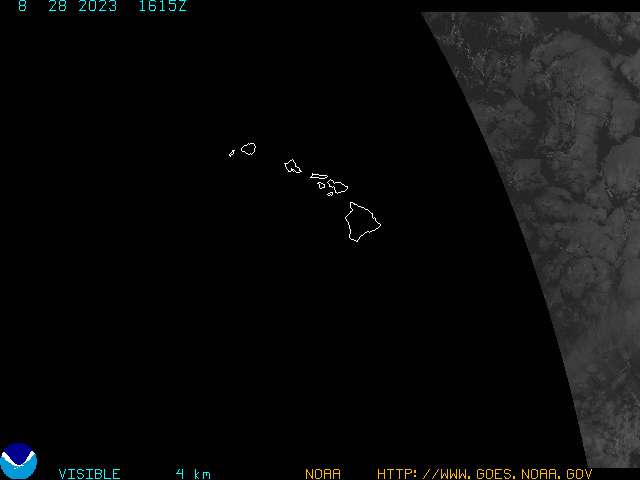


Kathy Lindsay Says:
Hi Glenn,
Just across the mountain from you in upper Olinda (where Piiholo and Olinda Rds meet), we had a fire about 4 am Tuesday morning, due to a downed power line. This is the third fire in this area in the last 2 years. The wind sounds like a freight train barreling down the track! We don’t feel a lot of movement on the ground, but a lot of leaves surely do blow in the house. This afternoon, our power came back on for the 3rd time in two days. It has been out for about 6-8 hours each time. Hopefully it will stay on all night tonight.
I’ll bet you are just loving all this!
Aloha,
Kathy and Dave~~~Hi Kathy and Dave, I must admit that I find all of this gustiness exciting. I used to live over by you in the old days, and have experienced some windy weather up there too. If I can hear this wind over here in Kula, at least could for a couple of days, I can imagine how low it is over there! As for your power, lets hope you can keep in on all the time soon. Thanks very much for your one the spot report, they are always welcome. Aloha, Glenn
Vern Lemke Says:
Glen,
Everybody including all the weather guys are talking the VERY STRONG GUSTS the last 2-3 days all over Hawaii.
How come we in Kihei have had basically no winds at all (except perhaps a slight southerly breeze yesterday afternoon) for basically the last two days (MONDAY and TUESDAY).
Leaving for home (LOCKPORT, ILLINOIS) this week but will access your reply in the archives…
Talk to you again next February.
Vern and Jean Lemke~~~Hi Vern and Jean, that is a good question, and I’m sure you’re not the only ones wondering about why the winds are so hit and miss. In this case, the winds are coming out of the east, and the Haleakala Crater is shielding you from this big blow. I live in Kula, which is also protected by Haleakala. Kaupo Gap, on the other side of the mountain from you, has had winds gusting up over 60 mph…as you probably know. When the winds are from the north and northeast, that’s when Kihei takes its turn on getting pounded by the strong trade winds. Aloha, Glenn
Max Says:
Oh boy, Glenn, the winds were strongest I’ve seen since February of 1990. At my house, which is about two miles to the west of Kawaihae, the winds picked up around 3pm yesterday and probably gusted up to 70mph or so from 5pm to midnight. This morning I’ve been inspecting the damage – a window blew out in our laundry room and a huge ficus tree was knocked over in our yard.
Funny thing is, I drove down to Kawaihae, just downwind of us, to film some of the winds and it wasn’t nearly as bad down there. Maybe gusting up to 30mph or so. The winds often blow in very localized bands on the Big Island.
Hope everyone else was less scathed than us!
Max~~~Hi Max, all I can say is wow, that, and sorry to hear of your damage! Yeah, across the Alenuihaha Channel from you, at Kaupo Gap here on Maui, 67 mph gusts yesterday, already 60 again today. Hang on, we’re not through this yet…more windy weather up ahead. Best of luck, and by the way, really appreciate your on the spot report! Please feel free to let us know what’s happening in your area on the Big Island. Aloha, Glenn