











February 5-6, 2010
Air Temperatures – The following maximum temperatures were recorded across the state of Hawaii Friday afternoon:
Lihue, Kauai – 76
Honolulu, Oahu – 79
Kaneohe, Oahu – 77
Kaunakakai, Molokai – 79
Kahului, Maui – 81
Hilo, Hawaii – 77
Kailua-kona – 81
Air Temperatures ranged between these warmest and coolest spots near sea level around the state – and on the highest mountains…at 5pm Friday evening:
Kawaihae, Big Island – 79F
Lihue, Kauai – 72
Haleakala Crater – 48 (near 10,000 feet on Maui)
Mauna Kea summit – 39 (near 14,000 feet on the Big Island)
Precipitation Totals – The following numbers represent the largest precipitation totals (inches) during the last 24 hours on each of the major islands, as of Friday afternoon:
0.38 Kapahi, Kauai
0.18 Oahu Forest NWR, Oahu
0.00 Molokai
0.00 Lanai
0.00 Kahoolawe
0.05 West Wailuaiki, Maui
0.15 Kawainui Stream, Big Island
Marine Winds – Here’s the latest (automatically updated) weather map showing a 1020 millibar high pressure system, currently to the northeast, moving eastward away from the islands, with southeast to south winds…gradually becoming northeast Sunday.
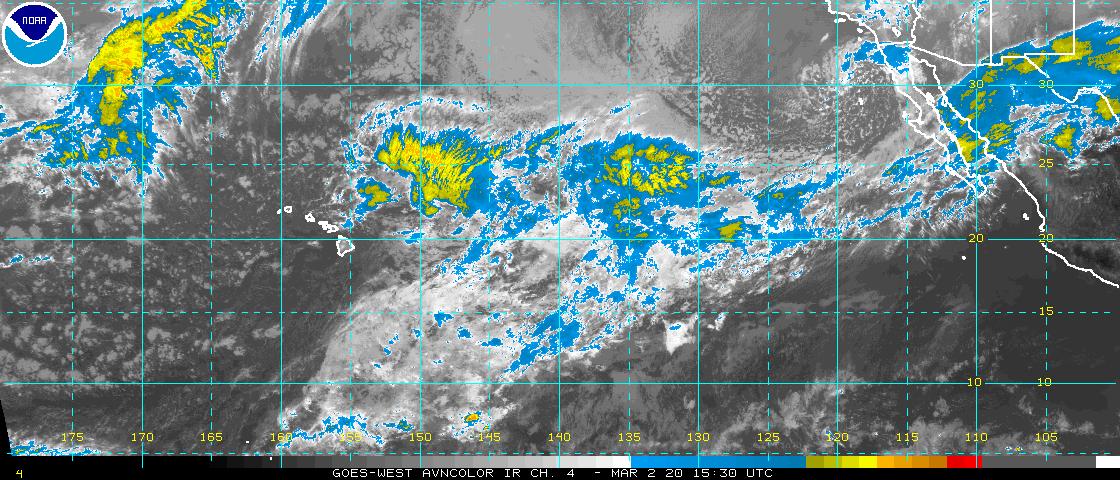
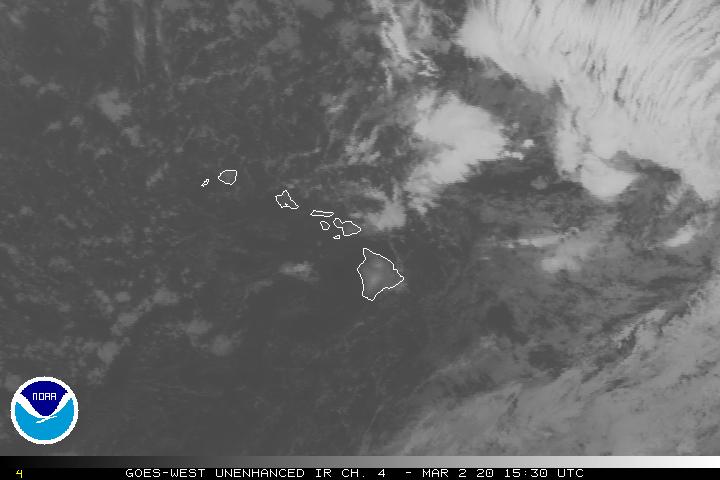
Satellite and Radar Images: To view the cloud conditions we have here in Hawaii, please use the following satellite links, starting off with this Infrared Satellite Image of the islands to see all the clouds around the state during the day and night. This next image is one that gives close images of the islands only during the daytime hours, and is referred to as a Close-up visible image. This next image shows a larger view of the Pacific…giving perspective to the wider ranging cloud patterns in the Pacific Ocean. Finally, here’s a Looping IR satellite image, making viewable the clouds around the islands 24 hours a day. To help you keep track of where any showers may be around the islands, here’s the latest animated radar image.
Hawaii’s Mountains – Here’s a link to the live webcam on the summit of near 14,000 foot Mauna Kea on the Big Island of Hawaii. The tallest peak on the island of Maui is the Haleakala Crater, which is near 10,000 feet in elevation. These two webcams are available during the daylight hours here in the islands…and when there’s a big moon rising just after sunset for an hour or two! Plus, during the nights and early mornings you will be able to see stars, and the sunrise too…depending upon weather conditions.
Tropical Cyclone activity in the eastern and central Pacific – Here’s the latest weather information coming out of the National Hurricane Center, covering the eastern north Pacific. You can find the latest tropical cyclone information for the central north Pacific (where Hawaii is located) by clicking on this link to the Central Pacific Hurricane Center. Here’s a tracking map covering both the eastern and central Pacific Ocean. A satellite image, which shows the entire ocean area between Hawaii and the Mexican coast…can be found here.
Aloha Paragraphs

Large surf along the north shores Saturday
Friday was a pleasant day in terms of weather, with generally clear to partly cloudy skies prevailing…along with some added volcanic haze locally. The winds are coming in from the classic easterly trade wind direction, although had begun shifting to the southeast. There’s certainly no lack of cloudiness around the islands, over the ocean to our east…in particular. This IR satellite image shows this well. These clouds, despite their appearance, generally consist of the dry stratus and stratocumulus variety. If we put that satellite image in motion, we see that already the winds are trying to take on a more south and southeasterly orientation. The high resolution visible satellite imagery from the U.S. Navy shows volcanic emissions being carried over the central islands from the
This wind shift from the trade wind direction, to the southeast and south, is being caused by the approach of another cold front, situated to the northwest of the islands. This front, according to the latest computer forecast models, won’t reach Kauai, with the front skating by to the north of
Looking a bit further ahead, the northeast winds Sunday, will gradually turn to the east, SE, and south through Monday and Tuesday. This swinging around of the winds, and their easing up in strength, will be prompted by the next cold front. The computer models have been swinging back and forth, between having the front stall near
It’s Friday evening, as I begin writing the last section of today’s narrative. As described above, our weather was nice today, and I anticipate it remaining that way generally through the upcoming weekend. There may be a couple of showers around, but nothing that anyone has to worry about. Looking out the window here in Kihei, before I take the drive to Kahului, I see some vog having snuck in during the afternoon, on the southeast breezes. Otherwise, it looks fine, with clear to partly cloud skies for the most part. ~~~ I’m excited about going to see a new film tonight, one that I’ve heard will be a good one. It’s called A Single Man (2009), starring Julianne Moore and Colin Firth…among others. The Yahoo critics are giving this film a B+ grade, while the Yahoo users gave it an A-…which is very good in my humble opinon. A brief synopsis of this film is: In Los Angeles 1962, at the height of the Cuban missile crisis George Falconer, a 52 year old British college professor is struggling to find meaning to his life after the death of his long time partner, Jim. George dwells on the past and cannot see his future as we follow him through a single day, where a series of events and encounters, ultimately lead him to decide if there is a meaning to life. The director and producer of this new film is Tom Ford, a famous person in the fashion industry. Just in case you have some curiousity about this noteworthy film, here’s a trailer. ~~~ I’m through working for the day, I hope you had a good Friday, and that you might join me here again on Saturday, when I’ll be back with your next new weather narrative in the morning. Aloha for now…Glenn.
Interesting: Despite the frightening regularity of humanitarian disasters like the earthquake in Haiti, international responses remain fragmented and must be improved, argue a group of trauma surgeons on the British Medical Journal website. They warn that an uncoordinated push to get people and equipment into the affected zone as soon as possible can worsen the situation and reduce the effectiveness of relief efforts. They also advise anyone thinking about volunteering to join an established group and obtain appropriate training to enable them to function in a disaster zone.
Many health care professionals from developed countries do not know what to do when faced with the horrors of a major humanitarian disaster, so proper preparation is key to providing prompt relief, write Dr Charles Krin and colleagues. In the US, volunteers are required to undertake a National Incident Management System (NIMS) course so that they are aware of the likely systems and where they will fit in to the system.
Other countries run similar programs. Passports and immunizations also need to be kept up to date. Medical volunteers should have a basic understanding of field and trauma medicine, be able to treat wounds and fractures with limited equipment and in non-sterile conditions, and know basic field sanitation and water purification techniques. These measures will help avoid well intentioned but sometimes misguided help from uncoordinated and untrained people that can hamper relief efforts, say the authors.
Surely, we have learnt enough from the natural disasters of the last few decades to allow us to set priorities and offer a reasonably coordinated international relief effort the next time this happens, say the authors. They call for international dialogue to explore ways to improve the response to these events.
"We have a perfect opportunity in Haiti to work towards true international cooperation, they conclude. "The Haitians will benefit from a long-term commitment to rebuilding, and the world medical community will benefit from the lessons learned when next we are called upon to provide disaster relief."
Interesting2: Communicating why biodiversity loss matters for people is essential for reversing it. The failed UN climate talks in Copenhagen in December could hardly have been a less promising prelude to the International Year of Biodiversity, which opened last month (January). As with climate change, the threat of large-scale biodiversity loss — and the need for global political action to stop it — is growing every day.
At a meeting about biodiversity organized by the British government in London in January, Robert Watson, former head of the Intergovernmental Panel on Climate Change (IPCC), warned that damage to the natural environment was approaching "a point of no return", a familiar phrase in the climate change debate.
Both issues face formidable challenges in persuading political leaders and the public of the urgent need to take action. The reasons are complex. But at root is the conflict between the need to radically change our use of natural resources and the desire to maintain current forms of economic growth in both developed and developing countries.
The solutions are equally complicated. Part of the answer, in each case, lies in enhancing the media’s ability to communicate messages emerging from the underlying science, so that these accurately reflect both the urgency of the situation, and how ordinary people’s lives may be affected.
Interesting3: Extensive commercial fishing endangers dolphin populations in the Mediterranean. This has been shown in a new study carried out at the University of Haifa’s Department of Maritime Civilizations. "Unfortunately, we turn our backs to the sea and do not give much consideration to our marine neighbors," states researcher Dr. Aviad Scheinin.
The study, which was supervised by Prof. Ehud Spanier and Dr. Dan Kerem, examined the competition between the two top predators along the Mediterranean coast of Israel: the Common Bottlenose Dolphin (Tursiops truncatus) and bottom trawlers. (Trawling is the principal type of commercial fishing in Israel and involves dragging a large fishing net through the water, close to the sea floor, from the back of a boat.)
These two predators off the coast of Israel trap similar types of fish near the sea floor, so the researchers decided to examine the nature of the competition between the two. Commercial trawling in the Mediterranean off the coast of Israel targets codfish, red mullet and sole, three commercial and sought-after types of fish.
The Department of Fisheries in Israel’s Ministry of Agriculture has data showing that over the years the amount of fish from the sea floor looted by Israel’s commercial trawling is larger than the amount of fish that nature provides, indicating that the sea floor fish population dropped between the years 1949 and 2006.
Would this decline in fish supply necessarily cause direct harm to the dolphins, seeing as their diet might also include other types of fish? In order to verify this, the researcher examined the contents of the stomachs of 26 dolphins that died and landed on the beach, or that had been caught by mistake.
He also examined the behavior of living dolphins by carrying out 232 marine surveys over more than 3,000 km. along the central coast of Israel. The dolphins’ stomachs contained mainly non-commercialized fish, suggesting that they perhaps do not compete directly with the commercial trawlers, and that the commercial fishing does not directly affect the dolphins’ nutrition.
Interesting4: Sure, some delicacies might taste just like chicken, but they usually feel and look much different. Soy meat alternatives, such as the soy burger, have become more popular recently, with increased sales of eight percent from 2007 to 2008. Now, scientists at the University of Missouri have created a soy substitute for chicken that is much like the real thing.
The new soy chicken also has health benefits, including lowering cholesterol and maintaining healthy bones. Fu-Hung Hsieh, an MU professor of biological engineering and food science in the College of Agriculture, Food and Natural Resources and the College of Engineering, is leading the project to create a low-cost soy substitute for chicken.
His research, funded by the U.S. Department of Agriculture and the Illinois-Missouri Biotechnology Alliance, has led to a process that does more than just add color and flavor to soy. Hsieh has developed a process that makes the soy product simulate the fibrous qualities of a chicken breast.
"Early tests provided some of the fibrous texture to the final product, but it tasted more like turkey," Hsieh said. "In order to produce a more realistic product, we had to tweak the process and add extra fiber to give the soy a stringy feeling that tears into irregular, coarse fibers similar to chicken." To create the soy chicken, Hsieh starts with a soy protein extracted from soy flour.
The soy then goes through an extrusion cooking process that uses water, heat and pressure while pushing the mixture through a cylinder with two augers. "This particular soy substitute is different because we are working with a higher moisture content, which is up to 75 percent," Hsieh said. "The high moisture content is what gives the soy a very similar texture to chicken — in addition to the appearance."
Along with pleasing the senses, Hsieh’s soy chicken provides health benefits for consumers. Soy foods contain important nutrition components, some of which help maintain healthy bones and prevent prostate, breast and colorectal cancers. Soy foods also are a good source of essential fatty acids and contain no cholesterol.
The FDA has approved a claim that encourages 25 grams of soy protein in a daily diet low in saturated fat and cholesterol to help reduce cholesterol that is at or above moderately high levels.
Interesting5: Southern Brazil should feel relief from the intense heat by Monday, but temperatures will remain hot through the weekend. High temperatures on Thursday reached 100 degrees F in Port Alegre. Pelotas also recorded a high of 102 F during the day on Wednesday. While beach goers have enjoyed the heat, nights of oppressive warmth has been problematic for several Brazilians.
The demand for energy has reached the state record for Rio Grande do Sul after Tuesday’s temperatures. This is likely due to an increased demand in air conditioning and other cooling devices. Neighboring Argentina helped fill Brazil’s electricity demand Wednesday by exporting 500 megawatts of power, according to the Wall Street Journal.
Interesting6: Scant ice over the Arctic Sea this winter could mean a "double whammy" of powerful ice-melt next summer, a top U.S. climate scientist said on Thursday. "It’s not that the ice keeps melting, it’s just not growing very fast," said Mark Serreze, director of the U.S. National Snow and Ice Data Center. In January, Arctic sea ice grew by about 13,000 square miles a day, which is a bit more than one-third the pace of ice growth during the 1980s, and less than the average for the first decade of the 21st century.
Arctic ice cover is important to the rest of the world because the Arctic is the globe’s biggest weather-maker, sometimes dubbed Earth’s air-conditioner for its ability to cool down the planet. More melting Arctic sea ice could affect this weather-making process; it is unlikely to lead to rising sea levels, any more than an ice cube melting in a glass of water would make the glass overflow.
If Arctic ice fails to build up sufficiently during the dark, cold winter months, it is likely to melt faster and earlier when spring comes, Serreze said by telephone from Colorado. "We’ve grown back ice in the winter, but that ice tends to be thin and that’s the problem," he said.
"You set yourself up for a world of hurt in summer. The ice that is there is also thinner than it was before and thinner ice simply takes less energy to melt out the next summer." With less of the Arctic sea covered in ice in winter, and with the existing ice thinner and more fragile than before, "you’ve got a double whammy going on," Serreze said.
 Email Glenn James: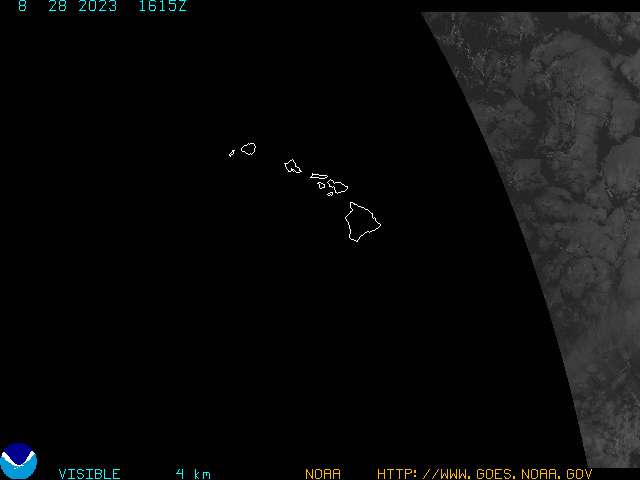


Dick Thompson Says:
Hi Glenn, Still love your site to find out what’s happening outside. But still there’s so much I do not understand. today I dont understand why it was 42.8 at your house (41 at 4000′), 50 up at the top of Haleakala! Was that for real?~~~It’s because of what we can an inversion, where warm air overlies cooler air below sometimes. It’s a good question, we all keep learning each day. Aloha, Glenn
Jim Crockatt Says:
My wife and I will be coming over Feb. 12th for a 10 day vacation to your loverly island. We have convinced 2 other couples to come along. This will be their first adventure to Maui. We have been there many times and love it. The last time we were there was in January, 2008 and we went the southwest route to Hana but due to a bridge washout close to the end we couldn’t make it and were disapointed. Do you know by chance if they have ever rebuilt that bridge or is the only way to get to Hana on the east side. Thanks for the weather updates. I check them out regularly when I’m sitting in a snow storm here in Utah. Have a great day and weekend.~~~Hi Jim, good to hear from you, good to hear that you and your friends are coming from cold Utah…I’m sure that you and your friends will have a marvelous time! Yes, the backway to and from Hana is open, that bridge has been fixed. Aloha, Glenn