











February 4-5, 2010
Air Temperatures – The following maximum temperatures were recorded across the state of Hawaii Thursday afternoon:
Lihue, Kauai – 72
Honolulu, Oahu – 76
Kaneohe, Oahu – 75
Kaunakakai, Molokai – 74
Kahului, Maui – 76
Hilo, Hawaii – 77
Kailua-kona – 83
Air Temperatures ranged between these warmest and coolest spots near sea level around the state – and on the highest mountains…at 5pm Thursday evening:
Kailua-kona – 80F
Lihue, Kauai – 69
Haleakala Crater – 50 (near 10,000 feet on Maui)
Mauna Kea summit – 37 (near 14,000 feet on the Big Island)
Precipitation Totals – The following numbers represent the largest precipitation totals (inches) during the last 24 hours on each of the major islands, as of Thursday afternoon:
0.06 Mount Waialaele, Kauai
0.02 Waimanalo, Oahu
0.00 Molokai
0.00 Lanai
0.00 Kahoolawe
0.05 West Wailuaiki, Maui
0.38 Laupahoehoe, Big Island
Marine Winds – Here’s the latest (automatically updated) weather map showing a high pressure system, currently to the north, moving into the area east of the islands, with breezes from the northeast…becoming lighter gradually Friday into Saturday.
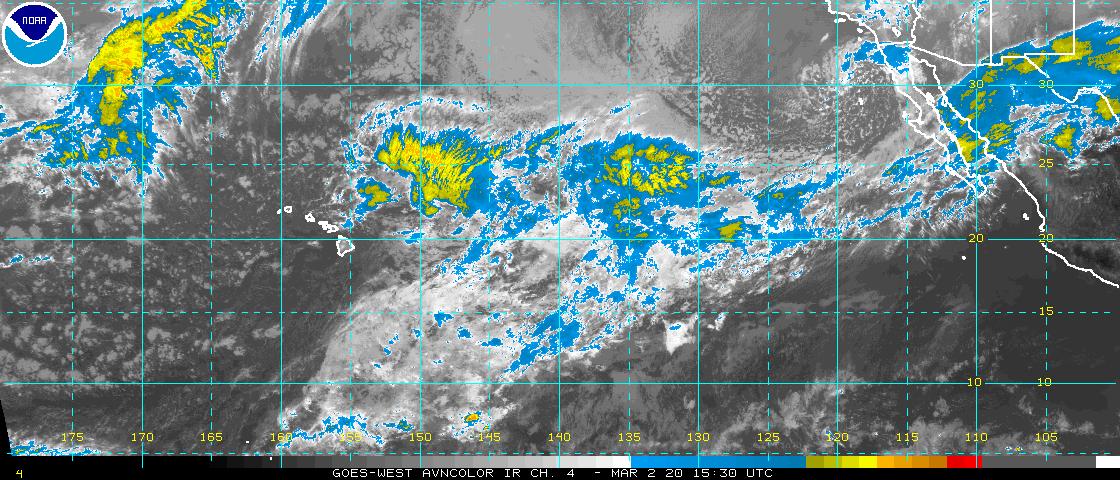
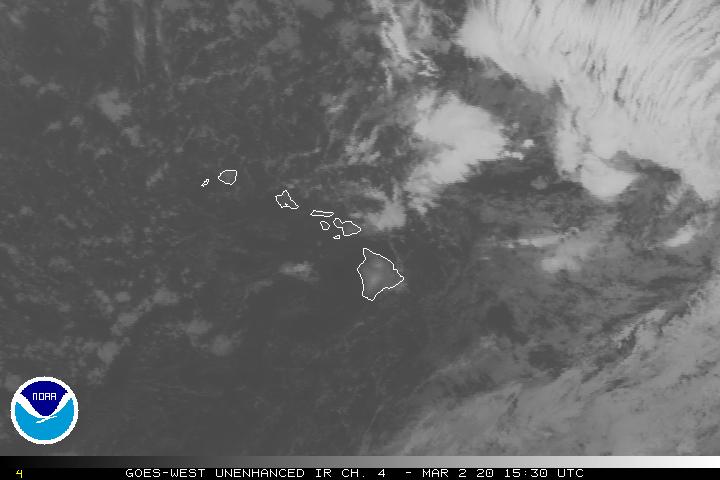
Satellite and Radar Images: To view the cloud conditions we have here in Hawaii, please use the following satellite links, starting off with this Infrared Satellite Image of the islands to see all the clouds around the state during the day and night. This next image is one that gives close images of the islands only during the daytime hours, and is referred to as a Close-up visible image. This next image shows a larger view of the Pacific…giving perspective to the wider ranging cloud patterns in the Pacific Ocean. Finally, here’s a Looping IR satellite image, making viewable the clouds around the islands 24 hours a day. To help you keep track of where any showers may be around the islands, here’s the latest animated radar image.
Hawaii’s Mountains – Here’s a link to the live webcam on the summit of near 14,000 foot Mauna Kea on the Big Island of Hawaii. The tallest peak on the island of Maui is the Haleakala Crater, which is near 10,000 feet in elevation. These two webcams are available during the daylight hours here in the islands…and when there’s a big moon rising just after sunset for an hour or two! Plus, during the nights and early mornings you will be able to see stars, and the sunrise too…depending upon weather conditions.
Tropical Cyclone activity in the eastern and central Pacific – Here’s the latest weather information coming out of the National Hurricane Center, covering the eastern north Pacific. You can find the latest tropical cyclone information for the central north Pacific (where Hawaii is located) by clicking on this link to the Central Pacific Hurricane Center. Here’s a tracking map covering both the eastern and central Pacific Ocean. A satellite image, which shows the entire ocean area between Hawaii and the Mexican coast…can be found here.
Aloha Paragraphs

Our local beaches will be lovely Friday
The overlying atmosphere over our islands is dry and stable now, providing another round of generally dry weather, after some good showers from the recent cold front…and it’s associated prefrontal precipitation. There were quite a few clouds around today, although they consisted mostly of the non-rain bearing stratus variety…as this IR satellite image shows. These are often referred to as pancake-like clouds, usually dropping mist or drizzle at best, along the windward sides. These clouds will stack-up against the north and northeast facing slopes for the most part. These low clouds may pass right over the smaller islands, although both Maui and the
Looking around at the island observations early this evening, the dew point temperatures are lower than usual…ranging in the 40F’s to 50’s. This simply shows that our air mass is dry, with not much moisture in it. At the same time, coupled with the locally gusty wind speeds, we have some wind chill factor active as well. As the low dew point temperatures team up with the quick paced winds…our local residents and visitors alike, were still feeling a bit of wintery coolness again Thursday. Meanwhile, and not helping very much, the air temperatures at sea level were pretty steady in the 70F’s…which is on the cool side. The one exception, like it was yesterday, was the 82 degree reading in Kailua-kona, which is blocked from the cool northeast winds, by the tall mountains behind. Temperatures were cool last night, and it will feel cool enough to have that extra blanket on the bed again tonight.
Glancing ahead, we see some changes coming up, which is quite normal during the winter month of February. Speaking of February, it is according to climatology, the coolest month of the year here in the islands…although not by much over January. As we move into Friday, the wind direction will change from the cool NE, to a warmer ENE and easterly direction. This will take the edge off our tropical cool snap, as the air moving in our direction, will be traveling over warmer sea surface temperatures before arriving. Winds will become quite light on Saturday, ahead of a cold front, which isn’t expected to make it as far south and southeast as
As we get into the second half of the upcoming weekend, our winds will shift from southeast to south, as the cold front moves by to the north of the islands…to the north and northeast. This will bring in another short bit of cooler weather, before the trade winds warm things up during the first day or two of early next week. The computer forecast models haven’t been totally clear in their prognostications for another cold front around the middle of next week. The latest iteration by the models though, now brings a frontal cloud band down into the state, with the chance of more showers then. Considering how dry that we are, especially in Maui County and
It’s Thursday evening, as I begin writing the last section of today’s narrative. As described above, we are dry now, perhaps even dry as a bone. What’s adding to the dry weather conditions, is the extra dry dew point temperatures. This makes the slightly cool air temperatures, feel cooler than the numbers show. Those low clouds wil continue to blanket the windward sides, although won’t do much rain dropping. The leeward sides will be generally fine, although still on the cool side tonight. ~~~ I worked from home, here in Kula, Maui today, and found nice weather, after a very chilly night, with the thermometer rocketing down to 44.1F degrees at the coldest point Thursday morning. I know that that doesn’t sound very cool to you folks on the mainland, where the real cold weather occurs, but for here in the tropics, even here on the slopes of the Haleakala Crater…it feels downright freezing! I expect that it will definitely drop into the 40’s again tonight, up here that is. I would imagine that the areas near sea level will dip into the 60’s, with the outside chance of one or two high 50’s…maybe in Kahului, Maui early Friday morning. My thought is that this weekend will be quite nice, that is if you don’t mind a little volcanic haze in some places later Saturday into Sunday morning. The only rain should be, and I should actually call it light showers…might break out over the mountain slopes Saturday afternoon, here and there. The beaches will be nice, although the north and west shores will have high surf breaking. ~~~ Ok, that’s about it for today’s work schedule, as I’m going to take a walk before dinner. I hope you have a great Thursday night, and that you can drop by again on Friday! One more thing, when I hit the hay tonight, I’ll be reading a couple of books that two of the readers of this website sent me in the mail. The first is a lovely book called At Ease Breathing…a users guide to the Breathing Body, by Miriam C. Trahan. The other, is called In Love…Celebrating the Seasons of Intimate Relationships, by Jack Adam Weber. I am thoroughly enjoying both of them! Aloha for now…Glenn.
Interesting: A new "underwater plane" will plunge wealthy riders down into the ocean depths for a hefty fee. U.K. company Virgin Limited Edition recently announced the Necker Nymph, a three-person "aero-submarine" that can dive to depths of 36,000 feet – which is deeper than Mount Everest is tall.
The Necker Nymph vehicle is designed and built by San Francisco-based Hawkes Ocean Technologies and is based on the company’s DeepFlight series of submersibles. Virgin bills the Necker Nymph as a "a new class of high-performance, positively buoyant vehicles which safely extend the overall capabilities of scuba, while offering the unique experience of underwater flight."
Unlike conventional subs, which use ballast to sink in the water, the Necker Nymph uses "uses downward ‘lift’ on the wings to fly down to depth," Virgin explained in a statement. Each dive can last up to two hours, during which time the "hydrobatic" Necker Nymph can perform dolphin-like flips underwater.
An open cockpit provides a near 360-degree viewing experience. Virgin says the Necker Nymph has "near-zero" environmental impact: "Its positive buoyancy prevents the sub from landing on a reef, and its low light and noise emissions ensure the fragile ocean ecosystems remain undisturbed." But unless you’re incredibly wealthy, don’t expect to experience a ride aboard the Necker Nymph anytime soon.
The craft is only available if you rent Necker Belle, Virgin’s 105-foot (32-meter) luxury catarmaran. The boat’s weekly charter rate is U.S. $88,000. Rent the Necker Nymph will cost an additional U.S. $25,000 per week. Virgin and its founder Sir Richard Branson have a reputation for building extreme vehicles. Virgin Galactic recently unveiled a space plane, called SpaceShipTwo, that will ferry tourists to suborbital space.
Interesting2: NASA’s new proposed budget will in part shift the space agency’s focus from landing people on the moon back to Earth, with more money slated to go to projects that will help us understand our planet’s climate and even plans to re-launch the carbon observatory that failed to launch last year. The 2011 proposed budget for NASA, announced on Monday, cancels the Constellation program to build new rockets and spacecraft optimized for the moon, but increases NASA’s overall budget by $6 billion over the next five years.
Of that $6 billion, about $2 billion will be funneled into new and existing science missions, particularly those aimed at investigating the Earth sciences, particularly climate. "That’s about 27 percent of the overall budget over the next five years of the agency [that] will be dedicated to science," said Edward Weiler, head of NASA’s Science Mission Directorate at the agency’s headquarters in Washington, D.C.
The Earth and climate science division will get the bulk of the money allocated to science, and that money will bolster Earth science missions that are either already in the works or proposed, "NASA will be able to turn its considerable expertise to advancing climate-change research and observations," Weiler said today in a press briefing. In particular, NASA’s budget will allow the agency to re-fly the Orbiting Carbon Observatory (OCO), which crashed into the ocean near Antarctica just after launch almost a year ago.
NASA has decided to give the mission a second chance, because it "is critical to our understanding of the Earth’s carbon cycle and its effect on climate change," Weiler said. OCO was the first satellite built exclusively to map carbon dioxide levels on Earth and help scientists understand how humanity’s contribution of the greenhouse gas is affecting global climate change. Climate scientist Ken Caldeira of Stanford University welcomed the news.
"The Orbiting Carbon Observatory is a key piece [of] the monitoring system that we need to keep track of our changing Earth, so that we might better understand the complex interplay of Earth’s climate system and carbon cycle, and therefore help to better inform the difficult climate-related decisions that we will need to make over the coming years and decades," he said.
Interesting3: Stephen Schafer, the kite surfer killed by a swarm of sharks off the coast of Florida Wednesday, was the victim of a terrifying but rare attack. Globally there are a few dozen shark attacks a year, with 4 deaths in 2008 (official numbers for 2009 have yet to be compiled). In Florida, there were 32 shark attacks in 2008 and the same number in 2007, with no fatalities.
The overall number of attacks had risen slightly in recent years, largely because more people go into the water where sharks are, but that trend has reversed of late. The recession has meant fewer people vacationing at places where they might swim and become shark bait. Sharks don’t generally eat people. The attacks on humans are accidental, experts say.
A paddling surfer looks a lot like dinner from below. Often, victims are able to get away after a shark realizes it has not found its normal food. New Zealand girl Lydia Ward, waist-deep in water earlier this week, beat off a shark with her boogie board after it attacked her hip.
The risk of being bit by a shark is about the same as the chances of getting bit by animals in New York City, hit by lightning or being attacked by an alligator, according to officials at the International Shark Attack File (ISAF). Of course, if you don’t ever go in the water, your chances are zero.
The shark attack capital of the United States is New Smyrna, Fla., sort of, according to the ISAF. The beach is in a county that has logged 210 attacks on humans. No. 2 is North Shore, Oahu, Hawaii and Long Beach Island in New Jersey gets the No. 3 spot. Meanwhile, by some estimates, 73 million sharks are killed every year, often just for their fins, and that’s taking a bite out of their ability to attack humans.
Interesting4: Incorporating 17,000 tropical islands, Indonesia is one of the world’s richest areas of biodiversity. However, according to the Jakarta Post, over half of this biodiversity remains unrecorded with only 20 of the more than 400 regencies in the country recording species.
Indonesia is one of the 17 largest biodiversity hotspots on the planet, but we have not recorded most of it," the deputy assistant of biodiversity conservation at the State Environment Ministry, Utami Andayani, told The Jakarta Post, adding that, "it is difficult for us to complain if other countries exploit our biodiversity for commercial purposes such as medicine because of the lack of data to prove the species are from Indonesia," Many of these species may vanish without ever being known.
Indonesia’s forests, and in turn its species, are facing unparalleled pressures. Rampant deforestation for tropical wood, oil palm plantations, mining, and fuel have taken a great toll on Indonesia’s environment. Fifty years ago 82 percent of Indonesia was covered with forests. As of 2005 that percentage has dropped to 48 percent. Illegal logging is a huge issue in the nation: even its protected areas have been infiltrated in the past.
Interesting5: A Malthusian catastrophe was originally foreseen to be a forced return to subsistence level conditions once population growth had outpaced agricultural production. The catastrophe is that in doing so, many people will starve. Sometime around 2050, there are going to be nine billion people roaming this planet two billion more than there are today. It’s a safe bet that all those folks will want to eat.
Still, not everyone’s convinced that feeding nine billion people is a totally impossible task. A Malthusian catastrophe has been predicted before to happen and has not yet done so. A new paper published this week in Science written by Britain’s chief scientific adviser John Beddington along with others, outlines a way this could actually be done. Thomas Malthus was a political economist who died in 1834 who is credited with the original theory.
What he had not anticipated was the industrial revolution, advances in medicine and advances in agricultural production that has so far prevented this catastrophe on a global basis. What might have to be done in the future is another matter. Though the world population has increased radically in the last 2 centuries some are predicting a leveling off by around 2100.
The British Science study suggests several changes in how people eat as well as produce new food to help adjust to the new population levels. Some of the discussed items include: Boosting crop yields: This has been done before with new fertilizers, new crop seed and pesticides. To do may mean new types of genetically modified foods and new pesticides. Both have their potential downsides in long term potential hazards.
There are also many small farmers in the developing world that could get more out of their land right now with better training, finances, or currently available technology. Stop wasting food: The study estimates that 30 percent to 40 percent of the world’s food is thrown out each year. In poorer countries, this typically happens because transfer and storage facilities are inadequate or poorly organized.
In wealthier countries, the causes of waste are a a matter of lifestyle choices such as supersized portions, restaurant waste, and conservative "use by dates" when the food still is edible. Fixing all this will require changing our eating habits, food portions and in some cases the underlying regulations. Less meat: Reducing meat consumption will allow more and less expensive use of vegetable food sources.
Again this is a lifestyle choice based on what the culture perceives as normal and acceptable. Then again better and more productive meat production methods may be found that use less land and time in producing. There are also other competing demands for the raw organics that eventually go into the food supply. These are bio fuels for example. The more biofuel that is used instead of a petroleum based fuel means there is potentially that much less available for food supplies.
Again this is related to lifestyle choices such as driving a car instead of mass transportation where it is available. Finally there are pending climate changes such as global warming that will affect total food production in the upcoming century. In some places more food will be produced and in other places there will be less food produced.
What is certain is that Malthus could not predict neither can anybody else with certainty. What is clear is that lifestyle choices will be changing as the world’s population grows and increased agricultural, processing and transportation improvements will be necessary.
 Email Glenn James: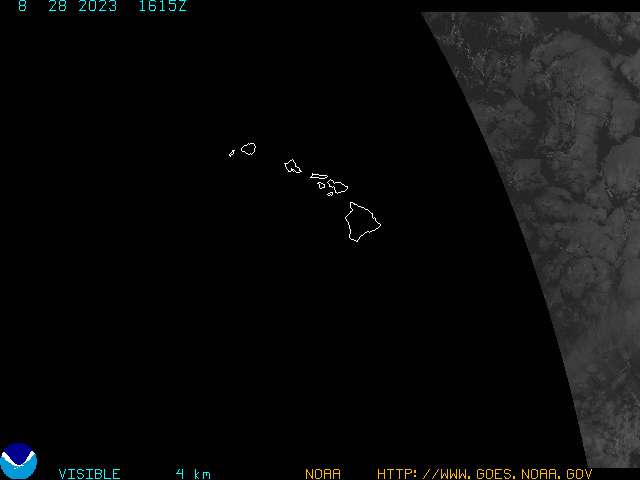

cloud Says:
hi glenn, sorry to hear you’ve been laid up. ouch. haven’t had a chance to log in lately, but thought you might enjoy the book <> as a quirky but pleasant distraction to stay under the covers during our northern california cold nights. i think yr oenophilic friend Alan J. is doing a tasting of french wines @ cafe marc aurel nxt wed nite. sounds cosy & warm, mmm…. be well, cloud~~~H Cloud, tweaked my back, but haven’t exactly been laid up, just working from home. Feeling good enough today that I’ll be heading down to Kihei to work at my regular work place. Thanks for tip on the book, and the French wine tastings. Stay warm there in northern California, Aloha, Glenn