











October 1-2, 2009
Air Temperatures – The following maximum temperatures were recorded across the state of Hawaii Thursday afternoon:
Lihue, Kauai – 85
Honolulu, Oahu – 89
Kaneohe, Oahu – 84
Kahului, Maui – 86
Hilo, Hawaii – 82
Kailua-kona – 84
Air Temperatures ranged between these warmest and coolest spots near sea level around the state – and on the highest mountains…at 5 p.m. Thursday evening:
Barking Sands, Kauai – 86F
Hilo, Hawaii – 72
Haleakala Crater – 48 (near 10,000 feet on Maui)
Mauna Kea summit – 36 (near 14,000 feet on the Big Island)
Precipitation Totals – The following numbers represent the largest precipitation totals (inches) during the last 24 hours on each of the major islands, as of Thursday afternoon:
0.32 Mount Waialaele, Kauai
0.28 Poamoho 2, Oahu
0.29 Molokai
0.00 Lanai
0.00 Kahoolawe
0.98 Puu Kukui, Maui
0.51 Laupahoehoe, Big Island
Marine Winds – Here’s the latest (automatically updated) weather map showing a 1036 millibar strong high pressure system far to the northeast. Our trade wind speeds will maintain moderate to fresh levels Friday and Saturday.
Satellite and Radar Images: To view the cloud conditions we have here in Hawaii, please use the following satellite links, starting off with this Infrared Satellite Image of the islands to see all the clouds around the state during the day and night. This next image is one that gives close images of the islands only during the daytime hours, and is referred to as a Close-up visible image. This next image shows a larger view of the Pacific…giving perspective to the wider ranging cloud patterns in the Pacific Ocean. Finally, here’s a Looping IR satellite image, making viewable the clouds around the islands 24 hours a day. To help you keep track of where any showers may be around the islands, here’s the latest animated radar image.
Hawaii’s Mountains – Here’s a link to the live webcam on the summit of near 14,000 foot Mauna Kea on the Big Island of Hawaii. The tallest peak on the island of Maui is the Haleakala Crater, which is near 10,000 feet in elevation. These two webcams are available during the daylight hours here in the islands…and when there’s a big moon rising just after sunset for an hour or two! Plus, during the nights and early mornings you will be able to see stars, and the sunrise too…depending upon weather conditions.
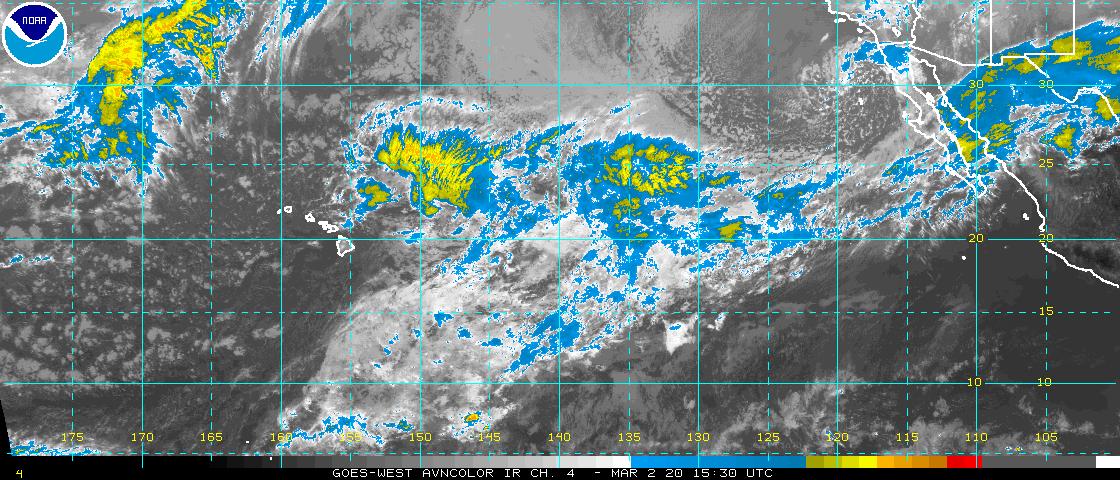
Tropical Cyclone activity in the eastern and central Pacific – Here’s the latest weather information coming out of the National Hurricane Center, covering the eastern north Pacific. You can find the latest tropical cyclone information for the central north Pacific (where Hawaii is located) by clicking on this link to the Central Pacific Hurricane Center. Here’s a tracking map covering both the eastern and central Pacific Ocean. A satellite image, which shows the entire ocean area between Hawaii and the Mexican coast…can be found here.
Aloha Paragraphs
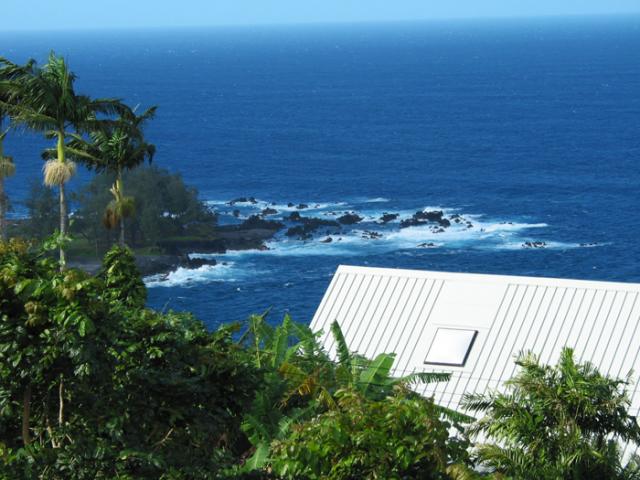
The Hilo coast…on the Big Island
The trade winds will remain active through the rest of this week, easing up some in strength Sunday…onwards into next week. These trade winds are blowing generally in the moderately strong realms Thursday evening, although as usual…there will be those typical variations in strength locally. As this weather map shows, we still have a strong and wide ranging 1036 millibar high system, positioned far to the northeast of
Looking at the latest GFS model output there remains two different cold fronts heading our way, neither of which is expected to reach the islands…at least not the first one for sure. The southeast movements of these cold fronts however will push our trade wind producing high pressure system eastward. As we move into the middle of next week, the second front will be close to us. This may shift us into a convective weather pattern, with daytime onshore flowing sea breezes, along with returning offshore flowing land breezes at night. We could see volcanic haze and cooler early morning temperatures coming into play then.
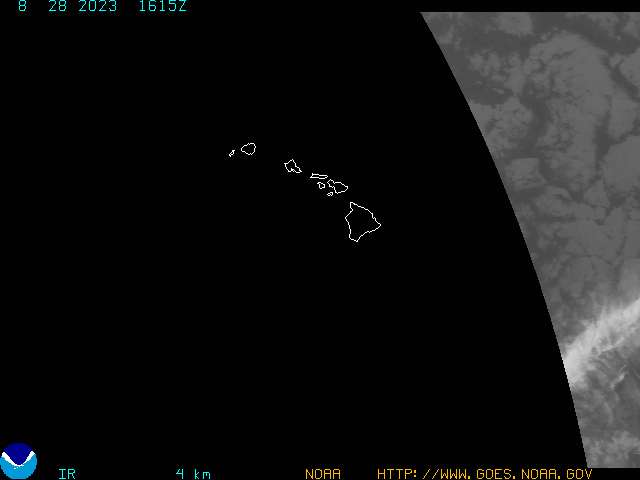
The current showery conditions that arrived last evening, continuing into today on the Big Island…will keep showers falling around that southernmost island for a while longer. If the trade winds remain intact as expected, the majority of whatever showers that fall through the rest of this week, will remain pretty closely attached to the windward sides as usual. If the breezes take on a south of east orientation early next week, we could see the smaller islands get into the wind shadow of the Big island, with sultry conditions following closely behind…with maybe even some vog then. As this satellite image shows, we have streaks of high cirrus clouds moving over the island chain tonight. We can look forward to colorful sunsets and sunrises while this high moisture gets carried our way on the winds aloft.
It’s early Thursday evening as I begin writing this last paragraph of today’s narrative update, here in Kihei, Maui. Looking out the window here before I take the drive back upcountry to Kula, I can see lots high cirrus clouds around. This almost certainly will make for a gorgeous sunset, and likely another colorful sunrise on Friday too. By the way, the red flag warning is still active across the leeward sides, until early Friday evening. This simply means that the danger of wild fire remains current, due to the strong trade winds, and low humidities. Have you seen the big almost full moon out there? It will reach its fullest peak late Friday night. ~~~ I’ll be back then with your next new weather narrative from paradise. I’m looking forward to the weekend already, and that new film I’ll be seeing Friday evening after work! I hope you have a great Thursday night from wherever you happen to be now! Aloha for now…Glenn.
Interesting: The increasing use of smart drugs or "nootropics," to boost academic performance, could mean that exam students will face routine doping tests in future, suggests an article in the Journal of Medical Ethics. Despite raising many dilemmas about the legitimacy of chemically enhanced academic performance, these drugs will be near impossible to ban, says Vince Cakic of the Department of Psychology, University of Sydney.
He draws several parallels with doping in competitive sports, where it is suggested that "95%" of elite athletes have used performance enhancing drugs. "It is apparent that the failures and inconsistencies inherent in anti doping policy in sport will be mirrored in academia unless a reasonable and realistic approach to the issue of nootropics is adopted," he claims.
But what this should be is far from clear, especially given the ready availability of these types drugs for therapeutic use, says Mr Cakic, conjuring up the prospect of urine tests for exam students. "As laughable as it may seem, it is possible that scenarios such as this could very well come to fruition in the future.
However, given that the benefits of nootropics could also be derived from periods of study at any time leading up to examinations, this would also require drug testing during non-exam periods," he writes. "If the current situation in competitive sport is anything to go by, any attempt to prohibit the use of nootropics will probably be difficult or inordinately expensive to police effectively," he warns.
Nootropics were designed to help people with cognitive problems, such as dementia and attention deficit disorder, but students with a looming deadline have several options: modafinil (Provigil), methylphenidate (Ritalin), and amphetamine (Dexedrine).
The non-medical use of methylphenidate and amphetamine is as high as 25% on some US college campuses, particularly in colleges with more competitive admission criteria, says Mr Cakic. For boosting memory retention, there’s brahmi, piracetam (Nootropil), donepezil (Aricept) and galantamine (Reminyl).
And for a bit more get up and go, there’s selegiline (Deprenyl). The impact of these drugs is as yet "modest," says Mr Cakic, but more potent versions are in the pipeline. "The possibility of purchasing ‘smartness in a bottle’ is likely to have broad appeal to students" seeking to gain an advantage in an increasingly competitive world, says Mr Cakic.
Interesting2: The optimal way to control swine flu, the new H1N1 virus that emerged as a global threat in 2009, is to vaccinate children with the planned H1N1 flu shot, says the co-director of the University of Alabama at Birmingham (UAB) Division of Pediatric Infectious Diseases. "Children are the highest-risk group for spreading the virus among themselves, and as a consequence, spreading it around their community," says UAB’s David Kimberlin, M.D., one of four U.S. physicians serving on the federal Safety Monitoring Committee reviewing clinical trials of H1N1 vaccines.
The committee is a part of the Division of Microbiology and Infectious Diseases at the National Institute of Allergy and Infectious Diseases. "Like a bull’s-eye, the middle of the target is what you vaccinate so you don’t see infections in the concentric rings around the center," Kimberlin says. "The center of the protection bull’s-eye should be children."
The United States’ prospects for developing and distributing a safe and effective vaccine to prevent infection with the current H1N1 virus are excellent, Kimberlin says. "The National Institutes of Health are conducting a number of studies across the country at special vaccine evaluation sites they’ve had set up for 40-60 years, and they have enrolled several thousand patients into those studies," he says.
"I’m on that federal monitoring board and we look at the vaccine-safety data constantly. These studies are going very well." The reasoning behind making children the highest priority comes from decades of experience with flu transmission, prevention strategies, infection monitoring and many other factors.
Additionally, children younger than age 5 are at higher risk of complications from influenza. Once the vaccine is available, which is expected to be in October, children 6 months of age and older, teenagers and young adults through age 24 will be among the first groups targeted by the Centers for Disease Control Advisory Committee on Immunization Practices to receive the shots.
Pregnant women, adults who have high-risk medical conditions and health-care workers who are direct care providers are among the others who will be given the earliest shots, says Kimberlin, who is a member of the American Academy of Pediatrics Committee on Infectious Diseases and associate editor of the academy’s Red Book, a revered pediatric treatment manual.
Interesting3: In 2007, congestion caused urban Americans to travel 4.2 billion hours more and to purchase an extra 2.8 billion gallons of fuel for a congestion cost of $87.2 billion – an increase of more than 50% over the previous decade. This was a decrease of 40 million hours and a decrease of 40 million gallons, but an increase of over $100 million from 2006 due to an increase in the cost of fuel and truck delay. Small traffic volume declines brought on by increases in fuel prices over the last half of 2007 caused a small reduction in congestion from 2006 to 2007.
Delay per traveler – the number of hours of extra travel time that commuters spend during rush hours – was 1.3 hours lower in 2007 than 2005. This change would be more hopeful if it was associated with something other than rising fuel prices (which occurred for a short time in 2005 and 2006 before the sustained increase in 2007 and 2008) and a slowing economy.
Interesting4: Lisa Jackson, administrator of the U.S. Environmental Protection Agency (E.P.A.), is proposing a major change in the way the federal government regulates tens of thousands of chemicals in consumer products, one that would place more of a responsibility on industry to prove that the compounds are safe. Jackson is proposing an overhaul of a 1976 toxics law that she called "inordinately cumbersome and time-consuming" and said that her agency will immediately begin analyzing and regulating six widely-used chemicals found in countless consumer products.
Among the six are bisphenol A, used in plastic bottles; phthalates, found in vinyl and cosmetics; and perfluorinated compounds used in making non-stick coatings and food packaging. Many scientists say these chemicals can mimic hormones and hurt development of fetuses and children, as well as possibly causing reproductive problems and cancer. "As more and more chemicals are found in our bodies and the environment, the public is understandably anxious and confused," said Jackson. "Many are turning to government for assurance that chemicals have been assessed using the best available science."
Interesting5: More than half of babies born in rich nations today will live to be 100 years old if current life expectancy trends continue, according to Danish researchers. Increasing numbers of very old people could pose major challenges for health and social systems, but the research showed that may be mitigated by people not only living longer, but also staying healthier in their latter years.
"Very long lives are not the distant privilege of remote future generations – very long lives are the probable destiny of most people alive now in developed countries," Kaare Christensen of the Danish Ageing Research Centre wrote in a study in the Lancet medical journal.
The study used Germany as a case study and showed that by 2050, its population will be substantially older and smaller than now – a situation it said was now typical of rich nations. This means smaller workforces in rich nations will have to shoulder an ever-greater burden of ballooning pension and healthcare requirements of the old.
Many governments in developed nations are already making moves toward raising the typical age of retirement to try to cope with ageing populations. The researchers said this was an important strategy and added that if part-time work was considered for more of the workforce, that could have yet more benefits.
"If people in their 60s and early 70s worked much more than they do nowadays, then most people could work fewer hours per week," they wrote. "Preliminary evidence suggests that shortened working weeks over extended working lives might further contribute to increases in life expectancy and health."
Huge increases in life expectancy – of more than 30 years – had been seen in most developed countries over the 20th Century. And death rates in nations with the longest life-expectancy, such as Japan, Sweden and Spain, suggest that, even if health conditions do not improve, three-quarters of babies will live to celebrate their 75th birthdays. "But should life expectancy continue to improve at the same rate, most babies born in rich nations since 2000 can expect to live to 100 years," they wrote.
 Email Glenn James:

cloud Says:
Ok, Glenn, got the book. Love it so far…besides orange/honey chicken (not too sweet) with couscous and dried cranberries, walnuts, celery, green onions, and cilantro–my recipe–yum, is it lunch yet? Thought you and your neighboring readers might be interested to know tomorrow (Fri. Oct 2) is International Empathy Day – especially relevant given the recent traumas in Pacific Region. http://worldempathy.org/ for more info.
p.s. your dry humor and collected restraint in responding to some of your posts, had me literally lol. keep it up…aloha. ~~~ Hi Cloud, what a great name… dare I say? Oh you got the book I was talking about I take it, and I recall I enjoyed it so much. I’m just now having my usual salad, but that dish you wrote about above, sounds even more appealing. My dry sense of humor, I take that as a distinct compliment, thanks not only for pointing that out, but also for noticing it. Stay in touch with me about that book, let me know what you thought at the end. Aloha, Glenn
Eliza Says:
Holy raindrops, Glenn, the intensity of the showers in upper Ha`iku for the past hour has been rather amazing! Where in the world did this blessing come from? Happy plants for sure.~~~Good for you, good for the plants, good for the island, good for everything! It’s nice when a heavy period of rain falls, sort of unexpectedly even…puts some spontaneity back in the world! Thanks for the report Eliza, always interesting. Aloha, Glenn