February 12-13, 2009
Air Temperatures – The following maximum temperatures were recorded across the state of Hawaii Thursday afternoon:
Lihue, Kauai – 76
Honolulu, Oahu – 79
Kaneohe, Oahu – 77
Kahului, Maui – 83
Hilo, Hawaii – 79
Kailua-kona – 80
Air Temperatures ranged between these warmest and coolest spots near sea level, and on the highest mountains…at 4 p.m. Thursday afternoon:
Kahului, Maui – 80F
Lihue, Kauai – 74
Haleakala Crater – 43 (near 10,000 feet on Maui)
Mauna Kea summit – 25 (near 14,000 feet on the Big Island)
Precipitation Totals – The following numbers represent the largest precipitation totals (inches) during the last 24 hours on each of the major islands, as of Thursday afternoon:
3.20 Kapahi, Kauai
4.90 Poamoho 2, Oahu
0.01 Molokai
0.01 Lanai
0.00 Kahoolawe
5.09 Kaupo Gap, Maui
1.56 Glenwood, Big Island
Weather Chart – Here’s the latest (automatically updated) weather map shows a 1038 millibar high pressure system located to the northeast of the islands Friday…we’ll see the return of stronger trade winds Friday…then even stronger and more gusty into Saturday.
Satellite and Radar Images: To view the cloud conditions we have here in Hawaii, please use the following satellite links, starting off with the Infrared Satellite Image of the islands to see all the clouds around the state during the day and night. This next image is one that gives close images of the islands only during the daytime hours, and is referred to as a Close-up visible image. This next image shows a larger view of the Pacific…giving perspective to the wider ranging cloud patterns in the Pacific Ocean. Finally, here’s a looping IR satellite image, making viewable the clouds around the islands 24 hours a day. To help you keep track of where any showers may be around the islands, here’s the latest animated radar image.
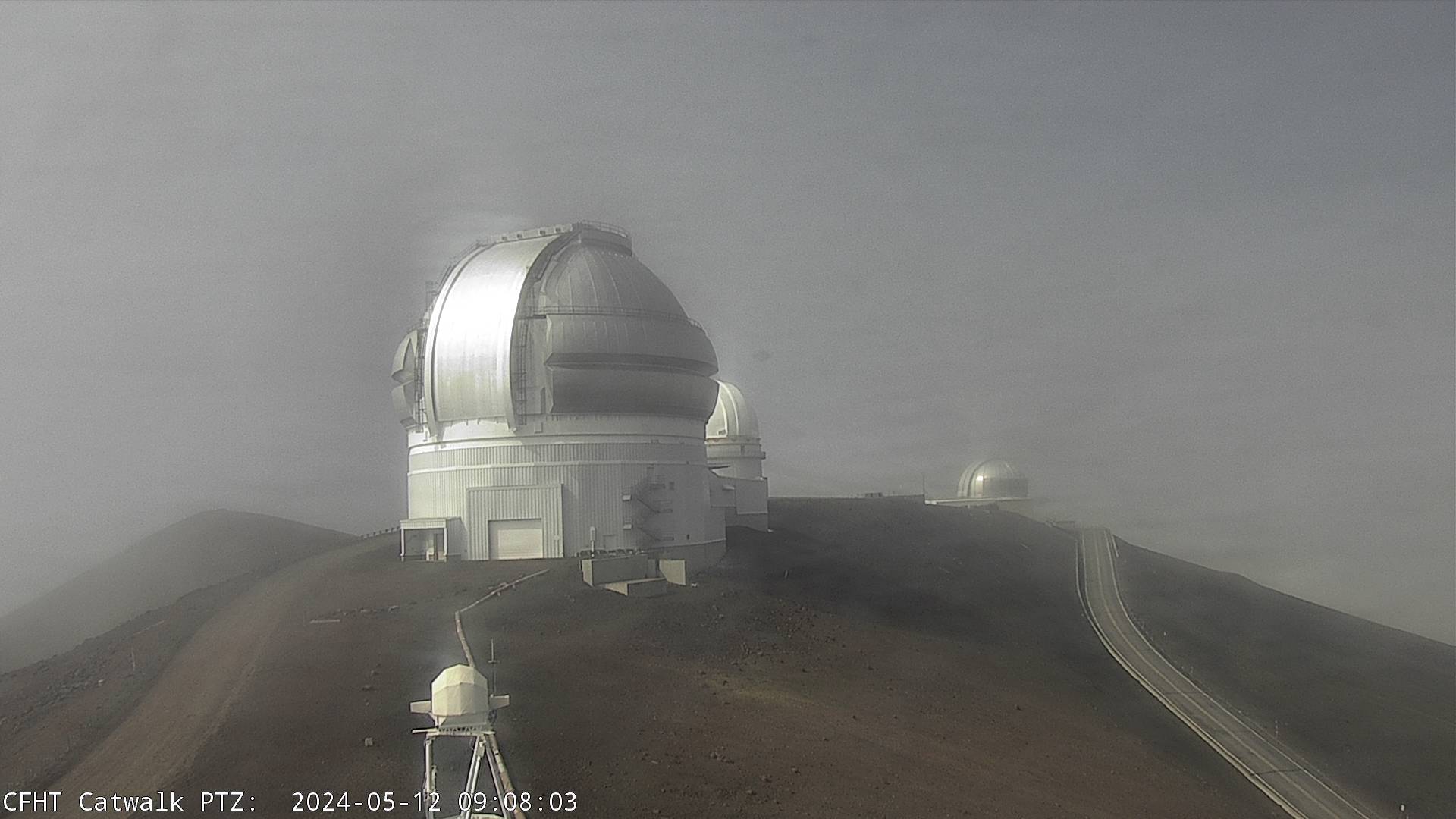
Hawaii’s Mountains – Here’s a link to the live webcam on the summit of near 14,000 foot Mauna Kea on the Big Island of Hawaii. The tallest peak on the island of Maui is the Haleakala Crater, which is near 10,000 feet in elevation. These two webcams are available during the daylight hours here in the islands…and when there’s a big moon rising just after sunset for an hour or two! Plus, during the nights and early mornings you will be able to see stars, and the sunrise too…depending upon weather conditions.
Aloha Paragraphs

Windy weather on the horizon
Photo Credit: flickr.com
The trade winds filled back into most of the eastern Hawaiian Islands Thursday afternoon…which will overlap all islands into Friday. As the trade winds return during the day Thursday, and become stronger Friday, they will require small craft wind advisories over all coastal and channel waters…with even perhaps a gale warning in those windiest areas Friday into Saturday. The NWS forecast office has issued a high wind watch for the entire state, which will come into effect later Friday, and last through most of the weekend. If the winds get as strong as anticipated, that watch would of course be upgraded to a high wind warning in select areas. The latest forecasts keep these gusty trade winds blowing through the middle of next week…at least.
What exactly is a high wind watch? Well, the official NWS definition of a watch is this:
"A HIGH WIND WATCH MEANS THERE IS THE POTENTIAL FOR A HAZARDOUS HIGH WIND EVENT. SUSTAINED WINDS OF AT LEAST 40 MPH…OR GUSTS OF 58 MPH OR STRONGER…MAY OCCUR."
I consider this a definite threat, and suggest that we begin to think about what loose objects that we may want to secure, before the strongest gusts begin blowing. We can expect these winds to be strongest where they blow downslope along the southwestern leeward sides of the islands. These winds too will become strongest where local acceleration occurs through valleys and around headlands…and over mountain ridges.
The instability associated with the long lasting trough of low pressure, is moving away to the west…taking the threat of heavy showers with it. There have been numerous towering cumulus clouds around, which built into thunderstorms locally this week. These rainy clouds have caused flood advisories to be issued by the NWS forecast in Honolulu, on each of the islands lately as well. As the trade winds return during the day Thursday, and then get considerably stronger Friday into the weekend, showers will focus more exclusively along our windward coasts ands slopes…spreading showers at times, over to the leeward sides in places too.
It remains cold atop the Big Island’s mountains, as shown in this webcam shot of Mauna Kea…with an exceptionally low 21F degrees early Thursday morning…which warmed only to 25 degrees early Thursday evening. This webcam, once the sun goes down Thursday evening, will return with first light Friday morning.
We’re heading into a windy period, which will peak in strength Friday through the weekend…gradually easing up as we move into next week. Once those winds become more blustery Friday into the weekend, we’ll see our local ocean become filled with white caps and becoming very rough. All the incoming strong and gusty trade winds will cause rough surf conditions, which will be pounding our east facing shores, and wrap around into other areas as well. Caution should be exercised when entering the ocean during this particularly blustery period, or just staying away from the ocean altogether…wouldn’t be a bad idea either.
It’s early Thursday evening here in Kihei, Maui, as I begin writing this last section of today’s narrative. Here on Maui today, especially during the middle of the day, we had towering cumulus clouds over the West Maui Mountains…and offshore over the smaller island of Lanai as well. As the trade winds arrived later in the afternoon, these cauliflower-like cumulus clouds all collapsed. Looking out the window before I leave for the drive upcountry to Kula, I see lots of clear blue skies out there. There were still one or two vertically enhanced cumulus clouds, although most of them were more horizontal, and flattened out now. As we move into Friday, the main talking point will focus primarily on the strengthening trade wind flow. These trade winds will carry more showers onto the windward sides than we’ve seen lately. ~~~ I’ll be back early Friday morning with your next new weather narrative, at which point I’ll have more new information about the nature of our soon to be blustery trade winds. I hope you have a great Thursday night, waking up rested and refreshed Friday morning! Aloha for now…Glenn.
Interesting: Imagine a hospital where morale is high, employee turnover is low and patient call buttons rarely go unanswered—and if they do, you can call the hospital’s CEO. That’s exactly the type of culture and service that "delights" patients and makes for the most successful community hospitals in the country, as rated by caregivers and patients, says John Griffith, professor in the University of Michigan School of Public Health. In a newly published report, Griffith examined the attributes of 34 community hospitals in nine states that have earned the Health Care Sector Malcolm Baldrige National Quality Award, a nationally recognized quality benchmark for various industries. Griffith’s findings suggest that the single-biggest factor in patient satisfaction is hospital employee morale, which starts with outside-the-box thinking at the very top management levels.
These community hospitals had the happiest patients and caregivers, but only because these hospitals departed radically from traditional hospital management, Griffith says. For instance, at the Florida hospital where patients receive a welcome letter with the CEO’s signature and home phone number, they’re also paid a visit by their unit’s nurse manager, who also leaves cell and office phone numbers. This personal service doesn’t come cheaply, yet the hospitals kept costs low enough to thrive financially on standard Medicare and insurance payments, despite paying employees "extremely well," Griffith says. "They reward a good job, both with celebration and financially with cash," he said. "One of the interesting things about these places is they don’t have any nursing shortages. They have enough nurses, well-trained nurses and well-motivated nurses."
Interesting2: Alcohol advertising and marketing may lead to underage drinking. A large systematic review of more than 13,000 people suggests that exposure to ads and product placements, even those supposedly not directed at young people, leads to increased alcohol consumption. Lesley Smith and David Foxcroft from Oxford Brookes University collated information from seven rigorously selected studies, featuring information on 13,255 participants. This systematic review, funded by the Alcohol and Education Research Council (AERC), is the first to study the effects of advertising, product placement in films, games, sporting events and music videos, depictions of drinking in various media, and exposure to product stands in shops. According to Smith, "Our work provides strong empirical evidence to inform the policy debate on the impact of alcohol advertising on young people, and policy groups may wish to revise or strengthen their policy recommendations in the light of this stronger evidence".
Interesting3: Approximately five million years ago, the Mediterranean Sea dried up after it was sealed off from the Atlantic Ocean. According to earth scientist Rob Govers of Utrecht University, a reduction in the weight on the Earth’s crust led to the Straits of Gibraltar moving upwards. Govers will publish his conclusions in the February issue of the earth sciences journal Geology. Much like a mattress springs back into shape after you get off it, the Earth’s crust moves upwards when sea levels fall. Known as isostasy, this phenomenon explains how the Mediterranean Sea was sealed off from the Atlantic Ocean five million years ago. This ‘dam’ would remain in place for 170,000 years.
Much like today, the rate of evaporation in the Mediterranean Sea five million years ago greatly exceeded the incoming flow of water. As no more water was introduced via the Straits of Gibraltar, the water evaporated and the Mediterranean Sea dried up completely. After being separated for 170,000 years, the Mediterranean Sea and the Atlantic Ocean were once again connected. Govers believes that the movement of the Earth’s crust played a crucial role. The African Plate subducts under the Eurasian Plate beneath Gibraltar and the weight of the subducting edge of the African Plate may have pulled the entire region downwards. Govers submits CT scans of the inner layers of the Earth’s crust and measurements of gravitational forces as evidence: both the scans and the measurements indicate the presence of a heavy mass up to 400 kilometers beneath the area.
Interesting4: About 53 million people in developing countries will remain poor because of the world economic slowdown, the World Bank has said. The Bank says the downturn will reverse many of the gains made in reducing poverty in developing countries. It estimates that 40% of the world’s 107 developing countries are "highly exposed" to the global crisis. And it calls on the rich countries to devote 0.7% of their bail-out packages to help the poor in developing nations. The global crisis is likely to keep 46 million more people below the absolute poverty line of $1.25 per day, and another seven million under $2 per day, compared with previous World Bank forecasts for 2009. "The global crisis threatens to become a human crisis in many developing countries unless they can take targeted measures to protect vulnerable people," said World Bank president Robert Zoellick.
"While much of the world is focused on bank rescues and stimulus packages, we should not forget that poor people are much more exposed if their economies falter." The World Bank says the crisis will also delay progress towards reducing infant mortality, which could see 200,000-400,000 more children a year die if the crisis persists. These developments will undermine the plans agreed by the UN to reach the world poverty targets agreed in the Millennium Development Goals by 2015. The food and fuel price increases in 2008 pushed another 130-150 million poor people into poverty, the Bank estimates.
Interesting5: Confronted with a sharp change of priorities in Washington, international oil executives are expressing an eagerness to work with President Obama to fashion new policies to tackle global warming. At an industry conference here this week, the executives struck a conciliatory tone on how to limit the emissions that are contributing to climate change, with many of them sounding like budding conservationists as they stressed energy efficiency and the need to develop renewable fuels. At the same time, they declared that the country would still need oil for a long time, and sought to persuade the new administration of the need for more drilling off the nation’s coasts. On tackling global warming, a subject that has long divided the industry, some executives said they supported a tax on carbon, while others favored a trading system like the one adopted by Europe.
Almost all of them seemed reconciled to the United States’ adopting some kind of climate policy, and said they were eager to work with the new administration to devise an effective energy strategy. “President Obama comes to office with a strong commitment to tackle climate change,” said Tony Hayward, the chief executive of BP. “Suddenly the challenges many of us have been wrestling with for a long time — the importance of energy security in providing economic security, and tackling the issue of climate change in a way that is commercially viable — are center stage.”
Interesting6: The raging infernos that have left more than 160 people dead in southern Australia burned with such speed that they resembled less a wildfire than a massive aerial bombing. Many victims caught in the blazes had no time to escape; their houses disintegrated around them, and they burned to death. As firefighters battle the flames and police begin to investigate possible cases of arson around some of the fires, there will surely be debates over the wisdom of Australia’s standard policy of advising residents to either flee a fire early or stay in their homes and wait it out. John Brumby, the premier of the fire-hit Australian state of Victoria, told a local radio station on Monday that "people will want to review that … There is no question that there were people who did everything right, put in place their fire plan, and it [didn’t] matter — their house was just incinerated."
Although the wildfires caught so many victims by surprise last weekend, there has been no shortage of distant early-warning signs. The 11th chapter of the second working group of the 2007 Intergovernmental Panel on Climate Change, for example, warned that fires in Australia were "virtually certain to increase in intensity and frequency" because of steadily warming temperatures over the next several decades. Research published in 2007 by the Australian government’s own Commonwealth Scientific and Industrial Research Organization reported that by 2020, there could be up to 65% more "extreme" fire-danger days compared with 1990, and that by 2050, under the most severe warming scenarios, there could be a 300% increase in such days. "[The fires] are a sobering reminder of the need for this nation and the whole world to act and put at a priority the need to tackle climate change," Australian Green Party leader Bob Brown told the Sky News.
Interesting7: The Hawaiian island of Oahu was hit by a rare tornado that touched down near the town of Kapolei on Wednesday. The tornado caused minor damage to several roofs and buildings. It was spawned from a storm that moved south across the islands, bringing strong winds, heavy rain, hail, and even snow over the mountains. As well as the damage caused by the tornado, localised flooding also occurred due to the intense rainfall. Tornadoes are fairly rare in Hawaii. The islands see an average of just one per year, and these tend to be less frequent and less severe compared to the tornadoes experienced in continental parts of the USA.
A tornado is a high speed vortex or funnel of wind that touches the ground. Tornadoes can develop inside hurricanes and large thunderstorms. In these storms, there are violent upcurrents that can combine with strong winds to form a rotating spiral known as a funnel cloud. The funnel cloud can then descend towards the ground, and it if makes contact with the ground, a tornado has been born. The last tornado reported in Hawaii was in September 2008, and the most abundant year for tornadoes was 1971 when five occurred in just one year.
Interesting8: Songbirds fitted with tiny electronic backpacks have provided their downloadable whereabouts over the course of a migration, revealing the feathery aviators can book three times faster than expected. Bridget Stutchbury, a professor of biology at York University in Toronto, and her colleages tracked 14 wood thrushes and 20 purple martins, a type of swallow also called Progne subis, from their breeding grounds in Pennsylvania to their wintering grounds in Central and South America. The next year, in 2008, the team retrieved the devices from five wood thrushes and two purple martins. Overall, the songbirds flew much quicker than expected — more than 311 miles (500 km) a day compared with previous estimates of 93 miles (150 km) per day. And the birds zipped back to North America in the spring about two to six times faster than the fall trip. For instance, one purple martin took 43 days to reach Brazil in the fall, but returned to its breeding colony in the spring in just 13 days. Stutchbury said the songbirds have more incentive in the spring to chug back to North America where they compete for the best real estate for snagging the highest quality mates. In fact, the birds took lengthier rest stops during their fall journeys to wintering grounds.
The purple martins stopped for three to four weeks in the Yucatan before continuing to Brazil. And four wood thrushes took a one- to two-week break in the southeastern United States in late October before crossing the Gulf of Mexico. Two of the wood thrushes (including one that stopped over in the southeastern United States) stopped on the Yucatan Peninsula for two to four weeks in the fall. The results, which are detailed in the Feb. 13 issue of the journal Science, were possible due to a new and lighter tracking technology. Before now, satellite tracking devices were so large they could only be used on heftier birds such as albatross and penguins. And the only contraption small enough for songbirds had been radio transmitters, which require a human to follow the tagged bird in an airplane. Researchers with the British Antarctic Survey miniaturized so-called geolocators recently. The mini backpacks are each smaller than a dime and detect light, allowing researchers to estimate a bird’s map coordinates by recording sunrise and sunset times. "Never before has anyone been able to track songbirds for their entire migratory trip," Stutchbury said.
Interesting9: The nest egg of the typical American family is smaller now than it was seven years ago, according to Federal Reserve data released Thursday. The inflation-adjusted net worth of the typical family increased 17.7% to $120,300 from 2004 through 2007, the Fed said Thursday in its Survey of Consumer Finances, the most detailed look at family finances available. Net worth is defined as assets minus liabilities. "But a lot has happened" since the end of 2007, a Fed economist said. As of October, median net worth had fallen to $98,900, down 3.2% from the end of 2007 and 2% below the level reported in the 2001 survey that was conducted after the dot.com bubble burst. Since October, stock prices have fallen another 15%, while home prices have fallen at least 2%. The Fed survey is conducted every three years. The median is a midpoint, with half of the households in the nation worth more and half worth less. The report shows median household income growth was relatively flat from 2004 to 2007 after adjusting for inflation.
Median household income stood at $47,300 per year at the end of 2007. However, mean income (or the simple average) rose 8.5% during that time to $84,300, suggesting big income gains at the high end of the income distribution. Indeed, the average income for those in the top tenth of the income scale increased nearly 20% to $398,000, while those in the bottom fifth saw their income rise by an average of 3% ($400) to $12,300. For those in the middle, average incomes decreased $400 to $47,300 after adjusting for inflation. The typical family owed $67,300 in debts in 2007, up from $60,700 in 2004. The big increase came from debt on second homes. The typical family that had a mortgage owed $107,000 on their primary residence. Those with credit card balances owed $3,000. The median installment debt, chiefly auto loans, was $13,000.
 Email Glenn James: