Hawaiian Islands weather details & Aloha paragraphs
Posted by GlennDecember 13-14 2007
Air Temperatures – The following maximum temperatures were recorded across the state of Hawaii Thursday:
Lihue, Kauai – 79
Honolulu, Oahu – 81
Kaneohe, Oahu – 78
Kahului, Maui – 79
Hilo, Hawaii – 78
Kailua-Kona, Hawaii – 83
Temperatures ranged between these warmest and coolest spots near sea level at 4 a.m. Friday morning:
Molokai airport – 78F
Hilo, Hawaii – 67
Precipitation Totals – The following numbers represent the largest precipitation totals (inches) during the last 24 hours on each of the major islands, as of Friday morning:
1.20 MOUNT WAIALEALE, KAUAI
1.57 SOUTH FORK KAUKONAHUA, OAHU
0.20 MOLOKAI
0.00 LANAI
0.07 KAHOOLAWE
2.82 PUU KUKUI, MAUI
1.45 LAUPAHOEHOE, BIG ISLAND
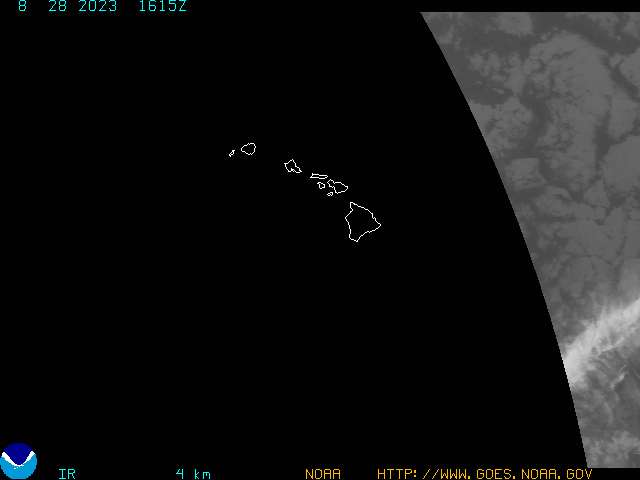
Satellite and Radar Images: To view the cloud conditions we have here in Hawaii, please use the following satellite links, starting off with the Infrared Satellite Image of the islands to see all the clouds around the state during the day and night. This next image is one that gives close images of the islands only during the daytime hours, and is referred to as a Close-up visible image. This next image shows a larger view of the Pacific…giving perspective to the wider ranging cloud patterns in the Pacific Ocean…out from the islands. To help you keep track of where any showers may be around the islands, here’s the latest animated radar image.
Weather Chart – An unusually strong 1038 millibar high pressure system is located to the north of the Aloha state now. This high and its associated ridge system, will keep strong trade winds blowing today into Saturday. Here’s the latest (automatically updated) weather map. Here’s a Weather Map Symbol page for clarification about what all those weather symbols mean on the map.
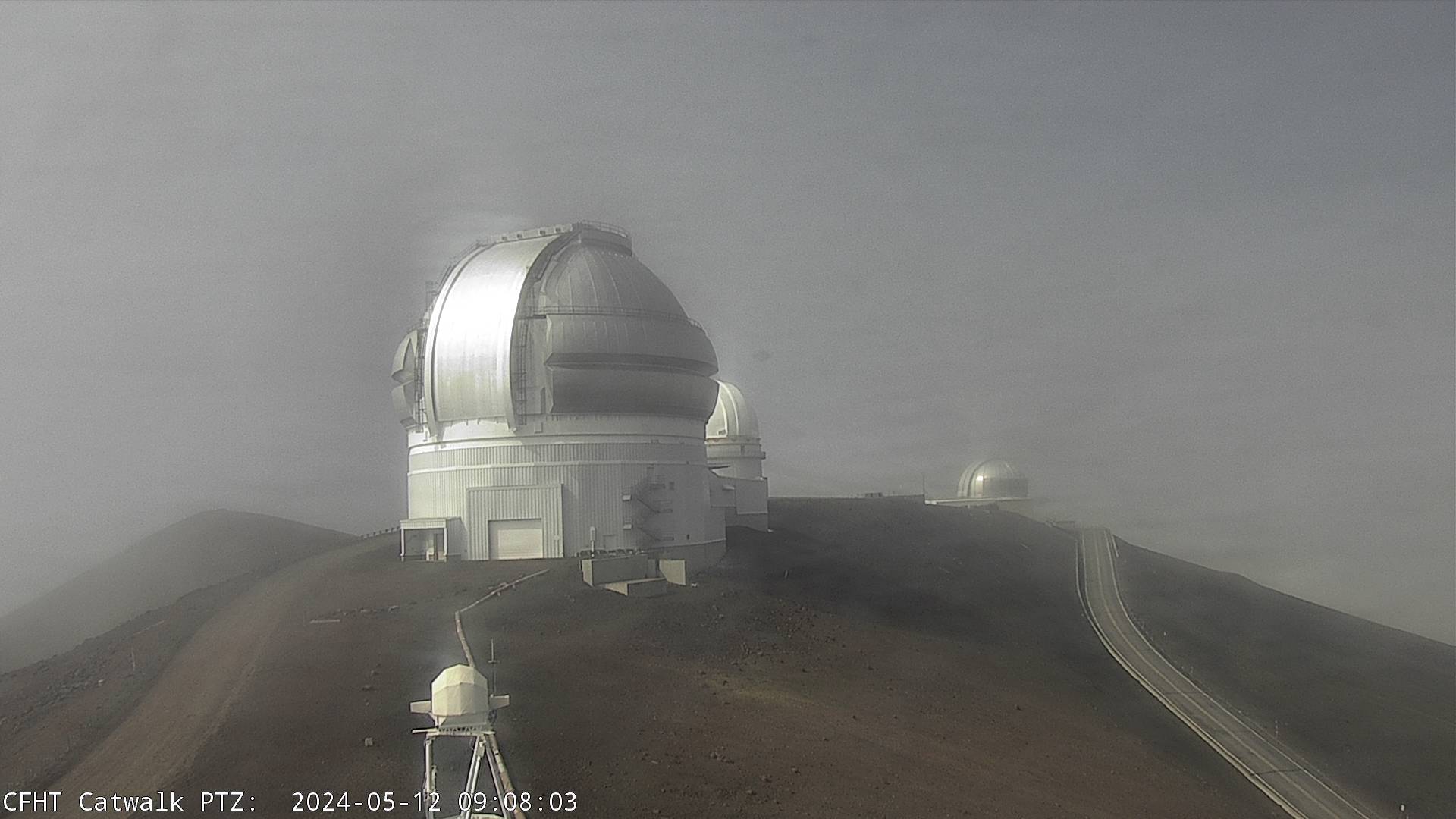
Hawaii’s Mountains – Here’s a link to the live webcam on the summit of near 14,000 foot Mauna Kea on the Big Island of Hawaii. The tallest peak on the island of Maui is the Haleakala Crater, which is near 10,000 feet in elevation. These two webcams are available during the daylight hours here in the islands…and when there’s a big moon rising just after sunset for an hour or two! Plus, during the nights and early mornings you will be able to see stars, and the sunrise too…depending upon cloud conditions.

Windy weather in the islands
photo credit: flickr.com
These quick paced trade winds will carry showery clouds to the windward sides on occasion, with a few stray showers being carried over into the leeward sides on the smaller islands. As is often the case when the trade wind get this strong, showers ride in on them, falling in an off and on manner along the north and east facing north and east facing windward coasts and slopes. It appears that there will be a fairly steady stream of these passing showers arriving now through the weekend along those wind exposed areas. The smaller islands have lower mountains dividing the windward and leeward sections, so that the blustery winds will likely whip a few showers over into the south and west facing coasts at times there as well.
It’s Thursday evening here in the islands, as I begin writing this last paragraph of today’s narrative. The stiff winds noted above, have definitely got our attention now. They will be blowing in the 15-30 mph range generally, although those windiest areas will find wind speeds between 30-40 mph, with higher gusts to nearing 50 mph in a few select spots! Just to put a little context into the picture, last week we had a very blustery Kona storm here in the islands, with exceptionally strong winds, which topped out in the 50-73 mph range. This blustery trade wind event isn’t going to be like that, as for one thing the winds will be coming in from the more or less easterly direction, rather than the SW direction like we had last week. That Kona storm last week was something like a once in a 20 or 25 year storm, unusual in the strength of its winds. This trade wind episode happens much more frequently, many times a year, just to relax some nerves here in the islands…which are still a bit frazzled from the big storm last week. Strong trade winds are common here in Hawaii, nothing to get worried about, as in a manner of speaking…our Hawaiian Islands are set up to withstand blustery trade winds very well. There will be areas that are more sheltered from the wind flow, like areas in the lee of the mountains, which will have lighter winds than the big numbers described above. ~~~ It was a generally nice and sunny day here in the islands, although those occasional passing showers kept a bit of wettness around at times along the windward sides. The leeward sides were really quite sunny and warm, just the way all our local sun worshippers like it, not to mention all the folks here on vacation now! When I went to the beach today at lunch, the wind in Kihei wasn’t all that strong, and the sunshine was abundant. By the way, the beach parks in Kihei are now open again, after being closed for several days, while crews cleaned them up after the big storm last week. ~~~ I’ll be back very early Friday morning with your next new weather narrative from paradise. I hope you have a great Thursday night until then, wherever you happen to be spending it! Aloha for now…Glenn.
Free Hugs
Tonight’s Geminid Meteor Shower: The Geminid meteor shower will be lighting up the night sky Thursday evening. According to the NASA Web site, there could be dozens of meteors per hour showering down to earth. At least one website is calling this the best meteor shower of 2007!
According to the Web site, when comets fly close to the sun, they evaporate, and the intense heat from the sun vaporizes the "dirty ice" in the comet. This results in high-speed jets of comet dust spewing into space. When pieces of this debris hit the Earth’s atmosphere, they disintegrate in a brilliant flash producing a meteor.
The first Geminid meteor showers occurred during the War Between the States in the early 1860s, according to the Web site. This meteor shower has been a regular one ever since, peaking every year in the middle of November.
According to NASA, the Geminid show will start about 10 p.m. tonight, but the best time to watch is between midnight until dawn on Friday. Looking to the west in the hours before dawn, the meteors will appear to be coming from the constellation Gemini.
Interesting – There already is enough carbon in Earth’s atmosphere to ensure that sea levels will rise several feet (meters) in coming decades and that summertime ice will vanish from the North Pole, scientists warned on Thursday. To mitigate global warming’s worst effects, including severe drought and flooding, people must not only cut current carbon emissions but also remove some carbon that has built up in the atmosphere since the Industrial Revolution, they said. "We’re a lot closer to climate tipping points than we thought we were," said James Hansen, director of NASA’s Goddard Institute for Space Studies. "If we are to have any chance in avoiding the points of no return, we’re going to have to make some changes." The small amount of warming that the Earth has experienced since the 1970s already has shrunk every glacier on the planet, scientists said this week at the 2007 meeting of the American Geophysical Union, where attention has focused on the unexpected acceleration of climate change. "If you see that even a small amount of warming has had a notable effect on the ice, it’s a good question what effect future warming will have," said Pennsylvania State University Professor Richard Alley. Record melting occurred in the North Pole this summer, when for the first time in recorded history, ships sailed across the
 Email Glenn James: