Weather Details & Aloha Paragraphs
Posted by GlennNovember 14-15 2007
Air Temperatures – The following maximum temperatures were recorded across the state of Hawaii Wednesday:
Lihue, Kauai – 83
Honolulu, Oahu – 84
Kaneohe, Oahu – 81
Kahului, Maui – 85
Hilo, Hawaii – 83
Kailua-Kona, Hawaii – 83
Temperatures ranged between these warmest and coolest spots near sea level at 4 a.m. Thursday morning:
Lihue, Kauai – 75F
Hilo, Hawaii – 67
Precipitation Totals – The following numbers represent the largest precipitation totals (inches) during the last 24 hours on each of the major islands, as of Thursday morning:
0.29 MOUNT WAIALEALE, KAUAI
0.77 MANOA LYON ARBORETUM, OAHU
0.13 MOLOKAI
0.07 LANAI
0.00 KAHOOLAWE
1.14 PUU KUKUI, MAUI
0.23 KAMUELA, BIG ISLAND
Weather Chart – High pressure cells to the NNW through NE of the islands will keep our moderately strong trade winds blowing Thursday, although a new gale low pressure system has formed to the NW of the islands now. This gale, with its associated cold front will push the high pressure to our north southward…with a corresponding drop in trade wind speeds starting Friday. Here’s the latest (automatically updated) weather map. Here’s a Weather Map Symbol page for clarification about what all those weather symbols mean on the map.
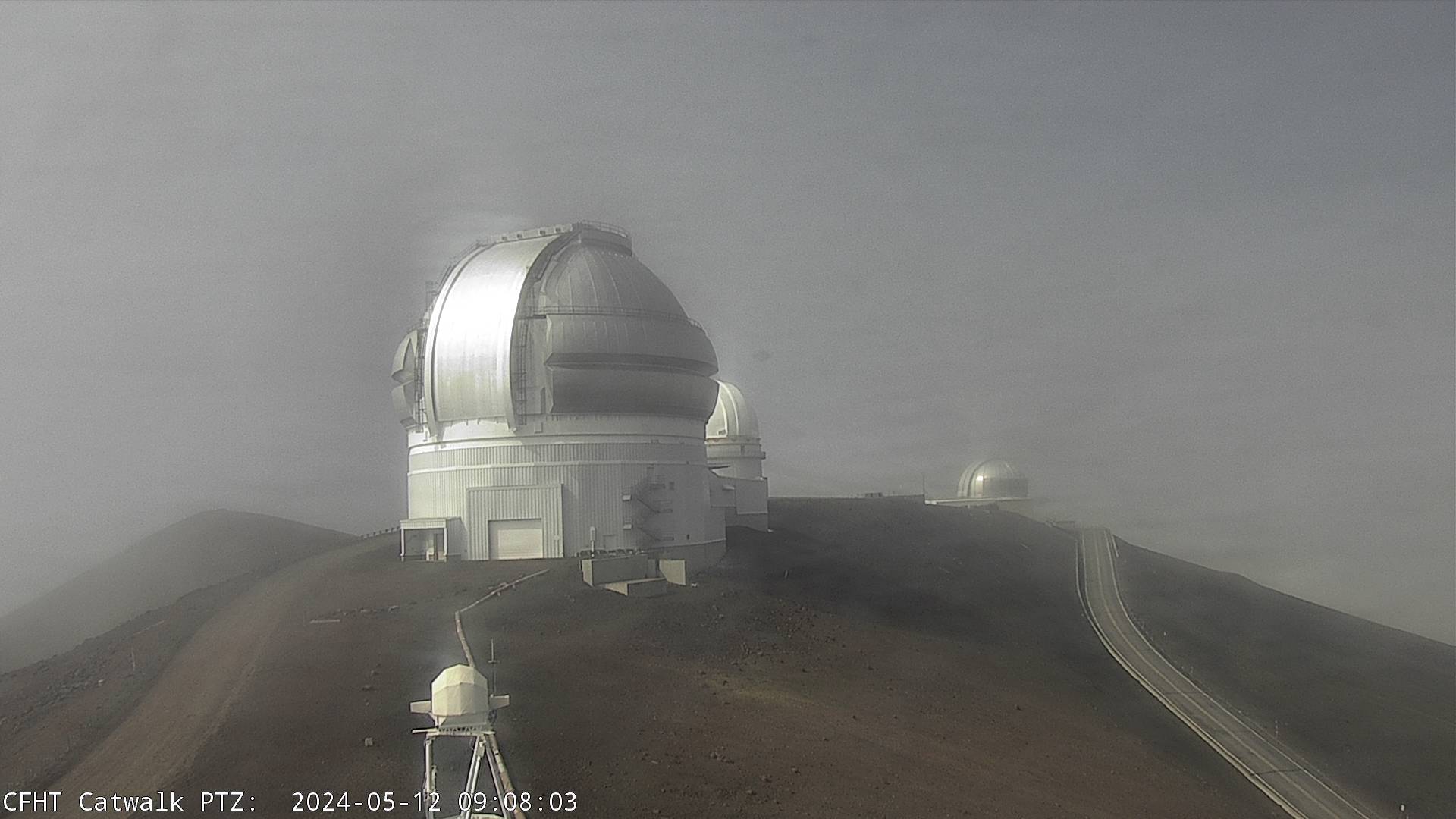
Hawaii’s Mountains – Here’s a link to the live webcam on the summit of near 14,000 foot Mauna Kea on the Big Island of Hawaii. The tallest peak on the island of Maui is the Haleakala Crater, which is near 10,000 feet in elevation. These two webcams are available during the daylight hours here in the islands…and when there’s a big moon rising just after sunset for an hour or two! Plus, during the nights and early mornings you will be able to see stars, and the sunrise too…depending upon cloud conditions.
Tropical Cyclone activity in the eastern and central Pacific – Here’s the latest information coming out of the National Hurricane Center, covering the eastern north Pacific. You can find the latest tropical cyclone information for the central north Pacific (where Hawaii is located) by clicking on this link to the Central Pacific Hurricane Center. Here’s a tracking map covering both the eastern and central Pacific Ocean.
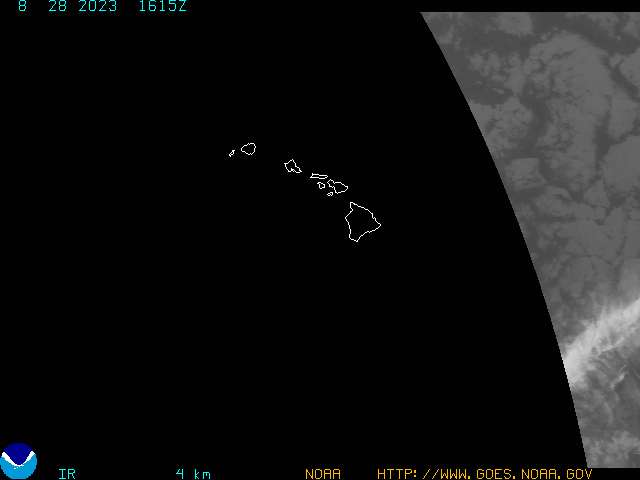
Satellite and Radar Images: To view the cloud conditions we have here in Hawaii, please use the following satellite links, starting off with the Infrared Satellite Image of the islands to see all the clouds around the state during the day and night. This next image is one that gives close images of the islands only during the daytime hours, and is referred to as a Close-up visible image. This next image shows a larger view of the Pacific…giving perspective to the wider ranging cloud patterns in the Pacific Ocean…out from the islands. To help you keep track of where any showers may be around the islands, here’s the latest animated radar image.

Another awesome Hawaiian sunset!
photo credit: flickr.com
The trade winds here in Hawaii will continue to blow in the moderately strong category through the rest of this work week…although getter lighter by the weekend into early next week. This trade wind weather pattern will keep the Hawaiian Islands in favorably inclined weather circumstances. The trade winds aren’t expected to blow so hard that they will be a problem for mariners, although will be strong enough to cut through the tropical heat that develops during the days. All in all, things will be just fine, with only the occasional shower passing along the windward coasts and slopes. The leeward beaches will be quite sunny, bringing just the kind of weather that visitors and locals appreciate this time of year.
This autumn trade wind weather pattern will last through the end of the week, although the models show an upper level trough of low pressure gettin close by the middle of next week. This isn’t anything to really worry about however, as it’s still too early to know the exact details. There is a chance that we would finally see a different weather pattern arriving about that time. Depending upon where exactly it forms, will help to determine just where exactly an increase in showers might occur. The most likely source of these showers would be to see the trough’s associated cold front moving into the state from the northwest.
It’s Wednesday evening here in islands, as I start writing this last paragraph of today’s narrative. As noted in the two paragraphs above, the trade winds will continue to be the driving force in our local Hawaiian Island weather picture for the time being…keeping nice weather around well into the future. The only wild card at this time is a low pressure system that the models want to bring into the area around the middle of next week, as noted in the paragraph above. ~~~ On another note, the famous Humpback Whales are back in Hawaiian waters now! Actually, they began arriving in the waters around Maui late last month, and have recently started to show themselves up around Kauai in the last day or two. It’s always exciting to know that these whales are out there doing their thing! I look forward to seeing them spout, and perhaps even breach almost completely out of the water at times. They will be around through March and into April, so there’s plenty of time to enjoy their company. ~~~ I hope you have a great Wednesday night, I’ll be back very early Thursday morning with your next new weather narrative from paradise. Aloha for now…Glenn.
 Email Glenn James: