Weather Details & Aloha Paragraphs
Posted by GlennSeptember 5-6 2007
Air Temperatures – The following maximum temperatures were recorded across the state of Hawaii Wednesday:
Lihue, Kauai – 85F
Honolulu, Oahu – 88
Kaneohe, Oahu – 85
Kahului, Maui – 87
Hilo, Hawaii – 87
Kailua-Kona, Hawaii – 85
Temperatures early Thursday morning ranged between these warmest and coolest spots near sea level at the 4 a.m. hour:
Lihue, Kauai – 77F
Kahului, Maui – 68
Precipitation Totals – The following numbers represent the largest precipitation totals (inches) during the last 24 hours on each of the major islands, as of Thursday morning:
1.75 HANALEI RIVER, KAUAI
0.94 POAMOHO 2, OAHU
0.07 MOLOKAI
0.02 LANAI
0.01 KAHOOLAWE
0.31 OHEO GULCH, MAUI
0.51 LAUPAHOEHOE, BIG ISLAND
Weather Chart – Here’s the latest (automatically updated) weather map…showing a 1030 millibar high pressure system located far NE of Hawaii now. At the same time we find a gale low pressure system, with its associated early season cold front to our NW. This pressure configuration will keep the trade winds lighter than usual Thursday…gaining a little strength starting later Friday into the weekend. Here’s a Weather Map Symbol page for clarification about what all those weather symbols mean on the map.
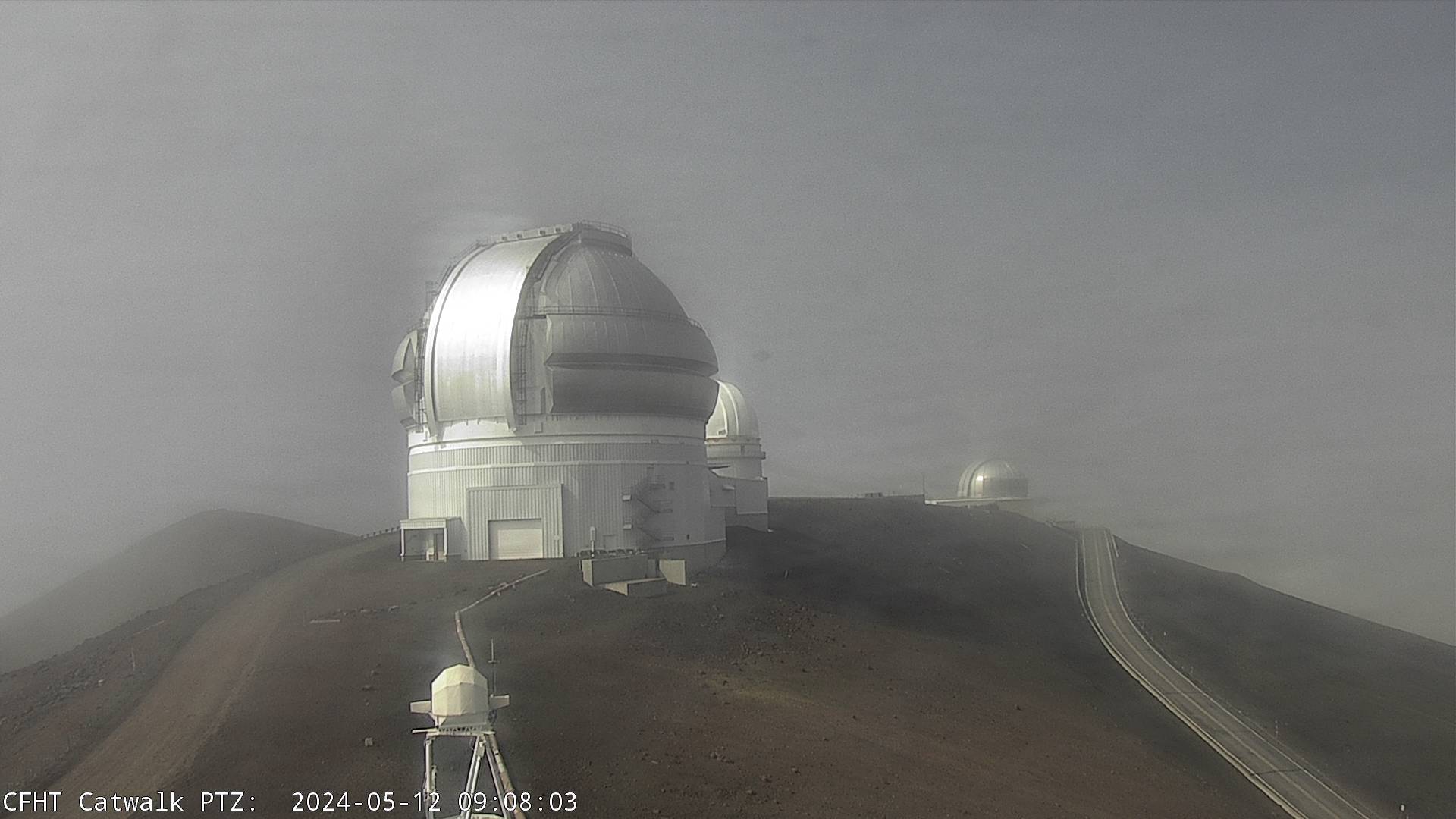
Hawaii’s Mountains – Here’s a link to the live webcam on the summit of near 14,000 foot Mauna Kea on the Big Island of Hawaii. The tallest peak on the island of Maui is the Haleakala Crater, which is near 10,000 feet in elevation. These two webcams are available during the daylight hours here in the islands…and when there’s a big moon rising just after sunset for an hour or two! Plus, during the nights and early mornings you will be able to see stars, and the sunrise too…depending upon cloud conditions.
Tropical Cyclone activity in the eastern and central Pacific – Here’s the latest information coming out of the National Hurricane Center, covering the eastern north Pacific. You can find the latest tropical cyclone information for the central north Pacific (where Hawaii is located) by clicking on this link to the Central Pacific Hurricane Center. Here’s a tracking map covering both the eastern and central Pacific Ocean.
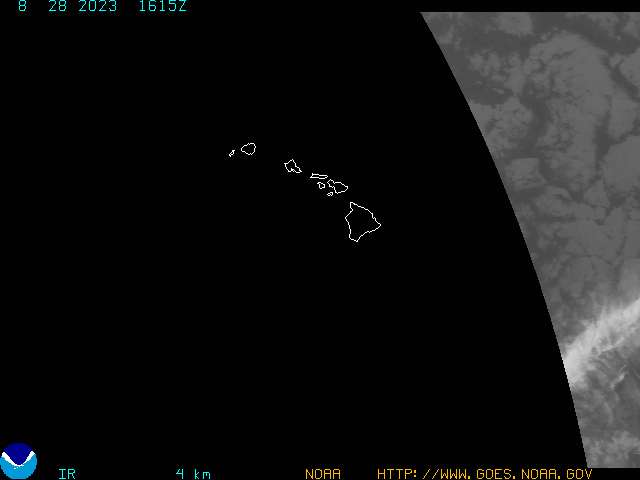
Satellite Images – To view the cloud conditions we have here in Hawaii, please use the following satellite links, starting off with the Infrared Satellite Image of the islands to see all the clouds around the state during the day and night. This next image is one that gives close images of the islands only during the daytime hours, and is referred to as a Close-up visible image. This next image shows a larger view of the Pacific…giving perspective to the wider ranging cloud patterns in the Pacific Ocean…out from the islands. To help you keep track of where any showers may be around the islands, here’s the latest animated radar image.

Elementally Tropical: land, water, and air…with clouds
Photo Credit:: flickr.com
The trade winds will remain active here in the Hawaiian Islands, although get softer as we head through the next couple of days. The latest weather map shows a 1030 millibar high pressure system located far to the NE of the islands…the source of our trade winds now. Meanwhile, that same weather map shows an early season storm low pressure system about 1000 miles to the NNW of Kauai. As this storm develops and deepens a bit more over the next couple of days, its associated cold front will push SE towards Hawaii. This frontal cloud band won’t get near the main Hawaiian Islands, although it will push our trade wind producing high pressure ridge southward, closer to us. This in turn will weaken our local trade winds, becoming lighter over the next couple of days, remaining somewhat lighter than normal into early next week.
The trade winds will remain strong enough to carry moisture patches into the state, arriving most frequently along our north and east facing windward coasts and slopes. The surface low pressure system, referred to in the paragraph above, will remain far to the NW and north of Hawaii through its life cycle. This distance, even for its associated early season cold front, will have little influence in our area in terms of precipitation. Showers will fall at times along the windward sides as usual, and perhaps along the Kona slopes on the Big Island…and along the leeward slopes of the Haleakala Crater during the afternoons or evenings too. As the winds come down soon, we may see some increase in those afternoon cumulus cloud buildups over the leeward sides of the larger islands…leading to some modest increase showers then.
It’s Wednesday evening here in the islands, as I update this last paragraph of today’s narrative. It’s rather odd to find myself writing about storm low pressure systems, and early season cold fronts during the first week of September. Not rare, although not all that common either. I must admit, after writing my way through a rather uneventfully long summer, full of normal trade wind weather patterns, that I do enjoy having some new words to toss around here! This storm, the primary topic of our discussion today, is nothing like what we would find during the winter months, although nonetheless, it is a bonafide storm, which brings to mind strong winds blowing on the ocean surface. As a matter of fact, that’s exactly what it is, and in that regard will be sending us a small NW swell this weekend. As a reminder: winds blowing on water is what produces swells, which in turn arrive along our local beaches as waves. We’ll find a small NW swell breaking on our NW and north shores by Saturday, again though, nothing like what we will find later in the upcoming autumn season, when the truly big stuff starts rolling in! ~~~ I’ll be back early Thursday morning with your next weather narrative, I hope you have a really nice Wednesday night until then! Aloha for now…Glenn.
Here’s a video made two days ago of a recon plane flying into the eyewall of category 5 hurricane Felix!
Interesting…Felix and Henriette made history yesterday, with both
 Email Glenn James: