Weather Details & Aloha Paragraphs
Posted by GlennAugust 9-10 2007
Air Temperatures – The following maximum temperatures were recorded across the state of Hawaii Thursday:
Lihue, Kauai – 86F
Honolulu, Oahu – 88
Kaneohe, Oahu – 84
Kahului, Maui – 88
Hilo, Hawaii – 85
Kailua-Kona, Hawaii – 87
Temperatures early Friday morning ranged between these warmest and coolest spots near sea level at the 4 a.m. hour:
Kaneohe, Oahu – 78F
Hilo, Hawaii – 70
Precipitation Totals – The following numbers represent the largest precipitation totals (inches) during the last 24 hours on each of the major islands, as of Friday morning:
0.15 OMAO, KAUAI
0.18 POAMOHO 2, OAHU
0.00 MOLOKAI
0.00 LANAI
0.00 KAHOOLAWE
0.24 OHEO GULCH, MAUI
0.34 KAPAPALA RANCH, BIG ISLAND
Weather Chart – Here’s the latest (automatically updated) weather map…showing the continued presence of a large 1034 millibar high pressure system located far NNE of Hawaii…with its associated ridges extending far NW and NE of Hawaii Friday. The trade winds will be moderately strong over Hawaii’s coastal waters…although locally stronger and gusty in those usual windiest locations through Saturday. Here’s a Weather Map Symbol page for clarification about what all those weather symbols mean on the map.
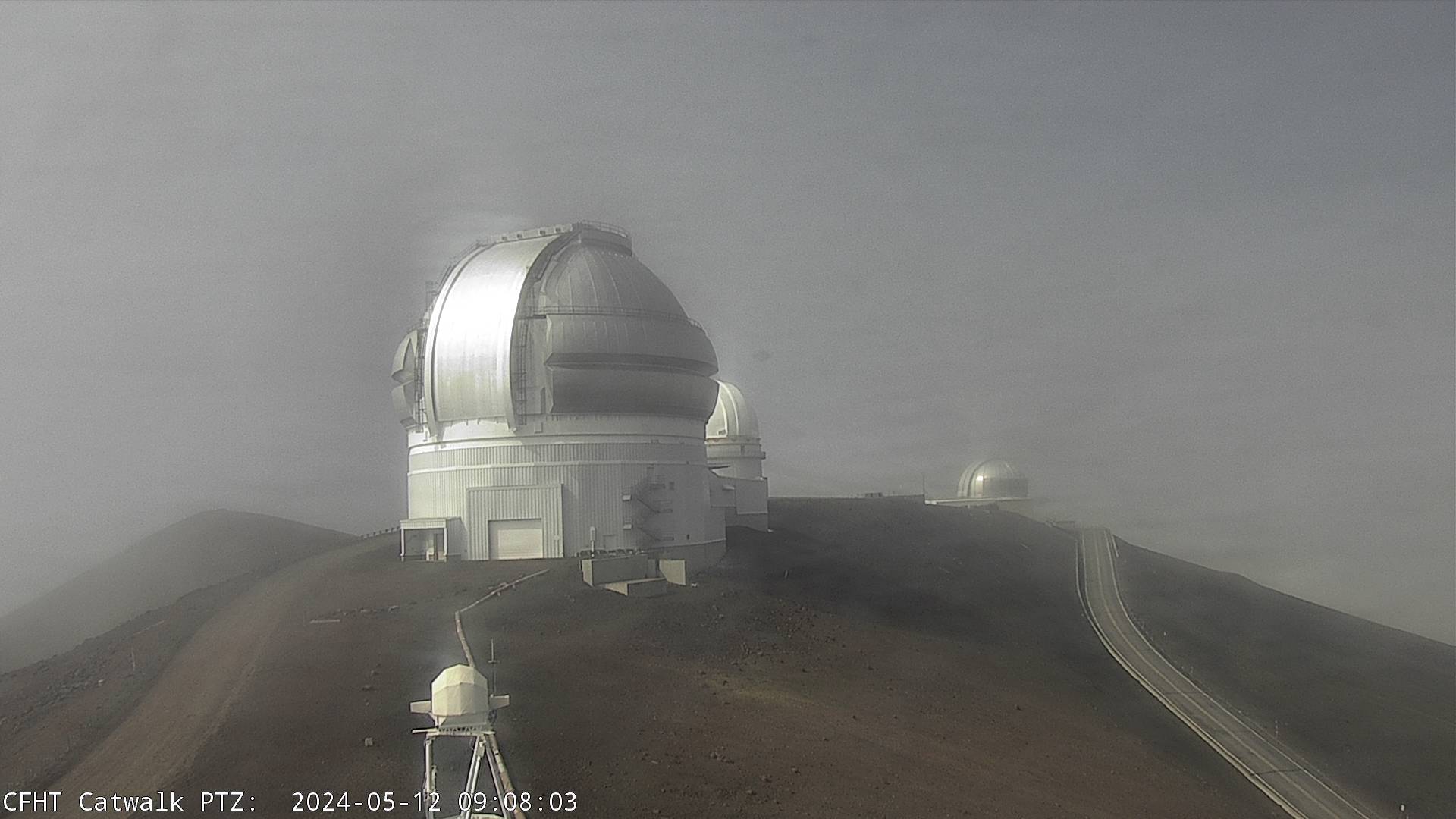
Hawaii’s Mountains – Here’s a link to the live webcam on the summit of near 14,000 foot Mauna Kea on the Big Island of Hawaii. The tallest peak on the island of Maui is the Haleakala Crater, which is near 10,000 feet in elevation. These two webcams are available during the daylight hours here in the islands…and when there’s a big moon rising just after sunset for an hour or two! Plus, during the nights and early mornings you will be able to see stars, and the sunrise too…depending upon cloud conditions.
Tropical Cyclone activity in the eastern and central Pacific – Here’s the latest information coming out of the National Hurricane Center, covering the eastern north Pacific. You can find the latest tropical cyclone information for the central north Pacific (where Hawaii is located) by clicking on this link to the Central Pacific Hurricane Center. Here’s a tracking map covering both the eastern and central Pacific Ocean.
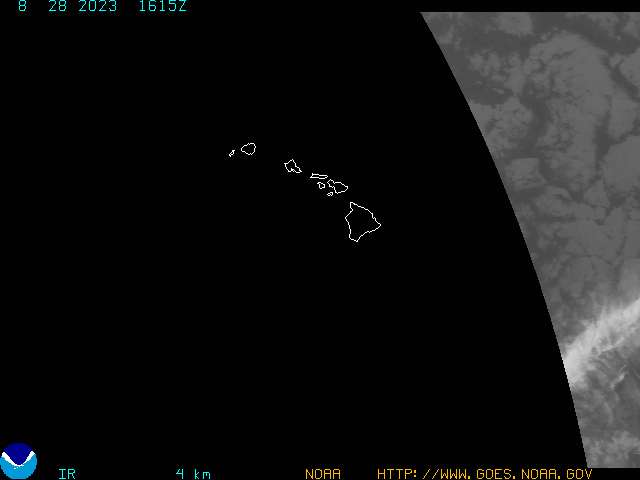
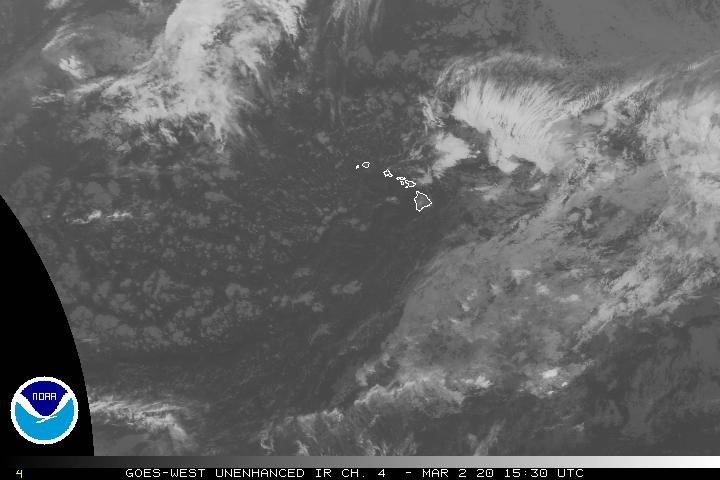
Satellite Images – To view the cloud conditions we have here in Hawaii, please use the following satellite links, starting off with the Infrared Satellite Image of the islands to see all the clouds around the state during the day and night. This next image is one that gives close images of the islands only during the daytime hours, and is referred to as a Close-up visible image. This next image shows a larger view of the Pacific…giving perspective to the wider ranging cloud patterns in the Pacific Ocean…out from the islands. To help you keep track of where any showers may be around the islands, here’s the latest animated radar image.

Windward Oahu
The trade winds will remain the dominant weather feature in the Hawaiian Island weather picture for the time being. Weather maps show the continued presence of an unusually large 1032 millibar high pressure system far to the north of Hawaii Thursday. This high pressure cell will keep the trade winds active through the next week, and likely longer. We can look for a modest increase in trade wind speeds this weekend, perhaps triggering a small craft wind advisory in some of the major channels then. If tropical cyclone Flossie moves by to the south of the state around the middle of next week, as expected, we could see our local trade winds become quite blustery for a day or two.
A low cloud swirl, the remnants of an old tropical disturbance to our east, should bring some increase in windward biased showers Friday. Satellite imagery shows the leading edge of this area of tropical moisture about 100+ miles east (to the right) of the islands, which will arrive along the windward sides by early Friday morning, first on the Big Island…moving through the state, reaching Kauai by Friday night. As is almost always the case, the leeward sides of the islands will find much less showers, with many areas remaining dry. The one exception will be the chance of a few afternoon showers along the Kona slopes of the Big Island. Whatever is left of tropical system Flossie may bring a more significant increase in showers around the middle of next week…although that’s not a sure thing yet.
The Perseid Meteor Shower will reach its maximum intensity early this coming Monday. Weather conditions permitting, showers of meteors appearing as bright streaks of light in the sky are expected to number as many as 100 an hour, made more visible by a new moon this year. Last year’s shower was marred by the glare of an 87 percent full moon, making the meteors nearly impossible to see, the National Aeronautics and Space Administration said. These showers are produced by dust trails left by comet Swift-Tuttle — next expected to approach the sun in August 2126. As Earth’s orbit crosses the dust that was ejected by the comet’s previous August passages it provides a spectacle for viewers on Earth. As the particles enter the planet’s atmosphere, they burn up, producing the "fireworks." The phenomenon derives its name from the constellation Perseus, from where the meteors seem to originate. Telescopes or binoculars aren’t necessary, but it is important to be in a dark area, without much pollution or illumination.
It’s Thursday here in the islands, as I begin writing this last paragraph of today’s narrative. A new tropical cyclone called 9E began in the eastern Pacific Wednesday, which was called 9E…or the ninth tropical cyclone in the eastern Pacific this hurricane season. It strengthened soon thereafter, and took on the name tropical storm Flossie. Here’s a tracking map, showing the expected path as it moves into our central Pacific. If we were to project the forecast track out at this point, we would find whatever is left of Flossie moving by to the south of the Hawaiian Islands around the middle of next week. If this projection were to occur, we would likely see an increase in our trade wind speeds, and perhaps increased tropical moisture over our island chain…if the northern cloud fringe of the system moved over Hawaii. It’s too early to know for sure exactly what will happen, although it is recommended that residents of Hawaii begin tracking the progress of this storm, as it moves westward. It should be pointed out that these tropical cyclones are notorious for changing directions, and this one could move either further north or south as it got closer to the islands. Here’s a looping satellite image of tropical storm Flossie in the eastern Pacific. ~~~ We’ve seen quite a bit of high cirrus clouds sweeping across Hawiian skies Thursday, which will make for a lovely and colorful sunset…with more than likely a pinkish sunrise Friday morning as well. I hope you have a great Thursday night wherever you happen to be spending it! I’ll be back with your next weather narrative, and more news about tropical storm Flossie early Friday morning. Aloha for now…Glenn.
 Email Glenn James: