October 2007
Monthly Archive
Posted by Glenn
1 Comment
October 31-November 1 2007
Air Temperatures – The following maximum temperatures were recorded across the state of Hawaii Wednesday:
Lihue, Kauai – 82
Honolulu, Oahu – 84
Kaneohe, Oahu – 81
Kahului, Maui – 84
Hilo, Hawaii – 82
Kailua-Kona, Hawaii – 85
Temperatures ranged between these warmest and coolest spots near sea level at 4 a.m. Thursday:
Kaneohe, Oahu – 76F
Hilo, Hawaii – 66
Precipitation Totals – The following numbers represent the largest precipitation totals (inches) during the last 24 hours on each of the major islands, as of Thursday morning:
0.56 HANALEI RIVER, KAUAI
1.99 OAHU FOREST NWR, OAHU
0.15 MOLOKAI
0.03 LANAI
0.00 KAHOOLAWE
1.43 PUU KUKUI, MAUI
1.41 HONAUNAU, BIG ISLAND
Weather Chart – High pressure systems to the NE of the islands will keep moderately strong trade winds blowing Thursday…becoming lighter and turning gradually to the ESE and SE Friday. Here’s the latest (automatically updated) weather map. Here’s a Weather Map Symbol page for clarification about what all those weather symbols mean on the map.
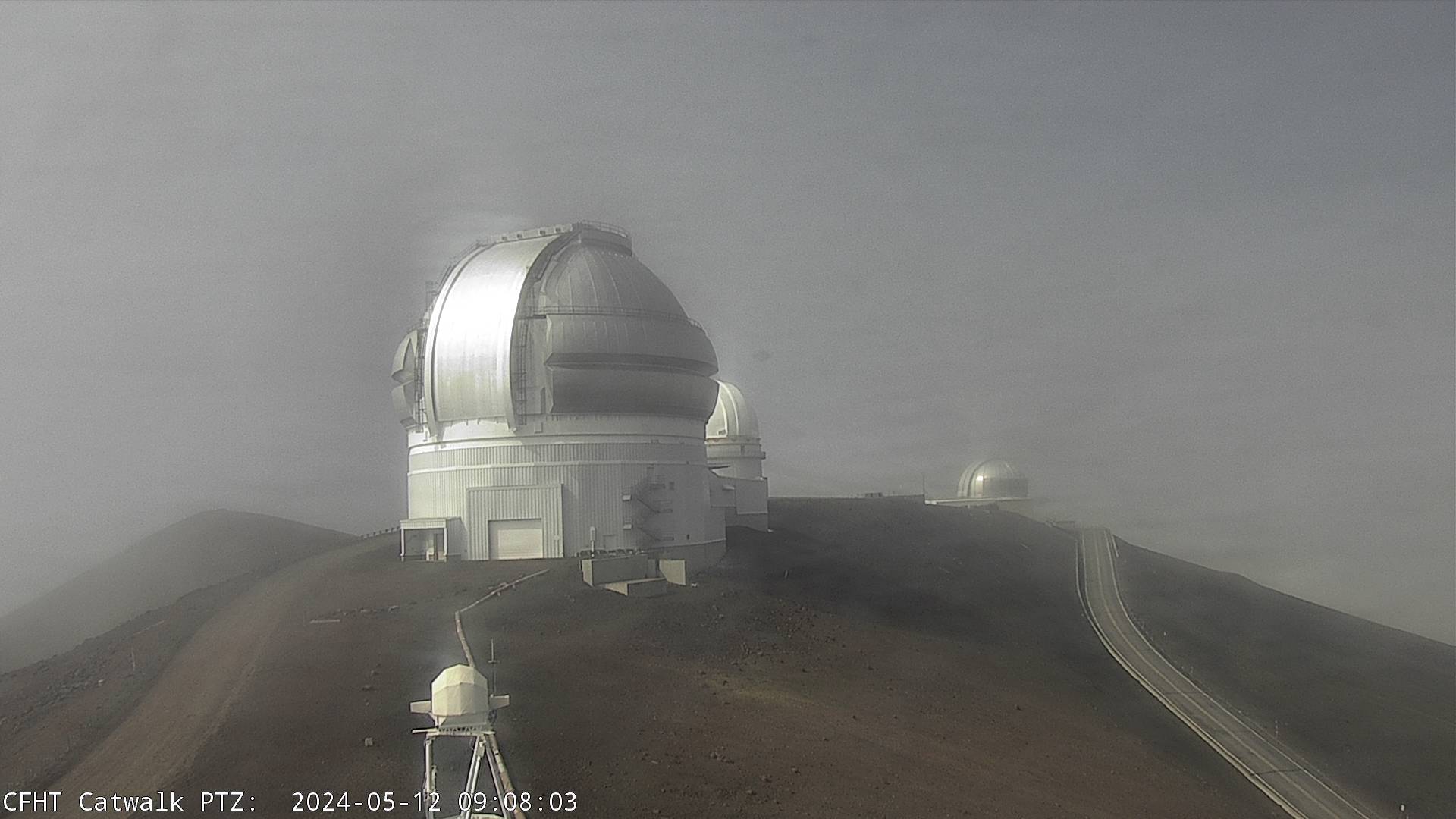
Hawaii’s Mountains – Here’s a link to the live webcam on the summit of near 14,000 foot Mauna Kea on the Big Island of Hawaii. The tallest peak on the island of Maui is the Haleakala Crater, which is near 10,000 feet in elevation. These two webcams are available during the daylight hours here in the islands…and when there’s a big moon rising just after sunset for an hour or two! Plus, during the nights and early mornings you will be able to see stars, and the sunrise too…depending upon cloud conditions.
Tropical Cyclone activity in the eastern and central Pacific – Here’s the latest information coming out of the National Hurricane Center, covering the eastern north Pacific. You can find the latest tropical cyclone information for the central north Pacific (where Hawaii is located) by clicking on this link to the Central Pacific Hurricane Center. Here’s a tracking map covering both the eastern and central Pacific Ocean.
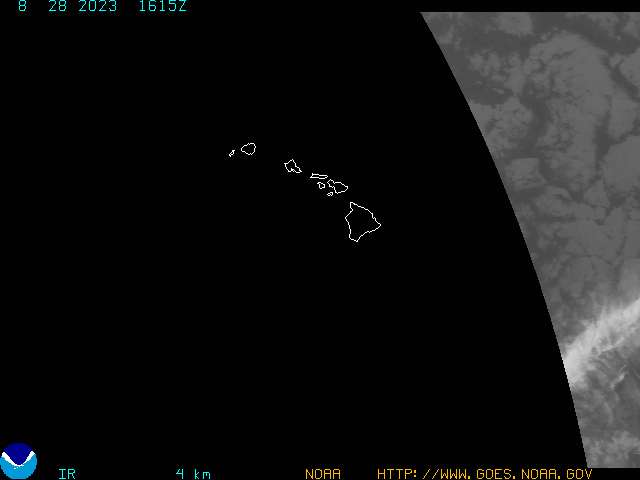
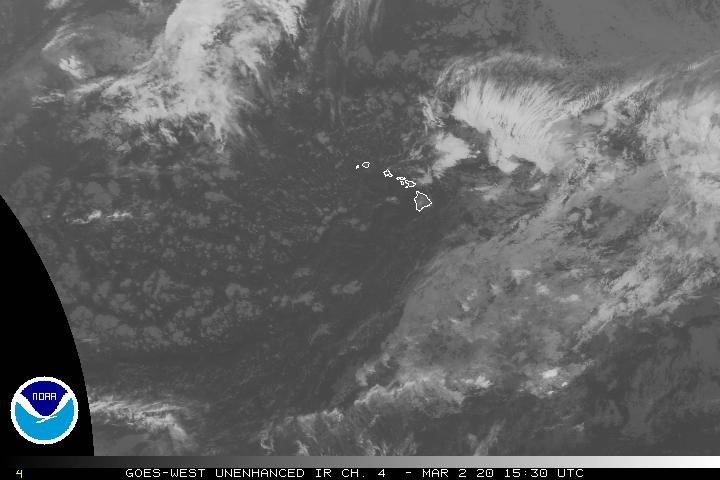
Satellite and Radar Images: To view the cloud conditions we have here in Hawaii, please use the following satellite links, starting off with the Infrared Satellite Image of the islands to see all the clouds around the state during the day and night. This next image is one that gives close images of the islands only during the daytime hours, and is referred to as a Close-up visible image. This next image shows a larger view of the Pacific…giving perspective to the wider ranging cloud patterns in the Pacific Ocean…out from the islands. To help you keep track of where any showers may be around the islands, here’s the latest animated radar image.
Aloha Paragraphs
 The geologic beauty of Maui’s Haleakala Crater
photo credit: flickr.com
The trade winds, at least for the moment, will be our main driver in the Hawaiian Island weather picture…aided in part by the passage of an upper level trough of low pressure. The combination may be able to trigger briefly heavy showers. There has been some evidence of this upper air feature, with its associated cold air aloft…as some towering cumulus clouds have been reported recently. The Kona slopes on the Big Island have seen locally heavy rains, falling at a rate of 2.50" per hour in places…which is pretty intense! An more robust upper low could influence our area more directly as we get into the Friday-Sunday time frame, forming as what we call a Kona low to the NW of Kauai.
Meanwhile, our latest weather map shows our trade wind producing high pressure cells far to the north and NE Wednesday evening. The high pressure cell to the north, up to the north of 40 degrees of latitude, will be moving swiftly eastward. As we move into Thursday, this high will be just offshore from the southern Washington coast. An active cold front, issuing from a low pressure system in the eastern Gulf of Alaska, will weaken our high pressure to the north. This in turn will begin to erode our trade wind air flow, making our local trade winds softer….and turning them clockwise to the southeast by Friday. SE winds put most of the islands in the wind shadow of the Big Island, with much lighter winds than we’ve seen over the last week expected. SE winds too can bring volcanic haze into the picture, especially over the Big Island and Maui.
These lighter winds will take us out of the trade wind weather pattern that is currently active, pushing us into what we call a convective weather pattern. This strongly suggests that our local cumulus clouds will have no reason to not climb higher into the sky than normal. We call these kinds of clouds towering cumulus. As you can well imagine, after looking at those types of turrets, heavy showers can easily fall from their bases. The one wild card remains just how the upper low will influence our local weather? The first level of uncertainty involves exactly where and how deep the upper low will be when it gets closest to the Hawaiian Islands this weekend. The second is just how much moisture will be drawn up over the islands by the SE winds.
If, and it’s still definitely an if, all the ingredients come together just right, we could see good soaking showers…mostly during the afternoon hours in the upcountry areas. Then again, if one part of the puzzle is missing, either the upper level low’s proximity, or the lack of moisture to feed the convective showers is missing….then all bets are off. It will likely take another day or even two before we know for sure which way the pendulum will swing. The NWS office in Honolulu hasn’t issued a hydrologic outlook, which typically signifies the good chance of a heavy rain event. The models continue to flip flop from one solution to the next. Just for reference, the latest GFS model run shows a deep kona low forming to the west-northwest of Kauai, with 35 mph SE winds drawing up lots of moisture…which would cause a heavy rain event with flooding! However, it seems premature to go with more than the chance of heavy rains occurring here in the islands this weekend at the moment.
It’s Wednesday evening here in Hawaii, as I begin updating this last paragraph of today’s narrative. As noted above, the trade winds will stick around through Thursday, then get knocked down by an upper level low pressure center moving near the islands starting Friday. It’s a straight forward fact that the trade winds will be going on vacation. Whether this Kona low will bring us rain, or even locally heavy showers, is another story. It appears that the low will get close enough that our atmosphere will become unstable. Instability can certainly prompt heavier showers, no doubt about that. The wild card then becomes just how much moisture is around to feed those showers! If the expected southeast winds can draw upon rich moisture from the deep tropics, then we should see some good soaking showers in the upcountry areas each afternoon from Friday through early next week. However, if that moisture doesn’t arrive, we could see nice weather, although rather hot and sultry…with little more than cloudy afternoons with localized showers falling. We may have to wait another day or so before we will know for sure what will manifest. ~~~ The islands may have good weather for the most part, even with that area of low pressure in our vicinity. The mornings especially will tend to be nice, with those pesky clouds building up over the mountains starting late in the mornings, through the rest of the daylight hours. ~~~ In the by the way department, I had to slam on my brakes this morning when driving down the back way towards Pukalani, as three little baby wild pigs ran across the road in front of me! Here on Maui, in Lahaina town, there is a famous event on Front street, where all the Halloween festivities occur. They often refer to this night out on the town as the Mardi Gras of the Pacific. Here’s a few pictures of one of those Lahaina Halloween nights in the past – 1 – 2 – 3 – 4. I will be back early Thursday morning with your next new weather narrative from paradise, and hopefully even some further clarification about the possible increase in showers through the rest of the week. I hope you have a great Wednesday night wherever you happen to be reading from! Aloha for now…Glenn.
Posted by Glenn
No Comments
October 30-31 2007
Air Temperatures – The following maximum temperatures were recorded across the state of Hawaii Tuesday:
Lihue, Kauai – 84
Honolulu, Oahu – 86
Kaneohe, Oahu – 82
Kahului, Maui – 86
Hilo, Hawaii – 79
Kailua-Kona, Hawaii – 84
Temperatures ranged between these warmest and coolest spots near sea level at 4 a.m. Wednesday:
Lihue, Kauai – 76F
Hilo, Hawaii – 67
Precipitation Totals – The following numbers represent the largest precipitation totals (inches) during the last 24 hours on each of the major islands, as of Wednesday morning:
0.18 HANALEI RIVER, KAUAI
0.91 POAMOHO 2, OAHU
0.00 MOLOKAI
0.00 LANAI
0.00 KAHOOLAWE
0.01 PUU KUKUI, MAUI
1.12 PAHOA, BIG ISLAND
Weather Chart – High pressure systems to the north and NE of the islands will keep moderately strong trade winds blowing, stronger and gusty in those locally windiest areas into Thursday. Here’s the latest (automatically updated) weather map. Here’s a Weather Map Symbol page for clarification about what all those weather symbols mean on the map.
Hawaii’s Mountains – Here’s a link to the live webcam on the summit of near 14,000 foot Mauna Kea on the Big Island of Hawaii. The tallest peak on the island of Maui is the Haleakala Crater, which is near 10,000 feet in elevation. These two webcams are available during the daylight hours here in the islands…and when there’s a big moon rising just after sunset for an hour or two! Plus, during the nights and early mornings you will be able to see stars, and the sunrise too…depending upon cloud conditions.
Tropical Cyclone activity in the eastern and central Pacific – Here’s the latest information coming out of the National Hurricane Center, covering the eastern north Pacific. You can find the latest tropical cyclone information for the central north Pacific (where Hawaii is located) by clicking on this link to the Central Pacific Hurricane Center. Here’s a tracking map covering both the eastern and central Pacific Ocean.
Satellite and Radar Images: To view the cloud conditions we have here in Hawaii, please use the following satellite links, starting off with the Infrared Satellite Image of the islands to see all the clouds around the state during the day and night. This next image is one that gives close images of the islands only during the daytime hours, and is referred to as a Close-up visible image. This next image shows a larger view of the Pacific…giving perspective to the wider ranging cloud patterns in the Pacific Ocean…out from the islands. To help you keep track of where any showers may be around the islands, here’s the latest animated radar image.
Aloha Paragraphs
 Near Waikiki Beach on Oahu
photo credit: flickr.com
The blustery trade winds will continue for another day or two, then begin flagging as we move towards the weekend. The latest weather maps show high pressure centers far to the northeast and northwest Tuesday evening, which continue to be the source of our trade winds. These trade winds are strong enough to keep small craft wind advisories active across those windiest marine waters in the southern part of the Aloha state. The weather models are suggesting that this trade wind pattern will continue through the middle of the week. As we move into the second half of the week however, an approaching trough of low pressure will cause the winds to get lighter from the south or SE by Friday into Saturday. As this upper trough moves away by Sunday or early next week, our winds will swing around to the north…bringing fresh and cooler air into the Aloha state.
A few showers will be carried in our direction, ending up along the windward sides for the time being. Additional shower areas are expected to be carried into the state later in the week. The computer models continue to describe an approaching upper level trough of low pressure getting closer to Hawaii then. The presence of this upper level trough may destabilize our overlying atmosphere, which could make some of the showers locally heavy towards the weekend. The trough will turn our winds SE, which would bring in volcanic haze to some parts of the state, and trigger afternoon convective showers over the interior parts of the islands.
It’s Tuesday here in Kula, Maui, as I begin writing this last paragraph of today’s narrative. As a way of summarizing the above two paragraphs, I would say that trade wind weather will continue for the time being, with an increase in showers…with the chance that they could become locally quite heavy starting Friday into the weekend. The upper level trough of low pressure, which I also described above, is the wild card in our Hawaiian Island weather picture. It may very well cause some locally heavy showers here and there, although then again…perhaps it won’t. It will take another day or two before things become clear enough to talk with authority about its effects on our local weather conditions. ~~~ Here on Maui Monday afternoon, a shark attack was reported in the Wailea area. This is of course never good news, although it should be noted that sharks usually leave our local swimmers alone. The beaches in that area were closed as water safety officers made sure it was ok for swimmers to get back into the ocean. ~~~ Folks here in the islands have noticed an increase in haze during the last couple of days. As it turns out, that haze is actually smoke that has been carried to us from the terrible fires in Southern California! ~~~ I’ll be back early Wednesday morning with your next new weather narrative from the tropics, until then I’d like to wish you all a great Tuesday night wherever you happen to be! Aloha for now…Glenn.
Posted by Glenn
No Comments
October 29-30 2007
Air Temperatures – The following maximum temperatures were recorded across the state of Hawaii Monday:
Lihue, Kauai – 83
Honolulu, Oahu – 86
Kaneohe, Oahu – 83
Kahului, Maui – 83
Hilo, Hawaii – 82
Kailua-Kona, Hawaii – 87
Temperatures ranged between these warmest and coolest spots near sea level at 4 a.m. Tuesday:
Honolulu, Oahu – 76F
Hilo, Hawaii – 72
Precipitation Totals – The following numbers represent the largest precipitation totals (inches) during the last 24 hours on each of the major islands, as of Tuesday morning:
0.06 KALAHEO, KAUAI
0.07 MOANALUA, OAHU
0.00 MOLOKAI
0.00 LANAI
0.02 KAHOOLAWE
0.28 PUU KUKUI, MAUI
0.23 GLENWOOD, BIG ISLAND
Weather Chart – High pressure systems to the NE of the islands will keep moderately strong trade winds blowing, stronger and gusty in those locally windiest areas through Wednesday. Here’s the latest (automatically updated) weather map. Here’s a Weather Map Symbol page for clarification about what all those weather symbols mean on the map.
Hawaii’s Mountains – Here’s a link to the live webcam on the summit of near 14,000 foot Mauna Kea on the Big Island of Hawaii. The tallest peak on the island of Maui is the Haleakala Crater, which is near 10,000 feet in elevation. These two webcams are available during the daylight hours here in the islands…and when there’s a big moon rising just after sunset for an hour or two! Plus, during the nights and early mornings you will be able to see stars, and the sunrise too…depending upon cloud conditions.
Tropical Cyclone activity in the eastern and central Pacific – Here’s the latest information coming out of the National Hurricane Center, covering the eastern north Pacific. You can find the latest tropical cyclone information for the central north Pacific (where Hawaii is located) by clicking on this link to the Central Pacific Hurricane Center. Here’s a tracking map covering both the eastern and central Pacific Ocean.
Satellite and Radar Images: To view the cloud conditions we have here in Hawaii, please use the following satellite links, starting off with the Infrared Satellite Image of the islands to see all the clouds around the state during the day and night. This next image is one that gives close images of the islands only during the daytime hours, and is referred to as a Close-up visible image. This next image shows a larger view of the Pacific…giving perspective to the wider ranging cloud patterns in the Pacific Ocean…out from the islands. To help you keep track of where any showers may be around the islands, here’s the latest animated radar image.
Aloha Paragraphs
 The north shore of Kauai
photo credit: flickr.com
The gusty trade winds will continue through the first half of this new week…and then mellow out starting Thursday into the weekend. The latest weather maps show high pressure centers far to the north and northeast Monday, which are the source of our trade winds. These trade winds are strong enough to keep small craft wind advisories active across those windiest marine waters in the southern part of the Aloha state. The weather models are suggesting that this trade wind pattern will continue through the middle of the week. As we move into the second half of the week however, an approaching trough of low pressure will cause the winds to get lighter from the south or SE…ending up being very light by the weekend.
The windward sides will continue to see some passing shower activity, although drier weather is expected later in the day through Tuesday. A new shower area is expected to be carried into the state by mid-week, which may interrupt Halloween tricker treaters along the windward sides that evening. Satellite imagery shows another showery looking area taking aim on the Big Island, which may increase showers again already Tuesday. The computer models continue to describe an approaching upper level trough of low pressure towards the weekend. The presence of this upper level trough could destabilize our overlying atmosphere, with another increase in showers then. The trough may turn our winds SE, which would bring in volcanic haze to some parts of the state, and trigger afternoon convective showers over the interior parts of the islands.
I’m back in the islands, after communing with the wilderness of California…having had a fabulous time! I actually spent quite a lot of time with family and friends too, some of it out in nature, and then some other parts in the cities and towns. I realized just how important the connection to nature is, especially when I got out away from the civilized world in a sense. My spirit yearned for that open space, those trees, mountains, and of course the ocean. I’m already thinking about my next vacation, where the NE corner of California, on the east side of the northern Sierra…grades up into SE Oregon, on the east side of the Cascade mountains. I understand that the the high desert up there is great, with Quaking Aspen groves intermixing with the evergreens, along with the Juniper and Sage. I hear that there are hot springs up that way too, which if I can’t have a hot tub nearby, hot springs would suffice just fine!
Touching back on my trip a little more, I remember fondly one late afternoon hike in Marin County, just north of San Francisco…when a lady friend and I were out walking in the coastal hills just inland from the ocean. We rounded a corner, when we saw a bobcat sitting in the grass. It was just far enough away that it felt enough space between us and him to stay put. We immediately sat down, brought out the binoculars, and for maybe 10 minutes he let us gawk. He eventually walked away…it was so exciting to be that close to a wild animal like that…a predator! That same day we saw deer, rabbits, hawks and ravens, and a good sighting of a Great Horned Owl. Walking around in the woods seems like a great thing to retire to, just traipsing around outside seems healthy and interesting both. Anyway, I had a great time, enjoyed seeing my Mom and Dad of course, and the renewing of friendships too.
It’s Monday here in Kula, my first day back to work after that wonderful three week vacation. As was noted above, in the first two paragraphs of this narrative, the trade winds will be the main driver in our Hawaiian Island weather picture for the next several days. The passing shower activity that we saw along the windward sides yesterday, which has extended into Monday, will finally move away. Satellite imagery shows less clouds upstream, so a drying trend will start later Monday into Tuesday…although the Big Island may still see an inflow of passing showers along the windward side. ~~~ It was so good to have some time away from work, taking the time to recharge my batteries so to speak. I’m feeling good about getting back into my work schedule, and seeing my friends at work. I’ll miss spending time with my family, and my friends on the mainland though. It is great to be back here in Hawaii, with the warm weather, and the warm ocean too! ~~~ I’ll be back early Tuesday morning with your next new tropical weather narrative, I hope you have a great Monday night wherever you happen to be spending it, either here in the islands or elsewhere! Aloha for now…Glenn.
Posted by Glenn
No Comments
October 28-29 2007
Air Temperatures – The following maximum temperatures were recorded across the state of Hawaii Sunday:
Lihue, Kauai – 83
Honolulu, Oahu – 86
Kaneohe, Oahu – 82
Kahului, Maui – 84
Hilo, Hawaii – 79
Kailua-Kona, Hawaii – 85
Temperatures ranged between these warmest and coolest spots near sea level at 4 a.m. Monday:
Honolulu, Oahu – 76F
Hilo, Hawaii – 69
Precipitation Totals – The following numbers represent the largest precipitation totals (inches) during the last 24 hours on each of the major islands, as of Monday morning:
0.19 HANALEI RIVER, KAUAI
0.35 MILILANI, OAHU
0.04 MOLOKAI
0.00 LANAI
0.00 KAHOOLAWE
1.28 PUU KUKUI, MAUI
0.53 WAIAKEA UKA, BIG ISLAND
Weather Chart – High pressure systems to the north and NE of the islands will keep moderately strong trade winds blowing, stronger and gusty in those locally windiest areas through Tuesday. Here’s the latest (automatically updated) weather map. Here’s a Weather Map Symbol page for clarification about what all those weather symbols mean on the map.
Hawaii’s Mountains – Here’s a link to the live webcam on the summit of near 14,000 foot Mauna Kea on the Big Island of Hawaii. The tallest peak on the island of Maui is the Haleakala Crater, which is near 10,000 feet in elevation. These two webcams are available during the daylight hours here in the islands…and when there’s a big moon rising just after sunset for an hour or two! Plus, during the nights and early mornings you will be able to see stars, and the sunrise too…depending upon cloud conditions.
Tropical Cyclone activity in the eastern and central Pacific – Here’s the latest information coming out of the National Hurricane Center, covering the eastern north Pacific. You can find the latest tropical cyclone information for the central north Pacific (where Hawaii is located) by clicking on this link to the Central Pacific Hurricane Center. Here’s a tracking map covering both the eastern and central Pacific Ocean.
Satellite and Radar Images: To view the cloud conditions we have here in Hawaii, please use the following satellite links, starting off with the Infrared Satellite Image of the islands to see all the clouds around the state during the day and night. This next image is one that gives close images of the islands only during the daytime hours, and is referred to as a Close-up visible image. This next image shows a larger view of the Pacific…giving perspective to the wider ranging cloud patterns in the Pacific Ocean…out from the islands. To help you keep track of where any showers may be around the islands, here’s the latest animated radar image.
Aloha Paragraphs

The great beaches of Hawaii
photo credit: flickr.com
The trade winds continue here in the Hawaiian Islands, breezin’ along in the moderately strong category for the time being. The latest weather maps show high pressure centers far to the northwest and northwest, as the source of these autumn trade winds. The trade winds are strong enough to keep small craft wind advisories active across those windiest marine waters. The weather models are suggesting that this trade wind pattern will continue through the middle of the upcoming week. As we move into the second of the week however, an approaching trough of low pressure will tamp down the air flow…ending up being very light by next weekend.
A cloud band Sunday morning has kept showers falling along the windward coasts and slopes. This band of passing showers should move through, carried by the blustery trade winds later in the day however. It appears that a fairly normal weather pattern will prevail in its place…although somewhat windier than usual. In terms of precipitation, showers will continue to focus their efforts best along the north and east facing slopes, perhaps increasing by Wednesday. The computer models are talking about an approaching upper level trough of low pressure towards next weekend. At the same time, at lower levels of the atmosphere, a surface cold front may bring the necessary dynamics for increased showers again by the weekend.
I’m back in the islands, after communing with the wilderness of California…having had a fabulous time! I actually spent quite a lot of time with family and friends too, some of it out in nature, and then some other parts in the cities and towns. I realize just how important for me the connection to nature is, especially when I get out away from the civilized world in a sense. My spirit yearned for that open space, those trees, mountains, and of course the ocean. I’m already thinking about my next vacation, where the NE corner of California, on the east side of the northern Sierra…grades up into SE Oregon, on the east side of the Cascade mountains. I understand that the the high desert up there is great, with Quaking Aspen groves intermixing with the evergreens, along with the Juniper and Sage. I hear that there are hot springs up that way too, which if I can’t have a hot tub nearby, hot springs would suffice just fine.
Touching back on my trip a little more, I remember fondly one late afternoon hike in Marin County, just north of San Francisco…when a lady friend and I were out walking in the coastal hills just inland from the ocean. We rounded a corner, when we saw a bobcat sitting in the grass. It was just far enough away that it felt enough space between us and him to stay put. We immediately sat down, brought out the binoculars, and for maybe 10 minutes he let us gawk. He eventually casually walked away, leaving us agasp, as it was so exciting to be that close to a wild animal like that…a predator! That same day we say deer, rabbits, hawks and ravens, and a good sighting of a Great Horned Owl. Walking around in the woods seems like a great thing to retire to, just traipsing around outside seems healthy and interesting both. Anyway, I had a great time, enjoyed seeing my Mom and Dad of course, and all the renewing of friendships.
It’s Sunday here in Kula, as I get back into the saddle, in terms of my return to the work world. The late morning clouds have converged over the leeward slopes of the Haleakala Crater, with showers still evident over on the windward side towards Pukalani, Makawao, Paia, and Haiku. It feels good to get this website up and running again, I really enjoy communicating about the weather with you. I suppose the most exciting thing going on now, would be the chance of a shower event Halloween night, and then again next weekend. It’s still too early to paint this into the picture permanently, although the forecast models seem to be sticking to their guns in regards to this potential couple of days of rain later in the upcoming week. ~~~ I’ll be up at around 4am Monday morning, updating this page on the internet, as well as the rest of my webpages too. Then it’s down to the Maui Community College for my TV weather show, which I’m looking forward to starting again. The drive to Kihei, to the Pacific Disaster Center will follow, where I’ll put in my first day back to work there too. I hope all of you readers have been well in my absence, and that you will enjoy our travels into the weather, as we move deeper into our autumn season here in the tropics together. I hope you have a great Sunday night, I’ll be back with a new narrative coming your way very early Monday morning. Aloha for now…Glenn.
Posted by Glenn
[4] Comments
October 3-4 2007
Air Temperatures – The following maximum temperatures were recorded across the state of Hawaii Wednesday:
Lihue, Kauai – 83F
Honolulu, Oahu – 86
Kaneohe, Oahu – 82
Kahului, Maui – 86
Hilo, Hawaii – 82
Kailua-Kona, Hawaii – 86
Temperatures early Thursday morning ranged between these warmest and coolest spots near sea level at the 4 a.m. hour:
Kaneohe, Oahu – 78F
Hilo, Hawaii – 69
Precipitation Totals – The following numbers represent the largest precipitation totals (inches) during the last 24 hours on each of the major islands, as of Thursday morning:
0.71 HANALEI RIVER, KAUAI
0.75 POAMOHO 2, OAHU
0.12 MOLOKAI
0.00 LANAI
0.00 KAHOOLAWE
1.85 PUU KUKUI, MAUI
1.16 WAIAKEA UKA, BIG ISLAND
Weather Chart – Here’s the latest (automatically updated) weather map…showing a strong 1035 millibar high pressure system located far north of the islands. This pressure configuration will keep moderately strong trade winds blowing across our marine environment through Friday…stronger and gusty in those usual windier places. Here’s a Weather Map Symbol page for clarification about what all those weather symbols mean on the map.
Hawaii’s Mountains – Here’s a link to the live webcam on the summit of near 14,000 foot Mauna Kea on the Big Island of Hawaii. The tallest peak on the island of Maui is the Haleakala Crater, which is near 10,000 feet in elevation. These two webcams are available during the daylight hours here in the islands…and when there’s a big moon rising just after sunset for an hour or two! Plus, during the nights and early mornings you will be able to see stars, and the sunrise too…depending upon cloud conditions.
Tropical Cyclone activity in the eastern and central Pacific – Here’s the latest information coming out of the National Hurricane Center, covering the eastern north Pacific. You can find the latest tropical cyclone information for the central north Pacific (where Hawaii is located) by clicking on this link to the Central Pacific Hurricane Center. Here’s a tracking map covering both the eastern and central Pacific Ocean.
Satellite and Radar Images: To view the cloud conditions we have here in Hawaii, please use the following satellite links, starting off with the Infrared Satellite Image of the islands to see all the clouds around the state during the day and night. This next image is one that gives close images of the islands only during the daytime hours, and is referred to as a Close-up visible image. This next image shows a larger view of the Pacific…giving perspective to the wider ranging cloud patterns in the Pacific Ocean…out from the islands. To help you keep track of where any showers may be around the islands, here’s the latest animated radar image.
Aloha Paragraphs

Lava rock coast
photo credit: flickr.com
Trade winds, trade winds…and more trade winds well into the future here in the Hawaiian Islands. The latest weather map shows a strong 1036 millibar high pressure system cemented into place far to the NNE of the islands Wednesday evening. This trade wind producing high pressure cell will keep moderate trade winds blowing, although locally quite strong and gusty in those typically windier locations around the Aloha state. A small craft wind advisory remains in place across those windiest coastal areas of the state…including all the major channels.
The blustery trade winds will continue to carry clouds in our direction, with showers falling most frequently along the windward coasts and slopes. The leeward areas, where most of the resorts are located, will be mostly dry, although the winds may be strong enough to carry a few showers into those areas on the smaller islands. The Kona coast and slopes of the Big Island may see a few showers falling during the afternoons into night locally as well. Meanwhile, there will continue to be at least some form of streaky high cirrus clouds streaming by locally, especially on the Kauai end of the state.
It’s Wednesday evening as I begin writing this last paragraph of todays weather narrative. As noted in the first paragraph above, the trade winds will continue to be the primary driver in our local Hawaiian Island weather picture for the time being. This time of year it’s not too unusual to start seeing the trade winds faltering at times, at least compared to during the summer months. Consulting with the latest computer forecast models, I still don’t see a break in the steady trade wind flow up ahead…although they should begin to ease back a little in strength by the middle of next week. ~~~ As this looping satellite image shows, we still have a long lasting trough of low pressure to our west and NW. This is that area of bright white clouds on the other side of Kauai that you see. Those clouds, oriented more or less north to south, are producing some rainfall, falling over the ocean out there. Although, the bulk of that cloudy area consists of high and middle level clouds. The cirrus clouds, the high ones, continue to make it to the Kauai and Oahu end of the state, and depending upon the upper level jet stream winds…could bring more serious cirrus clouds to the rest of the state with time. ~~~ I got an email from a friend who lives in Sonoma County, California this morning, asking if I was gone on vacation already…in my mind? Well, I must admit that I have been flashing on that the last several days. I’ve begun checking in with the San Francisco NWS office reports, checking to see what kind of weather that I can expect when I arrive there this Saturday evening, starting my three week vacation. More importantly though, is wondering at what stage the yellowing of the Aspen leaves will be at when I get up into the High Sierra for a three day camping trip right in the heart of an Aspen grove next Thursday! ~~~ At any rate, I hope you have a great Wednesday evening wherever you may be reading from…and look for some good sunset colors, and again for a colorful sunrise Thursday morning! I’ll be back early Thursday morning with your next brand new weather narrative from paradise. Aloha for now…Glenn.
Posted by Glenn
No Comments
October 2-3 2007
Air Temperatures – The following maximum temperatures were recorded across the state of Hawaii Tuesday:
Lihue, Kauai – 85F
Honolulu, Oahu – 85
Kaneohe, Oahu – 83
Kahului, Maui – 87
Hilo, Hawaii – 83
Kailua-Kona, Hawaii – 88
Temperatures early Wednesday morning ranged between these warmest and coolest spots near sea level at the 4 a.m. hour:
Kaneohe, Oahu – 77F
Hilo, Hawaii – 69
Precipitation Totals – The following numbers represent the largest precipitation totals (inches) during the last 24 hours on each of the major islands, as of Wednesday morning:
0.32 HANALEI RIVER, KAUAI
0.45 PALISADES, OAHU
0.02 MOLOKAI
0.00 LANAI
0.00 KAHOOLAWE
0.90 WEST WAILUAIKI, MAUI
0.79 GLENWOOD, BIG ISLAND
Weather Chart – Here’s the latest (automatically updated) weather map…showing a strong 1036 millibar high pressure system located far north of the islands. This pressure configuration will keep moderately strong trade winds blowing across our marine environment through Thursday…stronger and gusty in those usual windier places. Here’s a Weather Map Symbol page for clarification about what all those weather symbols mean on the map.
Hawaii’s Mountains – Here’s a link to the live webcam on the summit of near 14,000 foot Mauna Kea on the Big Island of Hawaii. The tallest peak on the island of Maui is the Haleakala Crater, which is near 10,000 feet in elevation. These two webcams are available during the daylight hours here in the islands…and when there’s a big moon rising just after sunset for an hour or two! Plus, during the nights and early mornings you will be able to see stars, and the sunrise too…depending upon cloud conditions.
Tropical Cyclone activity in the eastern and central Pacific – Here’s the latest information coming out of the National Hurricane Center, covering the eastern north Pacific. You can find the latest tropical cyclone information for the central north Pacific (where Hawaii is located) by clicking on this link to the Central Pacific Hurricane Center. Here’s a tracking map covering both the eastern and central Pacific Ocean.
Satellite and Radar Images: To view the cloud conditions we have here in Hawaii, please use the following satellite links, starting off with the Infrared Satellite Image of the islands to see all the clouds around the state during the day and night. This next image is one that gives close images of the islands only during the daytime hours, and is referred to as a Close-up visible image. This next image shows a larger view of the Pacific…giving perspective to the wider ranging cloud patterns in the Pacific Ocean…out from the islands. To help you keep track of where any showers may be around the islands, here’s the latest animated radar image.
Aloha Paragraphs

Coconut palm trees galore…on the Big Island
photo credit: flickr.com
There’s no end in sight for our pleasant early autumn trade wind weather pattern. The latest weather map shows a strong 1035 millibar high pressure system anchored far to the north of the islands Tuesday evening. This trade wind producing high pressure area will keep moderate trade winds blowing, although locally quite strong and gusty in those typically windier locations around the Aloha state. Some of these strongest winds will blow well up into the 30 mph range, and even over 40 mph. A small craft wind advisory is remains in place across those windiest areas in the southern part of the state…including all the major channels.
A minor shower band got blown in over the windward sides of the islands Tuesday, although satellite imagery shows less showery clouds upstream of the islands for Wednesday. The trade winds will continue to carry in an occasional passing shower over the north and east facing windward coasts and slopes however. This of course is very normal, although nothing too heavy or widespread is indicated. The south and west facing leeward beaches will remain nice and warm, and mostly dry. There may be some streaky high cirrus clouds flying overhead at times, especially on the Kauai end of the state. The Kona coast and slopes of the Big Island, may see showers falling here and there during the afternoons into night locally.
It’s Tuesday evening as I begin writing this last paragraph of todays weather narrative. As this satellite image shows that there’s still a bit of high cirrus clouds out to the west of the state…focused mostly around Kauai at the moment. The subtropical jet stream is quite wavy now, with its current twists and turns not bringing too much of that sun dimming high cloudiness over most of the state now…although that could increase. Those upper level winds may turn in such a way that we see those beautiful icy cirrus clouds being drawn over us more thoroughly soon. ~~~ As I’ve pointed out many times, if you are planning on going to the beach, and you don’t like gusty winds throwing sand at you while you’re laying on your towel, try and get there during the morning hours. The Kihei and Wailea areas of Maui, which has lovely beaches, is a perfect example of this kind of contrast between the near calm mornings…and the stronger and gusty conditions that can blow up during the afternoon hours! This of course is common when we have a stronger version of the trade winds blowing, like we have currently. ~~~ As I was mentioning above, the trade winds are rather strong and gusty now. Case in point: the Lipoa Point, on the upper west side of Maui, reported several hours when wind gusts were reaching 46 mph! ~~~ I want to remind everyone that I will be leaving on my autumn sojourn to the west coast this Saturday, leaving to chase the yellowing Aspen tree leaves in the High Sierra of northern California. I’ll be gone for three weeks, and since I haven’t had a vacation in over a year, I’m ready to get out from under my heavy duty work schedule. ~~~ I’ll be back early Wednesday morning with your next weather narrative, and as usual, I want to wish you a very pleasant Tuesday night wherever you happen to be spending it! Aloha for now…Glenn.
Posted by Glenn
1 Comment
October 1-2 2007
Air Temperatures – The following maximum temperatures were recorded across the state of Hawaii Monday:
Lihue, Kauai – 84F
Honolulu, Oahu – 85
Kaneohe, Oahu – 82
Kahului, Maui – 86
Hilo, Hawaii – 75
Kailua-Kona, Hawaii – 84
Temperatures early Tuesday morning ranged between these warmest and coolest spots near sea level at the 4 a.m. hour:
Honolulu, Oahu – 77F
Kahului, Maui – 68
Precipitation Totals – The following numbers represent the largest precipitation totals (inches) during the last 24 hours on each of the major islands, as of Tuesday morning:
0.21 WAILUA, KAUAI
2.94 OAHU FOREST NWR, OAHU
0.30 MOLOKAI
0.21 LANAI
0.03 KAHOOLAWE
3.27 PUU KUKUI, MAUI
2.21 HONAUNAU, BIG ISLAND
Weather Chart – Here’s the latest (automatically updated) weather map…showing high pressure systems located north of the islands. This pressure configuration will keep moderately strong trade winds blowing across our marine environment through Wednesday…stronger and gusty in those usual windier places. Here’s a Weather Map Symbol page for clarification about what all those weather symbols mean on the map.
Hawaii’s Mountains – Here’s a link to the live webcam on the summit of near 14,000 foot Mauna Kea on the Big Island of Hawaii. The tallest peak on the island of Maui is the Haleakala Crater, which is near 10,000 feet in elevation. These two webcams are available during the daylight hours here in the islands…and when there’s a big moon rising just after sunset for an hour or two! Plus, during the nights and early mornings you will be able to see stars, and the sunrise too…depending upon cloud conditions.
Tropical Cyclone activity in the eastern and central Pacific – Here’s the latest information coming out of the National Hurricane Center, covering the eastern north Pacific. You can find the latest tropical cyclone information for the central north Pacific (where Hawaii is located) by clicking on this link to the Central Pacific Hurricane Center. Here’s a tracking map covering both the eastern and central Pacific Ocean.
Satellite and Radar Images: To view the cloud conditions we have here in Hawaii, please use the following satellite links, starting off with the Infrared Satellite Image of the islands to see all the clouds around the state during the day and night. This next image is one that gives close images of the islands only during the daytime hours, and is referred to as a Close-up visible image. This next image shows a larger view of the Pacific…giving perspective to the wider ranging cloud patterns in the Pacific Ocean…out from the islands. To help you keep track of where any showers may be around the islands, here’s the latest animated radar image.
Aloha Paragraphs

Spouting Horn…on the island of Kauai
photo credit: flickr.com
The trade winds, blowing in the moderately strong category, will continue blowing across the Hawaiian Islands through the next week at least. The latest weather map shows a 1033 millibar high pressure system located far to the NNW of the islands Monday evening. This trade wind producing high pressure cell will keep moderate trade winds blowing, although locally quite strong and gusty in those typically windier locations around the 50th state. A small craft wind advisory is now in place across those windiest areas in the southern part of the state.
An area of showery clouds passed through the state today, with the majority of rain falling along the windward sides of the islands…drier weather Tuesday. Satellite imagery showed an area of clouds moving along in the trade wind flow during the day Monday. This moisture field brought showers, although most of them ending up most generously along the windward coasts and slopes. The leeward areas didn’t see much of this precipitation, and only in those areas on the smaller islands were the trade winds carried a few stray showers over the lower mountains. The Kona coast and slopes of course will likely see showers during the day into night as well.
It’s Monday evening as I begin writing this last paragraph of todays weather narrative. This satellite image shows high level cirrus cloudiness moving our way from the deeper tropics to our SW. This cirrus will give nice sunrise and sunset colors in those areas of the Aloha state where they happen to be overhead. ~~~ This Saturday I head out to the west coast on vacation. I’ll visit Marin County, that county that is just north of San Franciso for several days. Then its off to the High Sierra mountain range, for some camping in an Aspen forest, which hopefully will have the leaves turning yellow. After that, I head out to the northern coast of Mendecino County. A friend and I have rented a great house right on the bluff, with an outdoor hot tub for four days. Then it’s down to southern California for almost a week to visit with my Mom and Dad and family. It should be a great time, and just wanted to give you a heads up that I will be gone for about three weeks. I’ll have more to say about that later this week. ~~~ I’ll be early Tuesday morning with your next weather narrative from paradise, I hope you have a great Monday night wherever you happen to be today! Aloha for now…Glenn.












 Email Glenn James: