Air Temperatures ranged between these warmest and coolest spots near sea level around the state – and on the highest mountains…at 4pm Sunday afternoon:
Honolulu, Oahu – 82F
Hilo, Hawaii – 70
Haleakala Crater – 48 (near 10,000 feet on Maui)
Mauna Kea summit – 43 (near 14,000 feet on the Big Island)
Precipitation Totals–The following numbers represent the largest precipitation totals (inches) during the last 24 hours on each of the major islands, as of Sunday afternoon: 1.85 Mount Waialaele, Kauai 0.96 Manoa Valley, Oahu
0.04 Molokai
0.00 Lanai
0.02 Kahoolawe
0.70 West Wailuaiki, Maui 0.62 Glenwood, Big Island
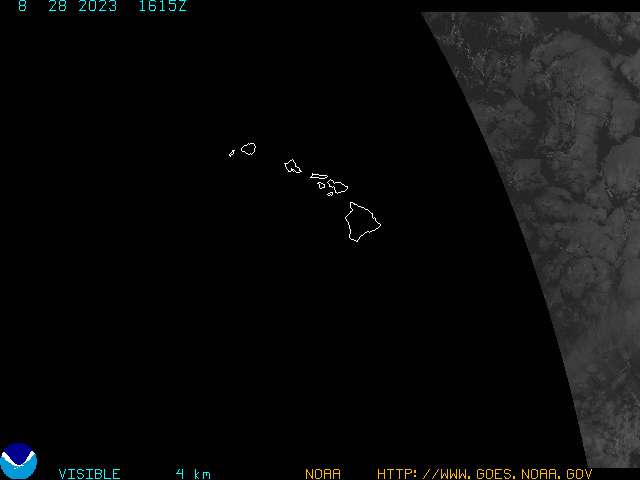
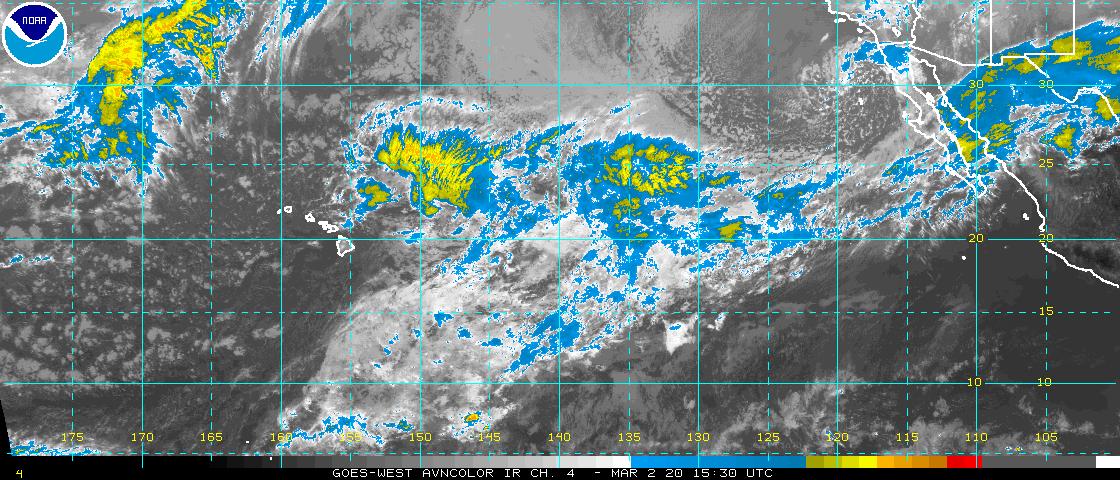
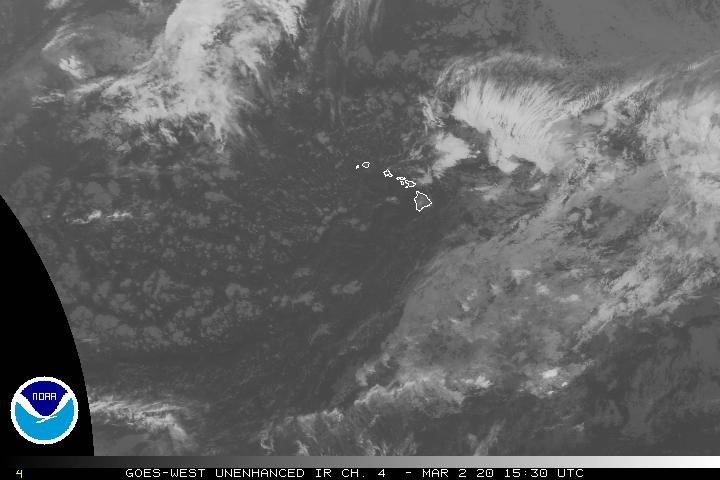
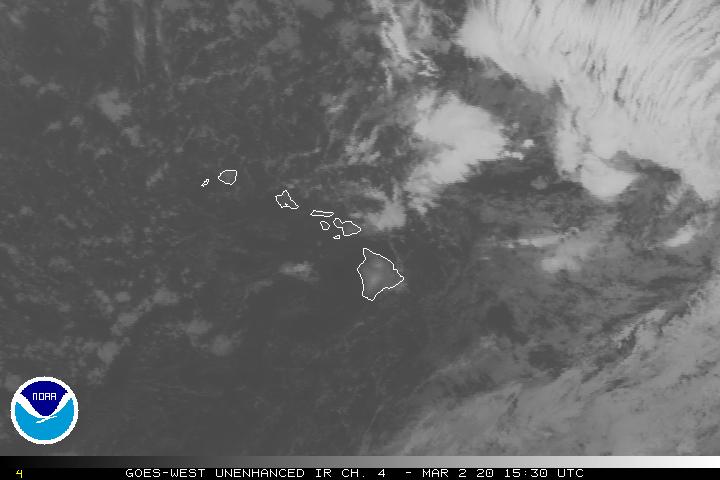
Marine Winds – Here’s the latest (automatically updated)weather mapshowing a 1027 millibar high pressure system far to the northeast, moving away. The tail-end of a dissipating cold front is located far to the east of the Big Island Sunday evening. The trade winds will gradually becoming lighter east-southeast to southeast breezes winds Monday-Tuesday. Satellite and Radar Images:To view the cloud conditions we have here in Hawaii, please use the following satellite links, starting off with thisInfrared Satellite Imageof the islands to see all the clouds around the state during the day and night. This next image is one that gives close images of the islands only during the daytime hours, and is referred to as aClose-up visible image. This next image showsa larger view of the Pacific…giving perspective to the wider ranging cloud patterns in the Pacific Ocean. Finally, here’s aLooping IR satellite image, making viewable the clouds around the islands 24 hours a day. To help you keep track of where any showers may be around the islands, here’s the latest animatedradar image.
Hawaii’s Mountains – Here’s a link to the live webcam on the summit of near 14,000 foot Mauna Kea on the Big Island of Hawaii. The tallest peak on the island of Maui is the Haleakala Crater, which is near 10,000 feet in elevation. These two webcams are available during the daylight hours here in the islands…and when there’s a big moon rising just after sunset for an hour or two! Plus, during the nights and early mornings you will be able to see stars, and the sunrise too…depending upon weather conditions. Tropical Cyclone activity in the eastern and central Pacific– Here’s the latest weather information coming out of theNational Hurricane Center, covering the eastern north Pacific. You can find the latest tropical cyclone information for the central north Pacific (where Hawaii is located) by clicking on this link to the Central Pacific Hurricane Center. Here’s atracking mapcovering both the eastern and central Pacific Ocean. A satellite image, which shows the entire ocean area between Hawaii and the Mexican coast…can be found here.
Aloha Paragraphs
Lighter winds…afternoon showers
The trade winds will be fading now, becoming light winds Monday, bringing us into a convective weather pattern…with afternoon showers locally. There are still quite a few clouds residing over the state now, although the atmosphere remains fairly stable. This IRsatellite imageshows lots of clouds around, most congregated along the windward sides Sunday evening. There are still those areas of high cirrus clouds out and around from the islands…which will be spreading over the state tonight into Monday. If we take a look at thiscloser view, we can see the low level clouds hanging over the north and east facing coasts and slopes. We can also see that there are still some showers falling, as they get carried along in the east to southeast wind flow…by switching over to thislooping radar image.
The computer forecast models are showing a cold front moving by to the north of the state…during the first part of the upcoming new work week.This will cause a slacking-off of the trade winds starting Monday, as they rotate around to the southeast now. This will bring up some volcanic haze (vog) from the Big Island vents up over Maui County. In addition, the SE winds will impact the Big Island slopes, and veer offshore around the other islands. This leaves the smaller islands from Maui County up through Kauai, in a wind shadow. We often find cool early mornings, giving way to clouds forming over and around the mountains during the afternoons. We’re expecting cold air, associated with an upper trough, to add intensity to whatever showers fall during the next couple of days. The trade winds will return by Wednesday…lasting through the rest of the week. It’s Sunday evening as I begin writing the last section of today’s narrative.
The main thing we notice now is that a convective weather pattern will shift into place, with rainy afternoons, some locally heavy…lasting into the first couple of days of the new week ahead. Winds will be light, with likely some volcanic haze around then too. Meanwhile, the large waves along our south shores are still active, although will be gradaully lowering in surf height into Monday.
~~~ Today is my friend Bob’s last full day here on Maui, as he leaves to return to work in California Monday. We had breakfast with my neighbors this morning, at that same nice French restuarant we went to yesterday morning here in Kula. Then, we headed down to Wailuku again, to visit a friend there whose birthday was today. We brought her some some Kula fruit, and took her out to the Vietnamese restaurant. We just got back to Kula, and as soon as I finish this last update, we’ll have a nice bbq here at home. Looking at the satellite images above, it looks like we’ll have a nice sunset here in the islands. I’ll be back here early Monday morning with your next new weather narrative, I hope you have a great Sunday night until then! Aloha for now…Glenn.
Air Temperatures ranged between these warmest and coolest spots near sea level around the state – and on the highest mountains…at 4pm Saturday afternoon:
Port Allen, Kauai – 79F
Hilo, Hawaii – 71
Haleakala Crater – 50 (near 10,000 feet on Maui)
Mauna Kea summit – 39 (near 14,000 feet on the Big Island)
Precipitation Totals–The following numbers represent the largest precipitation totals (inches) during the last 24 hours on each of the major islands, as of Saturday afternoon: 0.79 Mount Waialaele, Kauai 0.24 Oahu Forest NWR, Oahu
0.10 Molokai
0.00 Lanai
0.00 Kahoolawe 1.33 West Wailuaiki, Maui 0.55 Kawainui Strean, Big Island
Marine Winds – Here’s the latest (automatically updated)weather mapshowing a 1026 millibar high pressure system to the north-northeast, moving eastward. The tail-end of a dissipating cold front is located to the east of the Big Island. The trade winds will gradually becoming lighter east-southeast to southeast breezes winds Sunday-Monday. Satellite and Radar Images:To view the cloud conditions we have here in Hawaii, please use the following satellite links, starting off with thisInfrared Satellite Imageof the islands to see all the clouds around the state during the day and night. This next image is one that gives close images of the islands only during the daytime hours, and is referred to as aClose-up visible image. This next image showsa larger view of the Pacific…giving perspective to the wider ranging cloud patterns in the Pacific Ocean. Finally, here’s aLooping IR satellite image, making viewable the clouds around the islands 24 hours a day. To help you keep track of where any showers may be around the islands, here’s the latest animatedradar image.
Hawaii’s Mountains – Here’s a link to the live webcam on the summit of near 14,000 foot Mauna Kea on the Big Island of Hawaii. The tallest peak on the island of Maui is the Haleakala Crater, which is near 10,000 feet in elevation. These two webcams are available during the daylight hours here in the islands…and when there’s a big moon rising just after sunset for an hour or two! Plus, during the nights and early mornings you will be able to see stars, and the sunrise too…depending upon weather conditions. Tropical Cyclone activity in the eastern and central Pacific– Here’s the latest weather information coming out of theNational Hurricane Center, covering the eastern north Pacific. You can find the latest tropical cyclone information for the central north Pacific (where Hawaii is located) by clicking on this link to the Central Pacific Hurricane Center. Here’s atracking mapcovering both the eastern and central Pacific Ocean. A satellite image, which shows the entire ocean area between Hawaii and the Mexican coast…can be found here.
Aloha Paragraphs
Unusually large south swell…along our leeward beaches
A fairly typical trade wind weather pattern prevails this weekend, with generally nice weather conditions…although with some showers too. There are still quite a few clouds residing over the state now, although the atmosphere remains fairly stable. This IRsatellite imageshows variable clouds, along with an impressive area of high cirrus clouds to our south and to the north as well. If we take a look at thiscloser view, we can see the low level clouds hanging over some parts of the state. We can see also that there are still some showers falling, by switching over to thislooping radar image…although they seem to be backing off as we move into Saturday night. A high pressure system, now to the north-northwest of Hawaii, is keeping these trade winds blowing…keeping a slightly cooler than normal aspect to our weather for the moment.This weakening high pressure cell continues to move towards the east. As this high pressure cell migrates further eastward, the winds will gradually swing around to the more typical easterly trade wind direction on Sunday. As this happens, our local air temperatures will return to their more customary warmer reality during the days. The winds will eventually turn even further clockwise, ending up to the southeast by Monday.
The computer forecast models are showing another cold front approaching the state…during the first part of the upcoming new work week.The first influence here will be the slacking-off of the trade winds after the weekend, as they rotate around to the southeast. This could bring up another round of volcanic haze (vog) from the Big Island vents up over Maui County. In addition, the winds will impact the Big Island slopes, and veer offshore around the other islands. This leaves the smaller islands from Maui County up through Kauai, in a wind shadow. We often find cool early mornings, giving way to clouds forming over and around the mountains during the afternoons. We’re expecting cold air, associated with an upper trough, to add intensity to whatever showers fall Monday and Tuesday afternoons. The trade winds will return by Wednesday or Thursday…lasting through the rest of the week. It’s Saturday evening as I begin writing the last section of today’s narrative.
Saturday was our first day of the spring season…better known as the Vernal Equinox. I anticipate that our weather will be fairly decent again on Sunday, although with off and on showers occurring here and there. A convective weather pattern will unfold soon, with potentially rainy afternoons, lasting into the first couple of days of the new week ahead. Winds will be light, with likely some volcanic haze around then too. Don’t forget to heed the high surf advisory along our leeward beaches, where potentially dangerous waves will be breaking locally through Sunday.
~~~ My visiting friend Bob from California, and I went to see the new film Green Zone (2010) Friday evening, starring Matt Damon and Amy Ryan…among many others. A short synopsis: a rogue U.S. Army officer hunts through covert and faulty intelligence before war escalates in an unstable region. Bob and I both enjoyed this action film, and concurred that it deserved a solid B grade in our opinions. Here’s a trailer in case you are interested. We then went out for a great Thai dinner in Kahului afterwards, washing down the meal with a Chinese beer. ~~~ After a breakfast out this morning, at a good French restaurant here in Kula, Bob went over to the Makena area, and enjoyed watching the very large south swell waves that were breaking there. I drove down to Paia for some shopping, and then came back and tried to catch up on some domestic chores that I’ve been putting off. Bob came back up here, and after I finish these website updates, he and I are heading over to Maalaea Bay, where we have reservations for dinner at the Waterfront Restuarant. It’s situated right on the beach, so we’ll be able to see the surf breaking, and the Maalaea Harbor too. Then, and this is if we have the energy, we plan to head into Wailuku town, for a walk around to see a few of the open art galleries. We’ll be getting home late likely, so I’ll be hitting the hay here in Kula, and likely sleeping in a while on Sunday morning. We already have plans to take our neighbors out to breakfast in the morning, so Sunday is liable to be another full day of activites, before Bob flies back to California, and I go back to work on Monday. I hope that you have a great Saturday night wherever you happen to be spending it! Aloha for now…Glenn.
Air Temperatures ranged between these warmest and coolest spots near sea level around the state – and on the highest mountains…at 9pm Friday evening:
Kailua-kona – 74F
Princeville, Kauai – 64
Haleakala Crater – 37 (near 10,000 feet on Maui)
Mauna Kea summit – 30 (near 14,000 feet on the Big Island)
Precipitation Totals–The following numbers represent the largest precipitation totals (inches) during the last 24 hours on each of the major islands, as of Friday evening: 1.06 Mount Waialaele, Kauai 0.20 Oahu Forest NWR, Oahu
0.01 Molokai
0.00 Lanai
0.00 Kahoolawe
0.85 West Wailuaiki, Maui 0.61 Honokaa, Big Island
Marine Winds – Here’s the latest (automatically updated)weather mapshowing a 1028 millibar high pressure system to the north-northwest, moving eastward. The tail-end of a dissipating cold front is located just to the east of the Big Island. The trade winds will gradually becoming lighter east-southeast to southeast breezes winds Saturday-Monday. Satellite and Radar Images:To view the cloud conditions we have here in Hawaii, please use the following satellite links, starting off with thisInfrared Satellite Imageof the islands to see all the clouds around the state during the day and night. This next image is one that gives close images of the islands only during the daytime hours, and is referred to as aClose-up visible image. This next image showsa larger view of the Pacific…giving perspective to the wider ranging cloud patterns in the Pacific Ocean. Finally, here’s aLooping IR satellite image, making viewable the clouds around the islands 24 hours a day. To help you keep track of where any showers may be around the islands, here’s the latest animatedradar image.
Hawaii’s Mountains – Here’s a link to the live webcam on the summit of near 14,000 foot Mauna Kea on the Big Island of Hawaii. The tallest peak on the island of Maui is the Haleakala Crater, which is near 10,000 feet in elevation. These two webcams are available during the daylight hours here in the islands…and when there’s a big moon rising just after sunset for an hour or two! Plus, during the nights and early mornings you will be able to see stars, and the sunrise too…depending upon weather conditions. Tropical Cyclone activity in the eastern and central Pacific– Here’s the latest weather information coming out of theNational Hurricane Center, covering the eastern north Pacific. You can find the latest tropical cyclone information for the central north Pacific (where Hawaii is located) by clicking on this link to the Central Pacific Hurricane Center. Here’s atracking mapcovering both the eastern and central Pacific Ocean. A satellite image, which shows the entire ocean area between Hawaii and the Mexican coast…can be found here.
Aloha Paragraphs
Trade winds, high clouds, a few windward showers
The old cold front is located just to the southeast of the Big Island…leaving us in a trade wind weather pattern Friday.There are still lots clouds residing over the state today, in the wake of the frontal passage. This IRsatellite imageshows the rather considerable cloudiness over and around the islands. If we narrow our focus, using thiscloser view, we can see the residual clouds over our local skies, along with those brighter and whiter high cirrus clouds…coming in from the southwest aloft. In order to take a look at where the showers are falling at this time, we can switch our view to thislooping radar image. This shows that our local winds are still coming in from the northeast, with still some generally light showers falling along windward coasts and slopes.We may see a few showers being carried over into the leeward sides at times too.
A high pressure system to the northwest of Hawaii, is keeping these northeasterly winds blowing…keeping a slightly cooler than normal aspect to our weather for the moment.This moderately strong high pressure cell is following in the wake of the cold front. It’s eastern edge came right in as the front was passing down through the island chain. Wind directions were coming in from the north initially, although they’ve veered around to the northeast now. Winds from this compass point bring cooler than normal air into the Aloha state, with their late winter slight chill. As this high pressure cell migrates further eastward, the winds will gradually swing around to the east-northeast, and then clock around to the more typical easterly trade wind direction this weekend. As this happens, our local air temperatures will return to their more customary warm reality.
The computer forecast models are showing another cold front approaching the state around the middle of the new week ahead.The first influence here will be the slacking-off of the trade winds after the weekend, as they rotate around to the east-southeast, and southeast. This will likely bring up another round of volcanic haze (vog) from the Big Island vents…like we saw preceding this last cold front. In addition, the winds will impact the Big Island slopes, and veer offshore around the other islands. This leaves the smaller islands from Maui County up through Kauai, in a wind shadow. We often find cool early mornings, giving way to abnormally warm afternoons…leading to possible record high temperatures in a few coastal spots. Depending upon how much moisture is around then – being Monday and Tuesday – we usually find clouds forming over and around the mountains during the afternoons. Whether we have any upper level cold air, associated with an upper trough…could add intensity of those generally interior showers. Showers will arrive, at least probably, with the cold front on Wednesday. It’s Friday as I begin writing the last section of this narrative.
As noted above, we have lots of lower level clouds around on this last day of the work week. At the same time, we have streaks of high cirrus clouds flying overhead, carried our way from the southwest on the upper winds aloft. The atmosphere is generally stable now, so that whatever showers fall, shouldn’t be heavy ones. I anticipate that our weather will be fairly decent today, and continue that way through both Saturday and Sunday. A convective weather pattern will unfold as we move into the new work week ahead, with potentially rainy afternoons, at least in the upcountry areas both Monday and Tuesday. Winds will be light, with perhaps quite a bit of volcanic haze around then too. We will likely find a cold front pushing in our direction, or perhaps arriving by mid-week, more about that over the next day or two.
~~~ My visiting friend Bob from California is beginning to feel better now. He got a cold a couple of days ago, unfortunately. At any rate, I’m taking off work today, and we’ll probably taking a nice drive out along the Hana coast of east Maui. This will be a fun trip, as we’re both geographers, and weathermen too. We’ll have lots to talk about along the way, as we drive through some of the most beautiful tropical scenery in the islands. I’m not exactly sure when I’ll be back at this computer, and it may not be until Saturday? I hope you have a great Friday wherever you happen to be spending the day! Aloha for now…Glenn.
Interesting: A new assessment of the Arctic’s biodiversity reports a 26 per cent decline in species populations in the high Arctic. Populations of lemmings, caribou and red knot are some of the species that have experienced declines over the past 34 years, according to the first report from The Arctic Species Trend Index (ASTI), which provides crucial information on how the Arctic’s ecosystems and wildlife are responding to environmental change.
While some of these declines may be part of a natural cycle, there is concern that pressures such as climate change may be exacerbating natural cyclic declines. In contrast, population levels of species living in the sub-Arctic and low Arctic are relatively stable and in some cases, increasing. Populations of marine mammals, including bowhead whales found in the low Arctic, may have benefited from the recent tightening of hunting laws.
Some fish species have also experienced population increases in response to rising sea temperatures. "Rapid changes to the Arctic’s ecosystems will have consequences for the Arctic that will be felt globally. The Arctic is host to abundant and diverse wildlife populations, many of which migrate annually from all regions of the globe. This region acts as a critical component in the Earth’s physical, chemical, and biological regulatory system," says lead-author Louise McRae from the Zoological Society of London (ZSL).
Data collected on migratory Arctic shorebirds show that their numbers have also decreased. Further research is now needed to determine whether this is the result of changes in the Arctic or at other stopover sites on their migration. Louise McRae adds: "Migratory Arctic species such as brent goose, dunlin and turnstone are regular visitors to the UK’s shores. We need to sit up and take notice of what’s happening in other parts of the world if we want to continue to experience a diversity of wildlife on our own doorstep."
The ASTI includes almost 1,000 datasets on Arctic species population trends, including representation from 35 per cent of all known vertebrate species found in the Arctic. Co-author Christoph Zöckler from the UNEP-World Conservation Monitoring Centre says: "The establishment of these results comes at a crucial time for finding accurate indicators to monitor global biodiversity as governments strive to meet their targets of reducing biodiversity loss."
Interesting2:In a world first an international team of researchers have successfully extracted ancient DNA from the eggshells of various species of extinct birds. The research, published in scientific journal Proceedings of the Royal Society B, shows that fossil eggshell is a previously unrecognized source of ancient DNA and can provide exceptional long-term preservation of DNA in warmer climates.
The findings will boost research in archaeology and biology where species identifications can add significantly to our understanding of biodiversity, evolutionary processes, past environmental change and dispersal of animal and human populations. The research, published in scientific journal Proceedings of the Royal Society B, shows that fossil eggshell is a previously unrecognized source of ancient DNA and can provide exceptional long-term preservation of DNA in warmer climates.
The findings will boost research in archaeology and biology where species identifications can add significantly to our understanding of biodiversity, evolutionary processes, past environmental change and dispersal of animal and human populations. The study includes samples of Aepyornis sp, the giant Madagascan elephant bird collected by Dr Jean-Luc Schwenninger, a Quaternary geochronologist based at the Research Laboratory for Archaeology and the History of Art (RLAHA) at Oxford University.
The bird looked like an outsized ostrich, standing about three meters high and weighing in excess of half a ton. It was the heaviest bird to have ever existed and produced eggs with a capacity of 11L (equivalent to over two hundred chicken eggs or seven ostrich eggs). Its eggs are the largest eggs ever known. Since 1991, Schwenninger and a team from Sheffield University, the University of Colorado, and Antananarivo’s National Museum of Art and Archaeology in Madagascar have conducted large scale archaeological surveys of the Southern region of Madagascar and studied the timing of extinction of these giant flightless birds.
Whilst scouring the coastal dunes of Southern Madagascar they have found evidence of many of the bird’s former nesting sites from concentrations of eggshell debris. They have also excavated archaeological sites which document the rise and fall of a lost civilization with long-distance trade contacts to Africa’s Swahili coast, the Persian Gulf and China.
Dr Schwenninger and his colleague Professor Michael Parker Pearson, from the University of Sheffield, believe that by the time this civilization flourished, from the 11th to the 13th century, the population of elephant birds was in serious decline. The precise cause of extinction is not yet fully understood but it is probably linked to the arrival of humans.
Interesting3:Tropical Cyclone Ului has continued to slowly weaken over the open Coral Sea on Thursday as it makes ready for a late-week landfall upon northeastern Australia. As of Thursday morning, EDT, the storm held highest sustained winds of about 90 mph, or those of a strong Category 1 hurricane, as it drifted over open seas well south of the western Solomon Islands. After drifting slowly through Thursday, Ului will accelerate towards the southwest and the west on Friday.
Landfall is now forecast to happen on Saturday or Saturday night, EDT, between Mackay and Cairns, Queensland, Australia, possibly at the city of Townsville. Flooding rain along and near the direct path of Ului will rank as the greatest threat to life and property. Damaging winds will also be a threat.
Ulia formed one week ago and quickly became a severe, potentially catastrophic Category 5 during the weekend. At that time, highest sustained winds were reckoned by the Joint Typhoon Warning Center to be at least 160 mph, or above the 156-mph threshold for Category 5 status. Luckily, the storm’s severe wind and rain steered clear of land.
Interesting4:Do we really need all the regulatory programs at the federal and state levels of government? Do they really work to improve the quality of our air and water? Are they worth their cost in terms of regulatory burden and costs of compliance? In short, yes! To some extent, our regulatory programs are a trial and error affair. We can’t always know the ultimate effectiveness of a new program nor its ultimate costs.
We can’t always predict the economic benefits of new regulations either since they invariably lead to innovation and generate new inventions and jobs. The US has been monitoring the quality of our air and water for decades, so we can track the effectiveness of our programs. The U.S. Environmental Protection Agency (EPA) is making the most recent data available. Air pollution impacts public health, the environment, and the Earth’s climate, and understanding these impacts are important priorities for the agency.
EPA regulatory actions and voluntary efforts have led to cleaner cars, industries and consumer products, that in turn have contributed to improvements in the nation’s air. They have also led to developments of new pollution control systems for power plants and other major sources such as Selective Catalytic Reduction, a technology that removes Nitrogen Oxides from emissions by converting it to Nitrogen and water. Since 1990, nationwide air quality has improved significantly for the six common air pollutants: ground-level ozone, particle pollution, lead, nitrogen dioxide, carbon monoxide, and sulfur dioxide.
Emissions of toxic air pollutants, such as benzene, have declined about 40 percent nationwide between 1990 and 2005. These reductions are helping to improve public health by decreasing the number of emergency room visits, respiratory illnesses, and premature deaths. Positive impacts can also be seen in the environment, with regional haze decreasing. Despite this progress, about 127 million Americans live in counties violating at least one of the national air quality standards.
The agency has taken recent actions to tighten air quality standards to help ensure improvements in air quality for everyone. EPA’s most recent evaluation of air pollution, Our Nation’s Air, Status and Trends Through 2008, presents trends in air quality measurements, analyzes national emissions from key industrial sectors and takes a look at the relationship between air quality and climate change.
Air Temperatures ranged between these warmest and coolest spots near sea level around the state – and on the highest mountains…at 4pm Thursday afternoon:
Barking Sands, Kauai – 78F
Hilo, Hawaii – 66
Haleakala Crater – 45 (near 10,000 feet on Maui)
Mauna Kea summit – 45 (near 14,000 feet on the Big Island)
Precipitation Totals–The following numbers represent the largest precipitation totals (inches) during the last 24 hours on each of the major islands, as of Thursday afternoon: 2.89 Wainiha, Kauai 2.35 Punaluu Stream, Oahu
1.30 Molokai
0.16 Lanai
0.00 Kahoolawe 4.21 West Wailuaiki, Maui 2.31 Honokaa, Big Island
Marine Winds – Here’s the latest (automatically updated)weather mapshowing a cold front to the southeast of the Big Island. At the same time, we find a 1030 millibar high pressure system far to the northwest, moving eastward. The winds will be gusty from the northeast…gradually becoming trade winds Friday into Saturday. Satellite and Radar Images:To view the cloud conditions we have here in Hawaii, please use the following satellite links, starting off with thisInfrared Satellite Imageof the islands to see all the clouds around the state during the day and night. This next image is one that gives close images of the islands only during the daytime hours, and is referred to as aClose-up visible image. This next image showsa larger view of the Pacific…giving perspective to the wider ranging cloud patterns in the Pacific Ocean. Finally, here’s aLooping IR satellite image, making viewable the clouds around the islands 24 hours a day. To help you keep track of where any showers may be around the islands, here’s the latest animatedradar image.
Hawaii’s Mountains – Here’s a link to the live webcam on the summit of near 14,000 foot Mauna Kea on the Big Island of Hawaii. The tallest peak on the island of Maui is the Haleakala Crater, which is near 10,000 feet in elevation. These two webcams are available during the daylight hours here in the islands…and when there’s a big moon rising just after sunset for an hour or two! Plus, during the nights and early mornings you will be able to see stars, and the sunrise too…depending upon weather conditions. Tropical Cyclone activity in the eastern and central Pacific– Here’s the latest weather information coming out of theNational Hurricane Center, covering the eastern north Pacific. You can find the latest tropical cyclone information for the central north Pacific (where Hawaii is located) by clicking on this link to the Central Pacific Hurricane Center. Here’s atracking mapcovering both the eastern and central Pacific Ocean. A satellite image, which shows the entire ocean area between Hawaii and the Mexican coast…can be found here.
Aloha Paragraphs
Cool breezy winds…in the wake of the recent cold front
The rather diffuse, at least in terms of a crisp and clearly defined cloud band, moved quickly through the island chain late Wednesday, through the night…into Thursday.The current location of this dissipating frontal boundary is to the southeast of the Big Island early Thursday evening. This IRsatellite imageshows the frontal cloud band having broken up to some degree over the islands, as it continues its slow journey into the deeper tropics to our south. If we narrow our focus, using thiscloser view, we can see the leftover clouds strung out along the windward sides of each of the islands…along with those high cirrus clouds coming in from the southwest aloft. In order to take an even closer inspection of where the showers are falling at this time, we can switch our view to thislooping radar image. This demonstrates clearly that showers have ended for the most part, although there’s still quite a lot of small drop, mist and drizzle falling along those windward coasts and slopes.
The winds behind this frontal passage quickly took on a north to northeast orientation, prompted by a near 1030 millibar high pressure system…located far to the northwest of Hawaii.This moderately strong high pressure cell is following in the wake of the cold front. It’s eastern edge came right in as the front was passing down through the island chain. Wind directions were coming in from the north initially, although they’re already veering around to the northeast. Winds from these compass points bring cooler than normal air into the Aloha state, with their late winter slight chill. As the high migrates further eastward, the winds will gradually swing around to the east-northeast, and then clock around to the more typical easterly trade wind direction. As this happens, our local air temperatures will spring back to their more customary warm reality.
The computer forecast models are showing another cold front approaching the state around the middle of next week.The first influence here will be the slacking-off of the trade winds Sunday, as they rotate around to the east-southeast, and southeast. This will likely bring up another round of volcanic haze (vog) from the Big Island vents…like we saw preceding this last cold front. In addition, the winds will impact the Big Island slopes, and veer offshore around the other islands. This leaves the smaller islands from Maui County up through Kauai, in a wind shadow. We often find cool early mornings, giving way to abnormally warm afternoons…leading to possible record high temperatures in a few coastal spots. Depending upon how much moisture is around then – being Sunday, Monday, and Tuesday – we usually find clouds forming over and around the mountains during the afternoons. Whether we have any upper level cold air, associated with an upper trough…could add intensity of those generally upcountry showers. Showers will arrive, at least probably, with the cold front the next day. It’s Thursday evening, as I begin writing the last section of today’s narrative.
As noted above, the latest cold front swung completely through the entire island chain during the last 24 hours. Thursday was a winter day, no doubt about it, in that it was cooler than normal, with chilly breezes blowing…along with windward showers at times. High temperatures were all in the cool 70F’s today at sea level, with only Kailua-kona, sheltered from the north winds…able to rise to 80 degrees. It’s now around 530pm Thursday, and up here in Kula, Maui, it’s a cool 58 degrees, with chilly winds blowing…and a very light mist still being blown over from the windward sides…like it did all day. By the way, I anticipate a colorful sunset this evening, as the high cirrus clouds light up at sunset! I anticipate that Friday will warm up some, although will remain breezy, with a few showers sticking around too.
~~~ My visiting friend Bob, seems to be feeling a little better, after coming down with something yesterday. I’m just hoping that I will remain above these cold symptoms myself. At any rate, I’ll be back early Friday morning with your next new weather narrative. I’m planning on having it be a vacation day, like I tried to do today. I worked from home today instead, while Bob hung out here and relaxed. I hope you have a great Thursday night, and can visit again on Friday! Aloha for now…Glenn.
Interesting: A new assessment of the Arctic’s biodiversity reports a 26 per cent decline in species populations in the high Arctic. Populations of lemmings, caribou and red knot are some of the species that have experienced declines over the past 34 years, according to the first report from The Arctic Species Trend Index (ASTI), which provides crucial information on how the Arctic’s ecosystems and wildlife are responding to environmental change.
While some of these declines may be part of a natural cycle, there is concern that pressures such as climate change may be exacerbating natural cyclic declines. In contrast, population levels of species living in the sub-Arctic and low Arctic are relatively stable and in some cases, increasing. Populations of marine mammals, including bowhead whales found in the low Arctic, may have benefited from the recent tightening of hunting laws.
Some fish species have also experienced population increases in response to rising sea temperatures. "Rapid changes to the Arctic’s ecosystems will have consequences for the Arctic that will be felt globally. The Arctic is host to abundant and diverse wildlife populations, many of which migrate annually from all regions of the globe. This region acts as a critical component in the Earth’s physical, chemical, and biological regulatory system," says lead-author Louise McRae from the Zoological Society of London (ZSL).
Data collected on migratory Arctic shorebirds show that their numbers have also decreased. Further research is now needed to determine whether this is the result of changes in the Arctic or at other stopover sites on their migration. Louise McRae adds: "Migratory Arctic species such as brent goose, dunlin and turnstone are regular visitors to the UK’s shores. We need to sit up and take notice of what’s happening in other parts of the world if we want to continue to experience a diversity of wildlife on our own doorstep."
The ASTI includes almost 1,000 datasets on Arctic species population trends, including representation from 35 per cent of all known vertebrate species found in the Arctic. Co-author Christoph Zöckler from the UNEP-World Conservation Monitoring Centre says: "The establishment of these results comes at a crucial time for finding accurate indicators to monitor global biodiversity as governments strive to meet their targets of reducing biodiversity loss."
Interesting2:In a world first an international team of researchers have successfully extracted ancient DNA from the eggshells of various species of extinct birds. The research, published in scientific journal Proceedings of the Royal Society B, shows that fossil eggshell is a previously unrecognized source of ancient DNA and can provide exceptional long-term preservation of DNA in warmer climates.
The findings will boost research in archaeology and biology where species identifications can add significantly to our understanding of biodiversity, evolutionary processes, past environmental change and dispersal of animal and human populations. The research, published in scientific journal Proceedings of the Royal Society B, shows that fossil eggshell is a previously unrecognized source of ancient DNA and can provide exceptional long-term preservation of DNA in warmer climates.
The findings will boost research in archaeology and biology where species identifications can add significantly to our understanding of biodiversity, evolutionary processes, past environmental change and dispersal of animal and human populations. The study includes samples of Aepyornis sp, the giant Madagascan elephant bird collected by Dr Jean-Luc Schwenninger, a Quaternary geochronologist based at the Research Laboratory for Archaeology and the History of Art (RLAHA) at Oxford University.
The bird looked like an outsized ostrich, standing about three meters high and weighing in excess of half a ton. It was the heaviest bird to have ever existed and produced eggs with a capacity of 11L (equivalent to over two hundred chicken eggs or seven ostrich eggs). Its eggs are the largest eggs ever known. Since 1991, Schwenninger and a team from Sheffield University, the University of Colorado, and Antananarivo’s National Museum of Art and Archaeology in Madagascar have conducted large scale archaeological surveys of the Southern region of Madagascar and studied the timing of extinction of these giant flightless birds.
Whilst scouring the coastal dunes of Southern Madagascar they have found evidence of many of the bird’s former nesting sites from concentrations of eggshell debris. They have also excavated archaeological sites which document the rise and fall of a lost civilization with long-distance trade contacts to Africa’s Swahili coast, the Persian Gulf and China.
Dr Schwenninger and his colleague Professor Michael Parker Pearson, from the University of Sheffield, believe that by the time this civilization flourished, from the 11th to the 13th century, the population of elephant birds was in serious decline. The precise cause of extinction is not yet fully understood but it is probably linked to the arrival of humans.
Interesting3:Tropical Cyclone Ului has continued to slowly weaken over the open Coral Sea on Thursday as it makes ready for a late-week landfall upon northeastern Australia. As of Thursday morning, EDT, the storm held highest sustained winds of about 90 mph, or those of a strong Category 1 hurricane, as it drifted over open seas well south of the western Solomon Islands. After drifting slowly through Thursday, Ului will accelerate towards the southwest and the west on Friday.
Landfall is now forecast to happen on Saturday or Saturday night, EDT, between Mackay and Cairns, Queensland, Australia, possibly at the city of Townsville. Flooding rain along and near the direct path of Ului will rank as the greatest threat to life and property. Damaging winds will also be a threat.
Ulia formed one week ago and quickly became a severe, potentially catastrophic Category 5 during the weekend. At that time, highest sustained winds were reckoned by the Joint Typhoon Warning Center to be at least 160 mph, or above the 156-mph threshold for Category 5 status. Luckily, the storm’s severe wind and rain steered clear of land.
Interesting4:Do we really need all the regulatory programs at the federal and state levels of government? Do they really work to improve the quality of our air and water? Are they worth their cost in terms of regulatory burden and costs of compliance? In short, yes! To some extent, our regulatory programs are a trial and error affair. We can’t always know the ultimate effectiveness of a new program nor its ultimate costs.
We can’t always predict the economic benefits of new regulations either since they invariably lead to innovation and generate new inventions and jobs. The US has been monitoring the quality of our air and water for decades, so we can track the effectiveness of our programs. The U.S. Environmental Protection Agency (EPA) is making the most recent data available. Air pollution impacts public health, the environment, and the Earth’s climate, and understanding these impacts are important priorities for the agency.
EPA regulatory actions and voluntary efforts have led to cleaner cars, industries and consumer products, that in turn have contributed to improvements in the nation’s air. They have also led to developments of new pollution control systems for power plants and other major sources such as Selective Catalytic Reduction, a technology that removes Nitrogen Oxides from emissions by converting it to Nitrogen and water. Since 1990, nationwide air quality has improved significantly for the six common air pollutants: ground-level ozone, particle pollution, lead, nitrogen dioxide, carbon monoxide, and sulfur dioxide.
Emissions of toxic air pollutants, such as benzene, have declined about 40 percent nationwide between 1990 and 2005. These reductions are helping to improve public health by decreasing the number of emergency room visits, respiratory illnesses, and premature deaths. Positive impacts can also be seen in the environment, with regional haze decreasing. Despite this progress, about 127 million Americans live in counties violating at least one of the national air quality standards.
The agency has taken recent actions to tighten air quality standards to help ensure improvements in air quality for everyone. EPA’s most recent evaluation of air pollution, Our Nation’s Air, Status and Trends Through 2008, presents trends in air quality measurements, analyzes national emissions from key industrial sectors and takes a look at the relationship between air quality and climate change.
Air Temperatures ranged between these warmest and coolest spots near sea level around the state – and on the highest mountains…at 5pm Wednesday evening:
Port Allen, Kauai – 82F
Lihue, Kauai – 71
Haleakala Crater – 39 (near 10,000 feet on Maui)
Mauna Kea summit – 37 (near 14,000 feet on the Big Island)
Precipitation Totals–The following numbers represent the largest precipitation totals (inches) during the last 24 hours on each of the major islands, as of Wednesday afternoon: 3.10 Wainiha, Kauai 0.83 St. Stephens, Oahu
0.00 Molokai
0.00 Lanai
0.00 Kahoolawe
1.29 Kula, Maui 0.84 Puu Waawaa, Big Island
Marine Winds – Here’s the latest (automatically updated)weather mapshowing a 1031 millibar high pressure system to the northwest of Hawaii…moving eastward. At the same time we have a new cold front approaching from the northwest. The winds will strengthen from the north to northeast in the wake of the cold front. Satellite and Radar Images:To view the cloud conditions we have here in Hawaii, please use the following satellite links, starting off with thisInfrared Satellite Imageof the islands to see all the clouds around the state during the day and night. This next image is one that gives close images of the islands only during the daytime hours, and is referred to as aClose-up visible image. This next image showsa larger view of the Pacific…giving perspective to the wider ranging cloud patterns in the Pacific Ocean. Finally, here’s aLooping IR satellite image, making viewable the clouds around the islands 24 hours a day. To help you keep track of where any showers may be around the islands, here’s the latest animatedradar image.
Hawaii’s Mountains – Here’s a link to the live webcam on the summit of near 14,000 foot Mauna Kea on the Big Island of Hawaii. The tallest peak on the island of Maui is the Haleakala Crater, which is near 10,000 feet in elevation. These two webcams are available during the daylight hours here in the islands…and when there’s a big moon rising just after sunset for an hour or two! Plus, during the nights and early mornings you will be able to see stars, and the sunrise too…depending upon weather conditions. Tropical Cyclone activity in the eastern and central Pacific– Here’s the latest weather information coming out of theNational Hurricane Center, covering the eastern north Pacific. You can find the latest tropical cyclone information for the central north Pacific (where Hawaii is located) by clicking on this link to the Central Pacific Hurricane Center. Here’s atracking mapcovering both the eastern and central Pacific Ocean. A satellite image, which shows the entire ocean area between Hawaii and the Mexican coast…can be found here.
Aloha Paragraphs
Cold front into Thursday…with showers
Thelight winds of the last couple of days, with the localized heavy showers from Kauai down through Maui County…will give way to an approaching cold front into Thursday. This IR satellite imageshows the fragmented cold front now pushing into the state. The prefrontal clouds extend down as far as about Molokai at the time of this writing. The cold front, and these clouds out ahead of the frontal band, will move down the island chain towards the Big Island overnight into Thursday. These clouds will be the source of the showery weather taking aim on our island chain now…a few of which could be locally heavy.
This rather diffuse cold front, which is a bit difficult to make out exactly, continues to move southeast into the islands.The leading edge of this front was still to the northwest of Kauai late Wednesday afternoon, and is moving towards us at 15-20 mph. The frontal band itself was about 150-200 miles wide, and had some thunderstorms to the north of the islands. This front is forecast to arrive over Kauai at some point Wednesday evening, and then move down through the island chain during the night into Thursday. We can use this very largesatellite pictureto scope out the approaching cold front, curling out of a low pressure system far to the north of the Hawaiian Islands. As this cold front arrives, it will usher in another of those tropical cool snaps, with chilly north to northeast winds blowing in behind the frontal boundary.The source of this wind will be the 1031 millibar high pressure system, moving in behind the cold front. The winds will remain cool Thursday, although as the high progresses eastward, our winds will take on a more easterly direction, with warmer trade winds continuing into the weekend. These winds trailing the cold front may contain quite a bit of moisture, so that wet trade winds may continue for several days along the windward sides, blowing perhaps even into the leeward sides at times. The computer models are now showing yet another cold front will approach, bringing our local wind speeds down a notch or two after the weekend. It’s Wednesday evening, as I begin writing the last section of today’s narrative.
As noted above, we have some rather distinct weather changes taking aim on our islands now. Cloud have moved over Kauai, Oahu, and were over Molokai. Some of these associated showers have been rather generous. As a matter of fact, moderate to heavy showers were falling near Molokai as we got into the sunset hour. The rest of the islands will find clouds and showers arriving this evening, continuing into Thursday. Speaking of showers, we should keep this looping radar image handy. ~~~ Looking a bit further ahead, the moisture brought into the state with the front will keep the prospect of showery weather in the forecast into Friday, and perhaps into the weekend. Showers will keep the windward sides off and on wet, with even some showers being carried over to the leeward sides on the gusty winds.
Warmer trade winds will arrive by Friday, and remain in place through the upcoming weekend. ~~~ Everything seems to be unfolding as expected this evening, with the cold front moving through the island chain into Thursday. I just talked to my friend Bob, who is visiting from California, and he’s had a big day on the ocean. He took a whale watching trip out from Maalaea Bay, and said he saw tons of whales out there! I’m about ready to leave Kihei at the moment, and will meet him upcountry in Kula. I’ll be taking a walk, and then we may go out to dinner, or have it at my place. The main thing is that I’ll be taking a two day vacation from my work at the Pacific Disaster Center, and then have a weekend too, so he and I will be having some fun! I’ll be back here on Thursday morning with more news about the cold front, and other things too. I hope you have a great Wednesday night until then! Aloha for now…Glenn.
Interesting: The Atlantic blue fin tuna is one of the largest, fastest, and most gorgeously colored of all the world’s fishes. Their torpedo shaped, streamlined bodies are built for speed and endurance. Their coloring (metallic blue on top and silver white on the bottom) helps camouflage them from above and below. They have an average size of 6.5 feet and 550 pounds. Unfortunately for them they are also delicious and may be on the brink of extinction due to overfishing.
European Union ambassadors agreed to propose protecting blue fin tuna as an endangered species on March 10, a move that would effectively ban international trade in the species. Blue fin tuna have been eaten by humans for centuries. However, in the 1970s, demand and prices for large blue fins soared worldwide, particularly in Japan, and commercial fishing operations found new ways to find and catch these tuna.
As a result, blue fin stocks, especially of large, breeding age fish, have plummeted, and international conservation efforts and concerns have increased. This tuna is one of the most highly prized fish used in Japanese raw fish dishes. Blue fin tuna sashimi is a particular delicacy in Japan where at one auction, a single giant tuna sold for more than $100,000 on the Tsukiji fish market in Tokyo.
In January 2009, a 440 pounds blue fin sold for $173,000. The very highest prices in the Japanese market have tended to be from Pacific blue fin tuna caught in Japanese waters, but high grade Atlantic blue fin, particularly those from Canada and Boston, also fetch high prices.
Prices were highest in the late 1970s and 1980s. The entry of many North African Mediterranean countries, such as Tunisia and Libya, into the blue fin tuna market in the 1990s, along with the increasingly widespread practice of tuna farming in the Mediterranean and other areas such as southern Australia has brought down prices.
Atlantic blue fin populations probably remained stable until the 1960s. Prior to that period, blue fin fisheries were relatively small in scale. The decline became precipitous after the 1970’s. The EU agreement came ahead of a meeting of the Convention on International Trade in Endangered Species (CITES) that will take place from March 13 to March 25 to consider a number of species, including blue fin tuna, elephants and polar bears.
The ambassadors attached a number of conditions to the EU’s support, including a one year delay to the ban on fishing that normally follows an endangered listing, and an opt out for fishermen using small boats to supply local markets.
Governments also promised to consider paying financial compensation to EU fishermen affected by a possible ban on catching the fish which is used mainly in sushi – a concession designed to win the support of countries with domestic tuna fisheries.
Malta voted against the proposed ban while Sweden and Austria abstained, EU sources said. Environmental groups said the EU had not done enough to reduce over sized blue fin tuna fishing fleets, and had even subsidized expansion.
"Over eight years the EU blue fin tuna fishing industry received subsidies totaling 34.5 million euros. Of this, 33.5 million euros was for the construction and modernization of vessels, with only a tiny proportion for decommissioning," said Markus Knigge of the Pew Environment Group.
Opposition grew shortly after the proposed trade ban with several Arab countries joining Japan in arguing it would hurt poor fishing nations and was not supported by sound science. Supporters of the ban, including the European Union and the United States, say it is necessary because the Atlantic blue fin is a migratory species that swims from the western Atlantic to the Mediterranean — putting it beyond any one country’s border. Compounding the tuna’s plight is the growing threat from illegal fishing fleets and the failure of existing measures to keep the population sustainable.
Interesting2:The rollout of the highly touted Smart Grid ran into another buzz saw this week, this time in Texas, when a hundreds of consumers showed up at a town hall meeting, and the Grand Prairie City Hall, in the Dallas-Fort Worth area, complaining that their recently installed wireless Smart Meters were responsible for higher electric bills. That led state senator Troy Fraser to get involved, asking the Texas Public Utility Commission to halt installation of the meters and to initiate an investigation. The meters were installed by the Texas utility Oncor Electric Delivery, which services roughly three million customers in the area.
The company has installed nearly 800,000 of these meters and insists that they are highly accurate. They are now running a side by side verification study, where smart meters have been installed alongside the previously used mechanical meters and show little difference thus far.
That doesn’t placate folks like Tricia Lambert, one of the hundreds who have complained, claiming, "My bills average between 1,500 and 2,000 kilowatt-hours, and it goes up a little more in the summer," she said. "That’s pretty much where I stayed.
The first month with the smart meter was 4,383 kilowatt-hours." In some cases, like that of John Colbert, there were errors made by meter readers. An audit of his meter found that the smart meter was off by about 2000 kWh. Apparently, the meters are not read automatically. "Any time you’ve got humans involved in the process, there’s always an opportunity for errors to take place," said Oncor spokesman Chris Schein.
This experience closely parallels an earlier story in Bakersfield, CA, where PG&E customers voiced similar complaints. Bakersfield residents believe their new smart meters are malfunctioning because their bills are much higher than before and they have filed a class-action lawsuit against the utility.
An independent evaluator will be appointed by the California Public Utilities Commission some time this week. PG&E claims higher bills are due to rate hikes, an unusually warm summer, and customers not shifting demand to off-peak times when rates are lower. Likewise, in Texas, this past winter was unusually cold.
Interesting3:New analysis released today at a symposium on "Climate, Mind and Behavior" reveals that Americans can reduce U.S. carbon pollution by 15 percent — or one billion tons of global warming pollution — through collective personal actions that require little to no cost. The analysis released by NRDC and the Garrison Institute’s Climate Mind Behavior (CMB) Project is part of a larger collaboration that seeks to integrate emerging research findings about what drives human behavior into new thinking on climate solutions.
"While our nation develops clean energy strategies to reduce large-scale industrial pollution, this study empowers individual Americans with the knowledge that they can take action today in their daily lives," said Peter Lehner, Executive Director of the Natural Resources Defense Council. "We all have an opportunity to significantly reduce climate change pollution and cut costs at the same time."
Focusing exclusively on simple and affordable behavioral changes, the research indicates that Americans can reduce our nation’s annual carbon emissions by one billion metric tons below business-as-usual emission levels by 2020 through small modifications in the sectors of home energy use, transportation, food consumption and waste.
One billion metric tons is equivalent to 15% of the United States’ 7 billion tons of annual greenhouse gas emissions and roughly equivalent to the total annual emissions of the United Kingdom and Saudi Arabia combined.
Suggested behavioral changes in the study include: reducing unwanted catalog subscriptions, decreasing vehicle idling, using a programmable thermostat, replacing seven light bulbs with CFLs, setting computers to hibernate mode, shutting off unused lights, and eating poultry in place of red meat two days per week.
All of the recommendations offered in the study are available to be adopted immediately, at little or no cost, and will reduce not only emissions, but home energy, transportation and food costs as well.
Air Temperatures ranged between these warmest and coolest spots near sea level around the state – and on the highest mountains…at 4pm Tuesday afternoon:
Kahului, Maui – 82F
Lihue, Kauai – 74
Haleakala Crater – 39 (near 10,000 feet on Maui)
Mauna Kea summit – 37 (near 14,000 feet on the Big Island)
Precipitation Totals–The following numbers represent the largest precipitation totals (inches) during the last 24 hours on each of the major islands, as of Tuesday afternoon: 9.74 Mount Waialaele, Kauai 2.05 Oahu Forest NWR, Oahu
0.28 Molokai
0.03 Lanai
0.01 Kahoolawe
1.92 Oheo Gulch, Maui 0.82 Kawainui Stream, Big Island
Marine Winds – Here’s the latest (automatically updated)weather mapshowing a 1030 millibar high pressure system to the northeast of Hawaii…moving away into the area far northeast of Hawaii. At the same time we have a new cold front approaching from the northwest. The winds will gradually strengthen from the north to northeast later Wednesday into Thursday. Satellite and Radar Images:To view the cloud conditions we have here in Hawaii, please use the following satellite links, starting off with thisInfrared Satellite Imageof the islands to see all the clouds around the state during the day and night. This next image is one that gives close images of the islands only during the daytime hours, and is referred to as aClose-up visible image. This next image showsa larger view of the Pacific…giving perspective to the wider ranging cloud patterns in the Pacific Ocean. Finally, here’s aLooping IR satellite image, making viewable the clouds around the islands 24 hours a day. To help you keep track of where any showers may be around the islands, here’s the latest animatedradar image.
Hawaii’s Mountains – Here’s a link to the live webcam on the summit of near 14,000 foot Mauna Kea on the Big Island of Hawaii. The tallest peak on the island of Maui is the Haleakala Crater, which is near 10,000 feet in elevation. These two webcams are available during the daylight hours here in the islands…and when there’s a big moon rising just after sunset for an hour or two! Plus, during the nights and early mornings you will be able to see stars, and the sunrise too…depending upon weather conditions. Tropical Cyclone activity in the eastern and central Pacific– Here’s the latest weather information coming out of theNational Hurricane Center, covering the eastern north Pacific. You can find the latest tropical cyclone information for the central north Pacific (where Hawaii is located) by clicking on this link to the Central Pacific Hurricane Center. Here’s atracking mapcovering both the eastern and central Pacific Ocean. A satellite image, which shows the entire ocean area between Hawaii and the Mexican coast…can be found here.
Aloha Paragraphs
Heavy rain on Kauai…10.09"
The overlying atmosphere remains quite unstable, along with more than the ordinary amount of available moisture for showers.At least part of this moisture has been provided thanks to the recent cold front, which got hung up over Kauai…and is now to the north and northwest of that island Tuesday evening. The frontal cloud band is breaking up, although it certainly was able to drop lots of rainfall over Kauai during the last 24 hours. Case in point, there has been 4-10+ inch accumulations during the last 24 hours, in those wettest areas! This IR satellite imageshows what’s left of the front just to the north and northwest of Kauai and Niihau. The other islands got wet too, although most of the most recent shower activity fell during the afternoon hours Tuesday. Each of the islands got locally soaked, athough Oahu had enough to warrant a flood advisory.
So Tuesday had a reasonably nice morning, with those afternoon clouds dumping locally heavy showers.We can check out thislooping radar image, in order to see the wind direction, and where there are showers falling too. There seem to be considerably less showers falling over the ocean than we’ve seen the last several days. At the same time, we see generally southeast winds blowing. Checking out these winds a little more closely early Tuesday evening, it was still a bit gusty over Kahoolawe, and down at South Point on the Big Island too. Otherwise, the winds are noticeably lighter now, although the small craft wind advisory remains in force over all the coastal waters, probably more for the surf than the winds at this point.
We are about to get into some different kinds of weather soon, as the next cold front continues to push in our direction from the northwest.This front was still over 600 miles away early Tuesday evening, and moving southeast towards the Hawaiian Islands. The band contains broken to overcast low clouds, and is moving southeastward at just below 20 mph. At this rate, it is forecast to arrive over Kauai at some point later Wednesday, and then run down through the island chain during the night into Thursday morning. The island of Kauai doesn’t need all more rainfall, although Maui and the Big Island could certainly use pretty much as much…as they can muster up. We can use this very largesatellite pictureto scope out the approaching cold front, curling out of a 988 millibar low pressure system, located very close to the Washington state coast, and moving northward into British Columbia/Alaska…according to thisweather map.
As this cold front arrives, it will usher in another of those tropical cool snaps, with chilly north to northeast winds blowing in behind the frontal boundary.The source of this wind will be the 1031 millibar high pressure system moving in behind the front, currently located near the International Dateline to our west. Again, we can glance at that weather map above, to see this new high pressure cell. The winds will remain cool Thursday, although as the high progresses eastward, our winds will take on a more easterly direction, with warmer trade winds continuing into the weekend. These winds trailing the cold front may contain quite a bit of moisture, so that wet trade winds may continue for several days along the windward sides, blowing perhaps even into the leeward sides at times. The computer models are now showing yet another cold front will approach, bringing our local wind speeds down a notch or two after the weekend. It’s Tuesday evening, as I begin writing the last section of today’s narrative.
As noted above, heavy rainfall collected over and around the mountains on Kauai, and on the other islands during the second half of the day Tuesday. One particularly wet spot on Kauai, Mount Waialaele, picked up an amazing 10.09" of precipitation during the last 24 hours! There were several 5.00"+ amounts on Kauai as well, with some good totals on the other islands too. This looping radar image again shows the nature of the precipitation falling over the state Tuesday evening. ~~~ Looking a bit further ahead, another cold front will arrive Wednesday evening or night, into Thursday. This will keep the prospect of showery weather in the forecast into Friday. This doesn’t mean that it will be raining all the time by any means. The leeward sides will have less rainfall, and see more sunshine than the windward sides. The chilly north winds coming in behind the next cold front, will bring another one of those tropical cool snaps for a day or two. The warmer trade winds will arrive by Friday, and remain in place through the upcoming weekend. ~~~ I would imagine that much of the afternoon and early evening rainfall will slow down, and probably stop during the night. The one exception may be for Kauai, as some prefrontal clouds and showers may arrive before the actual cold front on Wednesday. Here in Kihei, its raining quite heavily before I take the drive back upcountry to Kula, where it was raining too. My friend Bob, whose visiting from California, went kayaking and snorkeling today, and then drove over to Lahaina during the afternoon, where it was raining too. I’ll be back early Wednesday morning with more weather reporting from Hawaii, I hope you have a great Tuesday night until then! Aloha for now…Glenn.
Interesting: Shrimp are swimming crustaceans found widely around the world in both fresh and salt water. Shrimp are an important food source for larger animals from fish to whales. Shrimp are small creatures but definitely larger than microscopic microbes. Technically, the "shrimp" is not a shrimp but a Lyssianasid amphipod, which is distantly related to shrimp. A finding of such a creature implies other larger organisms that feed off shrimp.
There is also another problem though. Under the glacier it is very cold and dark. Both conditions are quite forbidding for any life. So how can it be? "We were operating on the presumption that nothing’s there," said NASA ice scientist Robert Bindschadler, who will be presenting the initial findings and a video at an American Geophysical Union this month. "It was a shrimp you’d enjoy having on your plate." "We were just gaga over it," he said of the 3 inch long, orange critter starring in their two minute video.
The video is likely to inspire experts to rethink what they know about life in harsh environments. And it has scientists musing that if shrimp like creatures can be found below 600 feet of Antarctic ice in subfreezing dark water, what about other hostile places? What about Europa, a frozen moon of Jupiter? Many have speculated that under its thick surface ice layer lies a vast and frigid ocean. If the Antarctic shrimp can survive under a glacier perhaps its distant cousins can too.
Most planetary scientists believe that a layer of liquid water exists beneath Europa’s surface, kept warm by tidally-generated heat. Surface temperature average about −260 °F at the equator and only −370 °F at the poles, keeping Europa’s icy crust very hard. The first hints of a subsurface ocean came from theoretical considerations of tidal heating (a consequence of Europa’s slightly eccentric orbit and orbital resonance with the other Galilean moons).
In Antarctica: "They are looking at the equivalent of a drop of water in a swimming pool that you would expect nothing to be living in and they found not one animal but two," said biologist Stacy Kim of the Moss Landing Marine Laboratories in California, who joined the NASA team later. "We have no idea what’s going on down there." "This is a first for the sub glacial environment with that level of sophistication," microbiologist Ellis-Evans of the British Antarctic Survey said.
He said there have been findings somewhat similar, showing complex life in retreating ice shelves, but nothing quite directly under the ice like this. A retreating glacier is warmer and is more exposed to sunlight. Ellis-Evans said it’s possible the creatures swam in from far away and don’t live there permanently. But Kim, who is a co-author of the study, doubts it. The site in West Antarctica is at least 12 miles from the open seas. Bindschadler drilled an 8 inch wide hole and was looking at a tiny amount of water.
That means it’s unlikely that that two creatures swam from great distances and were captured randomly in that small of an area, she said. Yet scientists were puzzled at what the food source would be for these critters. While some microbes can make their own food out of chemicals in the ocean and sunlight, complex life like the amphipod can not do so. So what do they eat? And what eats them?
Interesting2:Enkidu, a man raised by wild animals in the classic Sumerian poem Epic of Gilgamesh, knew nothing of beer until a prostitute guided him to a shepherd’s camp. Upon finishing seven full cups, "his soul became free and cheerful, his heart rejoiced, his face glowed…. He became human." Beer was so popular throughout ancient Mesopotamia that some historians argue it inspired the earliest farmers to domesticate grain.
Beer is the third most popular drink in the world, after water and tea. Per-capita annual consumption is highest in the Czech Republic, at 157 liters per person, followed by Ireland (131) and Germany (116). World beer consumption has risen almost every year for the past two decades. The world average in 2005 was 23 liters per person. Conventional beer is made with malted grains (often barley or wheat), hops, yeast, and water.
The hops act as preservatives and add to some beers’ characteristic bitter flavor. Yeast is added after the grains are cooked from a few days to several months. The yeast combines with the mashed grains’ sugary compounds to form alcohol. The brew is then fermented again, filtered, and cooled. One liter of beer traditionally requires between four and six liters of water and four or five kilograms of grain.
Energy consumption – mostly from refrigeration and transportation – is also significant. But the greatest environmental impact is created by beer containers, overwhelmingly single-serving glass bottles or aluminum cans. One ton of glass embodies as much energy as is contained in 135 liters of oil and creates 845 kilograms of mining waste.
Interesting3:China’s international science influence is still weak, even though its investment in science has rapidly increased in recent years, a report has found. The Institute of Scientific and Technical Information of China (ISTIC) evaluated the changing ‘science power’ and global influence of 19 major countries — including China, India, the United Kingdom and the United States — since 2002.
The number of science papers, patents, citations and science awards, amongst other indices, were used to evaluate a country’s science power — a country’s continued investment in basic and applied research, and the results generated. China’s science power ranked fourth in 2006, up from seventh place in 2002. And in terms of investment in research China ranked third (after the United States and Japan).
But the country’s global science influence — measured by criteria including the number of citations in international journals, leading international awards, and membership of prestigious science academies — has not matched its science power, researchers found. China was ranked just thirteenth out of the 19 countries.
Interesting4: Levels of the main greenhouse gas in the atmosphere have risen to new highs in 2010 despite an economic slowdown in many nations that braked industrial output, data showed on Monday. Carbon dioxide, measured at Norway’s Zeppelin station on the Arctic Svalbard archipelago, rose to a median 393.71 parts per million of the atmosphere in the first two weeks of March from 393.17 in the same period of 2009, extending years of gains.
"Looking back at the data we have from Zeppelin since the end of the 1980s it seems like the increase is accelerating" Johan Stroem, of the Norwegian Polar Institute, said of the data compiled with Stockholm University. The rise in concentrations, close to an annual peak before carbon-absorbing plants start to grow in the northern hemisphere spring, was below the average gain over the year of around 2 parts per million.
"It still confirms the rise," Stroem said of the data from the first two weeks of March supplied to Reuters. Concentrations vary from week to week depending on the source of Arctic winds. Carbon concentrations have risen by more than a third since the Industrial Revolution ushered in wider use of fossil fuels.
A 2009 study of the ocean off Africa indicated carbon levels in the atmosphere were at their highest in 2.1 million years. Recession in 2009 in many nations has not apparently affected gains. The International Energy Agency estimated in September that emissions of carbon dioxide would fall about 2.6 percent in 2009 because of a decline in industrial activity.
Air Temperatures ranged between these warmest and coolest spots near sea level around the state – and on the highest mountains…at 4pm Monday afternoon:
Honolulu, Oahu – 79F
Lihue, Kauai – 71
Haleakala Crater – 41 (near 10,000 feet on Maui)
Mauna Kea summit – 37 (near 14,000 feet on the Big Island)
Precipitation Totals–The following numbers represent the largest precipitation totals (inches) during the last 24 hours on each of the major islands, as of Monday afternoon: 3.52 Mount Waialaele, Kauai 0.99 Oahu Forest NWR, Oahu
1.80 Molokai
0.10 Lanai
0.00 Kahoolawe
2.69 Puu Kukui, Maui 0.85 Waiakea Uka, Big Island
Marine Winds – Here’s the latest (automatically updated)weather mapshowing a 1031 millibar high pressure system to the north-northwest of Hawaii…moving eastward into the area north and northeast of Hawaii. At the same time we have a weakening cloud band push down into the state. The winds will be increasing from the northeast Monday…then lighter gradually becoming Tuesday and Wednesday. Satellite and Radar Images:To view the cloud conditions we have here in Hawaii, please use the following satellite links, starting off with thisInfrared Satellite Imageof the islands to see all the clouds around the state during the day and night. This next image is one that gives close images of the islands only during the daytime hours, and is referred to as aClose-up visible image. This next image showsa larger view of the Pacific…giving perspective to the wider ranging cloud patterns in the Pacific Ocean. Finally, here’s aLooping IR satellite image, making viewable the clouds around the islands 24 hours a day. To help you keep track of where any showers may be around the islands, here’s the latest animatedradar image.
Hawaii’s Mountains – Here’s a link to the live webcam on the summit of near 14,000 foot Mauna Kea on the Big Island of Hawaii. The tallest peak on the island of Maui is the Haleakala Crater, which is near 10,000 feet in elevation. These two webcams are available during the daylight hours here in the islands…and when there’s a big moon rising just after sunset for an hour or two! Plus, during the nights and early mornings you will be able to see stars, and the sunrise too…depending upon weather conditions. Tropical Cyclone activity in the eastern and central Pacific– Here’s the latest weather information coming out of theNational Hurricane Center, covering the eastern north Pacific. You can find the latest tropical cyclone information for the central north Pacific (where Hawaii is located) by clicking on this link to the Central Pacific Hurricane Center. Here’s atracking mapcovering both the eastern and central Pacific Ocean. A satellite image, which shows the entire ocean area between Hawaii and the Mexican coast…can be found here.
Aloha Paragraphs
Sunset Beach…Oahu
A high pressure system moving by to our north has increased our local winds Monday…which will gradually become lighter late Tuesday into Wednesday morning.As a result of these increasing wind speeds, the NWS office in Honolulu is keeping the small craft wind advisory active across all of Hawaii’s marine coastal waters. A high surf advisory remains up along the north and west shores of all the islands as well. As thisweather mapshows, we have a moderately strong 1031 millibar high pressure system to the north, moving eastward. These locally breezy northeast to east-northeast winds will gradually become lighter later Tuesday and Wednesday. Winds will then pick up again from the north to northeast behind the next cold front Wednesday night into Thursday.
A cold front seems to be holding firm near Kauai Monday evening, which is bringing showers to that island.Some of the showers have been rather generous along the windward coasts and slopes, with 1.00 to 3.00"+ amounts. Here’s an IRsatellite imageshowing the clouds being brought into the state Monday evening…especially near Kauai. Using this larger satellite picture, we can make out the rather diffuse cloud band coming in from the northeast. Meanwhile, down in the deeper tropics, far to our south, we see those bright high cirrus clouds. Glancing at thislooping radar image, we see quite a few showers riding in on the northeast wind flow. As the winds remain gusty Monday night, there will be a few showers flying over into the leeward sides on the smaller islands. It’s Monday evening, as I begin writing the last section of today’s narrative.
As noted above, a weakened cold front has moved into the state, bringing showers with it. The mountains on Kauai picked up 3.52" of the wet stuff, with 1 to 2+ inch amounts on Oahu, Molokai and Maui…at least in those wettest mountainous areas. This looping radar image again most effectively shows the nature of the precipitation moving through now. The overlying atmosphere is quite wet and unstable, so that just about anywhere could end up with some showers falling. This shower prone air mass will stick around through the next couple of days. Looking a bit further ahead, another cold front will arrive during the second half of this work week. The computer models suggest that it will bring showers, then stall somewhere around Maui County. This will keep the prospect of showery weather in the forecast through much of the rest of this week. This doesn’t mean that it will be raining all the time by any means. The leeward sides will often be quite clear and dry during the week, especially during the morning hours. ~~~ I’m just about ready to be leaving Kihei for the drive back upcountry to Kula, Maui. Looking out the window before I leave, it looks like some showers are falling up that way. I’m going to meet my visiting friend Bob, who will join me on my usual evening walk. Then we’ll have dinner together, before I head upstairs to read and sleep. He’ll enjoy his reading downstairs, and crash on the couch…which he finds very comfortable. He mentioned that he had a great time at the beach here in Kihei, as I’m sure many folks did. I’ll be back early Tuesday morning with your next new weather narrative from paradise. I expect Tuesday will be a reasonably decent day, and I’ll look forward to meeting you again here then! Aloha for now…Glenn.
Interesting: A new paper suggests that wind turbines, installed broadly, might actually change the climate themselves just by disrupting the normal flow of the wind. In a paper published online Feb. 22 in Atmospheric Chemistry and Physics, [the MIT researchers] Wang and Prinn suggest that using wind turbines to meet 10 percent of global energy demand in 2100 could cause temperatures to rise by one degree Celsius in the regions on land where the wind farms are installed, including a smaller increase in areas beyond those regions.
Their analysis indicates the opposite result for wind turbines installed in water: a drop in temperatures by one degree Celsius over those regions….In the analysis, the wind turbines on land reduced wind speed, particularly on the downwind side of the wind farms, which reduced the strength of the turbulent motion and horizontal heat transport processes that move heat away from the Earth’s surface.
This resulted in less heat being transported to the upper parts of the atmosphere, as well as to other regions farther away from the wind farms. The effect is similar to being at the beach on a windy summer day: If the wind weakened or disappeared, it would get warmer.
Interesting2:A vast network of under-sea volcanoes pumping out nutrient-rich water in the Southern Ocean plays a key role in soaking up large amounts of carbon dioxide, acting as a brake on climate change, scientists say. A group of Australian and French scientists have shown for the first time that the volcanoes are a major source of iron that single-celled plants called phytoplankton need to bloom and in the process soak up CO2, the main greenhouse gas.
Oceans absorb about a quarter of mankind’s CO2 from burning fossil fuels and deforestation, with the Southern Ocean between Australia and Antarctica among the largest ocean "carbon sinks." Phytoplankton underpin the ocean’s food chain. When they die or are eaten, they carry large amounts of carbon that they absorb to the bottom of the ocean, locking up the carbon for centuries.
There have been a number of studies showing iron is released from deep-sea volcanoes, said Andrew Bowie, a senior research scientist with the Antarctic Climate & Ecosystems Cooperative Research Center in Hobart, Tasmania. "But no study has considered that on a global level and considered its importance on Southern Ocean carbon storage," Bowie, one of the authors, told Reuters.
The volcanoes are dotted along deep ocean ridges that mark major plate boundaries of the earth’s crust and the study is based in part on measurements of how much iron there is in the Southern Ocean at depths of up to four kilometers (nearly three miles).
Interesting3:New York environmental regulators this week released a plan to protect aquatic life in the state’s rivers that could cost power generators billions to upgrade their facilities. The plan, which still needs final approval, would affect most of the state’s six nuclear power plants and several facilities powered by fossil fuels that use water for cooling.
The state Department of Environmental Conservation (DEC) wants the facilities to recycle and reuse the water in a closed-cycle cooling system rather than discharging the heated water into rivers.
One of the first plants to face the proposed regulations would be Entergy Corp’s 1,910-MW Indian Point, located about 45 miles north of New York City where it draws water from the Hudson River. Entergy has already asked the DEC for a new water permit and requested that the federal government renew the license for both of its reactors.
The DEC, which is accepting comment on its proposal through May 9, said it would require closed-cycle systems — like cooling towers — unless "an operator can demonstrate that closed-cycle cooling technology cannot physically be implemented at a particular location."
In February, Entergy filed a report with the DEC that found it would be better to add new underwater screens to the plant’s existing cooling water intake system rather than install expensive cooling towers. The state however wants plants to use closed-cycle systems, which recirculate the water instead of discharging it after one use. The DEC said closed-cycle systems reduce the impact on aquatic life by more than 90 percent.
Interesting4:In response to a 2004 petition and two lawsuits from the Center for Biological Diversity, the U.S. Fish and Wildlife Service announced today that it is finalizing listing for 48 species from the island of Kauai with designation of critical habitat. Most of the species are plants, and many have been waiting decades for protection.
Two birds, Akekee (Kauai akepa) and Akikiki (Kauai creeper), were also included. "Protection for these 48 species is long overdue," said Tierra Curry, conservation biologist at the Center for Biological Diversity. "These 48 highly endangered species now have a shot at survival and recovery."
Interesting5:In the far northern reaches of the Arctic, day versus night often doesn’t mean a whole lot. During parts of the year, the sun does not set; at other times, it’s just the opposite. A new study reported online on March 11th in Current Biology, a Cell Press publication, shows that Arctic reindeer have come up with a solution to living under those extreme conditions: They’ve abandoned use of the internal clock that drives the daily biological rhythms in other organisms.
"Our findings imply that evolution has come up with a means of switching off the cellular clockwork," said Andrew Loudon of the University of Manchester. "Such daily clocks may be positively a hindrance in environments where there is no reliable light-dark cycle for much of the year." Light-dark cycles drive hormone rhythms via a circuit that involves the eye and nervous system projections to structures involved in regulating hormone rhythms, in particular melatonin, Loudon explained.
In most mammals, this wiring circuit also involves an internal clock that drives hormone levels in a rhythmic 24-hour fashion, even when there is no light-dark cycle. "In reindeer, it is this clock element that seems to be missing," Loudon said. The reindeer show no natural internal rhythm of melatonin secretion at all. Instead, hormone levels rise and fall in direct response to light and dark. The researchers show that melatonin levels remain at or below detectable levels during daylight hours.
Those hormone concentrations spike almost as soon as the light goes out, only to dive again when it switches back on. Further studies by Loudon and his colleague Karl-Arne Stokkan of the University of Tromsø in Norway using reindeer skin cells showed that two well-known clock genes don’t oscillate the way they do in other organisms as a way of keeping time. "We suspect that they have the full range of normal clock genes, but these are regulated in a different way in reindeer," Loudon said.
The researchers say that the findings initially came as a surprise, but they now suspect that similar patterns will be uncovered in other Arctic animals. "Synchronization of seasonal cycles in mammals is a prominent feature of physiological adaptation in northern temperate and Arctic species," Loudon and Stokkan write.
"Studies of seasonal sheep reveal that melatonin signals need only be present for a few weeks of the year to entrain an annual reproductive cycle. It is attractive to speculate that in reindeer, informative melatonin signals associated with equinoxes directly entrain a ‘circannual clock’ that, at least in reindeer, may not involve circadian mechanisms."
Air Temperatures ranged between these warmest and coolest spots near sea level around the state – and on the highest mountains…at 4pm Sunday afternoon:
Poipu, Kauai – 81F
Kaneohe, Oahu – 72
Haleakala Crater – 45 (near 10,000 feet on Maui)
Mauna Kea summit – 37 (near 14,000 feet on the Big Island)
Precipitation Totals–The following numbers represent the largest precipitation totals (inches) during the last 24 hours on each of the major islands, as of Sunday afternoon: 2.29 Wainiha, Kauai 0.60 Oahu Forest NWR, Oahu
0.00 Molokai
0.00 Lanai
0.00 Kahoolawe
0.37 Hana airport, Maui 0.31 Puu Waawaa, Big Island
Marine Winds – Here’s the latest (automatically updated)weather mapshowing 1034 millibar high pressure system to the northwest of Hawaii…moving eastward into the area north of Hawaii. At the same time we have a cold front getting ready to push down into the state. The winds will be increasing from the north to northeast in the wake of the front Monday…then lighter Tuesday. Satellite and Radar Images:To view the cloud conditions we have here in Hawaii, please use the following satellite links, starting off with thisInfrared Satellite Imageof the islands to see all the clouds around the state during the day and night. This next image is one that gives close images of the islands only during the daytime hours, and is referred to as aClose-up visible image. This next image showsa larger view of the Pacific…giving perspective to the wider ranging cloud patterns in the Pacific Ocean. Finally, here’s aLooping IR satellite image, making viewable the clouds around the islands 24 hours a day. To help you keep track of where any showers may be around the islands, here’s the latest animatedradar image.
Hawaii’s Mountains – Here’s a link to the live webcam on the summit of near 14,000 foot Mauna Kea on the Big Island of Hawaii. The tallest peak on the island of Maui is the Haleakala Crater, which is near 10,000 feet in elevation. These two webcams are available during the daylight hours here in the islands…and when there’s a big moon rising just after sunset for an hour or two! Plus, during the nights and early mornings you will be able to see stars, and the sunrise too…depending upon weather conditions. Tropical Cyclone activity in the eastern and central Pacific– Here’s the latest weather information coming out of theNational Hurricane Center, covering the eastern north Pacific. You can find the latest tropical cyclone information for the central north Pacific (where Hawaii is located) by clicking on this link to the Central Pacific Hurricane Center. Here’s atracking mapcovering both the eastern and central Pacific Ocean. A satellite image, which shows the entire ocean area between Hawaii and the Mexican coast…can be found here.
Aloha Paragraphs
Increasing clouds, showers…and wind
The trade winds are pushing through the approaching cold front Sunday afternoon, which will become stronger as a cold front arrives later…into Monday.As the winds are picking up, and expected to increase in strength soon, we have a new set of warnings or advisories. Early Sunday evening we have a small craft wind advisory now active from Kauai down through Maui County. A high surf advisory has been put up along the north and west shores from Kauai down through the Big Island as well. Wind advisories are also active now over the mountain peaks on the Big Island. As thisweather mapshows, we have a weakening cold front pushing in our direction. Meanwhile, we also see a moderately strong 1034 millibar high pressure system to the northwest, following fairly closely behind. As we move through the evening and night, stronger northeast winds will arrive, gradually becoming trade winds Monday. Beyond that, our winds will become lighter again, generally from the east to southeast Tuesday into mid-week. These winds may bring some vog up from the Big Island vents, making for hazy conditions locally. The light winds too, will prompt afternoon cloud buildups over and around the mountains, leading to localized showers…some of which could be quite generous.
Despite the slow approach of the cold front, there are cloud elements, with their associated showers arriving ahead of the main cloud band as we move into the night.Here’s an IRsatellite imageshowing the nature of the clouds out and around the islands. There are quite a few showers riding along in the strengthening northeast winds, so that showers will be on the increase into Monday. Using thissatellite picture, we can spot the rather diffuse leading edge, or should I say leading edges, of the cold front to our northwest. Glancing at thislooping radar image, we see quite a few showers, although most of them are falling over the surrounding ocean…although they will begin to land over the islands more and more. We’ll need to keep this radar image around, as there will be more showers moving into our area, especially on Monday, as the strengthening winds carry showers to the windward sides. There may be a few showers flying over into the leeward sides locally as well. It’s Sunday evening, as I begin writing the last section of today’s narrative.
As noted above, we have some changes right around the corner. Our winds will be picking up now, we’ll see an increase in clouds, and showers arriving too into Monday. The showers associated with the cold front, and even those that will be falling after the frontal passage, will taper off by Tuesday. At that point, for several days thereafter, our winds will become light again. This will bring us into what we call a convective weather pattern. Our mornings will be clear to partly cloudy, and slightly cool too. The afternoon hours will cloud up locally, with showers popping-up, especially over and around the mountains. The next cold front will arrive around Thursday, followed by cooler north to northeast breezes for a day or two. ~~~My friend Bob and I took the drive up to the summit of the Haleakala Crater for a day hike this morning. We took a 2.6 mile hike down Sliding Sands Trail, to a great view of an old cinder cone, actually many cinder cones. We hung around for about an hour, enjoying the view, until it became very cloudy, foggy, and a chilly wind began blowing. Despite the 2.6 mile downhill hike getting there, it became 12.6 miles hiking out…just kidding. It was all uphill though, much of it quite steep, so my body is feeling it right now. It was so great being in the Crater again though, with the sounds of silence so distinct! ~~~ All of my neighbors are getting together for a bbq soon, so I’d better finish this off, and let you know that for sure I’ll be back early Monday morning with your next new weather narrative. I hope you have a great Sunday night until then! Aloha for now…Glenn.
Interesting:Gerard Fryer got paged about 20 times early Thursday morning Hawaii time, signaling a large earthquake had occurred in Chile and there was a potential for a tsunami. The 7.2-magnitude aftershock today, linked to the initial 8.8-magnitude quake that struck the area on Feb. 27, did more than shake the ground. It seemed to send some people into a state of panic, according to Fryer, a geophysicist with the Pacific Tsunami Warning Center (PTWC). "Since then I’ve pretty much been calming people’s ragged nerves," Fryer told LiveScience.
"Private citizens in Chile were calling us because they are alarmed. They are really very nervous about the state of earthquakes. This was a very large aftershock." While the National Emergency Office issued a tsunami alert for areas of Chile, the PTWC said there was "no real tsunami threat," issuing a tsunami information bulletin. Tell that to the people who felt the aftershock. "This was a really a big earthquake in anyone’s book, and clearly it was felt throughout Chile and Argentina, because we were getting quite a few calls from there," Fryer said.
"They ask if there is a tsunami and they actually called while we’re still in the middle of working up the event and figuring out what is going on." They even got calls from Hawaii. "A lot of people sign up for earthquake pages from the U.S. Geological Survey, and so their cell phone wakes them up in the middle of the night and they check it and the next thing they do is call us. Our job is to tell them what they need to know," Fryer said. Fryer’s pages came from seismographs set up all over the world.
A seismograph is a device for measuring the movement of the earth, and consists of a ground-motion detection sensor called a seismometer, coupled with a recording system. The seismic waves that are recorded get sent to computers, which can look at each signal. "Whenever it sees a big signal it will raise a flag," Fryer said. When there are enough "red flags" in close proximity, that’s a sign of a possible tsunami.
The Chilean aftershock was first picked up by a seismometer in South America, then North America and Antarctica, and then out into the wider Pacific Ocean, Fryer said. "Then we look to see if a tsunami has been generated. We look at tide gauges along the shoreline," he added. Indeed a tsunami had occurred, albeit a baby one. The gauges showed a 7.9-inch (20 centimeter) increase in tides above average at Valparaiso, Chile. Though the tsunami threat is over, Fryer said, he feels "sorry for the people."
Interesting2:When we get out the rags and the wash buckets, we have the best of intentions. Cleanliness is a virtue, right? And healthy too! Well, if you use conventional cleaning products, perhaps not. Have you ever cleaned your shower or oven and then had teary eyes, burning nasal tissues, an itchy throat, a headache, or dizziness? Guess what? All of these symptoms and more could have been caused by chemicals commonly found in household cleaners.
Some cleaners even contain suspected carcinogens and reproductive and developmental poisons. Some are thought to cause asthma. According to the American Thoracic Society, using conventional household cleaning sprays once a week may increase the risk of developing adult asthma, and may be responsible for one in every seven adult asthma cases.
The higher the concentration of cleaning products in indoor air, the greater the risk that a child will develop asthma. Some conventional household cleaners also sully the environment with ingredients that can contaminate the air, water, and soil when they are manufactured, used, and thrown away.
Cleaning products with phosphates, for example, can cause "dead zones" in lakes and streams. Triclosan, a chemical used in antibacterial cleaners that has been shown to interfere with thyroid function in animals, is now polluting more than 60% of U.S. streams.
Interesting3:The White House is finalizing rules on the first U.S. greenhouse gas emission standard for automobiles, which would raise average fuel economy 42 percent by 2016 in a bid to slash oil imports and fight climate change. The Environmental Protection Agency and the Transportation Department sent the final rules this week to the White House’s Office of Management and Budget, according to a notice posted on the OMB website.
The higher mileage requirements will reduce U.S. greenhouse gas emissions by 900 million metric tons and save 1.8 billion barrels of oil over the life of vehicles built during the 2012-2016 model years, according to the EPA. The vehicle emissions standards will be phased in starting with the 2012 model year, raising fuel economy to an average 35.5 miles per gallon by the time the 2016 models are ready — up 42 percent from the current 25 miles per gallon.
Lower U.S. gasoline consumption could make more crude supplies available in the world market, which in turn could put downward pressure on oil prices. Phil Flynn, an analyst with PFGBest Research in Chicago, said the new standards will definitely lower U.S. oil demand, but that could be offset with higher fuel use in other countries.
"We can save it here, but are these cars going to be marketable in China, where all the demand growth is going to come from?" he asked. The rules follow an EPA finding that greenhouse gas emissions from new vehicles contribute to air pollution, a danger to public health.
Interesting4:More 12 year olds have used potentially lethal inhalants than have used marijuana, cocaine and hallucinogens combined, according to data released March 11 by the Substance Abuse and Mental Health Services Administration (SAMHSA) in conjunction with the 18th annual National Inhalants & Poisons Awareness Week. The National Inhalant Prevention Coalition (NIPC) and SAMHSA kicked off National Inhalants and Poisons Awareness Week at a press conference featuring information and personal stories about the dangers of inhalant use or "huffing."
One of the leading participants in this year’s event was the American Osteopathic Association (AOA), which represents more than 67,000 osteopathic physicians (DOs). The organization urged its members to take continuing education programs designed to help enhance physician awareness of this risk to youth. The need to increase awareness of this public health risk among physicians, parents and others cannot come too soon for Kevin Talley, the father of Amber Ann Suri, who died in February 2009 after huffing.
Her parents suspected something was going on when they noticed she had a pungent smell, glassy eyes, and complained about sinus problems. Although she was taken to a doctor, her real problem was not identified and she was treated only for her sinus symptoms. She died shortly thereafter. Ashley Upchurch, a 17 year-old recovering from addiction to inhalants and other drugs, spoke at the press conference about the consequences of huffing, the importance of identifying and treating inhalant abuse and the hope of recovery.
"Inhalants were a cheap, legal, and an intense high that would also enhance the feeling I would get from other drugs," she said. "These highs nearly destroyed my life." In recovery for two years, Ashley now participates in a recovery program and is "giving back by sharing my story of hope with others." Young people sniff products such as refrigerant from air conditioning units, aerosol computer cleaners, shoe polish, glue, air fresheners, hair sprays, nail polish, paint solvents, degreasers, gasoline or lighter fluids.
Youngsters intentionally inhale these substances to get high. Most parents are not aware that use of inhalants can cause "Sudden Sniffing Death" — immediate death due to cardiac arrest — or lead to addiction and other health risks. SAMHSA data from the 2006-2008 National Surveys on Drug Use and Health show a rate of lifetime inhalant use among 12 year olds of 6.9 percent, compared to a rate of 5.1 percent for nonmedical use of prescription type drugs; a rate of 1.4 percent for marijuana; a rate of 0.7 percent for use of hallucinogens; and a 0.1 rate for cocaine use.
"We continue to face the challenge of increasing experimentation and intentional misuse of common household products among the youngest and most vulnerable segments of our population — 12 year olds. The data are ominous and their implications are frightening because of the toxic, chemical effects of these legal products on growing minds and bodies.
One of the front-line defenses against inhalant use is the family health care provider. This is why the action of the American Osteopathic Association is so important and why we are so proud that they are joining us and our partners in this public health campaign," Harvey Weiss, NIPC executive director, said.
Interesting5:A network of ancient rivers and streams that once flowed beneath Australia’s Simpson desert – famed for its dune fields – has been mapped in a new study. The map could lead the way to valuable minerals and water resources in this drying continent. Michael Hutchinson and John Stein of the Australian National University in Canberra extracted data from previous ground surveys to map an ancient river system 35 meters below the surface of the desert.
They think the channels are among the world’s oldest at 50 million years old, when the now barren land would have been lush and well watered. The dead rivers are a reminder of the great climate changes that have taken place in the continent, says Robert Craddock of the Smithsonian Institute in Washington, a co-author on the paper.
Thanks to data from remote sensing satellites, mapping buried waterways has become fairly commonplace worldwide. But Hutchinson says the Simpson desert rivers are too deep to detect using standard satellite techniques. And the massive sand dunes, towering up to 20 meters high and hundreds of kilometers in length, interfere with this kind of analysis.
So the team took ground surveys of the desert’s surface contours and used software developed by Hutchinson to join all the lower points on the map to devise a complete river system. To remove the distortions caused by the sand dunes – which appeared just 1 million years ago, long after the ancient river channels formed – the team used only points between the dunes to give an accurate picture of the underlying topography.
"We removed the data recorded over the sand dunes," says Hutchinson, and the final results "looked sensible". "They naturally connect with the current streams of the Simpson desert, and they are all draining toward the lowest point in the landscape," he says. The ancient waterways of the Simpson are still influencing the landscape, says Craddock.
They provide pathways for groundwater, so dictating the location of desert lakes. The map may also aid petroleum and mineral exploration, he adds, because the location of deposits is associated with underground streams. Because there is no way to detect directly water systems this far underground, the results cannot be validated, says Hutchinson.
But despite this, James Bowler of the University of Melbourne believes the methodology is "very accurate". "The data is telling us a whole new story about the ancient face of the land often obscured by the Simpson desert dunes, and this is a very powerful tool," he says. "It’s going to give us a tremendous amount of applied value in terms of mining and groundwater."
But Elisabeth Bui, an expert in environmental modeling of earth surfaces at CSIRO Land and Water in Canberra, doubts the practical usefulness of this study. "I doubt that there is heaps of underground water stored in these palaeochannels in the Simpson desert," she says.
Interesting6:A mold-resistant bean, a German pink tomato and a wild strawberry plucked from the flanks of a Russian volcano are just some of the crops whose seeds are being tucked away this week in a giant vault dug out of a mountainside of the Norwegian island Svalbard. With these new deposits, the so-called Svalbard "Doomsday" Global Seed Vault will reach its half-million mark of seed varieties. The giant icebox of sorts, which was officially opened on Feb. 26, 2008, is meant to protect the world’s crop diversity from natural or manmade disasters.
"Reaching the half million mark brings mixed emotions, because while it shows that the vault at Svalbard is now the gold standard for diversity, it comes at a time when our agriculture systems are really sitting on a knife’s edge," said Cary Fowler, executive director of the Global Crop Diversity Trust, which partners with the Norwegian government and the Nordic Genetic Resource Center in Sweden in operating the vault. Fowler added, "If crops and agriculture don’t adapt to climate change, neither will humanity."
The Vault is dug into the Platåberget mountain, which means "plateau mountain," and is located near the village of Longyearbyen, Svalbard – a group of islands north of mainland Norway. The arctic permafrost offers natural freezing for the seeds, while additional cooling brings the temperatures down to minus 0.4 degrees Fahrenheit (minus 18 degrees Celsius). And if the mountain of snow enshrouding the storage rooms isn’t enough protection, what better body guard than one of nature’s biggest beasts.
"The region on Svalbard surrounding the Seed Vault is remote, severe, and inhabited by polar bears," according to the Global Crop Diversity Trust, which helps to support the vault’s operations. The preciousness of such seeds is reflected in the inaccessible nature of the vault. "Anyone seeking access to the seeds themselves will have to pass through four locked doors: the heavy steel entrance doors, a second door approximately 115 meters down the tunnel and finally the two keyed air-locked doors," the Trust writes.
"Keys are coded to allow access to different levels of the facility. Not all keys unlock all doors." Like all seeds coming to the vault, the new ones are duplicates of those from other collections. Material directly acquired by plant breeders to develop disease-resistant and "climate-ready" crops, and to meet the challenge of rapidly growing populations, is maintained by gene banks, not the seed vault.
"Svalbard is a fail-safe backup to be used whenever a depositing seed bank loses part or all of its collection, but we should focus equally on averting the disasters in the first place," Fowler said. Other seeds shipped to the doomsday vault include: semi-dwarf wheat and rice from the early 1960s; disease-resistant soybeans; and the German pink tomato, a hardy sweet-flavored tomato transported to Iowa in 1883 by a Bavarian immigrant.
"We’re seeing in several of the soybean varieties intriguing traits that could allow farmers to confront such problems as drought or extreme heat, shorter or longer growing seasons, or higher levels of CO2 [carbon dioxide]," said Dave Ellis, curator at the U.S. Department of Agriculture, National Center for Genetic Resources Preservation.
Air Temperatures ranged between these warmest and coolest spots near sea level around the state – and on the highest mountains…at 9am Saturday morning:
Honolulu, Oahu – 76F
Lihue, Kauai – 70
Haleakala Crater – 50 (near 10,000 feet on Maui)
Mauna Kea summit – 39 (near 14,000 feet on the Big Island)
Precipitation Totals–The following numbers represent the largest precipitation totals (inches) during the last 24 hours on each of the major islands, as of Saturday morning: 0.49 Mount Waialaele, Kauai 0.06 Manoa Valley, Oahu
0.00 Molokai
0.00 Lanai
0.00 Kahoolawe
0.07 West Wailuaiki, Maui 0.42 Kawainui Stream, Big Island
Marine Winds – Here’s the latest (automatically updated)weather mapshowing 1026 millibar high pressure system far to the northeast of Hawaii. At the same time we have a cold front pushing in our direction from the northwest. The winds are gradually losing strength into Sunday…then increasing from the north to northeast in the wake of the front later Sunday into Monday. Satellite and Radar Images:To view the cloud conditions we have here in Hawaii, please use the following satellite links, starting off with thisInfrared Satellite Imageof the islands to see all the clouds around the state during the day and night. This next image is one that gives close images of the islands only during the daytime hours, and is referred to as aClose-up visible image. This next image showsa larger view of the Pacific…giving perspective to the wider ranging cloud patterns in the Pacific Ocean. Finally, here’s aLooping IR satellite image, making viewable the clouds around the islands 24 hours a day. To help you keep track of where any showers may be around the islands, here’s the latest animatedradar image.
Hawaii’s Mountains – Here’s a link to the live webcam on the summit of near 14,000 foot Mauna Kea on the Big Island of Hawaii. The tallest peak on the island of Maui is the Haleakala Crater, which is near 10,000 feet in elevation. These two webcams are available during the daylight hours here in the islands…and when there’s a big moon rising just after sunset for an hour or two! Plus, during the nights and early mornings you will be able to see stars, and the sunrise too…depending upon weather conditions. Tropical Cyclone activity in the eastern and central Pacific– Here’s the latest weather information coming out of theNational Hurricane Center, covering the eastern north Pacific. You can find the latest tropical cyclone information for the central north Pacific (where Hawaii is located) by clicking on this link to the Central Pacific Hurricane Center. Here’s atracking mapcovering both the eastern and central Pacific Ocean. A satellite image, which shows the entire ocean area between Hawaii and the Mexican coast…can be found here.
Aloha Paragraphs
Waikiki water front…artistically portrayed
The trade winds will remain active Saturday, although will be trending down in strength as we move into early Sunday.The Hawaiian Islands will continue to enjoy the blustery trades today, although they are light enough now that the NWS forecast office in Honolulu pulled small craft wind advisories, except in the southern part of the state, near Maui and the Big Island.. As thisweather mapshows, our trade wind producing high pressure system has moved to the northeast of the Aloha state. Meanwhile, we also see a very deep 963 millibar storm low pressure system, far to the north…moving into the Gulf of Alaska. This storm has a cold front draping southwest from its center, which crosses the International Dateline into the western Pacific. This cold front is pushing down from the northwest in our direction. The computer models show this frontal boundary arriving later Sunday into the night.The forecast has the frontal cloud band slowing down as it approaches Kauai. This suggests that Kauai and perhaps Oahu may see the most generous showers associated with this late winter cold front. There’s a chance that some moisture may be drawn into the state ahead of the front, which could bring some prefrontal showers to other areas of the state as well. There will also be some showers following in the wake of the front too…especially along the north and northeast coasts and slopes. Looking further ahead, the models are showing another possible cold front approaching the state around the middle of the new week.
Saturday should find good weather, with gradually diminishing trade wind speeds…and a fairly dry and stable atmosphere overhead.Here’s a IRsatellite imageshowing the nature of the clouds out and around the islands Saturday. There are some patchy clouds around, although many areas are quite clear as well. Looking a bit further afield, we can use thisbroader perspective, where we can see an area of high cirrus clouds, down in the deeper tropics to our south. Finally, using this even largersatellite viewwe can spot the approaching cold front moving in our direction to the northwest. It’s Saturday, as I begin writing the last section of today’s narrative.
As noted above, our weather will remain nicely settled Saturday, and most of Sunday as well. The winds are on the way down, and the rainfall will be generally light. Of course, later in the day Sunday we may begin to see some increase in showers, along with the rising wind speeds from the north to northeast as well. ~~~I have a good friend whose visiting from California now. This is that long term friend who I went to college with, and is my main weather nut friend in the world. He and I always get together when I go to the mainland on vacation. At any rate, I’m sure that his presence will influence my personal schedule some during the next 9 days. I’ll be working as usual, although here may be times that I’ll be the tour guide, and this may affect my narrative updates along the way.~~~Last night Bob and I went to a music concert at the Maui Arts and Cultural Center in Kahului. The preformers were Boz Scaggs, and Michael McDonald. These are artists who I’ve listened to for many, many years. Bob and I had dinner at the MACC, a glass of wine, and then just enjoyed the show…put on by these well seasoned performers and their bands. As it turned out, the evening was great fun, sitting outside, listening to great music, and even a little dancing too. I met some really nice new folks, and connected with some other friends of mine too. Today we have plans to go to the beach for a while, then shopping, before heading over to Haiku, to another friends house. This couple lives on eight acres, and it’s very fun to go over there to enjoy the property, have a glass of wine, bbq some organic chicken, and listen to more music. We sometimes light a small bonfire, and sit outside to enjoy the evening air too. ~~~ I’ll be gone through most of the rest of the day, so I’ll catch up with you again on Sunday. I hope everyone has a great weekend until then! Aloha for now…Glenn.
Interesting:Gerard Fryer got paged about 20 times early Thursday morning Hawaii time, signaling a large earthquake had occurred in Chile and there was a potential for a tsunami. The 7.2-magnitude aftershock today, linked to the initial 8.8-magnitude quake that struck the area on Feb. 27, did more than shake the ground. It seemed to send some people into a state of panic, according to Fryer, a geophysicist with the Pacific Tsunami Warning Center (PTWC). "Since then I’ve pretty much been calming people’s ragged nerves," Fryer told LiveScience.
"Private citizens in Chile were calling us because they are alarmed. They are really very nervous about the state of earthquakes. This was a very large aftershock." While the National Emergency Office issued a tsunami alert for areas of Chile, the PTWC said there was "no real tsunami threat," issuing a tsunami information bulletin. Tell that to the people who felt the aftershock. "This was a really a big earthquake in anyone’s book, and clearly it was felt throughout Chile and Argentina, because we were getting quite a few calls from there," Fryer said.
"They ask if there is a tsunami and they actually called while we’re still in the middle of working up the event and figuring out what is going on." They even got calls from Hawaii. "A lot of people sign up for earthquake pages from the U.S. Geological Survey, and so their cell phone wakes them up in the middle of the night and they check it and the next thing they do is call us. Our job is to tell them what they need to know," Fryer said. Fryer’s pages came from seismographs set up all over the world.
A seismograph is a device for measuring the movement of the earth, and consists of a ground-motion detection sensor called a seismometer, coupled with a recording system. The seismic waves that are recorded get sent to computers, which can look at each signal. "Whenever it sees a big signal it will raise a flag," Fryer said. When there are enough "red flags" in close proximity, that’s a sign of a possible tsunami.
The Chilean aftershock was first picked up by a seismometer in South America, then North America and Antarctica, and then out into the wider Pacific Ocean, Fryer said. "Then we look to see if a tsunami has been generated. We look at tide gauges along the shoreline," he added. Indeed a tsunami had occurred, albeit a baby one. The gauges showed a 7.9-inch (20 centimeter) increase in tides above average at Valparaiso, Chile. Though the tsunami threat is over, Fryer said, he feels "sorry for the people."
Interesting2:When we get out the rags and the wash buckets, we have the best of intentions. Cleanliness is a virtue, right? And healthy too! Well, if you use conventional cleaning products, perhaps not. Have you ever cleaned your shower or oven and then had teary eyes, burning nasal tissues, an itchy throat, a headache, or dizziness? Guess what? All of these symptoms and more could have been caused by chemicals commonly found in household cleaners.
Some cleaners even contain suspected carcinogens and reproductive and developmental poisons. Some are thought to cause asthma. According to the American Thoracic Society, using conventional household cleaning sprays once a week may increase the risk of developing adult asthma, and may be responsible for one in every seven adult asthma cases.
The higher the concentration of cleaning products in indoor air, the greater the risk that a child will develop asthma. Some conventional household cleaners also sully the environment with ingredients that can contaminate the air, water, and soil when they are manufactured, used, and thrown away.
Cleaning products with phosphates, for example, can cause "dead zones" in lakes and streams. Triclosan, a chemical used in antibacterial cleaners that has been shown to interfere with thyroid function in animals, is now polluting more than 60% of U.S. streams.
Interesting3:The White House is finalizing rules on the first U.S. greenhouse gas emission standard for automobiles, which would raise average fuel economy 42 percent by 2016 in a bid to slash oil imports and fight climate change. The Environmental Protection Agency and the Transportation Department sent the final rules this week to the White House’s Office of Management and Budget, according to a notice posted on the OMB website.
The higher mileage requirements will reduce U.S. greenhouse gas emissions by 900 million metric tons and save 1.8 billion barrels of oil over the life of vehicles built during the 2012-2016 model years, according to the EPA. The vehicle emissions standards will be phased in starting with the 2012 model year, raising fuel economy to an average 35.5 miles per gallon by the time the 2016 models are ready — up 42 percent from the current 25 miles per gallon.
Lower U.S. gasoline consumption could make more crude supplies available in the world market, which in turn could put downward pressure on oil prices. Phil Flynn, an analyst with PFGBest Research in Chicago, said the new standards will definitely lower U.S. oil demand, but that could be offset with higher fuel use in other countries.
"We can save it here, but are these cars going to be marketable in China, where all the demand growth is going to come from?" he asked. The rules follow an EPA finding that greenhouse gas emissions from new vehicles contribute to air pollution, a danger to public health.
Interesting4:More 12 year olds have used potentially lethal inhalants than have used marijuana, cocaine and hallucinogens combined, according to data released March 11 by the Substance Abuse and Mental Health Services Administration (SAMHSA) in conjunction with the 18th annual National Inhalants & Poisons Awareness Week. The National Inhalant Prevention Coalition (NIPC) and SAMHSA kicked off National Inhalants and Poisons Awareness Week at a press conference featuring information and personal stories about the dangers of inhalant use or "huffing."
One of the leading participants in this year’s event was the American Osteopathic Association (AOA), which represents more than 67,000 osteopathic physicians (DOs). The organization urged its members to take continuing education programs designed to help enhance physician awareness of this risk to youth. The need to increase awareness of this public health risk among physicians, parents and others cannot come too soon for Kevin Talley, the father of Amber Ann Suri, who died in February 2009 after huffing.
Her parents suspected something was going on when they noticed she had a pungent smell, glassy eyes, and complained about sinus problems. Although she was taken to a doctor, her real problem was not identified and she was treated only for her sinus symptoms. She died shortly thereafter. Ashley Upchurch, a 17 year-old recovering from addiction to inhalants and other drugs, spoke at the press conference about the consequences of huffing, the importance of identifying and treating inhalant abuse and the hope of recovery.
"Inhalants were a cheap, legal, and an intense high that would also enhance the feeling I would get from other drugs," she said. "These highs nearly destroyed my life." In recovery for two years, Ashley now participates in a recovery program and is "giving back by sharing my story of hope with others." Young people sniff products such as refrigerant from air conditioning units, aerosol computer cleaners, shoe polish, glue, air fresheners, hair sprays, nail polish, paint solvents, degreasers, gasoline or lighter fluids.
Youngsters intentionally inhale these substances to get high. Most parents are not aware that use of inhalants can cause "Sudden Sniffing Death" — immediate death due to cardiac arrest — or lead to addiction and other health risks. SAMHSA data from the 2006-2008 National Surveys on Drug Use and Health show a rate of lifetime inhalant use among 12 year olds of 6.9 percent, compared to a rate of 5.1 percent for nonmedical use of prescription type drugs; a rate of 1.4 percent for marijuana; a rate of 0.7 percent for use of hallucinogens; and a 0.1 rate for cocaine use.
"We continue to face the challenge of increasing experimentation and intentional misuse of common household products among the youngest and most vulnerable segments of our population — 12 year olds. The data are ominous and their implications are frightening because of the toxic, chemical effects of these legal products on growing minds and bodies.
One of the front-line defenses against inhalant use is the family health care provider. This is why the action of the American Osteopathic Association is so important and why we are so proud that they are joining us and our partners in this public health campaign," Harvey Weiss, NIPC executive director, said.
Interesting5:A network of ancient rivers and streams that once flowed beneath Australia’s Simpson desert – famed for its dune fields – has been mapped in a new study. The map could lead the way to valuable minerals and water resources in this drying continent. Michael Hutchinson and John Stein of the Australian National University in Canberra extracted data from previous ground surveys to map an ancient river system 35 meters below the surface of the desert.
They think the channels are among the world’s oldest at 50 million years old, when the now barren land would have been lush and well watered. The dead rivers are a reminder of the great climate changes that have taken place in the continent, says Robert Craddock of the Smithsonian Institute in Washington, a co-author on the paper.
Thanks to data from remote sensing satellites, mapping buried waterways has become fairly commonplace worldwide. But Hutchinson says the Simpson desert rivers are too deep to detect using standard satellite techniques. And the massive sand dunes, towering up to 20 meters high and hundreds of kilometers in length, interfere with this kind of analysis.
So the team took ground surveys of the desert’s surface contours and used software developed by Hutchinson to join all the lower points on the map to devise a complete river system. To remove the distortions caused by the sand dunes – which appeared just 1 million years ago, long after the ancient river channels formed – the team used only points between the dunes to give an accurate picture of the underlying topography.
"We removed the data recorded over the sand dunes," says Hutchinson, and the final results "looked sensible". "They naturally connect with the current streams of the Simpson desert, and they are all draining toward the lowest point in the landscape," he says. The ancient waterways of the Simpson are still influencing the landscape, says Craddock.
They provide pathways for groundwater, so dictating the location of desert lakes. The map may also aid petroleum and mineral exploration, he adds, because the location of deposits is associated with underground streams. Because there is no way to detect directly water systems this far underground, the results cannot be validated, says Hutchinson.
But despite this, James Bowler of the University of Melbourne believes the methodology is "very accurate". "The data is telling us a whole new story about the ancient face of the land often obscured by the Simpson desert dunes, and this is a very powerful tool," he says. "It’s going to give us a tremendous amount of applied value in terms of mining and groundwater."
But Elisabeth Bui, an expert in environmental modeling of earth surfaces at CSIRO Land and Water in Canberra, doubts the practical usefulness of this study. "I doubt that there is heaps of underground water stored in these palaeochannels in the Simpson desert," she says.
Interesting6:A mold-resistant bean, a German pink tomato and a wild strawberry plucked from the flanks of a Russian volcano are just some of the crops whose seeds are being tucked away this week in a giant vault dug out of a mountainside of the Norwegian island Svalbard. With these new deposits, the so-called Svalbard "Doomsday" Global Seed Vault will reach its half-million mark of seed varieties. The giant icebox of sorts, which was officially opened on Feb. 26, 2008, is meant to protect the world’s crop diversity from natural or manmade disasters.
"Reaching the half million mark brings mixed emotions, because while it shows that the vault at Svalbard is now the gold standard for diversity, it comes at a time when our agriculture systems are really sitting on a knife’s edge," said Cary Fowler, executive director of the Global Crop Diversity Trust, which partners with the Norwegian government and the Nordic Genetic Resource Center in Sweden in operating the vault. Fowler added, "If crops and agriculture don’t adapt to climate change, neither will humanity."
The Vault is dug into the Platåberget mountain, which means "plateau mountain," and is located near the village of Longyearbyen, Svalbard – a group of islands north of mainland Norway. The arctic permafrost offers natural freezing for the seeds, while additional cooling brings the temperatures down to minus 0.4 degrees Fahrenheit (minus 18 degrees Celsius). And if the mountain of snow enshrouding the storage rooms isn’t enough protection, what better body guard than one of nature’s biggest beasts.
"The region on Svalbard surrounding the Seed Vault is remote, severe, and inhabited by polar bears," according to the Global Crop Diversity Trust, which helps to support the vault’s operations. The preciousness of such seeds is reflected in the inaccessible nature of the vault. "Anyone seeking access to the seeds themselves will have to pass through four locked doors: the heavy steel entrance doors, a second door approximately 115 meters down the tunnel and finally the two keyed air-locked doors," the Trust writes.
"Keys are coded to allow access to different levels of the facility. Not all keys unlock all doors." Like all seeds coming to the vault, the new ones are duplicates of those from other collections. Material directly acquired by plant breeders to develop disease-resistant and "climate-ready" crops, and to meet the challenge of rapidly growing populations, is maintained by gene banks, not the seed vault.
"Svalbard is a fail-safe backup to be used whenever a depositing seed bank loses part or all of its collection, but we should focus equally on averting the disasters in the first place," Fowler said. Other seeds shipped to the doomsday vault include: semi-dwarf wheat and rice from the early 1960s; disease-resistant soybeans; and the German pink tomato, a hardy sweet-flavored tomato transported to Iowa in 1883 by a Bavarian immigrant.
"We’re seeing in several of the soybean varieties intriguing traits that could allow farmers to confront such problems as drought or extreme heat, shorter or longer growing seasons, or higher levels of CO2 [carbon dioxide]," said Dave Ellis, curator at the U.S. Department of Agriculture, National Center for Genetic Resources Preservation.
Air Temperatures ranged between these warmest and coolest spots near sea level around the state – and on the highest mountains…at 4pm Friday afternoon:
Barking Sands, Kauai – 80F
Hilo, Hawaii – 68
Haleakala Crater – 50 (near 10,000 feet on Maui)
Mauna Kea summit – 43 (near 14,000 feet on the Big Island)
Precipitation Totals–The following numbers represent the largest precipitation totals (inches) during the last 24 hours on each of the major islands, as of Friday afternoon:
0.45 Mount Waialaele, Kauai 0.37 Oahu Forest NWR, Oahu
0.01 Molokai
0.00 Lanai
0.00 Kahoolawe
0.92 Puu Kukui, Maui
0.47 Kawainui Stream, Big Island
Marine Winds – Here’s the latest (automatically updated)weather mapshowing high pressure systems to the northeast of Hawaii. At the same time we have a cold front pushing in our direction from the northwest. The winds are gradually losing strength into Sunday. Satellite and Radar Images:To view the cloud conditions we have here in Hawaii, please use the following satellite links, starting off with thisInfrared Satellite Imageof the islands to see all the clouds around the state during the day and night. This next image is one that gives close images of the islands only during the daytime hours, and is referred to as aClose-up visible image. This next image showsa larger view of the Pacific…giving perspective to the wider ranging cloud patterns in the Pacific Ocean. Finally, here’s aLooping IR satellite image, making viewable the clouds around the islands 24 hours a day. To help you keep track of where any showers may be around the islands, here’s the latest animatedradar image.
Hawaii’s Mountains – Here’s a link to the live webcam on the summit of near 14,000 foot Mauna Kea on the Big Island of Hawaii. The tallest peak on the island of Maui is the Haleakala Crater, which is near 10,000 feet in elevation. These two webcams are available during the daylight hours here in the islands…and when there’s a big moon rising just after sunset for an hour or two! Plus, during the nights and early mornings you will be able to see stars, and the sunrise too…depending upon weather conditions. Tropical Cyclone activity in the eastern and central Pacific– Here’s the latest weather information coming out of theNational Hurricane Center, covering the eastern north Pacific. You can find the latest tropical cyclone information for the central north Pacific (where Hawaii is located) by clicking on this link to the Central Pacific Hurricane Center. Here’s atracking mapcovering both the eastern and central Pacific Ocean. A satellite image, which shows the entire ocean area between Hawaii and the Mexican coast…can be found here.
Aloha Paragraphs
Waikiki water front…artistically portrayed
The trade winds will remain active Friday, although will be trending down in strength as we move into the weekend.The Hawaiian Islands will continue to enjoy the blustery trades today, although they soon become lighter than what we saw earlier this week. Nevertheless, the NWS forecast office in Honolulu is keeping small craft wind advisories active across our coastal marine environment. As thisweather mapshows, our trade wind producing high pressure systems have now moved to the northeast of the Aloha state. The one to the northeast is weighing-in at a moderately strong 1035 millibars, while its companion high to the east-northeast, was slightly rated a slightly weaker 1024 mbs. Meanwhile, we also see two very deep 968/967 millibar storm low pressure systems, far to the north-northwest…moving eastward into the Gulf of Alaska. This storm has a cold front draping southwest from its center, which crosses the International Dateline into the western Pacific. These storms, and their cold fronts, are helping to push our trade wind producing high pressure systems towards the east…with the cold front pushing down from the northwest in our direction. The computer models show this frontal boundary arriving over Kauai Sunday night or by Monday morning.The latest computer forecast model output also shows the frontal cloud band slowing down as it approaches Kauai. This suggests that Kauai and perhaps Oahu may see the most generous showers associated with this late winter cold front. There’s a chance that some moisture may be drawn into the state ahead of the front, which could bring some prefrontal showers to other areas of the state as well. Looking further ahead, the models are showing another possible cold front approaching the state around the middle of next week. As we still have drought conditions here in the islands, despite the recent rains…we would certainly put the welcome mat out for more showers anytime they can make their way to our shores.
As stated above, and confirmed by looking out the window early this afternoon, the islands are in good shape today, with gradually diminishing trade wind speeds, and a fairly dry and stable atmosphere overhead.The blustery winds of earlier this week are just about done with us, and most of the windward showers will be limited now as well. Here’s a IRsatellite imageshowing the nature of the clouds out and around the islands early Friday afternoon. MauiCounty was mostly clear, with a couple of patches of clouds bringing a few showers to Oahu and Kauai, and the windward side of the BigIsland. Looking a bit further afield, we can use thisbroader perspective, where we can see an area of high cirrus clouds, down in the deeper tropics to our south. Referring to this next satellite picture in order to see the approaching cold front to our northwest…we’ll need to refer to this even largersatellite view. As we can see, most of the rainfall is happening far to the northeast, along the frontal boundary. It’s Friday evening, as I begin writing the last section of today’s narrative.
As noted above, our weather will remain nicely settled Saturday, and most of Sunday as well. The winds are on the way down, and the rainfall will be generally light. This leaves us in good shape as we head into the weekend.~~~I have a good friend whose visiting from California now. This is that long term friend who I went to college with, and is my main weather nut friend in the world. He and I always get together when I go to the mainland on vacation. He’s taking this vacation on his own, leaving his wife and kids behind for a change. At any rate, I’m sure that his presence will influence my personal schedule some during the next 10 days. I’ll be working as usual, although here may be times that I’ll be the tour guide, and this may affect my narrative updates along the way.~~~This afternoon Bob and I went to lunch at a restaurant in Wailea, along with a friend from work, who was having a birthday. A last minute decision has us going to a music concert at the Maui Arts and Cultural Center in Kahului. The preformers are Boz Scaggs, and Michael McDonald. These are artists who I’ve listened to for many, many years. Bob and I will have dinner at the MACC, a glass of wine, and then just enjoy the show, put on by these well seasoned performers. ~~~ I’ll catch up with you again on Saturday, I hope you have a great Friday night! Aloha for now…Glenn.
Interesting:Gerard Fryer got paged about 20 times early Thursday morning Hawaii time, signaling a large earthquake had occurred in Chile and there was a potential for a tsunami. The 7.2-magnitude aftershock today, linked to the initial 8.8-magnitude quake that struck the area on Feb. 27, did more than shake the ground. It seemed to send some people into a state of panic, according to Fryer, a geophysicist with the Pacific Tsunami Warning Center (PTWC). "Since then I’ve pretty much been calming people’s ragged nerves," Fryer told LiveScience.
"Private citizens in Chile were calling us because they are alarmed. They are really very nervous about the state of earthquakes. This was a very large aftershock." While the National Emergency Office issued a tsunami alert for areas of Chile, the PTWC said there was "no real tsunami threat," issuing a tsunami information bulletin. Tell that to the people who felt the aftershock. "This was a really a big earthquake in anyone’s book, and clearly it was felt throughout Chile and Argentina, because we were getting quite a few calls from there," Fryer said.
"They ask if there is a tsunami and they actually called while we’re still in the middle of working up the event and figuring out what is going on." They even got calls from Hawaii. "A lot of people sign up for earthquake pages from the U.S. Geological Survey, and so their cell phone wakes them up in the middle of the night and they check it and the next thing they do is call us. Our job is to tell them what they need to know," Fryer said. Fryer’s pages came from seismographs set up all over the world.
A seismograph is a device for measuring the movement of the earth, and consists of a ground-motion detection sensor called a seismometer, coupled with a recording system. The seismic waves that are recorded get sent to computers, which can look at each signal. "Whenever it sees a big signal it will raise a flag," Fryer said. When there are enough "red flags" in close proximity, that’s a sign of a possible tsunami.
The Chilean aftershock was first picked up by a seismometer in South America, then North America and Antarctica, and then out into the wider Pacific Ocean, Fryer said. "Then we look to see if a tsunami has been generated. We look at tide gauges along the shoreline," he added. Indeed a tsunami had occurred, albeit a baby one. The gauges showed a 7.9-inch (20 centimeter) increase in tides above average at Valparaiso, Chile. Though the tsunami threat is over, Fryer said, he feels "sorry for the people."
Interesting2:When we get out the rags and the wash buckets, we have the best of intentions. Cleanliness is a virtue, right? And healthy too! Well, if you use conventional cleaning products, perhaps not. Have you ever cleaned your shower or oven and then had teary eyes, burning nasal tissues, an itchy throat, a headache, or dizziness? Guess what? All of these symptoms and more could have been caused by chemicals commonly found in household cleaners.
Some cleaners even contain suspected carcinogens and reproductive and developmental poisons. Some are thought to cause asthma. According to the American Thoracic Society, using conventional household cleaning sprays once a week may increase the risk of developing adult asthma, and may be responsible for one in every seven adult asthma cases.
The higher the concentration of cleaning products in indoor air, the greater the risk that a child will develop asthma. Some conventional household cleaners also sully the environment with ingredients that can contaminate the air, water, and soil when they are manufactured, used, and thrown away.
Cleaning products with phosphates, for example, can cause "dead zones" in lakes and streams. Triclosan, a chemical used in antibacterial cleaners that has been shown to interfere with thyroid function in animals, is now polluting more than 60% of U.S. streams.
Interesting3:The White House is finalizing rules on the first U.S. greenhouse gas emission standard for automobiles, which would raise average fuel economy 42 percent by 2016 in a bid to slash oil imports and fight climate change. The Environmental Protection Agency and the Transportation Department sent the final rules this week to the White House’s Office of Management and Budget, according to a notice posted on the OMB website.
The higher mileage requirements will reduce U.S. greenhouse gas emissions by 900 million metric tons and save 1.8 billion barrels of oil over the life of vehicles built during the 2012-2016 model years, according to the EPA. The vehicle emissions standards will be phased in starting with the 2012 model year, raising fuel economy to an average 35.5 miles per gallon by the time the 2016 models are ready — up 42 percent from the current 25 miles per gallon.
Lower U.S. gasoline consumption could make more crude supplies available in the world market, which in turn could put downward pressure on oil prices. Phil Flynn, an analyst with PFGBest Research in Chicago, said the new standards will definitely lower U.S. oil demand, but that could be offset with higher fuel use in other countries.
"We can save it here, but are these cars going to be marketable in China, where all the demand growth is going to come from?" he asked. The rules follow an EPA finding that greenhouse gas emissions from new vehicles contribute to air pollution, a danger to public health.
Interesting4:More 12 year olds have used potentially lethal inhalants than have used marijuana, cocaine and hallucinogens combined, according to data released March 11 by the Substance Abuse and Mental Health Services Administration (SAMHSA) in conjunction with the 18th annual National Inhalants & Poisons Awareness Week. The National Inhalant Prevention Coalition (NIPC) and SAMHSA kicked off National Inhalants and Poisons Awareness Week at a press conference featuring information and personal stories about the dangers of inhalant use or "huffing."
One of the leading participants in this year’s event was the American Osteopathic Association (AOA), which represents more than 67,000 osteopathic physicians (DOs). The organization urged its members to take continuing education programs designed to help enhance physician awareness of this risk to youth. The need to increase awareness of this public health risk among physicians, parents and others cannot come too soon for Kevin Talley, the father of Amber Ann Suri, who died in February 2009 after huffing.
Her parents suspected something was going on when they noticed she had a pungent smell, glassy eyes, and complained about sinus problems. Although she was taken to a doctor, her real problem was not identified and she was treated only for her sinus symptoms. She died shortly thereafter. Ashley Upchurch, a 17 year-old recovering from addiction to inhalants and other drugs, spoke at the press conference about the consequences of huffing, the importance of identifying and treating inhalant abuse and the hope of recovery.
"Inhalants were a cheap, legal, and an intense high that would also enhance the feeling I would get from other drugs," she said. "These highs nearly destroyed my life." In recovery for two years, Ashley now participates in a recovery program and is "giving back by sharing my story of hope with others." Young people sniff products such as refrigerant from air conditioning units, aerosol computer cleaners, shoe polish, glue, air fresheners, hair sprays, nail polish, paint solvents, degreasers, gasoline or lighter fluids.
Youngsters intentionally inhale these substances to get high. Most parents are not aware that use of inhalants can cause "Sudden Sniffing Death" — immediate death due to cardiac arrest — or lead to addiction and other health risks. SAMHSA data from the 2006-2008 National Surveys on Drug Use and Health show a rate of lifetime inhalant use among 12 year olds of 6.9 percent, compared to a rate of 5.1 percent for nonmedical use of prescription type drugs; a rate of 1.4 percent for marijuana; a rate of 0.7 percent for use of hallucinogens; and a 0.1 rate for cocaine use.
"We continue to face the challenge of increasing experimentation and intentional misuse of common household products among the youngest and most vulnerable segments of our population — 12 year olds. The data are ominous and their implications are frightening because of the toxic, chemical effects of these legal products on growing minds and bodies.
One of the front-line defenses against inhalant use is the family health care provider. This is why the action of the American Osteopathic Association is so important and why we are so proud that they are joining us and our partners in this public health campaign," Harvey Weiss, NIPC executive director, said.
Interesting5:A network of ancient rivers and streams that once flowed beneath Australia’s Simpson desert – famed for its dune fields – has been mapped in a new study. The map could lead the way to valuable minerals and water resources in this drying continent. Michael Hutchinson and John Stein of the Australian National University in Canberra extracted data from previous ground surveys to map an ancient river system 35 meters below the surface of the desert.
They think the channels are among the world’s oldest at 50 million years old, when the now barren land would have been lush and well watered. The dead rivers are a reminder of the great climate changes that have taken place in the continent, says Robert Craddock of the Smithsonian Institute in Washington, a co-author on the paper.
Thanks to data from remote sensing satellites, mapping buried waterways has become fairly commonplace worldwide. But Hutchinson says the Simpson desert rivers are too deep to detect using standard satellite techniques. And the massive sand dunes, towering up to 20 meters high and hundreds of kilometers in length, interfere with this kind of analysis.
So the team took ground surveys of the desert’s surface contours and used software developed by Hutchinson to join all the lower points on the map to devise a complete river system. To remove the distortions caused by the sand dunes – which appeared just 1 million years ago, long after the ancient river channels formed – the team used only points between the dunes to give an accurate picture of the underlying topography.
"We removed the data recorded over the sand dunes," says Hutchinson, and the final results "looked sensible". "They naturally connect with the current streams of the Simpson desert, and they are all draining toward the lowest point in the landscape," he says. The ancient waterways of the Simpson are still influencing the landscape, says Craddock.
They provide pathways for groundwater, so dictating the location of desert lakes. The map may also aid petroleum and mineral exploration, he adds, because the location of deposits is associated with underground streams. Because there is no way to detect directly water systems this far underground, the results cannot be validated, says Hutchinson.
But despite this, James Bowler of the University of Melbourne believes the methodology is "very accurate". "The data is telling us a whole new story about the ancient face of the land often obscured by the Simpson desert dunes, and this is a very powerful tool," he says. "It’s going to give us a tremendous amount of applied value in terms of mining and groundwater."
But Elisabeth Bui, an expert in environmental modeling of earth surfaces at CSIRO Land and Water in Canberra, doubts the practical usefulness of this study. "I doubt that there is heaps of underground water stored in these palaeochannels in the Simpson desert," she says.
Interesting6:A mold-resistant bean, a German pink tomato and a wild strawberry plucked from the flanks of a Russian volcano are just some of the crops whose seeds are being tucked away this week in a giant vault dug out of a mountainside of the Norwegian island Svalbard. With these new deposits, the so-called Svalbard "Doomsday" Global Seed Vault will reach its half-million mark of seed varieties. The giant icebox of sorts, which was officially opened on Feb. 26, 2008, is meant to protect the world’s crop diversity from natural or manmade disasters.
"Reaching the half million mark brings mixed emotions, because while it shows that the vault at Svalbard is now the gold standard for diversity, it comes at a time when our agriculture systems are really sitting on a knife’s edge," said Cary Fowler, executive director of the Global Crop Diversity Trust, which partners with the Norwegian government and the Nordic Genetic Resource Center in Sweden in operating the vault. Fowler added, "If crops and agriculture don’t adapt to climate change, neither will humanity."
The Vault is dug into the Platåberget mountain, which means "plateau mountain," and is located near the village of Longyearbyen, Svalbard – a group of islands north of mainland Norway. The arctic permafrost offers natural freezing for the seeds, while additional cooling brings the temperatures down to minus 0.4 degrees Fahrenheit (minus 18 degrees Celsius). And if the mountain of snow enshrouding the storage rooms isn’t enough protection, what better body guard than one of nature’s biggest beasts.
"The region on Svalbard surrounding the Seed Vault is remote, severe, and inhabited by polar bears," according to the Global Crop Diversity Trust, which helps to support the vault’s operations. The preciousness of such seeds is reflected in the inaccessible nature of the vault. "Anyone seeking access to the seeds themselves will have to pass through four locked doors: the heavy steel entrance doors, a second door approximately 115 meters down the tunnel and finally the two keyed air-locked doors," the Trust writes.
"Keys are coded to allow access to different levels of the facility. Not all keys unlock all doors." Like all seeds coming to the vault, the new ones are duplicates of those from other collections. Material directly acquired by plant breeders to develop disease-resistant and "climate-ready" crops, and to meet the challenge of rapidly growing populations, is maintained by gene banks, not the seed vault.
"Svalbard is a fail-safe backup to be used whenever a depositing seed bank loses part or all of its collection, but we should focus equally on averting the disasters in the first place," Fowler said. Other seeds shipped to the doomsday vault include: semi-dwarf wheat and rice from the early 1960s; disease-resistant soybeans; and the German pink tomato, a hardy sweet-flavored tomato transported to Iowa in 1883 by a Bavarian immigrant.
"We’re seeing in several of the soybean varieties intriguing traits that could allow farmers to confront such problems as drought or extreme heat, shorter or longer growing seasons, or higher levels of CO2 [carbon dioxide]," said Dave Ellis, curator at the U.S. Department of Agriculture, National Center for Genetic Resources Preservation.




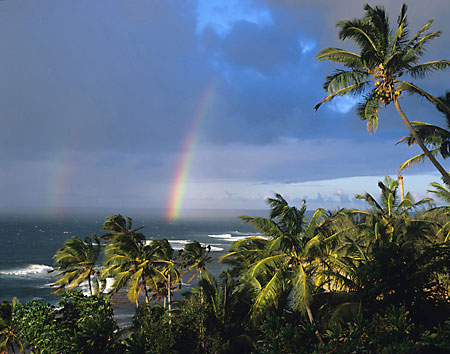


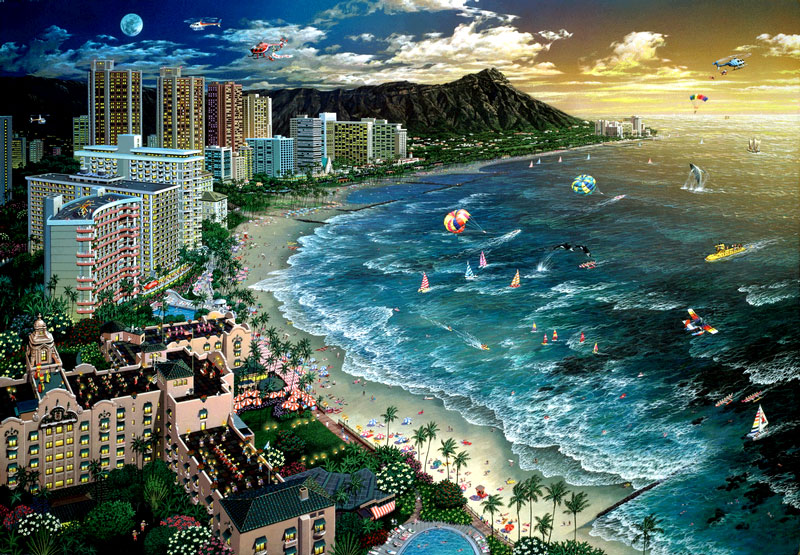










 Email Glenn James: