Air Temperatures – The following maximum temperatures were recorded across the state of Hawaii Sunday afternoon: Lihue, Kauai – 84 Honolulu, Oahu – 91 Kaneohe, Oahu – 83 Kahului, Maui – 89 Hilo, Hawaii – 84 Kailua-kona – 87 Air Temperaturesranged between these warmest and coolest spots near sea level, and on the highest mountains…at 8 p.m. Sunday evening:
Honolulu, Oahu – 79F Hilo, Hawaii – 73
Haleakala Crater – 46 (near 10,000 feet on Maui)
Mauna Kea summit – 43 (near 14,000 feet on the Big Island) Precipitation Totals – The following numbers represent the largest precipitation totals (inches) during the last 24 hours on each of the major islands, as of Sunday evening: 0.47 Mount Waialeale Kauai
0.42 Poamoho 2, Oahu
0.02 Molokai
0.00 Lanai
0.00 Kahoolawe 0.32 Puu Kukui, Maui
0.06 Kealakekua, Big Island Weather Chart – Here’s the latest (automatically updated) weather mapshowing a 1022 millibar high pressure system to the northeast of the islands. The location and strength of this high pressure cell will keep light to moderately strong trade winds blowing across our islands…locally stronger.
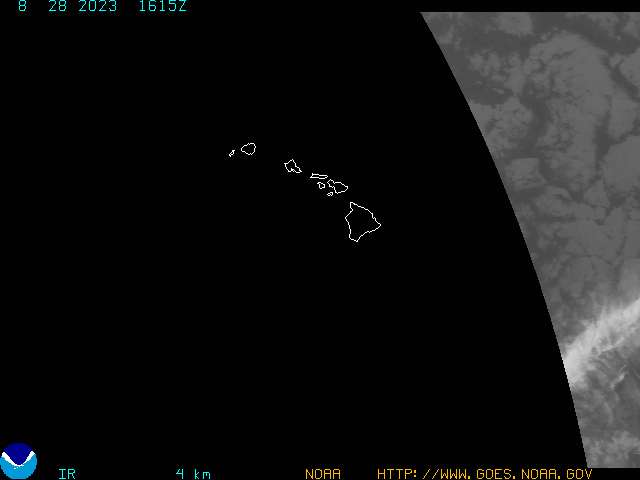
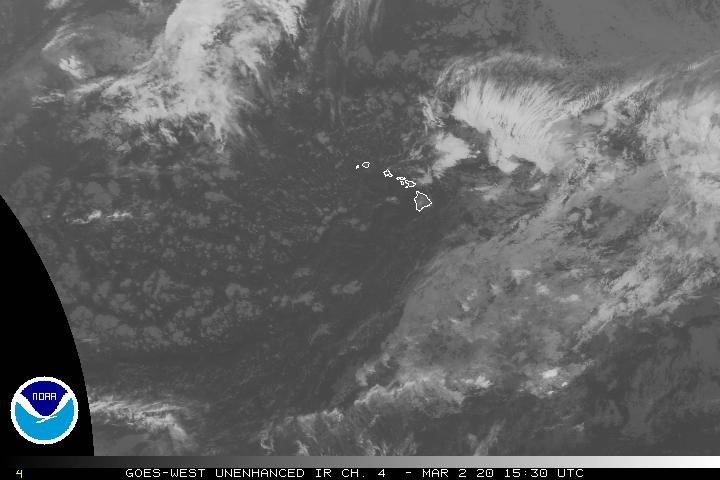
Satellite and Radar Images: To view the cloud conditions we have here in Hawaii, please use the following satellite links, starting off with theInfrared Satellite Image of the islands to see all the clouds around the state during the day and night. This next image is one that gives close images of the islands only during the daytime hours, and is referred to as a Close-up visible image. This next image shows a larger view of the Pacific…giving perspective to the wider ranging cloud patterns in the Pacific Ocean. To help you keep track of where any showers may be around the islands, here’s the latest animatedradar image.
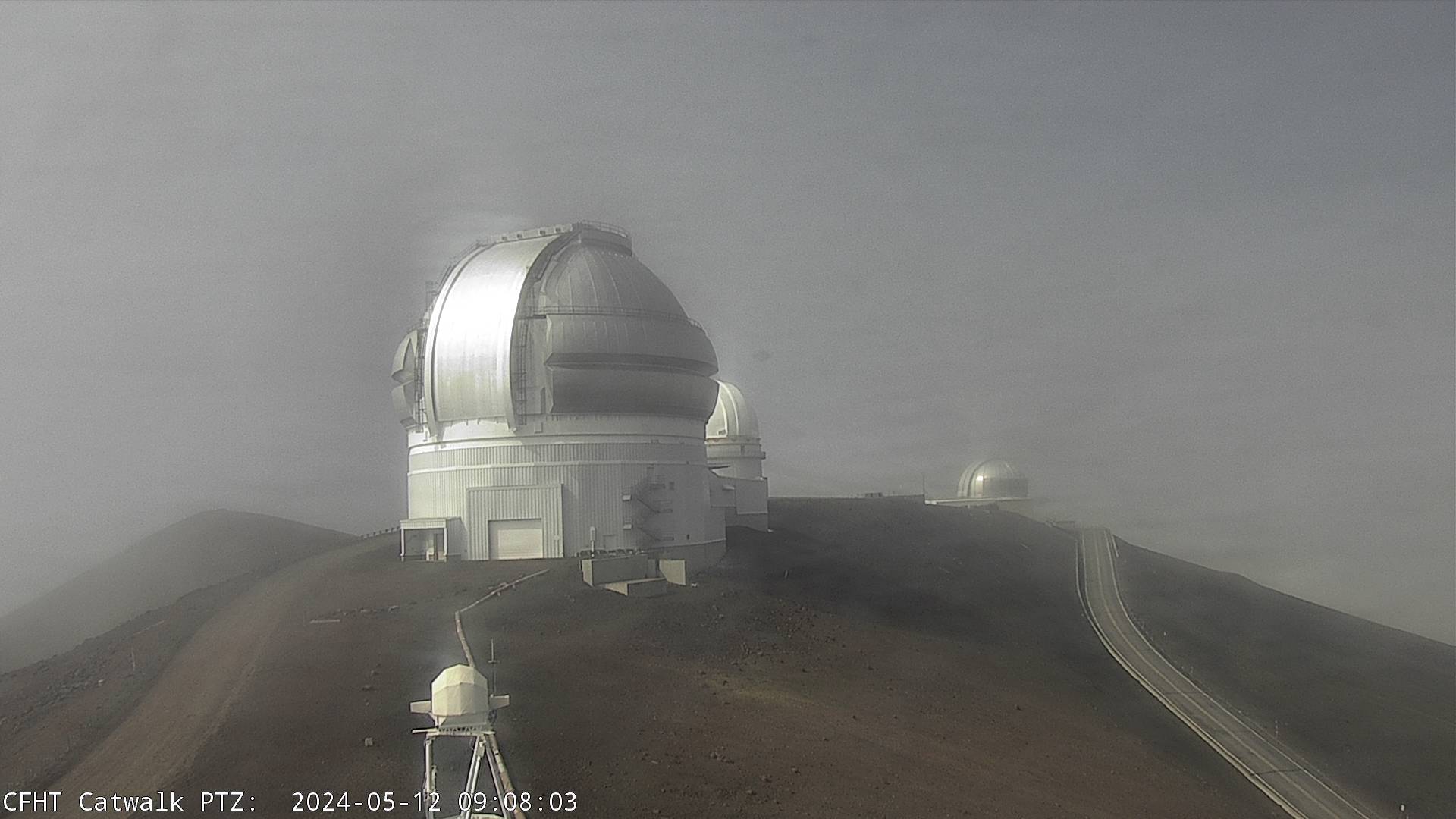
Hawaii’s Mountains – Here’s a link to the live webcam on the summit of near 14,000 footMauna Kea on the Big Island of Hawaii. The tallest peak on the island of Maui is theHaleakala Crater, which is near 10,000 feet in elevation. These two webcams are available during the daylight hours here in the islands…and when there’s a big moon rising just after sunset for an hour or two! Plus, during the nights and early mornings you will be able to see stars, and the sunrise too…depending upon weather conditions.
The typical trade wind weather pattern continues here in the islands.High pressure to the northeast of Hawaii, will keep light to moderately strong trade winds blowing across our tropical latitudes. There will be little change in this pleasant reality into at least the first part of the new week ahead. Our winds will finally begin to ease up over the next several days.
These trade winds will carry a few showers our way, although they will be restricted to the windward sides for the most part. The leeward sides will continue to be dry and sunny to partly sunny during the days. All things considered, our local weather will remain nice, with no major changes expected through the next several days…at least.
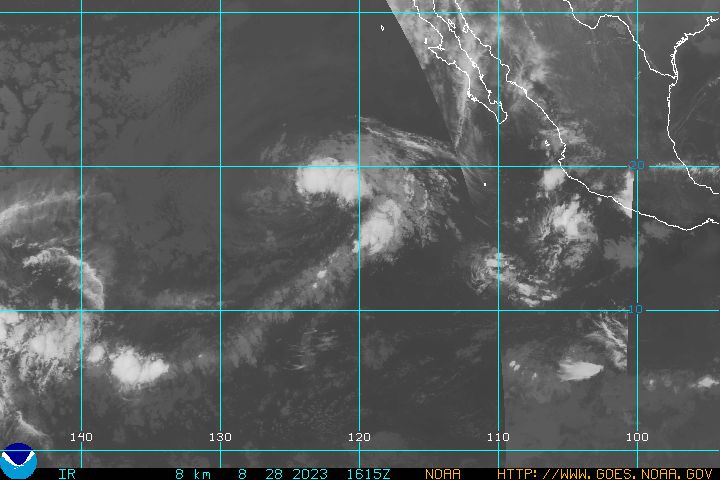
Tropical storm Marie, and tropical storm Norbet remain active in the eastern Pacific.Marie will is moving over cooler sea surface temperatures…bringing her down into the tropical storm category now. Well before Marie gets anywhere near our central Pacific, she will have fizzled out. Here’s atracking mapshowing these tropical storms in relation to our Hawaiian Islands, as well as asatellite imageof both of these tropical cyclones.
It’s Sunday evening here in Kula, Maui, as I begin writing this last section of today’s weather narrative from Hawaii. As you can see from the two paragraphs above, our weather here in the Hawaiian Islands will remain favorably inclined. I see nothing in the immediate future to interrupt these pleasant, autumn weather circumstances. The prevailing trade wind flow will dominate our Hawaiian islands weather picture well into the future. ~~~I will be back early Monday morning with your next new weather narrative. I hope you have a great Sunday night until then! Aloha for now…Glenn.
Interesting:
The world’s largest biomass power plant running exclusively on chicken manure has opened in the Netherlands. The power plant will deliver renewable electricity to 90,000 households. It has a capacity of 36.5 megawatts, and will generate more than 270 million kWh of electricity per year. The biomass power plant is more than merely “carbon neutral”. If the chicken manure were to be spread out over farm land, it would release not only CO2, but also methane, a very potent greenhouse gas. By using the manure for power generation, the release of methane is avoided. The biomass power plant will utilize approximately 440,000 tons of chicken manure, roughly one third of the total amount produced each year in the Netherlands. Many European countries, including the Netherlands, suffer under an excess of different types of animal manure that pollute the environment.
Interesting2:
Thanks to a genetic breakthrough, a large portion of Earth’s now-inhospitable soil could be used to grow crops — potentially alleviating one of the most pressing problems facing the planet’s rapidly growing population. Scientists at the University of California, Riverside made plants tolerant of poisonous aluminum by tweaking a single gene. This may allow crops to thrive in the 40 to 50 percent of Earth’s soils currently rendered toxic by the metal. "Aluminum toxicity is a very limiting factor, especially in developing countries, in South America and Africa and Indonesia," said biochemist Paul Larsen. "It’s not like these areas are devoid of plant life, but they’re not crop plants.
Among agriculturally important plants, there aren’t mechanisms for aluminum tolerance." The planet is rapidly running out of room to grow food, and scientists say that the world’s booming population — expected to swell by half in the next 50 years — will outstrip food production. There’s no more room for farms in the developed world; demand for cropland is fueling deforestation in the rain forests of Latin America and Africa; and the limits of the Green Revolution, which increased global food production through the use of pesticides and industrial farming techniques, have been reached. Another revolution, say agronomists, is needed.
Interesting3:
A paleontologist whose beachfront home in Texas was destroyed during Hurricane Ike has found a football-size tooth in the debris. Dorothy Sisk and Jim Westgate are scientists at LamarUniversity. They discovered the fossil tooth in the front yard of Sisk’s home in Caplen on the devastated BolivarPeninsula. Westgate believes the fossil is from a Columbian mammoth common in North America until around 10,000 years ago. The tooth looks like a series of boot soles or slices of bread wedged together. It is expected to be sent to the TexasMemorialMuseum in Austin. More than 1 million people fled the Texas coast because of Hurricane Ike.
Interesting4:
Arctic sea ice extent during the 2008 melt season dropped to the second-lowest level since satellite measurements began in 1979, reaching the lowest point in its annual cycle of melt and growth on Sept. 14, according to researchers at the University of Colorado at Boulder‘s National Snow and IceDataCenter. Preliminary data also indicate 2008 may represent the lowest volume of Arctic sea ice on record, according to the researchers. The declining Arctic sea ice is due to rising concentrations of greenhouse gases that have elevated temperatures across the Arctic and strong natural variability in Arctic sea ice, according to scientists. Average sea ice extent during September, a benchmark measurement in the scientific study of Arctic sea ice, was 1.8 million square miles.
The record monthly low, set in 2007, was 1.65 million square miles. The third lowest monthly low was 2.15 square miles in 2005, according researchers at the center. The 2008 low strongly reinforces the 30-year downward trend in Arctic sea ice extent, said CU-Boulder Research Professor Mark Serreze, an NSIDC senior scientist. The 2008 September low was 34 percent below the long-term average from 1979 to 2000 and only 9 percent greater than the 2007 record. Because the 2008 low was so far below the September average, the negative trend in the September extent has been pulled downward, from a minus 10.7 percent per decade to a minus 11.7 percent per decade, he said. "When you look at the sharp decline we have seen over the past 30 years, a recovery from lowest to second lowest is no recovery at all," Serreze said. "Both within and beyond the Arctic, the implications of the decline are enormous."
Interesting5:
Bluefin tuna from both sides of the Atlantic get together as juveniles, a discovery that could affect how the tuna fishery is managed. While North American and Mediterranean bluefin return home to spawn, a study published in Friday’s edition of the journal Science reveals that as youngsters the fish travel long distances to intermix. The researchers found that while the largest tuna — sought by commercial fishermen off North America — tend to be local fish, the smaller ones caught by sport fishermen often have originated in the Mediterranean. The team, led by Jay Rooker of TexasA&MUniversity and David Secor of the University of Maryland Center for Environmental Science, was able to identify the origins of fish by examining the chemical composition of the otolith, or ear stone, of the tuna. "Juveniles are not conforming to the principal premise of how they’ve been managed — that fish keep to their own side of the Atlantic," Secor said in a statement. "This could be particularly troubling if North American juveniles head to the Mediterranean. High exploitation there might mean that few make it back. Evaluating where Mediterranean juveniles originate should be our next highest priority." The International Commission for the Conservation of Atlantic Tunas meets next month in Morocco to discuss declining tuna stocks and ways to better manage species.
Air Temperatures – The following maximum temperatures were recorded across the state of Hawaii Friday afternoon: Lihue, Kauai – 85 Honolulu, Oahu – 89 Kaneohe, Oahu – 83 Kahului, Maui – 88 Hilo, Hawaii – 82 Kailua-kona – 87 Air Temperaturesranged between these warmest and coolest spots near sea level, and on the highest mountains…at 5 p.m. Friday evening:
Port Allen – 86F Hilo, Hawaii – 74
Haleakala Crater – 46 (near 10,000 feet on Maui)
Mauna Kea summit – 37 (near 14,000 feet on the Big Island) Precipitation Totals – The following numbers represent the largest precipitation totals (inches) during the last 24 hours on each of the major islands, as of Friday afternoon: 0.82 Mount Waialeale Kauai
0.24 Manoa Valley, Oahu
0.00 Molokai
0.00 Lanai
0.00 Kahoolawe 0.10 Puu Kukui, Maui
0.25 Hilo airport, Big Island Weather Chart – Here’s the latest (automatically updated) weather mapshowing a 1024 millibar high pressure system to the north of the islands. The location and strength of this high pressure cell will keep light to moderately strong trade winds blowing across our islands…locally stronger.
Satellite and Radar Images: To view the cloud conditions we have here in Hawaii, please use the following satellite links, starting off with theInfrared Satellite Image of the islands to see all the clouds around the state during the day and night. This next image is one that gives close images of the islands only during the daytime hours, and is referred to as a Close-up visible image. This next image shows a larger view of the Pacific…giving perspective to the wider ranging cloud patterns in the Pacific Ocean. To help you keep track of where any showers may be around the islands, here’s the latest animatedradar image.
Hawaii’s Mountains – Here’s a link to the live webcam on the summit of near 14,000 footMauna Kea on the Big Island of Hawaii. The tallest peak on the island of Maui is theHaleakala Crater, which is near 10,000 feet in elevation. These two webcams are available during the daylight hours here in the islands…and when there’s a big moon rising just after sunset for an hour or two! Plus, during the nights and early mornings you will be able to see stars, and the sunrise too…depending upon weather conditions.
Aloha Paragraphs
Iao Stream and Needle on Maui Photo Credit: flickr.com
There are plenty of things that don’t seem normal at the moment, but our local Hawaiian weather picture isn’t one of them.We find all the necessary ingredients to qualify as routine now, with light to moderately strong trade winds, and the obligatory few passing showers along the windward sides. There will be no shortage of daytime sunshine, especially along those warm to very warm leeward beaches. The nights will be getting longer slowly, although air temperatures will remain seasonably warm under the influence of air brought in by the easterly trade winds.
Looking at the latest GFS computer model, we find trade wind producing high pressure systems parked generally to the north through the next several days, which eventually shift to the northeast away from Hawaii. This migration of the high pressure cell is induced by the approach of a storm moving along in the mid-latitudes next week. This low, with its associated cold front don’t get close to our islands. This allows the trade winds to continue blowing through at least the next week, keeping favorably inclined weather over the Aloha state.
Glancing eastward, we see hurricane Marie spinning the waters of the eastern Pacific, located approximately 2000 miles away.Marie will sport these hurricane force winds only briefly before moving over cooler sea surface temperatures…bringing her down into the tropical storm category again. Well before Marie gets anywhere near our central Pacific, all the winds will have left her sails. Here’s atracking mapshowing this hurricane in relation to our Hawaiian Islands…asatellite imagetoo. A new tropical system named 15E has spun up Friday evening, which are shown on both the links above.
It’s early Friday evening here in Kihei, Maui, as I begin writing this last section of today’s weather narrative from Hawaii. As you can see from the two paragraphs above, our weather here in the Hawaiian Islands will remain really nice. I see nothing in the immediate future to interrupt this these pleasant, autumn weather circumstances. The prevailing trade wind flow will dominate our Hawaiian islands weather picture well into the future. ~~~ The haze problem that we saw Thursday afternoon into Friday morning, got blown away by the trade winds, so our air visibilities have improved markedly during the day. ~~~I’m about ready to leave Kihei, for the drive to Kahului. I’m going to see the new western out called Appaloosa (2008), starring Ed Harris, Jeremy Irons, Robert Knott, Viggo Mortensen, and Renee Zellweger, among others. The Western genre continues its resurgence with this drama from actor-director Ed Harris. Based on Robert B. Parker’s novel, Appaloosa follows a pair of lawmen (played by Harris and Viggo Mortensen) who must unite over their town’s crisis, as they’re divided over their mutual love of a woman (Renée Zellweger). One critic writes this about the film: "A warmly made, slightly offbeat movie about friendly devotion. It also happens to be a western, and every man in it is grizzled or wizened or both." At any rate, I’m certainly drawn to it, and perhaps you will be too, here’s atrailer for your perusal. ~~~I’ll be back early Saturday morning with your next new weather narrative, along with a movie review of my own. I hope you have a great Friday night until then! Aloha for now…Glenn.
Interesting:
The world’s largest biomass power plant running exclusively on chicken manure has opened in the Netherlands. The power plant will deliver renewable electricity to 90,000 households. It has a capacity of 36.5 megawatts, and will generate more than 270 million kWh of electricity per year. The biomass power plant is more than merely “carbon neutral”. If the chicken manure were to be spread out over farm land, it would release not only CO2, but also methane, a very potent greenhouse gas. By using the manure for power generation, the release of methane is avoided. The biomass power plant will utilize approximately 440,000 tons of chicken manure, roughly one third of the total amount produced each year in the Netherlands. Many European countries, including the Netherlands, suffer under an excess of different types of animal manure that pollute the environment.
Interesting2:
Thanks to a genetic breakthrough, a large portion of Earth’s now-inhospitable soil could be used to grow crops — potentially alleviating one of the most pressing problems facing the planet’s rapidly growing population. Scientists at the University of California, Riverside made plants tolerant of poisonous aluminum by tweaking a single gene. This may allow crops to thrive in the 40 to 50 percent of Earth’s soils currently rendered toxic by the metal. "Aluminum toxicity is a very limiting factor, especially in developing countries, in South America and Africa and Indonesia," said biochemist Paul Larsen. "It’s not like these areas are devoid of plant life, but they’re not crop plants.
Among agriculturally important plants, there aren’t mechanisms for aluminum tolerance." The planet is rapidly running out of room to grow food, and scientists say that the world’s booming population — expected to swell by half in the next 50 years — will outstrip food production. There’s no more room for farms in the developed world; demand for cropland is fueling deforestation in the rain forests of Latin America and Africa; and the limits of the Green Revolution, which increased global food production through the use of pesticides and industrial farming techniques, have been reached. Another revolution, say agronomists, is needed.
Interesting3:
A paleontologist whose beachfront home in Texas was destroyed during Hurricane Ike has found a football-size tooth in the debris. Dorothy Sisk and Jim Westgate are scientists at LamarUniversity. They discovered the fossil tooth in the front yard of Sisk’s home in Caplen on the devastated BolivarPeninsula. Westgate believes the fossil is from a Columbian mammoth common in North America until around 10,000 years ago. The tooth looks like a series of boot soles or slices of bread wedged together. It is expected to be sent to the TexasMemorialMuseum in Austin. More than 1 million people fled the Texas coast because of Hurricane Ike.
Interesting4:
Arctic sea ice extent during the 2008 melt season dropped to the second-lowest level since satellite measurements began in 1979, reaching the lowest point in its annual cycle of melt and growth on Sept. 14, according to researchers at the University of Colorado at Boulder‘s National Snow and IceDataCenter. Preliminary data also indicate 2008 may represent the lowest volume of Arctic sea ice on record, according to the researchers. The declining Arctic sea ice is due to rising concentrations of greenhouse gases that have elevated temperatures across the Arctic and strong natural variability in Arctic sea ice, according to scientists. Average sea ice extent during September, a benchmark measurement in the scientific study of Arctic sea ice, was 1.8 million square miles.
The record monthly low, set in 2007, was 1.65 million square miles. The third lowest monthly low was 2.15 square miles in 2005, according researchers at the center. The 2008 low strongly reinforces the 30-year downward trend in Arctic sea ice extent, said CU-Boulder Research Professor Mark Serreze, an NSIDC senior scientist. The 2008 September low was 34 percent below the long-term average from 1979 to 2000 and only 9 percent greater than the 2007 record. Because the 2008 low was so far below the September average, the negative trend in the September extent has been pulled downward, from a minus 10.7 percent per decade to a minus 11.7 percent per decade, he said. "When you look at the sharp decline we have seen over the past 30 years, a recovery from lowest to second lowest is no recovery at all," Serreze said. "Both within and beyond the Arctic, the implications of the decline are enormous."
Interesting5:
Bluefin tuna from both sides of the Atlantic get together as juveniles, a discovery that could affect how the tuna fishery is managed. While North American and Mediterranean bluefin return home to spawn, a study published in Friday’s edition of the journal Science reveals that as youngsters the fish travel long distances to intermix. The researchers found that while the largest tuna — sought by commercial fishermen off North America — tend to be local fish, the smaller ones caught by sport fishermen often have originated in the Mediterranean. The team, led by Jay Rooker of TexasA&MUniversity and David Secor of the University of Maryland Center for Environmental Science, was able to identify the origins of fish by examining the chemical composition of the otolith, or ear stone, of the tuna. "Juveniles are not conforming to the principal premise of how they’ve been managed — that fish keep to their own side of the Atlantic," Secor said in a statement. "This could be particularly troubling if North American juveniles head to the Mediterranean. High exploitation there might mean that few make it back. Evaluating where Mediterranean juveniles originate should be our next highest priority." The International Commission for the Conservation of Atlantic Tunas meets next month in Morocco to discuss declining tuna stocks and ways to better manage species.
Air Temperatures – The following maximum temperatures were recorded across the state of Hawaii Thursday afternoon: Lihue, Kauai – 83 Honolulu, Oahu – 88 Kaneohe, Oahu – 82 Kahului, Maui – 88 Hilo, Hawaii – 82 Kailua-kona – 86 Air Temperaturesranged between these warmest and coolest spots near sea level, and on the highest mountains…at 4 p.m. Thursday afternoon:
Honolulu, Oahu – 86F Hilo, Hawaii– 77
Haleakala Crater – 55 (near 10,000 feet on Maui)
Mauna Kea summit – 43 (near 14,000 feet on the Big Island) Precipitation Totals – The following numbers represent the largest precipitation totals (inches) during the last 24 hours on each of the major islands, as of Thursday afternoon: 1.59 Mount Waialeale Kauai
1.32 Oahu Forest NWR, Oahu
0.03 Molokai
0.00 Lanai
0.00 Kahoolawe 0.28 West Wailuaiki, Maui
0.27 Kealakekua, Big Island Weather Chart – Here’s the latest (automatically updated) weather mapshowing a 1023 millibar high pressure system to the north of the islands. The location and strength of this high pressure cell will keep light to moderately strong trade winds blowing across our islands…locally stronger.
Satellite and Radar Images: To view the cloud conditions we have here in Hawaii, please use the following satellite links, starting off with theInfrared Satellite Image of the islands to see all the clouds around the state during the day and night. This next image is one that gives close images of the islands only during the daytime hours, and is referred to as a Close-up visible image. This next image shows a larger view of the Pacific…giving perspective to the wider ranging cloud patterns in the Pacific Ocean. To help you keep track of where any showers may be around the islands, here’s the latest animatedradar image.
Hawaii’s Mountains – Here’s a link to the live webcam on the summit of near 14,000 footMauna Kea on the Big Island of Hawaii. The tallest peak on the island of Maui is theHaleakala Crater, which is near 10,000 feet in elevation. These two webcams are available during the daylight hours here in the islands…and when there’s a big moon rising just after sunset for an hour or two! Plus, during the nights and early mornings you will be able to see stars, and the sunrise too…depending upon weather conditions.
Aloha Paragraphs
Rainbow Falls, Hilo, Hawaii Photo Credit: flickr.com
A typical autumn trade wind weather pattern is well established here in the Hawaiian Islands Thursday evening.Light to moderately strong trade winds will continue, with those locally windier areas finding somewhat strong and gusty conditions. There is no end to the trade winds in sight, which may strengthen some as we move into next week. The winds are now coming out of the east, bringing in relatively warm air from over the tropical ocean.
These balmy breezes will carry a few showers to our windward coasts and slopes, leaving the leeward sides dry and sunny to partly cloudy during the days.The one exception Thursday night will be increased clouds and showers on the Big Island. Daytime temperatures will remain warm to very warm, with the warmest areas rising nto the upper 80F’s. Nights in contrast, will drop down into the lower 70F’s for the most part at sea level..cooler in the upcountry areas.
It’s early Thursday evening here in Kihei, Maui, as I begin writing this last section of today’s weather narrative from Hawaii.Our weather through the rest of this week, as noted in the two paragraphs above, will be just the kind that the Chamber of Commerce likes to promote! I don’t see anything that will interrupt our gorgeous weather conditions on the horizon. There is a tropical storm, named Marie, in the eastern Pacific, but it won’t be bothering us anytime soon. It should be noted however, that some of the computer models bring whatever is left of this tropical system towards our islands late next week…or early the following week. Whether its remnant moisture will bring an increase in showers to Hawaii then, is still uncertain at this point. ~~~ Thursday way yet another one of those near perfect days, that is if you didn’t mind some fresh trade winds whipping around in places. The Big Island’s windward side saw those trade winds bringing quite a big of cloudiness, associated with the leftover moisture from a cold front cloud band earlier this week. At any rate, and as is often the case, here on Maui had the strongest wind gusts early in the evening, with both the Kahului airport, and Maalaea Bay both showing 31 mph. Looking out the window, before leaving Kihei for Kula, I see mostly blue skies, with just the usual capping cloud over the West Maui Mountains, and a few clouds stretching along the windward sides…along with what looks a lot like fairly thick volcanic haze in the air too. As this satellite image shows, there are the most numerous clouds, and showers, around the Big Island as we move into the night. ~~~ I’ll be back very early Friday morning with your next new weather narrative, I hope you have a great Thursday night until then! Aloha for now…Glenn.
Interesting:
The ports of Los Angeles and Long Beach, the busiest U.S. cargo complex, launched a landmark clean-air program on Wednesday banning some 2,000 older trucks blamed for half the pollution spewed by the ports’ diesel haulers. The port complex ranks as the biggest air polluter in Southern California — more than the region’s cars — and heavy-duty trucks operating there generate more than a third of its overall diesel emissions, port officials say. Despite weeks of court wrangling and worries that cargo deliveries would be slowed, at least 15,000 newer-model trucks — more than enough to keep terminal traffic flowing smoothly — registered on time to comply with the new requirements at each port, port authorities said. The two adjacent shipping centers, which together account for 40 percent of U.S. container imports, have banned all pre-1989 model-year diesel trucks as part of larger plans to reduce air pollutants from the ports by nearly half in the next five years. Approval of those plans were crucial to paving the way for port expansions long stalled over concerns about pollution-linked illnesses in nearby communities.
"Cleaner air is on the way," Mayor Antonio Villaraigosa proclaimed at a harbor-side news conference kicking off the clean trucks program. "Ports across the world have their eyes on us as a model for the future because today the cornerstone of the world’s most comprehensive plan to clean up a major port hits the road." The nearly 17,000 trucks regularly serving the ports produce more smog and soot than all 6 million cars in the region and cause 1,200 premature deaths annually, according to the California Air Resources Board. Asthma rates among children living in the vicinity are double the national average, while dock workers and truck drivers face significantly higher risks of lung and throat cancer, various studies have shown. The ban on pre-1989 trucks immediately excludes more than 2,000 vehicles — roughly 14 percent of the ports’ combined fleet of diesel haulers — that account for about half of the port area’s total truck pollution, port officials say. Supporters say scrapping those 2,000-plus trucks will remove more than 350 tons of harmful emissions.
Interesting2:
Almost every major auto manufacturer has now announced plans to offer a plug-in hybrid vehicle that can run on electricity for 20-40 miles before switching to gasoline. Since half of American cars travel under 25 miles a day, plug-ins allow people to do most of their driving on electricity, but still have a car for long-distance trips that can be easily and quickly refuelled with gasoline. The most highly anticipated of all the plug-ins is the Chevy Volt, whose new design was recently rolled out by GM. It will be offered to the public by the end of 2010, and, soon after that, GM expects to be selling 60,000 a year. One key advantage of electricity as an alternative fuel is that it is much, much cheaper per mile than gasoline at current prices. GM says it will cost $0.02 per mile to drive the Volt less than 40 miles per day, versus $0.12 per mile for gasoline at a price of $3.60. If gas prices continue to rise over the next decade, as many think, the fuel savings from plug-ins will only grow. Another advantage is that electricity can come from pollution-free sources that do not contribute to global warming. There simply is no other alternative fuel that offers a more affordable and practical path to sharply reducing the transportation sector’s greenhouse gas emissions.
That said, the lithium-ion batteries required for plug-ins have never been used for this application before. As one battery expert told me: "There are only pilot production of various Li-Ion batteries" around the world. An alternative fuel vehicle expert told me that GM has "already sunk at least $1bn into the Volt and cannot reasonably expect a profit from a $45,000 new car in an economy which is imploding. The actual cost of the vehicle may be higher." So to succeed, plug-ins like the Volt will require several years of sustained government support. But that should not be a surprise. No country in the world has achieved significant market penetration of an alternative-fuel vehicle without major government incentives and mandates. Yet while Barack Obama strongly believes in such incentives and mandates, John McCain has a quarter-century record in Congress strongly opposing them. Indeed, he has voted with oil-patch senator James Inhofe and against clean energy and alternative fuels a remarkable 42 out of 44 times since the mid-1990s, not even counting the last eight consecutive votes on renewable energy incentives that he didn’t bother to show up for.
Interesting3:
The shorelines of ancient Alberta, British Columbia and the Canadian Arctic were an important refuge for some of the world’s earliest animals, most of which were wiped out by a mysterious global extinction event some 252 million years ago. U of C scientists have solved part of the mystery of where marine organisms that recovered from the biggest extinction on earth were housed. A team of researchers, including Charles Henderson, a geoscience professor at the U of C, Tyler Beatty, a PhD candidate at the U of C and J-P Zonneveld, an associate professor at the U of A, discovered that the shorelines of ancient Canada provided a refuge for marine organisms that escaped annihilation during the Permian-Triassic extinction event. "The boundary between the end of the Permian and beginning of the Triassic period saw unparalleled species loss in the marine realm, and biotic recovery was delayed relative to other mass extinctions," says Henderson, in a paper published in the October edition of Geology. "A major unresolved question has been discovering where the marine organisms that recovered from the extinction were housed." Henderson adds that this may not be the only refuge where life survived after the mass extinction, but it is the only area discovered to date.
Interesting4:
Arctic sea ice extent during the 2008 melt season dropped to the second-lowest level since satellite measurements began in 1979, reaching the lowest point in its annual cycle of melt and growth on Sept. 14, according to researchers at the University of Colorado at Boulder‘s National Snow and IceDataCenter. Preliminary data also indicate 2008 may represent the lowest volume of Arctic sea ice on record, according to the researchers. The declining Arctic sea ice is due to rising concentrations of greenhouse gases that have elevated temperatures across the Arctic and strong natural variability in Arctic sea ice, according to scientists. Average sea ice extent during September, a benchmark measurement in the scientific study of Arctic sea ice, was 1.8 million square miles.
The record monthly low, set in 2007, was 1.65 million square miles. The third lowest monthly low was 2.15 square miles in 2005, according researchers at the center. The 2008 low strongly reinforces the 30-year downward trend in Arctic sea ice extent, said CU-Boulder Research Professor Mark Serreze, an NSIDC senior scientist. The 2008 September low was 34 percent below the long-term average from 1979 to 2000 and only 9 percent greater than the 2007 record. Because the 2008 low was so far below the September average, the negative trend in the September extent has been pulled downward, from a minus 10.7 percent per decade to a minus 11.7 percent per decade, he said. "When you look at the sharp decline we have seen over the past 30 years, a recovery from lowest to second lowest is no recovery at all," Serreze said. "Both within and beyond the Arctic, the implications of the decline are enormous."
Interesting5:
Bluefin tuna from both sides of the Atlantic get together as juveniles, a discovery that could affect how the tuna fishery is managed. While North American and Mediterranean bluefin return home to spawn, a study published in Friday’s edition of the journal Science reveals that as youngsters the fish travel long distances to intermix. The researchers found that while the largest tuna — sought by commercial fishermen off North America — tend to be local fish, the smaller ones caught by sport fishermen often have originated in the Mediterranean. The team, led by Jay Rooker of TexasA&MUniversity and David Secor of the University of Maryland Center for Environmental Science, was able to identify the origins of fish by examining the chemical composition of the otolith, or ear stone, of the tuna. "Juveniles are not conforming to the principal premise of how they’ve been managed — that fish keep to their own side of the Atlantic," Secor said in a statement. "This could be particularly troubling if North American juveniles head to the Mediterranean. High exploitation there might mean that few make it back. Evaluating where Mediterranean juveniles originate should be our next highest priority." The International Commission for the Conservation of Atlantic Tunas meets next month in Morocco to discuss declining tuna stocks and ways to better manage species.
Air Temperatures – The following maximum temperatures were recorded across the state of Hawaii Wednesday afternoon: Lihue, Kauai – 84 Honolulu, Oahu – 88 Kaneohe, Oahu – 83 Kahului, Maui – 86 Hilo, Hawaii – 83 Kailua-kona – 87 Air Temperaturesranged between these warmest and coolest spots near sea level, and on the highest mountains…at 4 p.m. Wednesday afternoon:
Port Allen, Kauai – 88F Lihue, Kauai– 77
Haleakala Crater – 55 (near 10,000 feet on Maui)
Mauna Kea summit – 43 (near 14,000 feet on the Big Island) Precipitation Totals – The following numbers represent the largest precipitation totals (inches) during the last 24 hours on each of the major islands, as of Wednesday afternoon:
0.31 Mount Waialeale Kauai
0.18 Wilson Tunnel, Oahu
0.03 Molokai
0.00 Lanai
0.00 Kahoolawe 0.23 West Wailuaiki, Maui 1.81 Honaunau, Big Island Weather Chart – Here’s the latest (automatically updated) weather mapshowing a 1021 millibar high pressure system to the north-northwest of the islands. The placement and strength of this high pressure cell will keep light to moderately strong trade winds coming our way…locally a bit stronger.
Satellite and Radar Images: To view the cloud conditions we have here in Hawaii, please use the following satellite links, starting off with theInfrared Satellite Image of the islands to see all the clouds around the state during the day and night. This next image is one that gives close images of the islands only during the daytime hours, and is referred to as a Close-up visible image. This next image shows a larger view of the Pacific…giving perspective to the wider ranging cloud patterns in the Pacific Ocean. To help you keep track of where any showers may be around the islands, here’s the latest animatedradar image.
Hawaii’s Mountains – Here’s a link to the live webcam on the summit of near 14,000 footMauna Kea on the Big Island of Hawaii. The tallest peak on the island of Maui is theHaleakala Crater, which is near 10,000 feet in elevation. These two webcams are available during the daylight hours here in the islands…and when there’s a big moon rising just after sunset for an hour or two! Plus, during the nights and early mornings you will be able to see stars, and the sunrise too…depending upon weather conditions.
The first cold front of the autumn season is now to the south of the Hawaiian Islands.The truth is that even if this frontal cloud band waited until October to arrive, it still would have been an early one…qualifying for the label unusual. The fact that it arrived during the month of September puts it into more rarified air! At any rate, the front is now in the area to our south, as shown on thissatellite image. As can be seen, the linear integrity of the band is now falling apart, grading into just the scattered clouds that surround it generally to the north. The remnant clouds are down in the easterly trade wind belt of winds, which will pull and stretch what’s left of it into oblivion soon. Here in the islands, and to the north and northeast, our winds are still coming in from the northeast direction.
The airflow is dry and stable in the wake of the frontal passage.This in turn will put a good cap on the ability for our local cumulus and stratocumulus to grow vertically. These rather shallow clouds will be limited in their shower producing capabilities. These are all the qualities of a fairly routine trade wind weather pattern. The current NE breezes will gradually turn clockwise towards the east. Trade winds this time of year signify good weather, actually, some of the best of the autumn season…before we see more frequent cold fronts with their blustery Kona winds. That, or light and variable winds, with the associated haze and muggy weather that accompanies slack wind conditions.
It’s early Wednesday evening here in Kihei, Maui, as I begin writing this last section of today’s weather narrative from Hawaii.Looking out the next five days, I don’t see any new cold fronts coming our way from the northwest. High pressure systems remain parked more or less to the north of the state through the rest of this week. Looking east, over in the eastern Pacific, we find newly formed tropical stormMariechurning the waters there. Just eastward of Marie, as shown on that satellite picture, there may be a second storm brewing, which if it were to spin-up…would take the name Norbert. Marie isn’t expected to reach hurricane status, and by the end of the week, will still be located in the eastern Pacific, well east of the all important 140W line of longitude, separating the central and eastern Pacific Ocean. There’s always that chance that Marie, or whatever is left of her, might eventually bring an increase in showers to our windward sides.~~~ Wednesday was one of those near perfect days here in the islands…why wasn’t it perfect, well, I’m not exactly sure! I have no reason to believe that Thursday, and for that matter, all the rest of the days this week won’t remain firmly planted on the positive side of the weather spectrum. I’ll be back very early Thursday morning with your next new weather narrative from paradise, I hope you have a great Wednesday night! Aloha for now…Glenn.
Interesting:
Wind turbines do not drive birds from surrounding areas, British researchers said on Wednesday, in findings which could make it easier to build more wind farms. Conservation groups have raised fears that large birds could get caught in the turbines and that the structures could disturb other species. But scientists found only one of the 23 species studied, the pheasant, was affected during their survey of two wind farms in eastern England. The findings published in the Journal of Applied Ecology could help government and business efforts to boost the number of wind farms as a way to increase production of renewable energy. "This is the first evidence suggesting that the present and future location of large numbers of wind turbines on European farmland is unlikely to have detrimental effects on farmland birds," Mark Whittingham, whose team from NewcastleUniversity carried out the research, said in a statement.
"This should be welcome news for nature conservationists, wind energy companies and policy makers." The survey studied the impact of two wind farms on about 3,000 birds in the area, including five species of conservation concern — the yellowhammer, the Eurasian tree sparrow, the corn bunting, the Eurasian skylark and the common reed bunting. The researchers recorded the density of birds at different distances from the turbines and found that aside from the pheasant, the structures posed no problems. The new findings are important because the European Union is committed to generating 20 percent of its energy from renewable resources by 2020 and is also seeking to boost biodiversity. The study did not look at the danger of the birds colliding with the turbines, which has been a worry of conservationists, Whittingham said.
Interesting2:
Will there be another "dust bowl" in the Great Plains similar to the one that swept the region in the 1930s? It depends on water storage underground. Groundwater depth has a significant effect on whether the Great Plains will have a drought or bountiful year. Recent modeling results show that the depth of the water table, which results from lateral water flow at the surface and subsurface, determines the relative susceptibility of regions to changes in temperature and precipitation. "Groundwater is critical to understand the processes of recharge and drought in a changing climate," said Reed Maxwell, an atmospheric scientist at Lawrence Livermore National Laboratory, who along with a colleague at BonnUniversity analyzed the models that appear in the Sept. 28 edition of the journal Nature Geoscience.
Maxwell and Stefan Kollet studied the response of a watershed in the southern Great Plains in Oklahoma using a groundwater/surface-water/land-surface model. The southern Great Plains are an important agricultural region that has experienced severe droughts during the past century including the "dust bowl" of the 1930s. This area is characterized by little winter snowpack, rolling terrain and seasonal precipitation. While the onset of droughts in the region may depend on sea surface temperature, the length and depth of major droughts appear to depend on soil moisture conditions and land-atmosphere interactions.
Interesting3:
Thousands of feet below the bottom of the sea, off the shores of Santa Barbara, single-celled organisms are busy feasting on oil. Until now, nobody knew how many oily compounds were being devoured by the microscopic creatures, but new research led by David Valentine of UC Santa Barbara and Chris Reddy of Woods Hole Oceanographic Institution in Massachusetts has shed new light on just how extensive their diet can be. In a report to be published in the Oct. 1 edition of the journal Environmental Science & Technology, Valentine, Reddy, lead author George Wardlaw of UCSB, and three other co-authors detail how the microbes are dining on thousands of compounds that make up the oil seeping from the sea floor.
"It takes a special organism to live half a mile deep in the Earth and eat oil for a living," said Valentine, an associate professor of earth science at UCSB. "There’s this incredibly complex diet for organisms down there eating the oil. It’s like a buffet." And, the researchers found, there may be one other byproduct being produced by all of this munching on oil – natural gas. "They’re eating the oil, and probably making natural gas out of it," Valentine said. "It’s actually a whole consortium of organisms – some that are eating the oil and producing intermediate products, and then those intermediate products are converted by another group to natural gas."
Interesting4:
Nearly 200 million people now live outside their country of birth. But the patterns of migration that got them there have proven difficult to project. Now scientists at RockefellerUniversity, with assistance from the United Nations, have developed a predictive model of worldwide population shifts that they say will provide better estimates of migration across international boundaries. Because countries use population projections to estimate local needs for jobs, schools, housing and health care, a more precise formula to describe how people move could lead to better use of resources and improved economic conditions. The model, recently published in Proceedings of the National Academy of Sciences, improves existing ways to estimate population movement between individual countries and is being considered by the United Nations as an approach all nations can utilize, says the study’s lead investigator, Joel E. Cohen, Abby Rockefeller Mauzé Professor and head of the Laboratory of Populations.
"From year to year, it has been difficult to calculate how the world’s population ebbs and flows between countries other than guessing that this year will resemble last year. But that is critical information in so many ways, and this model offers a new and unified approach that, we hope, will be of global benefit," Cohen says. Formulas used until now were so flawed that they sometimes estimated that net emigration away from a particular country was greater than the country’s original population, Cohen says, with a result that a nation was left with a predicted population of fewer than zero. "This has been a very inexact science," Cohen says.
Interesting5:
Some breakfast cereals marketed to U.S. children are more than half sugar by weight and many get only fair scores on nutritional value, Consumer Reports said on Wednesday. A serving of 11 popular cereals, including Kellogg’s Honey Smacks, carries as much sugar as a glazed doughnut, the consumer group found. And some brands have more sugar and sodium when formulated for the U.S. market than the same brands have when sold in other countries. Post Golden Crisp made by Kraft Foods Inc and Kellogg’s Honey Smacks are more than 50 percent sugar by weight, the group said, while nine brands are at least 40 percent sugar.
The most healthful brands are Cheerios with three grams of fiber per serving and one gram of sugar, Kix and Honey Nut Cheerios, all made by General Mills, and Life, made by Pepsico Inc’s Quaker Oats unit. "Be sure to read the product labels, and choose cereals that are high in fiber and low in sugar and sodium," Gayle Williams, deputy editor of Consumer Reports Health, said in a statement. Honey Smacks has 15 grams of sugar and just one gram of fiber per serving while Kellogg’s Corn Pops has 12 grams of sugar and no fiber. Consumer Reports studied how 91 children aged 6 to 16 poured their cereal and found they served themselves about 50 to 65 percent more on average than the suggested serving size for three of the four tested cereals.
Interesting6:
The federal government took a new, ecosystem-based approach to the endangered species list on Tuesday, proposing an all-at-once addition of 48 species, including plants, two birds and a fly, that live only on the Hawaiian island of Kauai. The action by the Interior Department would designate about 43 square miles as critical habitat for all the species rather than considering each species’ habitat separately, which has been the practice for three decades. Officials said considering the species all at once should save time and resources and would help the whole ecosystem. The same approach is planned to help protect rare species on Oahu, the Big Island and Maui over the next several years, and it could be considered for the Arctic, big river systems of the Southwest and areas of the mountain West, according to department officials.
"For more than three decades, we’ve been struggling with one species at a time," said Dale Hall, Fish and Wildlife Service director, in a conference call with news media. "This gives us a chance to look at groups of species and at the same time be economical in the way we designate critical habitat." Interior Secretary Dirk Kempthorne, in Honolulu for an island health conference, said the new "holistic approach" will benefit not only the listed species but also the rest of the ecosystem. "By addressing the common threats that occur across these ecosystems, we can more effectively focus our conservation efforts on restoring the functions of these shared habitats," Kempthorne said. The species include 45 plants, two birds and an insect, the Hawaiian picture-wing fly. The Endangered Species Coalition hailed the action as "an end to the drought," noting that the Interior Department has added only one species to the endangered list in the past two years, the polar bear.














 Email Glenn James: