April 2008
Monthly Archive
Posted by Glenn
1 Comment
April 10-11 2008
Air Temperatures – The following maximum temperatures were recorded across the state of Hawaii Thursday:
Lihue, Kauai – 80
Honolulu, Oahu – 80
Kaneohe, Oahu – 77
Kahului, Maui – 84
Hilo, Hawaii – 77
Kailua-Kona, Hawaii – 82
Temperatures ranged between these warmest and coolest spots near sea level at 4 p.m. Thursday afternoon:
Honolulu, Oahu – 82F
Lihue, Kauai – 74
Precipitation Totals – The following numbers represent the largest precipitation totals (inches) during the last 24 hours on each of the major islands, as of Thursday afternoon:
0.52 WAINIHA, KAUAI
0.10 KAMEHAME, OAHU
0.06 MOLOKAI
0.05 LANAI
0.02 KAHOOLAWE
1.50 WEST WAILUAIKI, MAUI
0.71 WAIKII, BIG ISLAND
Weather Chart – Here’s the latest (automatically updated) weather map showing a 1032 millibar high pressure system is located far to the northeast of Hawaii, with the weak tail-end of a cold front NW of Kauai. The winds will pick up in strength from the trade wind direction…strengthening Saturday.
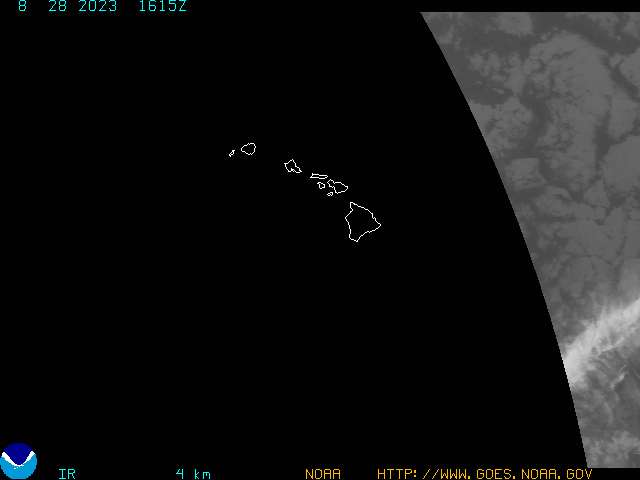
Satellite and Radar Images: To view the cloud conditions we have here in Hawaii, please use the following satellite links, starting off with the Infrared Satellite Image of the islands to see all the clouds around the state during the day and night. This next image is one that gives close images of the islands only during the daytime hours, and is referred to as a Close-up visible image. This next image shows a larger view of the Pacific…giving perspective to the wider ranging cloud patterns in the Pacific Ocean…out from the islands. To help you keep track of where any showers may be around the islands, here’s the latest animated radar image.
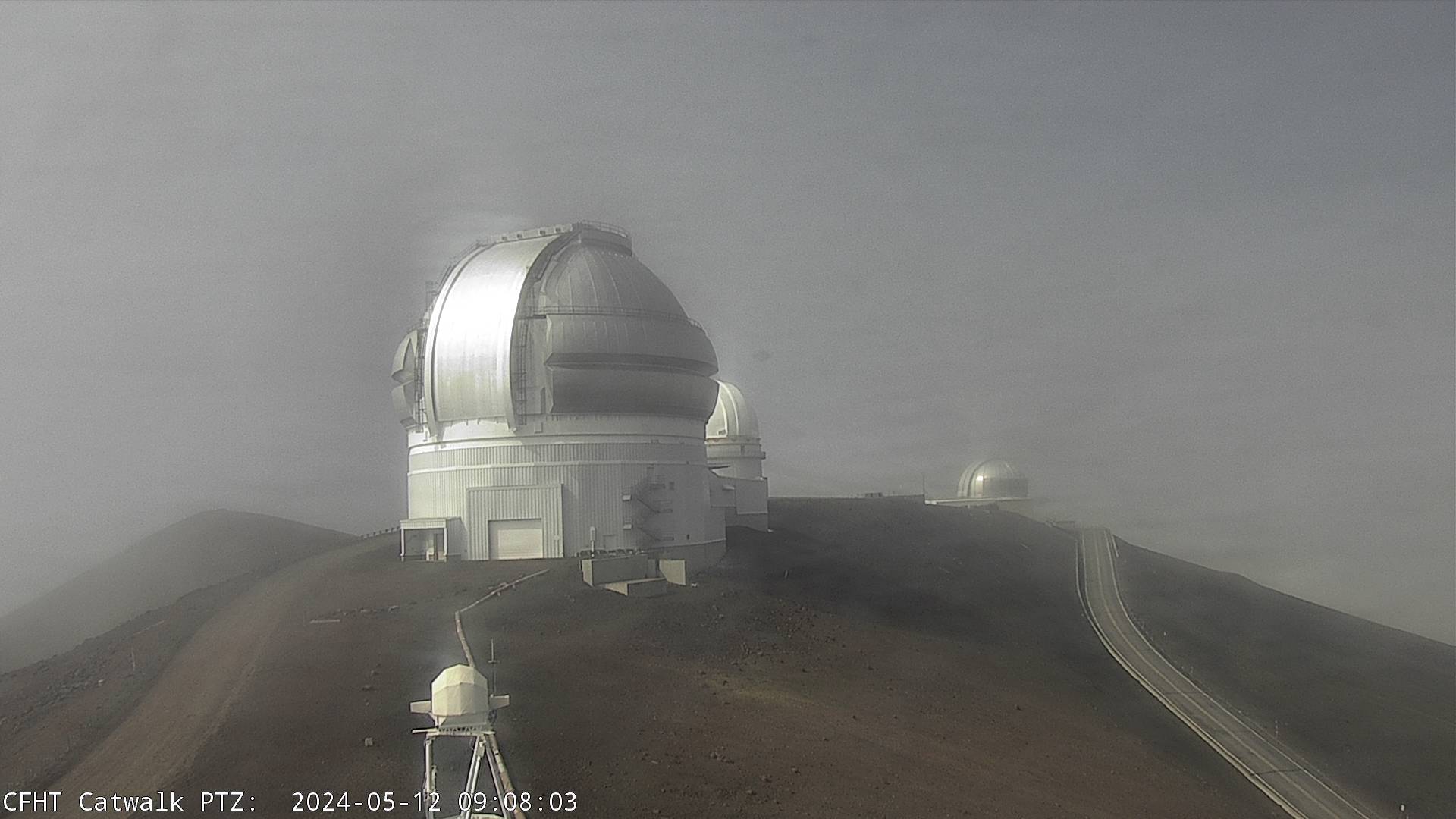
Hawaii’s Mountains – Here’s a link to the live webcam on the summit of near 14,000 foot Mauna Kea on the Big Island of Hawaii. The tallest peak on the island of Maui is the Haleakala Crater, which is near 10,000 feet in elevation. These two webcams are available during the daylight hours here in the islands…and when there’s a big moon rising just after sunset for an hour or two! Plus, during the nights and early mornings you will be able to see stars, and the sunrise too…depending upon cloud conditions.
Aloha Paragraphs
 Hawaiian beach hula
Photo Credit: Randy Jay Braun
The trade winds have come back Thursday, and will strengthen Friday. The trade winds are gaining ground now, which is helping to blow away the volcanic haze that plagued the entire state of Hawaii recently. This haze was washed out of the air a bit recently, with the light rain that fell in many areas…with the trade winds now continuing. The computer forecast models suggest that the trade winds will become fresh and gusty as we get into the weekend, remaining active into next week.
A trough of low pressure is losing its influence with the threat of heavy showers fading quickly. This trough, now closest to the island of Kauai, will keep both that island most shower prone for the time being. As we move into the upcoming weekend, a frontal cloud band will move into the area between Kauai and Oahu, which will provide windward showers to all the islands. These showers may be locally quite generous, although flash flooding isn’t expected.
It’s Thursday evening as I begin updating this last section of today’s narrative. We’ve had some interesting weather circumstances during the last couple of days. A trough of low pressure moved through the state on Tuesday, which wasn’t all that big a deal. When it settled into the area west and northwest of the Aloha state however on Wednesday, that’s when we saw quite a change occur. Adding to the influence of the trough, was an upper level low pressure system, which formed at the base of the trough…to the southwest of Hawaii. This low pressure area drew in lots of tropical moisture, and with the cold air aloft, destabilized our local atmosphere. This rich moisture fed the showers, which at times expanded into thunderstorms.
As you can see from the looping satellite image just below, we still have quite a bit of high level cirrus clouds streaming northward over the islands. The looping radar image below, shows that there is still quite a bit of shower activity in the vicinity, although now to the north of Hawaii…and moving away.
Here’s the looping satellite image
Here’s the looping radar image
Thursday began on rather a threatening note, although ended up being actually not too bad. The majority of the showers that fell, did so on the island of Oahu, and then later over Kauai. The threat of heavy showers is fading quickly, which is good news. The trade winds are filtering into the state from the Big Island end of the chain, and will encompass the entire state Friday. This will bring drier air, and help to ventilate the atmosphere of the hazy conditions in most areas. The Kau District on the Big Island may remain hazy with volcanic haze unfortunately.
The next thing we have to worry about, not really worry, but keep in mind…is the approach of a cold front to our NW. This weather map shows this cold front, whose leading edge is around 550 miles NW of Kauai. Weather models show a very strong near 1040 millibar to the NW of this cold front. As this new trade wind producing high pressure system gets closer to the islands, to our north, a surge of trade winds will carry what’s left of this front over Kauai…which will be called a shearline then. So, besides the stronger and gusty winds, we’ll see an increase in windward biased showers arriving. The strength of the trade winds may be able to carry a few of these windward showers into the leeward sides on the smaller islands.
Looking even further ahead, towards the middle of next week, would be the next time that could present another fairly major change in our weather…which may or may not manifest as some of the models are describing. At least some of the computers are showing an upper low pressure system edging in close to the islands. This in turn, again if it happens, could destabilize our local atmosphere again then. We could see another go around with lots of high clouds, locally heavy showers, or even thunderstorms. It will take a few more days, but by the weekend, it would become more clear whether or not this will happen.
~~~ I’ll be back very early Friday morning with your next new weather narrative. By the way, with all this interesting weather happening here in Hawaii now, Wednesday found this website receiving 19,103 hits…with 14,266 hits as of Thursday evening…thanks for your readership! I hope you have a great Thursday night wherever you happen to be spending it! Aloha for now…Glenn.
Interesting: Cell phones from recycled materials are a few years away from reaching consumers’ hands, a senior official at Nokia said on Thursday, adding the handset maker expects the green push will boost demand. "We believe it will become a competitive factor," Markus Terho, a director at Nokia’s environmental affairs unit, told a news conference. Nokia has been promoting recycling cell phones and materials used in phones and Olli-Pekka Kallasvuo, the chief executive of the world’s top cell phone maker, introduced an ecophone concept phone at a trade show in Barcelona in February. Terho said due to lack of availability of recycled materials in very large scale it would take some time before such phones could reach the market. "It’s a few years away," Terho said, adding that recycled materials already accounted for 40-60 percent of the metal parts in Nokia’s current phones. He said financial gains were often helping companies to act in more environmentally friendly ways. By introducing smaller packages in early 2006, Nokia saved $158.5 million on transport and material costs by end of 2007.
Interesting2: Plastic litter on Britain’s beaches has reached record levels, endangering whales, dolphins and seabirds, an environmental charity survey said on Thursday. The Marine Conservation Society, which campaigns for cleaner beaches and seas, said plastic litter has increased by 126 percent since its first survey in 1994. Scores of marine wildlife species, including seals and turtles, have died after eating plastic or drowning after getting tangled in debris or old fishing nets, it said. "The results are truly shocking," said Emma Snowden, the society’s litter projects coordinator. "Plastics are of particular concern as they could persist in the marine environment for centuries with fatal consequences for marine wildlife." In the last decade, the amount of plastic drinks bottles has risen by 67 percent, plastic bags by 54 percent and cigarette butts by 44 percent, the society said. Nearly 4,000 volunteers took part in the survey of 354 beaches in September last year. They removed nearly 350,000 pieces of litter. The average density of litter was 2,054 items of litter per kilometer, compared to 1,999 last year. Cotton buds, crisp wrappers and anglers’ fishing line were among the most common items found. The charity urged the government, industry and retailers to reduce packaging and cut the use of plastic bags. It said people should reuse bags, take home litter and dispose of cigarette ends responsibly.
Interesting3: Asteroids that strike Earth have cosmic origins, but clues to the size of ancient impactors now have come from a decidedly Earth-bound source: the chemistry of ancient seawater. Asteroids and other extraterrestrial objects have struck Earth countless times over its multi-billion-year history, but most have left little visible trace. Though these cosmic projectiles pack a wallop when they collide with our planet, they often vaporize on impact or fall into the ocean, making it hard to find any resulting craters and estimate their size. However, the impactors may leave behind certain chemical traces in ancient ocean-floor sediments that can act as a telltale sign of their impact and record what was floating around in the seawater in the distant geologic past. The new study, detailed in the April 11 issue of the journal Science, has found higher levels of a particular isotope of the element osmium in ocean sediment layers that correspond to the timing of known impacts. "So it’s like a label in the ocean," said study leader Francois Paquay of the University of Hawaii.
Posted by Glenn
No Comments
April 9-10 2008
Air Temperatures – The following maximum temperatures were recorded across the state of Hawaii Wednesday:
Lihue, Kauai – 78
Honolulu, Oahu – 74
Kaneohe, Oahu – 80
Kahului, Maui – 75
Hilo, Hawaii – 79
Kailua-Kona, Hawaii – 82
Temperatures ranged between these warmest and coolest spots near sea level at 4 a.m. Wednesday afternoon:
Barking Sands, Kauai – 80F
Molokai airport – 70
Precipitation Totals – The following numbers represent the largest precipitation totals (inches) during the last 24 hours on each of the major islands, as of Wednesday afternoon:
0.35 MOUNT WAIALEALE, KAUAI
0.51 WAIPIO, OAHU
0.23 MOLOKAI
0.95 LANAI
0.11 KAHOOLAWE
1.49 HANA AIRPORT, MAUI
4.16 PAHOA, BIG ISLAND
Weather Chart – Here’s the latest (automatically updated) weather map showing a 1031 millibar high pressure system is located far to the northeast of Hawaii, with a weakening low pressure trough of low pressure west and NW of Kauai. The winds will start picking up from the trade wind direction today, strengthening Friday.
Satellite and Radar Images: To view the cloud conditions we have here in Hawaii, please use the following satellite links, starting off with the Infrared Satellite Image of the islands to see all the clouds around the state during the day and night. This next image is one that gives close images of the islands only during the daytime hours, and is referred to as a Close-up visible image. This next image shows a larger view of the Pacific…giving perspective to the wider ranging cloud patterns in the Pacific Ocean…out from the islands. To help you keep track of where any showers may be around the islands, here’s the latest animated radar image.
Hawaii’s Mountains – Here’s a link to the live webcam on the summit of near 14,000 foot Mauna Kea on the Big Island of Hawaii. The tallest peak on the island of Maui is the Haleakala Crater, which is near 10,000 feet in elevation. These two webcams are available during the daylight hours here in the islands…and when there’s a big moon rising just after sunset for an hour or two! Plus, during the nights and early mornings you will be able to see stars, and the sunrise too…depending upon cloud conditions.
Aloha Paragraphs

Hula dancing right on the edge
Photo Credit: flikr.com
A weakening trough of low pressure remains in place to the west and northwest of the Aloha state Wednesday evening. The location of the trough is keeping light and variable winds blowing across Hawaii…although gusty in some spots. This wind flow has carried thick volcanic haze up the chain from the Big Island to Maui, on up the chain to Oahu and Kauai. We’ll find trade winds returning later Thursday into Friday, into the upcoming weekend…helping to carry the vog away then.
The trough, along with an upper level low pressure system to our SW, is keeping our atmosphere humid, and unstable…which will keep showers in the forecast into Thursday. We can look for showers, some of which will be locally heavy…with a few thunderstorms here and there. As the trade winds return later Thursday, we’ll see the bias for shower activity focusing most intently along the windward coasts and slopes. Looking ahead, there seems to be a good chance for a cold front to bring showers to Kauai and maybe Oahu this weekend.
It’s Wednesday evening as I begin updating this last section of today’s narrative. As the two paragraphs above mention, we aren’t "out of the woods" yet, in terms of both showers, and the hazy conditions. The volcanic haze has spread throughout the state, and not restricted to the Big Island, as is often the case. Our atmosphere will be murky with all the volcanic emissions for the time being. It will take the return of the trade winds to finally sweep this haze away. As for the showers, the air mass is ripe for their occurrence, some of which will be on the heavy side. In fact, so much so, that the NWS forecast office in Honolulu, is keeping the flash flood watch alive into Thursday for the entire state. The good thing about the showers will be their ability to wash the air to some degree, as the rain drops collect the haze on their way down to the ground.
Meanwhile, as this looping satellite image shows, a major amount of high cirrus clouds is streaming over the Hawaiian Islands, coming up from the deeper tropics to our southwest. High clouds dim and filter our sunshine, giving a muted look to our skies. The combination of the haze and the high clouds, will give the good old one-two punch to our Hawaiian sunshine for the time being.
While we’re looking at images, here’s a looping radar image as well, which shows an incredible amount of moisture riding up over the state…most actively from Oahu down through Maui County.
The computer models continue to show a cold front approaching the state this weekend. It now appears that we’ll see this frontal cloud band move over Kauai and perhaps Oahu at some point this weekend. How much further into the state it may be able to push, if any, is still a question. The models go on to show, at least a few do…that an upper level low pressure system may edge up towards the islands around the middle of next week, which might bring a whole new round of heavy showers into our area. This is still too far out into the future to get overly worked up about now.
~~~ Wednesday was an interesting day from a weather perspective. The primary emphasis started out being the thick volcanic haze in the morning, although as the day wore on, showers took over being the main event. Kauai was just outside of the rain shield, with the Big Island mostly outside the wet area as well. The central part of the state however, got wet…and stayed wet all day. Here on Maui, I spent the day in Kihei, at work as usual, and light rain fell just about continuously. During the afternoon a series of mild thunderstorms flared up, with lightning flashes and thunder claps keeping me on the edge of my seat. This kind of weather is unusual, and kept me getting up and down from my desk, looking out the window, and walking outside to check out all the action repeatedly!
~~~ I’m about ready to take the drive home to Kula, which I understand has been foggy and cool all day. I love driving home into a wall of thick fog as I go higher up the mountain. I’ll be back again very early Thursday morning with your next new weather narrative. I hope you have a great Wednesday night wherever you happen to be spending it! Aloha for now…Glenn.
Interesting: In the future, all those DVDs you buy could be made from air pollution. If plans to remove carbon dioxide from smokestacks succeed, the gas could be harnessed and turned into plastic products, new research claims. Carbon dioxide is emitted into the air by the burning of fossil fuels, primarily by power plants and automobiles. It is the main greenhouse gas contributing to man-made global warming. Sucking the carbon dioxide from smokestack emissions could enable a process by which the heat-trapping gas would be turned into a raw material for making polycarbonates, a type of plastic, and keep it from raising global temperatures even more, according to two groups of researchers who presented their findings today at a meeting of the American Chemical Society in New Orleans. "Using CO2 to create polycarbonates might not solve the total carbon dioxide problem, but it could be a significant contribution," said the leader of one team, Thomas Müller of the Institut für Technishe und Makromolekulare Chemie. Carbon dioxide is also cheaper and less toxic than other starting materials traditionally used to make plastics.
Interesting2: An enzyme from a microbe that lives inside a cow’s stomach is the key to turning corn plants into fuel, according to Michigan State University scientists. The enzyme that allows a cow to digest grasses and other plant fibers can be used to turn other plant fibers into simple sugars. These simple sugars can be used to produce ethanol to power cars and trucks. MSU scientists have discovered a way to grow corn plants that contain this enzyme. They have inserted a gene from a bacterium that lives in a cow’s stomach into a corn plant. Now, the sugars locked up in the plant’s leaves and stalk can be converted into usable sugar without expensive synthetic chemicals. “The fact that we can take a gene that makes an enzyme in the stomach of a cow and put it into a plant cell means that we can convert what was junk before into biofuel,” said Mariam Sticklen, MSU professor of crop and soil science. She is presenting at the 235th national American Chemical Society meeting in New Orleans today. The work also is presented in the “PlantGenetic Engineering for Biofuel Production: Towards Affordable Cellulosic Ethanol” in the June edition of Nature Review Genetics.
Interesting3: A noted hurricane researcher predicted Wednesday that rising water temperatures in the Atlantic will bring a "well above average" storm season this year, including four major storms. The updated forecast by William Gray’s team at Colorado State University calls for 15 named storms in the Atlantic in 2008 and says there’s a better than average chance that at least one major hurricane will hit the United States. An average of 5.9 hurricanes form in the Atlantic each year. The Atlantic is a bit warmer than in the past couple of years," said Phil Klotzbach, a member of the forecast team. "That is something we would like to keep an eye on." Gray had projected seven hurricanes with three major storms in a preliminary forecast in December. One of the most closely watched hurricane forecasters, Gray has been issuing hurricane predictions for more than 20 years. But he and others have been criticized in recent years for having forecasts that were off the mark. Gray’s team says precise predictions are impossible, and the warnings raise awareness of hurricanes.
Interesting4: Elevated sulfur dioxide levels from Kilauea volcano have forced the closure of Hawaii Volcanoes National Park on the Big Island for a second straight day. Superintendent Cindy Orlando says air conditions in the park have become worse. Park officials are hopeful they will be able to reopen Thursday with tradewinds expected to blow the sulfur-laden gas away. Officials Tuesday evacuated 2,000 people from the park, including guests and staff of the Volcano House hotel. Outside the park, the Volcano Charter School is also closed for the second day. Elevated levels of sulfur dioxide have been pouring from Kilauea‘s Halemaumau Crater and Puu Oo vent.
Posted by Glenn
1 Comment
April 8-9 2008
Air Temperatures – The following maximum temperatures were recorded across the state of Hawaii Tuesday:
Lihue, Kauai – 79
Honolulu, Oahu – 82
Kaneohe, Oahu – 80
Kahului, Maui – 81
Hilo, Hawaii – 83
Kailua-Kona, Hawaii – 84
Temperatures ranged between these warmest and coolest spots near sea level at 4 p.m. Tuesday afternoon:
Kailua-kona – 82F
Hilo, Hawaii – 76
Precipitation Totals – The following numbers represent the largest precipitation totals (inches) during the last 24 hours on each of the major islands, as of Tuesday afternoon:
1.19 MOUNT WAIALEALE, KAUAI
0.77 AHUIMANU LOOP, OAHU
0.09 MOLOKAI
0.05 LANAI
0.37 KAHOOLAWE
0.43 ULUPALAKUA, MAUI
0.25 HILO AIRPORT, BIG ISLAND
Weather Chart – Here’s the latest (automatically updated) weather map…A 1035 millibar high pressure system is located far to the northeast of Hawaii, with a weakening low pressure trough of low pressure west and NW of Kauai. The winds will be light from the ESE to SE Wednesday, than trade winds starting again later Thursday.
Satellite and Radar Images: To view the cloud conditions we have here in Hawaii, please use the following satellite links, starting off with the Infrared Satellite Image of the islands to see all the clouds around the state during the day and night. This next image is one that gives close images of the islands only during the daytime hours, and is referred to as a Close-up visible image. This next image shows a larger view of the Pacific…giving perspective to the wider ranging cloud patterns in the Pacific Ocean…out from the islands. To help you keep track of where any showers may be around the islands, here’s the latest animated radar image.
Hawaii’s Mountains – Here’s a link to the live webcam on the summit of near 14,000 foot Mauna Kea on the Big Island of Hawaii. The tallest peak on the island of Maui is the Haleakala Crater, which is near 10,000 feet in elevation. These two webcams are available during the daylight hours here in the islands…and when there’s a big moon rising just after sunset for an hour or two! Plus, during the nights and early mornings you will be able to see stars, and the sunrise too…depending upon cloud conditions.
Aloha Paragraphs
 The rugged interior…on the island of Kauai
Photo Credit: flikr.com
A surface trough of low pressure is moving across the state of Hawaii, and will be to the west of Kauai Wednesday. The latest weather map shows a 1036 millibar high pressure system far to the northeast, and a trough of low pressure moving westward across the islands. This migration of the trough across Hawaii, has caused lighter winds from the east-southeast and southeast. This wind direction has carried thick volcanic haze up the chain from the Big Island to Maui and beyond. We’ll find trade winds returning later Wednesday, into the upcoming weekend…helping to carry the vog away later in the week.
The trough will help to make our atmosphere more shower prone, as well as warm and muggy. As this trough moves over the state, our overlying atmosphere has become unstable, and more shower prone in the process. Therefore, we can look for a few more showers through Wednesday, some of which will be locally heavy…with the chance of a thunderstorm here and there. As the trade winds return later Wednesday into Thursday, we’ll see most of the shower activity occurring along the windward coasts and slopes.
It’s Tuesday evening as I begin updating this last section of today’s narrative. The long lasting low pressure system, which was hanging out to the NE of the islands, has opened up into a more or less northeast to southwest oriented trough of low pressure. This elongated trough had passed over the Big Island, Maui,and Oahu…and almost over Kauai early Tuesday evening. The daytime heating of the islands caused clouds to form during the day, with active showers locally. The heaviest showers broke out on the Big Island and also the north shore of Oahu…where localized flooding conditions occurred. ~~~ Wednesday will find the trough located to the west of Kauai. The atmosphere over the state in the wake of the trough’s passage will remain warm, moist and locally showery. The trade winds will fill in behind the trough, and gain strength through the remainder of the week into next week. These blustery trade winds will carry showers in our direction, arriving most frequently, and generously, along the windward coasts and slopes.
Here’s a looping satellite image showing a major amount of high cirrus clouds streaming over the Hawaiian Islands, coming up from the deeper tropics to our southwest now. High clouds dim and filter our sunshine…although they provide great sunset and sunrise colors too!
The weekend weather outlook is still a bit sketchy, with some of the computer forecast models bringing in an area of clouds and showers. It’s still too early to reel this wet forecast into the boat…hook, line, and sinker. I recommend that we don’t get too overly serious about this showery episode just yet, giving the models another day or so, to clarify their weather solution for the weekend time frame. ~~~ Tuesday morning started off just fine, with relatively clear skies. As the day wore on however, the southeast winds brought copious amounts of thick volcanic haze up from the Big Island, onward to Maui and on to Oahu. The volcanic emissions were enough of a problem on the Big Island, that Harry Kim, the mayor there, initiated evacuations from some areas, due to the hazardous air qualities! ~~~ I’ll be back again very early Wednesday morning with your next new weather narrative. I hope you have a great Tuesday night wherever you happen to be spending it! Aloha for now…Glenn.
Interesting: The world’s largest tidal turbine, weighing 1000 tons, has been installed in Northern Ireland’s Strangford Lough. The tidal turbine is rated at 1.2 megawatts, which is enough to power a thousand local homes. It was built by Marine Current Turbines, and it will be the first commercial tidal turbine to produce energy, when it begins operation later this year. The turbine has twin rotors measuring 16 meters in diameter. The rotors will operate for up to 18-20 hours per day to produce enough clean, green electricity. The turbine will be positioned 400 meters off of shoreline in Strangford Lough, which is know for its fast tidal current, and protection from severe weather. The rotors on the SeaGen turbine turn slowly: about 10 to 20 revolutions per minute. A ship’s propellers, by comparison, typically run 10 times as fast. The risk of impact from SeaGen rotor blades is small, because the marine creatures that swim in strong currents tend to be agile, and can avoid slow-moving underwater obstructions.
Interesting2: Robots could fill the jobs of 3.5 million people in graying Japan by 2025, a think tank says, helping to avert worker shortages as the country’s population shrinks. Japan faces a 16 percent slide in the size of its workforce by 2030 while the number of elderly will mushroom, the government estimates, raising worries about who will do the work in a country unused to, and unwilling to contemplate, large-scale immigration. The think tank, the Machine Industry Memorial Foundation, says robots could help fill the gaps, ranging from micro-sized capsules that detect lesions to high-tech vacuum cleaners. Rather than each robot replacing one person, the foundation said in a report that robots could make time for people to focus on more important things.
Interesting3: Giant solar energy balloons floating high in the air may be a cheap way to provide electricity to areas lacking the land and infrastructure needed for traditional power systems, researchers in Israel say. The world is racing to find renewable energy sources to replace fossil fuels, and entrepreneurs are scrambling for a slice of a clean energy market that analysts estimate was worth nearly $150 billion last year. Edison International’s Southern California Edison utility has announced plans to build the largest photovoltaic solar system in the United States at 250 megawatts, enough for 162,000 homes. With many of the earth’s sunniest spots falling in the middle of the ocean or desert, the balloons, designed by a team from the Technion Institute of Technology, could be used to harness the sun’s energy in those remote areas. However, the application may turn out to have strictly niche appeal given the vast area available in remote locations to park solar panels on rooftops in cities, and on cheap scrub land.
Interesting4: With the start of spring comes the start of the tornado season in the USA and yet 2008 has already seen an unusually high number of tornadoes. The National Weather Service (NWS) keeps a count of all tornadoes via Local Storm Reports (LSR’s) collated from its various offices across the country. Preliminary reports are often over estimated as offices receive several reports for the same tornado. However despite this, the number of tornadoes reported in the first three months of this year still far exceeds the number in previous years. From January to March 2008 up to 516 preliminary tornado reports were noted, this compares to 330 in the same period in 2007 and is said to be almost two and a half times the 10-year average. The increased activity has been attributed to the current La Niña and though this is expected to weaken over the spring, the season has only just officially begun. It is usually during the spring months that tornado activity is at its highest with conditions ripe for their development. A large portion of these tornadoes develop across the central US in an area referred to as “Tornado Alley”. An outbreak of severe storms is expected to develop across central US later this week which could spawn some significant tornadoes.
Posted by Glenn
[2] Comments
April 7-8 2008
Air Temperatures – The following maximum temperatures were recorded across the state of Hawaii Monday:
Lihue, Kauai – 78
Honolulu, Oahu – 84
Kaneohe, Oahu – 79
Kahului, Maui – 79
Hilo, Hawaii – 79
Kailua-Kona, Hawaii – 82
Temperatures ranged between these warmest and coolest spots near sea level at 4 p.m. Monday evening:
Barking Sands, Kauai – 80F
Kaneohe, Oahu – 76
Precipitation Totals – The following numbers represent the largest precipitation totals (inches) during the last 24 hours on each of the major islands, as of Monday afternoon:
0.49 MOUNT WAIALEALE, KAUAI
0.31 NIU VALLEY, OAHU
0.36 MOLOKAI
0.00 LANAI
0.11 KAHOOLAWE
1.28 PUU KUKUI, MAUI
0.39 HONOKAA, BIG ISLAND
Weather Chart – Here’s the latest (automatically updated) weather map.A 1031 millibar high pressure system is located to the north of Hawaii, with a trough of low pressure to the east, moving westward. The winds will gradually become east, then ESE to SE Tuesday and lighter.
Satellite and Radar Images: To view the cloud conditions we have here in Hawaii, please use the following satellite links, starting off with the Infrared Satellite Image of the islands to see all the clouds around the state during the day and night. This next image is one that gives close images of the islands only during the daytime hours, and is referred to as a Close-up visible image. This next image shows a larger view of the Pacific…giving perspective to the wider ranging cloud patterns in the Pacific Ocean…out from the islands. To help you keep track of where any showers may be around the islands, here’s the latest animated radar image.
Hawaii’s Mountains – Here’s a link to the live webcam on the summit of near 14,000 foot Mauna Kea on the Big Island of Hawaii. The tallest peak on the island of Maui is the Haleakala Crater, which is near 10,000 feet in elevation. These two webcams are available during the daylight hours here in the islands…and when there’s a big moon rising just after sunset for an hour or two! Plus, during the nights and early mornings you will be able to see stars, and the sunrise too…depending upon cloud conditions.
Aloha Paragraphs
 North coast of Kauai
Photo Credit: flikr.com
Our weather will be turning a little warmer, as our winds turn east to southeast now. The latest weather map shows a 1031 millibar high pressure system to the north, and a trough of low pressure just to the east. The trough will move over the islands Tuesday through Wednesday…ending up to the west of Kauai by Thursday. This migration of the trough across Hawaii, will cause lighter winds from the east and southeast, then stronger trade winds will return Thursday into next weekend.
There will be a localized increase in showers…as the trough of low pressure moves across the state. As this trough moves over the state Tuesday into Wednesday, our overlying atmosphere will become less stable, and more shower prone. Therefore, we can look for increased showers Monday night through Wednesday…a few of which could be locally heavy. As the trade winds return Thursday, we’ll see most of the shower activity occurring along the windward coasts and slopes.
It’s Monday evening as I begin updating this last paragraph of today’s narrative. The long lasting low pressure system, which has been meandering around in the area NE of Hawaii, has started to shift westward now. This low has kept our local winds coming in from the NE, which has caused cool and breezy conditions. As this low, which has become a trough Monday evening, moves over us…our local winds will take on a more easterly, or even southeasterly orientation. This will bring warmer air into the Aloha state. ~~~ Meanwhile, during the second half of the week, a new upper low pressure will arrive in the area NW of the state. The counterclockwise air circulation around that low, will dip into the deep tropics to our SW, drawing up varying amounts of high cirrus clouds over the islands…muting our Hawaiian sunshine during the days. At the same time, the cold air aloft will continue the enhancement of incoming showers, taking aim on the windward sides, likely through the rest of the week. ~~~ So, in sum, warmer weather soon, with some increase in showers through mid-week, then stronger trade winds and sun dimming and filtering high clouds during the second half of the week…along with continued windward biased showers. ~~~ Monday was a nice day, a day in between the periodic shower bands that have been arriving across the state during the last week…with lots of sunshine just about everywhere. The winds were still coming out of the NE, so that there was still a little cool air around, with most sea level locations almost getting to 80F degrees. The Honolulu airport was the hot spot for the day, reaching all the way to a warm 84F degrees. ~~~ I’ll be back again very early Tuesday morning with your next new weather narrative. I hope you have a great Monday night until then! Aloha for now…Glenn.
Interesting: If any country can claim to be pitched on the global warming front line, it may be the North Atlantic island nation of Iceland. On a purely physical level, this land of icecaps and volcanoes and home to 300,000 people is undergoing a rapid transformation as its glaciers melt and weather patterns change dramatically. But global warming is also having a profound effect on Iceland economically — and in many ways the effects have actually been beneficial. Warmer weather has been a boon to Iceland‘s hydroelectric industry, which is producing more energy than before as melting glaciers feed its rivers. Climate change, stoked by human use of fossil fuels, has also focused attention on Iceland‘s energy innovations and created demand for its ideas and expertise in fields such as geothermal energy and fuel technology.
Scientists from Africa to the Americas are exploring what Icelandic universities and energy researchers are up to. And foreign companies are teaming up with the small island’s firms. Two-thirds of electricity in Iceland is already derived from renewable sources — its plentiful rivers and waterfalls and the geothermal heat that warms 90 percent of Iceland‘s houses. Some observers say forward-thinking comes naturally on an island where climate change can already be seen in thawing ice and balmier winters. "People are already now planning for a future that will be different from the past," said Tomas Johannesson, a geophysicist at the Icelandic Meteorological Office.
Posted by Glenn
No Comments
April 6-7 2008
Air Temperatures – The following maximum temperatures were recorded across the state of Hawaii Sunday:
Lihue, Kauai – 80
Honolulu, Oahu – 82
Kaneohe, Oahu – 78
Kahului, Maui – 79
Hilo, Hawaii – 80
Kailua-Kona, Hawaii – 83
Temperatures ranged between these warmest and coolest spots near sea level at 5 p.m. Sunday evening:
Barking Sands, Kauai – 83F
Molokai airport – 71
Precipitation Totals – The following numbers represent the largest precipitation totals (inches) during the last 24 hours on each of the major islands, as of Sunday afternoon:
0.73 MOUNT WAIALEALE, KAUAI
1.96 OAHU FOREST NWR, OAHU
0.38 MOLOKAI
0.01 LANAI
0.00 KAHOOLAWE
0.77 PUU KUKUI, MAUI
0.05 KAHUKU RANCH, BIG ISLAND
Weather Chart – Here’s the latest (automatically updated) weather map. A 1030 millibar high pressure system is located to the north of Hawaii, with a weakening low pressure system located to the ENE. The winds will come in from the NE direction…gradually becoming ENE and east, then ESE to SE Tuesday and lighter.
Satellite and Radar Images: To view the cloud conditions we have here in Hawaii, please use the following satellite links, starting off with the Infrared Satellite Image of the islands to see all the clouds around the state during the day and night. This next image is one that gives close images of the islands only during the daytime hours, and is referred to as a Close-up visible image. This next image shows a larger view of the Pacific…giving perspective to the wider ranging cloud patterns in the Pacific Ocean…out from the islands. To help you keep track of where any showers may be around the islands, here’s the latest animated radar image.
Hawaii’s Mountains – Here’s a link to the live webcam on the summit of near 14,000 foot Mauna Kea on the Big Island of Hawaii. The tallest peak on the island of Maui is the Haleakala Crater, which is near 10,000 feet in elevation. These two webcams are available during the daylight hours here in the islands…and when there’s a big moon rising just after sunset for an hour or two! Plus, during the nights and early mornings you will be able to see stars, and the sunrise too…depending upon cloud conditions.
Aloha Paragraphs
 Moloa’a Mountains on Kauai…with a shower
Photo Credit: flikr.com
The locally brisk and cool NNE to northeast winds, will continue to bring a slight tropical chill to the Hawaiian Islands Sunday evening into Monday. The latest weather map shows more or less the same configuration we’ve seen the last several days, with a 1032 millibar high pressure to the north, and a low pressure system just to the northeast. Air temperatures will remain slightly on the cool side into Monday. The low pressure cell mentioned above, will open up into a trough, and move over the islands later Monday through Wednesday. This in turn will cause lighter winds, then stronger trade winds will return Thursday into next weekend.
There will be occasional showers carried our way on the northeast winds, falling most frequently along the north and east facing coasts and slopes. The leeward beaches for the most part will remain quite nice, although cloudier than normal at times. As a trough of low pressure moves over the state later Monday into Tuesday, our overlying atmosphere will become less stable, and more shower prone. Therefore, we can look for increased showers Monday night through Wednesday…a few could be locally heavy. Drier and improved weather should return during the second half of the week.
It’s Sunday evening as I begin updating this last paragraph of today’s narrative. This weekend was very changeable, alternating between clear to cloudy, and dry and then locally wet. The winds have remained from the NE direction, keeping a slightly cool edge of our local weather. ~~~ As we move into the new week, our winds will be turning turn from the NE, back to an easterly or even ESE direction. This will take the edge off the cool weather we’ve seen recently. ~~~ The culprit for the expected weather change will be the low pressure system, now to the NE of Hawaii…moving towards, and then over the islands. Here’s a looping satellite image of that low, which is expected to bring the wind change, and the chance for increased showers. Obviously, we’ll be paying close attention to this low pressure area, as it brings its shower bearing area of clouds our way. As usual, the bulk of the showers will take aim on the windward coasts and slopes, although the leeward areas could be on the receiving end of some of these showers too. This is good news, as the islands need the moisture. Looking further ahead, weather conditions will likely take a turn for the better by Thursday, and remain drier then through the end of the week. ~~~ Sunday was one of those days that saw incoming cloud bands, which continue to peel off the southwest flank of the low pressure system to our NE. These clouds brought showers generally from Kauai down through Maui, leaving the Big island alone for the most part. I’m in my Kula, Maui weather tower typing these words, accompanied by the sounds of my wind chimes. The winds have been locally quite brisk today, carrying mist over from the windward side at times. Looking out my windows, there’s a nice rainbow arching across the sky to the east. ~~~ I’ll be back very early Monday morning with your next new weather narrative. I hope you have a great Sunday night until then, wherever you happen to be spending it! Aloha for now…Glenn.
Posted by Glenn
No Comments
April 5-6 2008
Air Temperatures – The following maximum temperatures were recorded across the state of Hawaii Saturday:
Lihue, Kauai – 79
Honolulu, Oahu – 81
Kaneohe, Oahu – 79
Kahului, Maui – 77
Hilo, Hawaii – 78
Kailua-Kona, Hawaii – 83
Temperatures ranged between these warmest and coolest spots near sea level at 4 p.m. Saturday afternoon:
Kailua-kona – 81F
Molokai airport – 73
Precipitation Totals – The following numbers represent the largest precipitation totals (inches) during the last 24 hours on each of the major islands, as of Saturday afternoon:
0.81 MOUNT WAIALEALE, KAUAI
0.11 POAMOHO, OAHU
0.15 MOLOKAI
0.05 LANAI
0.00 KAHOOLAWE
0.06 PUU KUKUI, MAUI
0.09 KAMUELA UPPER, BIG ISLAND
Weather Chart – Here’s the latest (automatically updated) weather map. A 1032 millibar high pressure system is located to the north of Hawaii, with a weakening low pressure system located to the ENE. The winds will come in from the NE direction…gradually becoming ENE and east into Monday.
Satellite and Radar Images: To view the cloud conditions we have here in Hawaii, please use the following satellite links, starting off with the Infrared Satellite Image of the islands to see all the clouds around the state during the day and night. This next image is one that gives close images of the islands only during the daytime hours, and is referred to as a Close-up visible image. This next image shows a larger view of the Pacific…giving perspective to the wider ranging cloud patterns in the Pacific Ocean…out from the islands. To help you keep track of where any showers may be around the islands, here’s the latest animated radar image.
Hawaii’s Mountains – Here’s a link to the live webcam on the summit of near 14,000 foot Mauna Kea on the Big Island of Hawaii. The tallest peak on the island of Maui is the Haleakala Crater, which is near 10,000 feet in elevation. These two webcams are available during the daylight hours here in the islands…and when there’s a big moon rising just after sunset for an hour or two! Plus, during the nights and early mornings you will be able to see stars, and the sunrise too…depending upon cloud conditions.
Aloha Paragraphs
 Tropical setting on Kauai
Photo Credit: flikr.com
The locally brisk and cool NNE to northeast winds, will continue to bring a slight tropical chill to the Hawaiian Islands for the time being. The latest weather map shows more or less the same configuration we’ve seen the last several days, with a 1032 millibar high pressure to the north, and a low pressure system just to the east-northeast Saturday evening. Air temperatures will remain slightly on the cool side Sunday. The low pressure cell mentioned above, will open up into a trough, and move over the islands Monday through Wednesday. This in turn will cause lighter winds, until mid-week…when stronger trade winds will return.
There will be a few showers carried our way on the northeast winds, falling most frequently along the north and east facing coasts and slopes. The overlying atmosphere remains quite dry and stable however, which will help to limit shower production temporarily. The leeward beaches for the most part will remain sunny to partly cloudy during the days, and dry. As a trough of low pressure moves over the state Monday, our overlying atmosphere will become less stable, and more shower prone. Therefore, we can look for increased showers Monday through Wednesday…a few could locally heavy. Drier and improved weather should return through the second half of the week.
It’s Saturday evening as I begin updating this last paragraph of today’s narrative. If you had a chance to read down through the two paragraphs above, you know that we have a change in weather coming up as we move into the new week ahead. This weekend is turning out to be fabulous though, with incredibly sunny skies prevailing during the days, and clear, star filled skies at night. Sunday will remain favorably inclined weatherwise, likely comparable to the pristine conditions of Saturday! ~~~ As we move into the new week, our winds will turn from the current NNE to NE cool breezes, back to easterly and even all the way around to the ESE. This will take the edge off the cool weather we’ve seen the last few days. ~~~ The culprit for the expected weather change will be caused by a low pressure system, now to the NE of Hawaii…moving towards, and perhaps even over the islands right after the weekend. Here’s a looping satellite image of that low, which is expected to bring lighter winds, and the chance for increased showers. Obviously, we’ll be paying close attention to this low pressure cell, to see if it in fact, as the computer forecast models suggest, comes our way. ~~~ A friend has invited me to take a walk out in the country soon, and throw something on her bbq, along with a glass of fine red wine afterwards. The weather is so perfect, it seems like good idea to get outside and stretch my legs. I hope you have a great Saturday night wherever you happen to be spending it! I’ll be back Sunday morning with your next new weather narrative. Aloha for now…Glenn.
Posted by Glenn
No Comments
April 4-5 2008
Air Temperatures – The following maximum temperatures were recorded across the state of Hawaii Friday:
Lihue, Kauai – 78
Honolulu, Oahu – 81
Kaneohe, Oahu – 77
Kahului, Maui – 77
Hilo, Hawaii – 77
Kailua-Kona, Hawaii – 82
Temperatures ranged between these warmest and coolest spots near sea level at 4 p.m. Friday afternoon:
Kailua-kona – 81F
Molokai airport – 73
Precipitation Totals – The following numbers represent the largest precipitation totals (inches) during the last 24 hours on each of the major islands, as of Friday afternoon:
0.24 MOUNT WAIALEALE, KAUAI
0.05 MANOA LYON ARBORETUM, OAHU
0.08 MOLOKAI
0.00 LANAI
0.00 KAHOOLAWE
0.29 WEST WAILUAIKI, MAUI
0.19 GLENWOOD, BIG ISLAND
Weather Chart – Here’s the latest (automatically updated) weather map. A 1032 millibar high pressure system is located to the north of Hawaii, with a low pressure system located to the NE. The winds will come in from the NE direction through the next several days.
Satellite and Radar Images: To view the cloud conditions we have here in Hawaii, please use the following satellite links, starting off with the Infrared Satellite Image of the islands to see all the clouds around the state during the day and night. This next image is one that gives close images of the islands only during the daytime hours, and is referred to as a Close-up visible image. This next image shows a larger view of the Pacific…giving perspective to the wider ranging cloud patterns in the Pacific Ocean…out from the islands. To help you keep track of where any showers may be around the islands, here’s the latest animated radar image.
Hawaii’s Mountains – Here’s a link to the live webcam on the summit of near 14,000 foot Mauna Kea on the Big Island of Hawaii. The tallest peak on the island of Maui is the Haleakala Crater, which is near 10,000 feet in elevation. These two webcams are available during the daylight hours here in the islands…and when there’s a big moon rising just after sunset for an hour or two! Plus, during the nights and early mornings you will be able to see stars, and the sunrise too…depending upon cloud conditions.
Aloha Paragraphs
 The look and feel of Kauai
Photo Credit: flikr.com
The locally brisk and cool northeast winds, will continue to bring a slight tropical chill to the Hawaiian Islands for the time being.The latest weather map shows more or less the same configuration we’ve seen the last several days, with a 1032 millibar high pressure to the north, and a 1015 millibar low pressure system just to the northeast. Air temperatures will still be able to rise well up into the upper 70F’s at most sea level locations, with those wind protected areas topping the 80F degree level locally. The winds will be strong enough, that the wind chill factor will be at work, keeping that little edge of coolness around into the weekend…especially in shaded areas. As the winds finally turn more easterly, which will happen in a couple of days…our weather will warm up again, by Monday more than likely.
There will be a few showers carried our way on the northeast winds, falling most frequently along the north and east facing coasts and slopes. The overlying atmosphere remains quite dry and stable however, which will help to limit shower production. The leeward beaches for the most part will remain sunny to partly cloudy during the days, and dry. There don’t appear to be any significant rain events on our weather horizon. As this looping satellite image shows, the low pressure system to the northeast, both at the surface and aloft, continues to spin out fairly minor cloud band our way. There have been at least three distinct bands that have brought increased showers, although they move through quickly, leaving fine weather between their arrivals.
It’s Friday evening as I begin updating this last paragraph of today’s narrative. The springtime cool snap, again in a tropical sense, continues. Our local winds have been arriving from the northeast directions. This brings air from more poleward latitudes, which is of course cooler than what we commonly find in the islands. During the days it will still be warm, although Hawaii’s residents will definitely notice that there is a slight chill to the air. Air temperatures will be 1-3 degrees cooler than normal during the day, and cooler than normal during the nights as well. ~~~ I’m about ready to leave Kihei, Maui, where the weather was simply lovely and warm Friday! I decided to see the new film called The Bank Job (2008). Inspired by the infamous 1971 robbery that took place at the Lloyds Bank in Marylebone London, The Bank Job stars Jason Statham (Transporter, Snatch, Crank, Italian Job) and Saffron Burrows. This highly-charged heist thriller tautly interweaves high-level corruption, murder and sexual scandal in 1970s England. The critics are fairly enthused about this film, giving it 78% acceptance points out of a possible 100. The trailer makes it look quite entertaining, so I’m hoping for an enjoyable evening at the theater. ~~~ I’ll be back early Saturday morning with not only your next new weather narrative from paradise, but also with my thoughts about the film. I hope you have a great Friday night until then! Aloha for now…Glenn.
Interesting: Global temperatures will drop slightly this year as a result of the cooling effect of the La Nina current in the Pacific, UN meteorologists have said. The World Meteorological Organization’s secretary-general, Michel Jarraud, told the BBC it was likely that La Nina would continue into the summer. This would mean global temperatures have not risen since 1998, prompting some to question climate change theory. But experts say we are still clearly in a long-term warming trend – and they forecast a new record high temperature within five years. The WMO points out that the decade from 1998 to 2007 was the warmest on record. Since the beginning of the 20th Century, the global average surface temperature has risen by 0.74C. While Nasa, the US space agency, cites 2005 as the warmest year, the UK‘s Hadley Centre lists it as second to 1998. Researchers say the uncertainty in the observed value for any particular year is larger than these small temperature differences. What matters, they say, is the long-term upward trend.
Interesting2: The Kilauea volcanic vent continues its activity at two locations Friday. Pu’u ‘O’o, lava continues to flow into the ocean, treating visitors to a special sight. At the summit, Halema’uma’u continues emitting ash and sulfur dioxide. HVO reports that ash level concentration has been lower as the plume remained white most of yesterday & thru the night. HVO also reports that the sulfur dioxide level has steadily decreased over the last few days. Less than 50% of a week ago. Be aware that although emissions have decreased substantially, the level is still high enough to remain on the alert and cautious. HVO reports it is still too early to project if this downward trend will continue. Due to the continued volcanic emissions of sulfur dioxide and ash at Halema’uma’u and Pu’u ‘O’o, the following advisories are in effect: CODE YELLOW remains in effect for Pahala in the Ka’u district due to the higher levels of SO2 in the area. Yellow code recommends individuals sensitive to be aware and cautious and avoid outdoor activity. For others, potential health effects are not expected, but all should limit exposure to sulfur dioxide.
Posted by Glenn
No Comments
April 3-4 2008
Air Temperatures – The following maximum temperatures were recorded across the state of Hawaii Thursday:
Lihue, Kauai – 78
Honolulu, Oahu – 80
Kaneohe, Oahu – 78
Kahului, Maui – 73
Hilo, Hawaii – 79
Kailua-Kona, Hawaii – 83
Temperatures ranged between these warmest and coolest spots near sea level at 4 p.m. Thursday afternoon:
Barking Sands, Kauai – 80F
Hilo, Hawaii – 71
Precipitation Totals – The following numbers represent the largest precipitation totals (inches) during the last 24 hours on each of the major islands, as of Thursday afternoon:
0.71 MOUNT WAIALEALE, KAUAI
0.54 MANOA LYON ARBORETUM, OAHU
0.22 MOLOKAI
0.03 LANAI
0.00 KAHOOLAWE
0.36 PUU KUKUI, MAUI
0.11 LAUPAHOEHOE, BIG ISLAND
Weather Chart – Here’s the latest (automatically updated) weather map. A 1033 millibar high pressure system is located to the north of Hawaii, with a low pressure system located to the NE Friday. The winds will come in from the NE direction through the next several days.
Satellite and Radar Images: To view the cloud conditions we have here in Hawaii, please use the following satellite links, starting off with the Infrared Satellite Image of the islands to see all the clouds around the state during the day and night. This next image is one that gives close images of the islands only during the daytime hours, and is referred to as a Close-up visible image. This next image shows a larger view of the Pacific…giving perspective to the wider ranging cloud patterns in the Pacific Ocean…out from the islands. To help you keep track of where any showers may be around the islands, here’s the latest animated radar image.
Hawaii’s Mountains – Here’s a link to the live webcam on the summit of near 14,000 foot Mauna Kea on the Big Island of Hawaii. The tallest peak on the island of Maui is the Haleakala Crater, which is near 10,000 feet in elevation. These two webcams are available during the daylight hours here in the islands…and when there’s a big moon rising just after sunset for an hour or two! Plus, during the nights and early mornings you will be able to see stars, and the sunrise too…depending upon cloud conditions.
Aloha Paragraphs
 Windward Oahu
Photo Credit: flikr.com
The Hawaiian Islands are experiencing a tropical cool snap, which will give way to warmer air temperatures this weekend. The winds are coming into the state from a more northerly direction than normal now, which is the cause of our chilly weather. Air temperatures will be several degrees cooler than usual both during the days and at night for the time being.
As this weather map shows, we have a moderately strong 1034 millibar high pressure system to the NNW, which is spinning in a clockwise fashion. At the same time, we have a 1013 millibar low pressure system to the NNE, which in contrast, is rotating counterclockwise. This pressure configuration is bringing cooler air into our area. The northerly aspect to the winds will continue for several more days, so that our local weather will remain a little on the cool side into Saturday. As we move into the weekend, our winds to clock around to the more customary easterly direction.
Meanwhile, the tail-end of a cold front, called a shearline, brought clouds and showers to the windward sides of the islands Thursday. This cloud band didn’t bring heavy rain, although there were showers falling…mostly along the windward sides. This looping satellite image shows this band of clouds well moving over the Big Island late in the day…along with some high clouds edging our way from the west. There’s another line of clouds approaching, which may bring another batch of showers to the islands later Thursday night into Friday morning.
It’s Thursday evening as I begin updating this last paragraph of today’s narrative. As described above, our weather will be on the cool side of the temperature spectrum for the time being. The winds are locally gusty from the NNE-NE direction, and will remain that way Friday. ~~~ The latest cloud band, which brought showers to the primarily the windward sides last night into Thursday, had progressed down to the Big Island late in the day. This left rapidly clearing skies, with mostly sunny weather in most areas. The winds were rather gusty, even very strong and gusty in some isolated areas, like the southern part of the Big Island around Puna. These winds may calm down quite a bit during the night, which would allow temperatures to fall into the chilly realms. ~~~ Dew point temperatures were lower than usual, reading in the 50F’s Thursday evening…which will support the nighttime temperatures dipping into the 60F’s at sea level, perhaps even into the upper 50F’s in a few spots. It might be wise to grab an extra blanket before retiring tonight. ~~~ I’ll be back very early Friday morning with your next new weather narrative. I hope have a great Thursday night until then! Aloha for now…Glenn.
Interesting: Mexico City on Thursday banned cigarette smoking in all public places, from bars to office buildings, to reduce the amount of carcinogens inhaled by residents of the smog-filled capital. The city, home to some 18 million people in the metropolitan area, is the latest large city around the world to pass a smoking ban to improve public health and protect nonsmokers from secondary smoke. But not all Mexicans are happy about the prospect of smoke-free cantinas where tequila and cigarettes are traditionally enjoyed hand-in-hand. "Right now I’m fine, but later tonight — after a couple of drinks — I’m going to really want one," said 26-year-old Rodrigo Nunez, a smoker and government office worker playing a game of pool in a bar in the fashionable Condesa neighborhood on his lunch break. The law to ban smoking in all enclosed areas, from sidewalk cafes to public transportation to elevators and schools, was passed by the city assembly in November. Smokers who violate the ban can be fined between $50 and $300, with higher penalties for bar and restaurant owners who allow smoking.
Interesting2: An extensive fault that tracks the Pacific coast of North America from Canada to Northern California could trigger major quakes along California’s San Andreas Fault, a new study suggests. "The faults seem to be communicating with each other," said study leader Chris Goldfinger of Oregon State University. The evidence came from core samples of marine sediments taken along the northern California seabed. There, seismologists found 15 turbidites, sediment deposits that are created when an earthquake triggers an underwater landslide. The turbidites correspond to earthquakes along the San Andreas Fault, including the great 1906 earthquake that destroyed large parts of San Francisco. The study, detailed in the April issue of the Bulletin of the Seismological Society of America, revealed that 13 out of 15 of the San Andreas earthquakes in the past 3,000 years occurred at almost the same time (in geological terms) as quakes along the southern portion of the Cascadia fault. The Cascadia temblors preceded the ruptures along the San Andreas by an average of about 25 to 45 years (to seismologists who study events across millions and billions of years, that’s a close match.
Posted by Glenn
1 Comment
April 2-3 2008
Air Temperatures – The following maximum temperatures were recorded across the state of Hawaii Wednesday:
Lihue, Kauai – 80
Honolulu, Oahu – 83
Kaneohe, Oahu – 78
Kahului, Maui – 77
Hilo, Hawaii – 77
Kailua-Kona, Hawaii – 83
Temperatures ranged between these warmest and coolest spots near sea level at 4 p.m. Wednesday afternoon:
Barking Sands, Kauai – 82F
Hilo, Hawaii – 72
Precipitation Totals – The following numbers represent the largest precipitation totals (inches) during the last 24 hours on each of the major islands, as of Wednesday afternoon:
0.15 MOUNT WAIALEALE, KAUAI
0.72 OAHU FOREST NWR, OAHU
0.34 MOLOKAI
0.38 LANAI
0.00 KAHOOLAWE
0.76 PUU KUKUI, MAUI
0.37 HONAUNAU, BIG ISLAND
Weather Chart – Here’s the latest (automatically updated) weather map. A 1034 millibar high pressure system is located to the north-northwest of Hawaii, with low pressure systems located to the NNE. The winds will come in from the NE and NNE through the next several days.
Satellite and Radar Images: To view the cloud conditions we have here in Hawaii, please use the following satellite links, starting off with the Infrared Satellite Image of the islands to see all the clouds around the state during the day and night. This next image is one that gives close images of the islands only during the daytime hours, and is referred to as a Close-up visible image. This next image shows a larger view of the Pacific…giving perspective to the wider ranging cloud patterns in the Pacific Ocean…out from the islands. To help you keep track of where any showers may be around the islands, here’s the latest animated radar image.
Hawaii’s Mountains – Here’s a link to the live webcam on the summit of near 14,000 foot Mauna Kea on the Big Island of Hawaii. The tallest peak on the island of Maui is the Haleakala Crater, which is near 10,000 feet in elevation. These two webcams are available during the daylight hours here in the islands…and when there’s a big moon rising just after sunset for an hour or two! Plus, during the nights and early mornings you will be able to see stars, and the sunrise too…depending upon cloud conditions.
Aloha Paragraphs
 Crescent moon, Hawaii
Photo Credit: flikr.com
The Hawaiian Islands are getting a little touch of winter weather, as an old cold front, or more accurately the tail end of a cold front, brought localized clouds and showers to the islands recently. The winds behind this cloud band are coming in from a more northerly point on the compass, which is the cause of our cool snap…in a tropical sense of course. Air temperatures will be several degrees cooler today than anytime in the recent several weeks. This air is relatively dry as well, which is helping to add a little coolness to the air. Temperatures at sea level will have a difficult time reaching 80F degrees, although a few places, sheltered from the north to NE breezes may reach that threshold…or a degree or two above that.
As this weather map shows that we have a moderately strong 1034 millibar high pressure system to the NNW, which is spinning in a clockwise fashion. At the same time, we have a 1009 millibar low pressure system to the NNE, which is turning counterclockwise. The net result shows the isobars pointing southward towards the islands. This in turn is bringing cooler air into our tropical area. Satellite images show the next cloud band looming to the NE of Hawaii, which will bring in the next batch showers on Thursday. The northerly aspect to the winds will continue for several more days, so that our local weather will remain a little on the cool side into Friday.
As we move into the weekend, low to the NNW dissipate, allowing our winds to clock around to the more customary easterly direction. This will allow the temporary cool edge to be replaced by a warm flow of air. As the regular trade winds return, we will continue to see the occasional passing showers along our windward sides. Later this coming weekend, and perhaps continuing on into next week, an upper level trough of low pressure, with its associated cold air, may prompt the trade wind showers to be more frequent. The higher elevations on the Big Island may see a spring time dusting of new snow. As this Mauna Kea webcam shows, there is a bit of snow left from a winter storm of about a month ago.
It’s Wednesday evening as I begin updating this last paragraph of today’s narrative. As the three paragraphs above point out, we’re not having exactly normal springtime weather here in the islands. It should be pointed out however, that the month of April is often a transition period between winter to summer…with aspects of both showing up typically. At the present, it looks a bit more like winter, with a low pressure system to the NNE of Hawaii, spinning out weak cold fronts, or cloud bands southward in our direction. The next showery cloud band will arrive Thursday, with yet another on Friday. ~~~ Today was an interesting day here on Maui, as we had a major power outage. I understand that most of the island, if not all, had no power for several hours. Here in Kihei, the power has returned, which is probably true for the rest of the island late in the afternoon as well. Fortunately, where I work at the Pacific Disaster Center, we had backup power generators, which keep our computers running, so that we could continue to work. ~~~ I’ll be back with your next new weather narrative very early Thursday morning, that is if the power stays on upcountry. I hope you all have a pleasant Wednesday night until then! Aloha for now…Glenn.
Interesting: When parents think about their children’s exposure to environmental risks, they might think of lead, pesticides or grass pollens. In fact, the greatest environmental exposure for most children is television. They spend more time watching television than in any other wakeful activity, and it affects their health and well-being in significant ways. For too long parents and even pediatricians have asked: "Is television good or bad?" Television is inherently neither; it’s time to move beyond such black or white thinking. Television is a tool. Whether it is good or bad for children depends on what they watch and how they watch it. Used carefully for children older than 2, TV need not have untoward effects at all. According to recent studies, it even can exert a positive influence. By and large, however, it is not being used carefully. By and large, parents are clueless about the content and consequences of the media-saturated world their children inhabit.
Interesting2: Endurance events at the Beijing Olympics could pose a health risk if they are staged on heavily polluted days, the International Olympic Committee said on Wednesday, although it was prepared to reschedule such events. Hein Verbruggen, chairman of the IOC coordination commission, said there was a small chance of athletes suffering some damage to their health if they took part in events lasting longer than an hour, such as the marathon and cycling road races. Beijing is one of the most polluted cities in the world and, despite a $17.12 billion clean-up over the last decade, air quality remains a concern for many athletes coming to the Olympics, already a lightning rod for rights protests worldwide. "There can be a risk, but it’s not big, for endurance events that last longer than an hour," the Dutchman told Reuters on the sidelines of the final inspection of preparations for the August 8-24 Games. "In that case, we are developing a Plan B. We might delay certain events for a couple of days. But to do that it must be very bad." Organizers could face a dilemma if on the final day of competition pollution levels are too high to stage the men’s marathon.
Interesting3: The town of Pahala, 50 miles southwest of Hilo, experienced slightly elevated levels of sulfur dioxide gas from Halemaumau Crater during three days in March, according to data from the state Department of Health. The method of reporting, a single number giving a 24-hour average, tends to downplay the worst of the gas, but Marya Schwabe, living in Wood Valley near Pahala, had no doubt about its unpleasant effects. "It really was difficult to breathe," she said. For six to eight hours it was really intense, like smog in a city, she said. But she added, "It wasn’t all day." Federal law requires the state to publish the number if the 24-hour average goes over 0.140 parts per million. On Sunday the reading was 0.181 ppm, followed by 0.154 ppm on Monday. The level also hit 0.149 ppm on March 19. Different standards for different time periods confuse the picture. In February, Hawaii Volcanoes National Park planned to let people drive through areas with 1 part per million, but had to close part of Crater Rim Drive when drivers stopped too long. This week, Hawaii County put out a brochure with danger levels expressed in a color code from green (minimal) to purple (possible evacuation). No numbers were included, but the brochure says sensitive people may be affected by even traces of the gas.
Interesting4: The noted Colorado State University forecast team expects an above-average Atlantic hurricane season and may raise its prediction of 13 tropical storms and seven hurricanes when it updates its outlook next week, the team’s founder, Bill Gray, said on Wednesday. La Nina cool-water conditions in the Pacific and higher sea surface temperatures in the eastern Atlantic are contributing to enhanced conditions for hurricane activity, Gray told Reuters at the U.S. National Hurricane Conference. "We’re expecting an above-average season," Gray said. "The big question we have is, are we going to raise the numbers from our December forecast? We might." "We’re not going to lower the numbers," he said. The average six-month Atlantic hurricane season produces about 10 tropical storms and six hurricanes — a standard that was blown out of the water in record-busting 2005, when 28 storms formed, including Hurricane Katrina, which swamped New Orleans. The 2007 Atlantic hurricane season brought 14 tropical storms, of which six strengthened into hurricanes.
Posted by Glenn
No Comments
April 1-2 2008
Air Temperatures – The following maximum temperatures were recorded across the state of Hawaii Tuesday:
Lihue, Kauai – 81
Honolulu, Oahu – 85
Kaneohe, Oahu – 79
Kahului, Maui – 83
Hilo, Hawaii – 80
Kailua-Kona, Hawaii – 83
Temperatures ranged between these warmest and coolest spots near sea level at 4 p.m. Tuesday afternoon:
Honolulu, Oahu – 82F
Molokai airport – 77
Precipitation Totals – The following numbers represent the largest precipitation totals (inches) during the last 24 hours on each of the major islands, as of Tuesday afternoon:
0.51 MOUNT WAIALEALE, KAUAI
0.39 SOUTH FORK KAUKONAHUA, OAHU
0.05 MOLOKAI
0.00 LANAI
0.00 KAHOOLAWE
0.42 PUU KUKUI, MAUI
0.20 HONAUNAU, BIG ISLAND
Weather Chart – Here’s the latest (automatically updated) weather map. A 1034 millibar high pressure system is located to the north-northwest of Hawaii, with a 1012 millibar low pressure system located to the NNE. The winds will begin from the ENE, and veer around to the NE and perhaps even NNE through the next several days.
Satellite and Radar Images: To view the cloud conditions we have here in Hawaii, please use the following satellite links, starting off with the Infrared Satellite Image of the islands to see all the clouds around the state during the day and night. This next image is one that gives close images of the islands only during the daytime hours, and is referred to as a Close-up visible image. This next image shows a larger view of the Pacific…giving perspective to the wider ranging cloud patterns in the Pacific Ocean…out from the islands. To help you keep track of where any showers may be around the islands, here’s the latest animated radar image.
Hawaii’s Mountains – Here’s a link to the live webcam on the summit of near 14,000 foot Mauna Kea on the Big Island of Hawaii. The tallest peak on the island of Maui is the Haleakala Crater, which is near 10,000 feet in elevation. These two webcams are available during the daylight hours here in the islands…and when there’s a big moon rising just after sunset for an hour or two! Plus, during the nights and early mornings you will be able to see stars, and the sunrise too…depending upon cloud conditions.
Aloha Paragraphs
 A great little table to set a cup of coffee down on
in the morning, or a glass of wine at sunset!
Photo Credit: flikr.com
There will be periodic increases in showers along the windward sides of the islands through the rest of this week. Meanwhile, the leeward sides will remain dry in most cases, except in Kona, on the Big Island, which will see late afternoon, or early evening showers falling locally. Satellite imagery show a couple of cloud bands approaching the state from the northeast direction, bringing some increase in showers to the windward sides Tuesday night, and then again around Thursday. As we move into the upcoming weekend, there may be another increase in windward biased showers.
Gusty trade winds will give way to slightly lighter winds Wednesday through Friday…then boost up again this weekend. Weather maps show a 1030 millibar high pressure system north of Hawaii Tuesday evening. This high pressure cell, or one like it, will provide trade winds through the next week. Those typically windiest areas will see strong and gusty conditions, especially during the afternoon hours. The winds remain strong enough now, that small craft wind advisory flags will be needed in just those windiest areas in the southern part of the state.
It’s Tuesday evening as I begin writing this last paragraph of today’s narrative. To the casual observer, our weather will change little during the rest of the week. Those living along the windward sides will see the most obvious shifts, which will include off and on passing shower areas arriving. A low pressure system to the northeast of the islands, will spin out cloud bands in our direction. Here’s a looping satellite image, so we can keep track of those showery clouds that will move our way on the trade winds. That rather impressive swath of high cirrus clouds, to the south and south of the Big Island, seem to be moving away from the islands at the moment. ~~~ Towards the weekend, a low pressure system may form close enough to Hawaii, that the trade wind showers may be enhanced then. Once again, the windward sides will receive the bulk of this incoming moisture. The leeward sides, will find abundant sunshine beaming down during the days, with a full sky of stars available for the viewing at night. By the way, a lovely crescent moon is appearing in our early morning hours, before sunrise. ~~~ Tuesday was a glorious day, that is if you like mostly clear and sunny weather…and who doesn’t! I’ll be back very early Wednesday morning with your next new weather narrative from paradise. I hope you have a great Tuesday night until then! Aloha for now…Glenn.
Interesting: Why do humans have fingernails? When painted, they can add a girly sparkle to hands, and for some people they can substitute as a guitar pick or even a backscratcher. These savvy services, though, are not the reason we humans sport the keratin-rich coverings atop our fingertips. "We have fingernails because we’re primates," said John Hawks, a biological anthropologist at the University of Wisconsin-Madison. Fingernails are one of the features that distinguish primates, including humans, from other mammals. They are essentially flattened forms of claws. "Most mammals have claws," Hawks told LiveScience. "[They] use them to grab onto things, to climb things, to scratch things, and to dig holes."
Scientists suspect primates sort of lost their claws and fashioned broad fingertips topped with nails to aid in locomotion. While claws would have provided excellent grip as our mammalian ancestors clambered up large tree trunks, they would have been a nuisance for larger-bodied primates trying to grasp smaller branches while scrambling across tree canopies for fruits. Rather, primates developed broader fingertips made for grasping. About 2.5 million years ago, fossil evidence suggests early humans first picked up stone tools, which is about the same time our ancestors also developed even broader fingertips than earlier primates. To this day, humans sport broader fingertips than other primates.
Interesting2: You can skip the mouth-to-mouth breathing and just press on the chest to save a life. In a major change, the American Heart Association said Monday that hands-only CPR — rapid, deep presses on the victim’s chest until help arrives — works just as well as standard CPR for sudden cardiac arrest in adults. Experts hope bystanders will now be more willing to jump in and help if they see someone suddenly collapse. Hands-only CPR is simpler and easier to remember and removes a big barrier for people skittish about the mouth-to-mouth breathing. "You only have to do two things. Call 911 and push hard and fast on the middle of the person’s chest," said Dr. Michael Sayre, an emergency medicine professor at Ohio State University who headed the committee that made the recommendation.
Hands-only CPR calls for uninterrupted chest presses — 100 a minute — until paramedics take over or an automated external defibrillator is available to restore a normal heart rhythm. This action should be taken only for adults who unexpectedly collapse, stop breathing and are unresponsive. The odds are that the person is having cardiac arrest — the heart suddenly stops — which can occur after a heart attack or be caused by other heart problems. In such a case, the victim still has ample air in the lungs and blood and compressions keep blood flowing to the brain, heart and other organs.
« Previous Page












 Email Glenn James: